
Thermal Analysis Market Direction in Process Industries


Thermal analysis is shaping strategic decisions across process industries as companies seek tighter quality control, higher efficiency, and smarter compliance management. For business decision-makers, understanding the market direction of thermal analysis means identifying where instrumentation investment can improve production stability, reduce operational risk, and support digital transformation. This overview explores the trends, opportunities, and competitive drivers influencing adoption in today’s industrial landscape.
What does thermal analysis mean in process industries today?
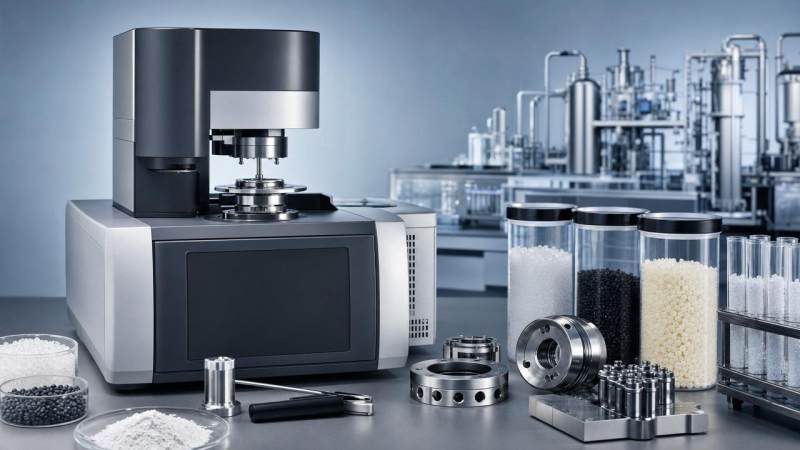
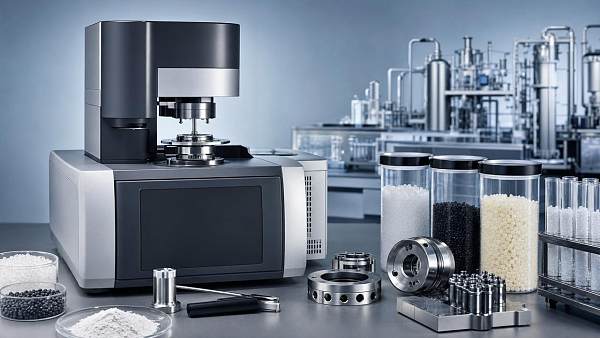
In practical terms, thermal analysis refers to a group of techniques used to measure how materials respond to temperature changes over time, under controlled heating, cooling, or constant-temperature conditions. In process industries, this includes methods such as DSC, TGA, DTA, and evolved gas analysis, along with integrated software for data interpretation and traceability. The growing importance of thermal analysis is not only technical. It is closely tied to process stability, product consistency, energy use, safety validation, and lifecycle optimization across a broad industrial base.
The market direction of thermal analysis is moving away from isolated laboratory testing toward connected decision support. Instead of being used only for R&D, thermal analysis is increasingly positioned as a strategic instrumentation tool that supports raw material qualification, formulation control, production troubleshooting, failure analysis, and compliance documentation. This shift matters because many industries now operate under tighter tolerances, shorter development cycles, and greater pressure to document process reliability.
For the broader instrumentation industry, thermal analysis fits naturally into a larger ecosystem of measurement, monitoring, and automation. It links with temperature sensing, gas analysis, data acquisition, laboratory information systems, and plant-level digital platforms. As a result, thermal analysis market growth is increasingly influenced by how well suppliers support integration, data quality, remote diagnostics, and standardized reporting rather than by hardware performance alone.
Why is the thermal analysis market direction changing now?
Several forces are accelerating thermal analysis adoption. First, material complexity is rising. Process industries are using advanced polymers, specialty chemicals, multi-component blends, battery-related materials, engineered minerals, and recycled feedstocks. These materials often behave differently under heat, making thermal analysis essential for predicting decomposition, glass transition, oxidation stability, curing behavior, and moisture effects.
Second, quality expectations have become more stringent. In sectors tied to industrial manufacturing, environmental systems, energy applications, laboratory services, and construction engineering, a small thermal inconsistency can lead to coating defects, unstable viscosity, shortened service life, safety incidents, or batch rejection. Thermal analysis helps identify these risks earlier, often before visible defects appear.
Third, digital transformation is changing investment logic. Companies increasingly expect instruments to generate usable data, not just measurements. Thermal analysis systems with better software, automated sample handling, cloud-ready reporting, and easier audit trails have become more attractive because they reduce manual work and improve cross-functional collaboration between laboratories, production, engineering, and compliance teams.
Another key driver is regulation and governance. Whether the issue is product safety, energy efficiency, emissions, material traceability, or validation of thermal stability during storage and transport, thermal analysis creates evidence that supports compliance. This makes it relevant not only for product development but also for risk management and operational governance.
Which applications are influencing thermal analysis market growth the most?
The strongest growth in thermal analysis comes from applications where heat behavior directly affects performance, safety, or economic return. In chemicals and specialty materials, thermal analysis supports formulation screening, reaction monitoring, and decomposition studies. In energy and power, it helps characterize battery materials, insulation components, lubricants, and thermal degradation behavior. In environmental and waste-related processes, it supports material classification and combustion profiling.
Industrial manufacturing also remains a major demand source. Thermal analysis is widely used for polymers, adhesives, coatings, composites, seals, and packaging materials. It can reveal curing windows, crystallization changes, filler content, thermal expansion trends, and aging behavior that standard visual inspection cannot capture. In construction engineering, it contributes to cementitious material studies, fire resistance evaluation, and insulation material benchmarking.
The instrumentation industry benefits because these applications often require a complete workflow rather than a single device. Thermal analysis may be paired with sample preparation tools, gas control modules, online monitoring inputs, calibration systems, or software platforms for data review. That creates more value around service, validation, training, and long-term performance support.
How should thermal analysis systems be evaluated before investment?
A common mistake is to evaluate thermal analysis only by temperature range or instrument sensitivity. In reality, long-term value depends on the full use case. A good evaluation starts with sample types, throughput needs, required standards, operator skill level, reporting expectations, and whether the results must connect to broader quality or automation systems. For many facilities, the best thermal analysis platform is the one that fits workflow discipline and data governance, not simply the one with the highest technical specification.
Comparison should include five practical dimensions:
- Measurement reliability across routine and complex sample conditions
- Software usability, audit trail quality, and report standardization
- Service capability, calibration support, and spare part continuity
- Expandability with gas analysis, automation, or data integration tools
- Total cost of ownership, including training and validation time
It is also useful to distinguish between laboratory-centered thermal analysis and process-support thermal analysis. The first is focused on material characterization depth; the second emphasizes repeatability, turnaround speed, and decision relevance for production. Where process industries need both innovation and operational control, hybrid workflows are becoming more common. That trend is influencing supplier competition and product roadmap priorities.
What risks and misconceptions can distort thermal analysis decisions?
One misconception is that thermal analysis is too specialized to matter outside research settings. In fact, many recurring production problems involve thermal behavior, including raw material variability, inconsistent curing, contamination, unstable storage performance, and unexpected degradation during transport or processing. Ignoring thermal analysis can leave these issues unresolved for longer than necessary.
Another risk is underestimating method development. Even advanced thermal analysis equipment can produce weak business value if testing protocols are not aligned with real process conditions. Sample preparation, atmosphere control, heating rate, baseline correction, and interpretation rules all affect result quality. A system purchase without clear testing governance often leads to low utilization or inconsistent conclusions.
There is also a budgeting misunderstanding. Some assume thermal analysis is expensive because they compare it only with basic laboratory instruments. A better comparison is against the cost of poor quality, process interruptions, failed batches, delayed troubleshooting, or compliance gaps. In many cases, thermal analysis pays back through avoided waste, faster root-cause analysis, and more confident material acceptance decisions.
What does the future of thermal analysis look like, and how should companies prepare?
The future thermal analysis market will likely be defined by smarter software, stronger interoperability, greater automation, and more application-specific workflows. Instead of selling a standalone analytical device, suppliers will increasingly compete on integrated solutions that combine thermal analysis with digital recordkeeping, predictive maintenance support, remote troubleshooting, and guided method templates for recurring industrial tasks.
Another clear direction is broader access. As user interfaces improve and workflows become more standardized, thermal analysis will be easier to deploy outside expert-only environments. This does not reduce the importance of technical rigor; it expands the number of situations where reliable thermal data can support faster decisions. That trend aligns well with the instrumentation industry’s larger move toward automation, intelligent monitoring, and connected quality systems.
Preparation should begin with a structured review of where temperature-driven uncertainty affects operations most. This may include incoming material inspection, batch release, product development handoff, shelf-life verification, failure investigation, or change management for formulations and suppliers. Once those priority points are clear, thermal analysis investment becomes easier to justify and easier to scale.
Thermal analysis is no longer a niche laboratory topic. It is becoming a practical decision tool for process industries that need better material understanding, lower operational risk, and stronger data-backed control. The strongest results usually come from matching thermal analysis capabilities to real workflow demands, integration needs, and long-term quality objectives. A useful next step is to map current process challenges against thermal failure modes, identify gaps in existing instrumentation, and define the testing and data requirements that will support future growth with confidence.
Recommended for You
 FDA Updates IVD Import Guidance: CNAS Calibration Chain Required for China-Made DevicesFDA now requires CNAS calibration chain reports for China-made IVD analyzers—pH, ion & clinical chemistry devices entering via 510(k)/De Novo. Act now to avoid U.S. port rejections.
 EN 61000-6-4:2026 Enters Force: Stricter EMC Requirements for Industrial Field InstrumentsEN 61000-6-4:2026 enforces stricter EMC requirements for industrial field instruments—key for AI edge controllers, sensors & exporters. Act now to ensure CE-EMC compliance by Nov 2026.
 Global Methanol Electric Alliance Launches Cross-Border Energy Efficiency Recognition RoadmapGlobal Methanol Electric Alliance launches cross-border energy efficiency recognition roadmap—key for exporters, cal labs & methanol-instrument manufacturers.
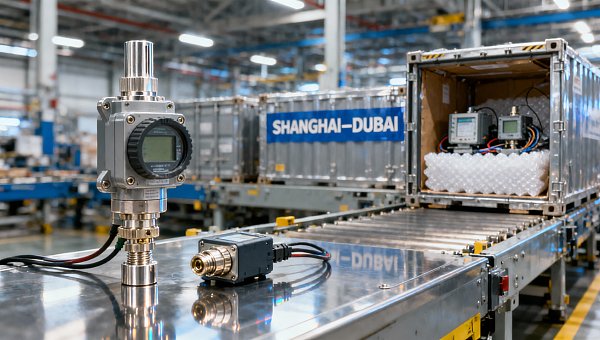
 Red Sea Crisis Escalates: Air Freight Premiums for China–Middle East Industrial Instruments Hit 390%Red Sea Crisis hits industrial instruments: China–Middle East air freight premiums surge 390%. Act now to secure Q3 capacity, avoid delays & optimize LCL alternatives.
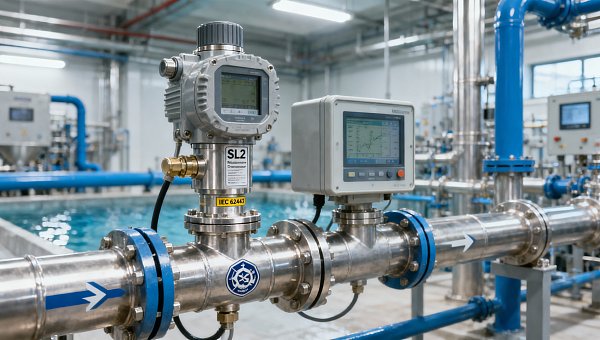
 IEC TC65 Mandates Cybersecurity Certification for Industrial Field Instruments from 2027IEC TC65 mandates cybersecurity certification for industrial field instruments by 2027 — pressure, flow & analytical devices must meet IEC 62443-4-2:2026 and display SL1–SL3 labels. Act now to ensure market access.
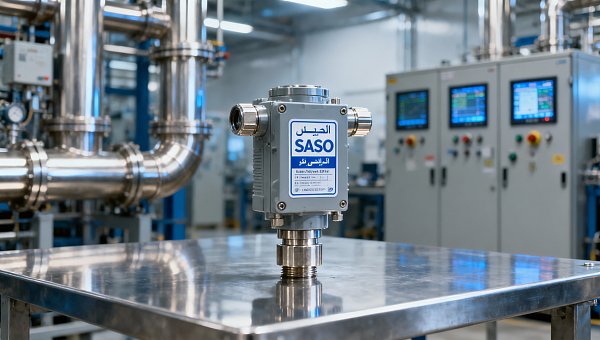
 SASO Cuts Energy Labeling Turnaround for Industrial Transmitters to 7 Working DaysSASO Energy Labeling now takes just 7 working days for industrial transmitters — faster market access, CNAS reports accepted. Act now!
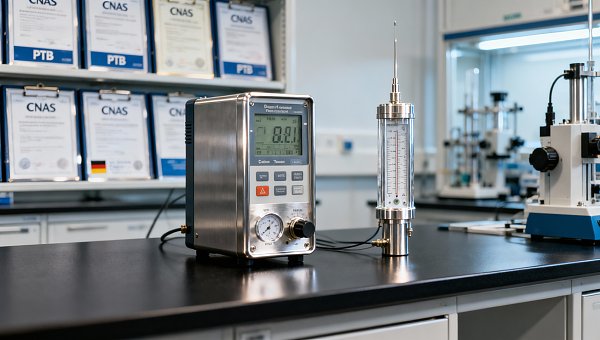
 PTB Launches CalCloud 2.0 with Direct CNAS Lab IntegrationCalCloud 2.0 now integrates directly with CNAS labs—enabling automated VDA 5 & ISO/IEC 17025 dual-compliant calibration reports for automotive and industrial exporters. Boost compliance efficiency today!
 ASEAN's Green Clearance Corridor for CNAS Calibration Reports LaunchesASEAN's Green Clearance Corridor now verifies CNAS calibration reports via blockchain—cut customs clearance to <48h for flow meters, analyzers & more. Act now!
 Vietnam Mandates CNAS Calibration Certificates & Vietnamese Manuals for Industrial Meters from June 1, 2026CNAS calibration certificates & Vietnamese manuals now mandatory for industrial meters entering Vietnam from June 1, 2026—avoid customs delays and ensure seamless market access.
 U.S. BIS Tightens Export Controls on High-Precision Laser InterferometersU.S. BIS tightens export controls on high-precision laser interferometers—critical for semiconductor metrology & ISO/IEC 17025 calibration. Act now to ensure compliance.
 Paramagnetic Monitor Calibration Tips for Stable OutputParamagnetic monitor calibration tips for stable output: learn how to reduce drift, improve accuracy, cut downtime, and keep oxygen measurement reliable in demanding industrial applications.
 Paramagnetic Measurement in Low-Oxygen Process ControlParamagnetic measurement enables accurate low-oxygen process control with fast response and stable oxygen analysis. Learn how it improves safety, consistency, and system performance.
 Laser Detector Import Risks and Certification DelaysLaser detector import risks can cause costly certification delays, customs issues, and testing setbacks. Learn how to avoid compliance failures before ordering.
 Explosion Proof Detector Demand Under New Safety RulesExplosion proof detector demand is rising under new safety rules. Discover how to compare certified, reliable options that improve compliance, integration, and long-term site safety.
 Laboratory Detector Accuracy Standards You Should CheckLaboratory detector accuracy standards explained: check detection limits, repeatability, drift, and traceability to reduce risk, improve audit readiness, and choose with confidence.
 Custom Measurement Lead Times and Budget PlanningCustom measurement lead times and budgets explained for procurement teams. Learn key cost drivers, planning steps, and supplier tips to reduce delays and buy with confidence.
 Laser Measurement for Leak Detection: Common PitfallsLaser measurement for leak detection can fail due to setup, airflow, and data interpretation errors. Learn the common pitfalls and proven fixes for more accurate, reliable results.
 How to Evaluate a High Accuracy Detector in the FieldHigh accuracy detector evaluation starts with real field performance. Learn how to compare stability, response time, and reliability to choose the right detector with confidence.
 Electrochemical Monitor Lifespan and Replacement CostsElectrochemical monitor lifespan and replacement costs explained for buyers. Learn how sensor life, maintenance, and total ownership cost affect safer, smarter purchasing decisions.
 Thermal Analysis Market Direction in Process IndustriesThermal analysis market direction in process industries: discover trends, applications, and investment insights that improve quality control, reduce risk, and support smarter industrial decisions.
 Monitoring Shelter Design Priorities for Outdoor SitesMonitoring shelter design starts with protection, climate control, and power reliability. Discover how to choose the right outdoor solution for stable data, safer maintenance, and lower lifecycle risk.
 Fixed Measurement Planning for Multi-Point InstallationsFixed measurement planning is essential for multi-point installations. Learn how to improve accuracy, reliability, compliance, and maintenance efficiency across complex industrial systems.
 Fixed Analysis Systems for Stable Long-Term MonitoringFixed analysis systems enable stable long-term monitoring, reliable data, and better process control. Discover how they improve safety, compliance, and operational efficiency.
 Thermal Gas Applications Expanding in Clean IndustryThermal gas applications are reshaping clean industry with smarter flow measurement, emissions control, and energy optimization. Discover where they cut risk, boost efficiency, and support automation.
 Monitoring Detector Export Rules to Watch in 2026Monitoring detector export rules are changing fast in 2026. Learn the key compliance risks, supplier checks, and trade signals to protect margins and make smarter sourcing decisions.
 Control Detector Setup Mistakes That Affect ReliabilityControl detector setup mistakes can quietly reduce accuracy and uptime. Learn the most common installation, wiring, and calibration errors—and how to avoid them for reliable performance.
 What Defines a High Accuracy Monitor TodayHigh accuracy monitor selection starts with real-world performance. Learn the key accuracy factors, buyer checklist, and how to choose a reliable monitor for industrial control.
 Infrared Monitor Demand in Industrial Safety UpgradesInfrared monitor demand is rising as industrial safety upgrades accelerate. Discover where buyers need it most, how channel partners can sell smarter, and which applications drive long-term growth.
 Thermal Conductivity Monitor Limits in Mixed Gas StreamsThermal conductivity monitor limits in mixed gas streams explained—learn where accuracy drops, what buyers should compare, and how to choose the right analyzer with confidence.
 Laser Monitor vs Infrared Monitor for Fast DetectionLaser monitor vs infrared monitor for fast detection: discover which delivers better precision, response speed, and reliability for industrial monitoring and smarter sensor selection.
 Thermal Gas Analyzer Price Shifts Across Global MarketsThermal gas analyzer price shifts are reshaping global budgets. Learn what drives costs, regional differences, and how buyers can reduce risk and improve long-term value.
 Custom Analysis Options for Complex Gas ApplicationsCustom analysis helps solve complex gas applications with better accuracy, compliance, and reliability. Discover practical selection insights that reduce risk and improve system performance.

Search Categories
Search Categories
Latest Article
- FDA Updates IVD Import Guidance: CNAS Calibration Chain Required for China-Made DevicesFDA now requires CNAS calibration chain reports for China-made IVD analyzers—pH, ion & clinical chemistry devices entering via 510(k)/De Novo. Act now to avoid U.S. port rejections.Posted by:
- EN 61000-6-4:2026 Enters Force: Stricter EMC Requirements for Industrial Field InstrumentsEN 61000-6-4:2026 enforces stricter EMC requirements for industrial field instruments—key for AI edge controllers, sensors & exporters. Act now to ensure CE-EMC compliance by Nov 2026.Posted by:
- Global Methanol Electric Alliance Launches Cross-Border Energy Efficiency Recognition RoadmapGlobal Methanol Electric Alliance launches cross-border energy efficiency recognition roadmap—key for exporters, cal labs & methanol-instrument manufacturers.Posted by:
Please give us a message
