
Laser Monitor vs Infrared Monitor for Fast Detection


When fast detection is critical, choosing between a laser monitor and an infrared monitor can directly affect accuracy, response time, and operating efficiency. In the instrumentation industry, where monitoring systems support industrial manufacturing, energy, environmental control, laboratory work, and automation, this choice is rarely just about sensor preference. It is about matching detection physics to real operating conditions. A well-selected laser monitor can improve target discrimination, reduce false alarms, and support higher-speed measurement workflows, while infrared technology often provides broader thermal or presence-based visibility. Understanding the difference is essential for reliable fast detection.
Core Technology Differences in Fast Detection
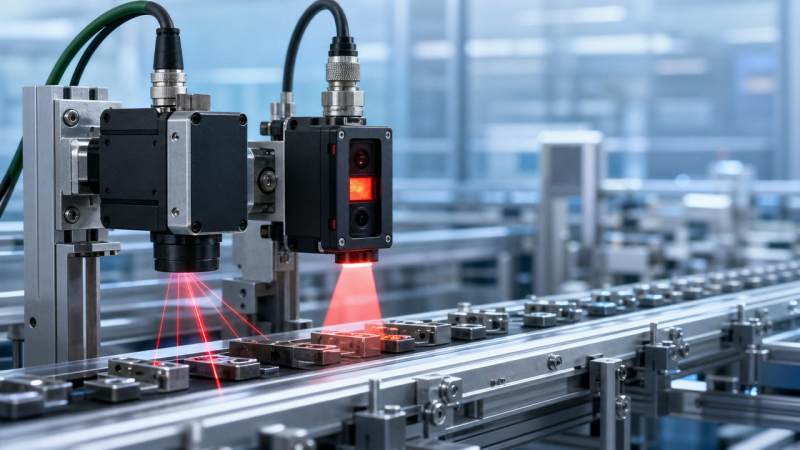
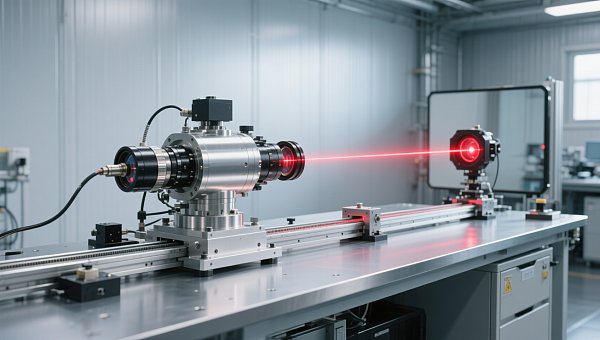
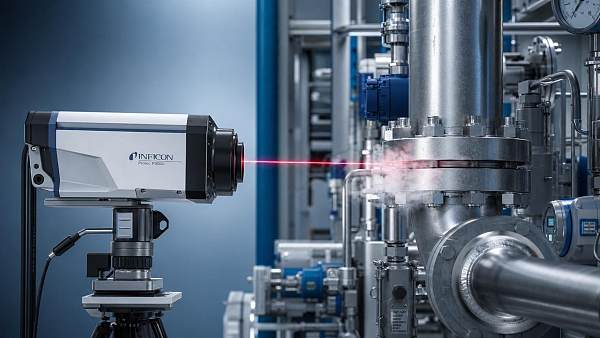
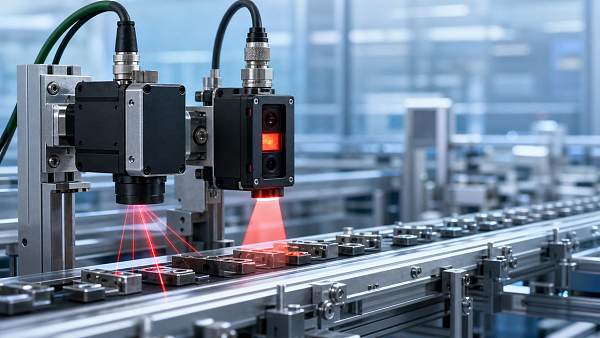
A laser monitor typically uses a focused laser beam to detect position, distance, motion, alignment, particle presence, or surface change with high precision. Because the beam is narrow and coherent, the monitor can often isolate a small target area and respond quickly to subtle variation. This makes laser-based monitoring especially useful when the detection task demands tight tolerances, long-range precision, or fast switching between pass and fail conditions.
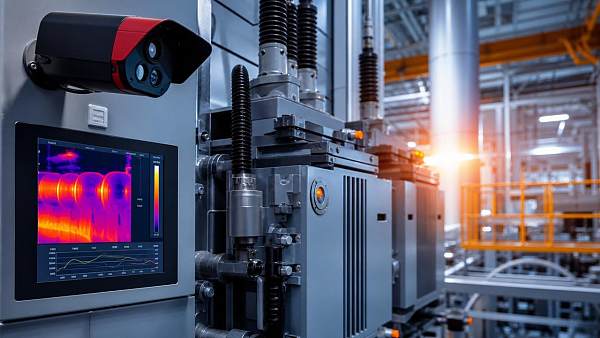
An infrared monitor works differently. It detects infrared radiation, either actively through emitted IR light or passively through heat signatures. Infrared systems are widely used for presence sensing, thermal monitoring, perimeter detection, and condition observation where temperature contrast matters. In fast detection applications, infrared can be effective for identifying hot spots, movement, or broad-area occupancy, but its resolution and targeting behavior may be less precise than a laser monitor in fine measurement tasks.
In practical terms, the main distinction is simple: a laser monitor is usually stronger in pinpoint detection and dimensional accuracy, while an infrared monitor is often stronger in thermal awareness and wider-field sensing. The best option depends on whether the monitored event is geometric, positional, compositional, or temperature-related.
Industry Context and Current Detection Priorities
Across the broader instrumentation sector, monitoring speed is no longer viewed separately from data quality. Digital transformation and automation have increased the need for sensors that can detect events in real time, communicate with control systems, and remain stable in complex environments. This is why comparisons between a laser monitor and infrared monitoring solution have become more common in integrated measurement and control projects.
Current priorities in fast detection usually include the following:
- Short response time for high-speed production or process transitions
- Low false-trigger rate in dusty, reflective, or high-temperature settings
- Reliable integration with PLC, SCADA, DCS, and industrial IoT platforms
- Stable monitoring performance over distance or across moving targets
- Ease of calibration, maintenance, and signal interpretation
These priorities explain why the laser monitor is often considered in advanced detection environments such as conveyor inspection, robotic guidance, dimensional verification, alignment control, and online process monitoring. Infrared systems remain highly relevant, especially where heat trend visibility or non-contact thermal screening is the main goal.
Operational Value of a Laser Monitor
For many fast detection tasks, the operational value of a laser monitor lies in its ability to support control decisions with minimal uncertainty. In automated production, even a small detection delay can create scrap, downtime, or poor synchronization between machines. A laser monitor can help reduce that risk by offering fast signal output tied to exact spatial events, such as object edge arrival, gap presence, thickness variation, or alignment deviation.
Another important advantage is selectivity. In crowded or dynamic industrial environments, a wider sensing field may capture irrelevant changes. A laser monitor can narrow the monitored zone and detect only the intended target path. This improves repeatability in packaging lines, material handling systems, assembly verification, and precision movement tracking.
The business impact is often seen in three areas:
- Higher throughput from faster and more reliable event detection
- Better quality control due to accurate position or dimension feedback
- Improved system integration with automated inspection and control loops
That said, infrared monitoring still offers strong value where surface temperature, heat leakage, overheating, combustion conditions, or human/non-human presence must be recognized rapidly. In these cases, thermal contrast can reveal issues that a laser monitor would not directly measure. This is why the comparison is not about one technology replacing the other, but about selecting the more relevant physical signal for the task.
Typical Application Scenarios and Selection Paths
The following scenarios show where a laser monitor is often preferred over infrared, and where infrared may remain the better fit.
For general instrumentation projects, the decision path should start with the monitored variable. If the process requires exact location, gap, contour, travel distance, or object profiling, a laser monitor is usually the stronger candidate. If the process requires heat mapping, human presence confirmation, or temperature-driven alerting, infrared may be more suitable.
Implementation Considerations and Practical Cautions
A laser monitor can deliver excellent fast detection performance, but only when installation and environmental conditions are properly managed. Beam alignment, target surface properties, vibration, airborne contamination, and mounting stability all influence final accuracy. Reflective metal, transparent material, and irregular surfaces may require application-specific tuning or sensor selection.
Infrared monitors have their own setup challenges. Ambient temperature swings, emissivity variation, steam, direct sunlight, and background heat sources can distort readings or create false triggers. In both cases, fast detection performance should be validated under actual operating conditions rather than only from catalog specifications.
Useful implementation practices include:
- Define the exact detection event before choosing sensor technology
- Test response time together with controller and communication latency
- Evaluate environmental noise such as dust, heat, glare, and vibration
- Confirm maintenance access for cleaning, recalibration, and inspection
- Review whether a laser monitor or infrared monitor should operate alone or as part of a multi-sensor strategy
In advanced systems, hybrid deployment is increasingly common. A laser monitor may handle precision triggering, while infrared provides condition awareness or thermal safety confirmation. This layered approach can improve both speed and reliability in critical monitoring architecture.
Decision Summary and Next-Step Evaluation
In fast detection, the better option is the one that aligns with the physical reality of the monitored event. A laser monitor is generally the better choice for high-speed, high-precision detection involving position, distance, edge, displacement, or alignment. An infrared monitor is often better for temperature-led detection, thermal abnormalities, or broader presence recognition. Both are valuable in the instrumentation industry, but they solve different monitoring problems.
To move from comparison to implementation, begin by listing the required detection speed, target size, sensing distance, environmental conditions, and control interface needs. Then compare whether a laser monitor can deliver the required precision and stability under those conditions, or whether infrared sensing provides a more relevant signal. A structured trial with real process samples, noise sources, and control integration points will usually reveal the most suitable solution faster than a purely theoretical review.
For demanding monitoring tasks, a carefully evaluated laser monitor often becomes the preferred solution when exact, rapid, and repeatable detection is the priority. The strongest decision comes from matching technology capability to application evidence, not from assuming one sensing method fits every industrial environment.
Recommended for You
 FDA Updates IVD Import Guidance: CNAS Calibration Chain Required for China-Made DevicesFDA now requires CNAS calibration chain reports for China-made IVD analyzers—pH, ion & clinical chemistry devices entering via 510(k)/De Novo. Act now to avoid U.S. port rejections.
 EN 61000-6-4:2026 Enters Force: Stricter EMC Requirements for Industrial Field InstrumentsEN 61000-6-4:2026 enforces stricter EMC requirements for industrial field instruments—key for AI edge controllers, sensors & exporters. Act now to ensure CE-EMC compliance by Nov 2026.
 Global Methanol Electric Alliance Launches Cross-Border Energy Efficiency Recognition RoadmapGlobal Methanol Electric Alliance launches cross-border energy efficiency recognition roadmap—key for exporters, cal labs & methanol-instrument manufacturers.
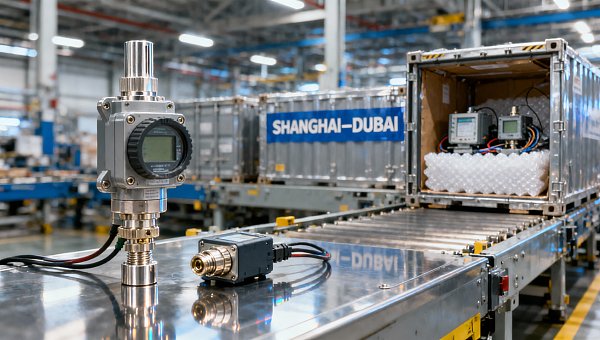
 Red Sea Crisis Escalates: Air Freight Premiums for China–Middle East Industrial Instruments Hit 390%Red Sea Crisis hits industrial instruments: China–Middle East air freight premiums surge 390%. Act now to secure Q3 capacity, avoid delays & optimize LCL alternatives.
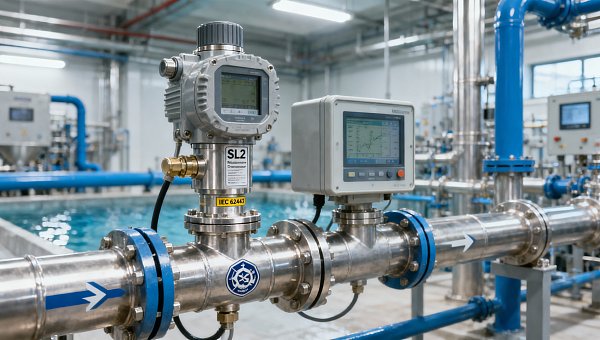
 IEC TC65 Mandates Cybersecurity Certification for Industrial Field Instruments from 2027IEC TC65 mandates cybersecurity certification for industrial field instruments by 2027 — pressure, flow & analytical devices must meet IEC 62443-4-2:2026 and display SL1–SL3 labels. Act now to ensure market access.
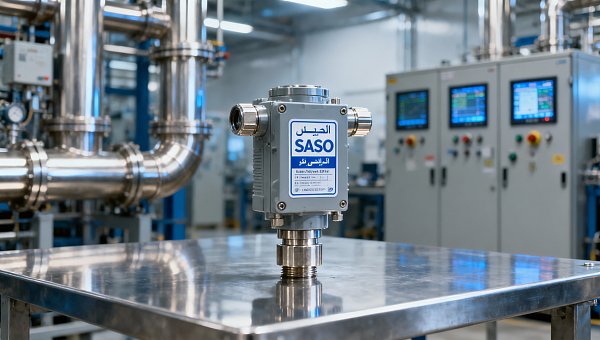
 SASO Cuts Energy Labeling Turnaround for Industrial Transmitters to 7 Working DaysSASO Energy Labeling now takes just 7 working days for industrial transmitters — faster market access, CNAS reports accepted. Act now!
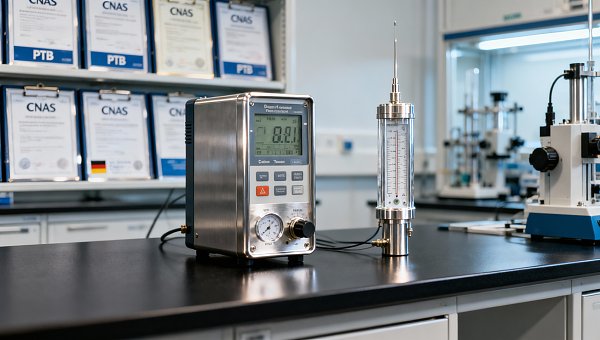
 PTB Launches CalCloud 2.0 with Direct CNAS Lab IntegrationCalCloud 2.0 now integrates directly with CNAS labs—enabling automated VDA 5 & ISO/IEC 17025 dual-compliant calibration reports for automotive and industrial exporters. Boost compliance efficiency today!
 ASEAN's Green Clearance Corridor for CNAS Calibration Reports LaunchesASEAN's Green Clearance Corridor now verifies CNAS calibration reports via blockchain—cut customs clearance to <48h for flow meters, analyzers & more. Act now!
 Vietnam Mandates CNAS Calibration Certificates & Vietnamese Manuals for Industrial Meters from June 1, 2026CNAS calibration certificates & Vietnamese manuals now mandatory for industrial meters entering Vietnam from June 1, 2026—avoid customs delays and ensure seamless market access.
 U.S. BIS Tightens Export Controls on High-Precision Laser InterferometersU.S. BIS tightens export controls on high-precision laser interferometers—critical for semiconductor metrology & ISO/IEC 17025 calibration. Act now to ensure compliance.
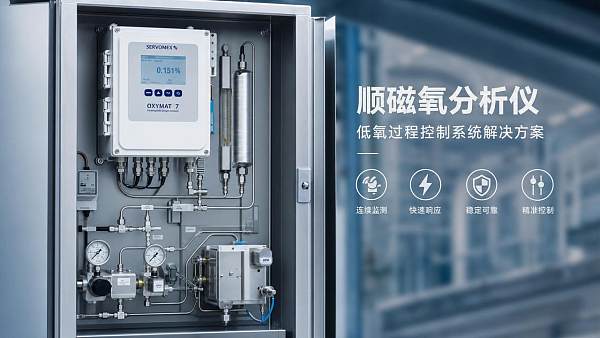
 Paramagnetic Monitor Calibration Tips for Stable OutputParamagnetic monitor calibration tips for stable output: learn how to reduce drift, improve accuracy, cut downtime, and keep oxygen measurement reliable in demanding industrial applications.
 Paramagnetic Measurement in Low-Oxygen Process ControlParamagnetic measurement enables accurate low-oxygen process control with fast response and stable oxygen analysis. Learn how it improves safety, consistency, and system performance.
 Laser Detector Import Risks and Certification DelaysLaser detector import risks can cause costly certification delays, customs issues, and testing setbacks. Learn how to avoid compliance failures before ordering.
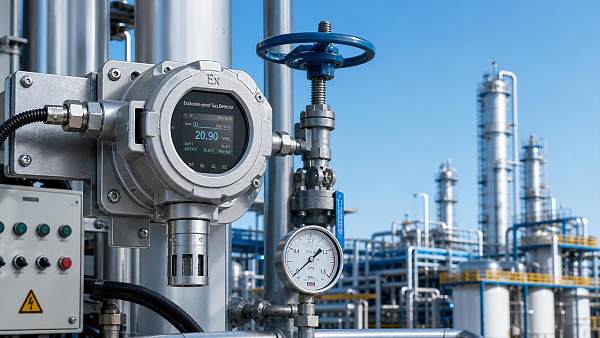
 Explosion Proof Detector Demand Under New Safety RulesExplosion proof detector demand is rising under new safety rules. Discover how to compare certified, reliable options that improve compliance, integration, and long-term site safety.
 Laboratory Detector Accuracy Standards You Should CheckLaboratory detector accuracy standards explained: check detection limits, repeatability, drift, and traceability to reduce risk, improve audit readiness, and choose with confidence.
 Custom Measurement Lead Times and Budget PlanningCustom measurement lead times and budgets explained for procurement teams. Learn key cost drivers, planning steps, and supplier tips to reduce delays and buy with confidence.
 Laser Measurement for Leak Detection: Common PitfallsLaser measurement for leak detection can fail due to setup, airflow, and data interpretation errors. Learn the common pitfalls and proven fixes for more accurate, reliable results.
 How to Evaluate a High Accuracy Detector in the FieldHigh accuracy detector evaluation starts with real field performance. Learn how to compare stability, response time, and reliability to choose the right detector with confidence.
 Electrochemical Monitor Lifespan and Replacement CostsElectrochemical monitor lifespan and replacement costs explained for buyers. Learn how sensor life, maintenance, and total ownership cost affect safer, smarter purchasing decisions.
 Thermal Analysis Market Direction in Process IndustriesThermal analysis market direction in process industries: discover trends, applications, and investment insights that improve quality control, reduce risk, and support smarter industrial decisions.
 Monitoring Shelter Design Priorities for Outdoor SitesMonitoring shelter design starts with protection, climate control, and power reliability. Discover how to choose the right outdoor solution for stable data, safer maintenance, and lower lifecycle risk.
 Fixed Measurement Planning for Multi-Point InstallationsFixed measurement planning is essential for multi-point installations. Learn how to improve accuracy, reliability, compliance, and maintenance efficiency across complex industrial systems.
 Fixed Analysis Systems for Stable Long-Term MonitoringFixed analysis systems enable stable long-term monitoring, reliable data, and better process control. Discover how they improve safety, compliance, and operational efficiency.
 Thermal Gas Applications Expanding in Clean IndustryThermal gas applications are reshaping clean industry with smarter flow measurement, emissions control, and energy optimization. Discover where they cut risk, boost efficiency, and support automation.
 Monitoring Detector Export Rules to Watch in 2026Monitoring detector export rules are changing fast in 2026. Learn the key compliance risks, supplier checks, and trade signals to protect margins and make smarter sourcing decisions.
 Control Detector Setup Mistakes That Affect ReliabilityControl detector setup mistakes can quietly reduce accuracy and uptime. Learn the most common installation, wiring, and calibration errors—and how to avoid them for reliable performance.
 What Defines a High Accuracy Monitor TodayHigh accuracy monitor selection starts with real-world performance. Learn the key accuracy factors, buyer checklist, and how to choose a reliable monitor for industrial control.
 Infrared Monitor Demand in Industrial Safety UpgradesInfrared monitor demand is rising as industrial safety upgrades accelerate. Discover where buyers need it most, how channel partners can sell smarter, and which applications drive long-term growth.
 Thermal Conductivity Monitor Limits in Mixed Gas StreamsThermal conductivity monitor limits in mixed gas streams explained—learn where accuracy drops, what buyers should compare, and how to choose the right analyzer with confidence.
 Laser Monitor vs Infrared Monitor for Fast DetectionLaser monitor vs infrared monitor for fast detection: discover which delivers better precision, response speed, and reliability for industrial monitoring and smarter sensor selection.
 Thermal Gas Analyzer Price Shifts Across Global MarketsThermal gas analyzer price shifts are reshaping global budgets. Learn what drives costs, regional differences, and how buyers can reduce risk and improve long-term value.
 Custom Analysis Options for Complex Gas ApplicationsCustom analysis helps solve complex gas applications with better accuracy, compliance, and reliability. Discover practical selection insights that reduce risk and improve system performance.



Search Categories
Search Categories
Latest Article
- FDA Updates IVD Import Guidance: CNAS Calibration Chain Required for China-Made DevicesFDA now requires CNAS calibration chain reports for China-made IVD analyzers—pH, ion & clinical chemistry devices entering via 510(k)/De Novo. Act now to avoid U.S. port rejections.Posted by:
- EN 61000-6-4:2026 Enters Force: Stricter EMC Requirements for Industrial Field InstrumentsEN 61000-6-4:2026 enforces stricter EMC requirements for industrial field instruments—key for AI edge controllers, sensors & exporters. Act now to ensure CE-EMC compliance by Nov 2026.Posted by:
- Global Methanol Electric Alliance Launches Cross-Border Energy Efficiency Recognition RoadmapGlobal Methanol Electric Alliance launches cross-border energy efficiency recognition roadmap—key for exporters, cal labs & methanol-instrument manufacturers.Posted by:
Please give us a message
