
How to Evaluate a High Accuracy Detector in the Field


In field operations, choosing a high accuracy detector is not just about specifications on paper—it directly affects product quality, worker safety, and compliance outcomes. For quality control and safety management professionals, knowing how to assess real-world performance, stability, response speed, and environmental adaptability is essential. This guide explains the key factors to evaluate so you can select a reliable detector with confidence.
What should you verify first when evaluating a high accuracy detector?
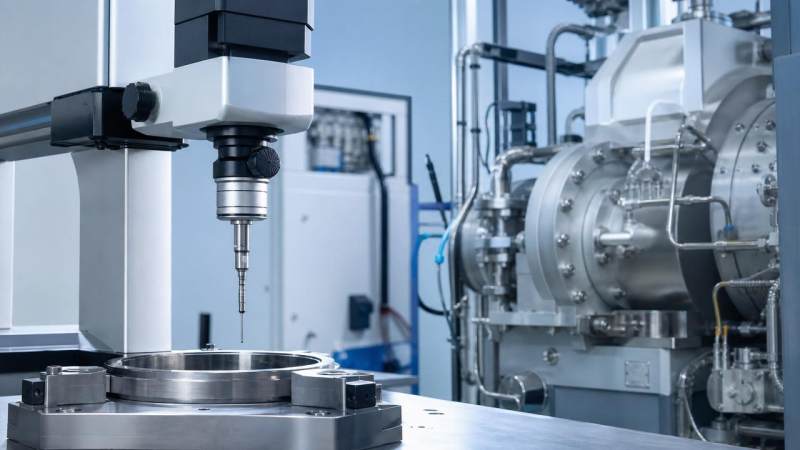
A high accuracy detector is only valuable if its field performance matches its stated specification. In instrumentation-heavy environments such as manufacturing plants, power facilities, laboratories, environmental monitoring points, and automated production lines, the detector must maintain measurement integrity under vibration, dust, humidity, temperature variation, electromagnetic interference, and operator handling.
For quality control personnel, the main concern is whether readings stay consistent enough to support pass/fail decisions, calibration traceability, and process stability. For safety managers, the priority is whether the detector responds fast enough and accurately enough to prevent exposure, incidents, shutdowns, or non-compliance. These two goals often overlap, which is why field evaluation should go beyond catalog claims.
The first verification step is simple: define the actual measurement task. A detector used for spot checking in a warehouse is not evaluated the same way as one used for continuous industrial online monitoring, confined-space entry, laboratory screening, or process control verification.
- Identify the target substance or parameter, expected concentration or range, and acceptable error band.
- Clarify whether the detector is used for compliance, preventive safety, product quality inspection, or troubleshooting.
- Confirm whether the measurement is continuous, periodic, handheld, fixed-point, or integrated into automation control.
- Determine the environmental stresses that may change detector behavior in the field.
Without this context, buyers often select a high accuracy detector that looks impressive in the datasheet but performs poorly in the real operating window. The most common failure is not a broken instrument. It is a mismatch between instrument capability and site conditions.
Which field performance indicators matter most?
The most practical way to assess a high accuracy detector is to separate laboratory accuracy from field usability. Many instruments can achieve excellent results in stable calibration conditions. Fewer maintain dependable performance on a busy production floor, near motors and pumps, outdoors in changing weather, or across multiple shifts.
The table below summarizes the core indicators quality and safety teams should review before approval or procurement.
When reviewing these indicators, avoid relying on one-time demonstrations. A high accuracy detector should be observed over repeated tasks, preferably across multiple operators and environmental conditions. Consistency matters more than a single impressive test.
How to test repeatability on site
Repeatability is often more useful than headline accuracy for day-to-day control. If a detector provides slightly offset but highly consistent readings, the issue can often be corrected through calibration or compensation. If readings vary unpredictably, the instrument becomes risky for both quality assurance and safety response.
- Take at least three repeated measurements at the same test point using the same method.
- Repeat the test at different times of day if temperature or process load changes.
- Compare results with a calibrated reference instrument or known standard when available.
- Record operator name, ambient conditions, and sample path to identify variation sources.
How do application scenarios change detector selection?
In the instrumentation industry, a high accuracy detector may support industrial manufacturing, energy and power systems, environmental inspection, laboratory analysis, medical testing support, construction engineering, and automated monitoring networks. Each scenario creates a different evaluation standard.
The table below helps connect field conditions with practical selection logic instead of generic specification comparison.
This comparison shows why detector evaluation should be scenario-driven. A detector optimized for metrology support may be too delicate for construction commissioning. A rugged safety unit may be excellent for alarm response but not ideal for tight laboratory tolerances.
Typical pain points by user role
- Quality control teams often struggle with inconsistent readings between shifts, poor traceability, and unclear recalibration schedules.
- Safety managers often face alarm credibility issues, harsh environments, and pressure to meet compliance deadlines with limited downtime.
- Procurement teams often compare only purchase price and nominal accuracy, while ignoring lifecycle cost and field suitability.
What technical details are often overlooked during procurement?
A high accuracy detector should not be judged by accuracy percentage alone. In many projects, the real difference between acceptable and poor performance comes from secondary parameters that affect how the instrument behaves outside the calibration bench.
Key technical factors beyond basic accuracy
- Measurement range and resolution: high accuracy at one narrow point does not guarantee useful performance across the full operating span.
- Warm-up and stabilization time: field teams need to know how long the detector takes before readings can be trusted.
- Calibration method and interval: difficult or frequent calibration raises labor cost and increases risk of skipped maintenance.
- Sampling system design: tubing length, pump response, filters, and sample conditioning can change the effective response time.
- Data output and integration: modern instrumentation often needs digital communication, logging, alarms, or interface compatibility with automation systems.
These details are especially important in industries moving toward digital transformation and intelligent upgrading. A detector that cannot integrate smoothly with data collection, remote supervision, or control workflows may create manual workarounds and hidden risk, even if its core sensing element performs well.
Checklist for a short field trial
- Inspect startup behavior, self-check prompts, and operator guidance.
- Verify readings against a reference under at least two environmental conditions.
- Test alarm, response delay, and signal recovery after exposure ends.
- Review calibration access, maintenance steps, and replacement parts logic.
- Confirm data export, record retention, and compatibility with site documentation practices.
How can you compare options without focusing only on price?
Budget pressure is real, but the lowest purchase price rarely delivers the lowest operating cost. When a high accuracy detector is used for safety or critical quality checks, false alarms, sensor drift, delayed readings, and frequent maintenance can cost more than the instrument itself.
Use a lifecycle view during comparison. The matrix below can help procurement, QA, and EHS teams align their decision.
This does not mean the more expensive high accuracy detector is always the right answer. It means the decision should be tied to risk exposure, verification workload, and the consequence of wrong readings. In low-risk periodic checks, a simpler instrument may be sufficient. In high-consequence operations, reliability usually justifies a stronger specification.
Which standards, documentation, and compliance points should be reviewed?
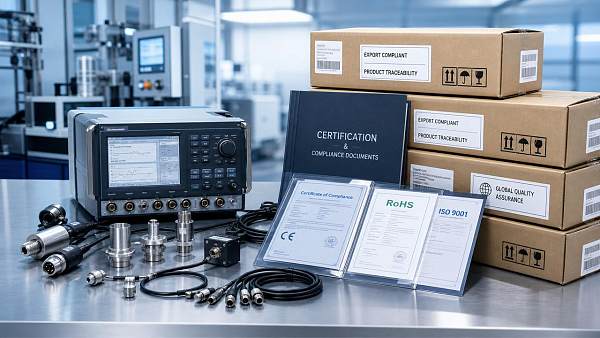
For quality control and safety management, documentation is part of performance. A high accuracy detector should be supported by clear calibration guidance, traceability information where applicable, operating instructions, maintenance requirements, and relevant conformity or safety documentation required by the target market or application.
- Check whether calibration procedures are clearly defined and practical for your team or service partner.
- Review whether the detector’s environmental limits match your installation location and duty cycle.
- Confirm required market access or safety compliance documents based on country, industry, and operating hazard.
- Ask how measurement records, alarms, and maintenance logs can be stored for audits and investigations.
In regulated or audited settings, the absence of clear documentation can turn an otherwise capable detector into a weak link. This is especially true for environmental reporting, laboratory support, and industrial safety programs where traceable decisions are required.
Common mistakes when evaluating a high accuracy detector
Mistake 1: treating laboratory accuracy as field accuracy
A detector can perform well in ideal conditions and still fail under vibration, unstable temperature, contaminated sampling paths, or mixed gases. Always test under realistic site conditions.
Mistake 2: ignoring operator workflow
If menu navigation, calibration steps, or alarm interpretation are unclear, field errors increase. Ease of use is not cosmetic. It directly affects reading quality and response quality.
Mistake 3: buying for the current task only
Instrumentation investments should also consider future automation, digital reporting, and broader monitoring needs. A detector that cannot scale may force early replacement.
Mistake 4: underestimating service and spare parts
A strong field detector still needs consumables, calibration support, and predictable lead times. Delayed service can interrupt safety routines and production schedules.
FAQ: practical questions from quality and safety teams
How do I know whether a high accuracy detector is suitable for harsh outdoor use?
Review operating temperature range, enclosure protection, resistance to moisture and dust, and stability under changing ambient conditions. Then validate those claims in a field trial. Outdoor suitability is not just about surviving exposure. It is about maintaining dependable readings during exposure.
What is more important: fast response or high accuracy?
It depends on the task. For emergency detection and worker protection, response speed may be the first priority as long as accuracy stays within acceptable limits. For product verification, laboratory support, or process optimization, repeatable accuracy often carries more weight. Many sites need both, so define the consequence of delay versus the consequence of measurement error.
How long should a field evaluation last?
A useful trial should cover enough operating variation to reveal drift, response behavior, and operator issues. For stable indoor processes, a few days may be enough. For outdoor or shift-based operations, longer observation often provides a more realistic picture. The key is to include normal disturbance factors, not just ideal moments.
Can one high accuracy detector cover multiple departments?
Sometimes, but only if the measurement range, environmental tolerance, data handling, and compliance requirements align. A shared device can reduce cost, yet it may create scheduling conflicts, wear, and inconsistent setup practices. Multi-department use should be planned, not assumed.
Why contact us for detector selection and field evaluation support?
Selecting a high accuracy detector for modern instrumentation applications requires more than comparing brochure values. It involves matching sensing performance, environmental resilience, calibration logic, workflow fit, and compliance expectations across manufacturing, energy, environmental monitoring, laboratory support, construction, and automation scenarios.
We can support your evaluation process with practical discussions focused on the questions that matter most to quality control and safety management teams.
- Parameter confirmation for range, sensitivity, repeatability, response time, and environmental limits
- Product selection guidance based on process conditions, usage frequency, and risk level
- Delivery timeline discussion for urgent projects, shutdown windows, or phased implementation
- Custom solution communication for integration, monitoring points, or special operating conditions
- Certification and documentation review based on your market or application requirements
- Sample support or trial planning where a practical field assessment is needed before purchase
- Quotation discussion built around total ownership factors rather than upfront price alone
If you are comparing detector options for a new project or replacing an unreliable unit, contact us with your target parameter, operating environment, accuracy expectation, and compliance needs. That allows a faster and more relevant recommendation instead of a generic product list.
Recommended for You
 FDA Updates IVD Import Guidance: CNAS Calibration Chain Required for China-Made DevicesFDA now requires CNAS calibration chain reports for China-made IVD analyzers—pH, ion & clinical chemistry devices entering via 510(k)/De Novo. Act now to avoid U.S. port rejections.
 EN 61000-6-4:2026 Enters Force: Stricter EMC Requirements for Industrial Field InstrumentsEN 61000-6-4:2026 enforces stricter EMC requirements for industrial field instruments—key for AI edge controllers, sensors & exporters. Act now to ensure CE-EMC compliance by Nov 2026.
 Global Methanol Electric Alliance Launches Cross-Border Energy Efficiency Recognition RoadmapGlobal Methanol Electric Alliance launches cross-border energy efficiency recognition roadmap—key for exporters, cal labs & methanol-instrument manufacturers.
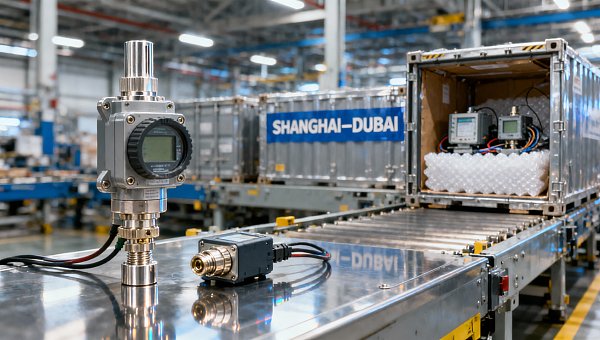
 Red Sea Crisis Escalates: Air Freight Premiums for China–Middle East Industrial Instruments Hit 390%Red Sea Crisis hits industrial instruments: China–Middle East air freight premiums surge 390%. Act now to secure Q3 capacity, avoid delays & optimize LCL alternatives.
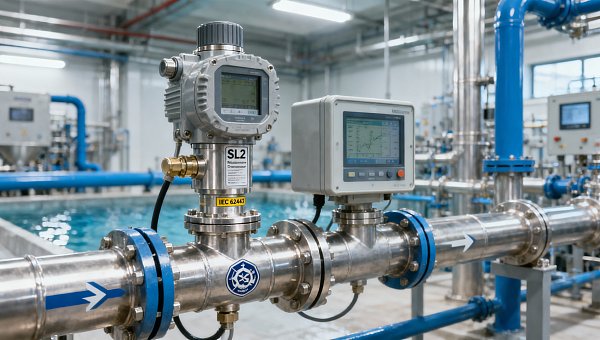
 IEC TC65 Mandates Cybersecurity Certification for Industrial Field Instruments from 2027IEC TC65 mandates cybersecurity certification for industrial field instruments by 2027 — pressure, flow & analytical devices must meet IEC 62443-4-2:2026 and display SL1–SL3 labels. Act now to ensure market access.
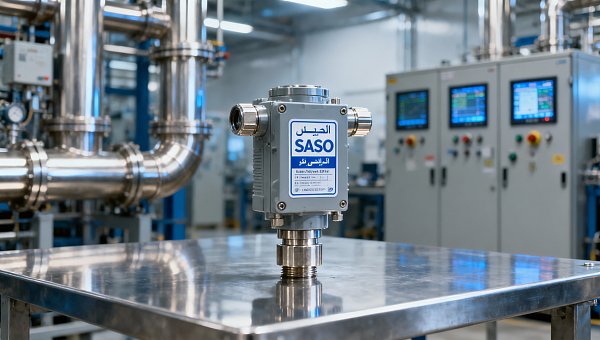
 SASO Cuts Energy Labeling Turnaround for Industrial Transmitters to 7 Working DaysSASO Energy Labeling now takes just 7 working days for industrial transmitters — faster market access, CNAS reports accepted. Act now!
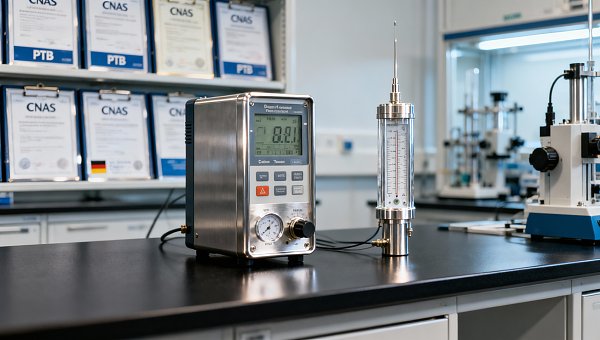
 PTB Launches CalCloud 2.0 with Direct CNAS Lab IntegrationCalCloud 2.0 now integrates directly with CNAS labs—enabling automated VDA 5 & ISO/IEC 17025 dual-compliant calibration reports for automotive and industrial exporters. Boost compliance efficiency today!
 ASEAN's Green Clearance Corridor for CNAS Calibration Reports LaunchesASEAN's Green Clearance Corridor now verifies CNAS calibration reports via blockchain—cut customs clearance to <48h for flow meters, analyzers & more. Act now!
 Vietnam Mandates CNAS Calibration Certificates & Vietnamese Manuals for Industrial Meters from June 1, 2026CNAS calibration certificates & Vietnamese manuals now mandatory for industrial meters entering Vietnam from June 1, 2026—avoid customs delays and ensure seamless market access.
 U.S. BIS Tightens Export Controls on High-Precision Laser InterferometersU.S. BIS tightens export controls on high-precision laser interferometers—critical for semiconductor metrology & ISO/IEC 17025 calibration. Act now to ensure compliance.
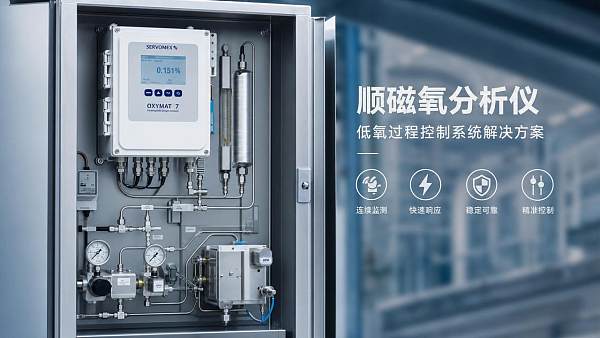
 Paramagnetic Monitor Calibration Tips for Stable OutputParamagnetic monitor calibration tips for stable output: learn how to reduce drift, improve accuracy, cut downtime, and keep oxygen measurement reliable in demanding industrial applications.
 Paramagnetic Measurement in Low-Oxygen Process ControlParamagnetic measurement enables accurate low-oxygen process control with fast response and stable oxygen analysis. Learn how it improves safety, consistency, and system performance.
 Laser Detector Import Risks and Certification DelaysLaser detector import risks can cause costly certification delays, customs issues, and testing setbacks. Learn how to avoid compliance failures before ordering.
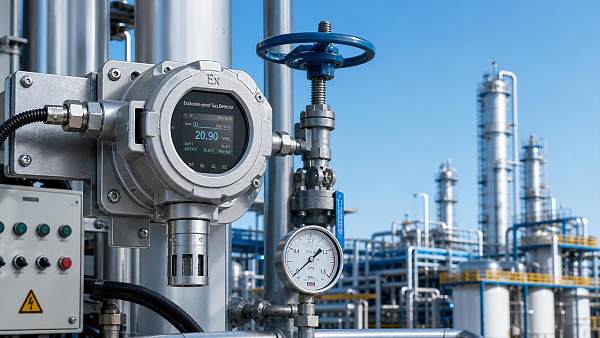
 Explosion Proof Detector Demand Under New Safety RulesExplosion proof detector demand is rising under new safety rules. Discover how to compare certified, reliable options that improve compliance, integration, and long-term site safety.
 Laboratory Detector Accuracy Standards You Should CheckLaboratory detector accuracy standards explained: check detection limits, repeatability, drift, and traceability to reduce risk, improve audit readiness, and choose with confidence.
 Custom Measurement Lead Times and Budget PlanningCustom measurement lead times and budgets explained for procurement teams. Learn key cost drivers, planning steps, and supplier tips to reduce delays and buy with confidence.
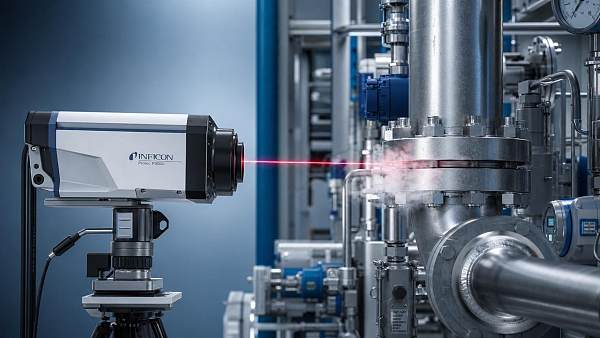
 Laser Measurement for Leak Detection: Common PitfallsLaser measurement for leak detection can fail due to setup, airflow, and data interpretation errors. Learn the common pitfalls and proven fixes for more accurate, reliable results.
 How to Evaluate a High Accuracy Detector in the FieldHigh accuracy detector evaluation starts with real field performance. Learn how to compare stability, response time, and reliability to choose the right detector with confidence.
 Electrochemical Monitor Lifespan and Replacement CostsElectrochemical monitor lifespan and replacement costs explained for buyers. Learn how sensor life, maintenance, and total ownership cost affect safer, smarter purchasing decisions.
 Thermal Analysis Market Direction in Process IndustriesThermal analysis market direction in process industries: discover trends, applications, and investment insights that improve quality control, reduce risk, and support smarter industrial decisions.
 Monitoring Shelter Design Priorities for Outdoor SitesMonitoring shelter design starts with protection, climate control, and power reliability. Discover how to choose the right outdoor solution for stable data, safer maintenance, and lower lifecycle risk.
 Fixed Measurement Planning for Multi-Point InstallationsFixed measurement planning is essential for multi-point installations. Learn how to improve accuracy, reliability, compliance, and maintenance efficiency across complex industrial systems.
 Fixed Analysis Systems for Stable Long-Term MonitoringFixed analysis systems enable stable long-term monitoring, reliable data, and better process control. Discover how they improve safety, compliance, and operational efficiency.
 Thermal Gas Applications Expanding in Clean IndustryThermal gas applications are reshaping clean industry with smarter flow measurement, emissions control, and energy optimization. Discover where they cut risk, boost efficiency, and support automation.
 Monitoring Detector Export Rules to Watch in 2026Monitoring detector export rules are changing fast in 2026. Learn the key compliance risks, supplier checks, and trade signals to protect margins and make smarter sourcing decisions.
 Control Detector Setup Mistakes That Affect ReliabilityControl detector setup mistakes can quietly reduce accuracy and uptime. Learn the most common installation, wiring, and calibration errors—and how to avoid them for reliable performance.
 What Defines a High Accuracy Monitor TodayHigh accuracy monitor selection starts with real-world performance. Learn the key accuracy factors, buyer checklist, and how to choose a reliable monitor for industrial control.
 Infrared Monitor Demand in Industrial Safety UpgradesInfrared monitor demand is rising as industrial safety upgrades accelerate. Discover where buyers need it most, how channel partners can sell smarter, and which applications drive long-term growth.
 Thermal Conductivity Monitor Limits in Mixed Gas StreamsThermal conductivity monitor limits in mixed gas streams explained—learn where accuracy drops, what buyers should compare, and how to choose the right analyzer with confidence.
 Laser Monitor vs Infrared Monitor for Fast DetectionLaser monitor vs infrared monitor for fast detection: discover which delivers better precision, response speed, and reliability for industrial monitoring and smarter sensor selection.
 Thermal Gas Analyzer Price Shifts Across Global MarketsThermal gas analyzer price shifts are reshaping global budgets. Learn what drives costs, regional differences, and how buyers can reduce risk and improve long-term value.
 Custom Analysis Options for Complex Gas ApplicationsCustom analysis helps solve complex gas applications with better accuracy, compliance, and reliability. Discover practical selection insights that reduce risk and improve system performance.




Search Categories
Search Categories
Latest Article
- FDA Updates IVD Import Guidance: CNAS Calibration Chain Required for China-Made DevicesFDA now requires CNAS calibration chain reports for China-made IVD analyzers—pH, ion & clinical chemistry devices entering via 510(k)/De Novo. Act now to avoid U.S. port rejections.Posted by:
- EN 61000-6-4:2026 Enters Force: Stricter EMC Requirements for Industrial Field InstrumentsEN 61000-6-4:2026 enforces stricter EMC requirements for industrial field instruments—key for AI edge controllers, sensors & exporters. Act now to ensure CE-EMC compliance by Nov 2026.Posted by:
- Global Methanol Electric Alliance Launches Cross-Border Energy Efficiency Recognition RoadmapGlobal Methanol Electric Alliance launches cross-border energy efficiency recognition roadmap—key for exporters, cal labs & methanol-instrument manufacturers.Posted by:
Please give us a message
