
Control Detector Setup Mistakes That Affect Reliability


A reliable control detector depends on more than product quality—setup mistakes can quietly reduce accuracy, stability, and service life. For operators and users, understanding these common installation and configuration errors is essential to prevent false readings, delayed responses, and unnecessary downtime. This article highlights the key setup issues that affect reliability and explains how to avoid them in practical working environments.
Why does a control detector fail even when the device itself is qualified?
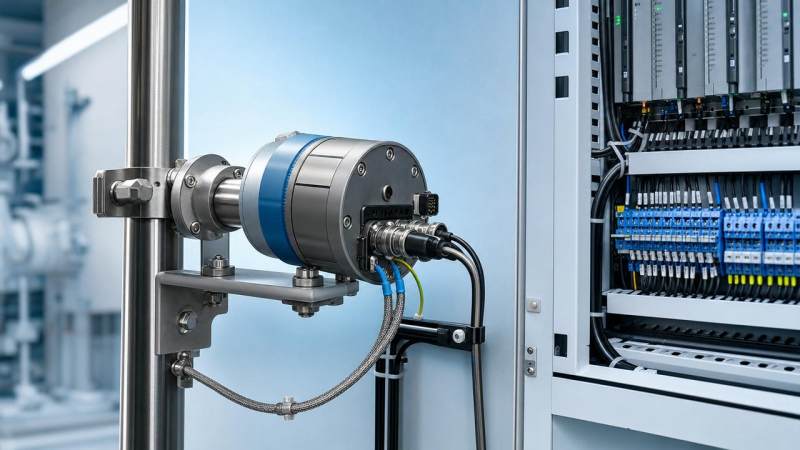
In instrumentation work, many reliability problems do not start with the sensor core, electronics, or software. They start during setup. A control detector may leave the factory within specification, yet perform poorly after installation because the mounting point is wrong, the wiring route introduces noise, the response settings do not match the process, or calibration is skipped after commissioning.
This matters across industrial manufacturing, energy and power, environmental monitoring, laboratory systems, building engineering, and automation control. In all of these environments, operators rely on stable measurements to trigger alarms, maintain process control, protect assets, and support digital monitoring platforms. A small setup error can create large downstream losses.
A control detector is only as reliable as the complete measurement chain around it. That chain usually includes the sensing element, process connection, cable routing, signal conditioning, power supply, control logic, and maintenance routine. If one part is mismatched, the reading may drift, oscillate, or respond too slowly.
- Wrong installation location can expose the control detector to turbulence, dead zones, vibration, heat sources, or contamination that were not considered during product selection.
- Improper electrical setup can cause unstable output, intermittent faults, grounding loops, signal interference, or communication loss in analog and digital systems.
- Poor configuration can create alarm delays, nuisance trips, filtering errors, or incorrect scaling that makes a healthy process look abnormal.
The most overlooked factor: process reality
Operators often inherit equipment layouts that were designed for mechanical convenience rather than measurement quality. As a result, the control detector may be installed where there is room, not where there is representative process behavior. In pressure, flow, level, temperature, and composition analysis, that shortcut usually reduces reliability first and accuracy second.
Which setup mistakes most often affect control detector reliability?
The most common mistakes are not mysterious. They repeat across industries because projects face the same pressures: fast delivery, tight budgets, mixed equipment brands, and limited commissioning time. The table below summarizes practical error patterns that frequently reduce control detector reliability in field conditions.
For operators, this table shows a useful truth: unreliable output usually has a visible cause. Before replacing a control detector, review installation position, electrical environment, and parameter settings. That sequence often solves the issue faster and at lower cost than immediate component replacement.
Mechanical installation mistakes
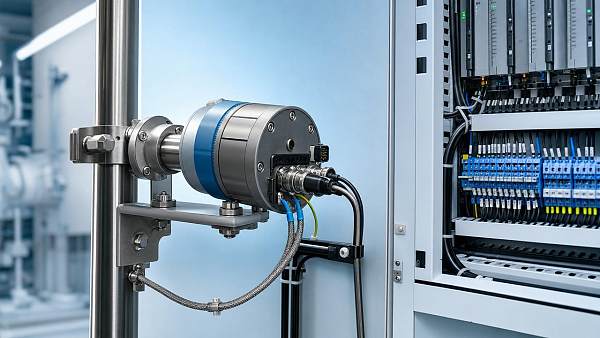
Mechanical errors include mounting on vibrating structures, installing without sufficient straight pipe length where flow conditions matter, exposing the device to direct sunlight or radiant heat, and using unsuitable fittings or seal materials. These problems can distort measurements or shorten service life through fatigue, leakage, or thermal stress.
Electrical and signal mistakes
Running signal cables beside high-power lines, ignoring shielding continuity, sharing grounding points without planning, or using a power supply outside stable tolerance are common causes of unreliable control detector performance. In digital plants, address conflicts and communication termination mistakes can produce faults that look like device failure but are actually network setup issues.
Configuration mistakes after installation
Even a well-installed control detector can perform badly when engineering units, scaling values, output type, damping, deadband, or alarm priorities are set incorrectly. A detector configured for the wrong range may appear stable while hiding important changes. A filter that is too aggressive may suppress noise but also hide fast process upsets.
How do setup errors differ by application scenario?
Control detector reliability is not affected the same way in every environment. What causes trouble in a water treatment skid may differ from a power plant, lab analyzer station, or factory automation line. Operators should judge setup quality against the actual process, not a generic checklist alone.
The following table compares typical setup concerns across common instrumentation scenarios. It can help users prioritize what to inspect first when a control detector starts showing unstable or doubtful behavior.
This comparison makes selection and troubleshooting more practical. A control detector should not be judged only by catalog performance. The real question is whether its setup matches vibration level, contamination risk, process dynamics, maintenance access, and control system architecture in the actual site.
Application-specific warning signs
- If readings fluctuate when a nearby motor starts, suspect routing, shielding, or grounding before suspecting the control detector itself.
- If response is consistently late during fast process changes, review damping, sample path length, mounting location, and process contact quality.
- If the device passes bench checks but fails in service, the likely cause is environmental or integration-related rather than an internal hardware defect.
What should operators check during installation and commissioning?
A practical control detector setup process reduces both early failures and hidden performance loss. Operators do not need a complex engineering study for every installation, but they do need a disciplined checklist. This is especially important in mixed-use industrial environments where instrumentation supports automation, online monitoring, safety interlocks, and quality control at the same time.
Pre-installation review
- Confirm process conditions: operating range, overload events, temperature, pressure, humidity, vibration, and exposure to dust, steam, or chemicals.
- Verify compatibility: process connection, wetted materials, cable specification, output signal type, control system input, and power supply requirements.
- Choose a representative mounting point: avoid stagnant zones, recirculation points, turbulence sources, and inaccessible maintenance positions.
Installation and wiring check
- Use proper mechanical support and sealing. Excess stress on threads, manifolds, brackets, or enclosures can create long-term reliability issues.
- Separate signal cables from high-current wiring. Where crossings are unavoidable, keep them controlled and avoid long parallel runs.
- Apply grounding and shielding according to the system design. An inconsistent field practice can make a stable control detector appear defective.
Commissioning and validation
After physical installation, validate scaling, units, communication mapping, zero and span condition where relevant, alarm thresholds, and filtering behavior. Then compare output against a known reference, process trend, or controlled test condition. This step is essential because many reliability complaints are really configuration problems discovered too late.
How to choose a control detector setup approach when budget and delivery are tight?
In real projects, users rarely have unlimited time or budget. The challenge is not only choosing the control detector, but deciding how much setup support is necessary. A low purchase price can become expensive if poor commissioning leads to process interruptions, repeated site visits, or premature replacement.
The table below helps operators and buyers compare setup approaches based on risk, speed, and support level.
For many users, the middle path works best. Technical guidance on installation point selection, wiring rules, and parameter confirmation often prevents the most expensive mistakes. In instrumentation projects, cost should be judged across the detector’s service life, not only at the purchase order stage.
Procurement questions worth asking before purchase
- What process conditions or media characteristics can reduce control detector reliability if not addressed during setup?
- What are the recommended mounting orientation, cable type, shielding practice, and environmental protection requirements?
- Is on-site or remote support available for parameter confirmation, alarm setting, and communication mapping?
- What verification steps are recommended after installation to confirm that the control detector is operating within expected conditions?
What standards, maintenance habits, and operator practices improve long-term reliability?
Long-term performance depends on routine control, not only first-day setup. In many facilities, reliability drops because documentation is incomplete, replacement practices are inconsistent, or maintenance intervals are based on habit rather than process risk. A control detector that supports automation and digital monitoring should be managed with the same discipline as other critical instrumentation assets.
Good practices for ongoing use
- Keep a setup record that includes location, wiring method, range, alarm values, filter settings, and verification date. This reduces repeat errors during maintenance.
- Review trend data after startup. A slow drift, unusual noise pattern, or frequent alarm reset may reveal setup weakness before a shutdown occurs.
- Use calibration and inspection intervals based on process severity, contamination risk, and criticality rather than a uniform schedule for all devices.
- When applicable, align practices with common industrial expectations for electrical safety, EMC control, calibration traceability, and documented change management.
These habits matter because the instrumentation industry increasingly supports digital transformation and intelligent upgrading. Data quality is the base layer of automation. If a control detector is badly installed or poorly maintained, the control logic above it will also become less trustworthy.
FAQ: what do operators ask most about control detector setup?
How do I know whether the problem is the control detector or the installation?
Start by checking the environment around the detector. If the reading changes with motor startup, weather exposure, cable movement, or nearby process disturbances, installation is a strong suspect. If bench testing or substitution with a reference device gives stable output, the original detector may still be healthy and the field setup may be the real issue.
Should I always use strong filtering to make the signal look stable?
No. Excessive filtering can hide useful process changes and delay alarms. For a control detector in fast automation loops, too much damping may be as harmful as too little. The best setting balances noise suppression with actual process response needs. Test it against real operating events, not only against a quiet startup condition.
What is the most common purchasing mistake related to setup reliability?
A frequent mistake is buying according to nominal measuring range only. Users may ignore vibration, ingress risk, cable length, media compatibility, maintenance access, or communication requirements. The result is a control detector that looks suitable on paper but becomes difficult to install correctly and keep reliable in daily use.
How much support should I request from a supplier?
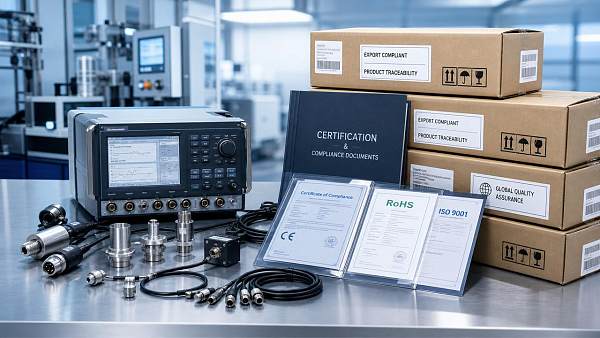
Ask for support whenever the site has complex integration, unusual media, difficult environmental conditions, or strict uptime expectations. Useful support includes parameter confirmation, wiring review, mounting recommendations, certification-related documentation, delivery schedule clarification, and startup validation guidance. These services often save more time than they cost.
Why choose us for control detector selection and setup support?
In instrumentation applications, reliable results come from matching the detector, the process, and the setup method as one system. We support users and operators across industrial manufacturing, energy and power, environmental monitoring, laboratory analysis, construction engineering, and automation control with practical guidance focused on field performance, not just catalog data.
You can contact us for specific and useful topics, including control detector parameter confirmation, installation point review, wiring and shielding suggestions, product selection for harsh environments, delivery cycle discussion, sample support, certification-related document needs, and quotation communication for standard or customized solutions.
If your current control detector shows unstable readings, repeated alarms, slow response, or early failure, share the process conditions and setup details. A focused review of the application, installation, and configuration can often identify the real cause quickly and help you choose a more reliable next step.
Recommended for You
 FDA Updates IVD Import Guidance: CNAS Calibration Chain Required for China-Made DevicesFDA now requires CNAS calibration chain reports for China-made IVD analyzers—pH, ion & clinical chemistry devices entering via 510(k)/De Novo. Act now to avoid U.S. port rejections.
 EN 61000-6-4:2026 Enters Force: Stricter EMC Requirements for Industrial Field InstrumentsEN 61000-6-4:2026 enforces stricter EMC requirements for industrial field instruments—key for AI edge controllers, sensors & exporters. Act now to ensure CE-EMC compliance by Nov 2026.
 Global Methanol Electric Alliance Launches Cross-Border Energy Efficiency Recognition RoadmapGlobal Methanol Electric Alliance launches cross-border energy efficiency recognition roadmap—key for exporters, cal labs & methanol-instrument manufacturers.
 Red Sea Crisis Escalates: Air Freight Premiums for China–Middle East Industrial Instruments Hit 390%Red Sea Crisis hits industrial instruments: China–Middle East air freight premiums surge 390%. Act now to secure Q3 capacity, avoid delays & optimize LCL alternatives.
 IEC TC65 Mandates Cybersecurity Certification for Industrial Field Instruments from 2027IEC TC65 mandates cybersecurity certification for industrial field instruments by 2027 — pressure, flow & analytical devices must meet IEC 62443-4-2:2026 and display SL1–SL3 labels. Act now to ensure market access.
 SASO Cuts Energy Labeling Turnaround for Industrial Transmitters to 7 Working DaysSASO Energy Labeling now takes just 7 working days for industrial transmitters — faster market access, CNAS reports accepted. Act now!
 PTB Launches CalCloud 2.0 with Direct CNAS Lab IntegrationCalCloud 2.0 now integrates directly with CNAS labs—enabling automated VDA 5 & ISO/IEC 17025 dual-compliant calibration reports for automotive and industrial exporters. Boost compliance efficiency today!
 ASEAN's Green Clearance Corridor for CNAS Calibration Reports LaunchesASEAN's Green Clearance Corridor now verifies CNAS calibration reports via blockchain—cut customs clearance to <48h for flow meters, analyzers & more. Act now!
 Vietnam Mandates CNAS Calibration Certificates & Vietnamese Manuals for Industrial Meters from June 1, 2026CNAS calibration certificates & Vietnamese manuals now mandatory for industrial meters entering Vietnam from June 1, 2026—avoid customs delays and ensure seamless market access.
 U.S. BIS Tightens Export Controls on High-Precision Laser InterferometersU.S. BIS tightens export controls on high-precision laser interferometers—critical for semiconductor metrology & ISO/IEC 17025 calibration. Act now to ensure compliance.
 Paramagnetic Monitor Calibration Tips for Stable OutputParamagnetic monitor calibration tips for stable output: learn how to reduce drift, improve accuracy, cut downtime, and keep oxygen measurement reliable in demanding industrial applications.
 Paramagnetic Measurement in Low-Oxygen Process ControlParamagnetic measurement enables accurate low-oxygen process control with fast response and stable oxygen analysis. Learn how it improves safety, consistency, and system performance.
 Laser Detector Import Risks and Certification DelaysLaser detector import risks can cause costly certification delays, customs issues, and testing setbacks. Learn how to avoid compliance failures before ordering.
 Explosion Proof Detector Demand Under New Safety RulesExplosion proof detector demand is rising under new safety rules. Discover how to compare certified, reliable options that improve compliance, integration, and long-term site safety.
 Laboratory Detector Accuracy Standards You Should CheckLaboratory detector accuracy standards explained: check detection limits, repeatability, drift, and traceability to reduce risk, improve audit readiness, and choose with confidence.
 Custom Measurement Lead Times and Budget PlanningCustom measurement lead times and budgets explained for procurement teams. Learn key cost drivers, planning steps, and supplier tips to reduce delays and buy with confidence.
 Laser Measurement for Leak Detection: Common PitfallsLaser measurement for leak detection can fail due to setup, airflow, and data interpretation errors. Learn the common pitfalls and proven fixes for more accurate, reliable results.
 How to Evaluate a High Accuracy Detector in the FieldHigh accuracy detector evaluation starts with real field performance. Learn how to compare stability, response time, and reliability to choose the right detector with confidence.
 Electrochemical Monitor Lifespan and Replacement CostsElectrochemical monitor lifespan and replacement costs explained for buyers. Learn how sensor life, maintenance, and total ownership cost affect safer, smarter purchasing decisions.
 Thermal Analysis Market Direction in Process IndustriesThermal analysis market direction in process industries: discover trends, applications, and investment insights that improve quality control, reduce risk, and support smarter industrial decisions.
 Monitoring Shelter Design Priorities for Outdoor SitesMonitoring shelter design starts with protection, climate control, and power reliability. Discover how to choose the right outdoor solution for stable data, safer maintenance, and lower lifecycle risk.
 Fixed Measurement Planning for Multi-Point InstallationsFixed measurement planning is essential for multi-point installations. Learn how to improve accuracy, reliability, compliance, and maintenance efficiency across complex industrial systems.
 Fixed Analysis Systems for Stable Long-Term MonitoringFixed analysis systems enable stable long-term monitoring, reliable data, and better process control. Discover how they improve safety, compliance, and operational efficiency.
 Thermal Gas Applications Expanding in Clean IndustryThermal gas applications are reshaping clean industry with smarter flow measurement, emissions control, and energy optimization. Discover where they cut risk, boost efficiency, and support automation.
 Monitoring Detector Export Rules to Watch in 2026Monitoring detector export rules are changing fast in 2026. Learn the key compliance risks, supplier checks, and trade signals to protect margins and make smarter sourcing decisions.
 Control Detector Setup Mistakes That Affect ReliabilityControl detector setup mistakes can quietly reduce accuracy and uptime. Learn the most common installation, wiring, and calibration errors—and how to avoid them for reliable performance.
 What Defines a High Accuracy Monitor TodayHigh accuracy monitor selection starts with real-world performance. Learn the key accuracy factors, buyer checklist, and how to choose a reliable monitor for industrial control.
 Infrared Monitor Demand in Industrial Safety UpgradesInfrared monitor demand is rising as industrial safety upgrades accelerate. Discover where buyers need it most, how channel partners can sell smarter, and which applications drive long-term growth.
 Thermal Conductivity Monitor Limits in Mixed Gas StreamsThermal conductivity monitor limits in mixed gas streams explained—learn where accuracy drops, what buyers should compare, and how to choose the right analyzer with confidence.
 Laser Monitor vs Infrared Monitor for Fast DetectionLaser monitor vs infrared monitor for fast detection: discover which delivers better precision, response speed, and reliability for industrial monitoring and smarter sensor selection.
 Thermal Gas Analyzer Price Shifts Across Global MarketsThermal gas analyzer price shifts are reshaping global budgets. Learn what drives costs, regional differences, and how buyers can reduce risk and improve long-term value.
 Custom Analysis Options for Complex Gas ApplicationsCustom analysis helps solve complex gas applications with better accuracy, compliance, and reliability. Discover practical selection insights that reduce risk and improve system performance.

Search Categories
Search Categories
Latest Article
- FDA Updates IVD Import Guidance: CNAS Calibration Chain Required for China-Made DevicesFDA now requires CNAS calibration chain reports for China-made IVD analyzers—pH, ion & clinical chemistry devices entering via 510(k)/De Novo. Act now to avoid U.S. port rejections.Posted by:
- EN 61000-6-4:2026 Enters Force: Stricter EMC Requirements for Industrial Field InstrumentsEN 61000-6-4:2026 enforces stricter EMC requirements for industrial field instruments—key for AI edge controllers, sensors & exporters. Act now to ensure CE-EMC compliance by Nov 2026.Posted by:
- Global Methanol Electric Alliance Launches Cross-Border Energy Efficiency Recognition RoadmapGlobal Methanol Electric Alliance launches cross-border energy efficiency recognition roadmap—key for exporters, cal labs & methanol-instrument manufacturers.Posted by:
Please give us a message
