
PTB Launches AI Calibration Cloud Platform 2.0


On May 9, 2026, the German National Metrology Institute (PTB) officially launched its AI Calibration Cloud Platform 2.0 — a development with direct implications for calibration-intensive sectors including automotive supply chains, industrial equipment manufacturing, and third-party testing laboratories operating under China’s CNAS accreditation system. This update introduces the first direct API integration between PTB’s platform and CNAS-accredited laboratories in China, enabling automated generation of dual-compliant calibration reports aligned with both VDA 5 (German Automotive Industry Association) and ISO/IEC 17025 standards. The move signals a tangible step toward harmonized metrological traceability across EU–China industrial cooperation, particularly where regulatory alignment affects market access.
Event Overview
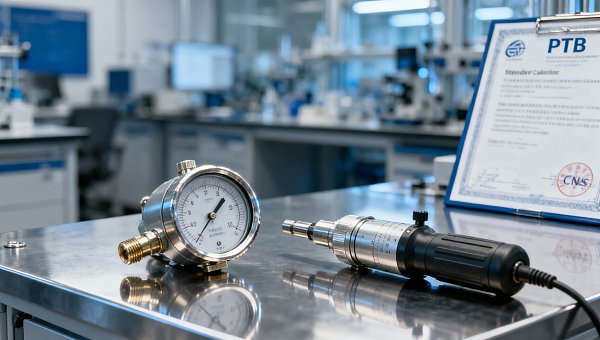
The Physikalisch-Technische Bundesanstalt (PTB) activated its AI Calibration Cloud Platform 2.0 on May 9, 2026. The platform now offers a certified, bidirectional interface for CNAS-accredited laboratories in China. Upon online submission of raw calibration data, the system automatically generates calibration reports compliant with both VDA 5 and ISO/IEC 17025 requirements. The platform has received formal recognition from procurement departments of major German industrial enterprises, including BMW and Siemens.
Impact on Specific Industry Segments
Automotive Tier Suppliers & Export-Oriented Manufacturers
Suppliers delivering components to German OEMs or Tier 1s may face increased expectations for calibration documentation traceability. VDA 5 compliance is often contractually required for measurement process validation in automotive quality management systems (e.g., VDA Volume 5, IATF 16949-aligned audits). With this platform, CNAS labs can now produce VDA 5–referenced reports without manual reinterpretation or revalidation — reducing report turnaround time and potential audit findings related to measurement uncertainty documentation.
Industrial Equipment Manufacturers (e.g., Sensors, Precision Tools)
Manufacturers embedding calibrated subsystems (e.g., pressure sensors, torque transducers) into machinery sold to German industrial customers may encounter updated technical specifications referencing VDA 5–aligned calibration evidence. Since the platform enables direct generation of dual-standard reports, device-level calibration certificates issued by CNAS labs gain enhanced acceptance in German technical evaluation processes — potentially shortening qualification cycles for new product introductions.
Third-Party Calibration & Testing Laboratories (CNAS-Accredited)
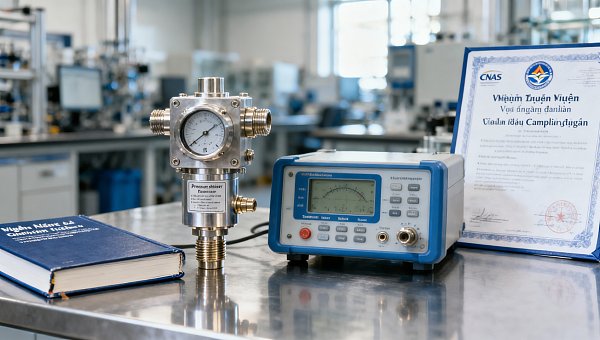
CNAS-accredited labs providing calibration services to export-oriented clients now have a standardized, PTB-validated route to meet VDA 5 reporting expectations. This does not replace CNAS accreditation, but adds an interoperable layer for cross-border metrological documentation. Labs using the platform must ensure their internal data formats and uncertainty budgets align with PTB’s ingestion requirements — implying possible updates to local SOPs and staff training on VDA 5 terminology and structure.
Supply Chain Compliance & Quality Assurance Teams
Quality managers responsible for supplier calibration validation — especially those auditing Chinese vendors supplying to German-based engineering or production units — may begin receiving VDA 5–referenced reports generated via this cloud platform. These reports carry PTB’s digital signature and metadata traceability, which could shift internal review protocols from manual cross-checking to metadata verification and audit-log inspection.
What Relevant Enterprises or Practitioners Should Focus On Now
Monitor official implementation guidance from PTB and CNAS
While the platform is live, neither PTB nor CNAS has published publicly accessible technical specifications for the API interface, data schema requirements, or validation procedures for report issuance. Enterprises should track announcements from both institutions — particularly any notices regarding mandatory fields, version control of VDA 5 clauses supported, or periodic recertification of connected labs.
Identify high-priority calibration assets tied to German customer contracts
Organizations should map which instruments, measurement processes, or product lines are subject to contractual VDA 5 requirements — especially those currently relying on manually adapted ISO/IEC 17025 reports. Prioritizing these for pilot use of the PTB platform helps assess integration effort and report acceptance in actual procurement reviews.
Distinguish between platform availability and contractual enforceability
The platform’s launch does not imply immediate revision of existing quality agreements or automatic acceptance of its outputs in all audit contexts. Customers (e.g., BMW procurement) may still require additional evidence — such as on-site assessment of the lab’s uncertainty budget derivation — even when a VDA 5–formatted report is provided. Treat the platform as an enabler, not a substitute for full process transparency.
Prepare internal documentation and communication protocols
For labs adopting the platform: update calibration certificates’ footnotes to clarify that VDA 5 alignment is derived via PTB’s AI Cloud Platform 2.0, specifying version and date of generation. For end users: revise internal QA checklists to include verification of PTB’s digital signature and embedded traceability metadata, rather than solely reviewing narrative content.
Editorial Perspective / Industry Observation
Observably, this initiative reflects a growing trend toward infrastructure-level standardization in cross-border metrology — not just harmonized documents, but interoperable digital systems. Analysis shows it functions less as an immediate regulatory mandate and more as a de facto technical pathway emerging from industry demand: German OEMs and suppliers are incentivizing adoption by signaling preference for PTB-validated outputs in procurement evaluations. From an industry perspective, the platform’s significance lies not in replacing national accreditation frameworks, but in creating a verifiable bridge between them. It remains to be seen whether similar integrations will emerge with other national metrology institutes (e.g., NIST, NPL), or whether PTB’s model becomes a reference for future EU–China conformity assessment dialogues. Continued observation is warranted on uptake rates among CNAS labs and frequency of platform-generated reports cited in supplier audits.
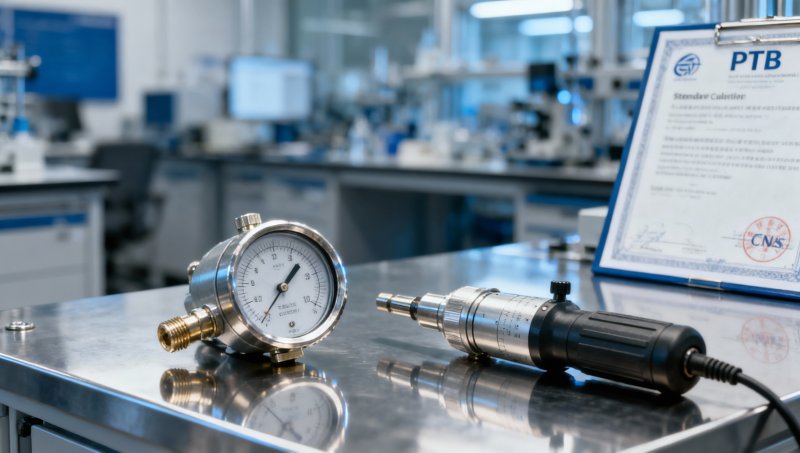
In summary, PTB’s AI Calibration Cloud Platform 2.0 marks a concrete advancement in digitally enabled metrological interoperability between Germany and China — one that lowers friction for calibration reporting but does not eliminate the need for rigorous uncertainty analysis or process validation. It is best understood not as a new compliance requirement, but as an operational tool gaining traction through industry endorsement. Its real-world impact will depend on sustained adoption, transparent governance, and alignment with evolving interpretations of VDA 5 and ISO/IEC 17025 in practice.
Source: Official announcement by Physikalisch-Technische Bundesanstalt (PTB), dated May 9, 2026. Additional context drawn from publicly acknowledged endorsements by BMW and Siemens procurement departments. Note: Technical specifications of the API interface, CNAS integration scope, and long-term maintenance commitments remain pending official publication and are subject to ongoing observation.
Recommended for You
 FDA Updates IVD Import Guidance: CNAS Calibration Traceability to NIST Required for Chinese ManufacturersFDA now requires CNAS calibration traceability to NIST for Chinese IVD manufacturers — critical for 510(k)/De Novo submissions. Act now to avoid RTA delays!
 ASEAN's Green Clearance Corridor Fully LaunchedGreen Clearance Corridor now live: CNAS calibration reports auto-verified for ASEAN customs clearance in under 4 hours — boost your China–ASEAN trade efficiency today!
 First Global Cybersecurity Verification Guide for Industrial Instruments ReleasedFirst global cybersecurity verification guide for industrial instruments launched—featuring a 5-level maturity model & standardized pentest library. Essential for exporters, OEMs, and critical infrastructure suppliers.
 SASO Shortens Energy Labeling for Industrial Transmitters to 7 Days, Adds AI Power Simulation RequirementSASO energy labeling for industrial transmitters now takes just 7 days — but requires AI power simulation. Learn how to comply fast and avoid delays.
 PTB Launches AI Calibration Cloud Platform 2.0PTB AI Calibration Cloud Platform 2.0 launches with CNAS-VDA 5/ISO/IEC 17025 dual-compliance reporting — streamline cross-border calibration for auto suppliers, labs & equipment makers.
 EU Mandates Carbon Footprint Labels on Industrial Instruments from 2027EU mandates carbon footprint labels on industrial instruments from 2027—key for pressure, temperature & flow meter exporters. Act now to ensure PEF compliance and market access.
 Red Sea Crisis Worsens: Gulf of Aden Ban Extends to 3 Weeks, Air Freight Premiums for Industrial Instruments Surge 420%Red Sea crisis deepens: Gulf of Aden ban hits 3 weeks, spiking air freight premiums for industrial instruments by 420%—urgent insights for exporters & EPC contractors.
 Vietnam Enforces CNAS + Vietnamese Dual Requirement for Industrial InstrumentsVietnam Enforces CNAS + Vietnamese Dual Requirement for Industrial Instruments: Key compliance update for exporters, labs & documentation teams ahead of June 2026.
 U.S. BIS Adds 5 High-Precision Pressure/Flow Calibration Sources to EAR ListU.S. BIS adds 5 high-precision pressure/flow calibration sources to EAR list — critical for exporters, instrument makers & supply chain teams. Act now.
 IEC 61508-3:2026 Published: Functional Safety Certification UpgradedIEC 61508-3:2026 is live—discover what the upgraded functional safety certification means for your industrial software, AI diagnostics & global market access.
 FDA Updates IVD Import Guidance: CNAS Calibration Chain Required for China-Made DevicesFDA now requires CNAS calibration chain reports for China-made IVD analyzers—pH, ion & clinical chemistry devices entering via 510(k)/De Novo. Act now to avoid U.S. port rejections.
 EN 61000-6-4:2026 Enters Force: Stricter EMC Requirements for Industrial Field InstrumentsEN 61000-6-4:2026 enforces stricter EMC requirements for industrial field instruments—key for AI edge controllers, sensors & exporters. Act now to ensure CE-EMC compliance by Nov 2026.
 Global Methanol Electric Alliance Launches Cross-Border Energy Efficiency Recognition RoadmapGlobal Methanol Electric Alliance launches cross-border energy efficiency recognition roadmap—key for exporters, cal labs & methanol-instrument manufacturers.
 Red Sea Crisis Escalates: Air Freight Premiums for China–Middle East Industrial Instruments Hit 390%Red Sea Crisis hits industrial instruments: China–Middle East air freight premiums surge 390%. Act now to secure Q3 capacity, avoid delays & optimize LCL alternatives.
 IEC TC65 Mandates Cybersecurity Certification for Industrial Field Instruments from 2027IEC TC65 mandates cybersecurity certification for industrial field instruments by 2027 — pressure, flow & analytical devices must meet IEC 62443-4-2:2026 and display SL1–SL3 labels. Act now to ensure market access.
 SASO Cuts Energy Labeling Turnaround for Industrial Transmitters to 7 Working DaysSASO Energy Labeling now takes just 7 working days for industrial transmitters — faster market access, CNAS reports accepted. Act now!
 PTB Launches CalCloud 2.0 with Direct CNAS Lab IntegrationCalCloud 2.0 now integrates directly with CNAS labs—enabling automated VDA 5 & ISO/IEC 17025 dual-compliant calibration reports for automotive and industrial exporters. Boost compliance efficiency today!
 ASEAN's Green Clearance Corridor for CNAS Calibration Reports LaunchesASEAN's Green Clearance Corridor now verifies CNAS calibration reports via blockchain—cut customs clearance to <48h for flow meters, analyzers & more. Act now!
 Vietnam Mandates CNAS Calibration Certificates & Vietnamese Manuals for Industrial Meters from June 1, 2026CNAS calibration certificates & Vietnamese manuals now mandatory for industrial meters entering Vietnam from June 1, 2026—avoid customs delays and ensure seamless market access.
 U.S. BIS Tightens Export Controls on High-Precision Laser InterferometersU.S. BIS tightens export controls on high-precision laser interferometers—critical for semiconductor metrology & ISO/IEC 17025 calibration. Act now to ensure compliance.
 Paramagnetic Monitor Calibration Tips for Stable OutputParamagnetic monitor calibration tips for stable output: learn how to reduce drift, improve accuracy, cut downtime, and keep oxygen measurement reliable in demanding industrial applications.
 Paramagnetic Measurement in Low-Oxygen Process ControlParamagnetic measurement enables accurate low-oxygen process control with fast response and stable oxygen analysis. Learn how it improves safety, consistency, and system performance.
 Laser Detector Import Risks and Certification DelaysLaser detector import risks can cause costly certification delays, customs issues, and testing setbacks. Learn how to avoid compliance failures before ordering.
 Explosion Proof Detector Demand Under New Safety RulesExplosion proof detector demand is rising under new safety rules. Discover how to compare certified, reliable options that improve compliance, integration, and long-term site safety.
 Laboratory Detector Accuracy Standards You Should CheckLaboratory detector accuracy standards explained: check detection limits, repeatability, drift, and traceability to reduce risk, improve audit readiness, and choose with confidence.
 Custom Measurement Lead Times and Budget PlanningCustom measurement lead times and budgets explained for procurement teams. Learn key cost drivers, planning steps, and supplier tips to reduce delays and buy with confidence.
 Laser Measurement for Leak Detection: Common PitfallsLaser measurement for leak detection can fail due to setup, airflow, and data interpretation errors. Learn the common pitfalls and proven fixes for more accurate, reliable results.
 How to Evaluate a High Accuracy Detector in the FieldHigh accuracy detector evaluation starts with real field performance. Learn how to compare stability, response time, and reliability to choose the right detector with confidence.
 Electrochemical Monitor Lifespan and Replacement CostsElectrochemical monitor lifespan and replacement costs explained for buyers. Learn how sensor life, maintenance, and total ownership cost affect safer, smarter purchasing decisions.
 Thermal Analysis Market Direction in Process IndustriesThermal analysis market direction in process industries: discover trends, applications, and investment insights that improve quality control, reduce risk, and support smarter industrial decisions.
 Monitoring Shelter Design Priorities for Outdoor SitesMonitoring shelter design starts with protection, climate control, and power reliability. Discover how to choose the right outdoor solution for stable data, safer maintenance, and lower lifecycle risk.
 Fixed Measurement Planning for Multi-Point InstallationsFixed measurement planning is essential for multi-point installations. Learn how to improve accuracy, reliability, compliance, and maintenance efficiency across complex industrial systems.















Search Categories
Search Categories
Latest Article
- FDA Updates IVD Import Guidance: CNAS Calibration Traceability to NIST Required for Chinese ManufacturersFDA now requires CNAS calibration traceability to NIST for Chinese IVD manufacturers — critical for 510(k)/De Novo submissions. Act now to avoid RTA delays!Posted by:
- ASEAN's Green Clearance Corridor Fully LaunchedGreen Clearance Corridor now live: CNAS calibration reports auto-verified for ASEAN customs clearance in under 4 hours — boost your China–ASEAN trade efficiency today!Posted by:
- First Global Cybersecurity Verification Guide for Industrial Instruments ReleasedFirst global cybersecurity verification guide for industrial instruments launched—featuring a 5-level maturity model & standardized pentest library. Essential for exporters, OEMs, and critical infrastructure suppliers.Posted by:
Please give us a message
