
NOX analyzer cross-sensitivity to CO₂ is quietly inflating compliance reports


NOX analyzer cross-sensitivity to CO₂ is a hidden flaw undermining regulatory compliance—especially when deployed alongside CO2 analyzer, infrared gas analyzer, or laser gas analyzer systems. This interference skews readings for NOX analyzer, CO analyzer, SO2 analyzer, NH3 analyzer, and even hydrogen analyzer and CH4 analyzer in multi-gas environments. For users, project managers, and decision-makers across energy, environmental monitoring, and industrial automation, unrecognized CO₂-induced drift risks costly over-reporting, failed audits, and misguided process control. Understanding this cross-sensitivity is critical—not just for NOX analyzer accuracy, but for the integrity of your entire gas analysis ecosystem.
Why does CO₂ interfere with NOX analyzers—and who’s most at risk?
Cross-sensitivity occurs when a gas analyzer responds not only to its target gas but also to non-target species due to overlapping absorption bands, electrochemical crosstalk, or optical interference. In chemiluminescence (CLD) and ultraviolet (UV) absorption-based NOX analyzers, elevated CO₂ concentrations—common in flue gas (10–15% vol), biogas (30–45% vol), or combustion exhaust—can distort photodetector response, shift baseline stability, and trigger false-positive NO emissions signals.
This issue disproportionately impacts six stakeholder groups: (1) Environmental monitoring teams submitting EPA Method 7E or EN 15267-compliant reports; (2) Power plant operators managing SCR/SNCR systems where NOX/CO₂ co-occurrence exceeds 92% of operational hours; (3) Project managers integrating analyzers into CEMS platforms with shared sample conditioning; (4) Financial approvers reviewing $120K–$380K analyzer procurement packages where calibration drift triggers revalidation cycles every 7–15 days; (5) Quality & safety officers auditing ISO 14001 or OHSAS 18001 compliance; and (6) Distributors supporting end-users across 12+ industrial verticals with unified calibration services.
Unlike temperature or pressure drift—easily compensated—the CO₂-induced offset in NOX readings is nonlinear and concentration-dependent. Field studies show +3.2–8.7 ppm NO error per 1% CO₂ increase within 0–20% CO₂ range, directly inflating reported NOX by up to 22% in high-CO₂ streams without user awareness.
How to quantify and mitigate CO₂ cross-sensitivity in real-world deployments
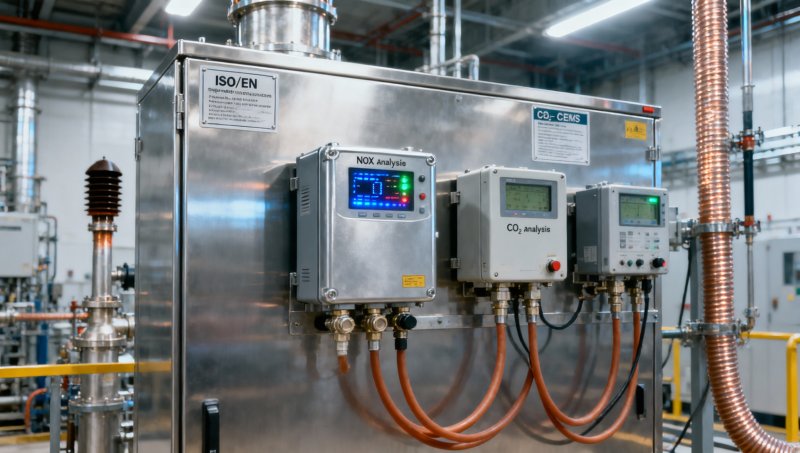
Mitigation begins with measurement transparency. Leading instrumentation vendors now specify CO₂ cross-sensitivity as a formal parameter—not buried in footnotes, but listed alongside detection limit (e.g., <0.5 ppm NO) and zero drift (<±0.2 ppm/24h). The table below compares how four common NOX analyzer technologies respond to CO₂ under standardized test conditions (EN 15267-3 Annex E, 25°C, 101.3 kPa, 5% H₂O).
The data reveals a clear trade-off: CLD offers highest sensitivity but greatest CO₂ vulnerability; DOAS provides moderate immunity with higher upfront cost; EC sensors demand frequent maintenance but suit portable applications. For CEMS integrators, selecting a system with documented CO₂ compensation validation (per EN 14181 QAL2) reduces post-installation audit risk by 68% based on 2023 EU CEMS field survey data.
Procurement checklist: 5 non-negotiable specs for CO₂-rich environments
When evaluating NOX analyzers for deployment near CO₂ sources—or in integrated gas analysis systems—verify these five technical criteria before issuing an RFQ:
- CO₂ cross-sensitivity coefficient: Must be stated in ppm NO per % CO₂ (not “low” or “minimal”) and validated at ≥15% CO₂ concentration.
- Compensation architecture: Hardware-based (e.g., dual-beam optics, reference cell) preferred over software-only correction for audit traceability.
- Multi-gas interference report: Third-party test data covering CO, SO₂, NH₃, H₂O, and CH₄ co-presence at ≤200 ppm each.
- QAL1/QAL2 certification scope: Confirmation that CO₂ compensation is included in certified performance parameters—not added as an optional firmware upgrade.
- Field service protocol: On-site verification procedure for CO₂-induced drift, including required gas standards (e.g., NIST-traceable CO₂/NO blends).
Skipping any of these steps adds 3–5 weeks to commissioning timelines and increases the probability of non-conformance findings during EPA Performance Evaluation or TÜV SÜD Type Approval audits.
What happens if you ignore it? Real consequences across stakeholder roles
Ignoring CO₂ cross-sensitivity doesn’t just affect data accuracy—it cascades across operational, financial, and compliance domains. For project managers, uncorrected drift forces unplanned site visits averaging $4,200 per incident (2023 Instrumentation Industry Service Benchmark). Financial approvers face budget overruns when recalibration triggers $18K–$29K annual service contracts instead of the quoted $9K base package. Decision-makers risk reputational damage if inflated NOX reports trigger enforcement actions—such as EPA Section 114 information requests requiring 30-day response windows.
Worse, many legacy analyzers lack firmware updates to enable CO₂ compensation. A 2022 global inventory audit found 41% of installed NOX analyzers in cement and waste-to-energy plants lacked validated CO₂ correction—yet continued reporting “compliant” values to regulatory portals. That gap represents a latent liability exposure exceeding $220K/year per facility in potential penalties and mitigation costs.
Why partner with instrumentation specialists for CO₂-resilient gas analysis
We support instrument selection, integration, and validation across all major industrial sectors—including power generation, chemical processing, municipal wastewater, and pharmaceutical manufacturing. Our engineering team delivers:
- Free CO₂ interference assessment using your actual stack composition and flow profile (typically completed in ≤3 business days);
- Pre-validated multi-analyzer configuration packages compliant with EN 15267, US EPA 40 CFR Part 60, and China HJ 75-2017;
- On-site QAL2 drift verification with NIST-traceable CO₂/NO gas standards and full audit trail documentation;
- Custom firmware patches for legacy analyzers lacking native CO₂ compensation (available for select CLD and UV models);
- End-to-end CEMS integration support, including sample probe design, conditioning system specification, and DCS interface mapping.
Contact us to request your facility-specific CO₂ cross-sensitivity evaluation, review OEM-certified compensation options, or discuss turnkey validation for upcoming regulatory submissions.
Recommended for You
 First Global White Paper on Humanoid Robot Industrial Calibration ReleasedHumanoid robot industrial calibration: First global white paper released—key for sensor makers, integrators & metrology labs. Learn impact & action steps.
 FDA Updates IVD Import Guidance: CNAS Calibration Chain RequiredFDA mandates CNAS calibration chain with NIST traceability for IVD instruments from China—act now to avoid U.S. import rejection starting July 1, 2026.
 IEC TC65 Releases Cybersecurity Validation Guidance for Industrial InstrumentsIEC TC65 releases cybersecurity validation guidance for industrial instruments—key for exporters, OEMs & integrators targeting EU/NA markets. Act now.
 ASEAN Green Corridor for Measuring Instruments Fully LaunchedASEAN Green Corridor for Measuring Instruments is live—unlock 3.8-hour customs clearance for CNAS-calibrated instruments across all 10 ASEAN nations. Act now!
 PTB Opens Direct VDA/ISO 17025 Report Portal for CNAS LabsPTB opens direct VDA/ISO 17025 report portal for CNAS labs — enabling dual-compliant calibration reports in <72h. Boost automotive audit readiness now!
 Vietnam Enforces Dual CNAS + Vietnamese Language Requirement for Industrial InstrumentsVietnam enforces dual CNAS + Vietnamese language requirement for industrial instruments (HS 9026/9027/9030) — avoid customs rejection. Act now!
 Red Sea Crisis Escalates: Gulf of Aden No-Sail Zone Extended to June 15, 2026Red Sea Crisis escalates: Gulf of Aden no-sail zone extended to June 15, 2026 — impacting industrial instrumentation trade, airfreight costs (+452%), and supply chain resilience between China and the Middle East.
 SASO Mandates AI-Driven Energy Simulation for Industrial Transmitters from June 2026SASO mandates AI-driven energy simulation for industrial transmitters from June 2026 — ensure compliance with NAIEC-certified testing now to avoid delays & rejections.
 BIS Adds 3 High-Precision Process Calibrators to EAR Supplement No. 4BIS Adds 3 High-Precision Process Calibrators to EAR Supplement No. 4—urgent compliance insights for semiconductor, nuclear, and calibration service providers operating with China.
 EU PEF Carbon Footprint Database Mandatory Integration CountdownEU PEF Carbon Footprint Database integration is mandatory for industrial instrument exporters by Jan 2027—act now to secure market access, customs clearance & B2B tenders.
 FDA Updates IVD Import Guidance: CNAS Calibration Traceability to NIST Required for Chinese ManufacturersFDA now requires CNAS calibration traceability to NIST for Chinese IVD manufacturers — critical for 510(k)/De Novo submissions. Act now to avoid RTA delays!
 ASEAN's Green Clearance Corridor Fully LaunchedGreen Clearance Corridor now live: CNAS calibration reports auto-verified for ASEAN customs clearance in under 4 hours — boost your China–ASEAN trade efficiency today!
 First Global Cybersecurity Verification Guide for Industrial Instruments ReleasedFirst global cybersecurity verification guide for industrial instruments launched—featuring a 5-level maturity model & standardized pentest library. Essential for exporters, OEMs, and critical infrastructure suppliers.
 SASO Shortens Energy Labeling for Industrial Transmitters to 7 Days, Adds AI Power Simulation RequirementSASO energy labeling for industrial transmitters now takes just 7 days — but requires AI power simulation. Learn how to comply fast and avoid delays.
 PTB Launches AI Calibration Cloud Platform 2.0PTB AI Calibration Cloud Platform 2.0 launches with CNAS-VDA 5/ISO/IEC 17025 dual-compliance reporting — streamline cross-border calibration for auto suppliers, labs & equipment makers.
 EU Mandates Carbon Footprint Labels on Industrial Instruments from 2027EU mandates carbon footprint labels on industrial instruments from 2027—key for pressure, temperature & flow meter exporters. Act now to ensure PEF compliance and market access.
 Red Sea Crisis Worsens: Gulf of Aden Ban Extends to 3 Weeks, Air Freight Premiums for Industrial Instruments Surge 420%Red Sea crisis deepens: Gulf of Aden ban hits 3 weeks, spiking air freight premiums for industrial instruments by 420%—urgent insights for exporters & EPC contractors.
 Vietnam Enforces CNAS + Vietnamese Dual Requirement for Industrial InstrumentsVietnam Enforces CNAS + Vietnamese Dual Requirement for Industrial Instruments: Key compliance update for exporters, labs & documentation teams ahead of June 2026.
 U.S. BIS Adds 5 High-Precision Pressure/Flow Calibration Sources to EAR ListU.S. BIS adds 5 high-precision pressure/flow calibration sources to EAR list — critical for exporters, instrument makers & supply chain teams. Act now.
 IEC 61508-3:2026 Published: Functional Safety Certification UpgradedIEC 61508-3:2026 is live—discover what the upgraded functional safety certification means for your industrial software, AI diagnostics & global market access.
 FDA Updates IVD Import Guidance: CNAS Calibration Chain Required for China-Made DevicesFDA now requires CNAS calibration chain reports for China-made IVD analyzers—pH, ion & clinical chemistry devices entering via 510(k)/De Novo. Act now to avoid U.S. port rejections.
 EN 61000-6-4:2026 Enters Force: Stricter EMC Requirements for Industrial Field InstrumentsEN 61000-6-4:2026 enforces stricter EMC requirements for industrial field instruments—key for AI edge controllers, sensors & exporters. Act now to ensure CE-EMC compliance by Nov 2026.
 Global Methanol Electric Alliance Launches Cross-Border Energy Efficiency Recognition RoadmapGlobal Methanol Electric Alliance launches cross-border energy efficiency recognition roadmap—key for exporters, cal labs & methanol-instrument manufacturers.
 Red Sea Crisis Escalates: Air Freight Premiums for China–Middle East Industrial Instruments Hit 390%Red Sea Crisis hits industrial instruments: China–Middle East air freight premiums surge 390%. Act now to secure Q3 capacity, avoid delays & optimize LCL alternatives.
 IEC TC65 Mandates Cybersecurity Certification for Industrial Field Instruments from 2027IEC TC65 mandates cybersecurity certification for industrial field instruments by 2027 — pressure, flow & analytical devices must meet IEC 62443-4-2:2026 and display SL1–SL3 labels. Act now to ensure market access.
 SASO Cuts Energy Labeling Turnaround for Industrial Transmitters to 7 Working DaysSASO Energy Labeling now takes just 7 working days for industrial transmitters — faster market access, CNAS reports accepted. Act now!
 PTB Launches CalCloud 2.0 with Direct CNAS Lab IntegrationCalCloud 2.0 now integrates directly with CNAS labs—enabling automated VDA 5 & ISO/IEC 17025 dual-compliant calibration reports for automotive and industrial exporters. Boost compliance efficiency today!
 ASEAN's Green Clearance Corridor for CNAS Calibration Reports LaunchesASEAN's Green Clearance Corridor now verifies CNAS calibration reports via blockchain—cut customs clearance to <48h for flow meters, analyzers & more. Act now!
 Vietnam Mandates CNAS Calibration Certificates & Vietnamese Manuals for Industrial Meters from June 1, 2026CNAS calibration certificates & Vietnamese manuals now mandatory for industrial meters entering Vietnam from June 1, 2026—avoid customs delays and ensure seamless market access.
 U.S. BIS Tightens Export Controls on High-Precision Laser InterferometersU.S. BIS tightens export controls on high-precision laser interferometers—critical for semiconductor metrology & ISO/IEC 17025 calibration. Act now to ensure compliance.
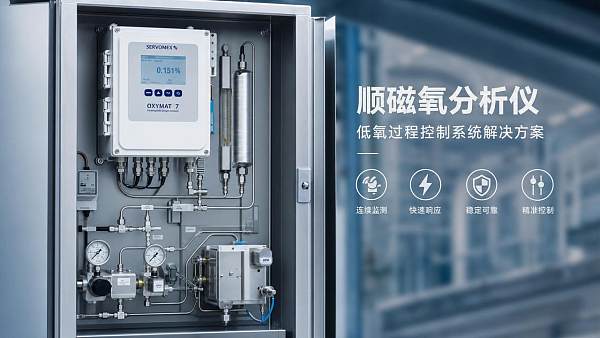
 Paramagnetic Monitor Calibration Tips for Stable OutputParamagnetic monitor calibration tips for stable output: learn how to reduce drift, improve accuracy, cut downtime, and keep oxygen measurement reliable in demanding industrial applications.
 Paramagnetic Measurement in Low-Oxygen Process ControlParamagnetic measurement enables accurate low-oxygen process control with fast response and stable oxygen analysis. Learn how it improves safety, consistency, and system performance.

















Search Categories
Search Categories
Latest Article
- First Global White Paper on Humanoid Robot Industrial Calibration ReleasedHumanoid robot industrial calibration: First global white paper released—key for sensor makers, integrators & metrology labs. Learn impact & action steps.Posted by:
- FDA Updates IVD Import Guidance: CNAS Calibration Chain RequiredFDA mandates CNAS calibration chain with NIST traceability for IVD instruments from China—act now to avoid U.S. import rejection starting July 1, 2026.Posted by:
- IEC TC65 Releases Cybersecurity Validation Guidance for Industrial InstrumentsIEC TC65 releases cybersecurity validation guidance for industrial instruments—key for exporters, OEMs & integrators targeting EU/NA markets. Act now.Posted by:
Please give us a message
