
PH3 Concentration Analyzer Safety Risks You Should Not Overlook


A PH3 concentration analyzer is essential for detecting phosphine accurately, but overlooked safety risks can compromise both personnel protection and process reliability. For quality control and safety management teams, understanding these hidden hazards is critical to preventing false readings, delayed alarms, equipment damage, and compliance failures in industrial environments.
Why safety risks around PH3 concentration analyzer use are receiving more attention
In many industrial settings, the discussion is shifting from simply installing a PH3 concentration analyzer to verifying whether the analyzer can stay accurate, stable, and safe under changing operating conditions. This is an important trend signal. As production environments become more automated, quality and safety teams increasingly depend on continuous gas analysis for alarm logic, ventilation control, fumigation management, confined-space safety, and process verification. That means any weakness in analyzer safety now has broader operational consequences than it did in the past.
The change is not only technical. It is also organizational. Safety managers are under pressure to prove that gas monitoring systems are dependable during audits, incident reviews, and compliance checks. At the same time, quality control personnel are expected to maintain product integrity and process consistency while reducing downtime. In this environment, a PH3 concentration analyzer is no longer treated as a passive instrument. It is part of the decision chain that influences emergency response, worker exposure prevention, and process continuation.
This is why overlooked risks matter more today: even a small analyzer problem can trigger a cascade of bad decisions. A false low reading may delay evacuation. A false high reading may stop production unnecessarily. Sensor contamination may hide a leak. Poor maintenance may reduce confidence in all monitoring data. The industry direction is clear: users now need to evaluate analyzer safety as a system issue, not just a device feature.
The main trend: risk is shifting from obvious failures to hidden reliability gaps
Historically, many facilities focused on visible failures such as power loss, damaged probes, or obvious alarm malfunction. Those problems are still relevant, but the more significant shift is toward hidden reliability gaps. A modern PH3 concentration analyzer may appear operational while already drifting, cross-sensitive, partially blocked, or poorly calibrated. That creates a dangerous illusion of safety.
Several field conditions are driving this change. Mixed gas environments are becoming more common. Humidity, dust, corrosive vapors, and fluctuating temperatures can all influence analyzer performance. In addition, some facilities are extending maintenance intervals to reduce labor costs, which increases the chance that degradation goes unnoticed. Remote monitoring also means fewer operators are physically present to identify unusual behavior early.
For safety management teams, this trend suggests a practical shift: the most serious PH3 concentration analyzer risks may not come from total failure, but from partially degraded performance that still looks acceptable on the surface.

What is driving these risks in real industrial use
The first driver is process complexity. Phosphine monitoring is often connected to fumigation, chemical handling, semiconductor-related operations, grain storage, specialty manufacturing, or byproduct control. These applications differ in concentration range, background gases, ventilation behavior, and alarm expectations. A PH3 concentration analyzer selected for one environment may perform poorly in another if response characteristics, sampling design, or material compatibility were not assessed properly.
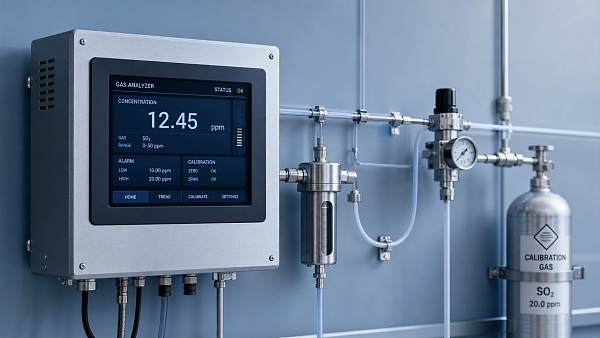
The second driver is environmental interference. Condensation in sampling lines, particulate loading, pressure changes, and unstable ambient temperature can distort readings or slow response. In many cases, users assume the analyzer itself is the only critical component, while the actual problem lies in filters, tubing, pumps, regulators, or installation position. This is a major trend in instrumentation risk management: supporting components now deserve the same scrutiny as the core analyzer.
The third driver is the gap between compliance and real readiness. Some facilities calibrate according to schedule but do not evaluate bump testing frequency, alarm setpoint logic, fault simulation, or data trend review. As a result, the PH3 concentration analyzer may meet a procedural requirement while still failing to provide trustworthy protection during abnormal events.
A fourth driver is digital integration. More analyzers are linked to control systems, dashboards, and remote alerts. This improves visibility, but it also creates new risks: signal mapping errors, delayed data transmission, alarm suppression, cybersecurity-related disruption, and overreliance on centralized screens. A good analyzer can still become part of a weak safety chain if system integration is not validated end to end.
The safety risks quality and safety teams should not overlook
One overlooked risk is incorrect placement. A PH3 concentration analyzer installed too far from likely release points, too close to turbulent airflow, or in an area with poor representative sampling may generate readings that do not reflect actual exposure conditions. This is especially serious where gas stratification, enclosed corners, or changing ventilation patterns affect local concentration.
Another major risk is calibration mismatch. Teams may use calibration practices that do not reflect actual operating range, background gas composition, or expected environmental stress. Even when calibration is performed, the analyzer can still drift between intervals, particularly in applications with frequent contamination or sensor poisoning potential. Without trend review and challenge testing, that drift can remain hidden.
Cross-sensitivity is also becoming more important. In mixed industrial atmospheres, other gases or vapors may influence the analyzer response. If users do not understand these interactions, they may misinterpret a reading as true phosphine presence or absence. For quality control personnel, this can distort process judgment. For safety managers, it can weaken trust in alarm decisions.
A further risk involves delayed response caused by blocked sample paths, exhausted filters, pump wear, or moisture accumulation. The PH3 concentration analyzer may eventually detect gas, but too slowly to support timely intervention. In fast-changing situations, delayed detection can be almost as dangerous as no detection at all.
There is also a growing risk in human-machine dependence. When operators assume that analyzer alarms will always provide the first warning, situational awareness can decline. If the instrument underperforms, personnel may have fewer backup signals to trigger action. That is why leading safety programs are returning to layered protection: analyzer data should support, not replace, procedural discipline and environmental awareness.
How these changes affect different roles and business functions
The impact of PH3 concentration analyzer safety risks is not limited to the EHS department. It spreads across procurement, maintenance, operations, compliance, and quality functions. This broader influence is another key trend worth noting.
This cross-functional impact explains why the conversation around PH3 concentration analyzer safety is expanding. It is no longer only about instrument technicians. It is about how trustworthy gas analysis supports operational resilience.
What signals should companies monitor next
Companies should watch for recurring calibration adjustments, rising maintenance frequency, unexplained alarm events, and discrepancies between analyzer data and field observations. These are often early signs of a deeper reliability issue. Trending service records can reveal whether a PH3 concentration analyzer is stable or merely being kept operational through repeated intervention.
Another useful signal is the gap between documented procedure and actual practice. If bump tests are skipped, spare parts are delayed, sample line inspections are inconsistent, or alarm tests are not recorded clearly, the monitoring system may be weaker than management assumes. For many organizations, this procedural drift becomes visible only after an incident or failed audit.
A third signal is increasing dependence on remote analytics without equivalent validation of field performance. Digital visibility is valuable, but if the analyzer installation, environmental protection, and local maintenance discipline are weak, dashboards may provide confidence without protection. The future direction in instrumentation is not just smart monitoring, but verified monitoring.
Practical judgment and response strategies for the next stage
A stronger approach begins with risk-based evaluation rather than routine-only maintenance. Review where each PH3 concentration analyzer is installed, what decision it supports, what interference it may face, and how quickly it must respond in a real event. Instruments tied to evacuation, shutdown, or permit-to-work decisions deserve tighter verification than devices used only for background trend observation.
Next, treat the full sampling and alarm chain as a single safety function. Validate tubing, filters, pumps, power supply, communication links, setpoints, and annunciation pathways. Many failures occur not because the analyzer sensor is defective, but because the surrounding system allows delay, contamination, or miscommunication.
It is also wise to strengthen data interpretation. Instead of reacting only when an alarm appears, teams should review baseline drift, response consistency, maintenance intervals, and repeated fault patterns. A PH3 concentration analyzer that remains technically operational but shows worsening behavior should be treated as an early warning case, not as a normal asset.
Training should evolve as well. Operators, QC personnel, and safety managers need a shared understanding of analyzer limitations, cross-sensitivity, fault indicators, and escalation procedures. This reduces overconfidence and improves response when readings appear questionable.
Key questions to guide immediate action
If your organization wants to judge how these trends affect its own operations, start with a focused review. Ask whether every PH3 concentration analyzer is installed in a representative location, whether calibration reflects real process conditions, whether response time has been verified recently, and whether maintenance records show drift or repeated intervention. Confirm whether alarm pathways are tested from sensing point to final notification, not just at the display screen.
Also ask whether procurement decisions are based on total lifecycle suitability rather than initial purchase cost. In the current environment, the safest and most cost-effective analyzer is often the one that matches the site, remains stable under interference, and can be maintained predictably. For quality control and safety management teams, that is the practical direction forward: move from device ownership to performance assurance.
As industrial monitoring expectations continue to rise, the PH3 concentration analyzer will remain a critical instrument. The companies that benefit most will be those that recognize the shift early, understand the hidden safety risks, and build monitoring strategies around verified reliability rather than assumptions.
Recommended for You
 Kuwait Bans HCFC Air Conditioners, Boosts IR Camera ExportsKuwait bans HCFC air conditioners—boosting demand for IR cameras, leak detectors & refrigerant analyzers. Discover GCC compliance insights and export opportunities.
 China's IC Exports Surge 78.3% in First Four Months of 2026China's IC exports surge 78.3% in early 2026 — driven by soaring global demand for AI chip test equipment, SMUs, and parametric analyzers. Discover the supply chain shift.
 Chile Enforces Mandatory INN Safety Certification for Industrial Temperature ControllersChile mandates INN safety certification (NCh Elec 4/2025) for industrial temperature controllers starting Aug 1, 2026—act now to avoid shipment delays & market bans.
 K-REACH Supply-Shortage Exemption Launches for pH/ORP ElectrodesK-REACH Supply-Shortage Exemption now applies to pH/ORP electrodes—act before June 30, 2026 to avoid customs delays & penalties. Key for exporters & manufacturers.
 4th China International Supply Chain Expo to Focus on Smart Sensing & In-Process InspectionSmart Sensing & In-Process Inspection take center stage at the 4th China International Supply Chain Expo in Beijing, Nov 26–30, 2026 — discover next-gen inspection tech, AI vision modules, and calibrated sensing solutions for global industrial buyers.
 ASTM F2100-26 Medical Mask Standard Takes Effect in USASTM F2100-26 medical mask standard is now in force—driving global demand for biosafety cabinets, particle counters & air velocity calibrators, especially China-made instruments.
 South Africa Enforces SABS Certification for IoT Monitoring DevicesSABS certification now mandatory for IoT monitoring devices entering South Africa via e-commerce—act before 1 June 2026 to avoid customs rejection and ensure market access.
 EU REACH Adds Fluorinated Substances; SVHC Reporting Required for Gas AnalyzersEU REACH now restricts fluorinated substances in gas analyzers—SVHC reporting is mandatory by 30 Nov 2026. Ensure compliance for sensors, membranes & monitoring systems.
 Revised Maritime Code Takes Effect May 1, 2026: Shift in Unclaimed Cargo LiabilityRevised Maritime Code (2026): Shippers now liable for unclaimed cargo—critical for industrial instrument exporters, logistics providers & cross-border supply chains. Act now.
 China Imposes Zero Tariffs on Goods from All African Diplomatic Partners Starting May 1, 2026China’s zero-tariff policy for African instrumentation & automation exports starts May 1, 2026—boosting competitiveness in EPC tenders and market access for exporters.
 Import and Export Shifts in the PPM Gas Analyzer Marketppm gas analyzer market insights: discover how import tariffs, export controls, and compliance shifts impact cost, supply stability, and growth opportunities across key applications.
 Single Gas Analyzer Maintenance Issues That Raise DowntimeSingle gas analyzer maintenance issues can quietly increase downtime. Learn how to spot drift, calibration errors, and sample path faults early to improve uptime and field efficiency.
 Combustion Gas Analyzer Market Trends Shaping 2026 UpgradesCombustion gas analyzer market trends shaping 2026: discover how smarter monitoring, multi-gas accuracy, and digital integration can improve compliance, efficiency, and ROI.
 Corrosive Gas Analyzer Risks That Impact Safety ComplianceCorrosive gas analyzer risks can quietly undermine safety compliance. Learn how drift, sampling failures, and poor maintenance affect accuracy—and how to strengthen monitoring reliability.
 Percent Range Analyzer Applications in Process ControlPercent range analyzer applications improve process control by turning raw signals into clear operating percentages. Discover faster decisions, better alarms, and more stable system performance.
 What Affects the Total Cost of a Dual Gas AnalyzerDual gas analyzer total cost goes beyond purchase price. Learn how sensors, calibration, compliance, integration, and maintenance shape lifecycle value and smarter buying decisions.
 High Temperature Analyzer Selection Mistakes to Avoid in 2026High temperature analyzer selection mistakes can delay projects and raise lifecycle costs. Discover the top 2026 pitfalls and how to choose a safer, smarter solution.
 2026 Price Trends for Multi Gas Analyzer SystemsMulti gas analyzer price trends for 2026: discover key cost drivers, ownership factors, and smart budgeting tips to compare systems, control risk, and choose the right solution.
 PPB Gas Analyzer vs PPM Gas Analyzer: What Changes in Real Useppb gas analyzer vs PPM gas analyzer: learn how sensitivity, calibration, maintenance, and sample handling change in real use to choose the right solution with less risk and cost.
 How to Choose a Trace Gas Analyzer for Low-Level Leak DetectionTrace gas analyzer selection for low-level leak detection: learn how to compare sensitivity, response time, interference control, and integration for safer, faster, more reliable results.
 US-China Trade Talks Agree on Tariff Cuts for Key Test Equipment PartsUS-China tariff cuts on key test equipment parts—like pressure sensor chips & infrared thermal imaging modules—boost margins, cut costs, and strengthen global competitiveness for manufacturers.
 G7 Paris Meeting Focuses on Critical Mineral Supply SecurityCritical mineral supply security takes center stage at the G7 Paris meeting—key for rare-earth sensor exporters. Learn EU compliance impacts & actionable readiness steps.
 Brent Crude Surpasses $106/bbl, Raising Sea Freight Costs for Small Testing Equipment ExportsBrent Crude Surpasses $106/bbl—sea freight costs surge, impacting small testing equipment exporters. Learn how SMEs can adapt pricing, terms & logistics now.
 WTO Forecasts 1.9% Global Goods Trade Growth in 2026 Amid Supply Chain ShorteningWTO forecasts 1.9% global goods trade growth in 2026—sparking nearshoring demand for testing equipment, calibration services & OTA-ready solutions in ASEAN, Middle East & Mexico.
 UK-China Export Control Working Group Holds Second Meeting in LondonUK-China Export Control Working Group: Key updates on dual-use items—laser interferometers, quantum sensors & oscilloscopes. Learn compliance implications for exporters now.
 Japan's 10Y Yield Drop to 2.745% Lifts Yen, Raising China-Made Testing Equipment CostsJapan's 10Y yield drop to 2.745% lifts yen, raising costs for China-made testing equipment — explore FX impacts, procurement shifts & strategic responses.
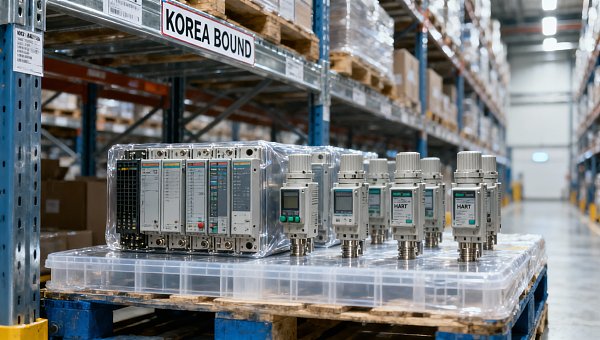
 KOSPI 200 Futures Circuit Breaker Triggered, Impacting Industrial Automation Instrument Export TimelinesKOSPI 200 futures circuit breaker triggered — impact on PLC modules, transmitters & fieldbus instrument exports to Korea. Urgent timeline insights inside.
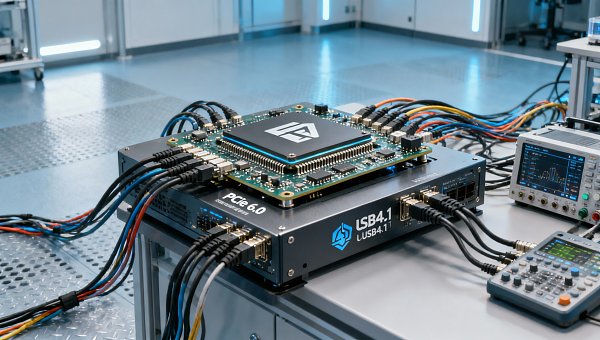
 South Korea’s Chip Exports Surge 202% in May 2026 Amid AI Test Equipment DemandAI test equipment demand surges as South Korea’s chip exports jump 202% in May 2026 — PCIe 6.0 & USB4.1 validation tools see sharp global procurement rise.
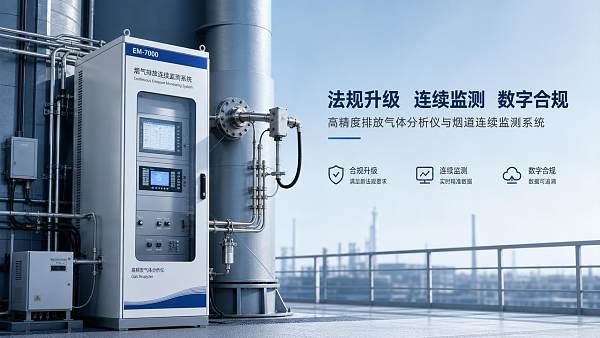
 Emission Gas Analyzer News in 2026: Regulatory Shifts Affecting DemandEmission gas analyzer demand is changing fast in 2026 as new regulations tighten limits, expand continuous monitoring, and raise data compliance standards. Explore key trends shaping smarter buying decisions.
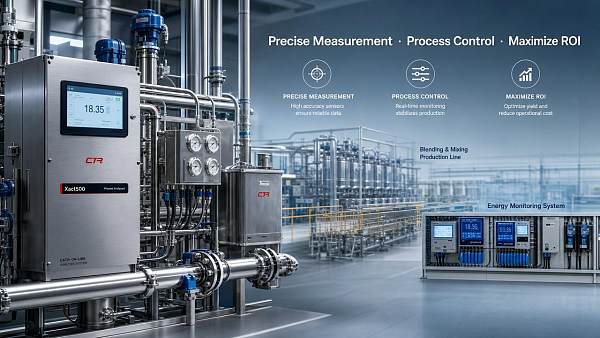
 When a High Accuracy Analyzer Delivers Real ROI in Process ControlHigh accuracy analyzer ROI starts with better process control. Learn where tighter measurements cut waste, improve stability, reduce compliance risk, and deliver measurable operational savings.
 SR-2030P Analyzer Import Updates in 2026: Compliance Points to ReviewSR-2030P analyzer import updates for 2026: review classification, certification, customs documents, and market access risks to reduce delays, control costs, and source with confidence.
 Industrial Oxygen Analyzer Price Trends in 2026: Cost Drivers to WatchIndustrial oxygen analyzer price trends in 2026 explained: compare sensor, compliance, installation, and maintenance cost drivers to make smarter, lower-risk buying decisions.


Search Categories
Search Categories
Latest Article
- Kuwait Bans HCFC Air Conditioners, Boosts IR Camera ExportsKuwait bans HCFC air conditioners—boosting demand for IR cameras, leak detectors & refrigerant analyzers. Discover GCC compliance insights and export opportunities.Posted by:
- China's IC Exports Surge 78.3% in First Four Months of 2026China's IC exports surge 78.3% in early 2026 — driven by soaring global demand for AI chip test equipment, SMUs, and parametric analyzers. Discover the supply chain shift.Posted by:
- Chile Enforces Mandatory INN Safety Certification for Industrial Temperature ControllersChile mandates INN safety certification (NCh Elec 4/2025) for industrial temperature controllers starting Aug 1, 2026—act now to avoid shipment delays & market bans.Posted by:
Please give us a message
