
What Makes a Reliable Industrial Measurement System?


A reliable industrial measurement system is not simply one that produces a number on demand. It is a system that delivers trustworthy data consistently, under real operating conditions, and in a way that supports safe decisions, stable production, regulatory compliance, and cost control. For manufacturers, utilities, laboratories, engineering teams, and business buyers, reliability comes from the combination of sensor accuracy, system stability, calibration discipline, environmental suitability, data integrity, maintainability, and integration with the wider industrial control system.
From gas quality measurement and oxygen measurement system performance to emission measurement system accuracy and process monitoring system visibility, dependable measurement is what allows operators to act confidently and managers to invest wisely. The question is not only whether an instrument works, but whether it continues to work correctly over time, under pressure, and with measurable business value.
What reliability really means in an industrial measurement system

When users search for a reliable industrial measurement system, they are usually trying to answer a practical question: Can this system be trusted in real operations? That trust depends on more than initial specification sheets.
In industrial environments, reliability usually means the system can:
- Maintain measurement accuracy over time
- Perform consistently in harsh or changing conditions
- Provide stable data for control, reporting, and traceability
- Support compliance with quality, safety, and environmental requirements
- Minimize downtime, false alarms, drift, and manual intervention
- Integrate smoothly with automation, SCADA, DCS, PLC, or digital monitoring platforms
For operators, reliable measurement means fewer interruptions and clearer decisions. For quality and safety teams, it means dependable records and lower operational risk. For project managers and decision-makers, it means better lifecycle value, lower maintenance burden, and stronger return on investment.
Which features matter most when evaluating system dependability
Not every measurement system is designed for the same duty level. A reliable process measurement system must be matched to the application, media, environment, and business consequences of bad data. The most important factors include the following.
1. Measurement accuracy under real operating conditions
Lab accuracy is useful, but field performance matters more. A dependable system should maintain accuracy despite vibration, dust, temperature swings, humidity, pressure changes, flow variation, or contamination. This is especially important in gas quality control, oxygen measurement systems, and emission control systems where process conditions directly affect reading stability.
2. Repeatability and long-term stability
Reliable systems do not just produce one correct reading. They produce consistent readings over time. Repeatability helps operators trust trends, while long-term stability reduces calibration frequency, maintenance effort, and unexpected process deviation.
3. Proper sensor and analyzer selection
The wrong sensing principle can undermine the whole installation. For example, selecting an analyzer for clean gas when the application contains moisture, particulates, or corrosive compounds will quickly reduce reliability. Sensor compatibility with process media, response speed, range, and installation location all matter.
4. Calibration and traceability
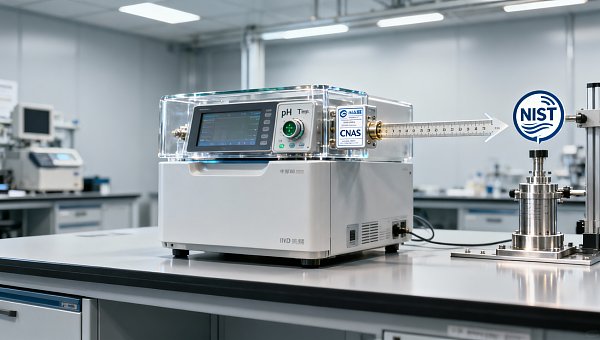
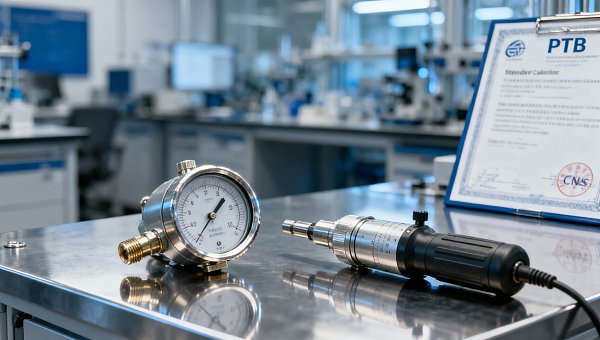
A reliable industrial measurement system should support easy, documented, and traceable calibration. This is critical for regulated industries, custody-related measurement, laboratory analysis, and emission monitoring. Systems that are difficult to calibrate often become unreliable in practice, even if the hardware is strong.
5. Data integrity and communication quality
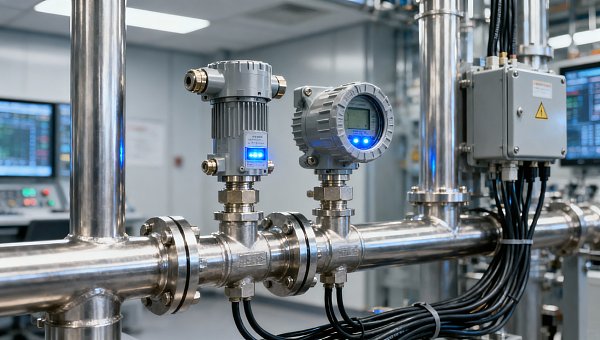
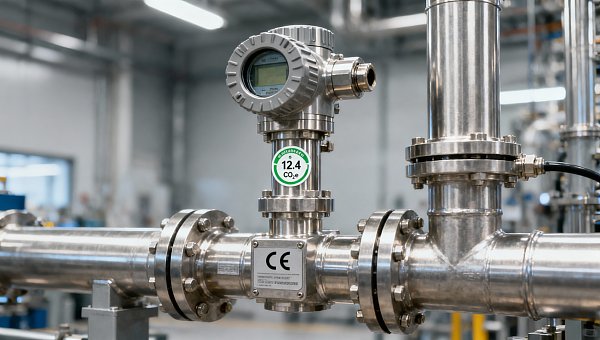
If data is lost, delayed, or distorted between the field instrument and control platform, the system is not truly reliable. Strong signal transmission, digital communication options, diagnostics, timestamping, and compatibility with existing industrial control equipment are essential.
6. Maintenance accessibility and diagnostics
Good systems make faults visible. Built-in diagnostics, self-check functions, drift alerts, and modular maintenance design reduce troubleshooting time and support continuous operations. This is especially valuable for remote sites, large plants, and multi-point monitoring systems.
Why reliability matters beyond technical performance
Many buyers initially focus on specification parameters, but the business impact of reliable measurement is often the bigger issue. A weak measurement system can affect far more than instrument performance.
- Production quality: Inaccurate flow, temperature, pressure, or composition data can lead to off-spec output, waste, and rework.
- Operational efficiency: Unstable readings can cause overcorrection, unnecessary shutdowns, or poor energy use.
- Safety: Incorrect oxygen, gas concentration, or pressure data can create dangerous conditions.
- Environmental compliance: An unreliable emission measurement system may lead to reporting errors, non-compliance, or penalties.
- Financial control: Poor measurement affects consumption tracking, process optimization, and investment planning.
- Decision quality: Management decisions are only as good as the data behind them.
This is why enterprise decision-makers, finance approvers, and project leaders should evaluate measurement systems not only by purchase price, but by total operational impact.
How to judge whether a system is reliable before you buy
For commercial evaluators, distributors, engineering teams, and end users, the most helpful approach is to assess reliability through a structured checklist rather than marketing claims.
Ask application-specific questions
- What process variable must be measured, and how critical is it?
- What are the actual operating conditions?
- What happens if the measurement is wrong by 1%, 2%, or more?
- Is this for control, monitoring, compliance, quality assurance, or all of these?
Review lifecycle requirements
- How often does the system require calibration?
- What consumables or replacement parts are needed?
- Is local technical support available?
- How quickly can faults be diagnosed and repaired?
Check proof of field performance
- Are there case references in similar industries?
- Has the system been used in continuous-duty applications?
- Are there compliance certifications or validation records?
- Can the supplier show performance under comparable environmental conditions?
Evaluate system integration
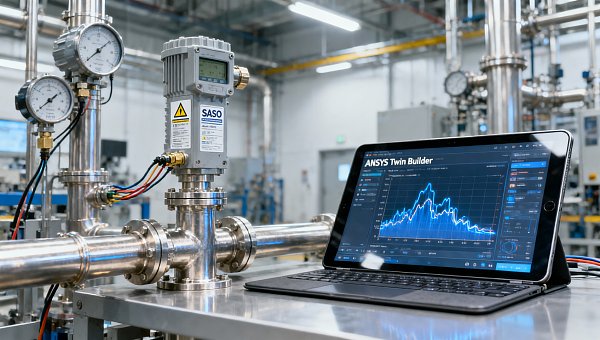
A strong industrial control system depends on connected measurement. Confirm whether the solution integrates with existing PLC, DCS, SCADA, MES, or cloud platforms. Reliable integration improves data visibility, alarm logic, reporting, and predictive maintenance potential.
Common reasons industrial measurement systems become unreliable
In many cases, poor reliability is not caused by one defective instrument but by system-level mistakes. The most common issues include:
- Incorrect instrument sizing or sensor technology selection
- Poor installation location causing turbulence, dead zones, heat exposure, or contamination
- Inadequate sampling system design for gas quality measurement or composition analysis
- Irregular calibration and weak maintenance procedures
- Electrical interference, communication faults, or unstable power supply
- Mismatch between instrument protection level and site environment
- Overlooking operator training and alarm response procedures
These issues show why reliability should be treated as a system design objective, not just a product feature.
Where advanced systems create the most value
Advanced industrial control equipment brings the highest value in applications where data quality directly affects process outcomes. Typical examples include:
- Gas quality control: supporting composition verification, combustion optimization, and product consistency
- Oxygen measurement systems: improving combustion efficiency, process safety, and energy management
- Emission control systems: enabling accurate monitoring, reporting, and environmental compliance
- Process monitoring systems: improving visibility into production conditions and reducing response time
- Automatic control loops: ensuring stable feedback for continuous optimization
- Laboratory and online analysis: linking testing precision with operational decision-making
In these scenarios, dependable measurement supports both immediate control and long-term operational strategy.
What different stakeholders should focus on
Because the audience for industrial measurement systems is broad, evaluation priorities often differ.
Operators and users
Focus on ease of use, alarm clarity, response speed, calibration workflow, and fault visibility.
Quality and safety managers
Focus on traceability, stability, compliance support, documented accuracy, and risk reduction.
Project managers and engineers
Focus on installation fit, system integration, maintainability, environmental suitability, and commissioning efficiency.
Business evaluators and decision-makers
Focus on lifecycle cost, downtime impact, supplier capability, service support, and measurable operational return.
Distributors and channel partners
Focus on product reliability consistency, technical support depth, training resources, and ease of deployment across different customer scenarios.
Conclusion: reliable measurement is a long-term operating asset
What makes a reliable industrial measurement system is not one feature, but the ability to deliver accurate, stable, maintainable, and actionable data throughout the full operating lifecycle. The best systems support process measurement, gas quality measurement, oxygen measurement system performance, emission measurement system accuracy, and industrial control system effectiveness all at once.
For any organization comparing solutions, the right question is not simply “Which instrument is most advanced?” but “Which system will continue to produce trusted data, reduce operational risk, and support better decisions over time?” When viewed that way, reliability becomes more than a technical standard. It becomes a core business asset.
Recommended for You
 First Global White Paper on Humanoid Robot Industrial Calibration ReleasedHumanoid robot industrial calibration: First global white paper released—key for sensor makers, integrators & metrology labs. Learn impact & action steps.
 FDA Updates IVD Import Guidance: CNAS Calibration Chain RequiredFDA mandates CNAS calibration chain with NIST traceability for IVD instruments from China—act now to avoid U.S. import rejection starting July 1, 2026.
 IEC TC65 Releases Cybersecurity Validation Guidance for Industrial InstrumentsIEC TC65 releases cybersecurity validation guidance for industrial instruments—key for exporters, OEMs & integrators targeting EU/NA markets. Act now.
 ASEAN Green Corridor for Measuring Instruments Fully LaunchedASEAN Green Corridor for Measuring Instruments is live—unlock 3.8-hour customs clearance for CNAS-calibrated instruments across all 10 ASEAN nations. Act now!
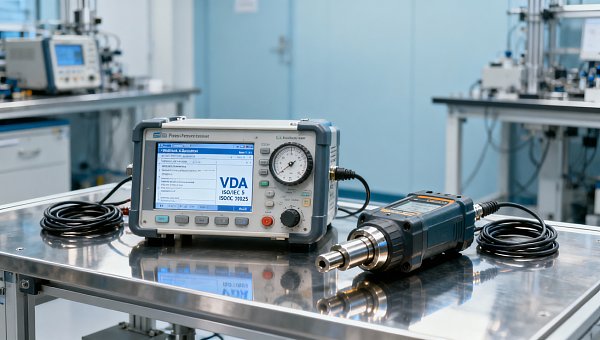
 PTB Opens Direct VDA/ISO 17025 Report Portal for CNAS LabsPTB opens direct VDA/ISO 17025 report portal for CNAS labs — enabling dual-compliant calibration reports in <72h. Boost automotive audit readiness now!
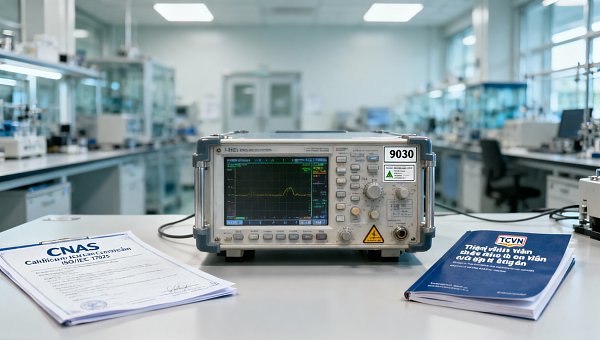
 Vietnam Enforces Dual CNAS + Vietnamese Language Requirement for Industrial InstrumentsVietnam enforces dual CNAS + Vietnamese language requirement for industrial instruments (HS 9026/9027/9030) — avoid customs rejection. Act now!
 Red Sea Crisis Escalates: Gulf of Aden No-Sail Zone Extended to June 15, 2026Red Sea Crisis escalates: Gulf of Aden no-sail zone extended to June 15, 2026 — impacting industrial instrumentation trade, airfreight costs (+452%), and supply chain resilience between China and the Middle East.
 SASO Mandates AI-Driven Energy Simulation for Industrial Transmitters from June 2026SASO mandates AI-driven energy simulation for industrial transmitters from June 2026 — ensure compliance with NAIEC-certified testing now to avoid delays & rejections.
 BIS Adds 3 High-Precision Process Calibrators to EAR Supplement No. 4BIS Adds 3 High-Precision Process Calibrators to EAR Supplement No. 4—urgent compliance insights for semiconductor, nuclear, and calibration service providers operating with China.
 EU PEF Carbon Footprint Database Mandatory Integration CountdownEU PEF Carbon Footprint Database integration is mandatory for industrial instrument exporters by Jan 2027—act now to secure market access, customs clearance & B2B tenders.
 FDA Updates IVD Import Guidance: CNAS Calibration Traceability to NIST Required for Chinese ManufacturersFDA now requires CNAS calibration traceability to NIST for Chinese IVD manufacturers — critical for 510(k)/De Novo submissions. Act now to avoid RTA delays!
 ASEAN's Green Clearance Corridor Fully LaunchedGreen Clearance Corridor now live: CNAS calibration reports auto-verified for ASEAN customs clearance in under 4 hours — boost your China–ASEAN trade efficiency today!
 First Global Cybersecurity Verification Guide for Industrial Instruments ReleasedFirst global cybersecurity verification guide for industrial instruments launched—featuring a 5-level maturity model & standardized pentest library. Essential for exporters, OEMs, and critical infrastructure suppliers.
 SASO Shortens Energy Labeling for Industrial Transmitters to 7 Days, Adds AI Power Simulation RequirementSASO energy labeling for industrial transmitters now takes just 7 days — but requires AI power simulation. Learn how to comply fast and avoid delays.
 PTB Launches AI Calibration Cloud Platform 2.0PTB AI Calibration Cloud Platform 2.0 launches with CNAS-VDA 5/ISO/IEC 17025 dual-compliance reporting — streamline cross-border calibration for auto suppliers, labs & equipment makers.
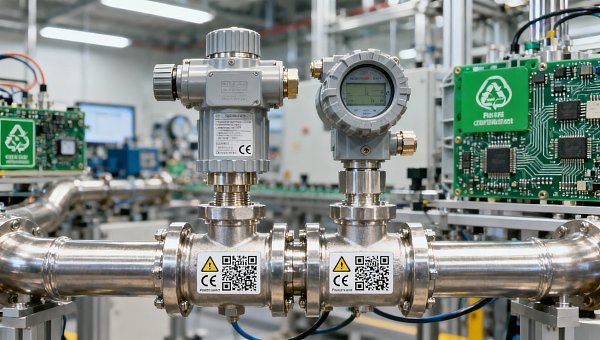
 EU Mandates Carbon Footprint Labels on Industrial Instruments from 2027EU mandates carbon footprint labels on industrial instruments from 2027—key for pressure, temperature & flow meter exporters. Act now to ensure PEF compliance and market access.
 Red Sea Crisis Worsens: Gulf of Aden Ban Extends to 3 Weeks, Air Freight Premiums for Industrial Instruments Surge 420%Red Sea crisis deepens: Gulf of Aden ban hits 3 weeks, spiking air freight premiums for industrial instruments by 420%—urgent insights for exporters & EPC contractors.
 Vietnam Enforces CNAS + Vietnamese Dual Requirement for Industrial InstrumentsVietnam Enforces CNAS + Vietnamese Dual Requirement for Industrial Instruments: Key compliance update for exporters, labs & documentation teams ahead of June 2026.
 U.S. BIS Adds 5 High-Precision Pressure/Flow Calibration Sources to EAR ListU.S. BIS adds 5 high-precision pressure/flow calibration sources to EAR list — critical for exporters, instrument makers & supply chain teams. Act now.
 IEC 61508-3:2026 Published: Functional Safety Certification UpgradedIEC 61508-3:2026 is live—discover what the upgraded functional safety certification means for your industrial software, AI diagnostics & global market access.
 FDA Updates IVD Import Guidance: CNAS Calibration Chain Required for China-Made DevicesFDA now requires CNAS calibration chain reports for China-made IVD analyzers—pH, ion & clinical chemistry devices entering via 510(k)/De Novo. Act now to avoid U.S. port rejections.
 EN 61000-6-4:2026 Enters Force: Stricter EMC Requirements for Industrial Field InstrumentsEN 61000-6-4:2026 enforces stricter EMC requirements for industrial field instruments—key for AI edge controllers, sensors & exporters. Act now to ensure CE-EMC compliance by Nov 2026.
 Global Methanol Electric Alliance Launches Cross-Border Energy Efficiency Recognition RoadmapGlobal Methanol Electric Alliance launches cross-border energy efficiency recognition roadmap—key for exporters, cal labs & methanol-instrument manufacturers.
 Red Sea Crisis Escalates: Air Freight Premiums for China–Middle East Industrial Instruments Hit 390%Red Sea Crisis hits industrial instruments: China–Middle East air freight premiums surge 390%. Act now to secure Q3 capacity, avoid delays & optimize LCL alternatives.
 IEC TC65 Mandates Cybersecurity Certification for Industrial Field Instruments from 2027IEC TC65 mandates cybersecurity certification for industrial field instruments by 2027 — pressure, flow & analytical devices must meet IEC 62443-4-2:2026 and display SL1–SL3 labels. Act now to ensure market access.
 SASO Cuts Energy Labeling Turnaround for Industrial Transmitters to 7 Working DaysSASO Energy Labeling now takes just 7 working days for industrial transmitters — faster market access, CNAS reports accepted. Act now!
 PTB Launches CalCloud 2.0 with Direct CNAS Lab IntegrationCalCloud 2.0 now integrates directly with CNAS labs—enabling automated VDA 5 & ISO/IEC 17025 dual-compliant calibration reports for automotive and industrial exporters. Boost compliance efficiency today!
 ASEAN's Green Clearance Corridor for CNAS Calibration Reports LaunchesASEAN's Green Clearance Corridor now verifies CNAS calibration reports via blockchain—cut customs clearance to <48h for flow meters, analyzers & more. Act now!
 Vietnam Mandates CNAS Calibration Certificates & Vietnamese Manuals for Industrial Meters from June 1, 2026CNAS calibration certificates & Vietnamese manuals now mandatory for industrial meters entering Vietnam from June 1, 2026—avoid customs delays and ensure seamless market access.
 U.S. BIS Tightens Export Controls on High-Precision Laser InterferometersU.S. BIS tightens export controls on high-precision laser interferometers—critical for semiconductor metrology & ISO/IEC 17025 calibration. Act now to ensure compliance.
 Paramagnetic Monitor Calibration Tips for Stable OutputParamagnetic monitor calibration tips for stable output: learn how to reduce drift, improve accuracy, cut downtime, and keep oxygen measurement reliable in demanding industrial applications.
 Paramagnetic Measurement in Low-Oxygen Process ControlParamagnetic measurement enables accurate low-oxygen process control with fast response and stable oxygen analysis. Learn how it improves safety, consistency, and system performance.













Search Categories
Search Categories
Latest Article
- First Global White Paper on Humanoid Robot Industrial Calibration ReleasedHumanoid robot industrial calibration: First global white paper released—key for sensor makers, integrators & metrology labs. Learn impact & action steps.Posted by:
- FDA Updates IVD Import Guidance: CNAS Calibration Chain RequiredFDA mandates CNAS calibration chain with NIST traceability for IVD instruments from China—act now to avoid U.S. import rejection starting July 1, 2026.Posted by:
- IEC TC65 Releases Cybersecurity Validation Guidance for Industrial InstrumentsIEC TC65 releases cybersecurity validation guidance for industrial instruments—key for exporters, OEMs & integrators targeting EU/NA markets. Act now.Posted by:
Please give us a message
