
2026 Price Outlook for Gas Quality Monitoring Equipment


As industrial compliance and operating costs come under closer scrutiny in 2026, buyers are paying more attention to the price outlook for gas quality monitoring equipment, flue gas monitoring equipment, and emission monitoring equipment. From emission control shelter and process control shelter solutions to advanced gas quality analyzer shelter systems, understanding cost drivers helps operators, evaluators, and decision-makers plan smarter investments.
For most buyers, the short answer is this: in 2026, prices for gas quality monitoring equipment are expected to remain firm overall, with moderate upward pressure in higher-spec systems and more selective pricing in standard configurations. The biggest price differences will not come from the analyzer alone, but from compliance requirements, system integration, shelter design, data handling, certification, and lifecycle service needs. For users, procurement teams, and project leaders, the key is not simply finding the lowest initial quote, but identifying which configuration level matches operational risk, regulatory obligations, and long-term maintenance reality.
What is driving the 2026 price outlook for gas quality monitoring equipment?

The core search intent behind this topic is practical buying judgment. Readers are usually not looking for a generic definition of gas monitoring systems. They want to know whether prices are likely to rise, what is affecting budgets, and how to avoid overbuying or under-specifying equipment.
In 2026, several factors are shaping the price outlook for gas quality monitoring equipment:
- Tighter environmental and process compliance requirements: More projects require better measurement accuracy, traceability, alarm logic, and reporting capability.
- Higher demand for integrated systems: Buyers increasingly prefer complete analyzer shelters, sampling systems, conditioning units, PLC/SCADA integration, and remote diagnostics rather than standalone devices.
- Component and electronics cost pressure: Sensors, optical modules, controllers, industrial computers, and certified electrical components still influence total system pricing.
- Customization: Special gas matrices, hazardous-area requirements, anti-corrosion structures, and climate-controlled shelters can move pricing significantly.
- Service expectations: Many end users now expect commissioning, training, calibration support, spare parts planning, and after-sales response to be included from the beginning.
This means the 2026 market is less about one universal price trend and more about stratification. Basic systems may remain relatively competitive, while engineered solutions such as gas quality analyzer shelter packages or emission control shelter systems are more likely to hold or increase in price because they depend on project-specific design, compliance burden, and integration complexity.
Which equipment categories are likely to see the most price variation?
For procurement and technical evaluation teams, one of the most important points is that “gas quality monitoring equipment” covers very different product types. Price expectations should be set by application category, not by headline terminology alone.
1. Portable or single-point monitoring devices
These products usually have the most competitive pricing environment. They are often used for spot checks, operator safety support, or less complex monitoring tasks. In 2026, pricing in this segment may remain relatively stable unless special certifications or advanced sensing technologies are required.
2. Fixed industrial gas quality monitoring systems
These systems often include analyzers, sampling probes, gas conditioning units, transmitters, cabinets, and communication modules. Price variation increases because site conditions, gas composition, and output requirements differ widely across facilities.
3. Flue gas monitoring equipment
Flue gas monitoring equipment is strongly influenced by emissions regulation, industry standards, and stack conditions. Where continuous emissions monitoring or documented reporting is required, pricing typically rises due to analyzer reliability, sample pretreatment, heated lines, calibration functions, and data integrity needs.
4. Emission monitoring equipment
Emission monitoring equipment can range from compact systems to full CEMS-style engineered packages. This category often sees large budget variation because it may involve compliance software, reporting systems, shelter integration, third-party validation, and environmental authority acceptance.
5. Shelter-based integrated systems
An emission control shelter, process control shelter, or gas quality analyzer shelter typically carries the highest project-level pricing because the buyer is not just purchasing measurement hardware. They are purchasing a protected operating environment, HVAC, gas handling layout, electrical distribution, safety logic, structural enclosure, and maintainability under site conditions.
For this reason, two quotes that both describe “gas monitoring equipment” may differ dramatically in price while both remain technically reasonable.
What do buyers usually overlook when comparing quotations?
The most common mistake is comparing analyzer prices without comparing system boundaries. A lower quote may exclude key items that will later appear as change orders, site engineering costs, or operating problems.
Decision-makers should closely review whether the quotation includes:
- Sampling and conditioning system
- Calibration modules and gases
- Shelter or cabinet structure
- HVAC and temperature control
- Hazardous-area design or explosion protection
- PLC, HMI, or SCADA integration
- Data logging and regulatory reporting functions
- Factory acceptance testing and site acceptance support
- Installation supervision and commissioning
- Operator training and maintenance documentation
- Spare parts and recommended service intervals
For finance approvers, this matters because an apparently lower capital purchase price may create a higher total installed cost. For operators and quality or safety managers, missing elements often become downtime, unstable readings, difficult calibration, or non-compliant reporting.
How should technical evaluators and project managers judge value instead of just price?
The best purchasing decisions usually come from matching system design to actual risk. A plant with stable conditions and limited compliance exposure does not need the same architecture as a regulated emissions installation with audit pressure and high penalty risk.
A practical evaluation framework includes five questions:
- What is the consequence of inaccurate measurement?
If bad data could trigger compliance issues, process losses, safety concerns, or product quality failure, higher-spec equipment may be justified. - How difficult is the site environment?
High dust, corrosive gases, vibration, extreme temperatures, or remote installation locations increase engineering requirements and cost. - How much uptime is needed?
Facilities that depend on continuous operation often need redundancy, easy maintenance access, remote diagnostics, and stronger service support. - What reporting or audit standard must be met?
The stricter the reporting obligation, the less room there is for low-end or loosely integrated systems. - What is the real maintenance capacity of the site?
A simpler system with strong vendor support may deliver more value than a complex system the site cannot maintain properly.
This is especially important in projects involving flue gas monitoring equipment or emission monitoring equipment, where ongoing performance matters more than a one-time purchase event.
Why are shelter-based systems often priced much higher?
Many buyers first focus on the analyzer and then wonder why a gas quality analyzer shelter or process control shelter quote is much higher than expected. The reason is that the shelter is part of the measurement performance, not just an enclosure.
A well-designed shelter-based system may include:
- Thermal insulation and climate control for measurement stability
- Corrosion-resistant structure for harsh industrial settings
- Safe routing for sample lines, vent lines, and calibration gas lines
- Electrical distribution, grounding, and control panels
- Access layout for maintenance and calibration
- Fire, gas leak, or ventilation safety measures where needed
- Pre-assembled and pre-tested integration to reduce site work
For remote sites, energy facilities, chemical plants, and continuous process industries, these design factors can reduce installation uncertainty and improve maintainability. That is why shelter-based systems may seem more expensive upfront but can reduce field labor, startup risk, and operational instability.
Will 2026 favor standardization or customization?
The answer is both, depending on project type. Standardization is becoming more attractive where buyers want shorter lead times, easier spare parts management, and more predictable budgets. This is especially relevant for distributors, EPC teams, and multi-site operators.
However, customization will remain strong in projects involving:
- Special gas compositions
- Harsh or hazardous operating environments
- Local compliance and documentation requirements
- Integration with existing plant control architecture
- Shelter-mounted systems with site-specific footprint limits
In other words, 2026 will likely reward modular design. Suppliers able to combine standard platforms with configurable options may offer the best balance of cost, performance, and delivery speed.
What can buyers do now to control cost without increasing risk?
For procurement teams and business decision-makers, the goal is not simply cost reduction. It is controlled spending with fewer downstream surprises. Several actions can improve outcomes:
- Define the scope clearly early: Ambiguous requirements almost always lead to quote gaps and later cost growth.
- Separate must-have requirements from preferred features: This helps vendors propose realistic alternatives.
- Ask for lifecycle cost visibility: Include consumables, calibration needs, spare parts, maintenance frequency, and service response assumptions.
- Review installation conditions in advance: Site constraints often reshape final project cost more than buyers expect.
- Check compliance alignment before purchase: Avoid buying a system that later requires redesign for reporting, certification, or acceptance testing.
- Evaluate vendor support capability: Lower equipment cost can be offset by weak commissioning or poor after-sales support.
For distributors and agents, there is also strategic value in focusing on product lines that offer configurable architecture and stable service support, since these factors increasingly influence buying decisions beyond list price alone.
2026 market judgment: what is the most realistic pricing expectation?
The most realistic view is that the 2026 price outlook for gas quality monitoring equipment will be stable to moderately higher overall, with the strongest upward movement in engineered, compliance-driven, and shelter-integrated solutions. Standardized products may remain competitive, but complex systems tied to emissions, environmental accountability, or demanding industrial conditions will continue to command stronger pricing.
Buyers should therefore avoid relying on broad market averages. A more useful approach is to classify the purchase into one of three bands:
- Basic monitoring need: Focus on fit-for-purpose function and serviceability.
- Critical process or quality monitoring: Balance accuracy, uptime, integration, and maintenance capability.
- Compliance-critical or engineered shelter system: Prioritize long-term reliability, acceptance readiness, reporting integrity, and total cost of ownership.
That framework helps users, technical evaluators, purchasing teams, and financial approvers make faster and more defensible decisions.
Conclusion
For 2026, the price outlook for gas quality monitoring equipment is best understood through system complexity, compliance pressure, and lifecycle demands rather than through headline equipment labels alone. Flue gas monitoring equipment, emission monitoring equipment, emission control shelter solutions, process control shelter packages, and gas quality analyzer shelter systems all sit at different points on the cost spectrum.
The most effective buying strategy is to judge price in context: required accuracy, site conditions, integration depth, reporting obligations, and maintenance reality. When buyers compare full system scope instead of isolated hardware quotes, they are far more likely to choose equipment that delivers operational value, audit confidence, and long-term cost control.
Recommended for You
 First Global White Paper on Humanoid Robot Industrial Calibration ReleasedHumanoid robot industrial calibration: First global white paper released—key for sensor makers, integrators & metrology labs. Learn impact & action steps.
 FDA Updates IVD Import Guidance: CNAS Calibration Chain RequiredFDA mandates CNAS calibration chain with NIST traceability for IVD instruments from China—act now to avoid U.S. import rejection starting July 1, 2026.
 IEC TC65 Releases Cybersecurity Validation Guidance for Industrial InstrumentsIEC TC65 releases cybersecurity validation guidance for industrial instruments—key for exporters, OEMs & integrators targeting EU/NA markets. Act now.
 ASEAN Green Corridor for Measuring Instruments Fully LaunchedASEAN Green Corridor for Measuring Instruments is live—unlock 3.8-hour customs clearance for CNAS-calibrated instruments across all 10 ASEAN nations. Act now!
 PTB Opens Direct VDA/ISO 17025 Report Portal for CNAS LabsPTB opens direct VDA/ISO 17025 report portal for CNAS labs — enabling dual-compliant calibration reports in <72h. Boost automotive audit readiness now!
 Vietnam Enforces Dual CNAS + Vietnamese Language Requirement for Industrial InstrumentsVietnam enforces dual CNAS + Vietnamese language requirement for industrial instruments (HS 9026/9027/9030) — avoid customs rejection. Act now!
 Red Sea Crisis Escalates: Gulf of Aden No-Sail Zone Extended to June 15, 2026Red Sea Crisis escalates: Gulf of Aden no-sail zone extended to June 15, 2026 — impacting industrial instrumentation trade, airfreight costs (+452%), and supply chain resilience between China and the Middle East.
 SASO Mandates AI-Driven Energy Simulation for Industrial Transmitters from June 2026SASO mandates AI-driven energy simulation for industrial transmitters from June 2026 — ensure compliance with NAIEC-certified testing now to avoid delays & rejections.
 BIS Adds 3 High-Precision Process Calibrators to EAR Supplement No. 4BIS Adds 3 High-Precision Process Calibrators to EAR Supplement No. 4—urgent compliance insights for semiconductor, nuclear, and calibration service providers operating with China.
 EU PEF Carbon Footprint Database Mandatory Integration CountdownEU PEF Carbon Footprint Database integration is mandatory for industrial instrument exporters by Jan 2027—act now to secure market access, customs clearance & B2B tenders.
 FDA Updates IVD Import Guidance: CNAS Calibration Traceability to NIST Required for Chinese ManufacturersFDA now requires CNAS calibration traceability to NIST for Chinese IVD manufacturers — critical for 510(k)/De Novo submissions. Act now to avoid RTA delays!
 ASEAN's Green Clearance Corridor Fully LaunchedGreen Clearance Corridor now live: CNAS calibration reports auto-verified for ASEAN customs clearance in under 4 hours — boost your China–ASEAN trade efficiency today!
 First Global Cybersecurity Verification Guide for Industrial Instruments ReleasedFirst global cybersecurity verification guide for industrial instruments launched—featuring a 5-level maturity model & standardized pentest library. Essential for exporters, OEMs, and critical infrastructure suppliers.
 SASO Shortens Energy Labeling for Industrial Transmitters to 7 Days, Adds AI Power Simulation RequirementSASO energy labeling for industrial transmitters now takes just 7 days — but requires AI power simulation. Learn how to comply fast and avoid delays.
 PTB Launches AI Calibration Cloud Platform 2.0PTB AI Calibration Cloud Platform 2.0 launches with CNAS-VDA 5/ISO/IEC 17025 dual-compliance reporting — streamline cross-border calibration for auto suppliers, labs & equipment makers.
 EU Mandates Carbon Footprint Labels on Industrial Instruments from 2027EU mandates carbon footprint labels on industrial instruments from 2027—key for pressure, temperature & flow meter exporters. Act now to ensure PEF compliance and market access.
 Red Sea Crisis Worsens: Gulf of Aden Ban Extends to 3 Weeks, Air Freight Premiums for Industrial Instruments Surge 420%Red Sea crisis deepens: Gulf of Aden ban hits 3 weeks, spiking air freight premiums for industrial instruments by 420%—urgent insights for exporters & EPC contractors.
 Vietnam Enforces CNAS + Vietnamese Dual Requirement for Industrial InstrumentsVietnam Enforces CNAS + Vietnamese Dual Requirement for Industrial Instruments: Key compliance update for exporters, labs & documentation teams ahead of June 2026.
 U.S. BIS Adds 5 High-Precision Pressure/Flow Calibration Sources to EAR ListU.S. BIS adds 5 high-precision pressure/flow calibration sources to EAR list — critical for exporters, instrument makers & supply chain teams. Act now.
 IEC 61508-3:2026 Published: Functional Safety Certification UpgradedIEC 61508-3:2026 is live—discover what the upgraded functional safety certification means for your industrial software, AI diagnostics & global market access.
 FDA Updates IVD Import Guidance: CNAS Calibration Chain Required for China-Made DevicesFDA now requires CNAS calibration chain reports for China-made IVD analyzers—pH, ion & clinical chemistry devices entering via 510(k)/De Novo. Act now to avoid U.S. port rejections.
 EN 61000-6-4:2026 Enters Force: Stricter EMC Requirements for Industrial Field InstrumentsEN 61000-6-4:2026 enforces stricter EMC requirements for industrial field instruments—key for AI edge controllers, sensors & exporters. Act now to ensure CE-EMC compliance by Nov 2026.
 Global Methanol Electric Alliance Launches Cross-Border Energy Efficiency Recognition RoadmapGlobal Methanol Electric Alliance launches cross-border energy efficiency recognition roadmap—key for exporters, cal labs & methanol-instrument manufacturers.
 Red Sea Crisis Escalates: Air Freight Premiums for China–Middle East Industrial Instruments Hit 390%Red Sea Crisis hits industrial instruments: China–Middle East air freight premiums surge 390%. Act now to secure Q3 capacity, avoid delays & optimize LCL alternatives.
 IEC TC65 Mandates Cybersecurity Certification for Industrial Field Instruments from 2027IEC TC65 mandates cybersecurity certification for industrial field instruments by 2027 — pressure, flow & analytical devices must meet IEC 62443-4-2:2026 and display SL1–SL3 labels. Act now to ensure market access.
 SASO Cuts Energy Labeling Turnaround for Industrial Transmitters to 7 Working DaysSASO Energy Labeling now takes just 7 working days for industrial transmitters — faster market access, CNAS reports accepted. Act now!
 PTB Launches CalCloud 2.0 with Direct CNAS Lab IntegrationCalCloud 2.0 now integrates directly with CNAS labs—enabling automated VDA 5 & ISO/IEC 17025 dual-compliant calibration reports for automotive and industrial exporters. Boost compliance efficiency today!
 ASEAN's Green Clearance Corridor for CNAS Calibration Reports LaunchesASEAN's Green Clearance Corridor now verifies CNAS calibration reports via blockchain—cut customs clearance to <48h for flow meters, analyzers & more. Act now!
 Vietnam Mandates CNAS Calibration Certificates & Vietnamese Manuals for Industrial Meters from June 1, 2026CNAS calibration certificates & Vietnamese manuals now mandatory for industrial meters entering Vietnam from June 1, 2026—avoid customs delays and ensure seamless market access.
 U.S. BIS Tightens Export Controls on High-Precision Laser InterferometersU.S. BIS tightens export controls on high-precision laser interferometers—critical for semiconductor metrology & ISO/IEC 17025 calibration. Act now to ensure compliance.
 Paramagnetic Monitor Calibration Tips for Stable OutputParamagnetic monitor calibration tips for stable output: learn how to reduce drift, improve accuracy, cut downtime, and keep oxygen measurement reliable in demanding industrial applications.
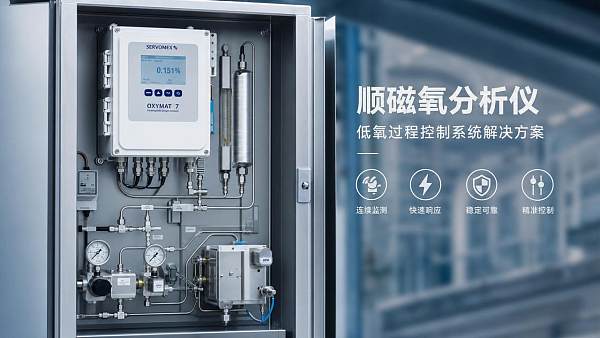
 Paramagnetic Measurement in Low-Oxygen Process ControlParamagnetic measurement enables accurate low-oxygen process control with fast response and stable oxygen analysis. Learn how it improves safety, consistency, and system performance.









Search Categories
Search Categories
Latest Article
- First Global White Paper on Humanoid Robot Industrial Calibration ReleasedHumanoid robot industrial calibration: First global white paper released—key for sensor makers, integrators & metrology labs. Learn impact & action steps.Posted by:
- FDA Updates IVD Import Guidance: CNAS Calibration Chain RequiredFDA mandates CNAS calibration chain with NIST traceability for IVD instruments from China—act now to avoid U.S. import rejection starting July 1, 2026.Posted by:
- IEC TC65 Releases Cybersecurity Validation Guidance for Industrial InstrumentsIEC TC65 releases cybersecurity validation guidance for industrial instruments—key for exporters, OEMs & integrators targeting EU/NA markets. Act now.Posted by:
Please give us a message
