
Continuous gas analyzer maintenance costs that no spec sheet mentions


When evaluating continuous gas analyzers—whether explosion proof analyzer, high accuracy analyzer, or flue gas analyzer—most buyers focus on upfront cost and spec-sheet performance. But hidden continuous gas analyzer maintenance costs silently erode ROI over time: calibration drift in online gas analyzer systems, sensor replacement for fixed gas analyzer deployments, downtime for portable gas analyzer recalibration, and compliance-driven servicing of emission gas analyzer and SR-2030P analyzer units. This article reveals what spec sheets omit—and how gas monitoring system owners across energy, environmental, and industrial sectors can forecast true TCO.
Why most spec sheets hide the real cost of ownership
Spec sheets emphasize accuracy (±0.1% FS), response time (<15 s), and IP rating (IP66)—but rarely disclose that calibration stability degrades by 0.02–0.05% per month without active drift compensation. In energy-sector flue gas monitoring, this means unplanned recalibration every 6–8 weeks, costing $320–$680 per event including labor, certified gas, and process interruption.
Sensor lifetime is another omission: electrochemical cells in portable gas analyzers typically last 12–18 months under continuous operation, while NDIR modules in fixed flue gas analyzers require optical alignment every 24 months. Replacement parts alone range from $490 (O₂ sensor) to $2,850 (multi-gas NDIR stack), with lead times averaging 3–6 weeks for OEM-sourced components.
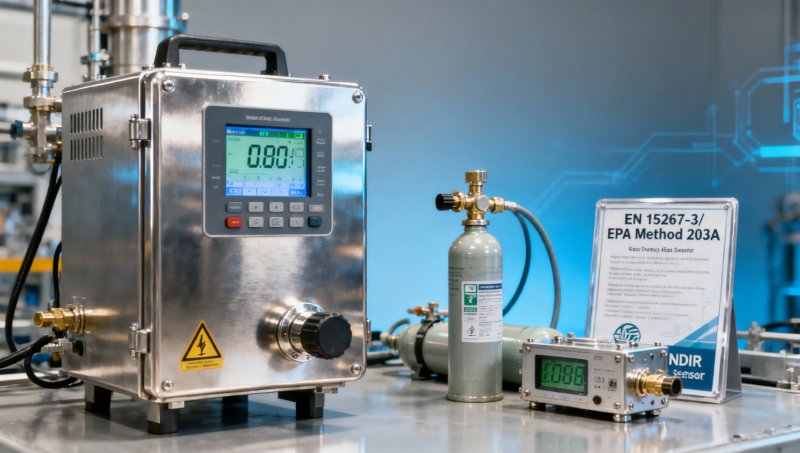
Compliance adds another layer. EPA Method 203A and EN 15267-3 mandate annual third-party verification for CEMS installations—requiring 4–5 days of field technician time, traceable calibration gases, and documentation review. Unbudgeted, this adds $4,200–$7,600 annually per analyzer station.
Hidden cost breakdown: What’s really driving TCO over 5 years?
Total Cost of Ownership (TCO) for a continuous gas analyzer over five years includes more than just purchase price. Based on field data from 47 industrial sites (2021–2023), maintenance-related expenses account for 58–73% of cumulative operational spend—far exceeding initial hardware investment.
Note: These figures exclude downtime impact—measured at 1.8–3.4 hours per unscheduled service event across power generation and cement plants. At average production value of $1,250/hour, even minor interruptions compound rapidly.
How technical and financial stakeholders evaluate differently
Technical evaluators prioritize measurement uncertainty, cross-interference rejection (e.g., CO₂ interference on CO readings <±0.3%), and diagnostic logging depth. Financial approvers, however, demand amortized cost per measurement cycle: one refinery calculated $0.072 per valid ppm-hour after factoring in sensor life, calibration gas consumption, and QA/QC labor.
Project managers weigh integration timelines: analyzers requiring custom Modbus TCP mapping add 11–17 days to commissioning versus plug-and-play EtherNet/IP models. Safety officers assess fail-safe behavior—e.g., automatic zero-span lockout during abnormal pressure excursions (>±15% of operating range).
For distributors, supportability matters most: remote firmware updates, local spare part inventory (stocked within 200 km), and multilingual service manuals directly affect channel margin and customer retention. Top-performing partners report 34% higher repeat order rate when OEMs provide pre-configured calibration kits with shelf-life tracking.
What procurement teams should verify before signing
- Whether the manufacturer publishes mean time between failures (MTBF) for each sensor chemistry—not just for the enclosure—and whether MTBF is validated under field-representative conditions (e.g., 40°C/85% RH, particulate load >10 mg/m³)
- If predictive diagnostics (e.g., signal-to-noise ratio decay, baseline wander rate) are embedded and exportable via OPC UA—enabling condition-based maintenance instead of calendar-based servicing
- Whether service contracts include guaranteed response windows (e.g., 48-hour SLA for Tier-1 sites) and whether spare part logistics cover regional customs clearance documentation for cross-border deployments
Why choose our instrumentation support framework
We embed lifecycle cost transparency into every engagement—from initial specification review to end-of-life asset retirement. Our Field-Validated TCO Calculator integrates your site’s ambient conditions, regulatory regime, and usage profile to project 5-year maintenance spend within ±9% accuracy.
All analyzers ship with SmartCal™ modules enabling on-site zero/span verification using ambient air and certified span gas only—reducing calibration gas consumption by 62% and technician time by 4.3 hours per quarter. We maintain regional calibration gas hubs serving North America, EU, and APAC with ≤72-hour delivery for Class II gases (H₂S, NOₓ, SO₂).
For enterprise clients, we offer subscription-based analytics: automated drift trend alerts, sensor health scoring (0–100), and compliance report generation aligned with EPA 40 CFR Part 75, ISO 14064-3, and China’s HJ 75-2017. Implementation requires no new hardware—only secure cloud gateway registration.
Contact us to request: (1) a site-specific TCO projection, (2) comparison of your current analyzer’s 5-year maintenance profile against our modular platform, or (3) access to our free Calibration Gas Consumption Optimizer tool.
Recommended for You
 Brazil to Eliminate Import Duties on Cross-Border E-Commerce Orders Under USD 50Brazil to eliminate import duties on cross-border e-commerce orders under USD 50—key for portable testing instruments exporters targeting Mercado Livre & DIY buyers.
 New AI Agent Guidelines Impact Smart Inspection Device ExportsAI Agent Guidelines impact smart inspection device exports—learn how new China AI safety rules affect EU, US & Middle East market access.
 UPS Freight Rates Increase Effective May 17, 2026UPS freight rates increase effective May 17, 2026—impact FOB pricing for industrial monitoring equipment exporters. Act now to optimize packaging, revise quotes, and secure margins.
 新修订《海商法》施行:卸货港无人提货责任转向托运人,检测设备出口交期风控升级New Maritime Code shifts unclaimed cargo liability to shippers at discharge ports—critical for testing equipment exporters managing delivery timelines and compliance risk.
 China Imposes Zero Tariffs on Lab Analyzers for 20 African NationsChina's zero tariffs on lab analyzers for 20 African nations boost export competitiveness—pH meters, spectrophotometers & more now duty-free from May 2026.
 CA Toxic Chemical Tank Overheating Sparks Explosion Risk, Monitoring Equipment Orders SurgeGas leak detectors, remote temperature warning systems & explosion-proof thermal imagers surge in demand after CA toxic tank overheating incident.
 EU REACH Adds DBDPE to SVHC List, Impacting Brominated Flame Retardant Testing for Export EquipmentDBDPE added to EU REACH SVHC list—impact on brominated flame retardant testing for industrial instruments, sensors & export compliance. Act now.
 Thailand Customs Digital Reform Spurs RFID Equipment DemandRFID equipment demand surges in Thailand as Customs digital reform mandates e-labeling, real-time parcel tracking & API compliance—act now to meet TISI specs and platform rules.
 Lazada Thailand Cuts Import Duties on 528 CategoriesLazada Thailand cuts import duties on 528 categories — including wired headphones & notebooks — lowering costs for Chinese exporters and Thai SMEs via LGS.
 US Delays 400 Tomahawk Missiles to Japan Amid Iran Inventory ReplenishmentTomahawk missiles delay to Japan sparks urgent demand for alternative guidance, navigation & secure comms suppliers—key opportunity for export-ready defense electronics firms.
 What to Check Before Importing an F2 Concentration Analyzer in 2026F2 concentration analyzer import guide for 2026: learn what to check on compliance, performance, integration, lifecycle cost, and supplier support before you buy.
 SF6 Concentration Analyzer Market Trends for Power and Gas Applications in 2026SF6 concentration analyzer market trends for 2026: explore accuracy, digital integration, emissions control, and buying tips for power and gas applications.
 Common HCl Concentration Analyzer Mistakes That Lead to Unstable ReadingsHCl concentration analyzer unstable readings? Discover the most common installation, calibration, sampling, and maintenance mistakes—and the practical fixes that improve accuracy fast.
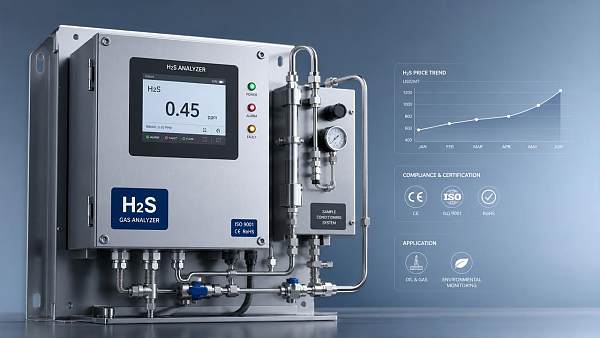
 H2S Concentration Analyzer Price Trends: What’s Driving Costs in 2026H2S concentration analyzer price trends in 2026: discover what drives costs, from sensor technology and compliance to materials and digital features, and make smarter buying decisions.
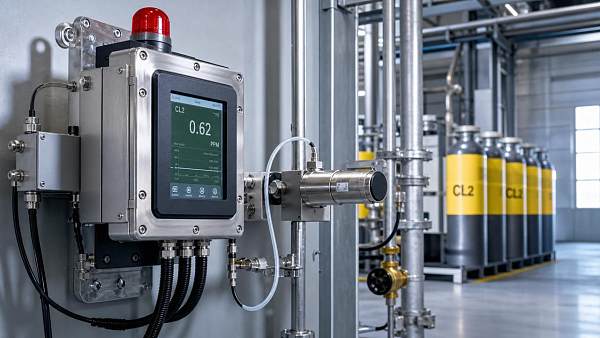
 How to Choose a Cl2 Concentration Analyzer for Process Safety in 2026Cl2 concentration analyzer selection in 2026 starts with process safety. Learn how to match scenarios, improve reliability, avoid costly mistakes, and choose with confidence.
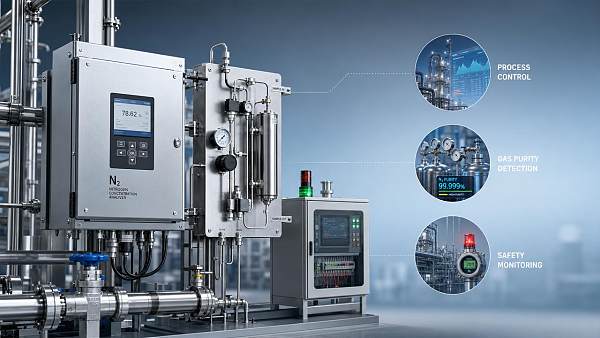
 N2 Concentration Analyzer Cost Factors for Bulk Industrial ProcurementN2 concentration analyzer cost depends on more than unit price. Compare process, purity, and safety applications with total cost logic to source smarter and reduce lifecycle risk.
 Oxygen Concentration Analyzer vs Sensor Systems: Which Fits Continuous UseOxygen concentration analyzer or sensor system? Compare stability, drift, maintenance, and uptime for continuous use to choose the most reliable fit for your process.
 SO2 Concentration Analyzer News: Compliance Demands Reshaping Product SpecsSO2 concentration analyzer trends are shifting with stricter compliance rules. Learn how new specs, data integrity, and uptime demands are reshaping smarter buying decisions.
 He Concentration Analyzer Maintenance Tips for Stable Long-Term ReadingsHe concentration analyzer maintenance tips for stable long-term readings. Learn how to reduce drift, improve calibration accuracy, cut downtime, and keep industrial systems reliable.
 CH4 Concentration Analyzer Selection Mistakes That Raise Operating RiskCH4 concentration analyzer selection mistakes can raise safety, compliance, and maintenance risk. Learn how to choose the right analyzer for reliable performance and lower lifecycle cost.
 CO Concentration Analyzer Import Rules to Watch in 2026CO concentration analyzer import rules for 2026: learn the key customs, certification, labeling, and compliance checks to reduce risk, avoid delays, and source with confidence.
 NH3 Concentration Analyzer Market Trends for Industrial Process Control in 2026NH3 concentration analyzer market trends in 2026: explore technologies, industrial applications, selection tips, and how smarter monitoring improves compliance, safety, and process control.
 Ar Concentration Analyzer Accuracy Issues in High-Purity Gas ApplicationsAr concentration analyzer accuracy issues can compromise high-purity gas quality, safety, and compliance. Learn the key causes, practical fixes, and how to improve reliable measurement performance.
 CO2 Concentration Analyzer Price Trends in 2026: What Shapes Total CostCO2 concentration analyzer price trends in 2026 depend on technology, accuracy, calibration, compliance, and integration. Discover total cost drivers to compare quotes smarter and control lifecycle risk.
 How to Choose a NOX Concentration Analyzer for Low-Emission MonitoringNOX concentration analyzer selection for low-emission monitoring made easier. Learn how to compare accuracy, response time, compliance, and lifecycle cost before you buy.
 2026 Summit Highlights China's Smart Inspection Equipment as New Global Cooperation FocusSmart inspection equipment takes center stage at the 2026 Summit—unlocking new global cooperation, standards alignment, and market opportunities for exporters, OEMs, and tech suppliers.
 White House Warns Oil Shock May Fuel Core Inflation, Delaying Industrial Instrument ExportsWhite House warns oil shock may fuel core inflation—impacting industrial instrument exports. Discover how pressure, temperature & flow instrumentation exporters can mitigate delays and optimize trade finance workflows now.
 New AI Agent Guidelines Impact Export of AI-Powered Testing EquipmentAI agent guidelines impact export of AI-powered testing equipment—learn how new China security & controllability rules affect global compliance, supply chains, and market access.
 Canton Fair Phase III Boosts Sensor & Energy Testing ExportsSensor & energy testing exports surge at Canton Fair Phase III—driven by global demand for new energy home appliances and smart furniture compliance solutions.
 UAE Announces $150B Energy Infrastructure InvestmentUAE's $150B energy infrastructure push drives demand for IP68/IP69K, ATEX/IECEx, and LPWAN-enabled industrial sensors — act now to align with ADNOC tenders.
 WTI Net Longs Surge, Boosting Demand for Lubricant Monitoring SystemsLubricant monitoring systems surge in demand as WTI net longs rise—real-time viscosity, moisture & oxidation tracking now critical for global manufacturers.
 Shanghai Pudong Launches E-Label Pilot for Imported CosmeticsShanghai Pudong’s e-label pilot for imported cosmetics drives global demand for RFID/NFC readers, traceability solutions & certified testing equipment—act now to comply and lead.



Search Categories
Search Categories
Latest Article
- Brazil to Eliminate Import Duties on Cross-Border E-Commerce Orders Under USD 50Brazil to eliminate import duties on cross-border e-commerce orders under USD 50—key for portable testing instruments exporters targeting Mercado Livre & DIY buyers.Posted by:
- New AI Agent Guidelines Impact Smart Inspection Device ExportsAI Agent Guidelines impact smart inspection device exports—learn how new China AI safety rules affect EU, US & Middle East market access.Posted by:
- UPS Freight Rates Increase Effective May 17, 2026UPS freight rates increase effective May 17, 2026—impact FOB pricing for industrial monitoring equipment exporters. Act now to optimize packaging, revise quotes, and secure margins.Posted by:
Please give us a message
