
G7 Prioritizes Critical Mineral Supply Chain Security


On May 6, 2026, G7 trade ministers convened in Paris and elevated ‘critical mineral supply chain security’ to a top agenda item—focusing on diversifying procurement of rare earths, cobalt, nickel, and other strategic raw materials to reduce reliance on China-dominated supply. This development directly affects industries deploying industrial sensors—especially those incorporating rare-earth permanent magnets (e.g., neodymium-iron-boron) and specialty high-temperature alloys—including Hall-effect displacement sensors and magnetostrictive level transmitters.
Event Overview
On May 6, 2026, the G7 trade ministers’ meeting in Paris formally identified ‘critical mineral supply chain security’ as a priority. Public statements confirmed the initiative aims to advance diversified sourcing of rare earth elements, cobalt, nickel, and related strategic minerals—explicitly citing the objective of reducing dependence on single-country supply dominance. No binding agreements or implementation timelines were announced at the meeting; the focus remains on coordination among member states and alignment of national strategies.
Industries Affected by Segment
Direct Exporters of Raw Materials & Semi-Finished Components
Chinese producers of sintered NdFeB magnets, dysprosium-terbium additives, and nickel-based superalloy powders may face heightened scrutiny when exporting to G7 markets. The G7’s emphasis on traceability and responsible sourcing signals potential future requirements for origin documentation, environmental and labor compliance certifications, and third-party audit readiness—increasing pre-shipment administrative burden and verification costs.
Manufacturers of Industrial Sensors & Precision Measurement Devices
Firms assembling Hall-effect sensors, magnetostrictive level transmitters, and similar instrumentation using imported rare-earth magnets or specialty alloys may encounter new import review protocols in the EU and U.S. These could include mandatory material-level declarations, enhanced customs risk assessments, or expanded end-use verification—delaying clearance and raising compliance overhead for finished goods exports.
Global Procurement & Supply Chain Management Units
Multinational engineering firms and OEMs with sensor-integrated systems (e.g., process automation, aerospace controls) may need to reassess supplier qualification criteria. Sourcing from non-G7-aligned jurisdictions—even if technically compliant—could trigger internal risk flags, prompting dual-sourcing evaluations or increased due diligence on upstream material provenance.
What Enterprises and Practitioners Should Monitor and Do Now
Track official policy instruments—not just summit statements
The Paris meeting reflects political consensus, not regulatory enactment. Enterprises should monitor subsequent national-level actions: e.g., updates to the EU Critical Raw Materials Act implementing acts, U.S. Department of Commerce rulemaking under Executive Order 14017, or Japan’s updated Mineral Resource Security Strategy. Summit language alone does not change customs codes or licensing requirements.
Identify and map exposure across specific sensor subcomponents
Risk is not uniform across all magnets or alloys. Priority categories likely include: sintered NdFeB grades with >2% Dy/Tb content; Ni-based alloys containing ≥50% cobalt or critical rare earths (e.g., Inconel 718, Hastelloy C-276); and sensor modules where magnet/substrate traceability is embedded in firmware or calibration records. Firms should conduct a targeted bill-of-materials (BOM) review—not broad category-level assumptions.
Distinguish between near-term operational impact and longer-term strategic shifts
Current impact is largely procedural: increased documentation expectations, longer customs processing windows for certain HS codes (e.g., 8543.70 for magnetic sensors), and early-stage supplier questionnaires. Mandatory certification or import bans are not yet in force. Companies should prioritize updating export compliance checklists and training logistics staff on emerging origin-labeling expectations—not restructuring entire supply chains prematurely.
Prepare for tiered communication with downstream customers
Industrial end-users (e.g., energy, chemical, defense contractors) may soon request material declarations or audit reports. Suppliers should begin compiling standardized, verifiable data packages—covering alloy composition, magnet grade specifications, smelter of origin (where known), and applicable environmental standards—to preempt reactive requests and support joint compliance reporting.
Editorial Perspective / Industry Observation
Observably, this G7 action functions primarily as a coordination signal—not an immediate regulatory trigger. It confirms that critical mineral resilience has shifted from a national security topic to a coordinated trade policy pillar among major industrial economies. Analysis shows that while no new tariffs or quotas were introduced, the meeting establishes a shared framework for future bilateral and multilateral tools: harmonized due diligence standards, joint investment in alternative mining/refining capacity, and interoperable traceability platforms. From an industry perspective, the real inflection point will be when individual G7 members translate this consensus into enforceable rules—particularly those requiring full-chain material provenance down to mine or smelter level. Until then, the event better represents a directional marker than an operational deadline.
For the industrial sensor sector, this moment underscores that component-level material governance is becoming inseparable from product-level market access. Compliance is evolving from a post-manufacturing verification step to a design-phase requirement—especially where magnets or alloys define core performance characteristics.
In summary, the May 6 G7 ministerial statement signals growing institutional attention to the upstream material foundations of precision industrial hardware—but it does not yet constitute a binding constraint. Current conditions favor proactive monitoring, selective BOM mapping, and incremental documentation upgrades over large-scale supply chain reconfiguration. The situation remains one of anticipatory alignment—not reactive compliance.
Information Source: Official G7 Trade Ministers’ Communiqué (Paris, May 6, 2026); accompanying press briefings by the French Ministry for Economic Affairs and the U.S. Office of the United States Trade Representative. Ongoing developments—including national implementation measures and sector-specific guidance—are subject to continued observation.

Recommended for You
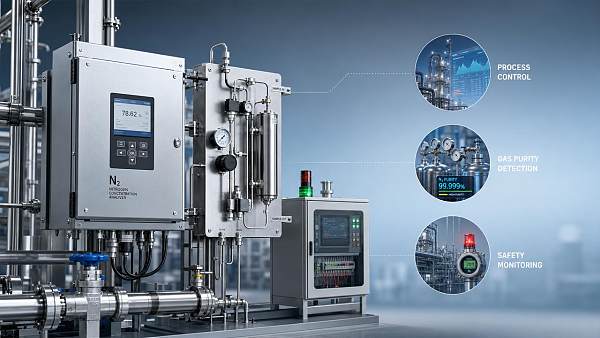
 N2 Concentration Analyzer Cost Factors for Bulk Industrial ProcurementN2 concentration analyzer cost depends on more than unit price. Compare process, purity, and safety applications with total cost logic to source smarter and reduce lifecycle risk.
 Oxygen Concentration Analyzer vs Sensor Systems: Which Fits Continuous UseOxygen concentration analyzer or sensor system? Compare stability, drift, maintenance, and uptime for continuous use to choose the most reliable fit for your process.
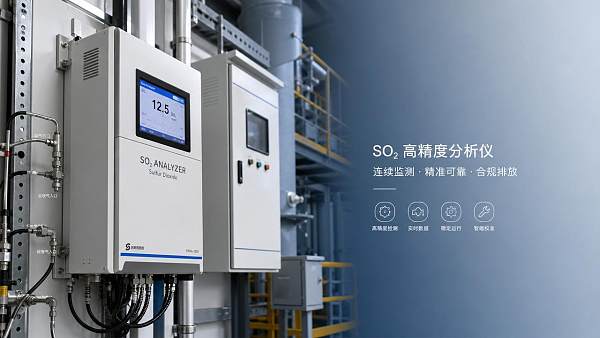
 SO2 Concentration Analyzer News: Compliance Demands Reshaping Product SpecsSO2 concentration analyzer trends are shifting with stricter compliance rules. Learn how new specs, data integrity, and uptime demands are reshaping smarter buying decisions.
 He Concentration Analyzer Maintenance Tips for Stable Long-Term ReadingsHe concentration analyzer maintenance tips for stable long-term readings. Learn how to reduce drift, improve calibration accuracy, cut downtime, and keep industrial systems reliable.
 CH4 Concentration Analyzer Selection Mistakes That Raise Operating RiskCH4 concentration analyzer selection mistakes can raise safety, compliance, and maintenance risk. Learn how to choose the right analyzer for reliable performance and lower lifecycle cost.
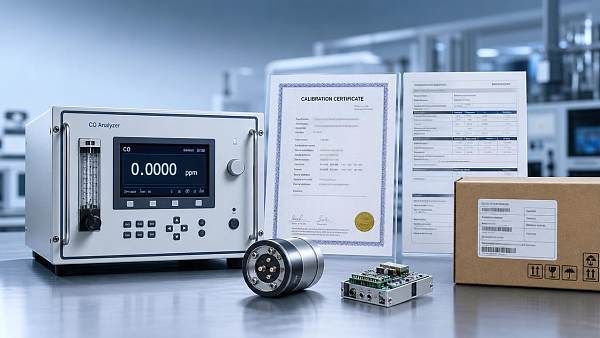
 CO Concentration Analyzer Import Rules to Watch in 2026CO concentration analyzer import rules for 2026: learn the key customs, certification, labeling, and compliance checks to reduce risk, avoid delays, and source with confidence.
 NH3 Concentration Analyzer Market Trends for Industrial Process Control in 2026NH3 concentration analyzer market trends in 2026: explore technologies, industrial applications, selection tips, and how smarter monitoring improves compliance, safety, and process control.
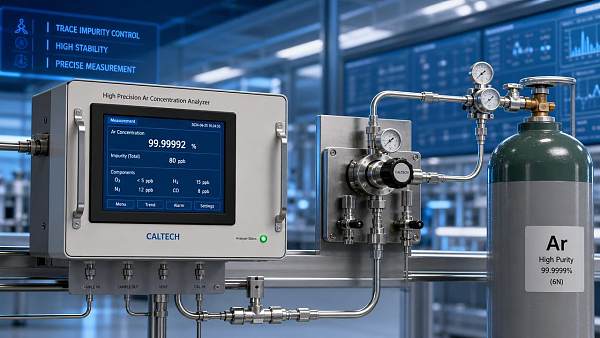
 Ar Concentration Analyzer Accuracy Issues in High-Purity Gas ApplicationsAr concentration analyzer accuracy issues can compromise high-purity gas quality, safety, and compliance. Learn the key causes, practical fixes, and how to improve reliable measurement performance.
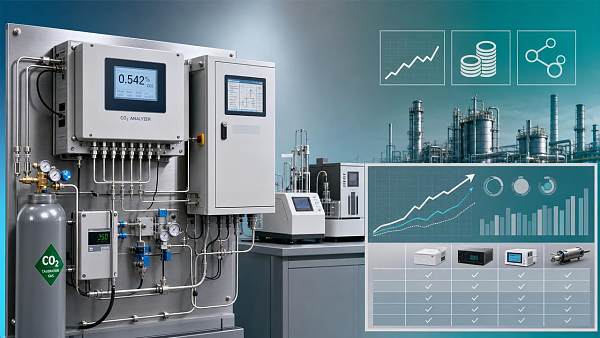
 CO2 Concentration Analyzer Price Trends in 2026: What Shapes Total CostCO2 concentration analyzer price trends in 2026 depend on technology, accuracy, calibration, compliance, and integration. Discover total cost drivers to compare quotes smarter and control lifecycle risk.
 How to Choose a NOX Concentration Analyzer for Low-Emission MonitoringNOX concentration analyzer selection for low-emission monitoring made easier. Learn how to compare accuracy, response time, compliance, and lifecycle cost before you buy.
 2026 Summit Highlights China's Smart Inspection Equipment as New Global Cooperation FocusSmart inspection equipment takes center stage at the 2026 Summit—unlocking new global cooperation, standards alignment, and market opportunities for exporters, OEMs, and tech suppliers.
 White House Warns Oil Shock May Fuel Core Inflation, Delaying Industrial Instrument ExportsWhite House warns oil shock may fuel core inflation—impacting industrial instrument exports. Discover how pressure, temperature & flow instrumentation exporters can mitigate delays and optimize trade finance workflows now.
 New AI Agent Guidelines Impact Export of AI-Powered Testing EquipmentAI agent guidelines impact export of AI-powered testing equipment—learn how new China security & controllability rules affect global compliance, supply chains, and market access.
 Canton Fair Phase III Boosts Sensor & Energy Testing ExportsSensor & energy testing exports surge at Canton Fair Phase III—driven by global demand for new energy home appliances and smart furniture compliance solutions.
 UAE Announces $150B Energy Infrastructure InvestmentUAE's $150B energy infrastructure push drives demand for IP68/IP69K, ATEX/IECEx, and LPWAN-enabled industrial sensors — act now to align with ADNOC tenders.
 WTI Net Longs Surge, Boosting Demand for Lubricant Monitoring SystemsLubricant monitoring systems surge in demand as WTI net longs rise—real-time viscosity, moisture & oxidation tracking now critical for global manufacturers.
 Shanghai Pudong Launches E-Label Pilot for Imported CosmeticsShanghai Pudong’s e-label pilot for imported cosmetics drives global demand for RFID/NFC readers, traceability solutions & certified testing equipment—act now to comply and lead.
 G7 Prioritizes Critical Mineral Supply Chain SecurityCritical mineral supply chain security takes center stage at G7 Paris meeting—impacting industrial sensors, rare-earth magnets & global procurement strategies.
 US-China Talks Yield Breakthrough on Agricultural NTBs for Testing EquipmentUS-China talks break ground on agricultural NTBs—key win for makers of residue detection, mycotoxin & spectral testing equipment targeting USDA/FDA markets.
 Fruit Attraction 2026 Booth Bookings Exceed 90%Fruit Attraction 2026 booth bookings exceed 90% — a strong signal for food safety instrumentation, cold-chain monitoring & EU compliance solution providers to secure visibility and drive qualified leads.
 Kuwait Bans HCFC Air Conditioners, Boosts IR Camera ExportsKuwait bans HCFC air conditioners—boosting demand for IR cameras, leak detectors & refrigerant analyzers. Discover GCC compliance insights and export opportunities.
 China's IC Exports Surge 78.3% in First Four Months of 2026China's IC exports surge 78.3% in early 2026 — driven by soaring global demand for AI chip test equipment, SMUs, and parametric analyzers. Discover the supply chain shift.
 Chile Enforces Mandatory INN Safety Certification for Industrial Temperature ControllersChile mandates INN safety certification (NCh Elec 4/2025) for industrial temperature controllers starting Aug 1, 2026—act now to avoid shipment delays & market bans.
 K-REACH Supply-Shortage Exemption Launches for pH/ORP ElectrodesK-REACH Supply-Shortage Exemption now applies to pH/ORP electrodes—act before June 30, 2026 to avoid customs delays & penalties. Key for exporters & manufacturers.
 4th China International Supply Chain Expo to Focus on Smart Sensing & In-Process InspectionSmart Sensing & In-Process Inspection take center stage at the 4th China International Supply Chain Expo in Beijing, Nov 26–30, 2026 — discover next-gen inspection tech, AI vision modules, and calibrated sensing solutions for global industrial buyers.
 ASTM F2100-26 Medical Mask Standard Takes Effect in USASTM F2100-26 medical mask standard is now in force—driving global demand for biosafety cabinets, particle counters & air velocity calibrators, especially China-made instruments.
 South Africa Enforces SABS Certification for IoT Monitoring DevicesSABS certification now mandatory for IoT monitoring devices entering South Africa via e-commerce—act before 1 June 2026 to avoid customs rejection and ensure market access.
 EU REACH Adds Fluorinated Substances; SVHC Reporting Required for Gas AnalyzersEU REACH now restricts fluorinated substances in gas analyzers—SVHC reporting is mandatory by 30 Nov 2026. Ensure compliance for sensors, membranes & monitoring systems.
 Revised Maritime Code Takes Effect May 1, 2026: Shift in Unclaimed Cargo LiabilityRevised Maritime Code (2026): Shippers now liable for unclaimed cargo—critical for industrial instrument exporters, logistics providers & cross-border supply chains. Act now.
 China Imposes Zero Tariffs on Goods from All African Diplomatic Partners Starting May 1, 2026China’s zero-tariff policy for African instrumentation & automation exports starts May 1, 2026—boosting competitiveness in EPC tenders and market access for exporters.
 Import and Export Shifts in the PPM Gas Analyzer Marketppm gas analyzer market insights: discover how import tariffs, export controls, and compliance shifts impact cost, supply stability, and growth opportunities across key applications.
 Single Gas Analyzer Maintenance Issues That Raise DowntimeSingle gas analyzer maintenance issues can quietly increase downtime. Learn how to spot drift, calibration errors, and sample path faults early to improve uptime and field efficiency.


















Search Categories
Search Categories
Latest Article
- N2 Concentration Analyzer Cost Factors for Bulk Industrial ProcurementN2 concentration analyzer cost depends on more than unit price. Compare process, purity, and safety applications with total cost logic to source smarter and reduce lifecycle risk.Posted by:
- Oxygen Concentration Analyzer vs Sensor Systems: Which Fits Continuous UseOxygen concentration analyzer or sensor system? Compare stability, drift, maintenance, and uptime for continuous use to choose the most reliable fit for your process.Posted by:
- SO2 Concentration Analyzer News: Compliance Demands Reshaping Product SpecsSO2 concentration analyzer trends are shifting with stricter compliance rules. Learn how new specs, data integrity, and uptime demands are reshaping smarter buying decisions.Posted by:
Please give us a message
