
UAE Announces $150B Energy Infrastructure Investment


On May 22, 2026, the United Arab Emirates announced a $150 billion investment in energy infrastructure development — focusing on transportation systems for oil, gas, and renewable energy. This initiative signals heightened demand for smart metering devices, remote monitoring systems, and industrial sensors, particularly among manufacturers and exporters specializing in high-protection-grade instrumentation and low-power wide-area network (LPWAN)-enabled equipment.
Event Overview
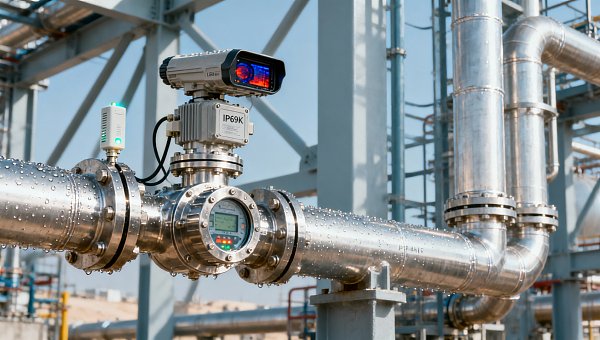
On May 22, 2026, the UAE government announced a $150 billion national investment program targeting upgrades to its energy transport infrastructure. Confirmed scope includes modernization of SCADA systems for oil and gas pipelines, installation of smart metering facilities at LNG receiving terminals, and deployment of remote condition-monitoring networks across photovoltaic power plants. The initiative explicitly references procurement requirements for flow meters, pressure transmitters, and infrared thermal imagers meeting IP68/IP69K ingress protection ratings, ATEX/IECEx explosion-proof certifications, and LoRaWAN or NB-IoT communication compatibility. Eligibility for tenders is noted to favor companies already listed as qualified suppliers by ADNOC.
Which Subsectors Are Affected
Direct Exporters of Industrial Instrumentation
Exporters supplying flow meters, pressure transmitters, and thermal imaging devices face direct tender opportunities. Impact arises from explicit technical specifications — including mandatory IP68/IP69K, ATEX/IECEx, and LPWAN protocol support — which narrow the pool of eligible suppliers. Demand will likely concentrate on products already certified for Middle Eastern operational environments and pre-qualified with ADNOC.
Manufacturers of Smart Metering & Remote Monitoring Hardware
Producers of smart metering systems for LNG terminals and remote monitoring units for solar farms are affected through revised product compliance expectations. Impact manifests in design validation cycles — especially for environmental resilience, intrinsic safety certification, and integration with regional telecom infrastructures (e.g., NB-IoT coverage in UAE industrial zones).
Supply Chain & Certification Service Providers
Third-party testing labs, certification consultants, and logistics partners supporting export compliance are impacted indirectly. Increased demand for ATEX/IECEx certification support, IP rating verification, and documentation localization (e.g., Arabic-language manuals, ADNOC-compliant QA records) is anticipated, particularly for firms with existing UAE market presence.
What Relevant Companies or Practitioners Should Focus On
Track Official Tender Timelines and ADNOC Procurement Updates
Current tender schedules and qualification windows have not yet been published. Companies should monitor ADNOC’s official procurement portal and UAE federal energy ministry announcements for phase rollout details — especially first-wave bidding deadlines and pre-qualification document requirements.
Prioritize Verification of Product Compliance Against Stated Technical Criteria
Eligibility hinges on verifiable conformance: IP68/IP69K test reports, valid ATEX/IECEx certificates issued by notified bodies, and documented LoRaWAN/NB-IoT interoperability testing under UAE spectrum conditions. Firms without current certifications should assess lead times for retesting or re-certification before tender submission opens.
Distinguish Between Policy Signal and Contractual Implementation
This announcement functions as a strategic policy signal — not an immediate procurement order. Actual contract volumes, delivery milestones, and payment terms remain unconfirmed. Companies should avoid scaling production or committing capital solely on this statement without subsequent tender issuance or budget appropriation disclosures.
Prepare Documentation and Localization Materials in Advance
ADNOC qualification typically requires Arabic-translated technical documentation, UAE-specific calibration traceability, and supplier performance history in similar GCC projects. Preparing these materials now — rather than waiting for formal RFPs — shortens response time when tenders open.
Editorial Perspective / Industry Observation
Observably, this $150 billion commitment serves primarily as a forward-looking policy signal — indicating long-term infrastructure priorities rather than near-term revenue certainty. Analysis shows it reflects UAE’s broader strategy to diversify energy logistics capacity while upgrading digital oversight capabilities across hydrocarbon and renewable assets. From an industry perspective, it more closely resembles a directional indicator than an executed procurement plan: actual tender volume, vendor selection criteria, and implementation sequencing remain pending public disclosure. Continuous tracking of ADNOC’s supplier portal updates and UAE federal budget execution reports is therefore essential — not as confirmation of opportunity, but as validation of timing and scale.
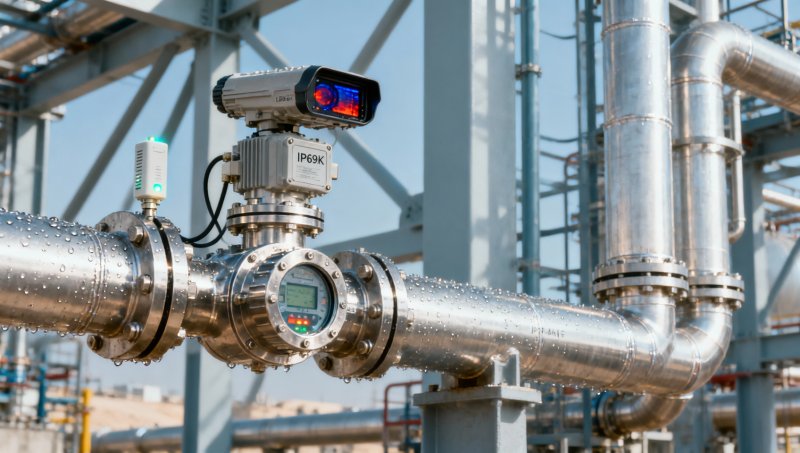
Conclusion: This announcement underscores a structural shift in UAE energy infrastructure procurement toward digitally integrated, environmentally hardened instrumentation — but its practical impact remains contingent on subsequent tender releases and qualification enforcement. It is best understood not as an immediate sales catalyst, but as a medium-term alignment benchmark for exporters targeting Gulf energy markets.
Source: UAE federal government announcement (May 22, 2026); ADNOC supplier qualification framework (publicly available version).
Note: Tender timelines, budget allocation breakdowns, and vendor selection procedures are not yet publicly disclosed and remain subject to official updates.
Recommended for You
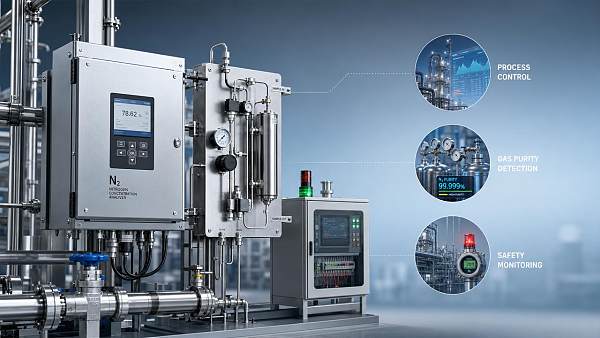
 N2 Concentration Analyzer Cost Factors for Bulk Industrial ProcurementN2 concentration analyzer cost depends on more than unit price. Compare process, purity, and safety applications with total cost logic to source smarter and reduce lifecycle risk.
 Oxygen Concentration Analyzer vs Sensor Systems: Which Fits Continuous UseOxygen concentration analyzer or sensor system? Compare stability, drift, maintenance, and uptime for continuous use to choose the most reliable fit for your process.
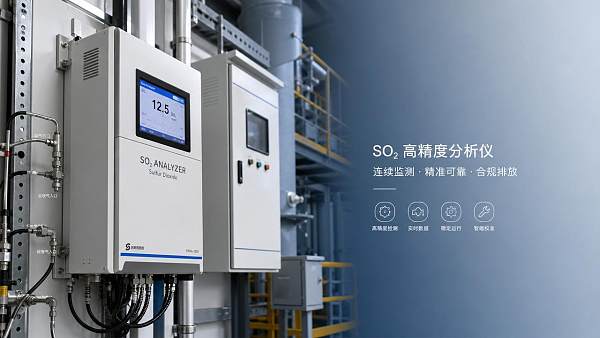
 SO2 Concentration Analyzer News: Compliance Demands Reshaping Product SpecsSO2 concentration analyzer trends are shifting with stricter compliance rules. Learn how new specs, data integrity, and uptime demands are reshaping smarter buying decisions.
 He Concentration Analyzer Maintenance Tips for Stable Long-Term ReadingsHe concentration analyzer maintenance tips for stable long-term readings. Learn how to reduce drift, improve calibration accuracy, cut downtime, and keep industrial systems reliable.
 CH4 Concentration Analyzer Selection Mistakes That Raise Operating RiskCH4 concentration analyzer selection mistakes can raise safety, compliance, and maintenance risk. Learn how to choose the right analyzer for reliable performance and lower lifecycle cost.
 CO Concentration Analyzer Import Rules to Watch in 2026CO concentration analyzer import rules for 2026: learn the key customs, certification, labeling, and compliance checks to reduce risk, avoid delays, and source with confidence.
 NH3 Concentration Analyzer Market Trends for Industrial Process Control in 2026NH3 concentration analyzer market trends in 2026: explore technologies, industrial applications, selection tips, and how smarter monitoring improves compliance, safety, and process control.
 Ar Concentration Analyzer Accuracy Issues in High-Purity Gas ApplicationsAr concentration analyzer accuracy issues can compromise high-purity gas quality, safety, and compliance. Learn the key causes, practical fixes, and how to improve reliable measurement performance.
 CO2 Concentration Analyzer Price Trends in 2026: What Shapes Total CostCO2 concentration analyzer price trends in 2026 depend on technology, accuracy, calibration, compliance, and integration. Discover total cost drivers to compare quotes smarter and control lifecycle risk.
 How to Choose a NOX Concentration Analyzer for Low-Emission MonitoringNOX concentration analyzer selection for low-emission monitoring made easier. Learn how to compare accuracy, response time, compliance, and lifecycle cost before you buy.
 2026 Summit Highlights China's Smart Inspection Equipment as New Global Cooperation FocusSmart inspection equipment takes center stage at the 2026 Summit—unlocking new global cooperation, standards alignment, and market opportunities for exporters, OEMs, and tech suppliers.
 White House Warns Oil Shock May Fuel Core Inflation, Delaying Industrial Instrument ExportsWhite House warns oil shock may fuel core inflation—impacting industrial instrument exports. Discover how pressure, temperature & flow instrumentation exporters can mitigate delays and optimize trade finance workflows now.
 New AI Agent Guidelines Impact Export of AI-Powered Testing EquipmentAI agent guidelines impact export of AI-powered testing equipment—learn how new China security & controllability rules affect global compliance, supply chains, and market access.
 Canton Fair Phase III Boosts Sensor & Energy Testing ExportsSensor & energy testing exports surge at Canton Fair Phase III—driven by global demand for new energy home appliances and smart furniture compliance solutions.
 UAE Announces $150B Energy Infrastructure InvestmentUAE's $150B energy infrastructure push drives demand for IP68/IP69K, ATEX/IECEx, and LPWAN-enabled industrial sensors — act now to align with ADNOC tenders.
 WTI Net Longs Surge, Boosting Demand for Lubricant Monitoring SystemsLubricant monitoring systems surge in demand as WTI net longs rise—real-time viscosity, moisture & oxidation tracking now critical for global manufacturers.
 Shanghai Pudong Launches E-Label Pilot for Imported CosmeticsShanghai Pudong’s e-label pilot for imported cosmetics drives global demand for RFID/NFC readers, traceability solutions & certified testing equipment—act now to comply and lead.
 G7 Prioritizes Critical Mineral Supply Chain SecurityCritical mineral supply chain security takes center stage at G7 Paris meeting—impacting industrial sensors, rare-earth magnets & global procurement strategies.
 US-China Talks Yield Breakthrough on Agricultural NTBs for Testing EquipmentUS-China talks break ground on agricultural NTBs—key win for makers of residue detection, mycotoxin & spectral testing equipment targeting USDA/FDA markets.
 Fruit Attraction 2026 Booth Bookings Exceed 90%Fruit Attraction 2026 booth bookings exceed 90% — a strong signal for food safety instrumentation, cold-chain monitoring & EU compliance solution providers to secure visibility and drive qualified leads.
 Kuwait Bans HCFC Air Conditioners, Boosts IR Camera ExportsKuwait bans HCFC air conditioners—boosting demand for IR cameras, leak detectors & refrigerant analyzers. Discover GCC compliance insights and export opportunities.
 China's IC Exports Surge 78.3% in First Four Months of 2026China's IC exports surge 78.3% in early 2026 — driven by soaring global demand for AI chip test equipment, SMUs, and parametric analyzers. Discover the supply chain shift.
 Chile Enforces Mandatory INN Safety Certification for Industrial Temperature ControllersChile mandates INN safety certification (NCh Elec 4/2025) for industrial temperature controllers starting Aug 1, 2026—act now to avoid shipment delays & market bans.
 K-REACH Supply-Shortage Exemption Launches for pH/ORP ElectrodesK-REACH Supply-Shortage Exemption now applies to pH/ORP electrodes—act before June 30, 2026 to avoid customs delays & penalties. Key for exporters & manufacturers.
 4th China International Supply Chain Expo to Focus on Smart Sensing & In-Process InspectionSmart Sensing & In-Process Inspection take center stage at the 4th China International Supply Chain Expo in Beijing, Nov 26–30, 2026 — discover next-gen inspection tech, AI vision modules, and calibrated sensing solutions for global industrial buyers.
 ASTM F2100-26 Medical Mask Standard Takes Effect in USASTM F2100-26 medical mask standard is now in force—driving global demand for biosafety cabinets, particle counters & air velocity calibrators, especially China-made instruments.
 South Africa Enforces SABS Certification for IoT Monitoring DevicesSABS certification now mandatory for IoT monitoring devices entering South Africa via e-commerce—act before 1 June 2026 to avoid customs rejection and ensure market access.
 EU REACH Adds Fluorinated Substances; SVHC Reporting Required for Gas AnalyzersEU REACH now restricts fluorinated substances in gas analyzers—SVHC reporting is mandatory by 30 Nov 2026. Ensure compliance for sensors, membranes & monitoring systems.
 Revised Maritime Code Takes Effect May 1, 2026: Shift in Unclaimed Cargo LiabilityRevised Maritime Code (2026): Shippers now liable for unclaimed cargo—critical for industrial instrument exporters, logistics providers & cross-border supply chains. Act now.
 China Imposes Zero Tariffs on Goods from All African Diplomatic Partners Starting May 1, 2026China’s zero-tariff policy for African instrumentation & automation exports starts May 1, 2026—boosting competitiveness in EPC tenders and market access for exporters.
 Import and Export Shifts in the PPM Gas Analyzer Marketppm gas analyzer market insights: discover how import tariffs, export controls, and compliance shifts impact cost, supply stability, and growth opportunities across key applications.
 Single Gas Analyzer Maintenance Issues That Raise DowntimeSingle gas analyzer maintenance issues can quietly increase downtime. Learn how to spot drift, calibration errors, and sample path faults early to improve uptime and field efficiency.











Search Categories
Search Categories
Latest Article
- N2 Concentration Analyzer Cost Factors for Bulk Industrial ProcurementN2 concentration analyzer cost depends on more than unit price. Compare process, purity, and safety applications with total cost logic to source smarter and reduce lifecycle risk.Posted by:
- Oxygen Concentration Analyzer vs Sensor Systems: Which Fits Continuous UseOxygen concentration analyzer or sensor system? Compare stability, drift, maintenance, and uptime for continuous use to choose the most reliable fit for your process.Posted by:
- SO2 Concentration Analyzer News: Compliance Demands Reshaping Product SpecsSO2 concentration analyzer trends are shifting with stricter compliance rules. Learn how new specs, data integrity, and uptime demands are reshaping smarter buying decisions.Posted by:
Please give us a message
