
Ar Concentration Analyzer Accuracy Issues in High-Purity Gas Applications


In high-purity gas applications, measurement precision is not a secondary concern. It directly affects product consistency, regulatory alignment, and operational safety across modern instrumentation environments.
An Ar concentration analyzer is widely used where trace-level composition control matters. Small accuracy issues can distort process decisions, trigger false alarms, or hide contamination events.
Because the instrumentation industry supports automation, laboratory analysis, energy systems, and industrial online monitoring, reliable argon measurement remains highly relevant across sectors.
Definition and Measurement Role of an Ar Concentration Analyzer
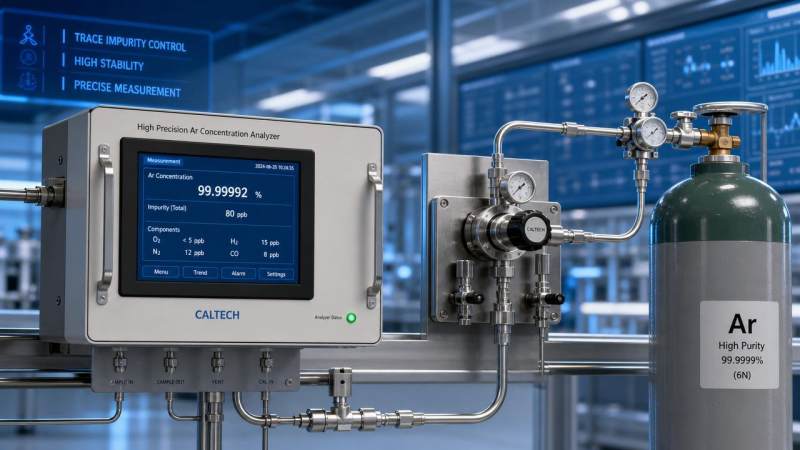
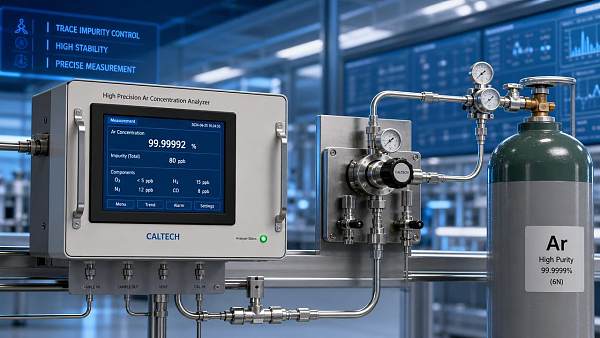
An Ar concentration analyzer is an instrument designed to quantify argon content within a gas stream. It may measure bulk concentration or trace impurities, depending on process requirements.
In high-purity systems, argon often appears as a product gas, a shielding gas, a carrier medium, or a controlled background component. Accuracy must remain stable over time.
Different analyzer technologies serve this purpose. Common approaches include thermal conductivity, mass spectrometry, gas chromatography, and optical methods for selected conditions.
The best Ar concentration analyzer is not defined only by sensitivity. It also depends on repeatability, calibration stability, sample integrity, environmental tolerance, and maintenance discipline.
Why accuracy becomes critical
- High-purity gas specifications often allow only very small composition deviations.
- Downstream equipment can react strongly to subtle gas quality changes.
- Incorrect readings may lead to unnecessary shutdowns or hidden process risk.
- Trace contamination can spread quickly through connected distribution networks.
Industry Context and Current Accuracy Concerns
Across the instrumentation industry, measurement systems are becoming more connected, automated, and data-driven. This trend increases the business impact of every analyzer output.
A modern Ar concentration analyzer may feed control logic, quality dashboards, compliance records, and alarm systems. If the reading is biased, every linked decision is affected.
High-purity gas applications also operate under tighter product standards than before. Semiconductor support systems, laboratory gas supply, specialty welding, and calibration workflows all expect dependable measurements.
Main Causes of Ar Concentration Analyzer Accuracy Issues
Most Ar concentration analyzer errors do not come from one dramatic failure. They usually develop through several small influences that gradually shift the reported value.
Calibration drift
Sensor response can change with age, thermal cycling, or electronic instability. Even a slight calibration drift can create meaningful error in high-purity gas control.
Poor calibration gas quality also causes hidden bias. If the reference standard is uncertain, the Ar concentration analyzer cannot produce trustworthy results.
Sample contamination
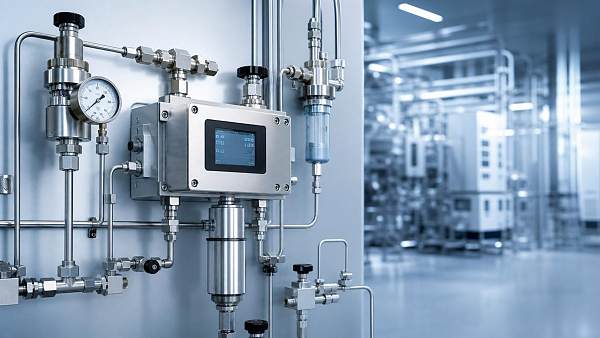
Contamination often enters through fittings, valves, tubing, regulators, or poorly purged sample lines. Moisture, oxygen, hydrocarbons, and particulates can all disturb analyzer response.
In trace applications, a tiny leak may be enough to alter the reading. Sample handling quality is therefore as important as analyzer design.
Operating condition effects
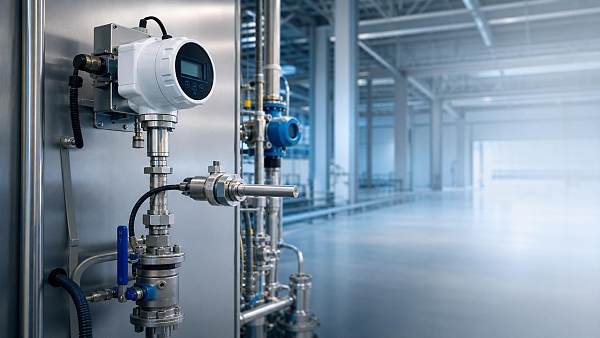
Pressure, temperature, flow stability, and vibration can influence measurement output. Some technologies are especially sensitive to these variables when compensation is inadequate.
A stable process does not guarantee a stable reading. The Ar concentration analyzer must also see controlled sample conditions at the measurement point.
Cross-sensitivity and method limitations
Certain analyzers respond not only to argon but also to other gas properties. Similar thermal or physical characteristics between gases can reduce selectivity.
When process composition changes, a method that worked well in one condition may become less accurate. Technology selection must match the gas matrix.
Business Value of Improving Ar Concentration Analyzer Accuracy
Improving Ar concentration analyzer accuracy delivers value beyond the instrument itself. It strengthens production stability, data quality, maintenance planning, and compliance confidence.
- Reduces false quality deviations and unnecessary product holds.
- Supports more reliable automated control and interlock behavior.
- Improves traceability for audits, validation, and internal review.
- Helps identify contamination events earlier.
- Lowers hidden costs from rework, wasted gas, and downtime.
In the broader instrumentation sector, dependable analysis also supports digital transformation. Clean input data remains essential for analytics, remote diagnostics, and predictive maintenance models.
Typical High-Purity Gas Scenarios and Accuracy Priorities
Not every application stresses an Ar concentration analyzer in the same way. Priorities vary by process purpose, impurity tolerance, and operational environment.
Practical Measures to Reduce Measurement Error
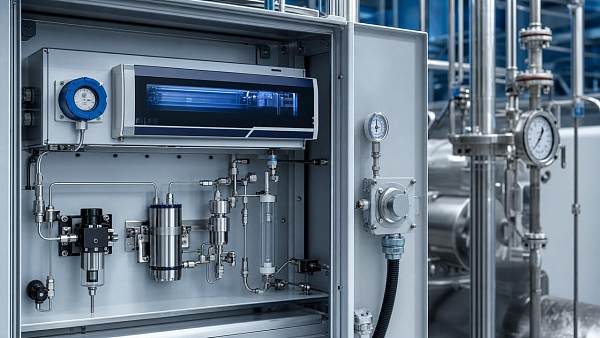
A reliable Ar concentration analyzer program combines equipment selection, disciplined sample handling, and controlled maintenance routines. Practical execution matters more than theoretical specification alone.
Strengthen calibration practice
- Use certified calibration gases with suitable purity and documented uncertainty.
- Set calibration frequency based on drift history, not only calendar intervals.
- Record zero, span, and as-found data to identify gradual bias.
Protect sample integrity
- Minimize dead volume and unnecessary connections in sample lines.
- Select compatible materials that limit adsorption and outgassing.
- Verify leak tightness and purge effectiveness after maintenance.
Control environmental variables
- Stabilize sample pressure and flow before gas reaches the analyzer.
- Protect the Ar concentration analyzer from thermal swings and vibration.
- Review compensation settings after process changes.
Validate performance with process reality
Bench calibration alone is not enough. Compare analyzer output with independent reference methods under real operating conditions when possible.
This step helps confirm whether the Ar concentration analyzer remains accurate in the actual gas matrix, not just in an ideal test setup.
Implementation Focus for More Reliable Results
A sustainable accuracy improvement plan starts with measurement mapping. Identify where the Ar concentration analyzer influences quality release, alarms, blending, or safety decisions.
Next, review current failure points. Check calibration history, leak records, sample conditioning design, maintenance intervals, and unexplained process deviations.
Then prioritize upgrades with the highest practical return. In many cases, better sample handling and calibration discipline improve performance faster than full analyzer replacement.
When evaluating any Ar concentration analyzer, compare not only stated accuracy but also long-term stability, serviceability, traceability support, and fit with process conditions.
High-purity gas applications leave little room for hidden error. A structured review of analyzer technology, installation, and operating practice can significantly improve measurement confidence.
The most effective next step is a targeted accuracy audit. Review calibration quality, sample path integrity, and environmental control around each Ar concentration analyzer in active service.
Recommended for You
 N2 Concentration Analyzer Cost Factors for Bulk Industrial ProcurementN2 concentration analyzer cost depends on more than unit price. Compare process, purity, and safety applications with total cost logic to source smarter and reduce lifecycle risk.
 Oxygen Concentration Analyzer vs Sensor Systems: Which Fits Continuous UseOxygen concentration analyzer or sensor system? Compare stability, drift, maintenance, and uptime for continuous use to choose the most reliable fit for your process.
 SO2 Concentration Analyzer News: Compliance Demands Reshaping Product SpecsSO2 concentration analyzer trends are shifting with stricter compliance rules. Learn how new specs, data integrity, and uptime demands are reshaping smarter buying decisions.
 He Concentration Analyzer Maintenance Tips for Stable Long-Term ReadingsHe concentration analyzer maintenance tips for stable long-term readings. Learn how to reduce drift, improve calibration accuracy, cut downtime, and keep industrial systems reliable.
 CH4 Concentration Analyzer Selection Mistakes That Raise Operating RiskCH4 concentration analyzer selection mistakes can raise safety, compliance, and maintenance risk. Learn how to choose the right analyzer for reliable performance and lower lifecycle cost.
 CO Concentration Analyzer Import Rules to Watch in 2026CO concentration analyzer import rules for 2026: learn the key customs, certification, labeling, and compliance checks to reduce risk, avoid delays, and source with confidence.
 NH3 Concentration Analyzer Market Trends for Industrial Process Control in 2026NH3 concentration analyzer market trends in 2026: explore technologies, industrial applications, selection tips, and how smarter monitoring improves compliance, safety, and process control.
 Ar Concentration Analyzer Accuracy Issues in High-Purity Gas ApplicationsAr concentration analyzer accuracy issues can compromise high-purity gas quality, safety, and compliance. Learn the key causes, practical fixes, and how to improve reliable measurement performance.
 CO2 Concentration Analyzer Price Trends in 2026: What Shapes Total CostCO2 concentration analyzer price trends in 2026 depend on technology, accuracy, calibration, compliance, and integration. Discover total cost drivers to compare quotes smarter and control lifecycle risk.
 How to Choose a NOX Concentration Analyzer for Low-Emission MonitoringNOX concentration analyzer selection for low-emission monitoring made easier. Learn how to compare accuracy, response time, compliance, and lifecycle cost before you buy.
 2026 Summit Highlights China's Smart Inspection Equipment as New Global Cooperation FocusSmart inspection equipment takes center stage at the 2026 Summit—unlocking new global cooperation, standards alignment, and market opportunities for exporters, OEMs, and tech suppliers.
 White House Warns Oil Shock May Fuel Core Inflation, Delaying Industrial Instrument ExportsWhite House warns oil shock may fuel core inflation—impacting industrial instrument exports. Discover how pressure, temperature & flow instrumentation exporters can mitigate delays and optimize trade finance workflows now.
 New AI Agent Guidelines Impact Export of AI-Powered Testing EquipmentAI agent guidelines impact export of AI-powered testing equipment—learn how new China security & controllability rules affect global compliance, supply chains, and market access.
 Canton Fair Phase III Boosts Sensor & Energy Testing ExportsSensor & energy testing exports surge at Canton Fair Phase III—driven by global demand for new energy home appliances and smart furniture compliance solutions.
 UAE Announces $150B Energy Infrastructure InvestmentUAE's $150B energy infrastructure push drives demand for IP68/IP69K, ATEX/IECEx, and LPWAN-enabled industrial sensors — act now to align with ADNOC tenders.
 WTI Net Longs Surge, Boosting Demand for Lubricant Monitoring SystemsLubricant monitoring systems surge in demand as WTI net longs rise—real-time viscosity, moisture & oxidation tracking now critical for global manufacturers.
 Shanghai Pudong Launches E-Label Pilot for Imported CosmeticsShanghai Pudong’s e-label pilot for imported cosmetics drives global demand for RFID/NFC readers, traceability solutions & certified testing equipment—act now to comply and lead.
 G7 Prioritizes Critical Mineral Supply Chain SecurityCritical mineral supply chain security takes center stage at G7 Paris meeting—impacting industrial sensors, rare-earth magnets & global procurement strategies.
 US-China Talks Yield Breakthrough on Agricultural NTBs for Testing EquipmentUS-China talks break ground on agricultural NTBs—key win for makers of residue detection, mycotoxin & spectral testing equipment targeting USDA/FDA markets.
 Fruit Attraction 2026 Booth Bookings Exceed 90%Fruit Attraction 2026 booth bookings exceed 90% — a strong signal for food safety instrumentation, cold-chain monitoring & EU compliance solution providers to secure visibility and drive qualified leads.
 Kuwait Bans HCFC Air Conditioners, Boosts IR Camera ExportsKuwait bans HCFC air conditioners—boosting demand for IR cameras, leak detectors & refrigerant analyzers. Discover GCC compliance insights and export opportunities.
 China's IC Exports Surge 78.3% in First Four Months of 2026China's IC exports surge 78.3% in early 2026 — driven by soaring global demand for AI chip test equipment, SMUs, and parametric analyzers. Discover the supply chain shift.
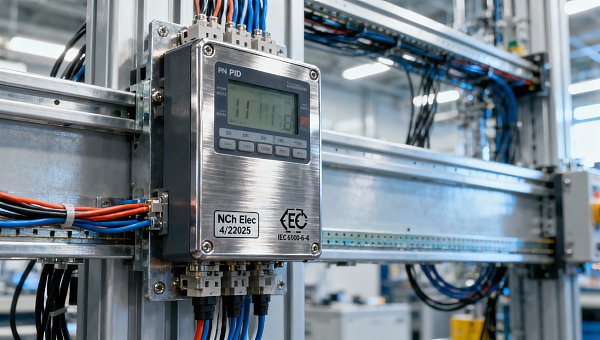
 Chile Enforces Mandatory INN Safety Certification for Industrial Temperature ControllersChile mandates INN safety certification (NCh Elec 4/2025) for industrial temperature controllers starting Aug 1, 2026—act now to avoid shipment delays & market bans.
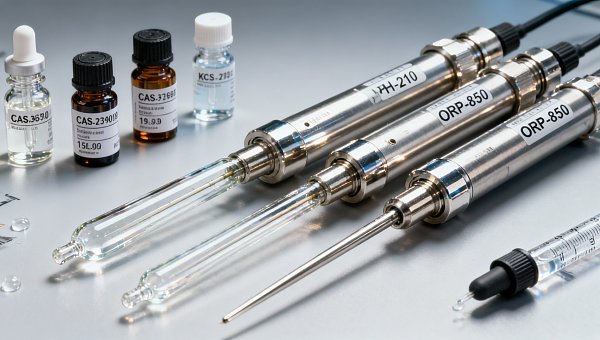
 K-REACH Supply-Shortage Exemption Launches for pH/ORP ElectrodesK-REACH Supply-Shortage Exemption now applies to pH/ORP electrodes—act before June 30, 2026 to avoid customs delays & penalties. Key for exporters & manufacturers.
 4th China International Supply Chain Expo to Focus on Smart Sensing & In-Process InspectionSmart Sensing & In-Process Inspection take center stage at the 4th China International Supply Chain Expo in Beijing, Nov 26–30, 2026 — discover next-gen inspection tech, AI vision modules, and calibrated sensing solutions for global industrial buyers.
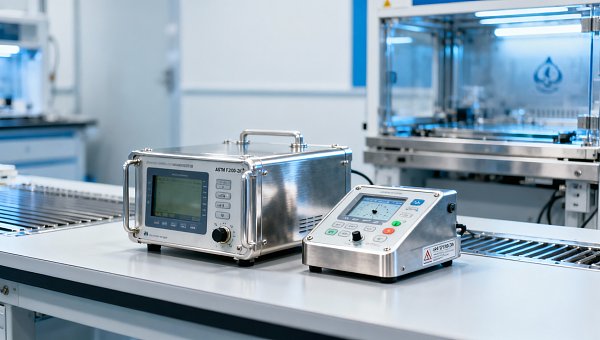
 ASTM F2100-26 Medical Mask Standard Takes Effect in USASTM F2100-26 medical mask standard is now in force—driving global demand for biosafety cabinets, particle counters & air velocity calibrators, especially China-made instruments.
 South Africa Enforces SABS Certification for IoT Monitoring DevicesSABS certification now mandatory for IoT monitoring devices entering South Africa via e-commerce—act before 1 June 2026 to avoid customs rejection and ensure market access.
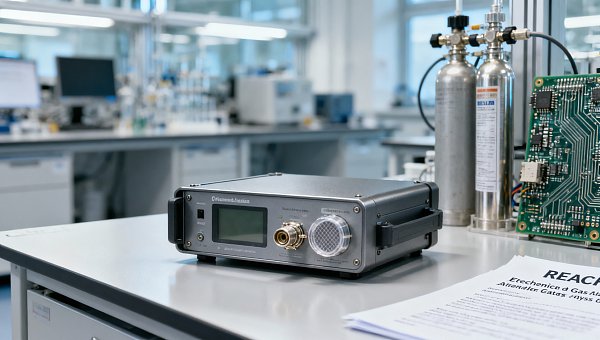
 EU REACH Adds Fluorinated Substances; SVHC Reporting Required for Gas AnalyzersEU REACH now restricts fluorinated substances in gas analyzers—SVHC reporting is mandatory by 30 Nov 2026. Ensure compliance for sensors, membranes & monitoring systems.
 Revised Maritime Code Takes Effect May 1, 2026: Shift in Unclaimed Cargo LiabilityRevised Maritime Code (2026): Shippers now liable for unclaimed cargo—critical for industrial instrument exporters, logistics providers & cross-border supply chains. Act now.
 China Imposes Zero Tariffs on Goods from All African Diplomatic Partners Starting May 1, 2026China’s zero-tariff policy for African instrumentation & automation exports starts May 1, 2026—boosting competitiveness in EPC tenders and market access for exporters.
 Import and Export Shifts in the PPM Gas Analyzer Marketppm gas analyzer market insights: discover how import tariffs, export controls, and compliance shifts impact cost, supply stability, and growth opportunities across key applications.
 Single Gas Analyzer Maintenance Issues That Raise DowntimeSingle gas analyzer maintenance issues can quietly increase downtime. Learn how to spot drift, calibration errors, and sample path faults early to improve uptime and field efficiency.



Search Categories
Search Categories
Latest Article
- N2 Concentration Analyzer Cost Factors for Bulk Industrial ProcurementN2 concentration analyzer cost depends on more than unit price. Compare process, purity, and safety applications with total cost logic to source smarter and reduce lifecycle risk.Posted by:
- Oxygen Concentration Analyzer vs Sensor Systems: Which Fits Continuous UseOxygen concentration analyzer or sensor system? Compare stability, drift, maintenance, and uptime for continuous use to choose the most reliable fit for your process.Posted by:
- SO2 Concentration Analyzer News: Compliance Demands Reshaping Product SpecsSO2 concentration analyzer trends are shifting with stricter compliance rules. Learn how new specs, data integrity, and uptime demands are reshaping smarter buying decisions.Posted by:
Please give us a message
