
ASEAN IoT Interoperability Standard V2.0 Released


On April 16, 2026, seven Southeast Asian countries—including Singapore (led by IMDA), Indonesia, Vietnam, and Thailand—jointly released the ASEAN Industrial IoT Interoperability White Paper, mandating protocol compliance for Chinese-made industrial IoT devices entering local smart factory platforms. This update directly affects manufacturers and exporters of data acquisition terminals, PLC gateways, and edge controllers supplying to ASEAN public-sector and subsidy-eligible industrial cloud ecosystems.
Event Overview
On April 16, 2026, the Infocomm Media Development Authority (IMDA) of Singapore, together with regulatory authorities from Indonesia, Vietnam, Thailand, Malaysia, the Philippines, and Cambodia, signed and published the ASEAN Industrial IoT Interoperability White Paper. The document establishes Version 2.0 of the Industrial IoT Device Interoperability Standard. It stipulates that, effective October 1, 2026, all China-manufactured data acquisition terminals, PLC gateways, and edge controllers connecting to national or government-subsidized industrial cloud platforms in participating countries must support the dual protocol stack: MQTT-SN 1.3 and OPC UA PubSub. Devices failing to meet this requirement will be denied registration and access to subsidized infrastructure.
Industries Affected by Segment
Direct Exporters of Industrial IoT Hardware
Manufacturers exporting data acquisition terminals, PLC gateways, or edge controllers to ASEAN markets are directly subject to the technical mandate. Non-compliant devices will face market access restrictions starting October 2026, potentially disrupting existing contracts tied to government-backed smart factory initiatives.
ODM/OEM Suppliers Serving Global System Integrators
Suppliers embedded in global supply chains—especially those producing white-label or co-branded hardware for system integrators deploying solutions across ASEAN—are affected indirectly but significantly. Their firmware and certification roadmaps must now align with the dual-protocol requirement, even if end customers are not based in ASEAN.
Industrial Cloud Platform Operators with ASEAN Presence
Operators of industrial cloud platforms offering subsidized connectivity or interoperability services in ASEAN must enforce device-level validation against the new standard. This implies updates to onboarding workflows, device attestation mechanisms, and API-level verification logic before October 2026.
What Enterprises and Practitioners Should Monitor and Do Now
Track official implementation guidelines and conformance test specifications
The White Paper confirms the requirement but does not yet publish formal conformance test procedures or certification pathways. Enterprises should monitor announcements from IMDA and ASEAN’s Joint Technical Working Group on Industrial IoT for upcoming technical annexes—expected by Q3 2026.
Prioritize assessment of high-volume export SKUs targeting ASEAN public-sector tenders
Not all exported devices will be impacted equally. Focus first on SKUs currently listed in national smart manufacturing procurement catalogs (e.g., Singapore’s Smart Nation Industrial Programme, Vietnam’s Industry 4.0 Priority Equipment List). These are most likely to fall under mandatory compliance scope.
Distinguish between policy signal and operational enforcement timelines
While the deadline is fixed at October 1, 2026, enforcement may roll out incrementally—e.g., starting with new subsidy applications rather than retroactively blocking existing deployments. Companies should verify whether legacy device fleets will be granted grace periods via national transitional policies.
Initiate internal firmware and documentation alignment planning
MQTT-SN 1.3 and OPC UA PubSub integration requires non-trivial firmware updates, security configuration adjustments, and updated user documentation. Engineering teams should begin scoping effort, dependency mapping, and third-party library validation—particularly for devices using legacy RTOS or constrained MCU platforms.
Editorial Perspective / Industry Observation
From an industry perspective, this development signals a deliberate regional consolidation of industrial IoT governance—not merely a technical update, but a coordinated step toward reducing cross-border integration friction in ASEAN’s shared manufacturing infrastructure. Analysis来看, it reflects growing confidence among member states in harmonizing digital industrial policy without relying on external standards bodies. Observation来看, the six-month window (April–October 2026) is tight for hardware iteration cycles, suggesting that early adopters may gain competitive advantage in tender evaluations. Current更值得关注的是 whether ASEAN will extend mutual recognition of test reports across national labs—a factor that could significantly reduce compliance overhead for multinational vendors.
It is更适合理解为 a regulatory milestone indicating ASEAN’s increasing capacity to set interoperability baselines independently, rather than an immediate market barrier. Its long-term significance lies less in technical complexity and more in its precedent: future ASEAN digital infrastructure mandates may follow similar multilateral coordination models.
Conclusion
This standard marks a structural shift in how industrial IoT equipment is qualified for public-sector deployment across key ASEAN economies. For affected enterprises, it represents a concrete, time-bound compliance obligation—not a speculative trend. The appropriate stance is neither alarm nor dismissal, but targeted technical due diligence aligned with specific export SKUs and national subsidy programs. Current readiness hinges on disciplined tracking of implementation details, not broad assumptions about regional digital policy.
Information Sources
Main source: ASEAN Industrial IoT Interoperability White Paper (Version 2.0), jointly issued by IMDA (Singapore), Kominfo (Indonesia), MIC (Vietnam), NBTC (Thailand), and five other national agencies on April 16, 2026. Pending observation: official conformance test framework, national enforcement rollout schedules, and mutual recognition arrangements among ASEAN accreditation bodies.
Recommended for You
 C2H5OH Concentration Analyzer: Key Checks Before Import OrdersC2H5OH concentration analyzer import guide: check specs, calibration, compliance, and supplier support before ordering to reduce risk and choose the right analyzer with confidence.
 2026 Market Trends for C4H10 Concentration Analyzers in Process IndustriesC4H10 concentration analyzer market trends for 2026: discover how smarter, connected analyzers help process industries improve safety, compliance, uptime, and ROI.
 Common Safety Gaps When Using a C6H6 Concentration AnalyzerC6H6 concentration analyzer safety gaps can distort readings and delay hazard response. Learn the most common risks, practical fixes, and smarter deployment tips across industrial, lab, and environmental use.
 C7H8 Concentration Analyzer Price Trends in 2026: What Shapes CostC7H8 concentration analyzer price trends in 2026 depend on sensors, compliance, calibration, integration, and service. See what really shapes total cost before you approve a budget.
 How to Choose a C8H10 Concentration Analyzer for Stable VOC MonitoringC8H10 concentration analyzer selection guide for stable VOC monitoring. Learn how to compare performance, technology, drift, and application fit for reliable results.
 Guangdong Launches 3-Year Service Trade Plan to Boost Instrument Exports via AI and HarmonyOSGuangdong's 3-year service trade plan boosts instrument exports via AI optimization & HarmonyOS—key for ASEAN/Latin America market access. Act now.
 China-Pakistan MOU Opens Faster Certification Path for Instruments in South AsiaChina-Pakistan MOU accelerates instrument certification in South Asia—faster CCC acceptance, mutual lab recognition & Islamabad testing hub for pressure gauges, flow meters, environmental monitors.
 Gold Futures Surge 1.1%; Overseas Orders for Precious Metals Analyzers Rise 35%Gold futures surge 1.1% — driving 35% rise in overseas orders for precious metals analyzers like XRF & ICP-MS. Discover key market impacts & compliance insights.
 《中华人民共和国矿产资源法实施条例》6月15日施行,矿产分析仪出口标准升级矿产分析仪出口标准升级!《中华人民共和国矿产资源法实施条例》6月15日正式施行,助力企业合规出海、抢占全球矿产检测新机遇。
 特朗普称美伊‘基本谈成’霍尔木兹通航协议,能源监测设备出口波动预警Energy monitoring equipment export volatility warning amid Trump’s 'nearly finalized' US-Iran Strait of Hormuz navigation deal—key insights for exporters and energy sector stakeholders.
,国产存储测试设备订单窗口打开") 长鑫科技科创板IPO上会(5月27日),国产存储测试设备订单窗口打开Changxin Technology's STAR Market IPO on May 27 opens a key window for domestic memory testing equipment orders—discover growth opportunities now!
长鑫科技科创板IPO上会(5月27日),国产存储测试设备订单窗口打开Changxin Technology's STAR Market IPO on May 27 opens a key window for domestic memory testing equipment orders—discover growth opportunities now! 墨西哥拟对中国轻型车及零部件加征关税至50%,车载检测设备出口承压Mexican tariff hike to 50% on Chinese light vehicles & parts pressures exports of automotive testing equipment—key insights and mitigation strategies.
 美SEC紧急叫停‘代币化美股’计划,全球AI算力设备出口融资环境趋稳AI算力设备出口融资环境趋稳!美SEC紧急叫停‘代币化美股’计划,释放监管明确信号,利好全球合规科技投融资布局。速看深度解析。
 EU Industrial Accelerator Act Enforces 70% Local Sourcing for InstrumentsEU Industrial Accelerator Act enforces 70% local sourcing for instruments—key implications for exporters, suppliers & integrators. Act now.
 China Imposes Full Export Ban on Dual-Use Items to Japanese Military End UsersChina's dual-use export ban to Japanese military users takes effect Jan 6, 2026—impacting rare earth, semiconductor & precision manufacturing supply chains. Act now.
 Where C3H8 Concentration Analyzers Fit in 2026 Industrial Emissions MonitoringC3H8 concentration analyzer solutions are reshaping 2026 industrial emissions monitoring with better compliance, safer propane control, and smarter efficiency insights. Learn where they fit.
 B2H6 Concentration Analyzer Import and Export Updates for 2026 Compliance PlanningB2H6 concentration analyzer import and export updates for 2026: explore compliance risks, documentation priorities, and planning tips to reduce delays and support smarter cross-border decisions.
 GeH4 Concentration Analyzer Safety Risks and Detection Limits in Semiconductor UseGeH4 concentration analyzer safety risks, alarm strategy, and detection limits for semiconductor use. Learn how to reduce exposure risk, improve process stability, and choose the right monitoring solution.
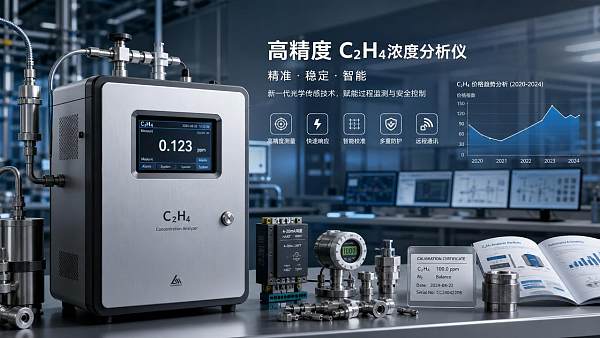
 C2H4 Concentration Analyzer Price Trends in 2026: What Is Driving Cost ChangesC2H4 concentration analyzer price trends in 2026 explained: discover key cost drivers, procurement risks, and smart buying tips to balance budget, compliance, and long-term value.
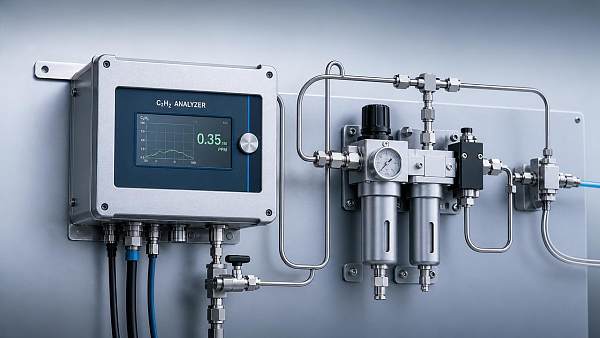
 How to Compare C2H2 Concentration Analyzer Accuracy in Industrial Gas MonitoringC2H2 concentration analyzer accuracy matters beyond the datasheet. Learn how to compare drift, calibration, interference, and field reliability for safer industrial gas monitoring.
![]() SiH4 Concentration Analyzer Import Rules to Watch in 2026SiH4 concentration analyzer import rules are tightening in 2026. Learn the key documents, compliance checks, and procurement tips to avoid delays and speed project delivery.
SiH4 Concentration Analyzer Import Rules to Watch in 2026SiH4 concentration analyzer import rules are tightening in 2026. Learn the key documents, compliance checks, and procurement tips to avoid delays and speed project delivery. HF Concentration Analyzer Demand Shifts Across Key IndustriesHF concentration analyzer demand is shifting across chemical, refining, environmental, and advanced manufacturing sectors—learn what drives safer control, compliance, and precision upgrades.
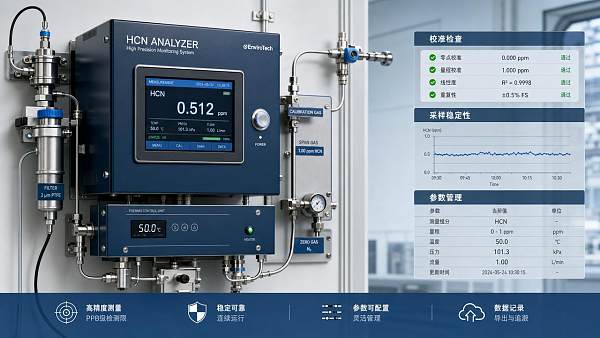
 Common HCN Concentration Analyzer Mistakes in Daily OperationHCN concentration analyzer daily mistakes can quietly damage accuracy and uptime. Learn common errors, practical checks, and smart operating tips to improve reliability.
 PH3 Concentration Analyzer Price Trends in 2026PH3 concentration analyzer price trends in 2026 reveal what really drives cost, compliance, and performance. Explore key buying factors to compare quotes smarter and reduce total ownership risk.
 How to Choose an AsH3 Concentration Analyzer for Trace Gas SafetyAsH3 concentration analyzer selection starts with the right application context. Learn how to compare response, interference, integration, and lifecycle fit for safer trace gas monitoring.
 Released") China's Business Environment Report (2026) ReleasedChina's Business Environment Report (2026) reveals 92% digital CMA/CNAS coverage—cutting export test report time to 15 days. Boost CE, UKCA & UL certification for pressure gauges, thermostats & analyzers.
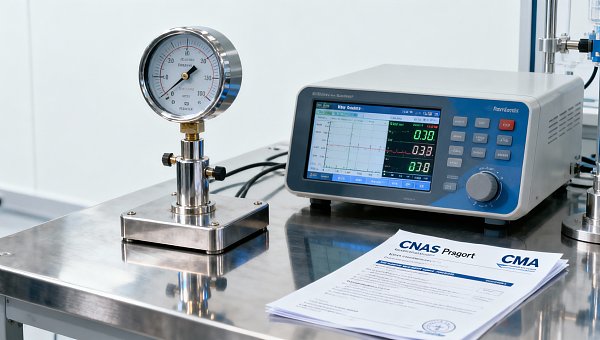
China's Business Environment Report (2026) ReleasedChina's Business Environment Report (2026) reveals 92% digital CMA/CNAS coverage—cutting export test report time to 15 days. Boost CE, UKCA & UL certification for pressure gauges, thermostats & analyzers. US MMA Tank Incident Triggers Regional Safety UpgradesUS MMA tank incident sparks urgent demand for VOCs monitoring, toxic gas modeling & intrinsically safe transmitters across LATAM and SEA.
 NDRC Expands Energy-Saving and Carbon-Reduction Oversight to Dyeing, Chemical Fibers, and PapermakingNDRC expands energy-saving & carbon-reduction oversight to dyeing, chemical fibers, and papermaking—boosting demand for COD/NH₃-N analyzers, VOCs monitors, and CEMS systems.
 MIIT Sets 2026 Energy-Saving Inspection Targets for High-Energy ChemicalsMIIT Sets 2026 Energy-Saving Inspection Targets for High-Energy Chemicals—urgent demand surges for certified pH meters, gas analyzers & explosion-proof controllers.
 MOFCOM: FDI in China Down 10.3% Jan–Apr 2026, but Manufacturing Up 12.1%FDI in China fell 10.3% Jan–Apr 2026—but manufacturing FDI surged 12.1%, led by high-tech sectors. Discover what this means for precision metrology, sensors & calibration providers.
 PBOC Conducts 600-Billion-Yuan MLF Operation, Boosting RMB Stability for Testing Equipment ExportsPBOC's 600-billion-yuan MLF operation boosts RMB stability—key for NDT equipment exporters using LC/DA terms. Reduce FX risk, optimize hedging & improve cash flow planning now.
 EU Steel Strategy Upgrade: CBAM Expansion to Machinery & InstrumentsEU Steel Strategy Upgrade expands CBAM to machinery & instruments (HS 84/90) — LCA data mandatory from 1 July 2026. Act now to avoid delays & ensure compliance.















Search Categories
Search Categories
Latest Article
- C2H5OH Concentration Analyzer: Key Checks Before Import OrdersC2H5OH concentration analyzer import guide: check specs, calibration, compliance, and supplier support before ordering to reduce risk and choose the right analyzer with confidence.Posted by:
- 2026 Market Trends for C4H10 Concentration Analyzers in Process IndustriesC4H10 concentration analyzer market trends for 2026: discover how smarter, connected analyzers help process industries improve safety, compliance, uptime, and ROI.Posted by:
- Common Safety Gaps When Using a C6H6 Concentration AnalyzerC6H6 concentration analyzer safety gaps can distort readings and delay hazard response. Learn the most common risks, practical fixes, and smarter deployment tips across industrial, lab, and environmental use.Posted by:
Please give us a message
