
GeH4 Concentration Analyzer Safety Risks and Detection Limits in Semiconductor Use


In semiconductor operations, a GeH4 concentration analyzer plays a critical role in protecting product quality, process stability, and worker safety. For quality control teams and safety managers, understanding safety risks, alarm response, and practical detection limits is essential to preventing toxic gas exposure and costly production incidents. This article explains the key concerns, performance factors, and application considerations that matter most in real industrial environments.
Germanium hydride, commonly written as GeH4, is used in specialized semiconductor processes where gas purity, flow stability, and contamination control directly affect yield. Because the gas is toxic and may also present handling hazards under tightly controlled process conditions, a reliable GeH4 concentration analyzer is not just a compliance tool. It is a critical layer of process assurance.
For quality control personnel, the main concern is whether the analyzer can detect meaningful concentration changes early enough to protect wafers, tools, and product consistency. For safety managers, the priority is different but connected: low-level leak detection, alarm integrity, response time, calibration stability, and integration with emergency procedures. In both cases, selection decisions should be based on actual plant conditions rather than headline specifications alone.
Why GeH4 Monitoring Matters in Semiconductor Facilities
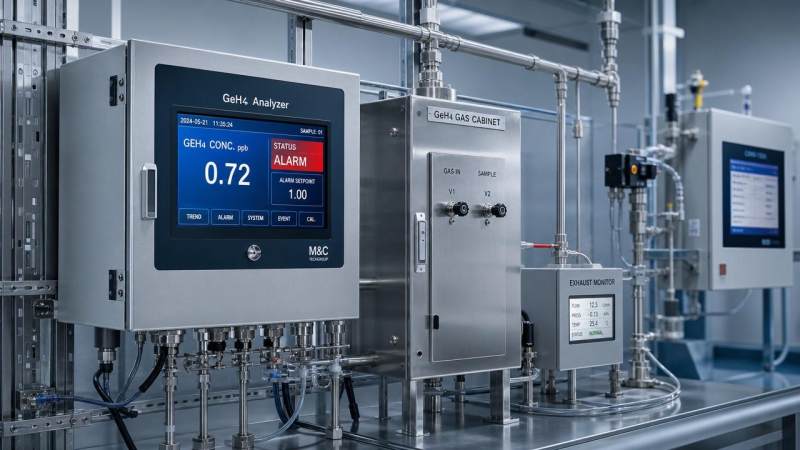
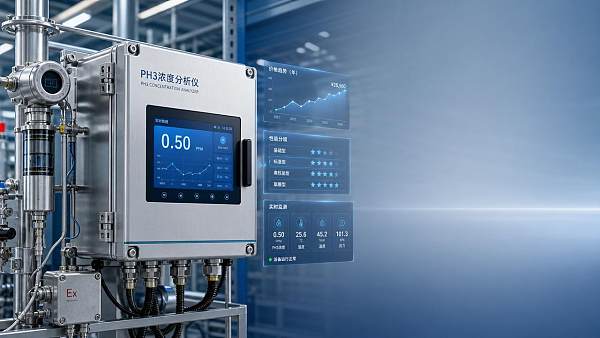
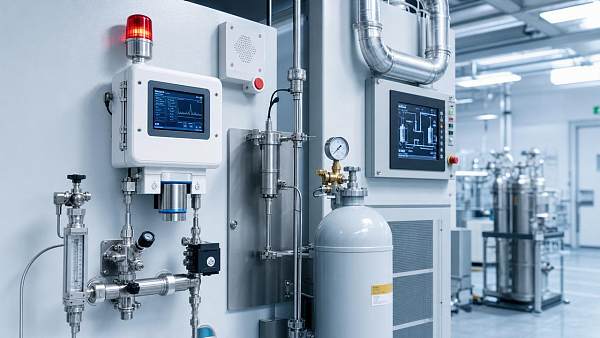
A GeH4 concentration analyzer is typically deployed at 3 key points in semiconductor operations: source gas cabinets, gas delivery lines, and room or exhaust monitoring locations. Each point has a different objective. Cabinet monitoring focuses on leak onset, line monitoring supports process control, and area monitoring protects workers during abnormal releases or maintenance events.
In many fabs, the acceptable performance target is not simply “detect gas.” It is detect the right concentration within the right time window. A 10-second to 30-second response may be acceptable for some room monitoring applications, while fast-changing cabinet conditions may require a much tighter alarm response profile. This is why the same GeH4 concentration analyzer specification cannot be applied everywhere without review.
Primary risks linked to GeH4 use
The first risk is toxic exposure. Even a low-concentration release can become a serious personnel issue in enclosed process areas or service chases. The second risk is process contamination. If gas concentration drifts outside the intended control range, thin-film quality, deposition uniformity, or doping consistency can suffer. The third risk is operational downtime, where a single alarm event can trigger evacuation, tool isolation, and hours of recovery work.
A fourth risk is false confidence. Some users assume that if an analyzer has a low stated detection limit, it will perform equally well in every installation. In reality, tubing length, moisture ingress, cross-sensitivity, sample conditioning, and maintenance intervals can shift performance enough to matter. A nominal sub-ppm capability on paper may become far less practical in a harsh production environment.
Where quality and safety objectives overlap
Quality teams often look at concentration stability, repeatability, and trend visibility over 8-hour, 12-hour, or 24-hour production windows. Safety managers focus on alarm thresholds, interlock logic, evacuation triggers, and proof testing frequency. The overlap appears in one question: can the GeH4 concentration analyzer provide reliable, actionable data before a minor deviation becomes a production or exposure incident?
When that answer is yes, fabs gain more than compliance. They reduce nuisance shutdowns, improve root cause analysis, and support more disciplined gas management. That is especially important in high-value process areas where one interrupted batch can affect dozens of wafers and extend the recovery cycle by 4 to 12 hours.
Typical decision points for instrumentation teams
- Required detection range, such as low ppm, sub-ppm, or percent-level process measurement
- Response time target, often defined as T90 within a specific number of seconds
- Compatibility with gas cabinet, scrubber, or building management interlocks
- Calibration frequency, usually every 30, 60, or 90 days depending on risk level
- Sampling system design, including line length, filtration, and moisture control
Safety Risks, Alarm Strategy, and Detection Limits
Detection limit is one of the most discussed specifications in any GeH4 concentration analyzer review, but it should never be interpreted in isolation. A stated limit of detection may come from controlled laboratory conditions with stable temperature, dry sample gas, and minimal interference. Real semiconductor facilities introduce vibration, pressure fluctuation, trace contaminants, and variable ventilation patterns, all of which can influence effective field performance.
For safety planning, managers usually define at least 2 alarm levels. A lower alarm supports early investigation, while a higher alarm activates stronger responses such as local shutdown, valve isolation, or evacuation. Practical thresholds depend on site policy, risk assessment, and analyzer capability, but the logic should always match response time, ventilation design, and staffing conditions on each shift.
Understanding practical versus theoretical detection limits
Theoretical detection limit refers to the smallest concentration distinguishable from background noise under ideal conditions. Practical detection limit is the lowest concentration that can be trusted in daily use after accounting for baseline drift, sample lag, environmental variation, and calibration tolerance. In purchasing discussions, the practical figure is often the more valuable one.
For example, an analyzer with a very low theoretical limit but poor baseline stability may generate more false alarms than a slightly less sensitive system with better repeatability. In gas safety management, repeatability within a narrow band and a stable zero point over 30 to 60 days can be more useful than chasing the lowest published number.
The table below shows how detection and alarm considerations often differ by semiconductor monitoring location.
The most important takeaway is that detection limits should be tied to the application objective. A GeH4 concentration analyzer intended for cabinet leak detection may require faster dynamic response than one intended mainly for process trend monitoring, even if both appear similar in basic specification sheets.
Common causes of missed alarms or false alarms
Missed alarms are often linked to 5 practical issues: long sample lines, blocked filters, poor calibration gas handling, sensor poisoning, and weak maintenance discipline. False alarms frequently come from unstable zero drift, incompatible installation points, power quality issues, and unrecognized cross-interference from other gases used nearby.
In semiconductor environments, these issues are not minor. A false alarm can stop production, trigger investigation protocols, and create unnecessary wafer risk. A missed alarm is more serious because it can expose staff and delay emergency response. That is why alarm management should include verification steps, periodic bump tests, and clearly assigned decision authority.
Recommended alarm response structure
- Low alarm: initiate local inspection, confirm analyzer trend, check ventilation status.
- High alarm: isolate source where interlocks allow, restrict access, notify shift supervision.
- Confirmed release: activate emergency procedure, verify scrubber and exhaust performance, document event for corrective action.
How to Select a GeH4 Concentration Analyzer for Real Plant Conditions
Selecting the right GeH4 concentration analyzer requires balancing sensitivity, reliability, maintainability, and integration cost. Many procurement teams initially focus on detection range alone, but experienced users compare at least 4 evaluation areas: sensing principle, sample system design, lifecycle maintenance, and control system compatibility. These factors often determine actual ownership value over 2 to 5 years.
Because the instrumentation industry supports industrial automation and intelligent monitoring, buyers should also consider how analyzer data will be used after installation. Will it feed a distributed control system, a gas management panel, a local HMI, or a digital maintenance platform? The answer affects signal output requirements, diagnostics visibility, and long-term service planning.
Core selection criteria
For most semiconductor users, a practical review starts with 6 questions. What detection range is required? What is the expected T90 response time? How often will calibration be performed? What are the ambient temperature and humidity conditions? Is the system intended for continuous 24/7 service? How will alarms connect to shutdown logic and operator workflows?
If any of these questions remain unanswered during procurement, there is a high chance of mismatch between the analyzer and the application. That mismatch may not appear during commissioning, but it usually becomes visible within the first 3 to 6 months as drift, maintenance burden, or unexplained alarm behavior.
The following table can help quality and safety teams compare evaluation points before purchase.
In many projects, serviceability becomes the hidden cost driver. If filters are difficult to replace, calibration access is poor, or spare parts require long lead times of 4 to 8 weeks, the ownership burden can outweigh any initial price advantage. A well-chosen GeH4 concentration analyzer should therefore be evaluated as a system, not only as a sensor.
Questions to ask suppliers before approval
- What is the practical field detection limit under expected semiconductor utility conditions?
- How is T90 response measured, and does the value include sampling path delay?
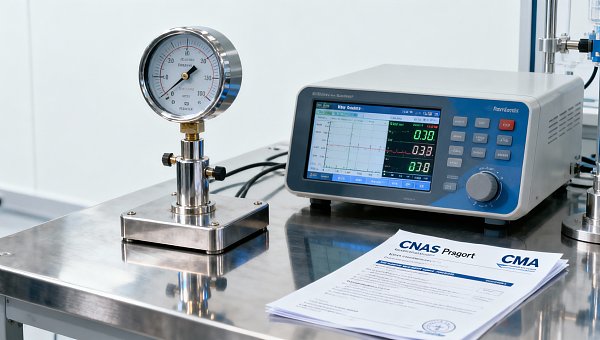
- What are the recommended calibration and bump test intervals?
- What maintenance tasks are required monthly, quarterly, and annually?
- Which output signals and communication protocols are supported for interlock systems?
- What parts are considered consumables, and what are their typical replacement cycles?
Implementation, Maintenance, and Daily Control Practices
Even a high-quality GeH4 concentration analyzer can underperform if implementation is weak. Installation should follow a defined sequence that includes site review, sample path verification, electrical integration, alarm logic validation, and operator training. In many plants, 5 implementation steps completed correctly prevent months of avoidable troubleshooting later.
Commissioning should verify not only analyzer startup but also end-to-end response. That means checking whether a concentration change is detected at the expected point, whether alarms appear at the control interface, whether interlocks activate properly, and whether the maintenance team can perform routine checks safely. A paper checklist alone is not enough.
A practical deployment workflow
- Define monitoring objective: leak detection, process control, or area protection.
- Confirm installation point and sampling layout, including line length and material compatibility.
- Set alarm thresholds and interlock logic according to risk assessment and shift procedures.
- Run calibration and functional tests, including signal transmission to supervisory systems.
- Train operators and maintenance staff on inspection, alarm handling, and documentation.
Routine maintenance intervals that matter
Most sites benefit from a tiered maintenance approach. Daily or shift checks may include status review and alarm log confirmation. Monthly tasks often include visual inspection, flow confirmation, and sample line review. Quarterly work may include calibration, filter replacement, and output verification. Annual review usually covers a broader performance assessment and procedural update.
The exact interval depends on process exposure, contamination load, and manufacturer guidance, but consistency matters more than ambition. A realistic 30-day or 90-day schedule that teams can sustain is better than an overly complex plan that slips during production pressure. Safety managers should also ensure that every maintenance event is recorded for trend analysis and audit readiness.
Frequent operational mistakes
- Treating factory acceptance data as equal to field performance data
- Placing the analyzer where sample transport delay exceeds the alarm objective
- Ignoring minor zero drift until it causes repeated nuisance alarms
- Skipping operator refresher training after process or staffing changes
- Failing to coordinate analyzer maintenance with gas cabinet and exhaust maintenance schedules
What quality control and safety teams should document
For better process discipline, keep records in 4 categories: calibration history, alarm events, maintenance actions, and corrective actions. This documentation helps separate true gas events from instrument drift. It also supports decisions on replacement cycles, spare stock levels, and whether a specific GeH4 concentration analyzer installation needs relocation or redesign.
When analyzer data is linked with process timestamps, gas usage records, and ventilation status, teams can improve both safety and yield analysis. That broader instrumentation perspective is increasingly important as semiconductor facilities move toward more connected monitoring, stronger traceability, and data-driven maintenance programs.
Final Considerations for Procurement and Risk Reduction
A GeH4 concentration analyzer should be selected and managed as part of a full risk control strategy, not as an isolated device purchase. For quality control staff, the value lies in stable measurement, fewer process deviations, and more defensible troubleshooting data. For safety managers, the value lies in dependable alarms, clear response logic, and reduced exposure risk during routine operation and upset conditions.
The strongest results usually come from aligning 3 elements: realistic detection expectations, disciplined maintenance, and correct system integration. When those elements are in place, the analyzer supports cleaner process control, faster incident response, and lower downtime risk. If you are evaluating monitoring upgrades or planning a new gas safety project, contact us to discuss application details, compare configuration options, and get a tailored solution for your semiconductor environment.
Recommended for You
 Where C3H8 Concentration Analyzers Fit in 2026 Industrial Emissions MonitoringC3H8 concentration analyzer solutions are reshaping 2026 industrial emissions monitoring with better compliance, safer propane control, and smarter efficiency insights. Learn where they fit.
 B2H6 Concentration Analyzer Import and Export Updates for 2026 Compliance PlanningB2H6 concentration analyzer import and export updates for 2026: explore compliance risks, documentation priorities, and planning tips to reduce delays and support smarter cross-border decisions.
 GeH4 Concentration Analyzer Safety Risks and Detection Limits in Semiconductor UseGeH4 concentration analyzer safety risks, alarm strategy, and detection limits for semiconductor use. Learn how to reduce exposure risk, improve process stability, and choose the right monitoring solution.
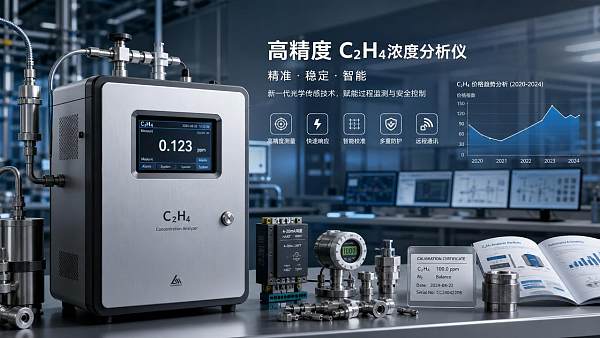
 C2H4 Concentration Analyzer Price Trends in 2026: What Is Driving Cost ChangesC2H4 concentration analyzer price trends in 2026 explained: discover key cost drivers, procurement risks, and smart buying tips to balance budget, compliance, and long-term value.
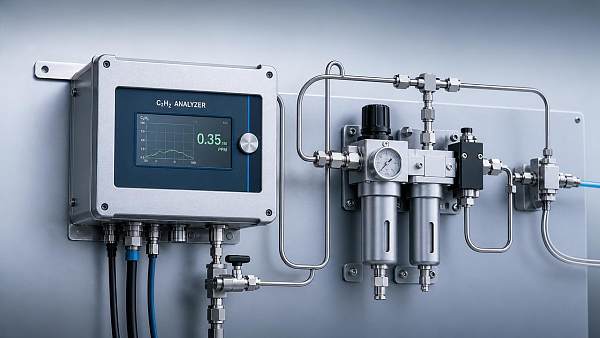
 How to Compare C2H2 Concentration Analyzer Accuracy in Industrial Gas MonitoringC2H2 concentration analyzer accuracy matters beyond the datasheet. Learn how to compare drift, calibration, interference, and field reliability for safer industrial gas monitoring.
![]() SiH4 Concentration Analyzer Import Rules to Watch in 2026SiH4 concentration analyzer import rules are tightening in 2026. Learn the key documents, compliance checks, and procurement tips to avoid delays and speed project delivery.
SiH4 Concentration Analyzer Import Rules to Watch in 2026SiH4 concentration analyzer import rules are tightening in 2026. Learn the key documents, compliance checks, and procurement tips to avoid delays and speed project delivery. HF Concentration Analyzer Demand Shifts Across Key IndustriesHF concentration analyzer demand is shifting across chemical, refining, environmental, and advanced manufacturing sectors—learn what drives safer control, compliance, and precision upgrades.
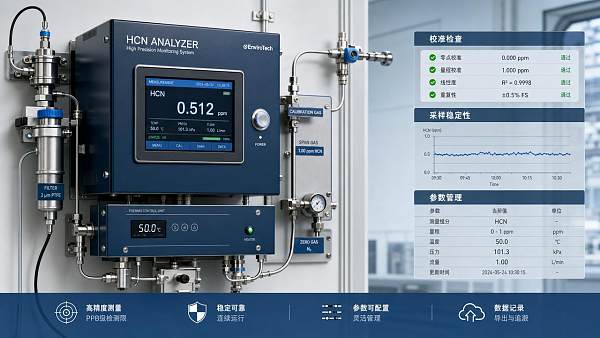
 Common HCN Concentration Analyzer Mistakes in Daily OperationHCN concentration analyzer daily mistakes can quietly damage accuracy and uptime. Learn common errors, practical checks, and smart operating tips to improve reliability.
 PH3 Concentration Analyzer Price Trends in 2026PH3 concentration analyzer price trends in 2026 reveal what really drives cost, compliance, and performance. Explore key buying factors to compare quotes smarter and reduce total ownership risk.
 How to Choose an AsH3 Concentration Analyzer for Trace Gas SafetyAsH3 concentration analyzer selection starts with the right application context. Learn how to compare response, interference, integration, and lifecycle fit for safer trace gas monitoring.
 Released") China's Business Environment Report (2026) ReleasedChina's Business Environment Report (2026) reveals 92% digital CMA/CNAS coverage—cutting export test report time to 15 days. Boost CE, UKCA & UL certification for pressure gauges, thermostats & analyzers.
China's Business Environment Report (2026) ReleasedChina's Business Environment Report (2026) reveals 92% digital CMA/CNAS coverage—cutting export test report time to 15 days. Boost CE, UKCA & UL certification for pressure gauges, thermostats & analyzers. US MMA Tank Incident Triggers Regional Safety UpgradesUS MMA tank incident sparks urgent demand for VOCs monitoring, toxic gas modeling & intrinsically safe transmitters across LATAM and SEA.
 NDRC Expands Energy-Saving and Carbon-Reduction Oversight to Dyeing, Chemical Fibers, and PapermakingNDRC expands energy-saving & carbon-reduction oversight to dyeing, chemical fibers, and papermaking—boosting demand for COD/NH₃-N analyzers, VOCs monitors, and CEMS systems.
 MIIT Sets 2026 Energy-Saving Inspection Targets for High-Energy ChemicalsMIIT Sets 2026 Energy-Saving Inspection Targets for High-Energy Chemicals—urgent demand surges for certified pH meters, gas analyzers & explosion-proof controllers.
 MOFCOM: FDI in China Down 10.3% Jan–Apr 2026, but Manufacturing Up 12.1%FDI in China fell 10.3% Jan–Apr 2026—but manufacturing FDI surged 12.1%, led by high-tech sectors. Discover what this means for precision metrology, sensors & calibration providers.
 PBOC Conducts 600-Billion-Yuan MLF Operation, Boosting RMB Stability for Testing Equipment ExportsPBOC's 600-billion-yuan MLF operation boosts RMB stability—key for NDT equipment exporters using LC/DA terms. Reduce FX risk, optimize hedging & improve cash flow planning now.
 EU Steel Strategy Upgrade: CBAM Expansion to Machinery & InstrumentsEU Steel Strategy Upgrade expands CBAM to machinery & instruments (HS 84/90) — LCA data mandatory from 1 July 2026. Act now to avoid delays & ensure compliance.
 Global EV Energy Consumption Standard to Take Effect Oct 1, 2026Global EV Energy Consumption Standard (GTR No. 22) takes effect Oct 1, 2026 — learn how it reshapes battery testing, certification & supply chains worldwide.
 WTO Report Shows Strong Global Trade, Easing Export Pressure for Industrial Monitoring DevicesIndustrial monitoring devices exporters benefit as WTO reports 4.2% global trade growth—easing export pressure, improving delivery predictability & cash flow.
 South Korea MFDS Revises Food Contact Materials StandardsSouth Korea MFDS revises food contact materials standards: new nickel/chromium migration limits & NIAS verification—critical for lab instrument exporters and compliance providers.
 Brazil to Eliminate Import Duties on Cross-Border E-Commerce Orders Under USD 50Brazil to eliminate import duties on cross-border e-commerce orders under USD 50—key for portable testing instruments exporters targeting Mercado Livre & DIY buyers.
 New AI Agent Guidelines Impact Smart Inspection Device ExportsAI Agent Guidelines impact smart inspection device exports—learn how new China AI safety rules affect EU, US & Middle East market access.
 UPS Freight Rates Increase Effective May 17, 2026UPS freight rates increase effective May 17, 2026—impact FOB pricing for industrial monitoring equipment exporters. Act now to optimize packaging, revise quotes, and secure margins.
 新修订《海商法》施行:卸货港无人提货责任转向托运人,检测设备出口交期风控升级New Maritime Code shifts unclaimed cargo liability to shippers at discharge ports—critical for testing equipment exporters managing delivery timelines and compliance risk.
 China Imposes Zero Tariffs on Lab Analyzers for 20 African NationsChina's zero tariffs on lab analyzers for 20 African nations boost export competitiveness—pH meters, spectrophotometers & more now duty-free from May 2026.
 CA Toxic Chemical Tank Overheating Sparks Explosion Risk, Monitoring Equipment Orders SurgeGas leak detectors, remote temperature warning systems & explosion-proof thermal imagers surge in demand after CA toxic tank overheating incident.
 EU REACH Adds DBDPE to SVHC List, Impacting Brominated Flame Retardant Testing for Export EquipmentDBDPE added to EU REACH SVHC list—impact on brominated flame retardant testing for industrial instruments, sensors & export compliance. Act now.
 Thailand Customs Digital Reform Spurs RFID Equipment DemandRFID equipment demand surges in Thailand as Customs digital reform mandates e-labeling, real-time parcel tracking & API compliance—act now to meet TISI specs and platform rules.
 Lazada Thailand Cuts Import Duties on 528 CategoriesLazada Thailand cuts import duties on 528 categories — including wired headphones & notebooks — lowering costs for Chinese exporters and Thai SMEs via LGS.
 US Delays 400 Tomahawk Missiles to Japan Amid Iran Inventory ReplenishmentTomahawk missiles delay to Japan sparks urgent demand for alternative guidance, navigation & secure comms suppliers—key opportunity for export-ready defense electronics firms.
 What to Check Before Importing an F2 Concentration Analyzer in 2026F2 concentration analyzer import guide for 2026: learn what to check on compliance, performance, integration, lifecycle cost, and supplier support before you buy.
 SF6 Concentration Analyzer Market Trends for Power and Gas Applications in 2026SF6 concentration analyzer market trends for 2026: explore accuracy, digital integration, emissions control, and buying tips for power and gas applications.





Search Categories
Search Categories
Latest Article
- Where C3H8 Concentration Analyzers Fit in 2026 Industrial Emissions MonitoringC3H8 concentration analyzer solutions are reshaping 2026 industrial emissions monitoring with better compliance, safer propane control, and smarter efficiency insights. Learn where they fit.Posted by:
- B2H6 Concentration Analyzer Import and Export Updates for 2026 Compliance PlanningB2H6 concentration analyzer import and export updates for 2026: explore compliance risks, documentation priorities, and planning tips to reduce delays and support smarter cross-border decisions.Posted by:
- GeH4 Concentration Analyzer Safety Risks and Detection Limits in Semiconductor UseGeH4 concentration analyzer safety risks, alarm strategy, and detection limits for semiconductor use. Learn how to reduce exposure risk, improve process stability, and choose the right monitoring solution.Posted by:
Please give us a message
