
How to Compare C2H2 Concentration Analyzer Accuracy in Industrial Gas Monitoring


Choosing the right C2H2 concentration analyzer starts with one practical question: can it deliver trustworthy readings in your actual process, not only in a controlled factory test. For technical evaluators, the best comparison method is to verify accuracy through calibration performance, interference resistance, response behavior, environmental tolerance, and long-term drift.
In industrial gas monitoring, a small difference in measured acetylene concentration can affect safety decisions, fault diagnosis, process optimization, and compliance reporting. That is why comparing analyzers by datasheet range alone is not enough. A robust evaluation must connect laboratory specifications with field conditions, maintenance workload, and total measurement reliability over time.
What does “accuracy” really mean when comparing a C2H2 concentration analyzer?
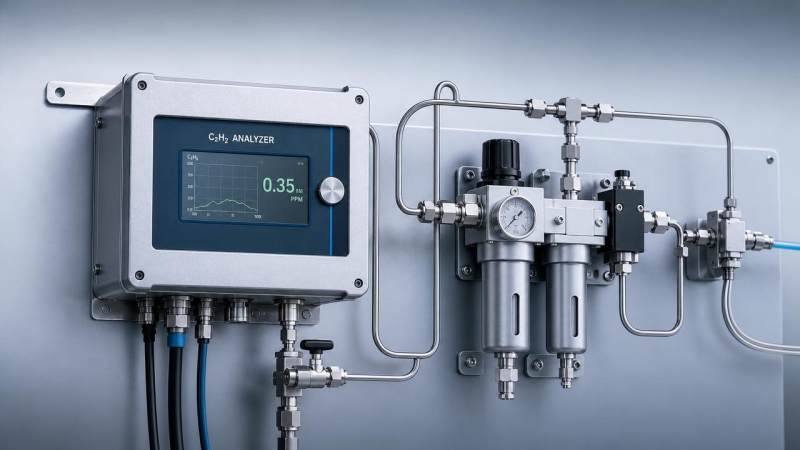
For technical assessment, accuracy is not a single number. It is a combination of measurement error, repeatability, linearity, zero stability, span stability, and uncertainty under the operating conditions that matter to your site. A vendor may advertise high accuracy, but the useful question is how that value was obtained.
When evaluating a C2H2 concentration analyzer, ask whether the stated accuracy applies across the full measurement range or only near one calibration point. Also confirm whether the specification is expressed as a percentage of reading, a percentage of full scale, or both, because those formats create very different performance outcomes at low concentrations.
For example, an analyzer with ±2% of full-scale error may appear acceptable on paper, but if your application works mainly at low acetylene concentrations, the practical error could become significant. In contrast, a specification based partly on reading may better reflect real low-level monitoring needs. Technical evaluators should always map accuracy format to expected operating concentration.
Another critical point is whether the analyzer maintains its performance after installation. Initial factory calibration accuracy has limited value if the instrument drifts quickly due to temperature changes, contamination, sensor aging, or sample system instability. In industrial gas monitoring, sustained accuracy is usually more important than a favorable startup result.
Which performance indicators matter most to technical evaluators?
Most technical evaluators care about five things first: measurement uncertainty in the target range, cross-sensitivity to other gases, response time, calibration stability, and maintenance demand. These factors influence whether the analyzer will support reliable industrial decisions without creating hidden operational burden.
Start with the target concentration range. If the process requires trace-level detection, compare low-end sensitivity, detection limit, and noise performance, not only full-range accuracy. If the application involves higher concentrations, check linearity across the entire span and whether the analyzer remains stable during fast process changes.
Cross-sensitivity is often underestimated. In many industrial environments, acetylene is not measured in isolation. Background gases, moisture, hydrocarbons, carbon monoxide, hydrogen, methane, or sulfur-containing compounds may influence the reported value. If a vendor does not provide interference data, the analyzer cannot be considered fully evaluated for industrial use.
Response time is equally important when gas composition changes rapidly or alarms depend on timely readings. Review T90 or T95 response specifications, but also examine whether the stated value includes the full sample handling path. A fast sensor does not guarantee a fast system if the gas line, filters, conditioning modules, or pumps introduce delay.
Calibration stability tells you how often the analyzer will need adjustment. Short calibration intervals can increase gas consumption, labor time, downtime, and risk of unnoticed drift between checks. For industrial gas monitoring, a slightly higher purchase price may be justified if the analyzer holds calibration significantly longer under field conditions.
Finally, maintenance demand is part of accuracy in practice. Instruments that are frequently fouled, require complex recalibration, or depend on highly controlled sample quality may not deliver better real-world measurement results than simpler analyzers with lower nominal specifications but stronger operational robustness.
How should you compare datasheet accuracy claims fairly?
Many comparison errors happen because evaluators review vendor datasheets as if all specifications were written under the same test conditions. In reality, manufacturers may define reference temperature, pressure, humidity, gas matrix, calibration procedure, and acceptance criteria differently. A fair comparison requires normalizing those assumptions.
First, confirm the measurement principle. A C2H2 concentration analyzer may use technologies such as non-dispersive infrared, tunable diode laser absorption spectroscopy, gas chromatography, photoacoustic methods, or electrochemical sensing in some niche cases. Each principle has different strengths in selectivity, drift, speed, and environmental sensitivity.
Second, compare the calibration basis. Ask whether the analyzer was calibrated with certified reference gas traceable to recognized standards. Also verify the number of calibration points and whether multipoint calibration was used across the operating range. A single-point calibration may not reveal poor linearity outside the reference concentration.
Third, look for performance under environmental variation. If one vendor states accuracy at 25°C in a clean laboratory and another states accuracy across a wider temperature range, the second specification may be more realistic even if the number appears less attractive. Better-looking figures are not always better indicators of field performance.
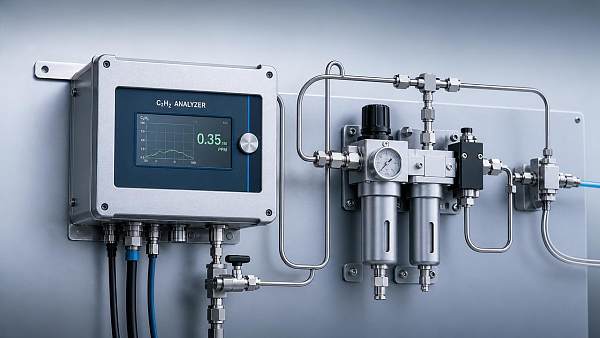
Fourth, separate sensor performance from system performance. In industrial gas monitoring, total analyzer accuracy includes probe design, sample extraction, filtration, pressure regulation, moisture control, flow stability, electronics, and software compensation. A good sensing module can still produce poor final measurement if the surrounding system is weak.
Finally, compare lifecycle assumptions. Some analyzers hold rated accuracy only when consumables are replaced often or optical components are cleaned on a strict schedule. If the specification depends on ideal maintenance behavior, that should be factored into the comparison rather than treated as a guaranteed outcome.
How do real industrial conditions affect C2H2 analyzer accuracy?
Real process environments create stress that laboratory testing may not fully represent. Temperature swings, vibration, dust, oil mist, corrosive compounds, unstable pressure, and varying moisture can all change the actual performance of a C2H2 concentration analyzer. Technical evaluators should therefore test suitability against site-specific disturbance factors.
Sample integrity is one of the biggest issues. If acetylene is absorbed, diluted, condensed, or chemically altered before reaching the measurement cell, analyzer accuracy becomes secondary because the sample itself no longer represents the process. This is especially relevant when long tubing runs or complex conditioning systems are involved.
Pressure and flow effects also matter. Some analyzers are highly sensitive to sample pressure fluctuations or inadequate flow control. If pressure compensation is limited or poorly documented, field readings may shift even when actual gas composition remains constant. Evaluators should review the acceptable operating window and test dynamic behavior.
Humidity can create both direct and indirect errors. Water vapor may interfere spectroscopically, affect thermal behavior, trigger condensation, or alter sensor response depending on the measurement method. In applications with wet gas, the conditioning strategy is part of the accuracy strategy and should be evaluated as seriously as the analyzer core.
Contaminants may slowly damage optics, poison sensor surfaces, clog filters, or cause baseline drift. A highly accurate analyzer in clean conditions may underperform quickly in dirty industrial streams. For this reason, ingress protection, material compatibility, purge design, and service accessibility deserve attention during technical review.
What tests should you run before making a selection?
A structured evaluation plan is more reliable than comparing brochures. The most useful approach is to combine document review, witness testing, calibration verification, and site-oriented trial conditions. This allows technical evaluators to identify not only nominal accuracy but also the analyzer’s resilience under realistic operating scenarios.
Begin with a controlled calibration verification using certified gas standards at several points across the expected concentration range. Record zero error, span error, repeatability, and linearity. If possible, test concentrations near the lower operating threshold because low-end uncertainty often determines the practical usefulness of the analyzer.
Next, perform interference testing. Introduce likely background gases or gas mixtures representative of your application and observe any shift in the acetylene reading. Even modest interference can become unacceptable if process decisions depend on narrow concentration changes or if multiple gases vary simultaneously.
Then evaluate response behavior. Apply step changes in concentration and measure not only the sensor response time but the total system response including tubing and conditioning hardware. Technical evaluators should also check recovery time after high concentration exposure, because some instruments return to baseline more slowly than expected.
Stability testing is essential. Run the analyzer over extended periods with fixed reference gas and monitor drift at both zero and span. If your site faces large ambient temperature changes, include thermal cycling in the evaluation. A stable analyzer should show predictable behavior, not random baseline movement that complicates correction.
Finally, if the application justifies it, conduct a short field trial. Parallel comparison with a trusted reference method can reveal installation-related errors, maintenance challenges, and alarm handling issues that are difficult to detect in laboratory acceptance testing alone.
How do you judge long-term value, not just initial accuracy?
Technical evaluators are rarely choosing for day-one performance only. They are usually choosing a measurement solution that must support stable operations for years. That means the best C2H2 concentration analyzer is often the one that balances adequate accuracy with low drift, easy verification, manageable maintenance, and high uptime.
Look at calibration frequency first. Frequent recalibration increases operating cost and creates more chances for adjustment errors. An analyzer with stronger intrinsic stability may reduce labor and calibration gas use enough to offset a higher upfront investment. This is especially important across multiple monitoring points.
Check diagnostic capability as well. Advanced analyzers can flag optical contamination, weak signal strength, sample flow problems, temperature faults, or calibration deviation before measurement quality collapses. These diagnostics support more reliable industrial gas monitoring because they reduce the risk of trusting bad data unknowingly.
Spare parts strategy matters too. If filters, pumps, valves, light sources, or detector modules have short replacement cycles or long procurement lead times, accuracy may suffer in practice due to delayed maintenance. Technical evaluators should include service logistics and component availability in the selection process.
Integration value should not be ignored. An analyzer that communicates cleanly with plant control systems, historian platforms, and alarm logic may improve operational decision-making more than a marginally more precise standalone unit. Good data usability helps preserve the value of analyzer accuracy across the broader automation environment.
What questions should you ask suppliers during technical evaluation?
Supplier interviews often reveal more than specifications alone. Ask how the accuracy claim was validated, under what gas matrix, and across which environmental conditions. Request test reports, not just summary values. If the supplier cannot explain the measurement basis clearly, confidence in the claim should be limited.
Ask for cross-sensitivity data against gases relevant to your application, and request long-term drift information from field deployments. Also ask what maintenance tasks are required to keep the stated accuracy, how often those tasks are needed, and what symptoms indicate that measurement quality is deteriorating.
It is also wise to ask whether the supplier can support factory acceptance testing, site acceptance testing, and periodic performance verification after commissioning. Strong support in these stages often improves actual measurement outcomes more than a small difference in datasheet accuracy.
Finally, ask for references from installations with similar pressure, temperature, gas composition, and contamination risk. Similar use cases provide much better evidence than generic performance claims because they show whether the analyzer has already proven itself in comparable industrial conditions.
Conclusion: how should technical evaluators make the final comparison?
To compare C2H2 concentration analyzer accuracy effectively, focus on usable accuracy rather than headline accuracy. The right analyzer is the one that stays reliable in your concentration range, resists interference, responds fast enough for the process, holds calibration over time, and performs well within the realities of your sample system.
For technical evaluators, the strongest decision framework is simple: normalize datasheet claims, verify with multipoint and interference testing, assess sample system impact, examine long-term drift, and estimate maintenance burden. That approach turns analyzer selection from a specification exercise into an evidence-based engineering decision.
In industrial gas monitoring, accurate acetylene measurement is valuable only when it remains dependable after installation. If you compare instruments through real operating conditions and lifecycle performance, you will make a more confident selection and reduce the risk of hidden measurement problems later.
Recommended for You
 Where C3H8 Concentration Analyzers Fit in 2026 Industrial Emissions MonitoringC3H8 concentration analyzer solutions are reshaping 2026 industrial emissions monitoring with better compliance, safer propane control, and smarter efficiency insights. Learn where they fit.
 B2H6 Concentration Analyzer Import and Export Updates for 2026 Compliance PlanningB2H6 concentration analyzer import and export updates for 2026: explore compliance risks, documentation priorities, and planning tips to reduce delays and support smarter cross-border decisions.
 GeH4 Concentration Analyzer Safety Risks and Detection Limits in Semiconductor UseGeH4 concentration analyzer safety risks, alarm strategy, and detection limits for semiconductor use. Learn how to reduce exposure risk, improve process stability, and choose the right monitoring solution.
 C2H4 Concentration Analyzer Price Trends in 2026: What Is Driving Cost ChangesC2H4 concentration analyzer price trends in 2026 explained: discover key cost drivers, procurement risks, and smart buying tips to balance budget, compliance, and long-term value.
 How to Compare C2H2 Concentration Analyzer Accuracy in Industrial Gas MonitoringC2H2 concentration analyzer accuracy matters beyond the datasheet. Learn how to compare drift, calibration, interference, and field reliability for safer industrial gas monitoring.
![]() SiH4 Concentration Analyzer Import Rules to Watch in 2026SiH4 concentration analyzer import rules are tightening in 2026. Learn the key documents, compliance checks, and procurement tips to avoid delays and speed project delivery.
SiH4 Concentration Analyzer Import Rules to Watch in 2026SiH4 concentration analyzer import rules are tightening in 2026. Learn the key documents, compliance checks, and procurement tips to avoid delays and speed project delivery. HF Concentration Analyzer Demand Shifts Across Key IndustriesHF concentration analyzer demand is shifting across chemical, refining, environmental, and advanced manufacturing sectors—learn what drives safer control, compliance, and precision upgrades.
 Common HCN Concentration Analyzer Mistakes in Daily OperationHCN concentration analyzer daily mistakes can quietly damage accuracy and uptime. Learn common errors, practical checks, and smart operating tips to improve reliability.
 PH3 Concentration Analyzer Price Trends in 2026PH3 concentration analyzer price trends in 2026 reveal what really drives cost, compliance, and performance. Explore key buying factors to compare quotes smarter and reduce total ownership risk.
 How to Choose an AsH3 Concentration Analyzer for Trace Gas SafetyAsH3 concentration analyzer selection starts with the right application context. Learn how to compare response, interference, integration, and lifecycle fit for safer trace gas monitoring.
 Released") China's Business Environment Report (2026) ReleasedChina's Business Environment Report (2026) reveals 92% digital CMA/CNAS coverage—cutting export test report time to 15 days. Boost CE, UKCA & UL certification for pressure gauges, thermostats & analyzers.
China's Business Environment Report (2026) ReleasedChina's Business Environment Report (2026) reveals 92% digital CMA/CNAS coverage—cutting export test report time to 15 days. Boost CE, UKCA & UL certification for pressure gauges, thermostats & analyzers. US MMA Tank Incident Triggers Regional Safety UpgradesUS MMA tank incident sparks urgent demand for VOCs monitoring, toxic gas modeling & intrinsically safe transmitters across LATAM and SEA.
 NDRC Expands Energy-Saving and Carbon-Reduction Oversight to Dyeing, Chemical Fibers, and PapermakingNDRC expands energy-saving & carbon-reduction oversight to dyeing, chemical fibers, and papermaking—boosting demand for COD/NH₃-N analyzers, VOCs monitors, and CEMS systems.
 MIIT Sets 2026 Energy-Saving Inspection Targets for High-Energy ChemicalsMIIT Sets 2026 Energy-Saving Inspection Targets for High-Energy Chemicals—urgent demand surges for certified pH meters, gas analyzers & explosion-proof controllers.
 MOFCOM: FDI in China Down 10.3% Jan–Apr 2026, but Manufacturing Up 12.1%FDI in China fell 10.3% Jan–Apr 2026—but manufacturing FDI surged 12.1%, led by high-tech sectors. Discover what this means for precision metrology, sensors & calibration providers.
 PBOC Conducts 600-Billion-Yuan MLF Operation, Boosting RMB Stability for Testing Equipment ExportsPBOC's 600-billion-yuan MLF operation boosts RMB stability—key for NDT equipment exporters using LC/DA terms. Reduce FX risk, optimize hedging & improve cash flow planning now.
 EU Steel Strategy Upgrade: CBAM Expansion to Machinery & InstrumentsEU Steel Strategy Upgrade expands CBAM to machinery & instruments (HS 84/90) — LCA data mandatory from 1 July 2026. Act now to avoid delays & ensure compliance.
 Global EV Energy Consumption Standard to Take Effect Oct 1, 2026Global EV Energy Consumption Standard (GTR No. 22) takes effect Oct 1, 2026 — learn how it reshapes battery testing, certification & supply chains worldwide.
 WTO Report Shows Strong Global Trade, Easing Export Pressure for Industrial Monitoring DevicesIndustrial monitoring devices exporters benefit as WTO reports 4.2% global trade growth—easing export pressure, improving delivery predictability & cash flow.
 South Korea MFDS Revises Food Contact Materials StandardsSouth Korea MFDS revises food contact materials standards: new nickel/chromium migration limits & NIAS verification—critical for lab instrument exporters and compliance providers.
 Brazil to Eliminate Import Duties on Cross-Border E-Commerce Orders Under USD 50Brazil to eliminate import duties on cross-border e-commerce orders under USD 50—key for portable testing instruments exporters targeting Mercado Livre & DIY buyers.
 New AI Agent Guidelines Impact Smart Inspection Device ExportsAI Agent Guidelines impact smart inspection device exports—learn how new China AI safety rules affect EU, US & Middle East market access.
 UPS Freight Rates Increase Effective May 17, 2026UPS freight rates increase effective May 17, 2026—impact FOB pricing for industrial monitoring equipment exporters. Act now to optimize packaging, revise quotes, and secure margins.
 新修订《海商法》施行:卸货港无人提货责任转向托运人,检测设备出口交期风控升级New Maritime Code shifts unclaimed cargo liability to shippers at discharge ports—critical for testing equipment exporters managing delivery timelines and compliance risk.
 China Imposes Zero Tariffs on Lab Analyzers for 20 African NationsChina's zero tariffs on lab analyzers for 20 African nations boost export competitiveness—pH meters, spectrophotometers & more now duty-free from May 2026.
 CA Toxic Chemical Tank Overheating Sparks Explosion Risk, Monitoring Equipment Orders SurgeGas leak detectors, remote temperature warning systems & explosion-proof thermal imagers surge in demand after CA toxic tank overheating incident.
 EU REACH Adds DBDPE to SVHC List, Impacting Brominated Flame Retardant Testing for Export EquipmentDBDPE added to EU REACH SVHC list—impact on brominated flame retardant testing for industrial instruments, sensors & export compliance. Act now.
 Thailand Customs Digital Reform Spurs RFID Equipment DemandRFID equipment demand surges in Thailand as Customs digital reform mandates e-labeling, real-time parcel tracking & API compliance—act now to meet TISI specs and platform rules.
 Lazada Thailand Cuts Import Duties on 528 CategoriesLazada Thailand cuts import duties on 528 categories — including wired headphones & notebooks — lowering costs for Chinese exporters and Thai SMEs via LGS.
 US Delays 400 Tomahawk Missiles to Japan Amid Iran Inventory ReplenishmentTomahawk missiles delay to Japan sparks urgent demand for alternative guidance, navigation & secure comms suppliers—key opportunity for export-ready defense electronics firms.
 What to Check Before Importing an F2 Concentration Analyzer in 2026F2 concentration analyzer import guide for 2026: learn what to check on compliance, performance, integration, lifecycle cost, and supplier support before you buy.
 SF6 Concentration Analyzer Market Trends for Power and Gas Applications in 2026SF6 concentration analyzer market trends for 2026: explore accuracy, digital integration, emissions control, and buying tips for power and gas applications.

Search Categories
Search Categories
Latest Article
- Where C3H8 Concentration Analyzers Fit in 2026 Industrial Emissions MonitoringC3H8 concentration analyzer solutions are reshaping 2026 industrial emissions monitoring with better compliance, safer propane control, and smarter efficiency insights. Learn where they fit.Posted by:
- B2H6 Concentration Analyzer Import and Export Updates for 2026 Compliance PlanningB2H6 concentration analyzer import and export updates for 2026: explore compliance risks, documentation priorities, and planning tips to reduce delays and support smarter cross-border decisions.Posted by:
- GeH4 Concentration Analyzer Safety Risks and Detection Limits in Semiconductor UseGeH4 concentration analyzer safety risks, alarm strategy, and detection limits for semiconductor use. Learn how to reduce exposure risk, improve process stability, and choose the right monitoring solution.Posted by:
Please give us a message
