
Ambient Gas Monitoring Mistakes That Lead to Unstable Safety Readings


Even advanced safety systems can fail when ambient gas monitoring is set up or managed incorrectly. For quality control and safety managers, unstable readings often come from avoidable mistakes such as poor sensor placement, missed calibration, and weak data interpretation. Understanding these common issues is the first step toward more reliable detection, stronger compliance, and safer day-to-day operations across complex industrial environments.
Why a checklist approach works better for unstable ambient gas monitoring issues
When safety readings fluctuate, many teams jump straight to replacing sensors or blaming instrument quality. In practice, unstable ambient gas monitoring results usually come from a chain of smaller issues: installation errors, environmental interference, maintenance gaps, alarm logic problems, and inconsistent operating conditions. A checklist approach helps quality control and safety managers isolate root causes faster, compare sites using the same standards, and avoid the costly mistake of fixing the wrong problem first.
This is especially important in the instrumentation industry, where monitoring systems support industrial manufacturing, energy, utilities, environmental control, laboratories, construction, and automated processes. In these settings, ambient gas monitoring is not just a device function. It is part of a larger measurement and control chain that affects worker protection, compliance records, shutdown decisions, incident response, and confidence in plant data.
Start here: the first checks to make before you trust the readings
Before reviewing trends, reports, or alarms, confirm the basics. Many unstable ambient gas monitoring problems can be identified within the first inspection round if teams verify a few high-impact items in the right order.
- Confirm whether the sensor type matches the target gas, concentration range, humidity level, and expected background atmosphere. A sensor that is technically functional but poorly matched to the application will still generate unreliable readings.
- Check sensor placement against gas behavior. Heavy gases may collect in low areas, while lighter gases may rise. Monitors placed only at eye level often miss the actual accumulation zone.
- Review calibration status, bump test records, and zero checks. If these are missing, outdated, or inconsistent, trend stability cannot be assumed.
- Inspect airflow and ventilation changes. Fans, open doors, extraction systems, and process exhaust can dilute or redirect gas, creating false stability or sudden spikes.
- Look for interfering substances. Cleaning chemicals, solvents, dust, steam, and process vapors may affect ambient gas monitoring performance even when the target gas level is unchanged.
- Verify signal transmission quality, power supply consistency, and communication logs. Some “gas events” are actually wiring, controller, or network problems.
Core mistakes that make ambient gas monitoring unstable
1. Poor sensor placement
Placement remains one of the most common and most underestimated causes of unstable ambient gas monitoring. Sensors installed too close to vents, doors, heat sources, washdown areas, or localized leaks may detect turbulence rather than representative ambient conditions. This leads to noisy data, inconsistent alarms, and repeated disputes over whether a reading reflects real risk.
A better standard is to place monitors according to gas density, likely release point, worker exposure path, and airflow pattern, not simply according to convenience or cable routing. Safety managers should also review whether plant modifications have changed air movement since the original installation.
2. Missed calibration and weak verification routines
Calibration drift is not always obvious from a quick display check. A monitor can appear stable while slowly moving away from true values. Ambient gas monitoring programs become unreliable when teams confuse calibration, bump testing, and full functional verification. These are related, but they are not interchangeable.
Quality personnel should define clear intervals based on gas type, sensor technology, environmental severity, and regulatory obligations. If a site experiences dust, vibration, temperature swings, or corrosive exposure, it may need tighter verification cycles than the manufacturer’s general recommendation.
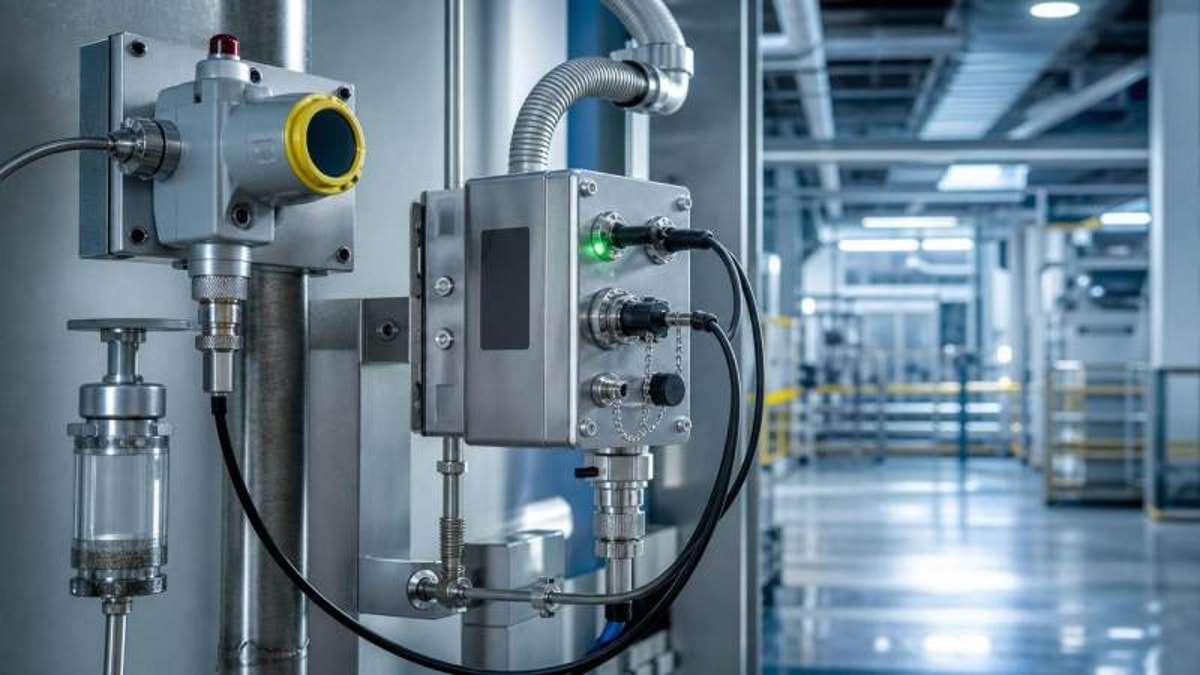
3. Ignoring cross-sensitivity and environmental interference
Not every unstable reading means target gas concentration is changing. Electrochemical and catalytic sensors, for example, can respond to multiple substances or lose accuracy under unusual humidity and temperature conditions. In industrial plants, laboratories, and utility spaces, cleaning agents, exhaust streams, or temporary chemicals used during maintenance may create misleading ambient gas monitoring signals.
If unexplained variations repeat during certain shifts, cleaning windows, or process changeovers, investigate interference before replacing equipment. This saves both budget and downtime.
4. Treating all alarms as equal
Alarm instability often comes from poor threshold strategy rather than poor detection. A system with alarm points set too close to normal background variation will trigger nuisance events. A system with excessive delay may miss fast changes. Ambient gas monitoring should support decisions, not overwhelm operators with ambiguous notifications.
Review high, low, and rate-of-change alarms separately. Also confirm whether time weighting, averaging windows, and local versus control-room logic are aligned with actual safety objectives.
5. Failing to connect readings to process context
Ambient gas monitoring data should never be interpreted in isolation. If a spike appears during startup, tank filling, welding, chemical transfer, confined space preparation, or ventilation balancing, the process event may explain the signal. Without context, teams may classify valid warnings as false alarms, or false signals as real hazards.
A strong practice is to compare gas trends with maintenance logs, shift changes, production records, weather conditions, and building management system data. This turns raw readings into usable evidence.
Practical checklist: how to evaluate reading stability step by step
Use the following checklist when ambient gas monitoring results appear inconsistent or difficult to trust. The goal is to separate sensor issues, environment issues, and data handling issues without losing time.
- Identify the exact symptom: drift, sudden spikes, flatline behavior, delayed response, repeated nuisance alarms, or disagreement between nearby monitors.
- Confirm whether the issue affects one point, one area, one gas type, or the full network.
- Review the last calibration, bump test, maintenance action, firmware update, and any recent process or facility change.
- Inspect the physical installation for blockage, contamination, water ingress, vibration, impact damage, or incorrect mounting height.
- Check environmental variables including temperature, humidity, ventilation speed, pressure changes, and nearby chemical use.
- Validate controller configuration, signal scaling, logging intervals, and alarm logic.
- Compare the suspect reading against a reference instrument or an independent portable detector under controlled conditions.
- Document the findings in a repeatable format so future ambient gas monitoring reviews can identify patterns instead of starting from zero.
Scene-by-scene reminders for quality and safety managers
Manufacturing workshops
In manufacturing, ambient gas monitoring is often affected by process heat, intermittent emissions, forklift traffic, welding activity, and variable ventilation. Recheck sensor placement whenever the line layout changes or new extraction equipment is installed.
Energy and utility sites
Power and utility environments may involve enclosed rooms, battery systems, fuel gases, and temperature extremes. Here, stable ambient gas monitoring depends heavily on sensor durability, communication integrity, and backup power continuity during abnormal events.
Environmental and laboratory spaces
Labs and environmental monitoring points often face cross-sensitivity from solvents, reagents, and cleaning routines. Trend review should include scheduled chemical handling periods, because these may explain recurring instability that looks like random detector behavior.
Construction and temporary work zones
Temporary spaces change quickly, and fixed assumptions often fail. Ambient gas monitoring in these areas needs more frequent reassessment because barriers, airflow, work crews, and machinery locations can shift daily.
Commonly overlooked risks that deserve priority review
Several issues are repeatedly missed during routine inspections even though they strongly affect reading stability:
- Calibration gas quality, expiration, and delivery method are not controlled well enough to support accurate verification.
- Maintenance records exist, but they do not show the reason for adjustment, the amount of drift found, or the technician’s observations.
- Alarm investigations focus on the event itself but ignore communication dropouts, timestamp mismatch, or data smoothing settings.
- Seasonal changes are not considered. Ambient gas monitoring may behave differently in winter, summer, or monsoon conditions due to ventilation and humidity shifts.
- Portable and fixed instruments are used side by side without a defined comparison method, creating confusion instead of validation.
Execution advice: how to make ambient gas monitoring more reliable over time
If your goal is long-term stability, the solution is not only technical. It is procedural. Build a routine that combines instrument discipline with operational awareness. Define ownership for each monitoring point, require documented verification after plant changes, and create a simple escalation path for unexplained deviations.
It is also wise to standardize a review package for each area: gas type, sensor technology, expected range, placement rationale, calibration interval, airflow notes, known interferences, alarm settings, and response instructions. This gives both quality and safety teams a common reference and reduces decision gaps between departments.
Final action guide for teams planning improvements
When unstable readings continue, do not limit the discussion to device replacement. Ambient gas monitoring performance depends on matching the right instrument to the right environment, then supporting it with correct installation, verification, and interpretation practices. For most facilities, the fastest path to improvement is to review sensor location, maintenance evidence, interference risks, alarm logic, and process context in one structured audit.
If your organization needs to improve system reliability, prioritize a discussion around target gases, exposure scenarios, required response speed, environmental conditions, calibration workflow, communication architecture, compliance obligations, maintenance capability, project timeline, and budget boundaries. Those inputs will make it much easier to confirm the most suitable ambient gas monitoring strategy, whether the next step is optimization of an existing network or selection of a new monitoring solution.
Recommended for You
 IEC 62443-4-2:2026 Released: New Cybersecurity Requirement for Industrial ComponentsIEC 62443-4-2:2026 is live — new cybersecurity requirements for industrial components like PLCs, HMIs & gateways. Act now to meet SDL mandates and win tenders with Siemens, ABB & more.
 US BIS Adds 12 High-Precision Calibration Devices to Export Control ListUS BIS adds 12 high-precision calibration devices to export control list—laser interferometers, quantum gradiometers & more. Critical for semiconductor, aerospace & metrology firms exporting to China. Act now.
 Southeast Asia Launches Industrial Metrology Green CorridorIndustrial Metrology Green Corridor launched across ASEAN — CNAS-accredited temp, pressure & flow reports now accepted in all 10 member states. Faster customs, lower compliance costs.
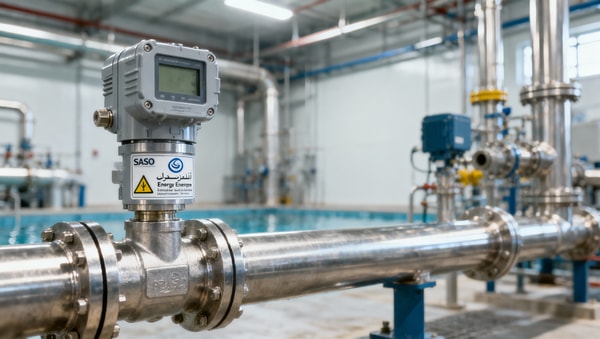
 SASO Energy Labeling Rule for Field Instruments Effective July 2026SASO Energy Labeling Rule for Field Instruments takes effect July 2026 — mandatory for 17 new instrument categories. Ensure compliance now to avoid customs delays in Saudi Arabia.
 Red Sea Crisis Escalates: Suez Canal Industrial Instrument Shipping Delays to 28 DaysRed Sea Crisis escalates: Suez Canal industrial instrument shipping delays hit 28 days — urgent air freight up 320%. Act now to protect precision manufacturing & compliance.
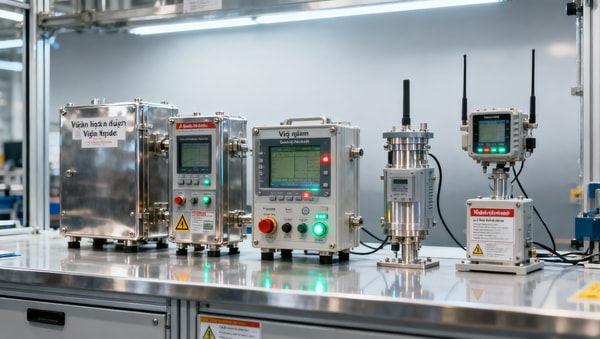
 Vietnam Tightens Industrial Instrument Import Rules from June 2026Vietnam Tightens Industrial Instrument Import Rules from June 2026: CNAS test reports & Vietnamese labels now mandatory—avoid port detention and 15% penalties.
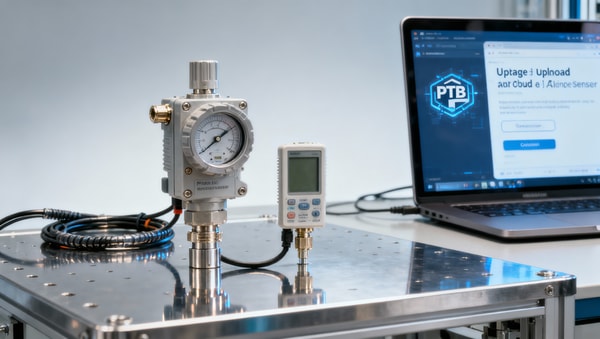
 PTB Launches AI Remote Calibration Cloud for CNAS LabsPTB launches CalCloud AI — the world’s first AI remote calibration cloud for CNAS labs, enabling fast, ILAC-MRA-compliant English certificates for EU-bound pressure, temperature & flow instruments.
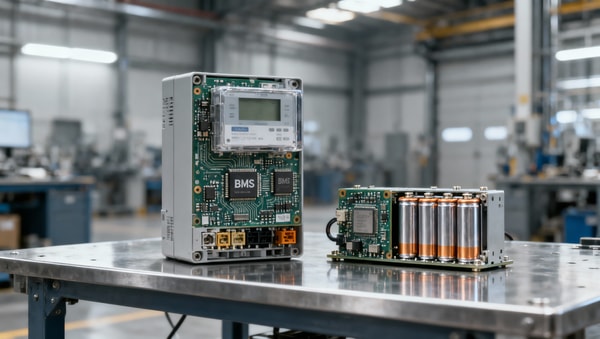
 New China Battery Recycling Rules Take Effect Apr 27, 2026New China battery recycling rules (effective Apr 27, 2026) impact smart meter & industrial sensor exporters—ensure BMS traceability and compliance now.
 Plant Safety Analyzer Investments That Reduce Hidden Operational RiskPlant safety analyzer investments help enterprises uncover hidden operational risk, improve uptime, strengthen compliance, and protect long-term profitability.
 High Purity Monitoring: When Standard Analyzers Are No Longer EnoughHigh purity monitoring is essential when standard analyzers miss trace contamination, fast excursions, and compliance risks. Discover where advanced solutions deliver safer, smarter control.
 Explosion Proof Equipment Export Checks That Delay Overseas ShipmentsExplosion proof equipment export checks can delay overseas shipments through certificate gaps, label mismatches, and local compliance issues. Learn how distributors can reduce risks, avoid rework, and keep projects on schedule.
 Electrochemistry Oxygen Analyzer Accuracy: What Affects Long-Term PerformanceElectrochemistry Oxygen Analyzer accuracy depends on sensor stability, calibration, sampling, and maintenance. Learn what drives long-term performance and choose the right solution.
 Explosion Protected Analyzer Market Direction After New Safety UpgradesExplosion protected analyzer trends are shifting fast after new safety upgrades. Learn where the market is headed, what buyers now prioritize, and how smarter systems can reduce risk and improve ROI.
 Smart Analyzer Features That Matter More Than Marketing ClaimsSmart Analyzer features that truly impact accuracy, uptime, integration, and lifecycle cost. Learn what matters beyond marketing claims before you choose.
 Production Line Analyzer Data Gaps That Hurt Process DecisionsProduction line analyzer data gaps can quietly distort trends, delay control actions, and weaken traceability. Learn how to spot the risks and protect smarter process decisions.
 Flameproof Analyzer Lead Times and Supply Risks in Global TradeFlameproof analyzer lead times are rising due to certification, logistics, and supplier risks. Learn how distributors can reduce delays, protect margins, and source with confidence.
 Intrinsically Safe Analyzer vs Flameproof Analyzer for Compact InstallationsIntrinsically safe analyzer vs flameproof analyzer: discover which option suits compact hazardous-area installations best for safer maintenance, smaller footprint, and lower lifecycle cost.
 Industrial Oxygen Monitoring: Common Setup Errors and How to Avoid ThemIndustrial oxygen monitoring setup mistakes can trigger false readings, downtime, and safety risks. Learn the most common errors and how to avoid them for more reliable, compliant performance.
 Cost Effective Analyzer Options Without Cutting Safety StandardsCost Effective analyzer sourcing starts with safety, not shortcuts. Learn how to compare options by compliance, performance, and lifecycle value to cut costs with confidence.
 When OEM Service Makes More Sense Than Standard SupplyOEM Service helps businesses match instrumentation to exact performance, integration, and compliance needs—reducing risk, lowering lifecycle costs, and improving reliability.
 Trace Gas Detection Challenges in High-Sensitivity Production EnvironmentsTrace gas detection challenges in high-sensitivity production demand more than low limits. Explore accuracy risks, technology choices, and smart selection tips for safer, more reliable operations.
 Gas Analyzer Equipment Price Shifts: What Is Driving Costs This YearGas analyzer equipment price shifts are being driven by sensor upgrades, supply pressure, compliance, and integration needs. Learn what is raising costs this year and how to buy smarter.
 Zone 1 Analyzer Import Rules That May Affect Delivery TimelinesZone 1 analyzer import rules can quietly delay projects. Learn the certification, HS code, document, and customs checks buyers must review early to avoid costly delivery setbacks.
 Zone 2 Analyzer Applications: Where It Fits and Where It Does NotZone 2 analyzer applications explained: discover where a zone 2 analyzer delivers fast, cost-effective field performance—and when safer, more precise alternatives make better sense.
 Industrial Safety Analyzer Trends Shaping Safer Plants in 2026Industrial safety analyzer trends in 2026 are redefining safer plants with real-time monitoring, smarter integration, and better lifecycle decisions. Explore what project leaders need to know.
 Oxygen Monitoring System Basics for Safer Daily OperationsOxygen monitoring system basics made practical: learn daily safety checks, sensor placement tips, alarm readiness, and smart actions to reduce risk and improve operational safety.
 Factory Gas Analyzer Maintenance Issues That Often Go UnnoticedFactory gas analyzer maintenance issues often start with hidden sampling, calibration, or environmental faults. Learn the overlooked causes of drift and downtime before they become costly failures.
 Manufacturing Analyzer Upgrades That Improve Process StabilityManufacturing analyzer upgrades improve process stability, reduce downtime, and strengthen data accuracy. Discover how smarter analyzer investments boost quality, ROI, and operational confidence.
 When a Quality Assurance Analyzer Becomes Worth the Extra SpendQuality assurance analyzer investments pay off when they cut defects, speed verification, and improve compliance. See how to justify the extra spend with clearer ROI.
 Laboratory Gas Analyzer Selection: Key Differences That Affect Test AccuracyLaboratory Gas Analyzer selection shapes test accuracy, stability, and compliance. Learn how principles, sensitivity, sample handling, and calibration affect reliable lab results.
 How to Identify a Trusted Manufacturer for Hazardous Area AnalyzersTrusted Manufacturer selection starts with safety, certifications, and reliable support. Learn how to identify the right hazardous area analyzer partner for long-term growth.
 What a Quality Product Means in Industrial Gas AnalysisQuality Product in industrial gas analysis means more than accuracy—discover how the right analyzer improves safety, compliance, uptime, and long-term ROI across industries.

Search Categories
Search Categories
Latest Article
- IEC 62443-4-2:2026 Released: New Cybersecurity Requirement for Industrial ComponentsIEC 62443-4-2:2026 is live — new cybersecurity requirements for industrial components like PLCs, HMIs & gateways. Act now to meet SDL mandates and win tenders with Siemens, ABB & more.Posted by:
- US BIS Adds 12 High-Precision Calibration Devices to Export Control ListUS BIS adds 12 high-precision calibration devices to export control list—laser interferometers, quantum gradiometers & more. Critical for semiconductor, aerospace & metrology firms exporting to China. Act now.Posted by:
- Southeast Asia Launches Industrial Metrology Green CorridorIndustrial Metrology Green Corridor launched across ASEAN — CNAS-accredited temp, pressure & flow reports now accepted in all 10 member states. Faster customs, lower compliance costs.Posted by:
Please give us a message
