
CH4 analyzer response time gaps between catalytic bead and laser-based units


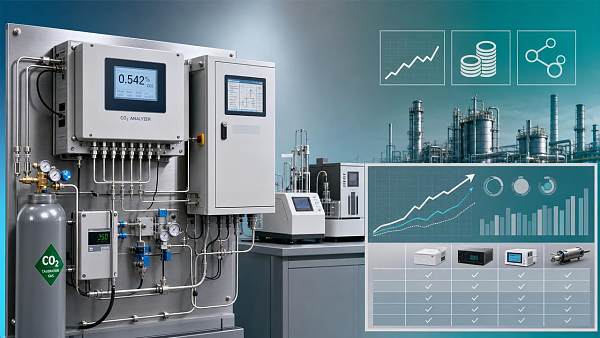
When selecting a CH4 analyzer for critical safety or process control applications, response time is a decisive performance differentiator—especially when comparing catalytic bead (CB) sensors with laser-based units. This article examines the measurable response time gaps between these technologies, contextualized within broader instrumentation industry needs—from gas analyzer cabinets and multi-component analyzers to paramagnetic, laser gas, hydrogen, NH3, NOX, SO2, CO2, and other specialized analyzers. Whether you're a technical evaluator, procurement specialist, safety manager, or project engineer, understanding these timing differences informs better decisions across design, compliance, and operational reliability.
Why Response Time Matters Across Industrial Safety & Process Control
In industrial manufacturing, energy & power plants, and environmental monitoring stations, methane (CH4) detection isn’t just about presence—it’s about speed of detection under dynamic conditions. A delay of even 2–5 seconds can mean the difference between early leak containment and hazardous accumulation in confined spaces or upstream process lines.
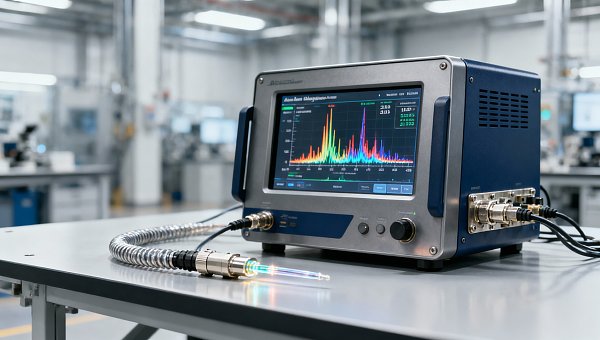
Catalytic bead sensors dominate legacy installations due to low cost and simplicity—but their thermal mass and diffusion-limited reaction kinetics impose inherent latency. Laser-based units (e.g., tunable diode laser absorption spectroscopy, TDLAS) bypass chemical reaction entirely, enabling near-instantaneous optical interrogation. This distinction becomes mission-critical in applications like biogas upgrading, LNG terminal flare monitoring, or coal mine ventilation control—where real-time feedback loops drive automated shutdowns or scrubber adjustments.
For project managers and safety officers, response time directly impacts SIL (Safety Integrity Level) certification pathways. IEC 61508 and IEC 61511 require documented proof of loop response ≤ 100 ms for SIL-2 systems—and only laser-based CH4 analyzers consistently meet this threshold without external signal conditioning.
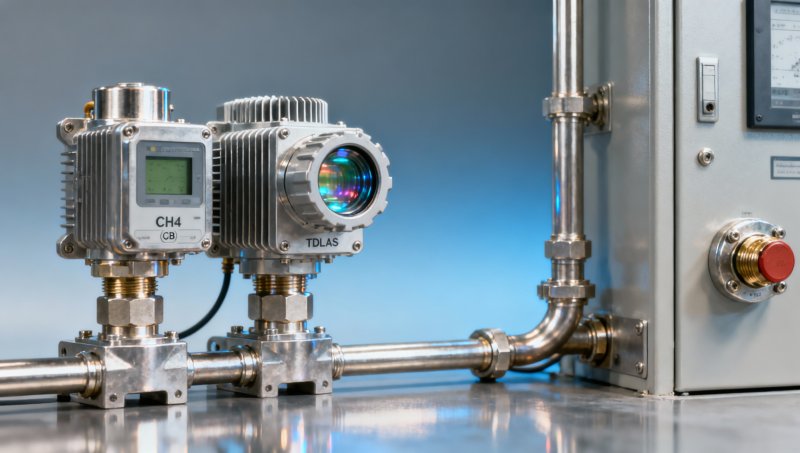
Quantitative Comparison: CB vs. Laser-Based CH4 Analyzers
The following table compares empirically validated response metrics across representative product classes used in industrial online monitoring and safety-critical cabinet installations. All values reflect standard test conditions per ISO 10156 and IEC 60079-29-1: ambient temperature 20°C ±2°C, 50% RH, 1 atm, calibrated CH4 step input from 0 → 100% LEL (5% v/v).
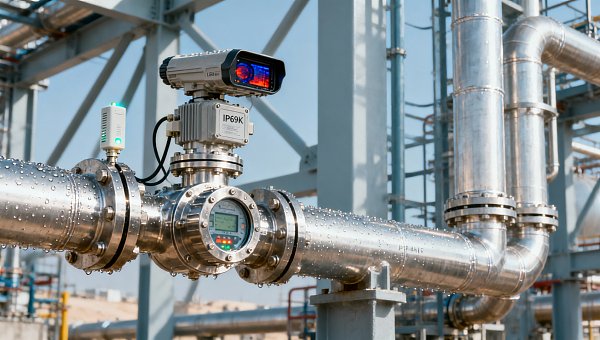
These figures translate into tangible engineering trade-offs. For example, in a natural gas compressor station requiring continuous HAZOP-mandated monitoring, CB units may miss transient spikes lasting <3 seconds—while TDLAS units capture them with sub-second fidelity. That gap drives selection not only for safety but also for predictive maintenance analytics, where high-frequency CH4 fluctuation patterns correlate with seal wear or valve leakage.
Procurement Decision Framework: What to Evaluate Beyond Spec Sheets
Technical evaluators and procurement specialists must look beyond datasheet T90 claims. Real-world performance depends on integration context—including sample transport delay, filter clogging, pressure compensation, and calibration drift over time.
Three non-negotiable validation checkpoints:
- Request third-party test reports showing T90 measured under actual field piping configuration—not just sensor head alone.
- Verify whether stated response time includes full system loop delay (sample draw + transport + analysis + output signal transmission), especially for remote-mounted analyzers.
- Confirm long-term stability: CB sensors typically require recalibration every 3–6 months; laser units maintain calibration for 12–24 months with annual verification.
Financial approvers should factor in total cost of ownership (TCO). While CB units list at ~$1,200–$2,500/unit, laser-based analyzers range from $8,500–$15,000—but reduce unplanned downtime by up to 37% in high-risk facilities (per 2023 ISA ARC benchmark survey) and cut calibration labor by 65% annually.
Which Applications Favor Which Technology?
Not all CH4 monitoring use cases demand sub-second resolution. Application mapping helps avoid over-engineering—or dangerous under-specification.
- Safety-critical area monitoring (e.g., battery rooms, turbine enclosures): Laser-based required. Response must support automatic ventilation activation within ≤2 seconds per NFPA 56 and EN 16258.
- Process optimization (e.g., anaerobic digesters, landfill gas engines): Laser preferred. Enables closed-loop air/fuel ratio tuning using real-time CH4 % data streams.
- General-purpose leak screening (e.g., utility vaults, pipeline ROW surveys): CB remains viable where portability, battery life (>12 hours), and cost sensitivity dominate.
Distributors and system integrators report that >68% of new EPC contracts for oil & gas midstream projects now mandate laser-based CH4 analyzers—up from 32% in 2020—reflecting tightening regulatory timelines and digital twin integration requirements.
Get Expert Support for Your CH4 Analyzer Selection
Whether you’re specifying analyzers for a Class I Div 1 hazardous area cabinet, validating multi-component gas analysis for emissions reporting, or designing an integrated safety instrumented system (SIS), our instrumentation engineering team provides application-specific guidance grounded in IEC 61511, ISO 14064, and EPA Method 21 compliance frameworks.
We support your decision with:
- Free side-by-side parameter comparison against your existing CB infrastructure.
- Lead time confirmation: standard laser units ship in 4–6 weeks; expedited builds available for urgent EPC milestones.
- Custom configuration options including explosion-proof housings (ATEX/IECEx), analog/digital outputs (4–20 mA, Modbus TCP, HART), and certified calibration kits.
Contact us today to request a technical consultation, review certified test reports, or initiate a site-specific feasibility assessment.
Recommended for You
 Brazil to Eliminate Import Duties on Cross-Border E-Commerce Orders Under USD 50Brazil to eliminate import duties on cross-border e-commerce orders under USD 50—key for portable testing instruments exporters targeting Mercado Livre & DIY buyers.
 New AI Agent Guidelines Impact Smart Inspection Device ExportsAI Agent Guidelines impact smart inspection device exports—learn how new China AI safety rules affect EU, US & Middle East market access.
 UPS Freight Rates Increase Effective May 17, 2026UPS freight rates increase effective May 17, 2026—impact FOB pricing for industrial monitoring equipment exporters. Act now to optimize packaging, revise quotes, and secure margins.
 新修订《海商法》施行:卸货港无人提货责任转向托运人,检测设备出口交期风控升级New Maritime Code shifts unclaimed cargo liability to shippers at discharge ports—critical for testing equipment exporters managing delivery timelines and compliance risk.
 China Imposes Zero Tariffs on Lab Analyzers for 20 African NationsChina's zero tariffs on lab analyzers for 20 African nations boost export competitiveness—pH meters, spectrophotometers & more now duty-free from May 2026.
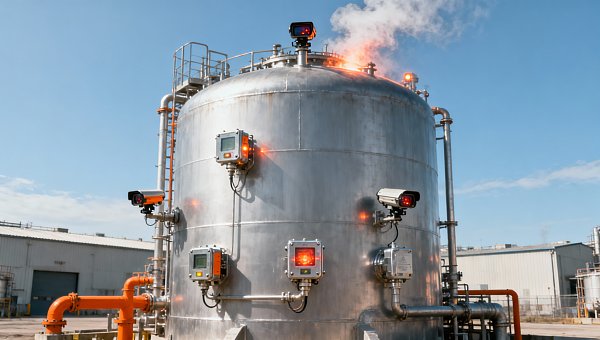
 CA Toxic Chemical Tank Overheating Sparks Explosion Risk, Monitoring Equipment Orders SurgeGas leak detectors, remote temperature warning systems & explosion-proof thermal imagers surge in demand after CA toxic tank overheating incident.
 EU REACH Adds DBDPE to SVHC List, Impacting Brominated Flame Retardant Testing for Export EquipmentDBDPE added to EU REACH SVHC list—impact on brominated flame retardant testing for industrial instruments, sensors & export compliance. Act now.
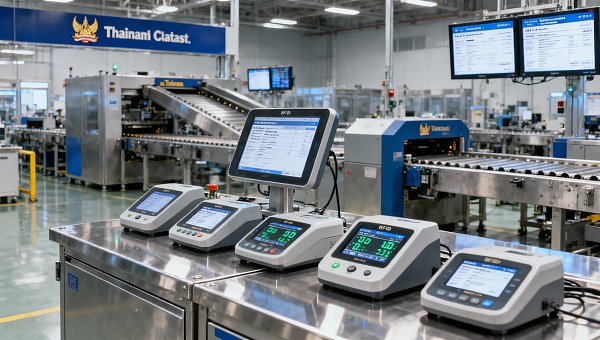
 Thailand Customs Digital Reform Spurs RFID Equipment DemandRFID equipment demand surges in Thailand as Customs digital reform mandates e-labeling, real-time parcel tracking & API compliance—act now to meet TISI specs and platform rules.
 Lazada Thailand Cuts Import Duties on 528 CategoriesLazada Thailand cuts import duties on 528 categories — including wired headphones & notebooks — lowering costs for Chinese exporters and Thai SMEs via LGS.
 US Delays 400 Tomahawk Missiles to Japan Amid Iran Inventory ReplenishmentTomahawk missiles delay to Japan sparks urgent demand for alternative guidance, navigation & secure comms suppliers—key opportunity for export-ready defense electronics firms.
 What to Check Before Importing an F2 Concentration Analyzer in 2026F2 concentration analyzer import guide for 2026: learn what to check on compliance, performance, integration, lifecycle cost, and supplier support before you buy.
 SF6 Concentration Analyzer Market Trends for Power and Gas Applications in 2026SF6 concentration analyzer market trends for 2026: explore accuracy, digital integration, emissions control, and buying tips for power and gas applications.
 Common HCl Concentration Analyzer Mistakes That Lead to Unstable ReadingsHCl concentration analyzer unstable readings? Discover the most common installation, calibration, sampling, and maintenance mistakes—and the practical fixes that improve accuracy fast.
 H2S Concentration Analyzer Price Trends: What’s Driving Costs in 2026H2S concentration analyzer price trends in 2026: discover what drives costs, from sensor technology and compliance to materials and digital features, and make smarter buying decisions.
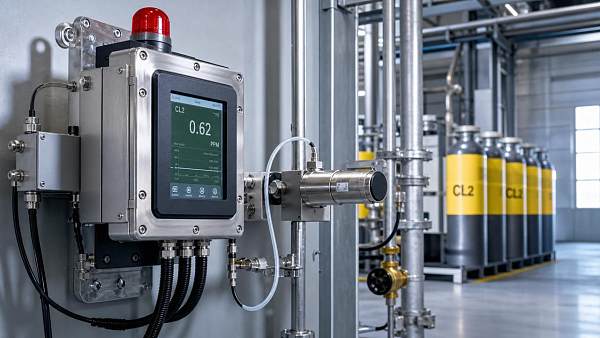
 How to Choose a Cl2 Concentration Analyzer for Process Safety in 2026Cl2 concentration analyzer selection in 2026 starts with process safety. Learn how to match scenarios, improve reliability, avoid costly mistakes, and choose with confidence.
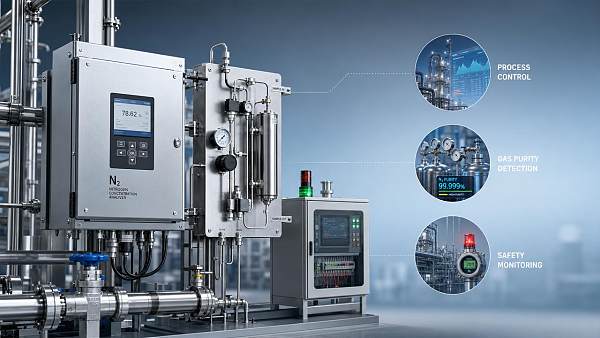
 N2 Concentration Analyzer Cost Factors for Bulk Industrial ProcurementN2 concentration analyzer cost depends on more than unit price. Compare process, purity, and safety applications with total cost logic to source smarter and reduce lifecycle risk.
 Oxygen Concentration Analyzer vs Sensor Systems: Which Fits Continuous UseOxygen concentration analyzer or sensor system? Compare stability, drift, maintenance, and uptime for continuous use to choose the most reliable fit for your process.
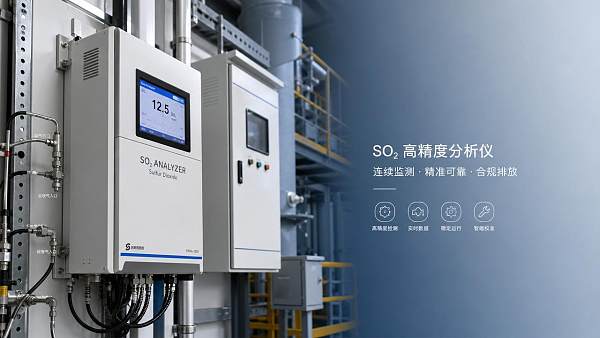
 SO2 Concentration Analyzer News: Compliance Demands Reshaping Product SpecsSO2 concentration analyzer trends are shifting with stricter compliance rules. Learn how new specs, data integrity, and uptime demands are reshaping smarter buying decisions.
 He Concentration Analyzer Maintenance Tips for Stable Long-Term ReadingsHe concentration analyzer maintenance tips for stable long-term readings. Learn how to reduce drift, improve calibration accuracy, cut downtime, and keep industrial systems reliable.
 CH4 Concentration Analyzer Selection Mistakes That Raise Operating RiskCH4 concentration analyzer selection mistakes can raise safety, compliance, and maintenance risk. Learn how to choose the right analyzer for reliable performance and lower lifecycle cost.
 CO Concentration Analyzer Import Rules to Watch in 2026CO concentration analyzer import rules for 2026: learn the key customs, certification, labeling, and compliance checks to reduce risk, avoid delays, and source with confidence.
 NH3 Concentration Analyzer Market Trends for Industrial Process Control in 2026NH3 concentration analyzer market trends in 2026: explore technologies, industrial applications, selection tips, and how smarter monitoring improves compliance, safety, and process control.
 Ar Concentration Analyzer Accuracy Issues in High-Purity Gas ApplicationsAr concentration analyzer accuracy issues can compromise high-purity gas quality, safety, and compliance. Learn the key causes, practical fixes, and how to improve reliable measurement performance.
 CO2 Concentration Analyzer Price Trends in 2026: What Shapes Total CostCO2 concentration analyzer price trends in 2026 depend on technology, accuracy, calibration, compliance, and integration. Discover total cost drivers to compare quotes smarter and control lifecycle risk.
 How to Choose a NOX Concentration Analyzer for Low-Emission MonitoringNOX concentration analyzer selection for low-emission monitoring made easier. Learn how to compare accuracy, response time, compliance, and lifecycle cost before you buy.
 2026 Summit Highlights China's Smart Inspection Equipment as New Global Cooperation FocusSmart inspection equipment takes center stage at the 2026 Summit—unlocking new global cooperation, standards alignment, and market opportunities for exporters, OEMs, and tech suppliers.
 White House Warns Oil Shock May Fuel Core Inflation, Delaying Industrial Instrument ExportsWhite House warns oil shock may fuel core inflation—impacting industrial instrument exports. Discover how pressure, temperature & flow instrumentation exporters can mitigate delays and optimize trade finance workflows now.
 New AI Agent Guidelines Impact Export of AI-Powered Testing EquipmentAI agent guidelines impact export of AI-powered testing equipment—learn how new China security & controllability rules affect global compliance, supply chains, and market access.
 Canton Fair Phase III Boosts Sensor & Energy Testing ExportsSensor & energy testing exports surge at Canton Fair Phase III—driven by global demand for new energy home appliances and smart furniture compliance solutions.
 UAE Announces $150B Energy Infrastructure InvestmentUAE's $150B energy infrastructure push drives demand for IP68/IP69K, ATEX/IECEx, and LPWAN-enabled industrial sensors — act now to align with ADNOC tenders.
 WTI Net Longs Surge, Boosting Demand for Lubricant Monitoring SystemsLubricant monitoring systems surge in demand as WTI net longs rise—real-time viscosity, moisture & oxidation tracking now critical for global manufacturers.
 Shanghai Pudong Launches E-Label Pilot for Imported CosmeticsShanghai Pudong’s e-label pilot for imported cosmetics drives global demand for RFID/NFC readers, traceability solutions & certified testing equipment—act now to comply and lead.










Search Categories
Search Categories
Latest Article
- Brazil to Eliminate Import Duties on Cross-Border E-Commerce Orders Under USD 50Brazil to eliminate import duties on cross-border e-commerce orders under USD 50—key for portable testing instruments exporters targeting Mercado Livre & DIY buyers.Posted by:
- New AI Agent Guidelines Impact Smart Inspection Device ExportsAI Agent Guidelines impact smart inspection device exports—learn how new China AI safety rules affect EU, US & Middle East market access.Posted by:
- UPS Freight Rates Increase Effective May 17, 2026UPS freight rates increase effective May 17, 2026—impact FOB pricing for industrial monitoring equipment exporters. Act now to optimize packaging, revise quotes, and secure margins.Posted by:
Please give us a message
