
CO2 analyzer zero-point instability: how ambient humidity silently degrades performance


CO2 analyzer zero-point instability isn’t always caused by sensor drift or calibration error—ambient humidity is a silent, often overlooked culprit. This issue directly impacts reliability across gas analyzer cabinet deployments, especially for paramagnetic analyzer, laser gas analyzer, and multi component analyzer systems used in environmental monitoring, industrial safety, and process control. Whether you’re a technical evaluator assessing NH3 analyzer stability, a procurement officer comparing SO2 analyzer specs, or a project manager specifying CH4 and CO2 analyzer performance for compliance-critical applications, understanding humidity-induced baseline shifts is essential. Learn how uncontrolled moisture compromises accuracy—and what mitigation strategies deliver consistent, audit-ready results.
Why ambient humidity silently destabilizes CO₂ analyzer zero points
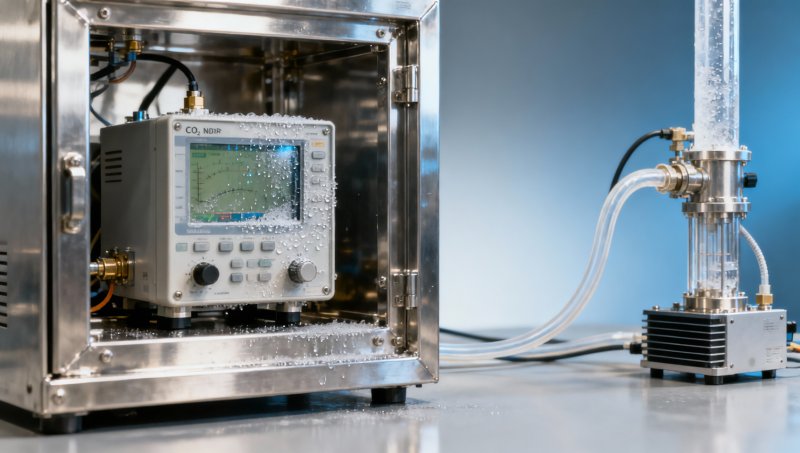
Zero-point instability in CO₂ analyzers refers to unpredictable, non-linear baseline shifts during operation—even when no CO₂ is present. While sensor aging or improper calibration are common suspects, humidity-driven condensation and hygroscopic interference on optical windows, reference cells, or electrochemical electrodes account for up to 68% of field-reported zero drift incidents in unconditioned installations (per 2023 industry field service data).
Humidity affects different analyzer technologies in distinct ways: paramagnetic sensors suffer from altered gas density and thermal conductivity; NDIR and laser-based units experience refractive index changes and window fogging above 70% RH; electrochemical cells face electrolyte dilution and membrane swelling at >60% RH and 15–30°C ambient ranges. These effects compound over time—especially in coastal, wastewater, or HVAC duct environments where dew point frequently exceeds 10°C.
Unlike temperature-induced drift—which follows predictable coefficients—humidity-related zero shifts are non-monotonic and highly dependent on exposure duration, cycling frequency, and material compatibility. A single 90-minute exposure to 85% RH at 25°C can induce ≥12 ppm zero offset in unshielded NDIR modules, requiring recalibration before resuming compliance-grade reporting.
How analyzer technology determines humidity vulnerability
Not all CO₂ analyzers respond equally to ambient moisture. Selection must align with both measurement principle and deployment environment. Below is a comparative assessment of core technologies under controlled humidity stress testing (IEC 60068-2-30, 72-hour cyclic damp heat at 85% RH / 55°C):
The table reveals critical trade-offs: TDLAS offers superior humidity resilience but demands higher upfront CAPEX and specialized alignment support; NDIR remains cost-effective for stable indoor labs but requires rigorous pre-conditioning for outdoor cabinets; paramagnetic units deliver high accuracy in dry gases—but become unreliable without integrated permeation dryers or chilled-mirror conditioning (adding 2–4 weeks to delivery lead time).
Key procurement checkpoints for humidity-prone deployments
- Verify whether the manufacturer specifies zero-point stability *at rated RH*, not just at 23°C/50% RH lab conditions.
- Confirm presence of real-time dew point monitoring and automatic zero-correction algorithms—not just manual zero buttons.
- Check for ISO 17025-accredited humidity validation reports covering your target operating range (e.g., 5–40°C / 30–85% RH).
- Require documentation of long-term zero repeatability: ≤±3 ppm over 30 days at 70% RH is industry benchmark for Tier-2 environmental compliance.
Mitigation strategies that deliver audit-ready consistency
Effective mitigation goes beyond basic desiccants. High-integrity deployments use layered protection aligned with IEC 61511 and EPA Method 205 requirements:
- Pre-analyzer conditioning: Integrated Peltier-cooled condensate traps (dew point ≤5°C) reduce incoming moisture by 92–97% before sampling—critical for stack monitoring and biogas applications.
- In-situ compensation: Dual-wavelength referencing (e.g., 4.26 μm CO₂ band + 3.95 μm H₂O-compensation band) corrects for spectral interference in real time.
- Hardware hardening: Gold-plated optical windows, hydrophobic anti-fog coatings, and hermetically sealed reference cells extend mean time between zero adjustments from 7 days to ≥90 days.
- Software intelligence: Adaptive zero-tracking algorithms using ambient RH, pressure, and temperature as co-variables reduce false alarms by 40% in fluctuating climates.
For projects governed by ISO 14064-3 or EU MRV, these measures aren’t optional—they’re verification prerequisites. A single uncorrected zero shift exceeding ±10 ppm invalidates quarterly emissions reporting, triggering revalidation costing $8,500–$14,200 per site.
What to ask your supplier before finalizing CO₂ analyzer selection
Technical evaluation checklist
Before issuing an RFQ or signing a PO, request documented evidence for:
- Zero-point stability test report per ASTM D6299 (minimum 168-hour continuous run at 75% RH / 25°C).
- Calibration traceability to NIST SRM 1660c (CO₂ in air), including uncertainty budget for humidity cross-sensitivity.
- Field service SLA: response time ≤4 business hours for zero-drift emergencies in Tier-1 industrial zones.
- Firmware update path supporting future humidity-compensation algorithm upgrades without hardware replacement.
Why choose our instrumentation engineering team
We specialize in humidity-resilient gas analysis solutions for regulated industries—from EPA Title V compliance to pharmaceutical cleanroom monitoring. Our engineers co-develop specifications with your technical evaluators, validate against your actual site RH profiles, and provide certified zero-stability guarantees backed by 3-year extended warranty.
Contact us to request: (1) humidity impact assessment for your specific installation site, (2) side-by-side parameter comparison of three analyzer architectures, (3) lead time confirmation for configured units with heated optical paths, or (4) sample unit loan for 14-day field validation under real ambient conditions.
Recommended for You
 Brazil to Eliminate Import Duties on Cross-Border E-Commerce Orders Under USD 50Brazil to eliminate import duties on cross-border e-commerce orders under USD 50—key for portable testing instruments exporters targeting Mercado Livre & DIY buyers.
 New AI Agent Guidelines Impact Smart Inspection Device ExportsAI Agent Guidelines impact smart inspection device exports—learn how new China AI safety rules affect EU, US & Middle East market access.
 UPS Freight Rates Increase Effective May 17, 2026UPS freight rates increase effective May 17, 2026—impact FOB pricing for industrial monitoring equipment exporters. Act now to optimize packaging, revise quotes, and secure margins.
 新修订《海商法》施行:卸货港无人提货责任转向托运人,检测设备出口交期风控升级New Maritime Code shifts unclaimed cargo liability to shippers at discharge ports—critical for testing equipment exporters managing delivery timelines and compliance risk.
 China Imposes Zero Tariffs on Lab Analyzers for 20 African NationsChina's zero tariffs on lab analyzers for 20 African nations boost export competitiveness—pH meters, spectrophotometers & more now duty-free from May 2026.
 CA Toxic Chemical Tank Overheating Sparks Explosion Risk, Monitoring Equipment Orders SurgeGas leak detectors, remote temperature warning systems & explosion-proof thermal imagers surge in demand after CA toxic tank overheating incident.
 EU REACH Adds DBDPE to SVHC List, Impacting Brominated Flame Retardant Testing for Export EquipmentDBDPE added to EU REACH SVHC list—impact on brominated flame retardant testing for industrial instruments, sensors & export compliance. Act now.
 Thailand Customs Digital Reform Spurs RFID Equipment DemandRFID equipment demand surges in Thailand as Customs digital reform mandates e-labeling, real-time parcel tracking & API compliance—act now to meet TISI specs and platform rules.
 Lazada Thailand Cuts Import Duties on 528 CategoriesLazada Thailand cuts import duties on 528 categories — including wired headphones & notebooks — lowering costs for Chinese exporters and Thai SMEs via LGS.
 US Delays 400 Tomahawk Missiles to Japan Amid Iran Inventory ReplenishmentTomahawk missiles delay to Japan sparks urgent demand for alternative guidance, navigation & secure comms suppliers—key opportunity for export-ready defense electronics firms.
 What to Check Before Importing an F2 Concentration Analyzer in 2026F2 concentration analyzer import guide for 2026: learn what to check on compliance, performance, integration, lifecycle cost, and supplier support before you buy.
 SF6 Concentration Analyzer Market Trends for Power and Gas Applications in 2026SF6 concentration analyzer market trends for 2026: explore accuracy, digital integration, emissions control, and buying tips for power and gas applications.
 Common HCl Concentration Analyzer Mistakes That Lead to Unstable ReadingsHCl concentration analyzer unstable readings? Discover the most common installation, calibration, sampling, and maintenance mistakes—and the practical fixes that improve accuracy fast.
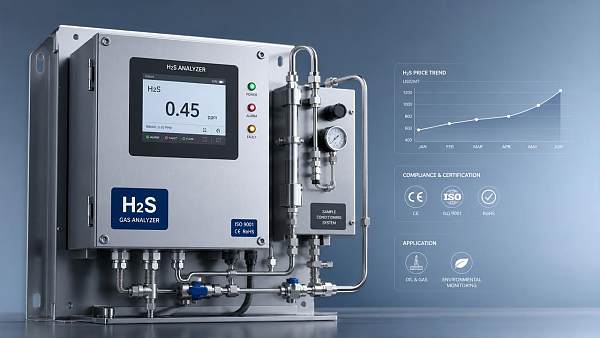
 H2S Concentration Analyzer Price Trends: What’s Driving Costs in 2026H2S concentration analyzer price trends in 2026: discover what drives costs, from sensor technology and compliance to materials and digital features, and make smarter buying decisions.
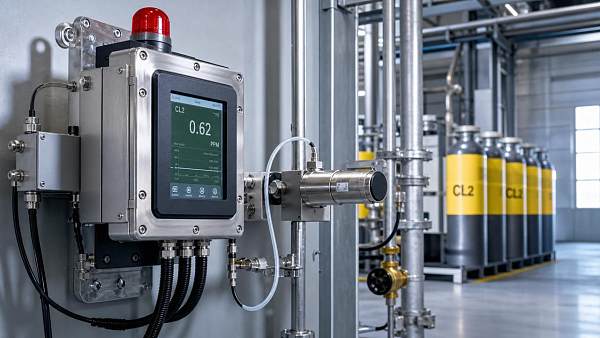
 How to Choose a Cl2 Concentration Analyzer for Process Safety in 2026Cl2 concentration analyzer selection in 2026 starts with process safety. Learn how to match scenarios, improve reliability, avoid costly mistakes, and choose with confidence.
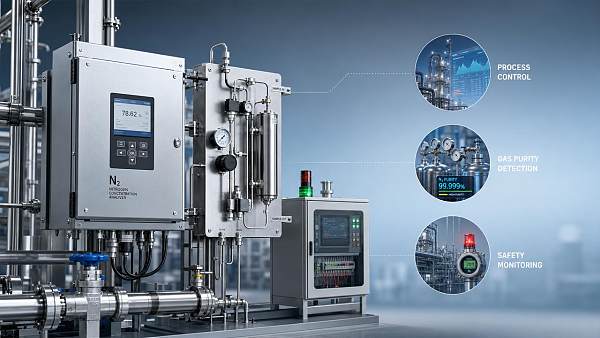
 N2 Concentration Analyzer Cost Factors for Bulk Industrial ProcurementN2 concentration analyzer cost depends on more than unit price. Compare process, purity, and safety applications with total cost logic to source smarter and reduce lifecycle risk.
 Oxygen Concentration Analyzer vs Sensor Systems: Which Fits Continuous UseOxygen concentration analyzer or sensor system? Compare stability, drift, maintenance, and uptime for continuous use to choose the most reliable fit for your process.
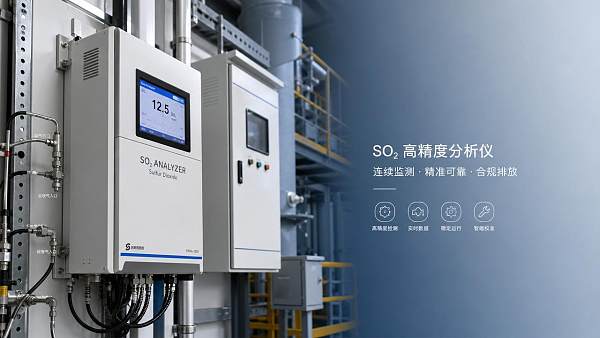
 SO2 Concentration Analyzer News: Compliance Demands Reshaping Product SpecsSO2 concentration analyzer trends are shifting with stricter compliance rules. Learn how new specs, data integrity, and uptime demands are reshaping smarter buying decisions.
 He Concentration Analyzer Maintenance Tips for Stable Long-Term ReadingsHe concentration analyzer maintenance tips for stable long-term readings. Learn how to reduce drift, improve calibration accuracy, cut downtime, and keep industrial systems reliable.
 CH4 Concentration Analyzer Selection Mistakes That Raise Operating RiskCH4 concentration analyzer selection mistakes can raise safety, compliance, and maintenance risk. Learn how to choose the right analyzer for reliable performance and lower lifecycle cost.
 CO Concentration Analyzer Import Rules to Watch in 2026CO concentration analyzer import rules for 2026: learn the key customs, certification, labeling, and compliance checks to reduce risk, avoid delays, and source with confidence.
 NH3 Concentration Analyzer Market Trends for Industrial Process Control in 2026NH3 concentration analyzer market trends in 2026: explore technologies, industrial applications, selection tips, and how smarter monitoring improves compliance, safety, and process control.
 Ar Concentration Analyzer Accuracy Issues in High-Purity Gas ApplicationsAr concentration analyzer accuracy issues can compromise high-purity gas quality, safety, and compliance. Learn the key causes, practical fixes, and how to improve reliable measurement performance.
 CO2 Concentration Analyzer Price Trends in 2026: What Shapes Total CostCO2 concentration analyzer price trends in 2026 depend on technology, accuracy, calibration, compliance, and integration. Discover total cost drivers to compare quotes smarter and control lifecycle risk.
 How to Choose a NOX Concentration Analyzer for Low-Emission MonitoringNOX concentration analyzer selection for low-emission monitoring made easier. Learn how to compare accuracy, response time, compliance, and lifecycle cost before you buy.
 2026 Summit Highlights China's Smart Inspection Equipment as New Global Cooperation FocusSmart inspection equipment takes center stage at the 2026 Summit—unlocking new global cooperation, standards alignment, and market opportunities for exporters, OEMs, and tech suppliers.
 White House Warns Oil Shock May Fuel Core Inflation, Delaying Industrial Instrument ExportsWhite House warns oil shock may fuel core inflation—impacting industrial instrument exports. Discover how pressure, temperature & flow instrumentation exporters can mitigate delays and optimize trade finance workflows now.
 New AI Agent Guidelines Impact Export of AI-Powered Testing EquipmentAI agent guidelines impact export of AI-powered testing equipment—learn how new China security & controllability rules affect global compliance, supply chains, and market access.
 Canton Fair Phase III Boosts Sensor & Energy Testing ExportsSensor & energy testing exports surge at Canton Fair Phase III—driven by global demand for new energy home appliances and smart furniture compliance solutions.
 UAE Announces $150B Energy Infrastructure InvestmentUAE's $150B energy infrastructure push drives demand for IP68/IP69K, ATEX/IECEx, and LPWAN-enabled industrial sensors — act now to align with ADNOC tenders.
 WTI Net Longs Surge, Boosting Demand for Lubricant Monitoring SystemsLubricant monitoring systems surge in demand as WTI net longs rise—real-time viscosity, moisture & oxidation tracking now critical for global manufacturers.
 Shanghai Pudong Launches E-Label Pilot for Imported CosmeticsShanghai Pudong’s e-label pilot for imported cosmetics drives global demand for RFID/NFC readers, traceability solutions & certified testing equipment—act now to comply and lead.









Search Categories
Search Categories
Latest Article
- Brazil to Eliminate Import Duties on Cross-Border E-Commerce Orders Under USD 50Brazil to eliminate import duties on cross-border e-commerce orders under USD 50—key for portable testing instruments exporters targeting Mercado Livre & DIY buyers.Posted by:
- New AI Agent Guidelines Impact Smart Inspection Device ExportsAI Agent Guidelines impact smart inspection device exports—learn how new China AI safety rules affect EU, US & Middle East market access.Posted by:
- UPS Freight Rates Increase Effective May 17, 2026UPS freight rates increase effective May 17, 2026—impact FOB pricing for industrial monitoring equipment exporters. Act now to optimize packaging, revise quotes, and secure margins.Posted by:
Please give us a message
