
Continuous analysis data quality depends on maintenance discipline


In continuous analysis, data quality is only as reliable as the maintenance discipline behind the system. From fixed analysis and portable analysis to online measurement, multi gas detection, and paramagnetic oxygen monitoring, stable performance depends on regular calibration, inspection, and timely service. For users, engineers, buyers, and safety managers, understanding how maintenance supports explosion proof design, laser measurement, thermal measurement, and custom analysis is essential to reducing risk, controlling cost, and ensuring trustworthy results.
Why maintenance discipline determines continuous analysis data quality
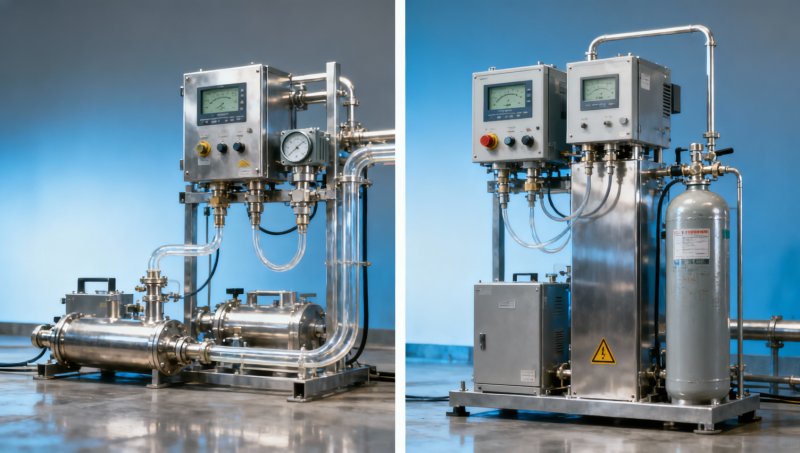
In the instrumentation industry, continuous analysis is not a one-time equipment purchase. It is an operating system that depends on sensor stability, sample integrity, calibration routines, alarm verification, and service response. Whether the application involves industrial manufacturing, energy and power, environmental monitoring, laboratory analysis, or automation control, poor maintenance discipline can gradually distort results long before a complete failure becomes visible.
This matters to different decision makers in different ways. Operators want stable readings during daily shifts. Technical evaluators need repeatability and diagnostic transparency. Procurement teams look for lifecycle value, not only purchase price. Financial approvers want predictable service cost over 12–36 months. Quality and safety managers focus on traceability, alarm reliability, and compliance with internal control procedures.
A disciplined maintenance program usually includes 4 basic layers: routine inspection, scheduled calibration, preventive replacement of wear parts, and documented corrective service. In continuous gas analysis, oxygen monitoring, online composition analysis, and multi gas detection, these layers support signal accuracy, process safety, and production consistency. Skipping even 1 layer often creates hidden risk that later appears as process deviation, safety exposure, or costly troubleshooting time.
For B2B buyers, the core issue is simple: a high-spec analyzer without maintenance discipline may deliver worse business value than a moderately priced system supported by a clear service plan. That is why maintenance should be evaluated as part of the total solution, especially in environments with continuous operation, hazardous areas, variable ambient temperatures, or strict reporting requirements.
What changes when maintenance is weak?
- Calibration drift may go unnoticed for weeks, leading to wrong process decisions or incorrect emission records.
- Filters, pumps, tubing, and sampling components can degrade gradually, affecting response time and measurement stability.
- Explosion proof installations may remain physically intact while performance declines due to neglected seal checks, purge verification, or connector inspection.
- Portable analysis and field detection units may pass visual inspection but fail bump tests or functional checks when urgently needed.
In practice, disciplined maintenance reduces uncertainty. It does not eliminate every risk, but it narrows the range of possible error. For most industrial users, that difference is critical because operating decisions often rely on trends, thresholds, and alarm points rather than on a single isolated reading.
Which maintenance tasks matter most across fixed, portable, and online analysis systems?
Not all continuous analysis systems fail in the same way. A fixed online analyzer, a portable gas detector, a laser measurement unit, and a paramagnetic oxygen analyzer each have different maintenance priorities. However, most plants can build a practical maintenance matrix around 5 key areas: sensing element condition, sampling path integrity, calibration validity, electrical connection reliability, and functional alarm verification.
The maintenance interval depends on process load, contamination level, and criticality. In clean and stable conditions, inspection may be performed monthly and calibration quarterly. In dirty, humid, corrosive, or vibration-prone environments, weekly checks and shorter calibration cycles are often more realistic. For portable devices used in confined space entry or emergency response, pre-use checks and frequent bump tests are usually more important than long interval assumptions.
Below is a practical comparison to help users, engineers, and project managers align maintenance planning with actual application conditions rather than generic assumptions. This is especially useful when comparing online measurement systems with portable analysis tools during procurement or service planning.
The table shows why maintenance cannot be standardized into a single fixed cycle for every instrument. Service intervals should match the operating environment, required confidence level, and downtime tolerance. For example, an online analyzer used for process optimization may tolerate different service timing than a detector protecting personnel in a hazardous zone.
A practical 4-step maintenance workflow
- Inspect: verify physical condition, displays, tubing, connectors, sample flow, and warning indicators.
- Validate: perform zero/span checks, bump tests, reference gas verification, or comparison with known values.
- Record: log drift, service actions, replacement parts, and next due date for traceability.
- Respond: replace consumables, schedule service, or escalate technical issues before they affect operation.
This workflow is simple enough for routine execution yet robust enough for procurement specifications and project acceptance planning. It also helps distributors and service partners define support scope more clearly for end users.
How should buyers evaluate maintenance when selecting continuous analysis equipment?
Many procurement discussions focus heavily on measurement range, output signal, and initial quotation. Those factors matter, but they do not fully determine lifecycle performance. For continuous analysis equipment, maintenance burden should be reviewed before approval because service complexity directly affects downtime, consumable cost, labor requirement, and long-term data confidence.
A useful procurement review usually covers 3 categories. First, technical fit: sensor principle, environmental compatibility, explosion proof requirements, and integration with control systems. Second, serviceability: calibration access, spare part availability, maintenance training, and remote diagnostics. Third, lifecycle economics: expected wear items, annual service frequency, and the operational impact of delayed maintenance.
For project managers and financial approvers, a slightly higher purchase price can be justified if the analyzer reduces service time from several hours to less frequent, shorter interventions, or if it simplifies calibration handling across multiple sites. The right question is not only “What does it cost to buy?” but also “What does it cost to maintain over the next 1–3 years?”
The following selection table is designed for B2B teams comparing fixed analysis, custom analysis packages, and online monitoring systems in real procurement scenarios. It can be adapted for RFQ review, technical clarification, or distributor evaluation.
For procurement teams, this evaluation framework reduces the risk of buying an instrument that performs well on paper but becomes difficult to sustain in daily operation. For distributors and project integrators, it also supports more credible proposal writing because maintenance expectations are clarified early.
Common buying mistakes that increase long-term cost
- Choosing only by upfront price while ignoring calibration gas handling, spare parts, and service labor.
- Using a portable analysis device in a duty cycle better suited to fixed online monitoring.
- Assuming explosion proof design removes the need for routine inspection and documented verification.
- Approving custom analysis systems without confirming maintenance access, sample path layout, and component standardization.
Avoiding these mistakes can significantly improve service consistency and protect data quality over the full operating cycle.
How do compliance, safety, and implementation affect maintenance planning?
Maintenance discipline is not only a technical issue. It is also a compliance and implementation issue. In many industrial settings, continuous analysis data supports internal quality control, safety management, environmental reporting, or process validation. That means maintenance records, calibration practices, and service traceability may be reviewed during audits, customer qualification, or project handover.
Where hazardous locations are involved, explosion proof design and installation practice require especially careful verification. The analyzer may be suitable for the area, but cable glands, enclosure integrity, purge logic, grounding, and maintenance procedures must also remain aligned with the installation concept. A good maintenance plan therefore connects instrument service with broader site safety procedures instead of treating it as an isolated equipment task.
Implementation planning should usually define 6 service-related checkpoints before project closure: installation verification, signal validation, calibration readiness, spare part confirmation, operator training, and maintenance documentation transfer. When these points are rushed or left vague, the system often enters operation with technical debt that later appears as unstable readings, unclear responsibilities, or repeated field service requests.
For laboratory-linked analysis, medical testing support environments, environmental monitoring, and industrial online monitoring, documentation discipline is often as important as the instrument itself. Clear records make it easier to compare trends, investigate anomalies, and justify maintenance budgets to finance teams or management committees.
A simple maintenance governance checklist
Operational control points
- Define who performs daily, weekly, and quarterly tasks, and who approves corrective actions.
- Set clear thresholds for recalibration, replacement, shutdown, or technical escalation.
- Keep service logs consistent across sites so trends can be reviewed over 6–12 month periods.
Project and audit control points
- Confirm handover documents include calibration instructions, wiring details, spare lists, and maintenance cycles.
- Align analyzer maintenance procedures with site safety permits and hazardous area work rules where relevant.
- Review whether outsourced service providers follow the same reporting standard as internal teams.
These governance steps are practical for manufacturers, utilities, laboratories, engineering contractors, and channel partners. They are especially useful when the same plant operates multiple analyzer types across different process units.
FAQ: what buyers, operators, and managers ask most about continuous analysis maintenance
How often should a continuous analyzer be calibrated?
There is no universal interval that fits every application. A common starting point is monthly inspection with calibration every quarter, but harsher applications may need shorter cycles. The correct schedule depends on process criticality, contamination load, sensor principle, and whether the analyzer supports safety, compliance, or process optimization. A good practice is to start conservatively, review drift data over 2–3 service cycles, and then adjust.
What is the difference between maintenance for portable analysis and online measurement?
Portable analysis usually requires stronger pre-use discipline because the device may be deployed in changing environments and under time pressure. Online measurement needs stronger system discipline because sample handling, flow stability, and continuous signal output affect long-duration performance. In short, portable devices emphasize readiness and verification before use, while online systems emphasize consistency and traceability over time.
Does explosion proof equipment require less maintenance?
No. Explosion proof design addresses installation and ignition risk management, not immunity from wear, drift, contamination, or connection issues. In fact, hazardous area service often requires more disciplined planning because inspection, replacement, and access procedures may be more controlled. Buyers should confirm both the protection concept and the maintenance process before approval.
When is custom analysis worth considering?
Custom analysis is worth considering when standard products do not fit the sample condition, integration requirement, response target, or installation environment. Typical triggers include multi-stream sampling, special gas composition, difficult ambient conditions, or project-specific control architecture. However, custom solutions should be reviewed carefully for spare part standardization, service access, and support responsibilities so that maintenance does not become unnecessarily complex.
What should finance teams ask before approving the budget?
Finance teams should ask for the expected annual service plan, likely consumables within 6–12 months, support response model, and any calibration gas or accessory requirements. They should also ask how downtime risk compares between options. This helps move the discussion from purchase price alone to total operating impact, which is often the more relevant business metric.
Why choose us for continuous analysis planning, maintenance support, and procurement coordination
In the instrumentation industry, value comes from matching measurement technology with real operating conditions, service capacity, and project goals. That is why our approach focuses on the full decision chain: application understanding, technical selection, maintenance planning, and practical support for procurement and implementation. This is relevant whether you are reviewing fixed analysis, portable analysis, online measurement, multi gas detection, paramagnetic oxygen monitoring, or a custom analysis requirement.
We can help you clarify key issues before a purchase or service decision is made. These typically include parameter confirmation, measurement principle comparison, maintenance interval planning, explosion proof or installation considerations, spare part strategy, and the likely impact of environmental conditions such as dust, humidity, vibration, or temperature fluctuation. For project teams, we can also support handover logic, service scope definition, and communication between engineering, purchasing, operations, and finance.
If you are comparing suppliers or preparing an RFQ, we can help organize the technical and commercial questions that matter most: calibration method, service access, lead time, consumables, training needs, documentation expectations, and channel support model. This saves time for evaluators and makes approvals easier because the maintenance implications are visible early rather than after installation.
Contact us to discuss your application in practical terms. You can request support for analyzer parameter confirmation, product selection, delivery cycle review, custom solution planning, compliance-related questions, sample support options, spare part planning, and quotation communication. If your current challenge is unstable data quality, rising service cost, or unclear maintenance responsibility, we can help you build a more disciplined and more workable continuous analysis strategy.
Recommended for You
 Brazil INMETRO to Require Portuguese UI and Local Units for Industrial Instruments by 2026Brazil INMETRO mandates Portuguese UI & local units (mbar, kPa, °C) for industrial instruments by Dec 2026—key for exporters, integrators & service providers.
 STMicroelectronics 200mm Line Eases Industrial Sensor Chip ShortageSTMicroelectronics 200mm line eases industrial sensor chip shortage — MCUs & signal-conditioning ICs now ship in 12 weeks. Secure allocation today.
 Southeast Asia Manufacturing Re-shoring Accelerates: Vietnam/Indonesia Industrial Instrument Imports Up 37% YoYSoutheast Asia manufacturing re-shoring accelerates: Vietnam & Indonesia industrial instrument imports up 37% YoY — key insights for suppliers, OEMs & procurement teams.
 First Global White Paper on Humanoid Robot Sensor Calibration ReleasedHumanoid robot sensor calibration: First global white paper released—key for ISO/IEC JWG 23 compliance, export readiness & dynamic torque accuracy. Act now.
 SAMR to Upgrade EV Battery Recycling Standard to MandatorySAMR to upgrade EV battery recycling standard GB/T 34015—202X to mandatory by Dec 2026 — critical for exporters, BMS makers & cert labs.
 Saudi SASO Accelerates AI Energy Efficiency Rules for TransmittersSASO AI energy efficiency rules for transmitters take effect 1 June 2026 — mandatory AI simulation, Saudi climate data, and authorized lab validation required. Act now to avoid export delays.
 IEC 63278:2026 Released for Industrial Instrument CybersecurityIEC 63278:2026 is live — the first global standard mandating cybersecurity verification for industrial instruments. Discover compliance impacts, deadlines, and actionable steps for OT/IT convergence.
 Red Sea Crisis Escalates: Gulf of Aden Navigation Ban Extended to June 15, 2026Red Sea Crisis escalates: Gulf of Aden navigation ban extended to June 15, 2026—disrupting industrial instrumentation shipments to the Middle East with 458% air freight spikes and 12–18 day delays.
 US DOE Updates Efficiency Rules for Industrial SensorsUS DOE updates industrial sensor efficiency rules: AI-driven dynamic calibration required by Sept 2026. Ensure AI-Cal Verified compliance now.
 EU Mandates PEF Carbon Footprint Module for Industrial Instruments from June 2026EU mandates PEF carbon footprint module for industrial instruments from June 2026—key for exporters, OEMs & certifiers. Act now to ensure compliance.
 Explosion-Proof Instruments: Compliance Risks Before You OrderExplosion-proof instruments can trigger delays, failed inspections, and safety risks if compliance is overlooked. Learn what to verify before ordering and make safer, smarter purchasing decisions.
 Gas Quality Monitoring Equipment Import Rules to Watch in 2026Gas quality monitoring equipment import rules for 2026 are tightening. Learn the key compliance, certification, and customs risks distributors must manage to avoid delays and protect margins.
 Emission Control Shelter Demand Shifts Across Industrial ProjectsEmission control shelter demand is rising across industrial projects as buyers seek faster deployment, reliable monitoring, and compliance-ready designs. Explore key evaluation factors.
 Temperature Measurement Instruments: Selection Mistakes That Raise DowntimeTemperature measurement instruments selection mistakes can drive downtime, unstable control, and higher costs. Discover 5 common errors and practical fixes to improve reliability.
 Thermal Conductivity Analyzers: When Are They the Right Choice?Thermal conductivity analyzers are ideal for binary and high-contrast gas mixtures. Learn when they deliver reliable, low-maintenance online monitoring and smarter project value.
 Level Measurement Instruments for Tanks: What Affects ReliabilityLevel measurement instruments reliability depends on media, installation, and diagnostics. Discover what causes tank reading failures and how to improve safety, uptime, and control.
 Flow Measurement Equipment Price Trends in 2026Flow measurement equipment price trends in 2026: learn key cost drivers, budgeting risks, and smart buying strategies to improve ROI and make better procurement decisions.
 Flue Gas Monitoring Equipment: Common Accuracy Issues and FixesFlue gas monitoring equipment accuracy issues can lead to drift, false readings, and compliance risks. Discover common causes, practical fixes, and smarter maintenance tips.
 Process Control Shelter vs Control Room: Key Cost and Deployment DifferencesProcess control shelter vs control room: compare cost, deployment speed, integration, and lifecycle value to choose the smarter solution for industrial automation projects.
 How to Select an Industrial Control Shelter for Harsh Site ConditionsIndustrial control shelter selection for harsh sites: learn how to compare materials, HVAC, safety, and lifecycle cost to protect equipment, reduce downtime, and improve reliability.
 SAMR to Finalize 1,800+ Standards by 2026, Including EV Battery RecyclingSAMR to finalize 1,800+ standards by 2026—including EV battery recycling, hazardous chemical packaging & EMC immunity. Stay ahead of mandatory GB shifts and global export compliance.
 China's Largest Single-Line Large-Tow Carbon Fiber Line Starts OperationChina's largest single-line large-tow carbon fiber line is live—30,000 tons/year capacity, ASME-certified, 22% cheaper & 6-week lead time. Boost your industrial instrumentation supply chain now.
 China Mobile Unveils National Integrated Computing Power NetworkChina Mobile's National Integrated Computing Power Network accelerates AI quality inspection for global manufacturers—cutting model training time by 68% and enabling cross-border industrial AI development.
 World's First Humanoid Robot Industrial Calibration White Paper ReleasedWorld's First Humanoid Robot Industrial Calibration White Paper released—setting new global benchmarks for dynamic sensor calibration in robotics. Discover how ABB, Yaskawa & metrology leaders are reshaping industry trust.
 Red Sea Crisis Escalates: Aden Gulf Ban Extended to June 15Red Sea Crisis escalates: Aden Gulf ban extended to June 15 — disrupting industrial instrumentation trade between China and the Middle East with 452% air freight spikes and 7–12 day delays.
 Saudi SASO Introduces AI-Based Energy Validation for Industrial TransmittersAI-based energy validation for industrial transmitters is now mandatory in Saudi Arabia—learn how SASO’s new AI regulation impacts global exporters, compliance timelines, and supply chains.
 IEC TC65 Releases Cybersecurity Validation Guide for Industrial InstrumentsIEC TC65’s new Cybersecurity Validation Guide for Industrial Instruments mandates SDL certification & firmware signing—key for EU/US market access. Act now to align with GB/T 42278-2026 and avoid export delays.
 EU PEF Carbon Footprint Database Mandatory Access for Industrial InstrumentsEU PEF Carbon Footprint Database mandatory access starts June 2026 for industrial instruments—pressure, temperature & flow meters. Ensure compliance now to avoid EU customs delays and market exclusion.
 Gas Quality Analyzer Shelter Price Trends and Specification Gaps to WatchGas quality analyzer shelter price trends vary with materials, HVAC, safety, integration, and compliance. See key specification gaps before shortlisting suppliers or approving budget.
 Process Measurement Equipment: Key Accuracy Risks in Harsh EnvironmentsProcess measurement equipment in harsh environments can drift before failing. Discover key accuracy risks, warning signs, and practical controls to protect quality, safety, and compliance.
 Industrial Analyzer Shelter Export Factors Affecting Lead Times This YearIndustrial analyzer shelter export lead times vary with sourcing, engineering, compliance, packing, and logistics. Learn the key factors to quote smarter and deliver with confidence.
 What to Check Before Buying a Process Analyzer ShelterProcess analyzer shelter buying guide: learn what to check before purchase, from compliance and HVAC to utilities, durability, and maintenance access.














Search Categories
Search Categories
Latest Article
- Brazil INMETRO to Require Portuguese UI and Local Units for Industrial Instruments by 2026Brazil INMETRO mandates Portuguese UI & local units (mbar, kPa, °C) for industrial instruments by Dec 2026—key for exporters, integrators & service providers.Posted by:
- STMicroelectronics 200mm Line Eases Industrial Sensor Chip ShortageSTMicroelectronics 200mm line eases industrial sensor chip shortage — MCUs & signal-conditioning ICs now ship in 12 weeks. Secure allocation today.Posted by:
- Southeast Asia Manufacturing Re-shoring Accelerates: Vietnam/Indonesia Industrial Instrument Imports Up 37% YoYSoutheast Asia manufacturing re-shoring accelerates: Vietnam & Indonesia industrial instrument imports up 37% YoY — key insights for suppliers, OEMs & procurement teams.Posted by:
Please give us a message
