
Gas Quality Analyzer Shelter Price Trends and Specification Gaps to Watch


For business evaluators comparing industrial monitoring investments, understanding gas quality analyzer shelter price trends requires more than checking quotations. Specification gaps in materials, climate control, safety systems, analyzer integration, and compliance can significantly affect lifecycle cost, project risk, and procurement value.
This article explains what drives pricing, where suppliers differ in substance rather than wording, and how to assess a gas quality analyzer shelter before budget approval or vendor shortlisting.
Why prices for a gas quality analyzer shelter vary more than many buyers expect
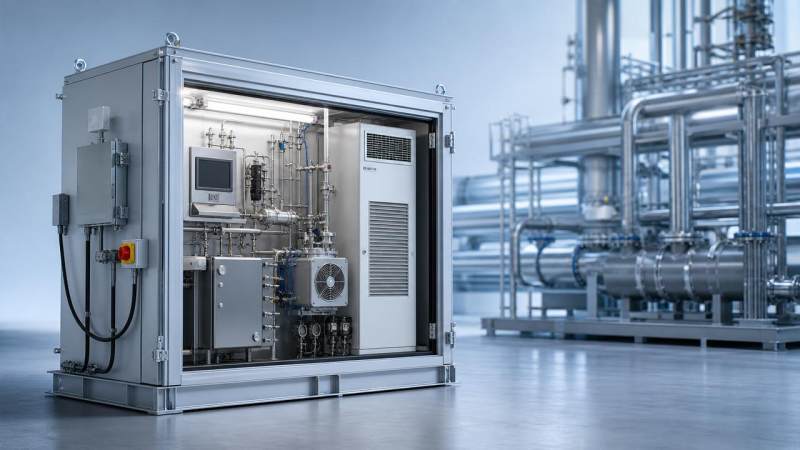
The core search intent behind this topic is practical evaluation. Buyers are not looking for a generic definition. They want to understand price ranges, cost drivers, hidden specification differences, and procurement risks.
For business evaluators, the central question is simple: why do two gas quality analyzer shelter quotations that appear similar on paper differ so much in total project value?
The short answer is that pricing is shaped less by the shelter box itself and more by the performance obligations attached to it. Environmental control, hazardous area design, analyzer package integration, documentation, testing, and compliance can all move cost substantially.
That is why a low initial quotation may not represent a low-cost project. In many cases, it reflects omitted scope, lighter materials, weaker thermal control, reduced safety functionality, or unverified certification assumptions.
What business evaluators care about most before approving the purchase
Commercial reviewers usually care about five issues. First, whether the quoted system is truly comparable across suppliers. Second, whether lifecycle cost is being underestimated. Third, whether specification gaps create project delay risk.
Fourth, they want to know whether the shelter is overengineered for the operating environment. Fifth, they need a defensible basis for procurement approval that balances capital cost, reliability, compliance, and operating continuity.
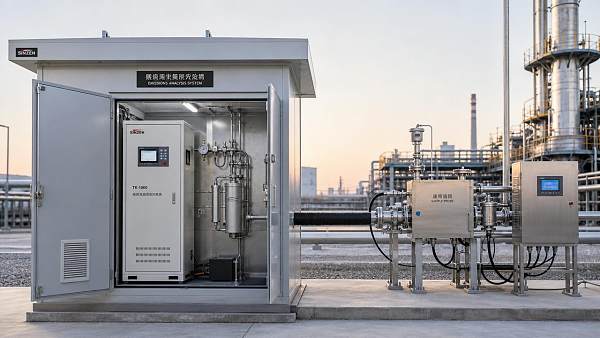
In that context, a gas quality analyzer shelter should be evaluated as a complete operating environment for analyzers, sample conditioning, utilities, and maintenance access, not merely as an enclosure with installed instruments.
This distinction matters because analyzer reliability often depends on the shelter’s thermal stability, ingress protection, electrical safety design, and maintainability. A lower-cost enclosure can become a higher-cost monitoring asset if these factors are weak.
The biggest price drivers are usually hidden in technical scope, not in the shelter dimensions
Many non-technical buyers assume the shelter’s physical size is the primary cost variable. Size matters, but it is rarely the dominant factor once analyzers, sample systems, HVAC, fire and gas systems, and hazardous area requirements are included.
One major cost driver is construction material. Carbon steel, stainless steel, and corrosion-protected composite options differ greatly in both initial cost and long-term suitability for coastal, chemical, desert, or cold-region installations.
Another major driver is insulation and thermal design. Shelters intended for stable analyzer performance in high heat, freezing climates, or rapidly changing ambient conditions need better insulation, vapor barriers, and more robust HVAC strategies.
Climate control can significantly change the price. Redundant air conditioning, heating, pressurization, and ventilation systems increase capital cost, yet they often reduce analyzer drift, shutdown risk, and maintenance intervention over time.
Hazardous area compliance is another critical variable. Requirements tied to ATEX, IECEx, NEC, or local electrical codes may affect lighting, cable glands, panel design, purge systems, detector layouts, and documentation packages.
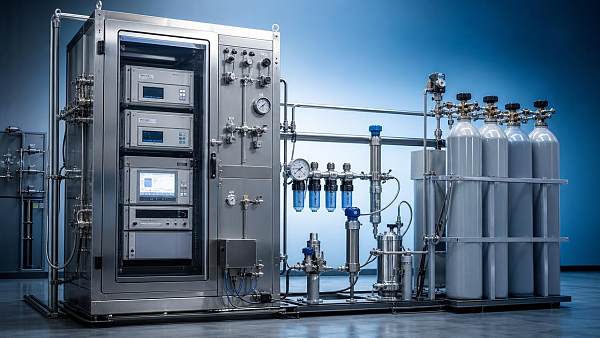
Integration scope also drives pricing. Some suppliers quote only the shelter body and utility basics, while others include analyzers, sample conditioning systems, calibration gas handling, control panels, internal wiring, factory testing, and commissioning support.
Specification gaps that often create misleadingly low quotations
Specification gaps are one of the most important issues to watch. A quotation can look competitive simply because the vendor interpreted the scope more narrowly than competitors or excluded functions that will later return as change orders.
A common gap is HVAC duty definition. One supplier may size cooling for average ambient temperature, while another designs for peak seasonal conditions, solar load, internal heat load, and analyzer sensitivity limits.
This difference has direct business impact. If the shelter cannot maintain required internal conditions, analyzer accuracy can suffer, downtime can rise, and urgent retrofits may erase any upfront savings.
Another frequent gap is in safety architecture. Fire detection, gas detection, emergency shutdown logic, pressurization monitoring, and alarm signaling may be treated as standard by one supplier and optional by another.
Ingress protection is also often misunderstood. Similar wording can hide very different sealing quality for doors, cable entries, roof penetrations, and floor interfaces, especially in dusty, humid, or washdown-prone environments.
Structural assumptions deserve close review as well. Wind load, seismic conditions, snow load, transport lifting design, and foundation interface details may not be equally covered across bids, even if the shelter dimensions match.
Documentation is another hidden differentiator. Drawings, calculations, hazardous area dossiers, material certificates, FAT procedures, and validation records may be included, simplified, or omitted depending on supplier practice.
How climate control and environmental design affect both price and analyzer performance
For many projects, environmental control is where business evaluators should spend extra attention. Gas analyzers often have strict operating conditions, and poor shelter thermal management can undermine the purpose of the investment.
If the process is in a hot desert, coastal refinery, cold gas field, or high-humidity location, the shelter must do more than provide enclosed space. It must protect analyzer stability, sample integrity, and maintenance safety under real operating extremes.
The specification should therefore clarify ambient design basis, internal temperature range, humidity control expectations, air changes, heat dissipation from installed equipment, and whether redundancy is required for critical monitoring duties.
Business reviewers should also ask whether the HVAC design supports maintenance access and uptime. A cheaper single-unit arrangement may be acceptable for non-critical service, but it can become a weak point in continuous compliance monitoring applications.
Energy use matters too. Better insulation, smarter control logic, and appropriate equipment selection may cost more initially, but they can reduce operating expense over the asset life, especially in remote or power-constrained sites.
Compliance and certification can change project economics more than buyers realize
Compliance is not just an engineering formality. It affects procurement timing, site approval, insurance confidence, startup risk, and the ease of passing client or regulatory reviews.
A gas quality analyzer shelter intended for regulated industrial environments may require conformity with electrical codes, hazardous area standards, pressure-related rules, building safety expectations, and customer-specific technical specifications.
When suppliers differ in certification strategy, price differences emerge quickly. One may provide third-party certification, complete traceability, and documented testing. Another may offer basic conformity statements that still leave approval risk with the buyer.
For business evaluators, the issue is not simply whether compliance exists, but whether the quoted compliance level matches project reality. Misalignment can trigger redesign, delayed acceptance, or extra site modification costs.
It is wise to review whether the quote includes factory acceptance testing, loop checks, analyzer integration verification, purge and pressurization testing, and control system validation. These items are often decisive in reducing startup uncertainty.
Price trends in the market: what has been influencing recent quotations
Recent price movement in this segment has generally been shaped by a mix of material costs, energy-related project demand, supply chain volatility, labor availability, and regional compliance requirements.
Stainless steel and specialty material fluctuations have affected shelter pricing, particularly for corrosive or offshore-related applications. At the same time, electrical and HVAC component lead times have influenced supplier contingency pricing.
Projects linked to energy transition, gas infrastructure expansion, emissions monitoring, and process digitalization have also supported demand for analyzer shelters and integrated monitoring packages.
Another trend is the increasing expectation for packaged systems rather than fragmented supply. Buyers increasingly prefer single-source responsibility for shelter, analyzers, sample systems, wiring, controls, and documentation, which can raise quoted value while reducing coordination risk.
There is also growing attention to modularization and pre-tested assemblies. Although this may increase factory scope cost, it can reduce site installation labor, shorten project schedules, and lower startup uncertainty.
For evaluators, the takeaway is that price trends should be read alongside scope trends. A higher quote may reflect genuine market inflation, but it may also reflect a more complete and less risky specification baseline.
How to compare quotations without being misled by headline price
The best comparison method is to normalize the offers into a line-by-line commercial and technical matrix. This should cover shelter construction, insulation, HVAC, hazardous area design, fire and gas protection, analyzers, sample systems, controls, testing, and documents.
Headcount assumptions for site work should also be clarified. Some suppliers include supervision, commissioning, or startup support, while others stop at shipment. These differences affect not only cost but schedule accountability.
Commercial reviewers should identify all exclusions, assumptions, and client-supplied items. In many industrial packages, the most expensive surprises emerge not from the listed price, but from the boundaries of responsibility.
Ask each vendor to state design basis conditions clearly. Ambient temperature, utility availability, area classification, required certifications, noise limits, maintenance access expectations, and operating continuity requirements should all be explicit.
It is also helpful to score bids on risk-weighted value, not only on purchase price. A slightly higher upfront cost may be justified if it lowers compliance risk, shortens delivery uncertainty, or reduces expected maintenance interventions.
Questions that reveal whether a supplier understands your real operating needs
Strong suppliers usually ask detailed questions before finalizing price. If a vendor prices quickly without clarifying environment, classification, analyzer heat load, maintenance philosophy, or compliance expectations, caution is warranted.
Business evaluators can test proposal quality by asking specific questions. What internal conditions are guaranteed? What redundancy is included? Which certifications are covered? What testing is part of factory acceptance?
Other useful questions include: what materials are used for the shelter structure and internal fittings; how corrosion is managed; what happens if ambient conditions exceed design basis; and which items are excluded from startup responsibility.
The answers often reveal more than the quotation itself. A supplier with strong engineering discipline will define limits, interfaces, and performance assumptions clearly. That usually translates into more predictable execution.
When a higher-priced gas quality analyzer shelter is actually the better investment
Not every project needs the highest specification. However, a premium-priced gas quality analyzer shelter can be the better business choice when downtime costs are high, compliance exposure is significant, or the site environment is demanding.
This is especially true for continuous emissions-related measurement, custody-relevant gas analysis, remote energy infrastructure, and hazardous process units where analyzer failure creates operational, financial, or reputational consequences.
In those cases, spending more for reliable climate control, documented compliance, safer access, better corrosion resistance, and tested integration may lower total cost of ownership and improve project confidence.
On the other hand, if the monitoring duty is less critical and environmental conditions are moderate, a simpler specification may be entirely reasonable. The key is alignment between asset criticality and shelter design basis.
Final evaluation framework for procurement approval
Before approving a purchase, business evaluators should confirm four things. First, the quotations are normalized for equivalent scope. Second, hidden specification gaps have been identified. Third, lifecycle cost has been considered alongside capital price.
Fourth, the selected supplier’s compliance and execution approach matches the project’s actual operating risk. This framework is more reliable than choosing the lowest number or the most detailed proposal at first glance.
In practical terms, a gas quality analyzer shelter should be treated as a performance package. Its value depends on how well it protects analyzers, supports continuous operation, satisfies compliance expectations, and reduces future intervention costs.
Price trends matter, but specification clarity matters more. When buyers understand where shelter quotations differ in substance, they can make procurement decisions that are commercially sound, technically defensible, and less vulnerable to post-award surprises.
Recommended for You
 Gas Quality Analyzer Shelter Price Trends and Specification Gaps to WatchGas quality analyzer shelter price trends vary with materials, HVAC, safety, integration, and compliance. See key specification gaps before shortlisting suppliers or approving budget.
 Process Measurement Equipment: Key Accuracy Risks in Harsh EnvironmentsProcess measurement equipment in harsh environments can drift before failing. Discover key accuracy risks, warning signs, and practical controls to protect quality, safety, and compliance.
 Industrial Analyzer Shelter Export Factors Affecting Lead Times This YearIndustrial analyzer shelter export lead times vary with sourcing, engineering, compliance, packing, and logistics. Learn the key factors to quote smarter and deliver with confidence.
 What to Check Before Buying a Process Analyzer ShelterProcess analyzer shelter buying guide: learn what to check before purchase, from compliance and HVAC to utilities, durability, and maintenance access.
 Process Monitoring Equipment Trends Shaping Plant Upgrades in 2026Process monitoring equipment trends for 2026 reveal how smarter plant upgrades can cut downtime, improve compliance, boost efficiency, and deliver faster ROI.
 Flue Gas Analyzer Shelter Maintenance Issues That Shorten Service LifeFlue gas analyzer shelter maintenance issues can quietly shorten equipment life. Learn the key risks, warning signs, and practical checks to reduce downtime and protect accuracy.
 Emission Analyzer Shelter vs Outdoor Mounting: Which Reduces DowntimeEmission analyzer shelter vs outdoor mounting: discover which setup cuts downtime, improves analyzer reliability, and lowers lifecycle risk in harsh or compliance-critical environments.
 Common Gas Quality Equipment Selection Mistakes in Industrial ProjectsGas quality equipment selection mistakes can delay industrial projects and raise compliance risks. Learn how to choose the right solution for accuracy, safety, integration, and faster commissioning.
 Gas Quality System Costs: What Shapes Total Project Spending in 2026Gas quality system costs in 2026 depend on more than analyzer price. Discover the key budget drivers, hidden expenses, and smart planning steps to control total project spending.
 How to Choose Emission Measurement Equipment for Reliable Compliance DataEmission measurement equipment selection affects compliance accuracy, uptime, and audit readiness. Learn how to compare systems, reduce risk, and choose a solution built for reliable data.
 First Global White Paper on Dynamic Calibration for Humanoid Robot Sensors ReleasedFirst global white paper on dynamic calibration for humanoid robot sensors—key for pressure & 6-axis force/torque accuracy in smart manufacturing and collaborative robotics.
 FDA Updates IVD Import Guidelines: CNAS/NIST Calibration Chain RequiredFDA mandates CNAS/NIST calibration chain for IVD pressure & temperature sensors—key for Chinese exporters. Act now to meet July 2026 deadline.
 EU PEF Carbon Database Mandatory Access for Chinese Industrial InstrumentsEU PEF Carbon Database mandatory for Chinese industrial instruments—meet June 15, 2026 deadline to keep CE marking & win EU tenders.
 IEC TC65 Releases Cybersecurity Validation Guide for Industrial InstrumentsIEC TC65 releases cybersecurity validation guide for industrial instruments—key for firmware signing, OT encryption & remote audit compliance. Act now.
 SASO Introduces AI-Based Energy Efficiency Verification for Industrial TransmittersSASO AI energy efficiency verification now mandatory for industrial transmitters in Saudi Arabia—ensure compliance before June 1, 2026 to avoid customs delays.
 ASEAN Green Customs Corridor Fully LaunchedASEAN Green Customs Corridor now live: AI-verified CNAS calibration reports slash ASEAN-China customs clearance to under 4 hours — boost precision equipment trade today.
 Process Control Equipment Price Trends Under Energy Cost PressureProcess control equipment price trends are shifting under energy cost pressure. Discover key cost drivers, total ownership factors, and smart sourcing tips to reduce risk and improve ROI.
 Multi Gas Analysis in Safety-Critical Areas: What to Check FirstMulti gas analysis starts with risk, not just instruments. Learn what to check first in safety-critical areas to improve compliance, reduce downtime, and protect people and assets.
 Industrial Analyzer Equipment: Common Failures and Maintenance TipsIndustrial analyzer equipment failures can disrupt uptime, compliance, and data accuracy. Discover common faults and practical maintenance tips to improve reliability fast.
 Industrial Measurement System Import Trends and Supply RisksIndustrial measurement system import trends and supply risks explained: learn how distributors can protect margins, reduce delays, and build stronger sourcing resilience.
 Emission Control Equipment Rules Reshaping Industrial DemandEmission control equipment is reshaping industrial investment as stricter rules drive demand for smarter monitoring, lower risk, and compliance-ready systems. Explore what buyers must evaluate now.
 Emission Measurement System Costs in 2026: What Shapes PricingEmission measurement system costs in 2026 depend on accuracy, compliance, installation, integration, and service. Learn what shapes pricing and plan a smarter investment.
 Process Measurement System Upgrades: When Do They Pay Off?Process measurement system upgrades pay off when they cut downtime, improve accuracy, and support compliance. Learn the key signals, ROI factors, and smart upgrade strategies.
 Paramagnetic Gas Measurement: Where It Performs Best in IndustryParamagnetic gas measurement delivers fast, stable oxygen analysis for combustion, emissions, and process control. Discover where it performs best and how it improves efficiency, compliance, and reliability.
 Gas Quality Analyzer Selection: Key Specs That Affect ResultsGas quality analyzer selection starts with the specs that truly impact results. Learn how accuracy, drift, response time, and durability affect safety, compliance, and process performance.
 How to Compare Custom Gas Analysis Options for Complex Process StreamsCustom gas analysis for complex process streams: learn how to compare technologies, sample conditioning, compliance, and maintenance to choose a reliable, application-fit solution.
 First Global White Paper on Humanoid Robot Industrial Calibration ReleasedHumanoid robot industrial calibration: First global white paper released—key for sensor makers, integrators & metrology labs. Learn impact & action steps.
 FDA Updates IVD Import Guidance: CNAS Calibration Chain RequiredFDA mandates CNAS calibration chain with NIST traceability for IVD instruments from China—act now to avoid U.S. import rejection starting July 1, 2026.
 IEC TC65 Releases Cybersecurity Validation Guidance for Industrial InstrumentsIEC TC65 releases cybersecurity validation guidance for industrial instruments—key for exporters, OEMs & integrators targeting EU/NA markets. Act now.
 ASEAN Green Corridor for Measuring Instruments Fully LaunchedASEAN Green Corridor for Measuring Instruments is live—unlock 3.8-hour customs clearance for CNAS-calibrated instruments across all 10 ASEAN nations. Act now!
 PTB Opens Direct VDA/ISO 17025 Report Portal for CNAS LabsPTB opens direct VDA/ISO 17025 report portal for CNAS labs — enabling dual-compliant calibration reports in <72h. Boost automotive audit readiness now!
 Vietnam Enforces Dual CNAS + Vietnamese Language Requirement for Industrial InstrumentsVietnam enforces dual CNAS + Vietnamese language requirement for industrial instruments (HS 9026/9027/9030) — avoid customs rejection. Act now!









Search Categories
Search Categories
Latest Article
- Gas Quality Analyzer Shelter Price Trends and Specification Gaps to WatchGas quality analyzer shelter price trends vary with materials, HVAC, safety, integration, and compliance. See key specification gaps before shortlisting suppliers or approving budget.Posted by:
- Process Measurement Equipment: Key Accuracy Risks in Harsh EnvironmentsProcess measurement equipment in harsh environments can drift before failing. Discover key accuracy risks, warning signs, and practical controls to protect quality, safety, and compliance.Posted by:
- Industrial Analyzer Shelter Export Factors Affecting Lead Times This YearIndustrial analyzer shelter export lead times vary with sourcing, engineering, compliance, packing, and logistics. Learn the key factors to quote smarter and deliver with confidence.Posted by:
Please give us a message
