
Industrial Analyzer Equipment: Common Failures and Maintenance Tips


Industrial analyzer equipment is now under greater pressure than ever.
Plants expect faster data, tighter compliance, lower downtime, and longer service life.
That shift changes how failures appear and how maintenance should be planned.
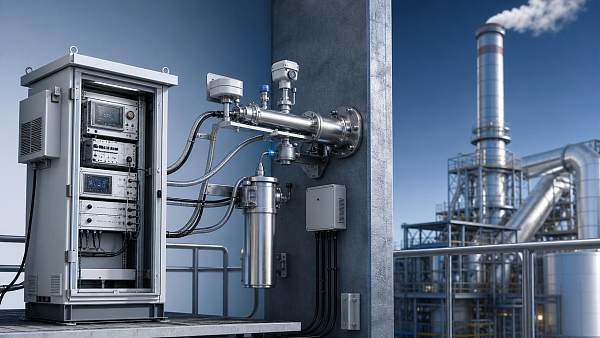
In modern industry, industrial analyzer equipment supports quality control, safety monitoring, emissions tracking, and process optimization.
When it fails, the impact spreads quickly across production, utilities, laboratories, and environmental systems.
This article reviews common faults, explains why failure patterns are changing, and offers practical maintenance tips for better reliability.
Failure patterns in industrial analyzer equipment are changing with smarter operations

Traditional faults were often mechanical, such as worn pumps, blocked filters, or damaged tubing.
Today, industrial analyzer equipment also faces software alarms, communication loss, unstable power quality, and sensor drift caused by complex environments.
Industrial online monitoring systems now connect with PLCs, DCS platforms, cloud dashboards, and compliance databases.
As integration grows, a small analyzer fault can trigger large process disturbances or misleading reports.
This means maintenance is no longer only about repair.
It is also about data quality, network stability, calibration discipline, and preventive control.
Trend signals seen across comprehensive industry applications
The same trend appears in manufacturing, energy, environmental monitoring, laboratory analysis, and automation control.
- More continuous monitoring instead of periodic manual checks
- Higher sensitivity requirements for composition analysis
- More remote diagnostics and fewer onsite inspection windows
- Stricter audit trails for calibration and maintenance records
- Growing demand for predictive maintenance of industrial analyzer equipment
Why these maintenance challenges are increasing
Several forces are pushing industrial analyzer equipment into harsher and more demanding operating conditions.
These drivers explain why common troubleshooting methods sometimes fail to solve recurring issues.
The real cause may sit outside the analyzer body itself.
The most common failures now seen in industrial analyzer equipment
Across the instrumentation industry, certain faults appear again and again.
Recognizing patterns improves repair speed and reduces unnecessary part replacement.
1. Sensor drift and unstable readings
This is one of the most frequent industrial analyzer equipment problems.
- Likely causes: aging sensors, contamination, temperature variation, poor calibration gas quality
- Maintenance tips: verify reference standards, inspect sample path cleanliness, review calibration intervals
2. Sample system blockage or contamination
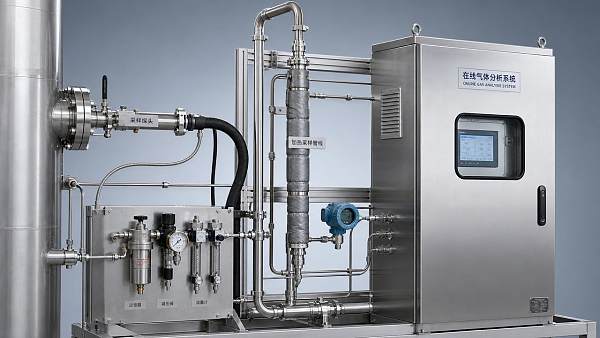
Filters, probes, tubing, condensate traps, and valves often create hidden restrictions.
- Likely causes: dust loading, sticky vapor, liquid carryover, improper heating
- Maintenance tips: clean or replace filters early, confirm heat tracing, inspect flow balance regularly
3. Power and grounding faults
Intermittent analyzer behavior is often linked to unstable supply conditions.
- Likely causes: voltage fluctuation, loose terminals, poor grounding, electrical noise
- Maintenance tips: measure supply under load, tighten connections, separate signal and power wiring
4. Communication loss and data interruption
A healthy analyzer can still appear failed if data does not reach the control system.
- Likely causes: damaged cables, protocol mismatch, IP conflict, firmware issues
- Maintenance tips: check network logs, confirm addressing, document software versions before updates
5. Calibration failure or poor repeatability
Repeatability problems can lead to false compliance alarms or weak process control.
- Likely causes: leaking fittings, expired standards, valve wear, wrong calibration sequence
- Maintenance tips: perform leak checks, validate standards, standardize calibration procedures
These failures affect more than one business link
The effect of industrial analyzer equipment failure goes beyond maintenance workload.
It touches production quality, energy use, environmental performance, and decision confidence.
- Production: wrong composition data can distort control actions and reduce output stability
- Utilities: poor analyzer response may increase fuel consumption or waste treatment cost
- Compliance: missing or inaccurate records can create reporting risk
- Laboratories: analyzer inconsistency can weaken cross-verification with bench instruments
- Automation: bad field signals can cause false alarms and operator distrust
Because industrial analyzer equipment now supports critical control loops, maintenance quality directly affects operational confidence.
Where maintenance focus should move next
A reactive repair mindset is no longer enough for industrial analyzer equipment.
Attention should shift toward failure prevention, condition visibility, and disciplined documentation.
Key points worth prioritizing
- Build maintenance around the full sample system, not only the analyzer module
- Track drift trends before alarms become hard failures
- Standardize spare parts for filters, seals, pumps, and sensor assemblies
- Use calibration records to identify chronic instability patterns
- Review firmware and communication settings during every major service event
- Protect industrial analyzer equipment from vibration, moisture, and temperature extremes
- Align analyzer maintenance schedules with process shutdown opportunities
Practical response strategies can improve reliability quickly
Not every improvement requires major investment.
Simple changes in inspection logic often produce better uptime for industrial analyzer equipment.
A stronger maintenance routine starts with better field judgment
The best industrial analyzer equipment maintenance combines inspection, data review, and root cause thinking.
When abnormal readings appear, avoid replacing parts too quickly.
First confirm process conditions, sample integrity, utilities, and communication status.
Then compare current behavior with historical calibration, alarm, and drift records.
This approach reduces repeat failures and protects maintenance resources.
For the next step, create a fault library for each industrial analyzer equipment model in service.
Include symptoms, probable causes, spare parts used, and verified corrective actions.
That single action can raise troubleshooting speed, improve consistency, and support long-term reliability across the instrumentation lifecycle.
Recommended for You
 First Global White Paper on Dynamic Calibration for Humanoid Robot Sensors ReleasedFirst global white paper on dynamic calibration for humanoid robot sensors—key for pressure & 6-axis force/torque accuracy in smart manufacturing and collaborative robotics.
 FDA Updates IVD Import Guidelines: CNAS/NIST Calibration Chain RequiredFDA mandates CNAS/NIST calibration chain for IVD pressure & temperature sensors—key for Chinese exporters. Act now to meet July 2026 deadline.
 EU PEF Carbon Database Mandatory Access for Chinese Industrial InstrumentsEU PEF Carbon Database mandatory for Chinese industrial instruments—meet June 15, 2026 deadline to keep CE marking & win EU tenders.
 IEC TC65 Releases Cybersecurity Validation Guide for Industrial InstrumentsIEC TC65 releases cybersecurity validation guide for industrial instruments—key for firmware signing, OT encryption & remote audit compliance. Act now.
 SASO Introduces AI-Based Energy Efficiency Verification for Industrial TransmittersSASO AI energy efficiency verification now mandatory for industrial transmitters in Saudi Arabia—ensure compliance before June 1, 2026 to avoid customs delays.
 ASEAN Green Customs Corridor Fully LaunchedASEAN Green Customs Corridor now live: AI-verified CNAS calibration reports slash ASEAN-China customs clearance to under 4 hours — boost precision equipment trade today.
 Red Sea Crisis Escalates: Gulf of Aden No-Sail Zone Extended to June 15, 2026Red Sea Crisis escalates: Gulf of Aden no-sail zone extended to June 15, 2026 — triggering 450% air cargo premiums for industrial instrumentation shipments from China to the Middle East.
 Process Control Equipment Price Trends Under Energy Cost PressureProcess control equipment price trends are shifting under energy cost pressure. Discover key cost drivers, total ownership factors, and smart sourcing tips to reduce risk and improve ROI.
 Multi Gas Analysis in Safety-Critical Areas: What to Check FirstMulti gas analysis starts with risk, not just instruments. Learn what to check first in safety-critical areas to improve compliance, reduce downtime, and protect people and assets.
 Industrial Analyzer Equipment: Common Failures and Maintenance TipsIndustrial analyzer equipment failures can disrupt uptime, compliance, and data accuracy. Discover common faults and practical maintenance tips to improve reliability fast.
 Industrial Measurement System Import Trends and Supply RisksIndustrial measurement system import trends and supply risks explained: learn how distributors can protect margins, reduce delays, and build stronger sourcing resilience.
 Emission Control Equipment Rules Reshaping Industrial DemandEmission control equipment is reshaping industrial investment as stricter rules drive demand for smarter monitoring, lower risk, and compliance-ready systems. Explore what buyers must evaluate now.
 Emission Measurement System Costs in 2026: What Shapes PricingEmission measurement system costs in 2026 depend on accuracy, compliance, installation, integration, and service. Learn what shapes pricing and plan a smarter investment.
 Process Measurement System Upgrades: When Do They Pay Off?Process measurement system upgrades pay off when they cut downtime, improve accuracy, and support compliance. Learn the key signals, ROI factors, and smart upgrade strategies.
 Paramagnetic Gas Measurement: Where It Performs Best in IndustryParamagnetic gas measurement delivers fast, stable oxygen analysis for combustion, emissions, and process control. Discover where it performs best and how it improves efficiency, compliance, and reliability.
 Gas Quality Analyzer Selection: Key Specs That Affect ResultsGas quality analyzer selection starts with the specs that truly impact results. Learn how accuracy, drift, response time, and durability affect safety, compliance, and process performance.
 How to Compare Custom Gas Analysis Options for Complex Process StreamsCustom gas analysis for complex process streams: learn how to compare technologies, sample conditioning, compliance, and maintenance to choose a reliable, application-fit solution.
 First Global White Paper on Humanoid Robot Industrial Calibration ReleasedHumanoid robot industrial calibration: First global white paper released—key for sensor makers, integrators & metrology labs. Learn impact & action steps.
 FDA Updates IVD Import Guidance: CNAS Calibration Chain RequiredFDA mandates CNAS calibration chain with NIST traceability for IVD instruments from China—act now to avoid U.S. import rejection starting July 1, 2026.
 IEC TC65 Releases Cybersecurity Validation Guidance for Industrial InstrumentsIEC TC65 releases cybersecurity validation guidance for industrial instruments—key for exporters, OEMs & integrators targeting EU/NA markets. Act now.
 ASEAN Green Corridor for Measuring Instruments Fully LaunchedASEAN Green Corridor for Measuring Instruments is live—unlock 3.8-hour customs clearance for CNAS-calibrated instruments across all 10 ASEAN nations. Act now!
 PTB Opens Direct VDA/ISO 17025 Report Portal for CNAS LabsPTB opens direct VDA/ISO 17025 report portal for CNAS labs — enabling dual-compliant calibration reports in <72h. Boost automotive audit readiness now!
 Vietnam Enforces Dual CNAS + Vietnamese Language Requirement for Industrial InstrumentsVietnam enforces dual CNAS + Vietnamese language requirement for industrial instruments (HS 9026/9027/9030) — avoid customs rejection. Act now!
 Red Sea Crisis Escalates: Gulf of Aden No-Sail Zone Extended to June 15, 2026Red Sea Crisis escalates: Gulf of Aden no-sail zone extended to June 15, 2026 — impacting industrial instrumentation trade, airfreight costs (+452%), and supply chain resilience between China and the Middle East.
 SASO Mandates AI-Driven Energy Simulation for Industrial Transmitters from June 2026SASO mandates AI-driven energy simulation for industrial transmitters from June 2026 — ensure compliance with NAIEC-certified testing now to avoid delays & rejections.
 BIS Adds 3 High-Precision Process Calibrators to EAR Supplement No. 4BIS Adds 3 High-Precision Process Calibrators to EAR Supplement No. 4—urgent compliance insights for semiconductor, nuclear, and calibration service providers operating with China.
 EU PEF Carbon Footprint Database Mandatory Integration CountdownEU PEF Carbon Footprint Database integration is mandatory for industrial instrument exporters by Jan 2027—act now to secure market access, customs clearance & B2B tenders.
 FDA Updates IVD Import Guidance: CNAS Calibration Traceability to NIST Required for Chinese ManufacturersFDA now requires CNAS calibration traceability to NIST for Chinese IVD manufacturers — critical for 510(k)/De Novo submissions. Act now to avoid RTA delays!
 ASEAN's Green Clearance Corridor Fully LaunchedGreen Clearance Corridor now live: CNAS calibration reports auto-verified for ASEAN customs clearance in under 4 hours — boost your China–ASEAN trade efficiency today!
 First Global Cybersecurity Verification Guide for Industrial Instruments ReleasedFirst global cybersecurity verification guide for industrial instruments launched—featuring a 5-level maturity model & standardized pentest library. Essential for exporters, OEMs, and critical infrastructure suppliers.
 SASO Shortens Energy Labeling for Industrial Transmitters to 7 Days, Adds AI Power Simulation RequirementSASO energy labeling for industrial transmitters now takes just 7 days — but requires AI power simulation. Learn how to comply fast and avoid delays.
 PTB Launches AI Calibration Cloud Platform 2.0PTB AI Calibration Cloud Platform 2.0 launches with CNAS-VDA 5/ISO/IEC 17025 dual-compliance reporting — streamline cross-border calibration for auto suppliers, labs & equipment makers.






Search Categories
Search Categories
Latest Article
- First Global White Paper on Dynamic Calibration for Humanoid Robot Sensors ReleasedFirst global white paper on dynamic calibration for humanoid robot sensors—key for pressure & 6-axis force/torque accuracy in smart manufacturing and collaborative robotics.Posted by:
- FDA Updates IVD Import Guidelines: CNAS/NIST Calibration Chain RequiredFDA mandates CNAS/NIST calibration chain for IVD pressure & temperature sensors—key for Chinese exporters. Act now to meet July 2026 deadline.Posted by:
- EU PEF Carbon Database Mandatory Access for Chinese Industrial InstrumentsEU PEF Carbon Database mandatory for Chinese industrial instruments—meet June 15, 2026 deadline to keep CE marking & win EU tenders.Posted by:
Please give us a message
