
Emission Measurement System Costs in 2026: What Shapes Pricing


Planning an investment in an emission measurement system in 2026 requires more than comparing list prices. For financial approvers, total cost is shaped by measurement accuracy, compliance requirements, installation complexity, data integration, maintenance, and long-term service support. Understanding these pricing drivers helps organizations control budget risk, justify capital spending, and choose a solution that balances regulatory confidence with operational value.
In the instrumentation industry, pricing is rarely a single equipment question. It is a system question that combines analyzers, sampling hardware, controls, software, commissioning, training, and lifecycle support. For plants in power, manufacturing, waste treatment, chemicals, and environmental monitoring, the right budget decision depends on knowing which cost elements are fixed, which are variable, and which become expensive only after deployment.
For finance teams, the goal is not simply to buy the cheapest emission measurement system. It is to approve a solution with a clear 5- to 10-year cost profile, acceptable compliance risk, manageable service exposure, and measurable operational value. That is where disciplined cost evaluation becomes essential.
What an Emission Measurement System Cost Actually Includes
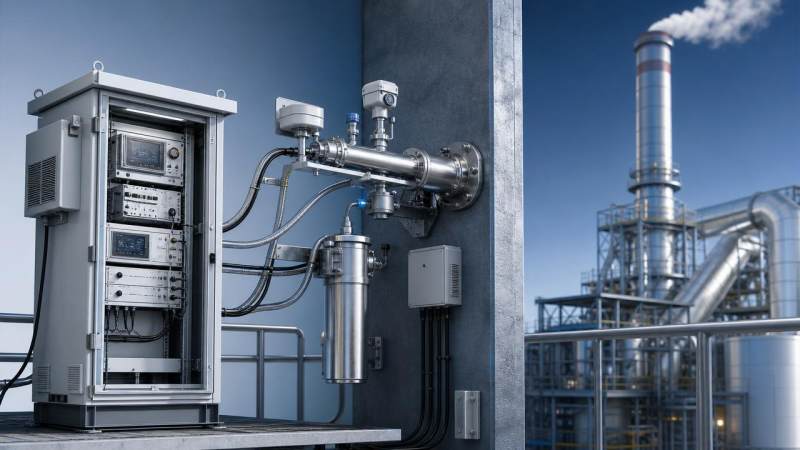
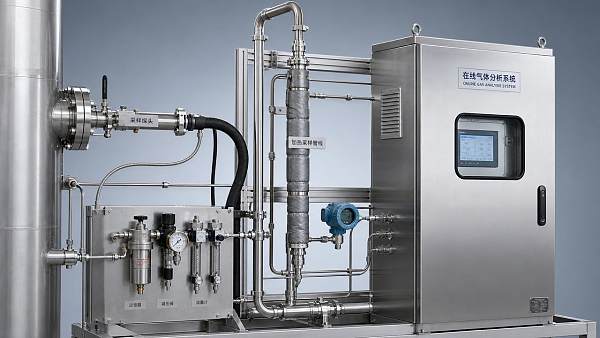
An emission measurement system typically includes more than a gas analyzer cabinet. Depending on the application, the project may require probes, heated sample lines, conditioning units, flow and temperature sensors, control panels, calibration accessories, reporting software, and links to plant DCS or SCADA platforms.
For budgeting purposes, buyers should separate costs into 4 layers: core hardware, installation and commissioning, compliance and documentation, and post-startup service. A quotation that appears 15% lower upfront can become 20% to 35% higher in total ownership when support, spares, and integration are added later.
Core hardware versus full project scope
In many industrial projects, the analyzer package itself represents only 35% to 55% of the approved capital value. The remaining share often comes from mounting structures, shelters, utility preparation, electrical work, tubing, cable routing, software setup, and site acceptance activities.
This distinction matters because financial approvers often compare line-item equipment prices from different suppliers without aligning scope. One supplier may quote analyzer hardware only, while another includes a complete emission measurement system ready for commissioning.
Typical cost buckets finance teams should request
- Analyzer and sensor package
- Sampling and conditioning components
- Control cabinet and I/O modules
- Mechanical and electrical installation
- Software, data communication, and reporting setup
- Calibration tools, validation, and startup services
- Training, warranty, and annual maintenance options
The table below shows how the same emission measurement system can vary in scope and budget depending on application complexity. These are typical industry planning ranges rather than fixed market prices.
The key takeaway is that a low equipment number does not equal a low project number. Financial review should always compare total delivered scope, not just analyzer price, especially when compliance deadlines leave little room for change orders.
The Main Pricing Drivers in 2026
Several factors will continue to shape emission measurement system costs in 2026. The most important ones are performance specification, regulatory duty, site conditions, automation requirements, and service model. Each one can change both capital cost and long-term operating expense.
Measurement accuracy and technology choice
Higher precision analyzers, multi-gas capability, faster response times, and lower drift performance usually raise the initial budget. In some applications, moving from a simpler process-monitoring setup to a compliance-grade emission measurement system can add 10% to 30% to hardware cost, but it may reduce revalidation and manual checking expenses later.
The same applies to extractive versus in-situ architectures. Extractive systems often require more sampling and conditioning hardware, while in-situ solutions may reduce sample handling but increase requirements for mounting position, purge systems, or optical alignment.
Compliance and documentation burden
Where emissions must be documented for environmental reporting, procurement should expect additional cost for calibration routines, audit-ready data storage, alarm logs, and acceptance documentation. These features are not cosmetic. They reduce financial exposure when inspections occur or when records must be retained for 3 to 7 years.
Systems used only for internal process optimization may have lighter reporting needs. Systems tied to mandatory reporting typically require stronger validation procedures, more disciplined maintenance intervals, and clearer traceability.
Installation complexity at the site
Installation can be one of the least understood budget items. A site with a 10-meter accessible platform, nearby power supply, and available instrument air will cost much less to equip than a site needing scaffolding, long cable runs, heated line routing, weatherproof enclosures, or shutdown coordination.
For some retrofits, field work can account for 20% to 40% of total project value. If access is difficult, mechanical modifications or safety permits can stretch implementation from 2 weeks to 8 weeks, directly affecting labor cost and production planning.
Data integration and digital reporting
A stand-alone emission measurement system is usually cheaper than one that must exchange data with PLCs, historians, MES platforms, environmental dashboards, or multi-site reporting systems. Yet integrated systems often produce stronger financial returns by reducing manual entry, reporting errors, and engineering hours.
For financial approvers, this is a classic capex-versus-opex tradeoff. An extra software and communication budget at the start can lower recurring labor by several hours per week and improve reporting consistency across 2, 5, or 10 facilities.
Service access, spare parts, and lifecycle support
The price of a system also reflects how it will be maintained. A lower-cost package with limited local support, long spare part lead times, or unclear preventive maintenance procedures can generate avoidable downtime. A better-supported emission measurement system may cost more upfront but reduce unplanned service events over a 5-year period.
Common service planning items include 6- or 12-month inspections, annual calibration support, recommended spare kits, remote diagnostics, and response windows such as 24 to 72 hours. These should be reviewed during approval, not after startup.
How Financial Approvers Should Evaluate Cost Risk
A strong finance review does not stop at the quotation total. It checks whether cost assumptions are complete, whether future obligations are visible, and whether the selected emission measurement system fits the operational and regulatory profile of the site.
Five cost questions to ask before approval
- Does the quotation cover hardware only, or full commissioning scope?
- Which compliance or validation tasks remain outside the supplier proposal?
- What maintenance frequency is expected over 12, 24, and 60 months?
- Are spare parts standard, stocked regionally, or custom-order only?
- What integration work will internal engineering still need to perform?
These questions help uncover hidden budget items early. They also support clearer payback logic by connecting the investment to labor savings, reduced compliance risk, and higher measurement reliability.
The following comparison framework helps finance teams review proposals on a like-for-like basis rather than accepting a lower price that excludes key obligations.
This type of review often explains why one proposal is 12% lower but carries 25% more delivery uncertainty. The best financial decision is usually the one with the clearest lifecycle visibility, not the smallest first number.
Common budgeting mistakes
Treating compliance systems like standard instruments
A compliance-focused emission measurement system should not be budgeted as if it were a single point sensor. It carries documentation, calibration, and validation requirements that affect purchasing, maintenance, and audit readiness.
Ignoring environmental and utility conditions
Ambient temperatures, dust loading, corrosive gases, vibration, and utility quality can all influence enclosure specification, filtration design, sample line selection, and maintenance frequency. Those details can change opex materially within the first 12 months.
Underestimating internal labor
If reporting still depends on manual extraction, spreadsheet consolidation, and operator reconciliation, the true cost of ownership is higher than the purchase order suggests. In multi-site operations, those labor costs often become visible only after rollout.
Balancing Cost, Compliance, and Operational Value
The most effective purchasing decisions balance 3 priorities: acceptable investment level, reliable compliance performance, and useful operational data. An emission measurement system that only satisfies minimum technical requirements may not deliver the reporting efficiency or maintenance predictability that finance teams expect.
When a higher-priced system makes financial sense
A higher initial spend may be justified when the site has strict reporting obligations, difficult installation conditions, expensive downtime exposure, or a multi-year digitalization plan. In those cases, improved analyzer stability, better diagnostics, and stronger integration can lower total cost over 3 to 7 years.
This is especially relevant in the instrumentation sector, where monitoring systems increasingly support not only environmental compliance but also process transparency, energy optimization, and centralized performance management.
A practical approval framework
- Define the regulatory and operational purpose of the system first
- Request itemized pricing across hardware, installation, software, and service
- Compare 5-year ownership cost, not just purchase cost
- Check implementation timeline, typically 6 to 16 weeks depending on scope
- Review support coverage, spare availability, and calibration planning
For many organizations, this approach creates stronger internal approval documents and fewer post-award surprises. It also improves negotiations because suppliers are evaluated on transparent scope, measurable service commitments, and realistic delivery assumptions.
Questions often raised by finance teams
How much contingency should be reserved?
For retrofit projects, a contingency range of 8% to 15% is commonly considered prudent because access, utilities, and existing infrastructure can reveal unknowns during site work. For standardized new-build installations, the range may be lower if scope is fully defined.
Should service contracts be approved with the original purchase?
In many cases, yes. Approving preventive maintenance, calibration support, and recommended spares at the start gives a clearer 12- to 24-month operating budget. It also reduces procurement delays when service is urgently needed after commissioning.
What is the biggest hidden cost?
The biggest hidden cost is usually incomplete scope alignment. If plant modifications, reporting software, communication interfaces, or validation procedures are assumed rather than specified, the final project cost can drift well beyond the initial quote.
For 2026 planning, a sound emission measurement system decision should connect technical specification with business discipline. Financial approvers should look beyond equipment price and test each proposal against compliance duty, integration effort, maintenance exposure, implementation timeline, and 5-year ownership logic.
Organizations that take this broader view are better positioned to avoid under-scoped purchases, reduce approval risk, and secure a system that supports both environmental confidence and operational efficiency. If you are reviewing options for an emission measurement system, now is the right time to request a tailored scope review, compare lifecycle cost scenarios, and get a solution plan aligned with your site conditions and budget priorities. Contact us to discuss product details, service structure, or a customized proposal.
Recommended for You
 First Global White Paper on Dynamic Calibration for Humanoid Robot Sensors ReleasedFirst global white paper on dynamic calibration for humanoid robot sensors—key for pressure & 6-axis force/torque accuracy in smart manufacturing and collaborative robotics.
 FDA Updates IVD Import Guidelines: CNAS/NIST Calibration Chain RequiredFDA mandates CNAS/NIST calibration chain for IVD pressure & temperature sensors—key for Chinese exporters. Act now to meet July 2026 deadline.
 EU PEF Carbon Database Mandatory Access for Chinese Industrial InstrumentsEU PEF Carbon Database mandatory for Chinese industrial instruments—meet June 15, 2026 deadline to keep CE marking & win EU tenders.
 IEC TC65 Releases Cybersecurity Validation Guide for Industrial InstrumentsIEC TC65 releases cybersecurity validation guide for industrial instruments—key for firmware signing, OT encryption & remote audit compliance. Act now.
 SASO Introduces AI-Based Energy Efficiency Verification for Industrial TransmittersSASO AI energy efficiency verification now mandatory for industrial transmitters in Saudi Arabia—ensure compliance before June 1, 2026 to avoid customs delays.
 ASEAN Green Customs Corridor Fully LaunchedASEAN Green Customs Corridor now live: AI-verified CNAS calibration reports slash ASEAN-China customs clearance to under 4 hours — boost precision equipment trade today.
 Red Sea Crisis Escalates: Gulf of Aden No-Sail Zone Extended to June 15, 2026Red Sea Crisis escalates: Gulf of Aden no-sail zone extended to June 15, 2026 — triggering 450% air cargo premiums for industrial instrumentation shipments from China to the Middle East.
 Process Control Equipment Price Trends Under Energy Cost PressureProcess control equipment price trends are shifting under energy cost pressure. Discover key cost drivers, total ownership factors, and smart sourcing tips to reduce risk and improve ROI.
 Multi Gas Analysis in Safety-Critical Areas: What to Check FirstMulti gas analysis starts with risk, not just instruments. Learn what to check first in safety-critical areas to improve compliance, reduce downtime, and protect people and assets.
 Industrial Analyzer Equipment: Common Failures and Maintenance TipsIndustrial analyzer equipment failures can disrupt uptime, compliance, and data accuracy. Discover common faults and practical maintenance tips to improve reliability fast.
 Industrial Measurement System Import Trends and Supply RisksIndustrial measurement system import trends and supply risks explained: learn how distributors can protect margins, reduce delays, and build stronger sourcing resilience.
 Emission Control Equipment Rules Reshaping Industrial DemandEmission control equipment is reshaping industrial investment as stricter rules drive demand for smarter monitoring, lower risk, and compliance-ready systems. Explore what buyers must evaluate now.
 Emission Measurement System Costs in 2026: What Shapes PricingEmission measurement system costs in 2026 depend on accuracy, compliance, installation, integration, and service. Learn what shapes pricing and plan a smarter investment.
 Process Measurement System Upgrades: When Do They Pay Off?Process measurement system upgrades pay off when they cut downtime, improve accuracy, and support compliance. Learn the key signals, ROI factors, and smart upgrade strategies.
 Paramagnetic Gas Measurement: Where It Performs Best in IndustryParamagnetic gas measurement delivers fast, stable oxygen analysis for combustion, emissions, and process control. Discover where it performs best and how it improves efficiency, compliance, and reliability.
 Gas Quality Analyzer Selection: Key Specs That Affect ResultsGas quality analyzer selection starts with the specs that truly impact results. Learn how accuracy, drift, response time, and durability affect safety, compliance, and process performance.
 How to Compare Custom Gas Analysis Options for Complex Process StreamsCustom gas analysis for complex process streams: learn how to compare technologies, sample conditioning, compliance, and maintenance to choose a reliable, application-fit solution.
 First Global White Paper on Humanoid Robot Industrial Calibration ReleasedHumanoid robot industrial calibration: First global white paper released—key for sensor makers, integrators & metrology labs. Learn impact & action steps.
 FDA Updates IVD Import Guidance: CNAS Calibration Chain RequiredFDA mandates CNAS calibration chain with NIST traceability for IVD instruments from China—act now to avoid U.S. import rejection starting July 1, 2026.
 IEC TC65 Releases Cybersecurity Validation Guidance for Industrial InstrumentsIEC TC65 releases cybersecurity validation guidance for industrial instruments—key for exporters, OEMs & integrators targeting EU/NA markets. Act now.
 ASEAN Green Corridor for Measuring Instruments Fully LaunchedASEAN Green Corridor for Measuring Instruments is live—unlock 3.8-hour customs clearance for CNAS-calibrated instruments across all 10 ASEAN nations. Act now!
 PTB Opens Direct VDA/ISO 17025 Report Portal for CNAS LabsPTB opens direct VDA/ISO 17025 report portal for CNAS labs — enabling dual-compliant calibration reports in <72h. Boost automotive audit readiness now!
 Vietnam Enforces Dual CNAS + Vietnamese Language Requirement for Industrial InstrumentsVietnam enforces dual CNAS + Vietnamese language requirement for industrial instruments (HS 9026/9027/9030) — avoid customs rejection. Act now!
 Red Sea Crisis Escalates: Gulf of Aden No-Sail Zone Extended to June 15, 2026Red Sea Crisis escalates: Gulf of Aden no-sail zone extended to June 15, 2026 — impacting industrial instrumentation trade, airfreight costs (+452%), and supply chain resilience between China and the Middle East.
 SASO Mandates AI-Driven Energy Simulation for Industrial Transmitters from June 2026SASO mandates AI-driven energy simulation for industrial transmitters from June 2026 — ensure compliance with NAIEC-certified testing now to avoid delays & rejections.
 BIS Adds 3 High-Precision Process Calibrators to EAR Supplement No. 4BIS Adds 3 High-Precision Process Calibrators to EAR Supplement No. 4—urgent compliance insights for semiconductor, nuclear, and calibration service providers operating with China.
 EU PEF Carbon Footprint Database Mandatory Integration CountdownEU PEF Carbon Footprint Database integration is mandatory for industrial instrument exporters by Jan 2027—act now to secure market access, customs clearance & B2B tenders.
 FDA Updates IVD Import Guidance: CNAS Calibration Traceability to NIST Required for Chinese ManufacturersFDA now requires CNAS calibration traceability to NIST for Chinese IVD manufacturers — critical for 510(k)/De Novo submissions. Act now to avoid RTA delays!
 ASEAN's Green Clearance Corridor Fully LaunchedGreen Clearance Corridor now live: CNAS calibration reports auto-verified for ASEAN customs clearance in under 4 hours — boost your China–ASEAN trade efficiency today!
 First Global Cybersecurity Verification Guide for Industrial Instruments ReleasedFirst global cybersecurity verification guide for industrial instruments launched—featuring a 5-level maturity model & standardized pentest library. Essential for exporters, OEMs, and critical infrastructure suppliers.
 SASO Shortens Energy Labeling for Industrial Transmitters to 7 Days, Adds AI Power Simulation RequirementSASO energy labeling for industrial transmitters now takes just 7 days — but requires AI power simulation. Learn how to comply fast and avoid delays.
 PTB Launches AI Calibration Cloud Platform 2.0PTB AI Calibration Cloud Platform 2.0 launches with CNAS-VDA 5/ISO/IEC 17025 dual-compliance reporting — streamline cross-border calibration for auto suppliers, labs & equipment makers.








Search Categories
Search Categories
Latest Article
- First Global White Paper on Dynamic Calibration for Humanoid Robot Sensors ReleasedFirst global white paper on dynamic calibration for humanoid robot sensors—key for pressure & 6-axis force/torque accuracy in smart manufacturing and collaborative robotics.Posted by:
- FDA Updates IVD Import Guidelines: CNAS/NIST Calibration Chain RequiredFDA mandates CNAS/NIST calibration chain for IVD pressure & temperature sensors—key for Chinese exporters. Act now to meet July 2026 deadline.Posted by:
- EU PEF Carbon Database Mandatory Access for Chinese Industrial InstrumentsEU PEF Carbon Database mandatory for Chinese industrial instruments—meet June 15, 2026 deadline to keep CE marking & win EU tenders.Posted by:
Please give us a message
