
Gas Quality Analyzer Selection: Key Specs That Affect Results


Selecting a gas quality analyzer is rarely a simple specification check.
In industrial manufacturing, energy systems, laboratories, and environmental control, small performance differences can change results, alarms, and operating decisions.
A suitable gas quality analyzer supports compliance, stable production, safety verification, and process optimization.
A poor match may create drift, false confidence, delayed response, or unnecessary maintenance.
The most effective selection process starts with the application scene, then maps that scene to measurable technical requirements.
Why application context changes gas quality analyzer requirements
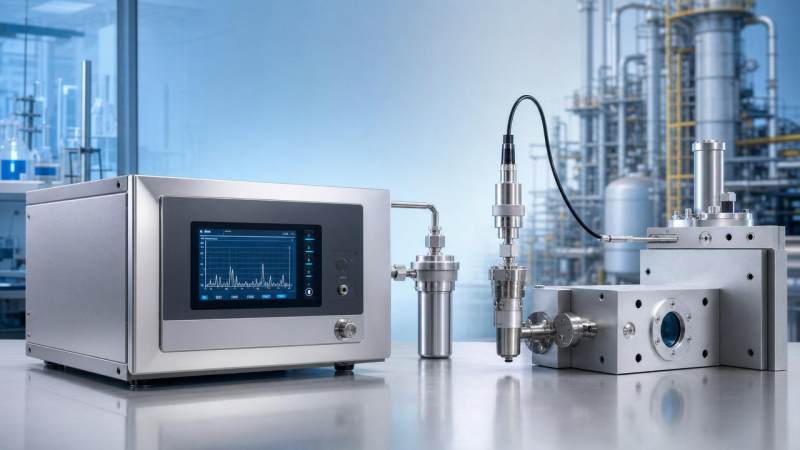
Not every gas stream behaves the same, and not every gas quality analyzer faces the same measurement challenge.
Fuel gas verification, emissions monitoring, compressed air checks, and laboratory purity analysis all demand different priorities.
Some scenes require very low detection limits.
Others require rapid response under variable pressure, temperature, moisture, or contamination.
That is why a gas quality analyzer should be selected by result risk, not by feature count alone.
Core question before comparing models
Ask what decision depends on the reading.
If the data controls combustion, product release, emissions reporting, or worker safety, the specification threshold becomes stricter.
This decision-first approach prevents overspending on irrelevant features and underbuying critical performance.
Scenario 1: Process control needs stable and fast gas quality analyzer results
In continuous production, the gas quality analyzer often feeds operating adjustments in near real time.
Examples include furnace fuel blending, inert gas verification, and gas composition control in automated lines.
Here, response time and repeatability often matter more than ultra-low trace sensitivity.
If readings lag behind process changes, the control loop reacts too late.
That can increase waste, reduce efficiency, or trigger unstable operation.
Key judging points
- Response time under real sampling conditions
- Repeatability during continuous use
- Resistance to pressure and flow variation
- Drift performance between calibrations
Scenario 2: Safety and compliance demand a gas quality analyzer with proven accuracy
When measurements support audits, emission records, or hazard confirmation, traceability becomes central.
A gas quality analyzer in these scenes must provide reliable accuracy across the expected concentration range.
Detection range alone is not enough.
Accuracy statements may vary by reading, full scale, temperature, or sensor type.
Those details directly affect acceptance decisions and compliance confidence.
What to confirm
- Accuracy expression and reference conditions
- Calibration traceability and interval recommendations
- Cross-sensitivity to other gases
- Applicable standards or verification methods
Scenario 3: Harsh field environments test gas quality analyzer durability
In outdoor stations, utility networks, construction sites, and mobile inspection tasks, environmental toughness matters greatly.
Dust, vibration, humidity, temperature swings, and unstable power can affect any gas quality analyzer result.
A technically strong analyzer may still fail in practice if sample conditioning is weak or housing protection is insufficient.
Field performance depends on the full measurement chain, not just the sensing element.
Important field-fit checks
- Ingress protection and enclosure robustness
- Operating temperature and humidity limits
- Sample pretreatment for moisture and particles
- Warm-up time and power stability needs
The key specs that affect gas quality analyzer results most
Several specifications appear in almost every datasheet, but their practical meaning differs by scene.
The following points usually have the greatest effect on result quality and decision reliability.
Detection range and resolution
The gas quality analyzer must cover normal values, upset conditions, and alarm thresholds.
Resolution should support meaningful action, not just attractive numbers on paper.
Accuracy, repeatability, and drift
Accuracy affects correctness, repeatability affects consistency, and drift affects confidence over time.
A gas quality analyzer with low drift often reduces recalibration burden and unplanned uncertainty.
Response time and recovery time
Fast detection matters when gas composition changes quickly.
Recovery time also matters after high concentrations or contamination events.
Selectivity and cross-interference
Some gases interfere with others, especially in mixed industrial streams.
A gas quality analyzer should be evaluated against actual background gases, not ideal lab assumptions.
Calibration and maintenance demand
High maintenance frequency increases downtime and ownership cost.
Selection should include spare parts, calibration gas availability, and service access.
How different scenarios change specification priorities
Practical gas quality analyzer selection steps for better fit
- Define target gases, concentration range, and alarm or control thresholds.
- Describe the sample condition, including moisture, dust, pressure, and temperature.
- List the business impact of wrong readings, delays, or calibration drift.
- Match the gas quality analyzer to the real operating environment, not only the lab test sheet.
- Confirm maintenance intervals, consumables, and communication needs before final selection.
Common mistakes that lead to poor gas quality analyzer performance
One frequent mistake is selecting by lowest detection limit without checking interference or sample contamination.
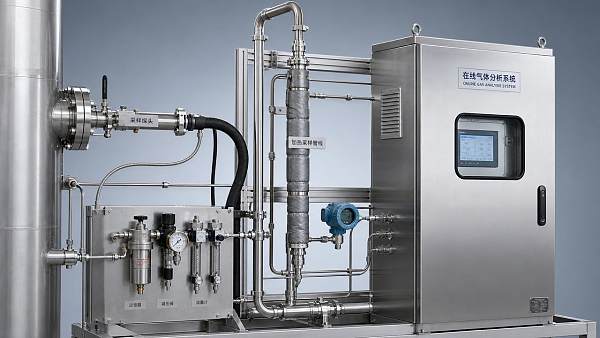
Another is ignoring the sampling system, even though tubing, filters, condensate, and flow control shape final readings.
Some users compare gas quality analyzer models only by sensor type.
In reality, software compensation, enclosure design, and calibration strategy can matter just as much.
A final mistake is overlooking total lifecycle cost.
Frequent service needs can erase the savings of a low purchase price.
Next actions for choosing the right gas quality analyzer
A reliable gas quality analyzer choice begins with a clear application map.
Document the gas stream, operating conditions, target limits, and decision risks.
Then compare specifications based on the scenario that matters most, not on generic marketing claims.
When possible, request validation using representative samples or realistic process conditions.
That step often reveals whether a gas quality analyzer will deliver stable, accurate, and useful results in daily operation.
In the instrumentation industry, better measurement starts with better matching.
The right gas quality analyzer protects quality, supports automation, and strengthens confident decision-making across complex industrial environments.
Recommended for You
 First Global White Paper on Dynamic Calibration for Humanoid Robot Sensors ReleasedFirst global white paper on dynamic calibration for humanoid robot sensors—key for pressure & 6-axis force/torque accuracy in smart manufacturing and collaborative robotics.
 FDA Updates IVD Import Guidelines: CNAS/NIST Calibration Chain RequiredFDA mandates CNAS/NIST calibration chain for IVD pressure & temperature sensors—key for Chinese exporters. Act now to meet July 2026 deadline.
 EU PEF Carbon Database Mandatory Access for Chinese Industrial InstrumentsEU PEF Carbon Database mandatory for Chinese industrial instruments—meet June 15, 2026 deadline to keep CE marking & win EU tenders.
 IEC TC65 Releases Cybersecurity Validation Guide for Industrial InstrumentsIEC TC65 releases cybersecurity validation guide for industrial instruments—key for firmware signing, OT encryption & remote audit compliance. Act now.
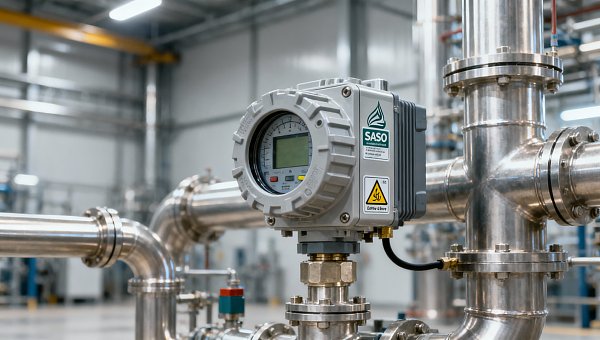
 SASO Introduces AI-Based Energy Efficiency Verification for Industrial TransmittersSASO AI energy efficiency verification now mandatory for industrial transmitters in Saudi Arabia—ensure compliance before June 1, 2026 to avoid customs delays.
 ASEAN Green Customs Corridor Fully LaunchedASEAN Green Customs Corridor now live: AI-verified CNAS calibration reports slash ASEAN-China customs clearance to under 4 hours — boost precision equipment trade today.
 Red Sea Crisis Escalates: Gulf of Aden No-Sail Zone Extended to June 15, 2026Red Sea Crisis escalates: Gulf of Aden no-sail zone extended to June 15, 2026 — triggering 450% air cargo premiums for industrial instrumentation shipments from China to the Middle East.
 Process Control Equipment Price Trends Under Energy Cost PressureProcess control equipment price trends are shifting under energy cost pressure. Discover key cost drivers, total ownership factors, and smart sourcing tips to reduce risk and improve ROI.
 Multi Gas Analysis in Safety-Critical Areas: What to Check FirstMulti gas analysis starts with risk, not just instruments. Learn what to check first in safety-critical areas to improve compliance, reduce downtime, and protect people and assets.
 Industrial Analyzer Equipment: Common Failures and Maintenance TipsIndustrial analyzer equipment failures can disrupt uptime, compliance, and data accuracy. Discover common faults and practical maintenance tips to improve reliability fast.
 Industrial Measurement System Import Trends and Supply RisksIndustrial measurement system import trends and supply risks explained: learn how distributors can protect margins, reduce delays, and build stronger sourcing resilience.
 Emission Control Equipment Rules Reshaping Industrial DemandEmission control equipment is reshaping industrial investment as stricter rules drive demand for smarter monitoring, lower risk, and compliance-ready systems. Explore what buyers must evaluate now.
 Emission Measurement System Costs in 2026: What Shapes PricingEmission measurement system costs in 2026 depend on accuracy, compliance, installation, integration, and service. Learn what shapes pricing and plan a smarter investment.
 Process Measurement System Upgrades: When Do They Pay Off?Process measurement system upgrades pay off when they cut downtime, improve accuracy, and support compliance. Learn the key signals, ROI factors, and smart upgrade strategies.
 Paramagnetic Gas Measurement: Where It Performs Best in IndustryParamagnetic gas measurement delivers fast, stable oxygen analysis for combustion, emissions, and process control. Discover where it performs best and how it improves efficiency, compliance, and reliability.
 Gas Quality Analyzer Selection: Key Specs That Affect ResultsGas quality analyzer selection starts with the specs that truly impact results. Learn how accuracy, drift, response time, and durability affect safety, compliance, and process performance.
 How to Compare Custom Gas Analysis Options for Complex Process StreamsCustom gas analysis for complex process streams: learn how to compare technologies, sample conditioning, compliance, and maintenance to choose a reliable, application-fit solution.
 First Global White Paper on Humanoid Robot Industrial Calibration ReleasedHumanoid robot industrial calibration: First global white paper released—key for sensor makers, integrators & metrology labs. Learn impact & action steps.
 FDA Updates IVD Import Guidance: CNAS Calibration Chain RequiredFDA mandates CNAS calibration chain with NIST traceability for IVD instruments from China—act now to avoid U.S. import rejection starting July 1, 2026.
 IEC TC65 Releases Cybersecurity Validation Guidance for Industrial InstrumentsIEC TC65 releases cybersecurity validation guidance for industrial instruments—key for exporters, OEMs & integrators targeting EU/NA markets. Act now.
 ASEAN Green Corridor for Measuring Instruments Fully LaunchedASEAN Green Corridor for Measuring Instruments is live—unlock 3.8-hour customs clearance for CNAS-calibrated instruments across all 10 ASEAN nations. Act now!
 PTB Opens Direct VDA/ISO 17025 Report Portal for CNAS LabsPTB opens direct VDA/ISO 17025 report portal for CNAS labs — enabling dual-compliant calibration reports in <72h. Boost automotive audit readiness now!
 Vietnam Enforces Dual CNAS + Vietnamese Language Requirement for Industrial InstrumentsVietnam enforces dual CNAS + Vietnamese language requirement for industrial instruments (HS 9026/9027/9030) — avoid customs rejection. Act now!
 Red Sea Crisis Escalates: Gulf of Aden No-Sail Zone Extended to June 15, 2026Red Sea Crisis escalates: Gulf of Aden no-sail zone extended to June 15, 2026 — impacting industrial instrumentation trade, airfreight costs (+452%), and supply chain resilience between China and the Middle East.
 SASO Mandates AI-Driven Energy Simulation for Industrial Transmitters from June 2026SASO mandates AI-driven energy simulation for industrial transmitters from June 2026 — ensure compliance with NAIEC-certified testing now to avoid delays & rejections.
 BIS Adds 3 High-Precision Process Calibrators to EAR Supplement No. 4BIS Adds 3 High-Precision Process Calibrators to EAR Supplement No. 4—urgent compliance insights for semiconductor, nuclear, and calibration service providers operating with China.
 EU PEF Carbon Footprint Database Mandatory Integration CountdownEU PEF Carbon Footprint Database integration is mandatory for industrial instrument exporters by Jan 2027—act now to secure market access, customs clearance & B2B tenders.
 FDA Updates IVD Import Guidance: CNAS Calibration Traceability to NIST Required for Chinese ManufacturersFDA now requires CNAS calibration traceability to NIST for Chinese IVD manufacturers — critical for 510(k)/De Novo submissions. Act now to avoid RTA delays!
 ASEAN's Green Clearance Corridor Fully LaunchedGreen Clearance Corridor now live: CNAS calibration reports auto-verified for ASEAN customs clearance in under 4 hours — boost your China–ASEAN trade efficiency today!
 First Global Cybersecurity Verification Guide for Industrial Instruments ReleasedFirst global cybersecurity verification guide for industrial instruments launched—featuring a 5-level maturity model & standardized pentest library. Essential for exporters, OEMs, and critical infrastructure suppliers.
 SASO Shortens Energy Labeling for Industrial Transmitters to 7 Days, Adds AI Power Simulation RequirementSASO energy labeling for industrial transmitters now takes just 7 days — but requires AI power simulation. Learn how to comply fast and avoid delays.
 PTB Launches AI Calibration Cloud Platform 2.0PTB AI Calibration Cloud Platform 2.0 launches with CNAS-VDA 5/ISO/IEC 17025 dual-compliance reporting — streamline cross-border calibration for auto suppliers, labs & equipment makers.





Search Categories
Search Categories
Latest Article
- First Global White Paper on Dynamic Calibration for Humanoid Robot Sensors ReleasedFirst global white paper on dynamic calibration for humanoid robot sensors—key for pressure & 6-axis force/torque accuracy in smart manufacturing and collaborative robotics.Posted by:
- FDA Updates IVD Import Guidelines: CNAS/NIST Calibration Chain RequiredFDA mandates CNAS/NIST calibration chain for IVD pressure & temperature sensors—key for Chinese exporters. Act now to meet July 2026 deadline.Posted by:
- EU PEF Carbon Database Mandatory Access for Chinese Industrial InstrumentsEU PEF Carbon Database mandatory for Chinese industrial instruments—meet June 15, 2026 deadline to keep CE marking & win EU tenders.Posted by:
Please give us a message
