
Process Control Equipment Price Trends Under Energy Cost Pressure


As energy costs continue to rise, pricing across industrial supply chains is shifting in visible and less visible ways.
For process control equipment, energy pressure affects materials, machining, testing, freight, compliance, and lifecycle support.
That makes today’s buying decisions more complex than comparing a quoted unit price.
A stronger evaluation framework helps balance budget limits, operational reliability, and long-term efficiency.
This article reviews current process control equipment price trends and explains practical factors behind cost movement.
Process Control Equipment and Its Pricing Foundations
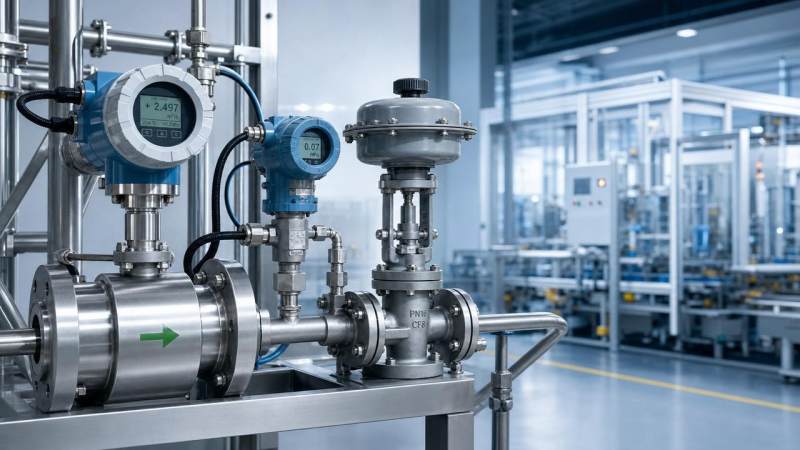
Process control equipment includes instruments and systems that measure, regulate, and optimize industrial operations.
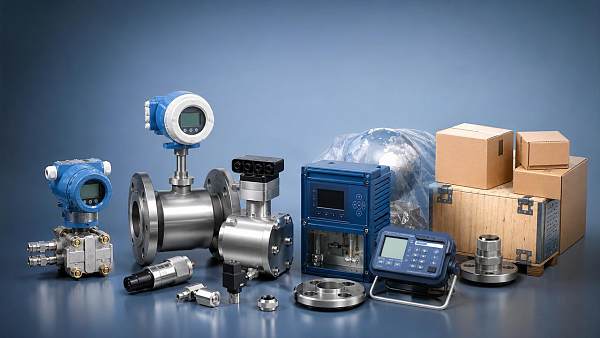
Common categories include pressure transmitters, flow meters, temperature sensors, control valves, analyzers, recorders, and controllers.
These products support manufacturing, energy, water treatment, laboratories, environmental monitoring, and automated facilities.
The price of process control equipment usually reflects more than physical hardware.
It often includes design complexity, calibration, certification, electronics content, software integration, and service expectations.
Energy cost pressure amplifies each of these components because production lines and testing stations are energy-intensive.
Even compact instruments may require precision machining, clean assembly, thermal cycling, and extended validation before shipment.
As a result, process control equipment price trends now depend on both factory economics and downstream operating value.
Current Market Signals Under Energy Cost Pressure
Recent market behavior shows that energy costs are influencing pricing through several connected channels.
Electricity and fuel increases raise direct manufacturing expenses for casting, welding, coating, and electronics assembly.
They also affect suppliers of steel, aluminum, copper, semiconductors, polymers, and specialty ceramics.
When upstream costs move, process control equipment prices often adjust with a short lag.
Another signal is longer price validity risk.
Suppliers are more cautious when quoting process control equipment for projects with long delivery windows.
Shorter quotation periods, escalation clauses, and component substitution terms are becoming more common.
This is especially true for equipment requiring imported chips, special alloys, or explosion-proof certification.
Why Energy Costs Change Total Ownership, Not Only Purchase Price
A low initial quote does not always produce the lowest long-term cost.
Under energy cost pressure, total ownership matters more for process control equipment selection.
Higher-quality instruments often improve process stability, reduce waste, and shorten maintenance downtime.
In energy-intensive operations, that performance can offset a higher purchase price.
Key value areas
- Measurement accuracy that reduces overuse of steam, compressed air, and electricity.
- Control responsiveness that limits off-spec batches and material loss.
- Reliable diagnostics that lower emergency maintenance events.
- Longer calibration intervals that reduce service cost and production interruption.
- Digital connectivity that supports energy management and predictive maintenance.
For this reason, process control equipment should be evaluated against operating outcomes, not only procurement line items.
A stable flow meter or control valve can influence utility consumption across an entire process loop.
That changes the economics of replacement, standardization, and upgrade timing.
Typical Equipment Categories and Price Sensitivity
Not all process control equipment reacts equally to energy-driven cost changes.
Price sensitivity varies by materials, production complexity, and application environment.
Energy and utility sectors often prioritize uptime and regulation compliance.
Food, pharmaceutical, and laboratory settings may place stronger weight on hygiene, traceability, and validation records.
Heavy industry usually sees greater impact from valve, drive, and high-temperature instrumentation costs.
Practical Evaluation Factors for Smarter Sourcing
When reviewing process control equipment quotes, a structured comparison reduces the risk of misleading savings.
Several practical checks can reveal whether a lower price creates higher future expense.
- Verify material grades, sealing materials, and environmental ratings.
- Check included calibration, test reports, and communication protocol support.
- Review spare parts availability and lead times for critical components.
- Assess energy-related process benefits, including lower waste and better control efficiency.
- Compare warranty scope, field service capability, and remote diagnostic options.
- Confirm quotation validity, escalation conditions, and acceptable substitutions.
It is also useful to segment process control equipment into critical and noncritical applications.
Critical loops may justify premium specifications because shutdown, waste, or compliance failure is expensive.
Noncritical applications may allow standardized models that improve purchasing consistency and inventory control.
Pricing Outlook and Near-Term Planning Considerations
The near-term outlook for process control equipment remains firm rather than sharply declining.
Energy costs may fluctuate, but structural pricing pressure remains due to compliance, labor, and technology content.
Digitalization is another factor.
More process control equipment now includes onboard diagnostics, communication modules, and data integration features.
These additions can increase unit price while improving efficiency and maintenance planning.
Planning should therefore combine budget forecasting with specification discipline and lifecycle analysis.
Framework agreements, approved alternates, and standardized technical requirements can reduce future exposure.
Early review of high-risk categories also helps avoid urgent buying during peak cost periods.
Actionable Next Steps for Better Cost Control
A practical response to rising process control equipment costs starts with better visibility.
Map current equipment by application criticality, energy impact, lead time risk, and replacement frequency.
Then compare quoted prices against expected service life, maintenance burden, and operational efficiency gains.
Where possible, align specifications across sites or lines to simplify sourcing and spares planning.
For new projects, request transparent breakdowns covering calibration, certification, software, and after-sales support.
That approach gives a clearer picture of real process control equipment value under energy cost pressure.
In a market shaped by volatile inputs, disciplined evaluation creates stronger cost control and more dependable industrial performance.
Recommended for You
 First Global White Paper on Dynamic Calibration for Humanoid Robot Sensors ReleasedFirst global white paper on dynamic calibration for humanoid robot sensors—key for pressure & 6-axis force/torque accuracy in smart manufacturing and collaborative robotics.
 FDA Updates IVD Import Guidelines: CNAS/NIST Calibration Chain RequiredFDA mandates CNAS/NIST calibration chain for IVD pressure & temperature sensors—key for Chinese exporters. Act now to meet July 2026 deadline.
 EU PEF Carbon Database Mandatory Access for Chinese Industrial InstrumentsEU PEF Carbon Database mandatory for Chinese industrial instruments—meet June 15, 2026 deadline to keep CE marking & win EU tenders.
 IEC TC65 Releases Cybersecurity Validation Guide for Industrial InstrumentsIEC TC65 releases cybersecurity validation guide for industrial instruments—key for firmware signing, OT encryption & remote audit compliance. Act now.
 SASO Introduces AI-Based Energy Efficiency Verification for Industrial TransmittersSASO AI energy efficiency verification now mandatory for industrial transmitters in Saudi Arabia—ensure compliance before June 1, 2026 to avoid customs delays.
 ASEAN Green Customs Corridor Fully LaunchedASEAN Green Customs Corridor now live: AI-verified CNAS calibration reports slash ASEAN-China customs clearance to under 4 hours — boost precision equipment trade today.
 Red Sea Crisis Escalates: Gulf of Aden No-Sail Zone Extended to June 15, 2026Red Sea Crisis escalates: Gulf of Aden no-sail zone extended to June 15, 2026 — triggering 450% air cargo premiums for industrial instrumentation shipments from China to the Middle East.
 Process Control Equipment Price Trends Under Energy Cost PressureProcess control equipment price trends are shifting under energy cost pressure. Discover key cost drivers, total ownership factors, and smart sourcing tips to reduce risk and improve ROI.
 Multi Gas Analysis in Safety-Critical Areas: What to Check FirstMulti gas analysis starts with risk, not just instruments. Learn what to check first in safety-critical areas to improve compliance, reduce downtime, and protect people and assets.
 Industrial Analyzer Equipment: Common Failures and Maintenance TipsIndustrial analyzer equipment failures can disrupt uptime, compliance, and data accuracy. Discover common faults and practical maintenance tips to improve reliability fast.
 Industrial Measurement System Import Trends and Supply RisksIndustrial measurement system import trends and supply risks explained: learn how distributors can protect margins, reduce delays, and build stronger sourcing resilience.
 Emission Control Equipment Rules Reshaping Industrial DemandEmission control equipment is reshaping industrial investment as stricter rules drive demand for smarter monitoring, lower risk, and compliance-ready systems. Explore what buyers must evaluate now.
 Emission Measurement System Costs in 2026: What Shapes PricingEmission measurement system costs in 2026 depend on accuracy, compliance, installation, integration, and service. Learn what shapes pricing and plan a smarter investment.
 Process Measurement System Upgrades: When Do They Pay Off?Process measurement system upgrades pay off when they cut downtime, improve accuracy, and support compliance. Learn the key signals, ROI factors, and smart upgrade strategies.
 Paramagnetic Gas Measurement: Where It Performs Best in IndustryParamagnetic gas measurement delivers fast, stable oxygen analysis for combustion, emissions, and process control. Discover where it performs best and how it improves efficiency, compliance, and reliability.
 Gas Quality Analyzer Selection: Key Specs That Affect ResultsGas quality analyzer selection starts with the specs that truly impact results. Learn how accuracy, drift, response time, and durability affect safety, compliance, and process performance.
 How to Compare Custom Gas Analysis Options for Complex Process StreamsCustom gas analysis for complex process streams: learn how to compare technologies, sample conditioning, compliance, and maintenance to choose a reliable, application-fit solution.
 First Global White Paper on Humanoid Robot Industrial Calibration ReleasedHumanoid robot industrial calibration: First global white paper released—key for sensor makers, integrators & metrology labs. Learn impact & action steps.
 FDA Updates IVD Import Guidance: CNAS Calibration Chain RequiredFDA mandates CNAS calibration chain with NIST traceability for IVD instruments from China—act now to avoid U.S. import rejection starting July 1, 2026.
 IEC TC65 Releases Cybersecurity Validation Guidance for Industrial InstrumentsIEC TC65 releases cybersecurity validation guidance for industrial instruments—key for exporters, OEMs & integrators targeting EU/NA markets. Act now.
 ASEAN Green Corridor for Measuring Instruments Fully LaunchedASEAN Green Corridor for Measuring Instruments is live—unlock 3.8-hour customs clearance for CNAS-calibrated instruments across all 10 ASEAN nations. Act now!
 PTB Opens Direct VDA/ISO 17025 Report Portal for CNAS LabsPTB opens direct VDA/ISO 17025 report portal for CNAS labs — enabling dual-compliant calibration reports in <72h. Boost automotive audit readiness now!
 Vietnam Enforces Dual CNAS + Vietnamese Language Requirement for Industrial InstrumentsVietnam enforces dual CNAS + Vietnamese language requirement for industrial instruments (HS 9026/9027/9030) — avoid customs rejection. Act now!
 Red Sea Crisis Escalates: Gulf of Aden No-Sail Zone Extended to June 15, 2026Red Sea Crisis escalates: Gulf of Aden no-sail zone extended to June 15, 2026 — impacting industrial instrumentation trade, airfreight costs (+452%), and supply chain resilience between China and the Middle East.
 SASO Mandates AI-Driven Energy Simulation for Industrial Transmitters from June 2026SASO mandates AI-driven energy simulation for industrial transmitters from June 2026 — ensure compliance with NAIEC-certified testing now to avoid delays & rejections.
 BIS Adds 3 High-Precision Process Calibrators to EAR Supplement No. 4BIS Adds 3 High-Precision Process Calibrators to EAR Supplement No. 4—urgent compliance insights for semiconductor, nuclear, and calibration service providers operating with China.
 EU PEF Carbon Footprint Database Mandatory Integration CountdownEU PEF Carbon Footprint Database integration is mandatory for industrial instrument exporters by Jan 2027—act now to secure market access, customs clearance & B2B tenders.
 FDA Updates IVD Import Guidance: CNAS Calibration Traceability to NIST Required for Chinese ManufacturersFDA now requires CNAS calibration traceability to NIST for Chinese IVD manufacturers — critical for 510(k)/De Novo submissions. Act now to avoid RTA delays!
 ASEAN's Green Clearance Corridor Fully LaunchedGreen Clearance Corridor now live: CNAS calibration reports auto-verified for ASEAN customs clearance in under 4 hours — boost your China–ASEAN trade efficiency today!
 First Global Cybersecurity Verification Guide for Industrial Instruments ReleasedFirst global cybersecurity verification guide for industrial instruments launched—featuring a 5-level maturity model & standardized pentest library. Essential for exporters, OEMs, and critical infrastructure suppliers.
 SASO Shortens Energy Labeling for Industrial Transmitters to 7 Days, Adds AI Power Simulation RequirementSASO energy labeling for industrial transmitters now takes just 7 days — but requires AI power simulation. Learn how to comply fast and avoid delays.
 PTB Launches AI Calibration Cloud Platform 2.0PTB AI Calibration Cloud Platform 2.0 launches with CNAS-VDA 5/ISO/IEC 17025 dual-compliance reporting — streamline cross-border calibration for auto suppliers, labs & equipment makers.

























Search Categories
Search Categories
Latest Article
- First Global White Paper on Dynamic Calibration for Humanoid Robot Sensors ReleasedFirst global white paper on dynamic calibration for humanoid robot sensors—key for pressure & 6-axis force/torque accuracy in smart manufacturing and collaborative robotics.Posted by:
- FDA Updates IVD Import Guidelines: CNAS/NIST Calibration Chain RequiredFDA mandates CNAS/NIST calibration chain for IVD pressure & temperature sensors—key for Chinese exporters. Act now to meet July 2026 deadline.Posted by:
- EU PEF Carbon Database Mandatory Access for Chinese Industrial InstrumentsEU PEF Carbon Database mandatory for Chinese industrial instruments—meet June 15, 2026 deadline to keep CE marking & win EU tenders.Posted by:
Please give us a message
