
What to Check Before Buying a Process Analyzer Shelter


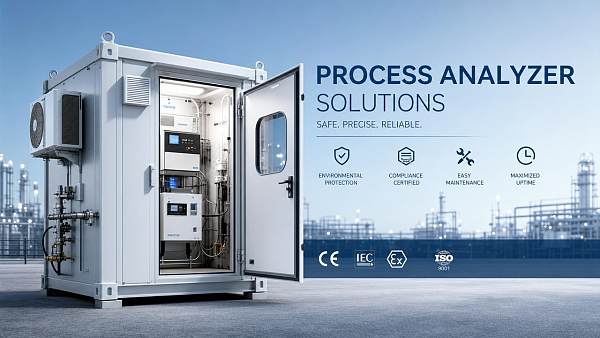
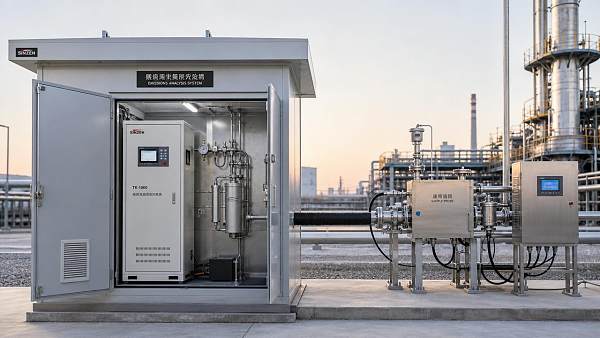
Buying a process analyzer shelter is not just about enclosure size or material—it directly affects analyzer accuracy, equipment life, safety, and maintenance efficiency. For procurement teams, checking environmental protection, utility integration, hazardous area compliance, insulation, ventilation, and service access before purchase can prevent costly mistakes later. This guide outlines the key points to review so you can compare options with confidence and choose a shelter that fits both operational and budget requirements.
When buyers search for a process analyzer shelter, they usually want a practical checklist, not a product brochure. Their real question is simple: what must be verified before issuing a purchase order?
For procurement teams, the best buying decision balances technical fit, compliance, lifecycle cost, delivery risk, and maintenance convenience. A shelter that looks acceptable on paper can still create expensive problems after installation.
The most useful evaluation method is to review the shelter as a working analyzer environment. That means checking how it protects instruments, supports utility systems, enables safe operation, and reduces downtime over years of service.
Start with the operating environment, because wrong assumptions cause most shelter failures
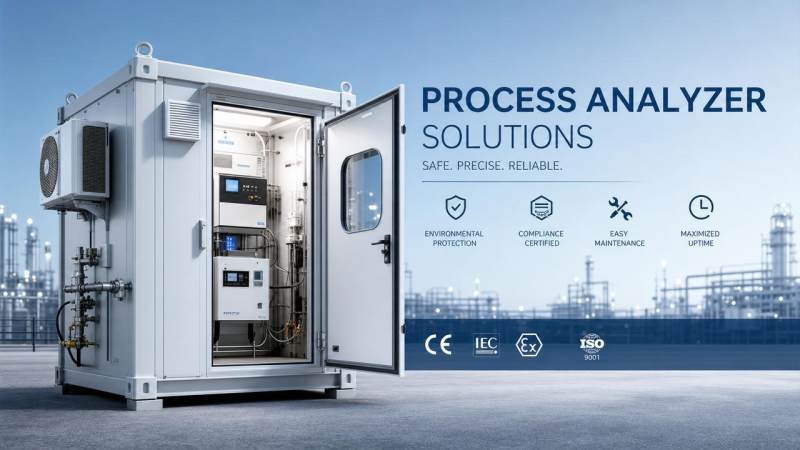
The first item to confirm is where and how the shelter will operate. A process analyzer shelter for a mild indoor area differs greatly from one exposed to desert heat, coastal corrosion, dust, snow, or washdown.
Ask the supplier to state the exact design basis. This should include ambient temperature range, humidity, solar load, wind, rain exposure, corrosive atmosphere, altitude, seismic conditions, and any special weather risks.
If the shelter will be installed near process units, flare areas, or chemical handling zones, external contaminants matter. Dust, salt, acid fumes, and hydrocarbon vapors can damage panels, seals, air systems, and analyzer components over time.
Procurement should also confirm whether the analyzer package generates its own internal heat. Sample conditioning systems, cabinets, lighting, heaters, and monitors can change cooling requirements significantly, especially in hot climates.
A common buying mistake is relying on generic enclosure ratings without reviewing the actual site. A shelter that is technically enclosed may still fail if the insulation, coating, HVAC, or sealing is not matched to conditions.
Check hazardous area classification and regulatory compliance before comparing prices
Many buyers focus on dimensions and material first, but compliance must come earlier. If the installation area has hazardous gas or dust classification, the shelter design must align with that requirement from the start.
Verify the applicable standards for the project location. Depending on the market, this may involve ATEX, IECEx, NEC, local electrical codes, fire safety rules, and plant-specific engineering standards.
Do not assume that a shelter supplier’s general experience equals project compliance. Ask for clear documentation showing how lighting, wiring, HVAC units, junction boxes, purge systems, and instruments meet the specified classification.
If a pressurized or purged shelter is required, procurement should check the full system scope. This includes pressure monitoring, alarms, interlocks, shutdown logic, door switches, startup sequence, and supporting certification documents.
Fire resistance may also matter, especially in oil, gas, chemical, or power applications. Confirm whether the project requires fire-rated walls, blast resistance, emergency lighting, gas detection, or other protective features.
From a purchasing perspective, compliance failures are expensive because they delay approvals, create redesign work, and can block commissioning. A lower initial quotation is rarely a true saving if certification is incomplete.
Review thermal performance, insulation, and HVAC as a system, not as separate options
Analyzer accuracy depends on stable internal conditions. That is why thermal design deserves close review. The shelter must maintain acceptable temperature limits for analyzers, sample systems, electronics, and operator access.
Ask how the supplier calculated heating and cooling loads. The answer should include ambient conditions, insulation values, solar gain, internal heat loads, door opening assumptions, air exchange, and utility availability.
Good insulation is not just for cold climates. In hot environments, proper insulation reduces HVAC load, improves temperature stability, and lowers energy consumption. It also helps avoid hot spots near sensitive measurement equipment.
Ventilation strategy matters as much as insulation. Some shelters need full HVAC conditioning, while others rely on ventilation, purge air, localized cooling, or a hybrid approach. The correct choice depends on analyzers and site hazards.
Procurement should ask for the internal design temperature range under worst-case conditions. If the supplier cannot state expected performance clearly, it becomes difficult to judge whether the shelter will protect analyzer reliability.
Also review condensation control. In humid or variable climates, moisture can affect electronics, optics, tubing, and calibration stability. Heating, dehumidification, insulation continuity, and sealed penetrations all help prevent that problem.
Confirm utility integration early to avoid hidden project costs
A process analyzer shelter is only as useful as the utilities supporting it. Buyers should verify all required inputs before purchase, including power supply, instrument air, purge gas, drains, lighting, communications, and grounding.
One important question is whether site utilities match the shelter design. Voltage, frequency, air quality, pressure, backup power needs, and cable entry directions should be defined before fabrication begins.
Many cost overruns come from small interface omissions. Missing drain points, unsuitable cable glands, undersized power distribution, or unclear network connections can all lead to site modifications and commissioning delays.
Procurement should request a utility list and interface drawing with the quotation package. This helps buyers compare suppliers on equal terms and identify scope gaps that may not be visible in a short commercial proposal.
If analyzers require calibration gases, sample return handling, or special vent routing, those interfaces should be reviewed together with the shelter layout. Utility planning should support both normal operation and safe maintenance access.
It is also worth checking redundancy philosophy. In critical monitoring applications, the shelter may need backup HVAC, UPS support, dual power feeds, or alarm forwarding to avoid data loss during temporary utility interruptions.
Look closely at internal layout, service access, and maintainability
Procurement teams often evaluate purchase price carefully but underestimate maintenance cost. A shelter that is difficult to enter, move around in, or service safely will increase labor time throughout its operating life.
Review the internal arrangement with operators or maintenance staff if possible. They can quickly identify issues such as blocked panel access, poor door swing, insufficient bench space, awkward tubing runs, or unsafe working positions.
There should be enough clearance for analyzer doors, panel opening, filter replacement, calibration tasks, and instrument removal. Tight layouts may reduce shelter size, but they often make routine maintenance slower and riskier.
Check whether the floor, wall supports, mounting frames, and cable routing are designed for practical service work. Simple details such as anti-slip flooring, drainage, interior lighting, and labeled utility points can make a major difference.
If the shelter will contain multiple analyzers, ask how cross-interference is controlled. Heat sources, vibration, maintenance congestion, and sample system routing can affect both usability and measurement performance.
A good supplier should provide layout drawings that show service envelopes rather than only equipment footprints. This is especially important when procurement must compare compact designs that appear similar in external dimensions.
Assess material selection, corrosion protection, and structural durability
Material choice should reflect the site environment and maintenance expectations. Common options include painted carbon steel, stainless steel, insulated sandwich panels, and modular structures with different protective coatings.
There is no single best material for every project. Carbon steel may be economical for moderate environments, while stainless steel or advanced coatings may be better for offshore, coastal, or corrosive chemical locations.
Ask about coating system specification, surface preparation, insulation cladding, fastener material, and sealing details. Corrosion often starts at joints, penetrations, edges, and hardware rather than on large flat surfaces.
Structural strength also deserves attention. The shelter should be designed for transport, lifting, installation loads, and site conditions. Weak skid design or poor frame rigidity can create damage before the shelter even enters service.
Door quality is another overlooked issue. Frequent access requires robust hinges, locks, seals, and closers. If doors warp or seals fail, temperature control, purge integrity, and environmental protection may all be compromised.
Request documentation that supports comparison, approval, and lifecycle management
Procurement needs more than a quotation and general brochure. Strong documentation helps compare bids fairly and reduces the risk of hidden scope differences between suppliers offering similar-looking process analyzer shelter packages.
At minimum, request general arrangement drawings, utility lists, hazardous area details, HVAC design basis, material specifications, insulation details, electrical single-line information, and a clear battery limit definition.
It is also useful to ask for inspection and test plans, factory acceptance test scope, painting procedure, certification matrix, spare parts recommendations, and expected maintenance requirements. These documents support both purchasing and operations teams.
If the project involves owner approval, EPC review, or third-party inspection, document quality becomes even more important. Poor or incomplete drawings can delay approvals long before the shelter reaches the site.
For long-term value, ask what records will be handed over at final delivery. Operations teams benefit from manuals, wiring diagrams, HVAC data, certification files, parts lists, and maintenance instructions that are organized and complete.
Compare total cost of ownership, not just fabrication price
For purchasing teams, the lowest upfront price is not always the best business decision. A shelter with inadequate thermal design, poor accessibility, or limited documentation may cost more through rework, downtime, and maintenance.
Try to compare suppliers using a broader framework: compliance, durability, energy use, expected maintenance effort, spare parts availability, and commissioning readiness. This gives a more realistic picture of total ownership cost.
Lead time and project execution capability should also be considered. A technically strong design can still become a risk if the supplier cannot manage engineering reviews, quality control, or delivery commitments.
It is wise to ask for reference projects similar in climate, industry, and analyzer scope. Real operating experience often reveals how well the supplier handles practical issues beyond the quotation stage.
Another useful approach is to build a procurement checklist with weighted criteria. This helps teams score process analyzer shelter options objectively instead of making decisions based only on headline price or external appearance.
A practical pre-purchase checklist for procurement teams
Before issuing a purchase order, confirm the following points clearly. First, the site environment and temperature design basis must be documented, realistic, and aligned with the actual installation location.
Second, hazardous area classification, electrical compliance, and any purge or pressurization requirements must be defined with supporting documents. Third, HVAC and insulation performance should be based on calculated thermal loads.
Fourth, all utility interfaces must be listed and coordinated with site conditions. Fifth, internal layout should allow safe maintenance, calibration, and equipment replacement without excessive congestion or access restrictions.
Sixth, materials, coatings, doors, seals, and structural elements should match the expected environment and service life. Seventh, documentation, testing scope, certification, and handover files should be included in supplier scope.
Finally, compare total cost of ownership, supplier capability, and lifecycle support rather than buying on enclosure price alone. That approach greatly reduces the risk of unpleasant surprises after installation.
Conclusion
Choosing the right process analyzer shelter is really about protecting analyzer performance, project compliance, and long-term operating efficiency. Procurement teams make better decisions when they treat the shelter as a complete operating environment.
If you verify environmental fit, compliance, thermal control, utilities, maintainability, material durability, and documentation before purchase, you will be in a much stronger position to compare suppliers with confidence.
In short, the best shelter is not simply the cheapest or the largest. It is the one that supports accurate analysis, safe operation, easier maintenance, and lower lifecycle risk for the specific application.
Recommended for You
 SAMR to Finalize 1,800+ Standards by 2026, Including EV Battery RecyclingSAMR to finalize 1,800+ standards by 2026—including EV battery recycling, hazardous chemical packaging & EMC immunity. Stay ahead of mandatory GB shifts and global export compliance.
 China's Largest Single-Line Large-Tow Carbon Fiber Line Starts OperationChina's largest single-line large-tow carbon fiber line is live—30,000 tons/year capacity, ASME-certified, 22% cheaper & 6-week lead time. Boost your industrial instrumentation supply chain now.
 China Mobile Unveils National Integrated Computing Power NetworkChina Mobile's National Integrated Computing Power Network accelerates AI quality inspection for global manufacturers—cutting model training time by 68% and enabling cross-border industrial AI development.
 World's First Humanoid Robot Industrial Calibration White Paper ReleasedWorld's First Humanoid Robot Industrial Calibration White Paper released—setting new global benchmarks for dynamic sensor calibration in robotics. Discover how ABB, Yaskawa & metrology leaders are reshaping industry trust.
 Red Sea Crisis Escalates: Aden Gulf Ban Extended to June 15Red Sea Crisis escalates: Aden Gulf ban extended to June 15 — disrupting industrial instrumentation trade between China and the Middle East with 452% air freight spikes and 7–12 day delays.
 Saudi SASO Introduces AI-Based Energy Validation for Industrial TransmittersAI-based energy validation for industrial transmitters is now mandatory in Saudi Arabia—learn how SASO’s new AI regulation impacts global exporters, compliance timelines, and supply chains.
 IEC TC65 Releases Cybersecurity Validation Guide for Industrial InstrumentsIEC TC65’s new Cybersecurity Validation Guide for Industrial Instruments mandates SDL certification & firmware signing—key for EU/US market access. Act now to align with GB/T 42278-2026 and avoid export delays.
 EU PEF Carbon Footprint Database Mandatory Access for Industrial InstrumentsEU PEF Carbon Footprint Database mandatory access starts June 2026 for industrial instruments—pressure, temperature & flow meters. Ensure compliance now to avoid EU customs delays and market exclusion.
 Gas Quality Analyzer Shelter Price Trends and Specification Gaps to WatchGas quality analyzer shelter price trends vary with materials, HVAC, safety, integration, and compliance. See key specification gaps before shortlisting suppliers or approving budget.
 Process Measurement Equipment: Key Accuracy Risks in Harsh EnvironmentsProcess measurement equipment in harsh environments can drift before failing. Discover key accuracy risks, warning signs, and practical controls to protect quality, safety, and compliance.
 Industrial Analyzer Shelter Export Factors Affecting Lead Times This YearIndustrial analyzer shelter export lead times vary with sourcing, engineering, compliance, packing, and logistics. Learn the key factors to quote smarter and deliver with confidence.
 What to Check Before Buying a Process Analyzer ShelterProcess analyzer shelter buying guide: learn what to check before purchase, from compliance and HVAC to utilities, durability, and maintenance access.
 Process Monitoring Equipment Trends Shaping Plant Upgrades in 2026Process monitoring equipment trends for 2026 reveal how smarter plant upgrades can cut downtime, improve compliance, boost efficiency, and deliver faster ROI.
 Flue Gas Analyzer Shelter Maintenance Issues That Shorten Service LifeFlue gas analyzer shelter maintenance issues can quietly shorten equipment life. Learn the key risks, warning signs, and practical checks to reduce downtime and protect accuracy.
 Emission Analyzer Shelter vs Outdoor Mounting: Which Reduces DowntimeEmission analyzer shelter vs outdoor mounting: discover which setup cuts downtime, improves analyzer reliability, and lowers lifecycle risk in harsh or compliance-critical environments.
 Common Gas Quality Equipment Selection Mistakes in Industrial ProjectsGas quality equipment selection mistakes can delay industrial projects and raise compliance risks. Learn how to choose the right solution for accuracy, safety, integration, and faster commissioning.
 Gas Quality System Costs: What Shapes Total Project Spending in 2026Gas quality system costs in 2026 depend on more than analyzer price. Discover the key budget drivers, hidden expenses, and smart planning steps to control total project spending.
 How to Choose Emission Measurement Equipment for Reliable Compliance DataEmission measurement equipment selection affects compliance accuracy, uptime, and audit readiness. Learn how to compare systems, reduce risk, and choose a solution built for reliable data.
 First Global White Paper on Dynamic Calibration for Humanoid Robot Sensors ReleasedFirst global white paper on dynamic calibration for humanoid robot sensors—key for pressure & 6-axis force/torque accuracy in smart manufacturing and collaborative robotics.
 FDA Updates IVD Import Guidelines: CNAS/NIST Calibration Chain RequiredFDA mandates CNAS/NIST calibration chain for IVD pressure & temperature sensors—key for Chinese exporters. Act now to meet July 2026 deadline.
 EU PEF Carbon Database Mandatory Access for Chinese Industrial InstrumentsEU PEF Carbon Database mandatory for Chinese industrial instruments—meet June 15, 2026 deadline to keep CE marking & win EU tenders.
 IEC TC65 Releases Cybersecurity Validation Guide for Industrial InstrumentsIEC TC65 releases cybersecurity validation guide for industrial instruments—key for firmware signing, OT encryption & remote audit compliance. Act now.
 SASO Introduces AI-Based Energy Efficiency Verification for Industrial TransmittersSASO AI energy efficiency verification now mandatory for industrial transmitters in Saudi Arabia—ensure compliance before June 1, 2026 to avoid customs delays.
 ASEAN Green Customs Corridor Fully LaunchedASEAN Green Customs Corridor now live: AI-verified CNAS calibration reports slash ASEAN-China customs clearance to under 4 hours — boost precision equipment trade today.
 Process Control Equipment Price Trends Under Energy Cost PressureProcess control equipment price trends are shifting under energy cost pressure. Discover key cost drivers, total ownership factors, and smart sourcing tips to reduce risk and improve ROI.
 Multi Gas Analysis in Safety-Critical Areas: What to Check FirstMulti gas analysis starts with risk, not just instruments. Learn what to check first in safety-critical areas to improve compliance, reduce downtime, and protect people and assets.
 Industrial Analyzer Equipment: Common Failures and Maintenance TipsIndustrial analyzer equipment failures can disrupt uptime, compliance, and data accuracy. Discover common faults and practical maintenance tips to improve reliability fast.
 Industrial Measurement System Import Trends and Supply RisksIndustrial measurement system import trends and supply risks explained: learn how distributors can protect margins, reduce delays, and build stronger sourcing resilience.
 Emission Control Equipment Rules Reshaping Industrial DemandEmission control equipment is reshaping industrial investment as stricter rules drive demand for smarter monitoring, lower risk, and compliance-ready systems. Explore what buyers must evaluate now.
 Emission Measurement System Costs in 2026: What Shapes PricingEmission measurement system costs in 2026 depend on accuracy, compliance, installation, integration, and service. Learn what shapes pricing and plan a smarter investment.
 Process Measurement System Upgrades: When Do They Pay Off?Process measurement system upgrades pay off when they cut downtime, improve accuracy, and support compliance. Learn the key signals, ROI factors, and smart upgrade strategies.
 Paramagnetic Gas Measurement: Where It Performs Best in IndustryParamagnetic gas measurement delivers fast, stable oxygen analysis for combustion, emissions, and process control. Discover where it performs best and how it improves efficiency, compliance, and reliability.


















Search Categories
Search Categories
Latest Article
- SAMR to Finalize 1,800+ Standards by 2026, Including EV Battery RecyclingSAMR to finalize 1,800+ standards by 2026—including EV battery recycling, hazardous chemical packaging & EMC immunity. Stay ahead of mandatory GB shifts and global export compliance.Posted by:
- China's Largest Single-Line Large-Tow Carbon Fiber Line Starts OperationChina's largest single-line large-tow carbon fiber line is live—30,000 tons/year capacity, ASME-certified, 22% cheaper & 6-week lead time. Boost your industrial instrumentation supply chain now.Posted by:
- China Mobile Unveils National Integrated Computing Power NetworkChina Mobile's National Integrated Computing Power Network accelerates AI quality inspection for global manufacturers—cutting model training time by 68% and enabling cross-border industrial AI development.Posted by:
Please give us a message
