
Fixed analysis systems often fail at sampling, not sensing


In fixed gas and process analysis, many “sensor problems” are actually sampling problems. If the sample does not reach the analyzer in the right condition, at the right speed, and without contamination or loss, even a high-end sensing technology will produce unreliable results. For teams comparing fixed analysis, portable analysis, and continuous analysis solutions, the key takeaway is simple: analyzer performance depends as much on sample handling as on the detector itself. This is especially true in explosion proof, multi gas, paramagnetic oxygen, laser measurement, thermal measurement, online measurement, and custom analysis systems, where poor sampling design can increase error, maintenance cost, safety risk, and downtime.
Why fixed analysis systems often fail before the sensor even starts measuring
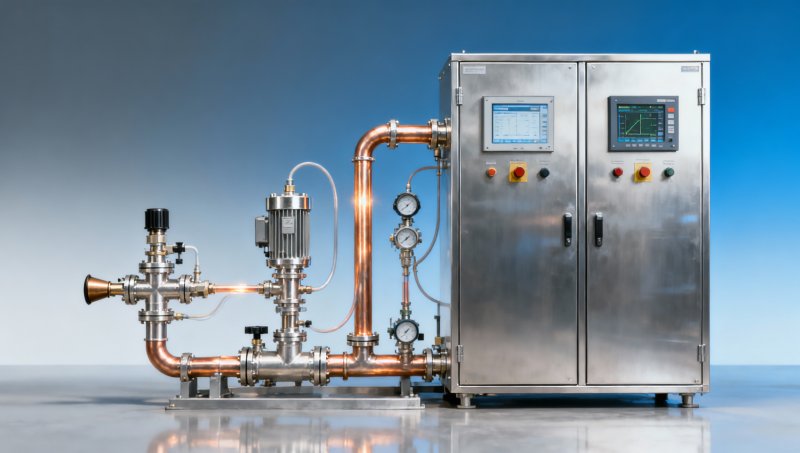
Searchers looking up this topic usually want to answer a practical question: why does a fixed analysis system underperform in the field when the sensing technology looks correct on paper? The most common answer is that the sample presented to the analyzer is no longer representative of the actual process.
In real operating environments, the analyzer only sees what the sampling system delivers. If pressure drops too much, if temperature changes cause condensation, if particles clog lines, if reactive components are absorbed by tubing, or if the transport time is too long, the reading can become delayed, distorted, or entirely misleading. This means a technically advanced online measurement device may still fail to support safe and accurate decisions.
For operators, this leads to unstable readings and repeated troubleshooting. For quality and safety teams, it creates uncertainty about compliance and process control. For procurement and management, it raises lifecycle cost because the issue is not solved by replacing sensors alone. For engineering teams, it means the true design problem is upstream of the analyzer.
What target users care about most when evaluating analysis systems
Different stakeholders approach fixed analysis systems from different angles, but their concerns are closely linked.
Operators and users want stable readings, fast response, manageable maintenance, and fewer false alarms. If sampling lines plug, leak, or lag, confidence in the system drops quickly.
Technical evaluators and project engineers focus on whether the system can preserve sample integrity across actual site conditions. They want to know how the design handles dust, moisture, corrosive gases, pressure variation, hazardous area requirements, and calibration access.
Quality, EHS, and safety managers care about whether the analyzer supports defensible monitoring and safe operation. In explosion proof and multi gas applications, poor sample handling is not just a performance issue; it can become a risk-control issue.
Procurement, finance, and decision-makers are usually comparing total value, not just equipment price. They want to understand whether a lower-cost analyzer will actually cost more over time through downtime, maintenance labor, spare parts, process losses, and repeated commissioning.
Distributors and channel partners often need a clear way to explain why one custom analysis system performs better than another. Sampling design is often the missing differentiator in sales conversations.
How sampling problems show up in fixed, portable, and continuous analysis comparisons
Many buyers compare fixed analysis, portable analysis, and continuous analysis options as if the decision is mainly about detector technology. In reality, the sampling method changes the reliability and usefulness of the result.
Fixed analysis systems are valuable when continuous or near-real-time monitoring is required at a stable point in the process. But they rely heavily on permanent sample transport, conditioning, and installation quality. If these are poorly designed, the system may look robust but perform inconsistently.
Portable analysis systems reduce some permanent sampling complexity because the instrument is brought to the point of use. This can help with spot checks and diagnostics, but it does not replace fixed monitoring where ongoing control, compliance, or safety response is required.
Continuous analysis systems offer strong process visibility, but only when sample delivery is fast, representative, and repeatable. Long lines, dead legs, dirty filters, and poor thermal control can undermine the very benefit continuous monitoring is meant to provide.
So the better comparison question is not simply “Which analyzer type is best?” It is “Which complete measurement approach can maintain sample quality under our real operating conditions?”
Common sampling failures that damage accuracy, response time, and safety
Several recurring issues explain why fixed analyzers fail in service:
Condensation and phase change: If the sample cools below its dew point, water or heavier components can condense out. This changes composition before measurement, especially in moisture-sensitive or trace-gas applications.
Particle contamination: Dust, aerosols, and process debris can clog filters, foul cells, and create pressure instability. The result is drift, slower response, and higher maintenance frequency.
Adsorption and material incompatibility: Some gases interact with tubing, seals, or regulators. Improper material selection can cause sample loss or delayed recovery, especially at low concentrations.
Excessive lag time: Long sample lines, poor flow design, or oversized volumes can make readings too slow to support control or safety action. A correct reading that arrives too late is often operationally useless.
Leaks and ingress: Small leaks can dilute the sample or allow oxygen or moisture ingress, which is especially damaging in paramagnetic oxygen measurement and sensitive process analysis.
Improper pressure and flow control: Many analyzers require stable sample conditions. Poor regulation can create unstable outputs that are mistaken for sensor defects.
Inadequate maintenance access: If filters, drains, or calibration points are difficult to reach, routine service is delayed, and performance degrades gradually until failure becomes visible.
Why the right sensing technology still depends on the right sample system
Different measurement principles have different strengths, but all depend on good sample presentation.
Paramagnetic oxygen analyzers can provide accurate oxygen measurement, but they are sensitive to sample contamination, pressure effects, and leaks. If the sample system allows ambient air ingress, readings may look credible while being wrong.
Laser measurement technologies are often chosen for selectivity and speed, but optical performance can still be affected by particulates, condensation, and poor path conditions. In some cases, in-situ designs reduce sampling challenges, but where extractive systems are used, sample handling remains critical.
Thermal measurement methods can be effective in defined applications, yet they also require controlled sample conditions to avoid distortion from flow, composition shifts, or temperature instability.
Multi gas systems add another layer of complexity because different target gases may require different conditioning priorities. A setup optimized for one component can unintentionally compromise another.
This is why custom analysis systems are often justified. The goal is not customization for its own sake, but matching the sample handling architecture to the process chemistry, site environment, safety classification, and response-time requirement.
How to judge whether a fixed analysis solution is well designed
For buyers and evaluators, the most useful approach is to assess the full sample path, not just the analyzer specification sheet. Ask these practical questions:
Is the sample truly representative? Consider probe location, extraction method, transport distance, and whether any component may drop out or react before measurement.
How is temperature managed? Heated lines, coolers, and conditioning stages should be selected based on process reality, not added by default.
How are particulates and moisture handled? Protection is necessary, but excessive filtration or poor condensate management can also create delay or loss.
What is the total response time? Do not evaluate sensor speed alone. Include probe, line volume, conditioning, switching, and analyzer stabilization time.
Are the materials compatible with the sample? Tubing, valves, seals, and wetted parts should be chosen for the gas composition and concentration range.
How maintainable is the system? Service points should be accessible, clearly arranged, and safe for routine maintenance.
Does the design match the area classification? Explosion proof requirements should be considered together with purge strategy, enclosure design, and installation practice.
Is there a realistic calibration and verification plan? A system that cannot be easily checked in operation will be hard to trust over time.
Business value: why better sampling design usually costs less over the system lifecycle
For management and finance stakeholders, the value of better sampling design is often underestimated because it is less visible than the analyzer brand or detection principle. But lifecycle economics usually favor a properly engineered system.
A weak sample system can lead to repeated callouts, unnecessary sensor replacement, process quality losses, delayed fault detection, compliance risk, and production interruptions. These hidden costs can quickly exceed the initial savings from buying a cheaper or less tailored package.
A stronger design improves uptime, reduces false diagnostics, shortens commissioning, and makes maintenance more predictable. It also improves confidence in online measurement data, which supports better process control and decision-making. In critical applications, that confidence is itself a major business asset.
When a custom analysis system makes more sense than a standard package
Standard systems can work well in stable, clean, and well-understood conditions. But a custom analysis system is often the better choice when the process involves high dust loading, moisture, corrosive media, long transport distances, hazardous area constraints, multi-component analysis, or strict response-time targets.
Customization is also valuable when multiple stakeholders need different outcomes from the same system, such as process optimization, product quality assurance, environmental compliance, and plant safety. In these cases, the sample system must balance several priorities at once.
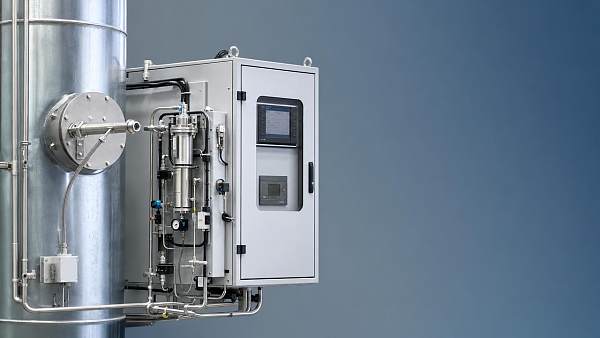
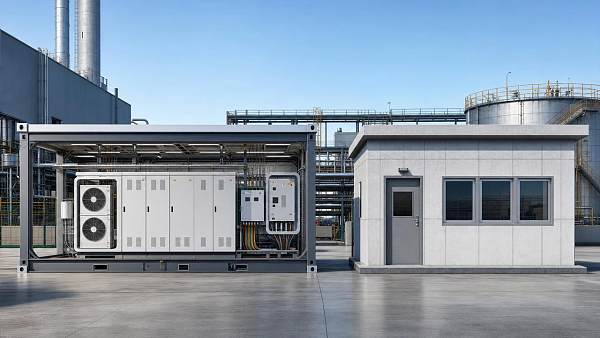
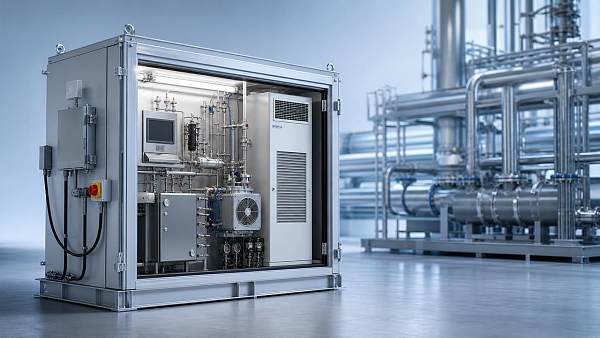
The best custom designs are not overengineered. They are purpose-built to reduce uncertainty. That may include optimized probes, heated sample lines, staged filtration, pressure control, moisture management, fast-loop arrangements, validation ports, or integrated shelters and panels designed for maintainability.
Conclusion: in fixed analysis, the sample system is often the real performance driver
The main lesson is clear: fixed analysis systems often fail at sampling, not sensing. If the sample is delayed, altered, contaminated, or unstable before it reaches the analyzer, even the best sensor cannot deliver trustworthy results. For users comparing fixed analysis, portable analysis, and continuous analysis solutions, the smartest evaluation starts with sample integrity, response time, maintainability, and fit to the application.
Whether the application involves explosion proof installation, multi gas monitoring, paramagnetic oxygen measurement, laser measurement, thermal measurement, or broader online measurement, better sampling design is what turns analyzer specifications into real-world performance. The most reliable system is not necessarily the one with the most advanced detector. It is the one that delivers the right sample, in the right condition, every time.
Recommended for You
 Brazil INMETRO to Require Portuguese UI and Local Units for Industrial Instruments by 2026Brazil INMETRO mandates Portuguese UI & local units (mbar, kPa, °C) for industrial instruments by Dec 2026—key for exporters, integrators & service providers.
 STMicroelectronics 200mm Line Eases Industrial Sensor Chip ShortageSTMicroelectronics 200mm line eases industrial sensor chip shortage — MCUs & signal-conditioning ICs now ship in 12 weeks. Secure allocation today.
 Southeast Asia Manufacturing Re-shoring Accelerates: Vietnam/Indonesia Industrial Instrument Imports Up 37% YoYSoutheast Asia manufacturing re-shoring accelerates: Vietnam & Indonesia industrial instrument imports up 37% YoY — key insights for suppliers, OEMs & procurement teams.
 First Global White Paper on Humanoid Robot Sensor Calibration ReleasedHumanoid robot sensor calibration: First global white paper released—key for ISO/IEC JWG 23 compliance, export readiness & dynamic torque accuracy. Act now.
 SAMR to Upgrade EV Battery Recycling Standard to MandatorySAMR to upgrade EV battery recycling standard GB/T 34015—202X to mandatory by Dec 2026 — critical for exporters, BMS makers & cert labs.
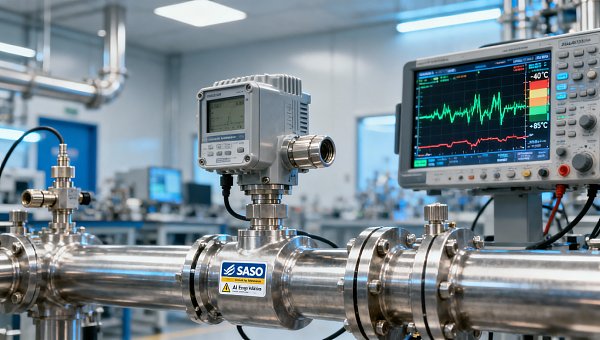
 Saudi SASO Accelerates AI Energy Efficiency Rules for TransmittersSASO AI energy efficiency rules for transmitters take effect 1 June 2026 — mandatory AI simulation, Saudi climate data, and authorized lab validation required. Act now to avoid export delays.
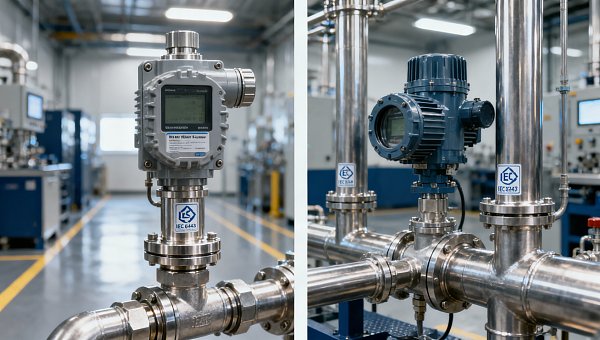
 IEC 63278:2026 Released for Industrial Instrument CybersecurityIEC 63278:2026 is live — the first global standard mandating cybersecurity verification for industrial instruments. Discover compliance impacts, deadlines, and actionable steps for OT/IT convergence.
 Red Sea Crisis Escalates: Gulf of Aden Navigation Ban Extended to June 15, 2026Red Sea Crisis escalates: Gulf of Aden navigation ban extended to June 15, 2026—disrupting industrial instrumentation shipments to the Middle East with 458% air freight spikes and 12–18 day delays.
 US DOE Updates Efficiency Rules for Industrial SensorsUS DOE updates industrial sensor efficiency rules: AI-driven dynamic calibration required by Sept 2026. Ensure AI-Cal Verified compliance now.
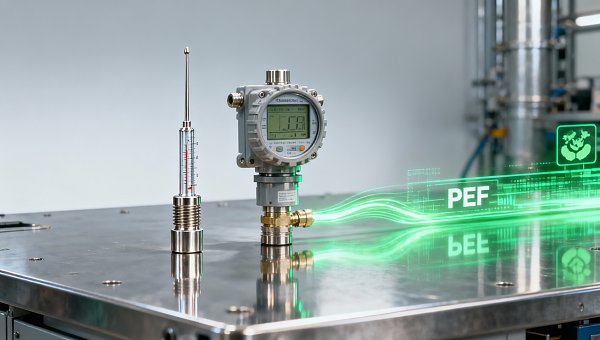
 EU Mandates PEF Carbon Footprint Module for Industrial Instruments from June 2026EU mandates PEF carbon footprint module for industrial instruments from June 2026—key for exporters, OEMs & certifiers. Act now to ensure compliance.
 Explosion-Proof Instruments: Compliance Risks Before You OrderExplosion-proof instruments can trigger delays, failed inspections, and safety risks if compliance is overlooked. Learn what to verify before ordering and make safer, smarter purchasing decisions.
 Gas Quality Monitoring Equipment Import Rules to Watch in 2026Gas quality monitoring equipment import rules for 2026 are tightening. Learn the key compliance, certification, and customs risks distributors must manage to avoid delays and protect margins.
 Emission Control Shelter Demand Shifts Across Industrial ProjectsEmission control shelter demand is rising across industrial projects as buyers seek faster deployment, reliable monitoring, and compliance-ready designs. Explore key evaluation factors.
 Temperature Measurement Instruments: Selection Mistakes That Raise DowntimeTemperature measurement instruments selection mistakes can drive downtime, unstable control, and higher costs. Discover 5 common errors and practical fixes to improve reliability.
 Thermal Conductivity Analyzers: When Are They the Right Choice?Thermal conductivity analyzers are ideal for binary and high-contrast gas mixtures. Learn when they deliver reliable, low-maintenance online monitoring and smarter project value.
 Level Measurement Instruments for Tanks: What Affects ReliabilityLevel measurement instruments reliability depends on media, installation, and diagnostics. Discover what causes tank reading failures and how to improve safety, uptime, and control.
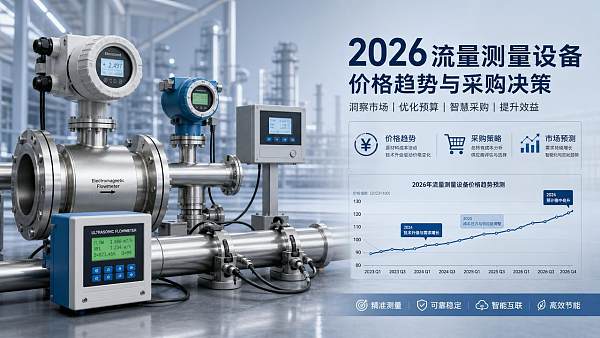
 Flow Measurement Equipment Price Trends in 2026Flow measurement equipment price trends in 2026: learn key cost drivers, budgeting risks, and smart buying strategies to improve ROI and make better procurement decisions.
 Flue Gas Monitoring Equipment: Common Accuracy Issues and FixesFlue gas monitoring equipment accuracy issues can lead to drift, false readings, and compliance risks. Discover common causes, practical fixes, and smarter maintenance tips.
 Process Control Shelter vs Control Room: Key Cost and Deployment DifferencesProcess control shelter vs control room: compare cost, deployment speed, integration, and lifecycle value to choose the smarter solution for industrial automation projects.
 How to Select an Industrial Control Shelter for Harsh Site ConditionsIndustrial control shelter selection for harsh sites: learn how to compare materials, HVAC, safety, and lifecycle cost to protect equipment, reduce downtime, and improve reliability.
 SAMR to Finalize 1,800+ Standards by 2026, Including EV Battery RecyclingSAMR to finalize 1,800+ standards by 2026—including EV battery recycling, hazardous chemical packaging & EMC immunity. Stay ahead of mandatory GB shifts and global export compliance.
 China's Largest Single-Line Large-Tow Carbon Fiber Line Starts OperationChina's largest single-line large-tow carbon fiber line is live—30,000 tons/year capacity, ASME-certified, 22% cheaper & 6-week lead time. Boost your industrial instrumentation supply chain now.
 China Mobile Unveils National Integrated Computing Power NetworkChina Mobile's National Integrated Computing Power Network accelerates AI quality inspection for global manufacturers—cutting model training time by 68% and enabling cross-border industrial AI development.
 World's First Humanoid Robot Industrial Calibration White Paper ReleasedWorld's First Humanoid Robot Industrial Calibration White Paper released—setting new global benchmarks for dynamic sensor calibration in robotics. Discover how ABB, Yaskawa & metrology leaders are reshaping industry trust.
 Red Sea Crisis Escalates: Aden Gulf Ban Extended to June 15Red Sea Crisis escalates: Aden Gulf ban extended to June 15 — disrupting industrial instrumentation trade between China and the Middle East with 452% air freight spikes and 7–12 day delays.
 Saudi SASO Introduces AI-Based Energy Validation for Industrial TransmittersAI-based energy validation for industrial transmitters is now mandatory in Saudi Arabia—learn how SASO’s new AI regulation impacts global exporters, compliance timelines, and supply chains.
 IEC TC65 Releases Cybersecurity Validation Guide for Industrial InstrumentsIEC TC65’s new Cybersecurity Validation Guide for Industrial Instruments mandates SDL certification & firmware signing—key for EU/US market access. Act now to align with GB/T 42278-2026 and avoid export delays.
 EU PEF Carbon Footprint Database Mandatory Access for Industrial InstrumentsEU PEF Carbon Footprint Database mandatory access starts June 2026 for industrial instruments—pressure, temperature & flow meters. Ensure compliance now to avoid EU customs delays and market exclusion.
 Gas Quality Analyzer Shelter Price Trends and Specification Gaps to WatchGas quality analyzer shelter price trends vary with materials, HVAC, safety, integration, and compliance. See key specification gaps before shortlisting suppliers or approving budget.
 Process Measurement Equipment: Key Accuracy Risks in Harsh EnvironmentsProcess measurement equipment in harsh environments can drift before failing. Discover key accuracy risks, warning signs, and practical controls to protect quality, safety, and compliance.
 Industrial Analyzer Shelter Export Factors Affecting Lead Times This YearIndustrial analyzer shelter export lead times vary with sourcing, engineering, compliance, packing, and logistics. Learn the key factors to quote smarter and deliver with confidence.
 What to Check Before Buying a Process Analyzer ShelterProcess analyzer shelter buying guide: learn what to check before purchase, from compliance and HVAC to utilities, durability, and maintenance access.







Search Categories
Search Categories
Latest Article
- Brazil INMETRO to Require Portuguese UI and Local Units for Industrial Instruments by 2026Brazil INMETRO mandates Portuguese UI & local units (mbar, kPa, °C) for industrial instruments by Dec 2026—key for exporters, integrators & service providers.Posted by:
- STMicroelectronics 200mm Line Eases Industrial Sensor Chip ShortageSTMicroelectronics 200mm line eases industrial sensor chip shortage — MCUs & signal-conditioning ICs now ship in 12 weeks. Secure allocation today.Posted by:
- Southeast Asia Manufacturing Re-shoring Accelerates: Vietnam/Indonesia Industrial Instrument Imports Up 37% YoYSoutheast Asia manufacturing re-shoring accelerates: Vietnam & Indonesia industrial instrument imports up 37% YoY — key insights for suppliers, OEMs & procurement teams.Posted by:
Please give us a message
