
Industrial Control System: Buy New or Retrofit?


When evaluating an industrial control system, the choice between buying new equipment and retrofitting existing assets affects cost, uptime, compliance, and future scalability. From industrial control equipment to a process measurement system, emission control system, gas quality measurement, and oxygen measurement system, the right path depends on performance goals, plant conditions, and long-term ROI.
For manufacturers, utilities, laboratories, process plants, EPC contractors, and distributors, this is rarely a simple price comparison. The decision touches production continuity, maintenance burden, data visibility, cybersecurity exposure, operator training, and the expected service life of installed assets. In many facilities, a control upgrade also affects calibration workflows, quality assurance routines, and environmental reporting obligations.
In the instrumentation industry, where pressure, temperature, flow, level, analysis, and automatic control systems work as an integrated layer, the wrong timing or wrong scope can lock a plant into 5–10 years of avoidable cost. The better approach is to compare new purchase and retrofit options against measurable criteria: performance gap, compliance risk, spare part availability, shutdown window, and payback period.
How the Decision Changes Across Industrial Control Applications

Not all industrial control system projects carry the same technical and financial logic. A retrofit that works well for a packaging line may be a poor fit for a combustion control loop, an emission control system, or an oxygen measurement system in a high-temperature process. The first step is to define whether the current system still meets process accuracy, response time, integration, and compliance needs.
In discrete manufacturing, replacing PLCs, HMIs, and network switches may restore reliability quickly if the field devices remain serviceable. In process industries, however, legacy DCS platforms, analyzers, transmitters, and control valves often interact with batch records, safety interlocks, and historian data. That makes the upgrade path more sensitive to downtime windows that may be limited to 24–72 hours during planned shutdowns.
Facilities that depend on process measurement systems or gas quality measurement often face a mixed reality: the primary sensing elements may still perform within tolerance, while communication modules, I/O cards, engineering software, and cybersecurity support are already obsolete. In that case, retrofitting the control layer while retaining selected instruments can extend asset value without replacing the entire line.
By contrast, if drift, unstable loops, spare part scarcity, and repeated nuisance alarms are already affecting product quality or environmental limits, buying new equipment may reduce lifecycle cost more effectively. A plant that loses even 2–4 hours per month due to control instability can see annual losses that outweigh the price difference between a phased retrofit and a full replacement.
Typical scenarios where retrofit is considered first
- Core field instrumentation still has 5–8 years of usable life and calibration results remain stable.
- Mechanical process equipment is sound, but the control platform is no longer supported by the original supplier.
- Production cannot tolerate a shutdown longer than 2–3 days.
- Budget approval is staged over 2 fiscal periods rather than released as one capital project.
Typical scenarios where new purchase is more practical
- The installed system has fragmented modifications from multiple vendors over 10–15 years.
- Safety, emissions, or reporting requirements now demand functions the old architecture cannot support.
- Mean time between failures is declining and spare boards, sensors, or analyzers are difficult to source.
- Expansion plans require new communication protocols, remote diagnostics, and higher data density.
Buy New vs Retrofit: Cost, Downtime, and Lifecycle Trade-Offs
The most common mistake is comparing only upfront equipment pricing. In industrial control equipment projects, the real cost sits across engineering hours, migration risk, shutdown duration, commissioning, operator training, software licensing, spare strategy, and maintenance labor over the next 3–7 years. A lower purchase price does not always mean lower total cost of ownership.
Retrofitting often reduces capital outlay by 20%–45% when cabinets, wiring paths, field junctions, enclosures, and selected instruments can be reused. This can be especially attractive in brownfield sites where civil work is expensive or process interruptions carry a high hourly loss. The trade-off is that engineering complexity may increase because old and new components must coexist during migration.
Buying new usually demands higher initial investment, but it can simplify architecture, standardize spare parts, improve energy efficiency, and reduce maintenance variability. New systems also provide a cleaner base for IIoT connectivity, historian integration, alarm management, and remote asset support. If a plant is planning capacity expansion within 12–24 months, a new platform may avoid a second upgrade cycle.
The table below outlines the practical differences decision-makers usually review before approving an industrial control system project.
The key takeaway is that retrofit works best when the retained components are reliable, documented, and compatible with the target architecture. New purchase becomes stronger when downtime cost is outweighed by the need for long-term standardization, compliance, and expansion capacity.
A useful cost framework for business and finance teams
- Estimate direct hardware and software cost.
- Add engineering, FAT, SAT, commissioning, and training cost.
- Calculate expected production loss from shutdown hours.
- Compare 3-year and 5-year maintenance burden, including spare inventory.
- Include compliance exposure if old systems can no longer document or control critical variables.
Technical Evaluation Criteria for Instrumentation-Driven Facilities
In instrumentation-intensive environments, the buy-new-or-retrofit decision should start with measurable technical checks. This is especially important for process measurement systems, emission control systems, gas quality measurement, and oxygen measurement systems where accuracy, repeatability, and traceability directly affect production quality or regulatory reporting.
A practical assessment normally includes 6 core points: sensor health, controller performance, communication protocol support, software support status, calibration traceability, and safety integration. If 2 or more of these categories show major weakness, a partial upgrade may only delay a larger replacement project by 12–18 months.
Operators and quality managers should also review trend stability. For example, if pressure transmitters or oxygen analyzers require recalibration more frequently than the normal 3–6 month cycle, or if process drift exceeds acceptable control limits, the issue may not be isolated to one device. It can point to aging electronics, poor signal integrity, or insufficient control resolution.
The following table can be used as a structured screening tool before a purchasing team requests quotations.
This type of evaluation helps align engineering and procurement. It also prevents a common problem: replacing visible hardware while leaving hidden bottlenecks in I/O architecture, analyzer shelters, power quality, or unsupported software versions.
Key technical questions before final selection
For operations and maintenance teams
- How many nuisance trips, communication losses, or unplanned restarts occurred in the last 12 months?
- Can the existing system be maintained with available in-house skills, or does every change require a specialist?
- Are critical measurement points still accurate enough for product quality, combustion efficiency, or emissions monitoring?
For project and compliance teams
- Does the architecture support required audit trails and data export for quality or environmental review?
- Can the proposed solution be commissioned within the next planned outage window?
- Will the chosen path support expansion for the next 5 years without a second major migration?
Implementation Strategy: Phased Retrofit or Full Replacement
Once the decision direction is clear, project success depends on execution. A technically sound industrial control system can still fail commercially if migration sequencing, documentation, testing, and site coordination are weak. This is where project managers and engineering leads need a realistic implementation plan rather than a broad modernization slogan.
A phased retrofit usually works best when the plant can isolate subsystems one by one. Typical phases include site survey, I/O mapping, software backup, panel modification, pre-commissioning, and staged cutover. Depending on complexity, engineering preparation may take 4–10 weeks, while the physical shutdown window may remain under 72 hours for each unit.
A full replacement is more suitable when legacy architecture is inconsistent, documentation is incomplete, or safety and performance requirements have changed too much. In these cases, a clean design reduces hidden incompatibilities. The trade-off is that FAT, SAT, and operator training must be more comprehensive, often requiring 2–4 rounds of review before final acceptance.
In both paths, document control is critical. Wiring schedules, loop drawings, calibration records, communication maps, logic narratives, and acceptance criteria should be frozen before installation. Many control upgrade delays come not from hardware supply, but from undocumented site deviations discovered too late.
Five-step delivery model for lower project risk
- Audit the installed system, including field devices, cabinets, software versions, and communication topology.
- Define migration boundaries: retain, replace, or defer each subsystem.
- Run factory tests against actual process logic, alarm lists, and signal simulations.
- Execute site cutover with rollback planning for the first 12–24 hours.
- Validate performance through trial operation, calibration checks, and operator sign-off.
Common implementation risks
- Underestimating legacy wiring differences and terminal conversion work.
- Ignoring analyzer warm-up time and calibration gas logistics in gas quality measurement projects.
- Replacing the controller but not addressing noisy power supply or grounding faults.
- Skipping operator training, which can turn a technically successful cutover into a production problem.
Procurement Checklist, FAQ, and Final Recommendation
For buyers, distributors, and plant leadership, the best purchasing outcome comes from matching project scope to business priority. If the immediate goal is reliability restoration within a fixed budget, retrofit may be the stronger path. If the goal is standardization, digital expansion, and lower lifecycle risk across multiple lines or sites, buying new often delivers better value over 5–10 years.
A practical procurement review should compare at least 4 dimensions: technical fit, downtime impact, lifecycle cost, and vendor support capability. Service response time matters as much as hardware quality. In many plants, a supplier that can support commissioning, calibration alignment, spare planning, and post-startup tuning within 24–48 hours provides more value than a lower initial quotation.
The checklist below helps non-technical approvers confirm whether the proposal is balanced, realistic, and suitable for instrumentation-heavy operations.
If a proposal scores well on these points, it is more likely to deliver a stable, supportable control environment instead of a short-term patch. This is especially important where process analyzers, oxygen measurement systems, and emission control systems must remain accurate and auditable after modernization.
FAQ
How do I know whether retrofit is still worth it?
Retrofit is usually worth considering when at least 40%–60% of the installed hardware remains reliable, critical instruments hold calibration within expected intervals, and the plant cannot accept a long shutdown. If supportability, spare parts, and documentation are already weak in several areas, a full replacement may offer better 5-year value.
What is a common delivery timeline?
For a moderate retrofit, engineering and procurement often take 4–10 weeks, followed by 1–4 days of cutover depending on complexity. A full replacement project may take 8–16 weeks or longer, especially when panels, software logic, analyzers, and factory testing are all included.
Which industries benefit most from partial modernization?
Brownfield facilities in manufacturing, energy, utilities, environmental monitoring, and automated processing often benefit most when mechanical assets remain sound but the control layer is aging. Sites with process measurement systems and gas quality measurement can gain substantial value if the migration keeps validated instruments while replacing unsupported control infrastructure.
What should decision-makers prioritize first?
Prioritize process risk, downtime cost, and future compatibility before unit price. A cheaper proposal that cannot support calibration workflow, audit trail requirements, or expansion plans may become more expensive within 12–24 months.
Choosing between a new industrial control system and a retrofit is ultimately a decision about lifecycle value, not just equipment replacement. The right path depends on asset condition, measurement accuracy, compliance needs, shutdown limits, and growth plans. If you are comparing options for industrial control equipment, a process measurement system, emission control system, gas quality measurement, or an oxygen measurement system, now is the time to review your installed base with a structured technical and commercial checklist. Contact us to discuss your application, get a tailored upgrade strategy, and explore a practical solution for your facility.
Recommended for You
 First Global White Paper on Humanoid Robot Industrial Calibration ReleasedHumanoid robot industrial calibration: First global white paper released—key for sensor makers, integrators & metrology labs. Learn impact & action steps.
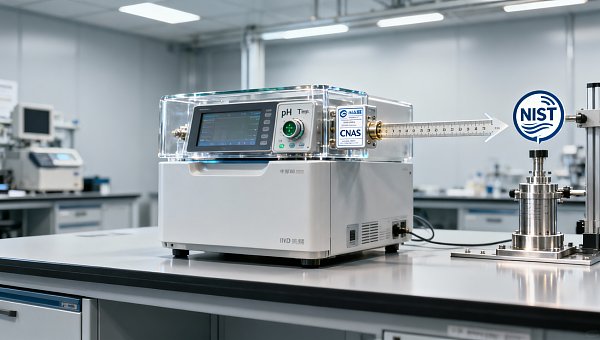
 FDA Updates IVD Import Guidance: CNAS Calibration Chain RequiredFDA mandates CNAS calibration chain with NIST traceability for IVD instruments from China—act now to avoid U.S. import rejection starting July 1, 2026.
 IEC TC65 Releases Cybersecurity Validation Guidance for Industrial InstrumentsIEC TC65 releases cybersecurity validation guidance for industrial instruments—key for exporters, OEMs & integrators targeting EU/NA markets. Act now.
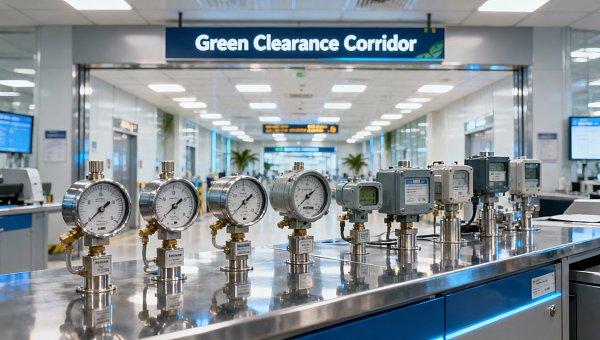
 ASEAN Green Corridor for Measuring Instruments Fully LaunchedASEAN Green Corridor for Measuring Instruments is live—unlock 3.8-hour customs clearance for CNAS-calibrated instruments across all 10 ASEAN nations. Act now!
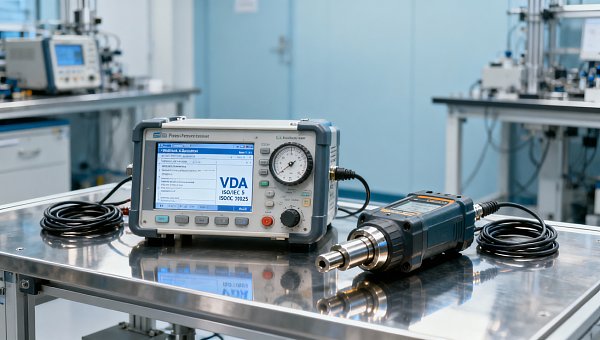
 PTB Opens Direct VDA/ISO 17025 Report Portal for CNAS LabsPTB opens direct VDA/ISO 17025 report portal for CNAS labs — enabling dual-compliant calibration reports in <72h. Boost automotive audit readiness now!
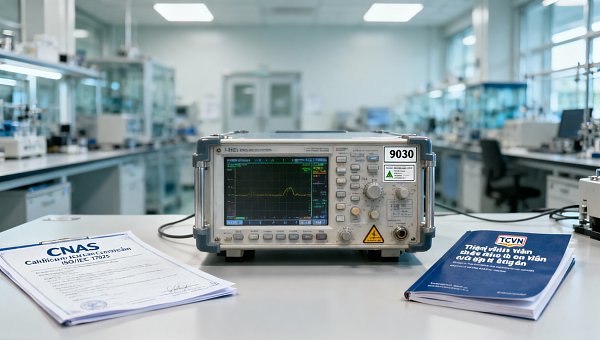
 Vietnam Enforces Dual CNAS + Vietnamese Language Requirement for Industrial InstrumentsVietnam enforces dual CNAS + Vietnamese language requirement for industrial instruments (HS 9026/9027/9030) — avoid customs rejection. Act now!
 Red Sea Crisis Escalates: Gulf of Aden No-Sail Zone Extended to June 15, 2026Red Sea Crisis escalates: Gulf of Aden no-sail zone extended to June 15, 2026 — impacting industrial instrumentation trade, airfreight costs (+452%), and supply chain resilience between China and the Middle East.
 SASO Mandates AI-Driven Energy Simulation for Industrial Transmitters from June 2026SASO mandates AI-driven energy simulation for industrial transmitters from June 2026 — ensure compliance with NAIEC-certified testing now to avoid delays & rejections.
 BIS Adds 3 High-Precision Process Calibrators to EAR Supplement No. 4BIS Adds 3 High-Precision Process Calibrators to EAR Supplement No. 4—urgent compliance insights for semiconductor, nuclear, and calibration service providers operating with China.
 EU PEF Carbon Footprint Database Mandatory Integration CountdownEU PEF Carbon Footprint Database integration is mandatory for industrial instrument exporters by Jan 2027—act now to secure market access, customs clearance & B2B tenders.
 FDA Updates IVD Import Guidance: CNAS Calibration Traceability to NIST Required for Chinese ManufacturersFDA now requires CNAS calibration traceability to NIST for Chinese IVD manufacturers — critical for 510(k)/De Novo submissions. Act now to avoid RTA delays!
 ASEAN's Green Clearance Corridor Fully LaunchedGreen Clearance Corridor now live: CNAS calibration reports auto-verified for ASEAN customs clearance in under 4 hours — boost your China–ASEAN trade efficiency today!
 First Global Cybersecurity Verification Guide for Industrial Instruments ReleasedFirst global cybersecurity verification guide for industrial instruments launched—featuring a 5-level maturity model & standardized pentest library. Essential for exporters, OEMs, and critical infrastructure suppliers.
 SASO Shortens Energy Labeling for Industrial Transmitters to 7 Days, Adds AI Power Simulation RequirementSASO energy labeling for industrial transmitters now takes just 7 days — but requires AI power simulation. Learn how to comply fast and avoid delays.
 PTB Launches AI Calibration Cloud Platform 2.0PTB AI Calibration Cloud Platform 2.0 launches with CNAS-VDA 5/ISO/IEC 17025 dual-compliance reporting — streamline cross-border calibration for auto suppliers, labs & equipment makers.
 EU Mandates Carbon Footprint Labels on Industrial Instruments from 2027EU mandates carbon footprint labels on industrial instruments from 2027—key for pressure, temperature & flow meter exporters. Act now to ensure PEF compliance and market access.
 Red Sea Crisis Worsens: Gulf of Aden Ban Extends to 3 Weeks, Air Freight Premiums for Industrial Instruments Surge 420%Red Sea crisis deepens: Gulf of Aden ban hits 3 weeks, spiking air freight premiums for industrial instruments by 420%—urgent insights for exporters & EPC contractors.
 Vietnam Enforces CNAS + Vietnamese Dual Requirement for Industrial InstrumentsVietnam Enforces CNAS + Vietnamese Dual Requirement for Industrial Instruments: Key compliance update for exporters, labs & documentation teams ahead of June 2026.
 U.S. BIS Adds 5 High-Precision Pressure/Flow Calibration Sources to EAR ListU.S. BIS adds 5 high-precision pressure/flow calibration sources to EAR list — critical for exporters, instrument makers & supply chain teams. Act now.
 IEC 61508-3:2026 Published: Functional Safety Certification UpgradedIEC 61508-3:2026 is live—discover what the upgraded functional safety certification means for your industrial software, AI diagnostics & global market access.
 FDA Updates IVD Import Guidance: CNAS Calibration Chain Required for China-Made DevicesFDA now requires CNAS calibration chain reports for China-made IVD analyzers—pH, ion & clinical chemistry devices entering via 510(k)/De Novo. Act now to avoid U.S. port rejections.
 EN 61000-6-4:2026 Enters Force: Stricter EMC Requirements for Industrial Field InstrumentsEN 61000-6-4:2026 enforces stricter EMC requirements for industrial field instruments—key for AI edge controllers, sensors & exporters. Act now to ensure CE-EMC compliance by Nov 2026.
 Global Methanol Electric Alliance Launches Cross-Border Energy Efficiency Recognition RoadmapGlobal Methanol Electric Alliance launches cross-border energy efficiency recognition roadmap—key for exporters, cal labs & methanol-instrument manufacturers.
 Red Sea Crisis Escalates: Air Freight Premiums for China–Middle East Industrial Instruments Hit 390%Red Sea Crisis hits industrial instruments: China–Middle East air freight premiums surge 390%. Act now to secure Q3 capacity, avoid delays & optimize LCL alternatives.
 IEC TC65 Mandates Cybersecurity Certification for Industrial Field Instruments from 2027IEC TC65 mandates cybersecurity certification for industrial field instruments by 2027 — pressure, flow & analytical devices must meet IEC 62443-4-2:2026 and display SL1–SL3 labels. Act now to ensure market access.
 SASO Cuts Energy Labeling Turnaround for Industrial Transmitters to 7 Working DaysSASO Energy Labeling now takes just 7 working days for industrial transmitters — faster market access, CNAS reports accepted. Act now!
 PTB Launches CalCloud 2.0 with Direct CNAS Lab IntegrationCalCloud 2.0 now integrates directly with CNAS labs—enabling automated VDA 5 & ISO/IEC 17025 dual-compliant calibration reports for automotive and industrial exporters. Boost compliance efficiency today!
 ASEAN's Green Clearance Corridor for CNAS Calibration Reports LaunchesASEAN's Green Clearance Corridor now verifies CNAS calibration reports via blockchain—cut customs clearance to <48h for flow meters, analyzers & more. Act now!
 Vietnam Mandates CNAS Calibration Certificates & Vietnamese Manuals for Industrial Meters from June 1, 2026CNAS calibration certificates & Vietnamese manuals now mandatory for industrial meters entering Vietnam from June 1, 2026—avoid customs delays and ensure seamless market access.
 U.S. BIS Tightens Export Controls on High-Precision Laser InterferometersU.S. BIS tightens export controls on high-precision laser interferometers—critical for semiconductor metrology & ISO/IEC 17025 calibration. Act now to ensure compliance.
 Paramagnetic Monitor Calibration Tips for Stable OutputParamagnetic monitor calibration tips for stable output: learn how to reduce drift, improve accuracy, cut downtime, and keep oxygen measurement reliable in demanding industrial applications.
 Paramagnetic Measurement in Low-Oxygen Process ControlParamagnetic measurement enables accurate low-oxygen process control with fast response and stable oxygen analysis. Learn how it improves safety, consistency, and system performance.

























Search Categories
Search Categories
Latest Article
- First Global White Paper on Humanoid Robot Industrial Calibration ReleasedHumanoid robot industrial calibration: First global white paper released—key for sensor makers, integrators & metrology labs. Learn impact & action steps.Posted by:
- FDA Updates IVD Import Guidance: CNAS Calibration Chain RequiredFDA mandates CNAS calibration chain with NIST traceability for IVD instruments from China—act now to avoid U.S. import rejection starting July 1, 2026.Posted by:
- IEC TC65 Releases Cybersecurity Validation Guidance for Industrial InstrumentsIEC TC65 releases cybersecurity validation guidance for industrial instruments—key for exporters, OEMs & integrators targeting EU/NA markets. Act now.Posted by:
Please give us a message
