
How Accurate Should an Oxygen Measurement System Be?


How accurate should an oxygen measurement system be in modern industry? The answer depends on process risk, gas quality measurement needs, compliance targets, and the performance of the wider industrial measurement system. From emission measurement system applications to process monitoring system optimization, choosing the right accuracy level is essential for gas quality control, safety, efficiency, and cost-effective industrial control equipment decisions.
For researchers, operators, project managers, quality teams, safety officers, distributors, and financial decision-makers, oxygen measurement accuracy is rarely a one-number question. In practice, the right target may range from basic trend monitoring at a few tenths of a percent to highly controlled analysis in ppm-level applications. The key is to match measurement performance to process consequence, maintenance capability, and total lifecycle cost.
In the instrumentation industry, oxygen analyzers support combustion control, inerting verification, emissions management, laboratory work, medical gas systems, and industrial gas quality checks. An over-specified system can raise capital and service costs by 15%–40%, while an under-specified system can create compliance gaps, product quality drift, safety incidents, or avoidable energy loss. That is why accuracy must be evaluated together with response time, calibration stability, installation conditions, and data integration.
Why Oxygen Measurement Accuracy Matters Across Industrial Applications
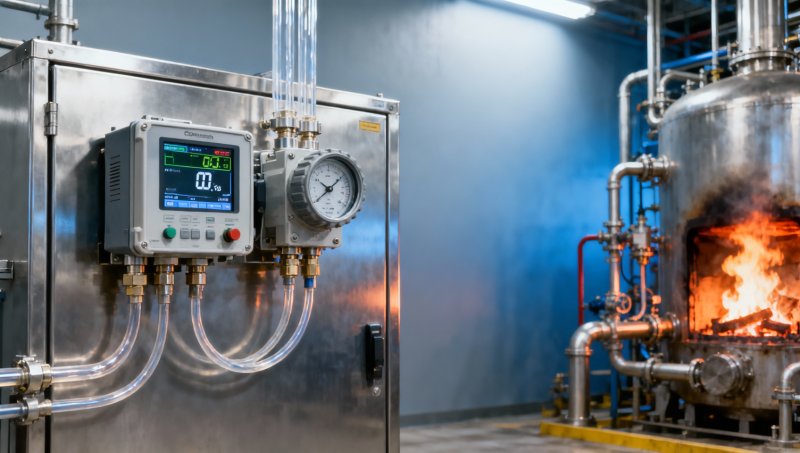
Oxygen concentration affects combustion efficiency, oxidation control, explosion prevention, product consistency, and environmental reporting. In a boiler, a difference of 0.5% O2 can influence excess air settings enough to alter fuel efficiency and emissions. In a nitrogen blanketing system, the difference between 2.0% and 3.0% oxygen may directly affect ignition risk for certain solvents or powders.
This means the “required” accuracy depends on what happens if the reading is wrong. If oxygen is only used as a general trend indicator, a system accuracy of ±1% of span may be enough. If it is used for compliance records, critical interlocks, or product release decisions, users may need tighter performance such as ±0.1% O2, ±0.05% O2, or even ppm-level accuracy with defined repeatability and drift limits.
Accuracy also matters differently at different ranges. A ±0.1% O2 error at 20.9% ambient oxygen is very different from a ±0.1% O2 error in a low-oxygen inert atmosphere near 0.5%. For this reason, buyers should look beyond brochure language and check whether the specification is given as percent of reading, percent of full scale, or absolute concentration error.
Another issue is that the analyzer is only one part of the industrial measurement system. Sampling lines, pressure control, moisture removal, filters, probe placement, and signal conversion can each add uncertainty. A sensor rated at ±1% of full scale may deliver worse field performance if the sample is delayed by 10–30 seconds, contaminated by condensate, or diluted by air ingress.
Typical consequences of poor oxygen measurement
- Combustion systems may run with too much excess air, increasing fuel consumption by a measurable margin over 12 months.
- Inerting and blanketing processes may fail to maintain safe oxygen thresholds, especially below 5% O2.
- Gas quality measurement programs may reject acceptable product or release off-spec gas due to poor analyzer confidence.
- Emission measurement system reports can face audit questions when calibration drift or traceability is not controlled.
Accuracy must be balanced with other performance indicators
Many procurement teams focus only on the top-line accuracy figure, but field value depends on a group of parameters. Response time, drift, repeatability, calibration interval, environmental tolerance, and maintenance burden all shape the final result. In many plants, a slightly less precise analyzer with stable 6-month calibration performance is more useful than a highly sensitive instrument that requires weekly attention.
The table below shows how accuracy expectations change by application category and risk level.
The main takeaway is simple: accuracy should be selected by consequence. High-risk and low-oxygen processes need tighter control than general-purpose trending. That alignment helps buyers avoid paying for unnecessary precision while still meeting safety, quality, and reporting needs.
How to Define the Right Accuracy for Your Process
A practical way to define oxygen measurement accuracy is to start with the process limit, then work backward to the alarm limit, control band, and analyzer uncertainty. If a process must stay below 2.0% O2, and the operating target is 1.2%, the available safety margin is only 0.8%. In that case, an analyzer error of ±0.5% O2 may be too loose, while ±0.1% to ±0.2% O2 is often more realistic.
Decision-makers should also separate control needs from reporting needs. A combustion loop may need fast repeatable trend data every 1–5 seconds, while a compliance report may prioritize calibration traceability and documented drift checks every 24 hours or every 7 days, depending on the management regime. One device does not always serve both needs equally well.
In many industrial projects, the correct specification comes from four questions: what is the oxygen range, what is the acceptable decision error, how quickly does the process change, and what is the cost of a wrong reading? Those questions help engineering, operations, quality, and finance teams evaluate whether they need a simple field transmitter, a sample-conditioned analyzer, or a higher-grade laboratory or process analysis system.
A useful rule is that analyzer uncertainty should consume only a limited share of the total process tolerance. Many engineering teams aim to keep measurement uncertainty within roughly 10%–25% of the allowable control band. If the allowed variation is narrow, the oxygen measurement system must be significantly tighter than that band.
A step-by-step selection framework
- Define the normal oxygen range, such as 0%–5%, 0%–25%, or ppm-level trace oxygen.
- Identify the process threshold, alarm point, and shutdown limit if applicable.
- Estimate the acceptable total error after sampling, calibration, and signal transmission losses.
- Check whether the response time must be under 5 seconds, under 30 seconds, or slower.
- Set a maintenance interval target, such as monthly, quarterly, or semiannual.
Do not confuse laboratory precision with plant-floor usefulness
Some users request extremely high analytical precision without considering site realities. If the sample contains moisture, particulates, or pressure fluctuations, the field system may never achieve the sensor’s laboratory specification. In these cases, investment should often go first into sample handling, probe location, and calibration discipline rather than into the most expensive sensor technology.
This is especially relevant for project managers and purchasing teams comparing quotes. A lower-priced analyzer with correct filtration, pressure regulation, and a 2-point calibration routine may outperform a premium sensor installed in a poor sampling layout. Accuracy is a system outcome, not just a component label.
Sensor Technologies, System Design, and Real-World Accuracy
Different oxygen sensing technologies offer different strengths. Electrochemical sensors are often suitable for portable or lower-cost fixed applications, but lifespan and environmental sensitivity should be reviewed carefully. Zirconia analyzers are widely used in combustion and high-temperature processes, often providing fast response, but they require correct temperature management and application fit. Paramagnetic and optical methods may offer advantages in specific clean-gas or precision applications.
Even when the sensor is well chosen, overall measurement quality can drop if system design is weak. A sample line longer than 10–20 meters may introduce delay. Poorly heated lines can create condensate. Leaks at fittings may allow ambient air ingress, especially when measuring low oxygen concentrations below 1%. These effects can distort readings more than the analyzer’s stated baseline error.
For process monitoring system design, engineers should evaluate at least six points: process pressure, gas temperature, moisture content, particulate load, corrosive components, and required response time. If any of these are ignored, nominal accuracy may not be achievable in the field. This is why many successful installations treat the analyzer, probe, conditioning panel, and calibration setup as a single package.
Routine calibration strategy also influences real accuracy. A system calibrated every 30 days using suitable span gas and zero checks often performs differently from one that is only checked twice a year. For critical processes, automatic calibration or validation every 24 hours to 7 days can reduce unnoticed drift and improve audit confidence.
Technology comparison for common industrial decisions
The table below summarizes how common oxygen measurement approaches are typically assessed in industrial environments.
The table shows that the “best” technology depends less on marketing claims and more on gas condition, maintenance capability, and required decision confidence. For distributors and procurement teams, this comparison is useful when aligning a product portfolio to different customer risk profiles rather than promoting one technology for every site.
System design details that often decide success
- Keep sampling paths as short as practical when fast control action is needed.
- Use suitable moisture management to avoid condensation error and sensor damage.
- Verify fitting integrity for low-O2 service where tiny leaks can create major bias.
- Plan calibration ports and access points during design, not after commissioning.
Procurement, Compliance, and Lifecycle Cost Considerations
For commercial evaluators and financial approvers, oxygen measurement accuracy should be linked to total ownership cost. A system with tighter specifications may cost more upfront, but it can still be the better investment if it reduces false alarms, lowers energy waste, shortens troubleshooting time, or supports compliance readiness. The opposite is also true: paying for ppm-level performance in a non-critical 0%–25% monitoring task may extend payback unnecessarily.
Lifecycle cost usually includes at least five elements: initial hardware, installation and sampling accessories, calibration gases and tools, maintenance labor, and downtime or quality loss caused by poor readings. In many facilities, maintenance and process impact over 3–5 years can exceed the original analyzer purchase value. That is why procurement teams should request both specification sheets and service assumptions.
Compliance-sensitive sites should also verify documentation needs. If the oxygen measurement system supports emission measurement system records, environmental reporting, product quality release, or audited safety procedures, traceability matters. Calibration records, inspection routines, and alarm validation frequency may carry more operational value than a marginal improvement in nominal sensor accuracy.
Project teams often benefit from a procurement checklist that compares technical fit, support readiness, and commercial risk side by side rather than evaluating purchase price alone.
Practical procurement comparison points
The following table can be used during vendor review, distributor screening, or internal project approval meetings.
This comparison framework helps decision-makers see that analyzer accuracy is only one purchasing dimension. Better ROI usually comes from selecting a system that balances risk coverage, maintainability, and site support rather than chasing the tightest number on paper.
Common buying mistakes to avoid
- Selecting by sensor accuracy only and ignoring sampling system design.
- Using one specification for both rough process control and formal compliance reporting.
- Not budgeting for calibration gas, service parts, and operator training in year 1.
- Failing to define acceptable drift over 30, 90, or 180 days.
Implementation, Maintenance, and Frequently Asked Questions
Once the right oxygen measurement system is selected, implementation quality determines whether the promised accuracy can be achieved. Commissioning should include installation verification, leak checks, span and zero validation, signal mapping, and operator instruction. In many projects, a structured 5-step startup process reduces early false alarms and shortens stabilization time during the first 7–14 days of operation.
Maintenance planning should be written into the project from the beginning. Typical tasks include filter checks, tubing inspection, sensor health review, calibration verification, and output testing. The exact frequency depends on application severity, but monthly visual checks and quarterly functional checks are common starting points for many industrial monitoring systems.
For quality and safety managers, documentation matters as much as the hardware. A good maintenance record should show who performed the check, what calibration gas was used, what deviation was found, and what corrective action was taken. This supports internal control, audit readiness, and easier troubleshooting when process changes occur.
Below are several frequently asked questions that reflect real procurement and operating concerns in the instrumentation market.
How accurate should an oxygen analyzer be for combustion control?
For many boilers, furnaces, and heaters, a practical target is often around ±0.1% to ±0.5% O2 within the working range, depending on burner design and efficiency goals. Faster response, stable drift behavior, and good probe placement are often just as important as the raw accuracy number because the control objective is consistent excess air management rather than laboratory-grade precision.
What if the process operates at very low oxygen levels?
Low-oxygen applications below 1% O2 usually require tighter analyzer selection, stronger leak control, and better calibration discipline. At these levels, small ambient air ingress can create major reading bias. Buyers should verify whether the instrument is truly suitable for trace or low-percentage oxygen service and whether the sampling arrangement protects that performance.
How often should the system be calibrated?
There is no single answer. Clean and stable services may support monthly or quarterly verification, while critical or dirty processes may require checks every 24 hours, every 7 days, or after process interruptions. The best interval is based on drift tendency, process criticality, and the cost of a wrong reading.
Is higher accuracy always better?
No. Higher accuracy is only better when the process can use that extra information and the system design can preserve it. If the process tolerance is wide or the sample condition is unstable, paying for extreme precision may not improve outcomes. The most effective industrial control equipment choice is the one that fits the operating envelope, maintenance resources, and business risk.
Choosing how accurate an oxygen measurement system should be is ultimately a risk-and-value decision. The best specification aligns analyzer performance with process limits, safety margins, gas quality requirements, compliance expectations, and lifecycle cost. Whether your application is combustion optimization, inerting, emissions support, laboratory analysis, or general process monitoring, selecting the right oxygen measurement strategy can improve reliability, control, and purchasing efficiency.
If you are comparing oxygen analyzers, reviewing an emission measurement system, or planning a new process monitoring system, now is the right time to map your required accuracy to actual operating conditions. Contact us to discuss your application, get a tailored recommendation, or explore more instrumentation solutions for industrial measurement, monitoring, and control.
Recommended for You
 First Global White Paper on Humanoid Robot Industrial Calibration ReleasedHumanoid robot industrial calibration: First global white paper released—key for sensor makers, integrators & metrology labs. Learn impact & action steps.
 FDA Updates IVD Import Guidance: CNAS Calibration Chain RequiredFDA mandates CNAS calibration chain with NIST traceability for IVD instruments from China—act now to avoid U.S. import rejection starting July 1, 2026.
 IEC TC65 Releases Cybersecurity Validation Guidance for Industrial InstrumentsIEC TC65 releases cybersecurity validation guidance for industrial instruments—key for exporters, OEMs & integrators targeting EU/NA markets. Act now.
 ASEAN Green Corridor for Measuring Instruments Fully LaunchedASEAN Green Corridor for Measuring Instruments is live—unlock 3.8-hour customs clearance for CNAS-calibrated instruments across all 10 ASEAN nations. Act now!
 PTB Opens Direct VDA/ISO 17025 Report Portal for CNAS LabsPTB opens direct VDA/ISO 17025 report portal for CNAS labs — enabling dual-compliant calibration reports in <72h. Boost automotive audit readiness now!
 Vietnam Enforces Dual CNAS + Vietnamese Language Requirement for Industrial InstrumentsVietnam enforces dual CNAS + Vietnamese language requirement for industrial instruments (HS 9026/9027/9030) — avoid customs rejection. Act now!
 Red Sea Crisis Escalates: Gulf of Aden No-Sail Zone Extended to June 15, 2026Red Sea Crisis escalates: Gulf of Aden no-sail zone extended to June 15, 2026 — impacting industrial instrumentation trade, airfreight costs (+452%), and supply chain resilience between China and the Middle East.
 SASO Mandates AI-Driven Energy Simulation for Industrial Transmitters from June 2026SASO mandates AI-driven energy simulation for industrial transmitters from June 2026 — ensure compliance with NAIEC-certified testing now to avoid delays & rejections.
 BIS Adds 3 High-Precision Process Calibrators to EAR Supplement No. 4BIS Adds 3 High-Precision Process Calibrators to EAR Supplement No. 4—urgent compliance insights for semiconductor, nuclear, and calibration service providers operating with China.
 EU PEF Carbon Footprint Database Mandatory Integration CountdownEU PEF Carbon Footprint Database integration is mandatory for industrial instrument exporters by Jan 2027—act now to secure market access, customs clearance & B2B tenders.
 FDA Updates IVD Import Guidance: CNAS Calibration Traceability to NIST Required for Chinese ManufacturersFDA now requires CNAS calibration traceability to NIST for Chinese IVD manufacturers — critical for 510(k)/De Novo submissions. Act now to avoid RTA delays!
 ASEAN's Green Clearance Corridor Fully LaunchedGreen Clearance Corridor now live: CNAS calibration reports auto-verified for ASEAN customs clearance in under 4 hours — boost your China–ASEAN trade efficiency today!
 First Global Cybersecurity Verification Guide for Industrial Instruments ReleasedFirst global cybersecurity verification guide for industrial instruments launched—featuring a 5-level maturity model & standardized pentest library. Essential for exporters, OEMs, and critical infrastructure suppliers.
 SASO Shortens Energy Labeling for Industrial Transmitters to 7 Days, Adds AI Power Simulation RequirementSASO energy labeling for industrial transmitters now takes just 7 days — but requires AI power simulation. Learn how to comply fast and avoid delays.
 PTB Launches AI Calibration Cloud Platform 2.0PTB AI Calibration Cloud Platform 2.0 launches with CNAS-VDA 5/ISO/IEC 17025 dual-compliance reporting — streamline cross-border calibration for auto suppliers, labs & equipment makers.
 EU Mandates Carbon Footprint Labels on Industrial Instruments from 2027EU mandates carbon footprint labels on industrial instruments from 2027—key for pressure, temperature & flow meter exporters. Act now to ensure PEF compliance and market access.
 Red Sea Crisis Worsens: Gulf of Aden Ban Extends to 3 Weeks, Air Freight Premiums for Industrial Instruments Surge 420%Red Sea crisis deepens: Gulf of Aden ban hits 3 weeks, spiking air freight premiums for industrial instruments by 420%—urgent insights for exporters & EPC contractors.
 Vietnam Enforces CNAS + Vietnamese Dual Requirement for Industrial InstrumentsVietnam Enforces CNAS + Vietnamese Dual Requirement for Industrial Instruments: Key compliance update for exporters, labs & documentation teams ahead of June 2026.
 U.S. BIS Adds 5 High-Precision Pressure/Flow Calibration Sources to EAR ListU.S. BIS adds 5 high-precision pressure/flow calibration sources to EAR list — critical for exporters, instrument makers & supply chain teams. Act now.
 IEC 61508-3:2026 Published: Functional Safety Certification UpgradedIEC 61508-3:2026 is live—discover what the upgraded functional safety certification means for your industrial software, AI diagnostics & global market access.
 FDA Updates IVD Import Guidance: CNAS Calibration Chain Required for China-Made DevicesFDA now requires CNAS calibration chain reports for China-made IVD analyzers—pH, ion & clinical chemistry devices entering via 510(k)/De Novo. Act now to avoid U.S. port rejections.
 EN 61000-6-4:2026 Enters Force: Stricter EMC Requirements for Industrial Field InstrumentsEN 61000-6-4:2026 enforces stricter EMC requirements for industrial field instruments—key for AI edge controllers, sensors & exporters. Act now to ensure CE-EMC compliance by Nov 2026.
 Global Methanol Electric Alliance Launches Cross-Border Energy Efficiency Recognition RoadmapGlobal Methanol Electric Alliance launches cross-border energy efficiency recognition roadmap—key for exporters, cal labs & methanol-instrument manufacturers.
 Red Sea Crisis Escalates: Air Freight Premiums for China–Middle East Industrial Instruments Hit 390%Red Sea Crisis hits industrial instruments: China–Middle East air freight premiums surge 390%. Act now to secure Q3 capacity, avoid delays & optimize LCL alternatives.
 IEC TC65 Mandates Cybersecurity Certification for Industrial Field Instruments from 2027IEC TC65 mandates cybersecurity certification for industrial field instruments by 2027 — pressure, flow & analytical devices must meet IEC 62443-4-2:2026 and display SL1–SL3 labels. Act now to ensure market access.
 SASO Cuts Energy Labeling Turnaround for Industrial Transmitters to 7 Working DaysSASO Energy Labeling now takes just 7 working days for industrial transmitters — faster market access, CNAS reports accepted. Act now!
 PTB Launches CalCloud 2.0 with Direct CNAS Lab IntegrationCalCloud 2.0 now integrates directly with CNAS labs—enabling automated VDA 5 & ISO/IEC 17025 dual-compliant calibration reports for automotive and industrial exporters. Boost compliance efficiency today!
 ASEAN's Green Clearance Corridor for CNAS Calibration Reports LaunchesASEAN's Green Clearance Corridor now verifies CNAS calibration reports via blockchain—cut customs clearance to <48h for flow meters, analyzers & more. Act now!
 Vietnam Mandates CNAS Calibration Certificates & Vietnamese Manuals for Industrial Meters from June 1, 2026CNAS calibration certificates & Vietnamese manuals now mandatory for industrial meters entering Vietnam from June 1, 2026—avoid customs delays and ensure seamless market access.
 U.S. BIS Tightens Export Controls on High-Precision Laser InterferometersU.S. BIS tightens export controls on high-precision laser interferometers—critical for semiconductor metrology & ISO/IEC 17025 calibration. Act now to ensure compliance.
 Paramagnetic Monitor Calibration Tips for Stable OutputParamagnetic monitor calibration tips for stable output: learn how to reduce drift, improve accuracy, cut downtime, and keep oxygen measurement reliable in demanding industrial applications.
 Paramagnetic Measurement in Low-Oxygen Process ControlParamagnetic measurement enables accurate low-oxygen process control with fast response and stable oxygen analysis. Learn how it improves safety, consistency, and system performance.



Search Categories
Search Categories
Latest Article
- First Global White Paper on Humanoid Robot Industrial Calibration ReleasedHumanoid robot industrial calibration: First global white paper released—key for sensor makers, integrators & metrology labs. Learn impact & action steps.Posted by:
- FDA Updates IVD Import Guidance: CNAS Calibration Chain RequiredFDA mandates CNAS calibration chain with NIST traceability for IVD instruments from China—act now to avoid U.S. import rejection starting July 1, 2026.Posted by:
- IEC TC65 Releases Cybersecurity Validation Guidance for Industrial InstrumentsIEC TC65 releases cybersecurity validation guidance for industrial instruments—key for exporters, OEMs & integrators targeting EU/NA markets. Act now.Posted by:
Please give us a message
