
2026 Industrial Control Equipment Price Outlook


As 2026 approaches, the industrial control equipment market is drawing intense attention from buyers, engineers, and decision-makers seeking clearer budget signals. From gas quality measurement and oxygen measurement system upgrades to emission measurement system and process measurement system investments, price trends are being shaped by automation demand, compliance pressure, and supply chain shifts. This outlook helps stakeholders evaluate industrial measurement system and industrial control system costs with greater confidence.
For most buyers, the short answer is this: industrial control equipment prices in 2026 are likely to remain firm overall, with selective increases in compliance-driven, sensor-heavy, and highly integrated systems. Standardized components may show milder movement, but engineered packages, analytical systems, and application-specific control solutions will continue to face pricing pressure from labor, certification, electronics content, and project complexity. That means the real question is no longer only “Will prices rise?” but “Which categories will rise faster, why, and how should we budget?”
What Should Buyers Expect from Industrial Control Equipment Prices in 2026?

For budgeting and procurement planning, 2026 is shaping up to be a market of differentiated pricing rather than a single-direction trend. Basic control hardware, common transmitters, and some mature automation components may see relatively stable prices if supply conditions remain normal. However, systems that combine measurement, control, software, installation, calibration, and compliance reporting are more likely to experience moderate to notable cost increases.
This is especially relevant for buyers of:
- industrial control system upgrades
- industrial measurement system packages
- gas quality measurement solutions
- oxygen measurement system retrofits
- emission measurement system projects
- process measurement system modernization
In practical terms, many organizations should plan for a mixed environment:
- Commodity-like items: limited price fluctuation
- Mid-range integrated instruments: moderate price firmness
- Customized systems and regulated applications: stronger upward pressure
For financial approvers and enterprise decision-makers, this means budget estimates based on older benchmarks may understate total project cost, especially when engineering services, commissioning, cybersecurity, validation, and after-sales support are included.
Why Are Some Categories Becoming More Expensive Than Others?
The biggest mistake in market forecasting is treating all industrial instrumentation and control products as if they respond to the same cost drivers. They do not. Prices vary widely because the underlying cost structure varies.
The main drivers behind 2026 pricing include:
- Automation and digitalization demand: More factories, utilities, and process plants are upgrading to smarter control architectures, increasing demand for connected devices and system integration.
- Compliance and emissions requirements: Environmental monitoring, safety documentation, traceability, and reporting obligations are increasing demand for certified and application-specific equipment.
- Engineering labor costs: Even when component prices stabilize, configuration, panel design, software work, site commissioning, and calibration still push total delivered cost upward.
- Electronics and sensor content: High-performance analyzers, precision measurement devices, and control units rely on components that remain sensitive to global supply conditions.
- Localization and customization: Buyers increasingly request project-specific integration, communication protocol compatibility, and plant-level adaptation.
- Lifecycle service expectations: More customers now expect diagnostics, remote support, maintenance planning, and training to be included in the procurement decision.
For distributors, agents, and project managers, the key insight is that price pressure is no longer limited to manufacturing cost. It increasingly comes from the complete delivery model.
Which Product Segments Deserve the Closest Attention?
Not all segments carry the same procurement risk in 2026. Buyers should pay particular attention to equipment classes where technical complexity, compliance burden, or system integration requirements are high.
1. Emission measurement system
These systems often face stronger price pressure because they involve regulatory conformity, analyzer precision, sampling systems, data handling, and long-term reliability expectations. Buyers in energy, environmental monitoring, and heavy industry should expect pricing to reflect both hardware and compliance value.
2. Gas quality measurement
Gas composition, calorific value, purity, and related analytical requirements often depend on sophisticated sensors and stable measurement performance. Costs may rise faster where analytical accuracy and harsh-environment suitability are critical.
3. Oxygen measurement system
Applications in combustion optimization, industrial furnaces, energy systems, and process control may require robust probes, transmitters, and integration with plant automation. Replacement demand plus efficiency-driven upgrades can keep this segment active.
4. Process measurement system
This broad segment includes pressure, flow, level, temperature, and composition-related measurement. Standard devices may remain more price-competitive, but complete process measurement system projects can become expensive once engineering, communication, diagnostics, and hazardous-area requirements are added.
5. Industrial control system
Controllers, HMI, networking, software, cabinets, and field integration are often purchased as solutions rather than isolated parts. In 2026, cybersecurity features, interoperability, and upgrade compatibility may increasingly influence price.
6. Industrial measurement system
When buyers need unified measurement architecture rather than single instruments, the cost picture changes. System design, software integration, validation, and service support can outweigh the unit price of individual devices.
How Should Companies Build a Realistic 2026 Budget?
For business evaluators, finance teams, and decision-makers, the most useful budgeting method is not to ask for a single average price increase. Instead, break the budget into layers.
Layer 1: Equipment base cost
Estimate the hardware spend for instruments, analyzers, control components, accessories, and spare parts.
Layer 2: Engineering and integration
Include design, configuration, software work, panel integration, protocol matching, and site adaptation.
Layer 3: Compliance and quality requirements
Account for documentation, calibration certificates, inspection standards, validation, and regulatory reporting support.
Layer 4: Installation and commissioning
This often includes site labor, startup support, loop checks, testing, and operator handover.
Layer 5: Lifecycle cost
Consider maintenance intervals, consumables, replacement sensors, training, downtime risk, and service contract needs.
This framework helps stakeholders avoid underbudgeting. A low upfront quotation may not represent the lowest total cost if it creates higher installation complexity, more frequent maintenance, or poor compatibility with existing systems.
What Questions Should Procurement and Engineering Teams Ask Suppliers?
Strong purchasing decisions depend on asking better questions early. In 2026, buyers should go beyond list price and compare total commercial and technical value.
Useful supplier questions include:
- What portion of the quotation is standard product versus custom engineering?
- How stable is pricing for key components over the quotation validity period?
- What calibration, certification, and documentation are included?
- Does the proposed solution support current and future communication protocols?
- What are the expected maintenance intervals and consumable costs?
- What are the lead time risks for critical parts?
- What commissioning and after-sales support are included?
- How does this solution reduce process risk, compliance risk, or operating cost?
For quality control personnel and safety managers, supplier transparency on reliability, traceability, and standards compliance is often just as important as price. For project leaders, schedule certainty may justify paying more for a supplier with stronger delivery capability.
How Can Buyers Control Cost Without Sacrificing Performance?
Cost control in industrial control equipment procurement is not simply about negotiating unit price. The smarter approach is to reduce avoidable cost drivers while protecting technical fit.
Effective strategies include:
- Standardize specifications where possible: unnecessary variation increases sourcing and maintenance cost.
- Separate must-have requirements from nice-to-have features: this prevents overengineering.
- Bundle projects carefully: larger sourcing packages may improve pricing, but only if scope is clear.
- Plan earlier: urgent purchases usually result in weaker price leverage and fewer options.
- Compare lifecycle value, not just bid price: lower downtime and easier service can justify higher initial spend.
- Use approved alternatives: in some applications, functionally equivalent options can reduce risk from single-source dependence.
- Align procurement with operations and maintenance teams: they often identify hidden long-term costs missed in tender review.
For distributors and channel partners, value-added support can become a stronger differentiator in a market where many customers are worried about total deployment cost, not only equipment margins.
What Does This Mean for Different Types of Readers?
For information researchers: focus on category-level differences rather than searching for one universal market percentage.
For operators and users: equipment usability, maintenance simplicity, and spare part availability will matter as much as purchase price.
For business evaluators: the most useful comparison is total ownership cost versus process benefit.
For enterprise decision-makers: prioritize systems that improve productivity, compliance confidence, and future automation readiness.
For finance approvers: ask whether the investment reduces operational variability, shutdown risk, manual workload, or environmental exposure.
For quality and safety personnel: ensure lower-cost alternatives do not weaken measurement integrity, traceability, or regulatory performance.
For project managers and engineering leaders: lead time, integration complexity, and commissioning support should be built into price evaluation from the start.
For dealers, distributors, and agents: customer demand will increasingly favor suppliers who can explain not just price, but application value and project certainty.
Final Outlook: Is 2026 a Good Time to Buy or Wait?
In most cases, waiting only makes sense if the project scope is unclear or if a non-essential purchase can be standardized further. For critical upgrades in industrial measurement system, industrial control system, gas quality measurement, oxygen measurement system, emission measurement system, and process measurement system applications, delay may increase risk more than it reduces cost.
The 2026 outlook suggests a market where prices remain resilient, especially in integrated, compliance-sensitive, and engineering-intensive segments. Buyers who prepare early, define specifications clearly, compare lifecycle value, and work with technically capable suppliers will make better decisions than those focused only on short-term unit pricing.
In short, 2026 is less about predicting a single price number and more about understanding where complexity, compliance, and integration are adding value and cost. Organizations that budget on that basis will be far better positioned to control spending and secure the right equipment for long-term performance.
Recommended for You
 First Global White Paper on Humanoid Robot Industrial Calibration ReleasedHumanoid robot industrial calibration: First global white paper released—key for sensor makers, integrators & metrology labs. Learn impact & action steps.
 FDA Updates IVD Import Guidance: CNAS Calibration Chain RequiredFDA mandates CNAS calibration chain with NIST traceability for IVD instruments from China—act now to avoid U.S. import rejection starting July 1, 2026.
 IEC TC65 Releases Cybersecurity Validation Guidance for Industrial InstrumentsIEC TC65 releases cybersecurity validation guidance for industrial instruments—key for exporters, OEMs & integrators targeting EU/NA markets. Act now.
 ASEAN Green Corridor for Measuring Instruments Fully LaunchedASEAN Green Corridor for Measuring Instruments is live—unlock 3.8-hour customs clearance for CNAS-calibrated instruments across all 10 ASEAN nations. Act now!
 PTB Opens Direct VDA/ISO 17025 Report Portal for CNAS LabsPTB opens direct VDA/ISO 17025 report portal for CNAS labs — enabling dual-compliant calibration reports in <72h. Boost automotive audit readiness now!
 Vietnam Enforces Dual CNAS + Vietnamese Language Requirement for Industrial InstrumentsVietnam enforces dual CNAS + Vietnamese language requirement for industrial instruments (HS 9026/9027/9030) — avoid customs rejection. Act now!
 Red Sea Crisis Escalates: Gulf of Aden No-Sail Zone Extended to June 15, 2026Red Sea Crisis escalates: Gulf of Aden no-sail zone extended to June 15, 2026 — impacting industrial instrumentation trade, airfreight costs (+452%), and supply chain resilience between China and the Middle East.
 SASO Mandates AI-Driven Energy Simulation for Industrial Transmitters from June 2026SASO mandates AI-driven energy simulation for industrial transmitters from June 2026 — ensure compliance with NAIEC-certified testing now to avoid delays & rejections.
 BIS Adds 3 High-Precision Process Calibrators to EAR Supplement No. 4BIS Adds 3 High-Precision Process Calibrators to EAR Supplement No. 4—urgent compliance insights for semiconductor, nuclear, and calibration service providers operating with China.
 EU PEF Carbon Footprint Database Mandatory Integration CountdownEU PEF Carbon Footprint Database integration is mandatory for industrial instrument exporters by Jan 2027—act now to secure market access, customs clearance & B2B tenders.
 FDA Updates IVD Import Guidance: CNAS Calibration Traceability to NIST Required for Chinese ManufacturersFDA now requires CNAS calibration traceability to NIST for Chinese IVD manufacturers — critical for 510(k)/De Novo submissions. Act now to avoid RTA delays!
 ASEAN's Green Clearance Corridor Fully LaunchedGreen Clearance Corridor now live: CNAS calibration reports auto-verified for ASEAN customs clearance in under 4 hours — boost your China–ASEAN trade efficiency today!
 First Global Cybersecurity Verification Guide for Industrial Instruments ReleasedFirst global cybersecurity verification guide for industrial instruments launched—featuring a 5-level maturity model & standardized pentest library. Essential for exporters, OEMs, and critical infrastructure suppliers.
 SASO Shortens Energy Labeling for Industrial Transmitters to 7 Days, Adds AI Power Simulation RequirementSASO energy labeling for industrial transmitters now takes just 7 days — but requires AI power simulation. Learn how to comply fast and avoid delays.
 PTB Launches AI Calibration Cloud Platform 2.0PTB AI Calibration Cloud Platform 2.0 launches with CNAS-VDA 5/ISO/IEC 17025 dual-compliance reporting — streamline cross-border calibration for auto suppliers, labs & equipment makers.
 EU Mandates Carbon Footprint Labels on Industrial Instruments from 2027EU mandates carbon footprint labels on industrial instruments from 2027—key for pressure, temperature & flow meter exporters. Act now to ensure PEF compliance and market access.
 Red Sea Crisis Worsens: Gulf of Aden Ban Extends to 3 Weeks, Air Freight Premiums for Industrial Instruments Surge 420%Red Sea crisis deepens: Gulf of Aden ban hits 3 weeks, spiking air freight premiums for industrial instruments by 420%—urgent insights for exporters & EPC contractors.
 Vietnam Enforces CNAS + Vietnamese Dual Requirement for Industrial InstrumentsVietnam Enforces CNAS + Vietnamese Dual Requirement for Industrial Instruments: Key compliance update for exporters, labs & documentation teams ahead of June 2026.
 U.S. BIS Adds 5 High-Precision Pressure/Flow Calibration Sources to EAR ListU.S. BIS adds 5 high-precision pressure/flow calibration sources to EAR list — critical for exporters, instrument makers & supply chain teams. Act now.
 IEC 61508-3:2026 Published: Functional Safety Certification UpgradedIEC 61508-3:2026 is live—discover what the upgraded functional safety certification means for your industrial software, AI diagnostics & global market access.
 FDA Updates IVD Import Guidance: CNAS Calibration Chain Required for China-Made DevicesFDA now requires CNAS calibration chain reports for China-made IVD analyzers—pH, ion & clinical chemistry devices entering via 510(k)/De Novo. Act now to avoid U.S. port rejections.
 EN 61000-6-4:2026 Enters Force: Stricter EMC Requirements for Industrial Field InstrumentsEN 61000-6-4:2026 enforces stricter EMC requirements for industrial field instruments—key for AI edge controllers, sensors & exporters. Act now to ensure CE-EMC compliance by Nov 2026.
 Global Methanol Electric Alliance Launches Cross-Border Energy Efficiency Recognition RoadmapGlobal Methanol Electric Alliance launches cross-border energy efficiency recognition roadmap—key for exporters, cal labs & methanol-instrument manufacturers.
 Red Sea Crisis Escalates: Air Freight Premiums for China–Middle East Industrial Instruments Hit 390%Red Sea Crisis hits industrial instruments: China–Middle East air freight premiums surge 390%. Act now to secure Q3 capacity, avoid delays & optimize LCL alternatives.
 IEC TC65 Mandates Cybersecurity Certification for Industrial Field Instruments from 2027IEC TC65 mandates cybersecurity certification for industrial field instruments by 2027 — pressure, flow & analytical devices must meet IEC 62443-4-2:2026 and display SL1–SL3 labels. Act now to ensure market access.
 SASO Cuts Energy Labeling Turnaround for Industrial Transmitters to 7 Working DaysSASO Energy Labeling now takes just 7 working days for industrial transmitters — faster market access, CNAS reports accepted. Act now!
 PTB Launches CalCloud 2.0 with Direct CNAS Lab IntegrationCalCloud 2.0 now integrates directly with CNAS labs—enabling automated VDA 5 & ISO/IEC 17025 dual-compliant calibration reports for automotive and industrial exporters. Boost compliance efficiency today!
 ASEAN's Green Clearance Corridor for CNAS Calibration Reports LaunchesASEAN's Green Clearance Corridor now verifies CNAS calibration reports via blockchain—cut customs clearance to <48h for flow meters, analyzers & more. Act now!
 Vietnam Mandates CNAS Calibration Certificates & Vietnamese Manuals for Industrial Meters from June 1, 2026CNAS calibration certificates & Vietnamese manuals now mandatory for industrial meters entering Vietnam from June 1, 2026—avoid customs delays and ensure seamless market access.
 U.S. BIS Tightens Export Controls on High-Precision Laser InterferometersU.S. BIS tightens export controls on high-precision laser interferometers—critical for semiconductor metrology & ISO/IEC 17025 calibration. Act now to ensure compliance.
 Paramagnetic Monitor Calibration Tips for Stable OutputParamagnetic monitor calibration tips for stable output: learn how to reduce drift, improve accuracy, cut downtime, and keep oxygen measurement reliable in demanding industrial applications.
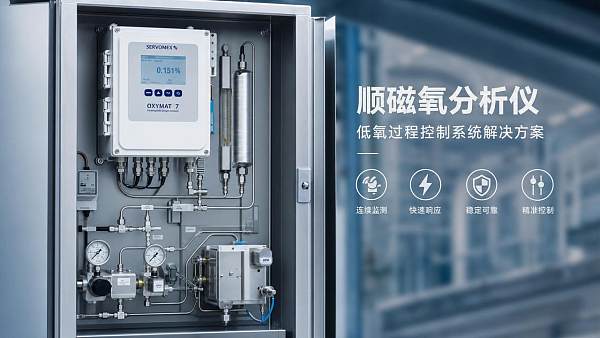
 Paramagnetic Measurement in Low-Oxygen Process ControlParamagnetic measurement enables accurate low-oxygen process control with fast response and stable oxygen analysis. Learn how it improves safety, consistency, and system performance.



























Search Categories
Search Categories
Latest Article
- First Global White Paper on Humanoid Robot Industrial Calibration ReleasedHumanoid robot industrial calibration: First global white paper released—key for sensor makers, integrators & metrology labs. Learn impact & action steps.Posted by:
- FDA Updates IVD Import Guidance: CNAS Calibration Chain RequiredFDA mandates CNAS calibration chain with NIST traceability for IVD instruments from China—act now to avoid U.S. import rejection starting July 1, 2026.Posted by:
- IEC TC65 Releases Cybersecurity Validation Guidance for Industrial InstrumentsIEC TC65 releases cybersecurity validation guidance for industrial instruments—key for exporters, OEMs & integrators targeting EU/NA markets. Act now.Posted by:
Please give us a message
