
Intrinsically Safe Analyzer vs Flameproof Analyzer for Compact Installations


For compact hazardous-area installations, choosing between an intrinsically safe analyzer and a flameproof analyzer directly affects safety, footprint, maintenance, and lifecycle cost. This article compares both protection methods from a technical evaluation perspective, helping engineers identify which solution best fits limited space, operational demands, and compliance requirements without compromising performance.
Understanding the protection concept in compact analyzer installations
In the instrumentation industry, hazardous-area analyzers are widely used for process monitoring, gas detection, emissions compliance, laboratory-grade sampling, and automated control. When installation space is tight, the selection of protection method becomes more than a regulatory exercise. It influences enclosure size, cable routing, purge requirements, heat management, service access, and even the skill level needed for field maintenance. For technical evaluators, the decision between an intrinsically safe analyzer and a flameproof analyzer should therefore be based on the complete operating context rather than on enclosure rating alone.
An intrinsically safe analyzer is designed so that the electrical energy available in the circuit remains below the level that could ignite a hazardous atmosphere, even under specified fault conditions. A flameproof analyzer, by contrast, allows ignition to occur inside a robust enclosure but prevents the flame from propagating to the surrounding atmosphere. Both methods are recognized in industrial standards and can be valid for chemical plants, oil and gas skids, power facilities, environmental monitoring stations, and compact process modules. The practical difference appears when engineers need to fit the analyzer into a very limited installation envelope.
Why this comparison matters across the instrumentation sector
The instrumentation sector supports industrial modernization through precise measurement, automated response, and reliable process data. As plants move toward distributed sensing, modular skids, digitalization, and edge monitoring, analyzers are increasingly installed closer to the process. This trend improves response time and reduces sample transport lag, but it also places equipment in classified areas where space is constrained and maintenance windows are short. Under these conditions, the protection concept has a direct effect on project efficiency.
Technical assessment teams are also expected to balance several goals at once: compliance with IECEx or ATEX-related requirements, safe operation in explosive atmospheres, manageable total cost of ownership, and compatibility with the plant’s maintenance philosophy. In many cases, the debate is not about which method is universally safer, but which one aligns better with the analyzer type, the available utilities, and the physical restrictions of the installation site.
Core differences between an intrinsically safe analyzer and a flameproof analyzer
From a technical evaluation standpoint, the key distinction lies in how ignition risk is controlled. An intrinsically safe analyzer limits voltage, current, stored energy, and surface behavior within the protected circuit. This often supports simpler access during service, because live maintenance may be possible under the applicable rules and documentation. A flameproof analyzer instead relies on mechanical containment, using heavy-duty enclosure construction, flame paths, certified glands, and strict closing integrity to ensure that any internal explosion cannot ignite the surrounding atmosphere.
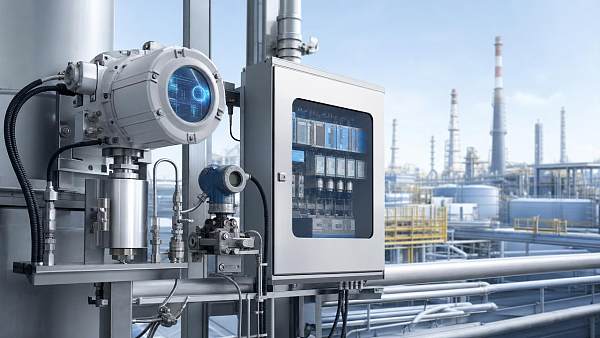
For compact installations, that difference often translates into very practical consequences. Intrinsically safe systems can offer lighter assemblies, lower thermal mass, and more flexible integration with remote sensors or low-power electronics. Flameproof systems may better accommodate higher-power components, but they usually require stronger mechanical support, more clearance for opening covers, and closer attention to enclosure temperature rise. In small cabinets, skids, analyzer shelters, or wall-mounted frames, these factors can quickly become decisive.
The table above should not be used as a universal rulebook, because analyzer architecture matters. Some technologies naturally favor low-energy circuits and distributed electronics, making the intrinsically safe analyzer route more attractive. Others involve heaters, pumps, high-intensity optical components, or power-demanding sample conditioning devices that are harder to implement within intrinsic safety limits.

Where each option delivers practical value
In compact installations, the value of an intrinsically safe analyzer usually appears in reduced bulk and improved maintainability. This is especially relevant for offshore modules, analyzer panels mounted near process lines, environmental monitoring points with limited cabinet volume, and distributed industrial automation systems where every cable entry and every millimeter of access space matters. Lower-energy design can also simplify thermal management, which is important in sealed or hot ambient environments.
Flameproof analyzers tend to deliver stronger value where internal power requirements are higher, where the analyzer technology cannot practically be energy-limited, or where the site already has an established flameproof maintenance culture. In some brownfield facilities, standardization across installed equipment can make a flameproof design easier to approve, stock, and service, even if it is not the smallest option. Therefore, the better choice is often the one that reduces system-level risk rather than only component-level complexity.
Typical compact-installation scenarios
Technical evaluators can benefit from looking at analyzer selection by application category instead of by protection method alone. In the broader instrumentation industry, compact hazardous-area deployments usually fall into several recognizable patterns.
Technical factors that should drive the evaluation
A sound decision should begin with the analyzer function itself. Evaluate sensor principle, required response time, calibration approach, sample system complexity, and total power draw. If the device can realistically be built around low-energy electronics and separated interfaces, an intrinsically safe analyzer may support a cleaner compact design. If the analyzer depends on heated chambers, lamps, motors, or other energy-intensive elements, flameproof construction may be more technically realistic.
Next, review the site classification and installation geometry. Compactness is not just about outer dimensions. Engineers should verify door swing, cover removal clearance, gland orientation, bending radius for armored cable, accessibility for calibration gas connection, and whether technicians can safely perform periodic checks. A small footprint on a drawing can still become a poor field solution if service access is obstructed.
Environmental conditions also matter. High ambient temperature, vibration, salt spray, washdown exposure, and dust accumulation can affect enclosure performance and long-term reliability. In some cases, the mass and sealing robustness of flameproof equipment can be beneficial. In others, the lower heat generation and easier modularity of an intrinsically safe analyzer may improve stability and reduce enclosure stress.
Maintenance, diagnostics, and lifecycle implications
For technical assessment personnel, maintenance strategy is often the hidden cost driver. An analyzer is rarely judged only by day-one compliance. It must also remain inspectable, calibratable, and repairable over years of operation. An intrinsically safe analyzer can provide lifecycle advantages where rapid diagnostics, signal verification, and modular replacement are needed. Because the protection approach is built around energy limitation, field handling can be less disruptive when all rules and documentation are followed correctly.
Flameproof analyzers may involve more procedural control during opening, reassembly, and inspection of flame paths. This is not necessarily a disadvantage if the plant already operates a disciplined shutdown-based maintenance model. However, in highly compact installations where every intervention is physically awkward, the cumulative burden of heavier covers, tighter access, and stricter opening controls can increase downtime and labor demands.
Compliance and engineering documentation considerations
No comparison is complete without considering the quality of certification and engineering documentation. For an intrinsically safe analyzer, loop calculations, entity parameters, barrier selection, grounding practice, and wiring segregation must be clearly documented. The apparent simplicity of a compact device can be misleading if the supporting intrinsic safety design is poorly controlled. For flameproof analyzers, the documentation focus shifts toward enclosure certification details, temperature class, cable entry compliance, flame path condition, and mechanical installation instructions.
Technical evaluators should request complete supporting data early in the review cycle. This includes hazardous-area certificates, installation drawings, maintenance procedures, spare-part limitations, and any restrictions on field modifications. In compact projects, late discovery of clearance or cable-entry issues can force redesign and erase the perceived benefit of the original equipment choice.
Practical selection guidance for technical evaluation teams
A practical way to choose is to rank the project around five decision drivers: available space, analyzer power demand, maintenance philosophy, retrofit compatibility, and environmental stress. If space is severely constrained and the measurement technology supports low-energy implementation, an intrinsically safe analyzer often deserves priority evaluation. If power demand is inherently high or the site strongly favors existing flameproof practice, a flameproof analyzer may remain the more robust option.
It is also wise to assess the complete analyzer package rather than only the certified core unit. Sample conditioning hardware, junction boxes, transmitters, display modules, and local alarms may consume more space and maintenance effort than the analyzer body itself. The best compact solution is the one that works as an integrated system in the actual plant environment.
Final perspective
For compact hazardous-area installations, the choice between an intrinsically safe analyzer and a flameproof analyzer should be made through a balanced engineering lens. Intrinsic safety often brings advantages in footprint, serviceability, and low-energy system integration, while flameproof construction can better support analyzer designs with higher internal energy or established site standardization. Neither method is automatically superior in every case.
For technical evaluation teams in the instrumentation industry, the most reliable path is to match protection philosophy with measurement technology, physical access constraints, maintenance practice, and lifecycle goals. A disciplined review of these factors will lead to a safer, more maintainable, and more space-efficient analyzer installation. If you are assessing a new hazardous-area monitoring point or upgrading a compact skid, begin by mapping the real installation constraints first, then test whether an intrinsically safe analyzer or a flameproof design better supports long-term operational performance.
Recommended for You
 Guangdong Launches 3-Year Service Trade Plan to Boost Instrument Exports via AI and HarmonyOSGuangdong's 3-year service trade plan boosts instrument exports via AI optimization & HarmonyOS—key for ASEAN/Latin America market access. Act now.
 China-Pakistan MOU Opens Faster Certification Path for Instruments in South AsiaChina-Pakistan MOU accelerates instrument certification in South Asia—faster CCC acceptance, mutual lab recognition & Islamabad testing hub for pressure gauges, flow meters, environmental monitors.
 Gold Futures Surge 1.1%; Overseas Orders for Precious Metals Analyzers Rise 35%Gold futures surge 1.1% — driving 35% rise in overseas orders for precious metals analyzers like XRF & ICP-MS. Discover key market impacts & compliance insights.
 《中华人民共和国矿产资源法实施条例》6月15日施行,矿产分析仪出口标准升级矿产分析仪出口标准升级!《中华人民共和国矿产资源法实施条例》6月15日正式施行,助力企业合规出海、抢占全球矿产检测新机遇。
 特朗普称美伊‘基本谈成’霍尔木兹通航协议,能源监测设备出口波动预警Energy monitoring equipment export volatility warning amid Trump’s 'nearly finalized' US-Iran Strait of Hormuz navigation deal—key insights for exporters and energy sector stakeholders.
,国产存储测试设备订单窗口打开") 长鑫科技科创板IPO上会(5月27日),国产存储测试设备订单窗口打开Changxin Technology's STAR Market IPO on May 27 opens a key window for domestic memory testing equipment orders—discover growth opportunities now!
长鑫科技科创板IPO上会(5月27日),国产存储测试设备订单窗口打开Changxin Technology's STAR Market IPO on May 27 opens a key window for domestic memory testing equipment orders—discover growth opportunities now! 墨西哥拟对中国轻型车及零部件加征关税至50%,车载检测设备出口承压Mexican tariff hike to 50% on Chinese light vehicles & parts pressures exports of automotive testing equipment—key insights and mitigation strategies.
 美SEC紧急叫停‘代币化美股’计划,全球AI算力设备出口融资环境趋稳AI算力设备出口融资环境趋稳!美SEC紧急叫停‘代币化美股’计划,释放监管明确信号,利好全球合规科技投融资布局。速看深度解析。
 EU Industrial Accelerator Act Enforces 70% Local Sourcing for InstrumentsEU Industrial Accelerator Act enforces 70% local sourcing for instruments—key implications for exporters, suppliers & integrators. Act now.
 China Imposes Full Export Ban on Dual-Use Items to Japanese Military End UsersChina's dual-use export ban to Japanese military users takes effect Jan 6, 2026—impacting rare earth, semiconductor & precision manufacturing supply chains. Act now.
 Where C3H8 Concentration Analyzers Fit in 2026 Industrial Emissions MonitoringC3H8 concentration analyzer solutions are reshaping 2026 industrial emissions monitoring with better compliance, safer propane control, and smarter efficiency insights. Learn where they fit.
 B2H6 Concentration Analyzer Import and Export Updates for 2026 Compliance PlanningB2H6 concentration analyzer import and export updates for 2026: explore compliance risks, documentation priorities, and planning tips to reduce delays and support smarter cross-border decisions.
 GeH4 Concentration Analyzer Safety Risks and Detection Limits in Semiconductor UseGeH4 concentration analyzer safety risks, alarm strategy, and detection limits for semiconductor use. Learn how to reduce exposure risk, improve process stability, and choose the right monitoring solution.
 C2H4 Concentration Analyzer Price Trends in 2026: What Is Driving Cost ChangesC2H4 concentration analyzer price trends in 2026 explained: discover key cost drivers, procurement risks, and smart buying tips to balance budget, compliance, and long-term value.
 How to Compare C2H2 Concentration Analyzer Accuracy in Industrial Gas MonitoringC2H2 concentration analyzer accuracy matters beyond the datasheet. Learn how to compare drift, calibration, interference, and field reliability for safer industrial gas monitoring.
![]() SiH4 Concentration Analyzer Import Rules to Watch in 2026SiH4 concentration analyzer import rules are tightening in 2026. Learn the key documents, compliance checks, and procurement tips to avoid delays and speed project delivery.
SiH4 Concentration Analyzer Import Rules to Watch in 2026SiH4 concentration analyzer import rules are tightening in 2026. Learn the key documents, compliance checks, and procurement tips to avoid delays and speed project delivery. HF Concentration Analyzer Demand Shifts Across Key IndustriesHF concentration analyzer demand is shifting across chemical, refining, environmental, and advanced manufacturing sectors—learn what drives safer control, compliance, and precision upgrades.
 Common HCN Concentration Analyzer Mistakes in Daily OperationHCN concentration analyzer daily mistakes can quietly damage accuracy and uptime. Learn common errors, practical checks, and smart operating tips to improve reliability.
 PH3 Concentration Analyzer Price Trends in 2026PH3 concentration analyzer price trends in 2026 reveal what really drives cost, compliance, and performance. Explore key buying factors to compare quotes smarter and reduce total ownership risk.
 How to Choose an AsH3 Concentration Analyzer for Trace Gas SafetyAsH3 concentration analyzer selection starts with the right application context. Learn how to compare response, interference, integration, and lifecycle fit for safer trace gas monitoring.
 Released") China's Business Environment Report (2026) ReleasedChina's Business Environment Report (2026) reveals 92% digital CMA/CNAS coverage—cutting export test report time to 15 days. Boost CE, UKCA & UL certification for pressure gauges, thermostats & analyzers.
China's Business Environment Report (2026) ReleasedChina's Business Environment Report (2026) reveals 92% digital CMA/CNAS coverage—cutting export test report time to 15 days. Boost CE, UKCA & UL certification for pressure gauges, thermostats & analyzers. US MMA Tank Incident Triggers Regional Safety UpgradesUS MMA tank incident sparks urgent demand for VOCs monitoring, toxic gas modeling & intrinsically safe transmitters across LATAM and SEA.
 NDRC Expands Energy-Saving and Carbon-Reduction Oversight to Dyeing, Chemical Fibers, and PapermakingNDRC expands energy-saving & carbon-reduction oversight to dyeing, chemical fibers, and papermaking—boosting demand for COD/NH₃-N analyzers, VOCs monitors, and CEMS systems.
 MIIT Sets 2026 Energy-Saving Inspection Targets for High-Energy ChemicalsMIIT Sets 2026 Energy-Saving Inspection Targets for High-Energy Chemicals—urgent demand surges for certified pH meters, gas analyzers & explosion-proof controllers.
 MOFCOM: FDI in China Down 10.3% Jan–Apr 2026, but Manufacturing Up 12.1%FDI in China fell 10.3% Jan–Apr 2026—but manufacturing FDI surged 12.1%, led by high-tech sectors. Discover what this means for precision metrology, sensors & calibration providers.
 PBOC Conducts 600-Billion-Yuan MLF Operation, Boosting RMB Stability for Testing Equipment ExportsPBOC's 600-billion-yuan MLF operation boosts RMB stability—key for NDT equipment exporters using LC/DA terms. Reduce FX risk, optimize hedging & improve cash flow planning now.
 EU Steel Strategy Upgrade: CBAM Expansion to Machinery & InstrumentsEU Steel Strategy Upgrade expands CBAM to machinery & instruments (HS 84/90) — LCA data mandatory from 1 July 2026. Act now to avoid delays & ensure compliance.
 Global EV Energy Consumption Standard to Take Effect Oct 1, 2026Global EV Energy Consumption Standard (GTR No. 22) takes effect Oct 1, 2026 — learn how it reshapes battery testing, certification & supply chains worldwide.
 WTO Report Shows Strong Global Trade, Easing Export Pressure for Industrial Monitoring DevicesIndustrial monitoring devices exporters benefit as WTO reports 4.2% global trade growth—easing export pressure, improving delivery predictability & cash flow.
 South Korea MFDS Revises Food Contact Materials StandardsSouth Korea MFDS revises food contact materials standards: new nickel/chromium migration limits & NIAS verification—critical for lab instrument exporters and compliance providers.
 Brazil to Eliminate Import Duties on Cross-Border E-Commerce Orders Under USD 50Brazil to eliminate import duties on cross-border e-commerce orders under USD 50—key for portable testing instruments exporters targeting Mercado Livre & DIY buyers.
 New AI Agent Guidelines Impact Smart Inspection Device ExportsAI Agent Guidelines impact smart inspection device exports—learn how new China AI safety rules affect EU, US & Middle East market access.





Search Categories
Search Categories
Latest Article
- Guangdong Launches 3-Year Service Trade Plan to Boost Instrument Exports via AI and HarmonyOSGuangdong's 3-year service trade plan boosts instrument exports via AI optimization & HarmonyOS—key for ASEAN/Latin America market access. Act now.Posted by:
- China-Pakistan MOU Opens Faster Certification Path for Instruments in South AsiaChina-Pakistan MOU accelerates instrument certification in South Asia—faster CCC acceptance, mutual lab recognition & Islamabad testing hub for pressure gauges, flow meters, environmental monitors.Posted by:
- Gold Futures Surge 1.1%; Overseas Orders for Precious Metals Analyzers Rise 35%Gold futures surge 1.1% — driving 35% rise in overseas orders for precious metals analyzers like XRF & ICP-MS. Discover key market impacts & compliance insights.Posted by:
Please give us a message
