
Portable gas detectors: when convenience starts hurting uptime


Portable gas detectors seem practical, but in many operations they create gaps in visibility, slower response, and hidden maintenance costs that hurt uptime. For teams comparing portable gas with fixed gas, online gas, and continuous gas solutions, the real question is not convenience alone, but measurement reliability across process gas, emission gas, and broader multi gas analysis needs.
That question matters across industrial manufacturing, power generation, environmental monitoring, laboratories, construction engineering, utilities, and automated process lines. Operators want fast readings. Safety managers want dependable alarms. Procurement teams want lower lifecycle cost. Decision-makers want fewer shutdowns, clearer compliance records, and better visibility into what is happening 24/7 rather than only when someone walks by with a handheld unit.
In instrumentation-heavy environments, gas detection is not just a safety purchase. It affects maintenance planning, production continuity, environmental reporting, contractor control, and incident response. The core issue is whether gas measurement happens continuously at the point of risk, or intermittently according to shifts, routes, and human availability.
This article looks at where portable gas detectors still make sense, where they begin to undermine uptime, and how to evaluate fixed gas, online gas, and continuous gas monitoring solutions for real operating conditions. It is written for researchers, operators, buyers, distributors, project managers, safety teams, quality personnel, financial approvers, and business leaders who need practical selection criteria rather than generic product claims.
Why portable gas detection often creates blind spots
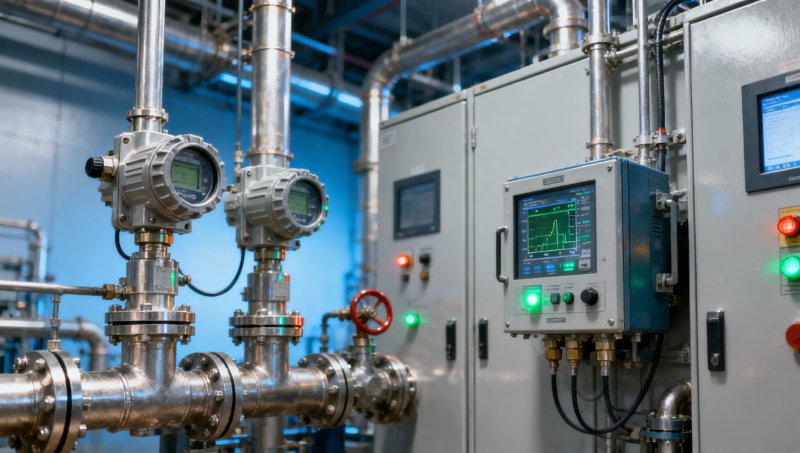
Portable gas detectors are designed for mobility, task-based checks, confined space entry, emergency response, and temporary surveys. In those roles, they are valuable. The problem begins when a mobile instrument is expected to do the work of a continuous monitoring system. A detector carried once every 2 hours does not protect the 118 minutes in between. If a leak occurs in 30 seconds, the convenience of portability becomes operational exposure.
This gap is especially serious in sites with process gas variation, intermittent venting, or rotating personnel. A worker may check one zone at 08:00, another at 08:20, and return at 10:00. During that period, gas concentration can rise, disperse, stratify, or collect in low areas. For toxic gases, oxygen deficiency, or combustible mixtures, missing even a short event can mean delayed evacuation, equipment damage, or production interruption.
Portable gas programs also depend heavily on human discipline. Bump tests, calibration intervals, battery charging, docking records, sensor replacement, route consistency, and alarm acknowledgement all require daily or weekly execution. In many facilities, the burden spreads across 3 to 6 people per shift. If just one step is skipped, measurement confidence drops quickly.
Another hidden weakness is data continuity. Handheld readings are often logged manually or uploaded only after a shift. That means safety managers and maintenance supervisors do not always get real-time visibility into trend changes. A continuous gas system can alarm in seconds and archive data every few seconds or minutes. A portable program may only provide snapshots, which is rarely enough for root-cause analysis or process optimization.
Typical situations where portability becomes a limitation
- Areas with 24/7 operation where process gas concentration can change outside inspection rounds.
- Emission points that need trend records for environmental review over 8, 12, or 24-hour periods.
- Battery rooms, compressor skids, boiler houses, solvent zones, and chemical dosing areas where a leak can escalate within minutes.
- Sites with multiple buildings or long pipe runs where one technician cannot physically cover all points with reliable frequency.
Portable vs continuous monitoring in uptime terms
The table below summarizes why portable gas detectors can appear cost-effective at purchase, yet become more expensive when uptime, labor, and alarm latency are included in the evaluation.
The key conclusion is simple: portability solves movement, not continuity. When a gas risk is permanent, recurring, or process-linked, the instrument strategy should match that risk profile. Otherwise, plants pay twice: once for the device and again through delayed response, manual workload, and unplanned downtime.
How fixed gas, online gas, and continuous gas solutions improve reliability
Fixed gas detection and online gas analysis are not the same thing, but they often work together. A fixed gas detector is usually installed at a known hazard point to detect combustible, toxic, or oxygen-related risks continuously. An online gas analyzer may sample process gas or emission gas through a conditioning system for more stable, traceable measurement. In both cases, the operating principle is the same: do not wait for a person to arrive before a gas event becomes visible.
This matters in automation and digital transformation projects. Modern facilities increasingly connect gas signals to PLC, DCS, SCADA, or building management systems. That allows alarm escalation, shutdown logic, ventilation control, and event logging. Instead of relying on a worker hearing a handheld alarm in a noisy area, the site can trigger a layered response in 3 steps: local alert, remote notification, and process interlock.
Continuous gas monitoring also supports trend analysis. A fixed detector might reveal repeated low-level combustible spikes every Monday morning during startup. An online analyzer might show emission gas drift during a 6-hour process window. These patterns are easy to miss with portable checks but highly valuable for maintenance teams trying to reduce nuisance trips, optimize ventilation, or identify valve leakage early.
For multi gas analysis, continuous systems provide better consistency when several parameters must be observed together, such as oxygen plus flammable gas, or hydrogen sulfide plus sulfur dioxide plus process pressure. Once linked to central instrumentation, they create a more complete operational picture rather than isolated readings from different handheld devices.
Where continuous monitoring delivers the most value
The strongest return usually appears in environments where one of four conditions exists: gas risk is always present, the area is hard to access, the event escalation time is short, or reporting history is required. In these conditions, a fixed or online system protects both uptime and accountability.
- Continuous process areas such as furnaces, boiler plants, chemical dosing lines, and compressor stations.
- Environmental monitoring points where emission gas records may need daily, weekly, or monthly review.
- Laboratories and pilot plants where changing gas composition requires stable measurement and trend comparison.
- Remote or unmanned equipment skids where a technician may visit only once per shift or less.
Decision criteria by application type
The table below can help project managers and procurement teams align detector type with application need rather than with purchase habit.
Most sites do not need to eliminate portable gas detectors. They need to stop using them as a substitute for permanent visibility. A hybrid architecture is often the most resilient approach: fixed devices for constant hazards, online analyzers for process or emission measurement, and portable units for entry checks, maintenance work, and personal safety.
The hidden cost of “lower-cost” portable programs
Many buying decisions start with unit price. A portable gas detector may cost less upfront than installing a fixed point with cabling, controller integration, and commissioning. But B2B selection should focus on total cost of ownership over 3 to 5 years. Once calibration gas, bump test stations, spare sensors, charging logistics, manual recordkeeping, lost devices, and labor hours are included, the cost gap often narrows significantly.
There is also the cost of uncertainty. If a portable detector fails a bump test at the start of a shift, work may be delayed. If a unit is left uncharged, a route may be skipped. If one technician is responsible for 20 to 40 checkpoints across a large plant, route completion time alone may absorb 1 to 2 labor hours per round. Multiply that by 2 or 3 rounds per day, and the operational burden becomes visible to finance as well as to safety.
Downtime exposure is often the largest hidden cost. A late alarm can lead to a small process upset becoming a line stop, ventilation event, or emergency intervention. Even without a major incident, recurring false confidence forces maintenance teams into reactive mode. For plants running batch cycles, cleanrooms, utility systems, or power equipment, one unplanned interruption can outweigh the initial savings of a cheaper monitoring approach.
Procurement teams should therefore compare not only purchase price, but also cost per monitored point, cost per year of reliable operation, and cost per avoided shutdown event. These are more useful commercial metrics than headline equipment cost alone.
Lifecycle cost elements that buyers should compare
- Calibration and bump test frequency, often daily checks with monthly or quarterly calibration depending on gas type and site policy.
- Battery replacement or charging management across 10, 20, or 50 portable units.
- Sensor replacement intervals that may vary from 12 to 36 months depending on technology and exposure conditions.
- Record management for audits, incident investigation, contractor control, and permit-to-work compliance.
- Labor time spent walking routes instead of performing preventive maintenance or process optimization.
Practical procurement comparison
The following matrix helps financial approvers and sourcing teams evaluate portable gas and continuous gas strategies on commercial terms that are relevant to uptime.
For many facilities, the best financial answer is phased deployment rather than all-at-once replacement. Start with the 5 to 10 highest-risk permanent points, connect them to existing control architecture, and keep portable gas detectors for mobile work. This reduces capital shock while improving uptime where exposure is greatest.
How to choose the right gas detection architecture for your site
Selection should begin with risk mapping, not product preference. List each measurement point by gas type, expected concentration range, event speed, occupancy pattern, ventilation conditions, and required response action. In instrumentation projects, 4 questions usually define the architecture: Is the gas risk continuous or occasional? Is the point fixed or mobile? Does the signal need to trigger control logic? Is historical data required for process or environmental review?
A practical method is to divide applications into three categories. Category 1 is personal safety and temporary work, where portable gas is essential. Category 2 is fixed hazard monitoring, where fixed gas detection is generally preferred. Category 3 is quality, emission, or process optimization, where online gas analysis often provides better accuracy and more useful trend data. Many sites need all three categories, but each should serve a distinct purpose.
Sensor and installation details also matter. Mounting height should follow gas behavior: heavier-than-air gases are often monitored lower, lighter-than-air gases higher, and breathing-zone toxic monitoring may need application-specific placement. Alarm setpoints, response times, enclosure suitability, sampling method, and maintenance access should be reviewed during design rather than after commissioning.
For project leaders, one of the most common mistakes is underestimating service access. A detector mounted in a difficult position may technically cover the risk, but if calibration takes too long or requires scaffolding, maintenance discipline declines. Good design reduces service time per point and keeps lifecycle cost predictable over 12, 24, and 36-month periods.
A 5-step selection process
- Define the gas risk: combustible, toxic, oxygen depletion, process composition, or emission monitoring.
- Map the event profile: continuous, shift-based, startup-related, batch-related, or emergency-only.
- Choose the monitoring mode: portable, fixed, online, or hybrid based on point stability and response needs.
- Confirm integration needs: local alarm only, central panel, PLC/DCS link, data historian, or cloud visibility.
- Plan maintenance and ownership: who calibrates, how often, what spare parts are needed, and what records must be retained.
Selection mistakes to avoid
- Using one portable detector to cover several fixed risk points spread across a large area.
- Choosing a detector based on purchase price without reviewing calibration workload and sensor life.
- Ignoring data integration when process shutdown logic or audit history is required.
- Treating emission gas, process gas, and personal exposure as the same measurement problem.
A well-matched architecture improves more than safety. It supports production planning, maintenance strategy, environmental accountability, contractor management, and digital operations. In modern instrumentation programs, gas detection should be treated as part of the plant information system, not as a standalone accessory.
Implementation, maintenance, and FAQ for long-term uptime
Once the right architecture is selected, implementation quality determines whether the expected uptime gains are actually realized. Most projects move through 3 stages: site survey and point definition, installation and signal integration, then commissioning with alarm verification and maintenance planning. Depending on project size, this may take 2 to 6 weeks for a focused upgrade or longer for multi-building deployment.
Maintenance planning should be documented before handover. Teams should define inspection frequency, calibration method, spare sensor strategy, alarm testing routine, and data review ownership. For example, a site may run weekly visual checks, monthly functional tests, quarterly calibration reviews, and annual system audits. The exact schedule depends on gas type, sensor technology, environmental severity, and internal policy, but the principle is constant: uptime comes from repeatable service discipline.
Distributors and system integrators can add value here by helping standardize spare parts, training operators, and aligning service records with the broader instrumentation maintenance plan. That is especially useful in organizations with mixed asset bases across factory, laboratory, utility, and environmental monitoring functions. Standardization can reduce training effort and simplify procurement across 2 to 4 sites.
For buyers and decision-makers, the best long-term result usually comes from selecting a scalable solution: one that covers today’s risk points but can also support additional channels, remote access, or new measurement demands later. This avoids replacing the system too early when operations expand or reporting requirements become stricter.
FAQ: common questions from buyers and operators
How do we know when portable gas detectors are no longer enough?
If a gas point needs monitoring between inspections, if alarms must trigger ventilation or shutdown logic, or if data trends are needed over 8 to 24 hours, portable-only coverage is usually not enough. Repeated route checks at the same point are a strong signal that a fixed or online solution should be evaluated.
Is a hybrid solution more expensive to manage?
Not necessarily. A hybrid design often reduces cost by assigning each tool to the right job. Fixed gas detectors cover permanent hazards, online gas analyzers cover process or emission needs, and portable units remain available for task-based work. This prevents overuse of handheld devices and reduces manual rounds over time.
What should procurement compare besides price?
At minimum, compare 6 items: monitoring continuity, integration capability, calibration workload, spare parts strategy, service access, and data retention. These factors often have a bigger effect on real operating cost than initial device price.
How long does deployment usually take?
A small fixed gas upgrade can often be planned and commissioned in 2 to 4 weeks, while a broader online gas or plant-wide system may require 4 to 8 weeks or more depending on cabling, sampling design, control integration, and shutdown windows.
Portable gas detectors still have a clear role in industrial safety and field operations, but they should not be used to cover permanent visibility gaps that require fixed gas, online gas, or continuous gas monitoring. When convenience starts replacing measurement continuity, uptime, traceability, and response speed begin to suffer.
A smarter gas detection strategy aligns technology with risk: portable for mobility, fixed for constant hazard points, and online analysis for process gas and emission gas control. If you are reviewing detector architecture, planning an instrumentation upgrade, or comparing lifecycle costs across multiple sites, now is the right time to map your monitoring points and define a more reliable solution.
Contact us to discuss your application, get a tailored gas detection plan, or learn more about fixed, online, and continuous monitoring solutions that support safer operations and stronger uptime.
Recommended for You
 Brazil INMETRO to Require Portuguese UI and Local Units for Industrial Instruments by 2026Brazil INMETRO mandates Portuguese UI & local units (mbar, kPa, °C) for industrial instruments by Dec 2026—key for exporters, integrators & service providers.
 STMicroelectronics 200mm Line Eases Industrial Sensor Chip ShortageSTMicroelectronics 200mm line eases industrial sensor chip shortage — MCUs & signal-conditioning ICs now ship in 12 weeks. Secure allocation today.
 Southeast Asia Manufacturing Re-shoring Accelerates: Vietnam/Indonesia Industrial Instrument Imports Up 37% YoYSoutheast Asia manufacturing re-shoring accelerates: Vietnam & Indonesia industrial instrument imports up 37% YoY — key insights for suppliers, OEMs & procurement teams.
 First Global White Paper on Humanoid Robot Sensor Calibration ReleasedHumanoid robot sensor calibration: First global white paper released—key for ISO/IEC JWG 23 compliance, export readiness & dynamic torque accuracy. Act now.
 SAMR to Upgrade EV Battery Recycling Standard to MandatorySAMR to upgrade EV battery recycling standard GB/T 34015—202X to mandatory by Dec 2026 — critical for exporters, BMS makers & cert labs.
 Saudi SASO Accelerates AI Energy Efficiency Rules for TransmittersSASO AI energy efficiency rules for transmitters take effect 1 June 2026 — mandatory AI simulation, Saudi climate data, and authorized lab validation required. Act now to avoid export delays.
 IEC 63278:2026 Released for Industrial Instrument CybersecurityIEC 63278:2026 is live — the first global standard mandating cybersecurity verification for industrial instruments. Discover compliance impacts, deadlines, and actionable steps for OT/IT convergence.
 Red Sea Crisis Escalates: Gulf of Aden Navigation Ban Extended to June 15, 2026Red Sea Crisis escalates: Gulf of Aden navigation ban extended to June 15, 2026—disrupting industrial instrumentation shipments to the Middle East with 458% air freight spikes and 12–18 day delays.
 US DOE Updates Efficiency Rules for Industrial SensorsUS DOE updates industrial sensor efficiency rules: AI-driven dynamic calibration required by Sept 2026. Ensure AI-Cal Verified compliance now.
 EU Mandates PEF Carbon Footprint Module for Industrial Instruments from June 2026EU mandates PEF carbon footprint module for industrial instruments from June 2026—key for exporters, OEMs & certifiers. Act now to ensure compliance.
 Explosion-Proof Instruments: Compliance Risks Before You OrderExplosion-proof instruments can trigger delays, failed inspections, and safety risks if compliance is overlooked. Learn what to verify before ordering and make safer, smarter purchasing decisions.
 Gas Quality Monitoring Equipment Import Rules to Watch in 2026Gas quality monitoring equipment import rules for 2026 are tightening. Learn the key compliance, certification, and customs risks distributors must manage to avoid delays and protect margins.
 Emission Control Shelter Demand Shifts Across Industrial ProjectsEmission control shelter demand is rising across industrial projects as buyers seek faster deployment, reliable monitoring, and compliance-ready designs. Explore key evaluation factors.
 Temperature Measurement Instruments: Selection Mistakes That Raise DowntimeTemperature measurement instruments selection mistakes can drive downtime, unstable control, and higher costs. Discover 5 common errors and practical fixes to improve reliability.
 Thermal Conductivity Analyzers: When Are They the Right Choice?Thermal conductivity analyzers are ideal for binary and high-contrast gas mixtures. Learn when they deliver reliable, low-maintenance online monitoring and smarter project value.
 Level Measurement Instruments for Tanks: What Affects ReliabilityLevel measurement instruments reliability depends on media, installation, and diagnostics. Discover what causes tank reading failures and how to improve safety, uptime, and control.
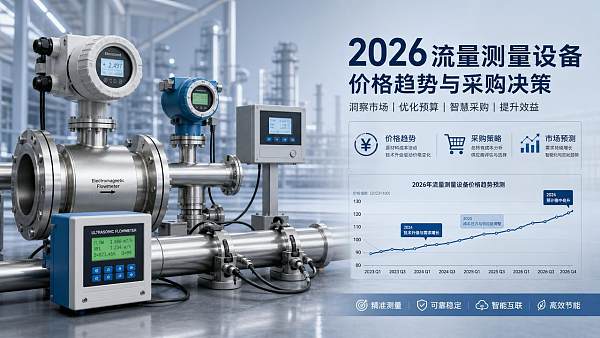
 Flow Measurement Equipment Price Trends in 2026Flow measurement equipment price trends in 2026: learn key cost drivers, budgeting risks, and smart buying strategies to improve ROI and make better procurement decisions.
 Flue Gas Monitoring Equipment: Common Accuracy Issues and FixesFlue gas monitoring equipment accuracy issues can lead to drift, false readings, and compliance risks. Discover common causes, practical fixes, and smarter maintenance tips.
 Process Control Shelter vs Control Room: Key Cost and Deployment DifferencesProcess control shelter vs control room: compare cost, deployment speed, integration, and lifecycle value to choose the smarter solution for industrial automation projects.
 How to Select an Industrial Control Shelter for Harsh Site ConditionsIndustrial control shelter selection for harsh sites: learn how to compare materials, HVAC, safety, and lifecycle cost to protect equipment, reduce downtime, and improve reliability.
 SAMR to Finalize 1,800+ Standards by 2026, Including EV Battery RecyclingSAMR to finalize 1,800+ standards by 2026—including EV battery recycling, hazardous chemical packaging & EMC immunity. Stay ahead of mandatory GB shifts and global export compliance.
 China's Largest Single-Line Large-Tow Carbon Fiber Line Starts OperationChina's largest single-line large-tow carbon fiber line is live—30,000 tons/year capacity, ASME-certified, 22% cheaper & 6-week lead time. Boost your industrial instrumentation supply chain now.
 China Mobile Unveils National Integrated Computing Power NetworkChina Mobile's National Integrated Computing Power Network accelerates AI quality inspection for global manufacturers—cutting model training time by 68% and enabling cross-border industrial AI development.
 World's First Humanoid Robot Industrial Calibration White Paper ReleasedWorld's First Humanoid Robot Industrial Calibration White Paper released—setting new global benchmarks for dynamic sensor calibration in robotics. Discover how ABB, Yaskawa & metrology leaders are reshaping industry trust.
 Red Sea Crisis Escalates: Aden Gulf Ban Extended to June 15Red Sea Crisis escalates: Aden Gulf ban extended to June 15 — disrupting industrial instrumentation trade between China and the Middle East with 452% air freight spikes and 7–12 day delays.
 Saudi SASO Introduces AI-Based Energy Validation for Industrial TransmittersAI-based energy validation for industrial transmitters is now mandatory in Saudi Arabia—learn how SASO’s new AI regulation impacts global exporters, compliance timelines, and supply chains.
 IEC TC65 Releases Cybersecurity Validation Guide for Industrial InstrumentsIEC TC65’s new Cybersecurity Validation Guide for Industrial Instruments mandates SDL certification & firmware signing—key for EU/US market access. Act now to align with GB/T 42278-2026 and avoid export delays.
 EU PEF Carbon Footprint Database Mandatory Access for Industrial InstrumentsEU PEF Carbon Footprint Database mandatory access starts June 2026 for industrial instruments—pressure, temperature & flow meters. Ensure compliance now to avoid EU customs delays and market exclusion.
 Gas Quality Analyzer Shelter Price Trends and Specification Gaps to WatchGas quality analyzer shelter price trends vary with materials, HVAC, safety, integration, and compliance. See key specification gaps before shortlisting suppliers or approving budget.
 Process Measurement Equipment: Key Accuracy Risks in Harsh EnvironmentsProcess measurement equipment in harsh environments can drift before failing. Discover key accuracy risks, warning signs, and practical controls to protect quality, safety, and compliance.
 Industrial Analyzer Shelter Export Factors Affecting Lead Times This YearIndustrial analyzer shelter export lead times vary with sourcing, engineering, compliance, packing, and logistics. Learn the key factors to quote smarter and deliver with confidence.
 What to Check Before Buying a Process Analyzer ShelterProcess analyzer shelter buying guide: learn what to check before purchase, from compliance and HVAC to utilities, durability, and maintenance access.








Search Categories
Search Categories
Latest Article
- Brazil INMETRO to Require Portuguese UI and Local Units for Industrial Instruments by 2026Brazil INMETRO mandates Portuguese UI & local units (mbar, kPa, °C) for industrial instruments by Dec 2026—key for exporters, integrators & service providers.Posted by:
- STMicroelectronics 200mm Line Eases Industrial Sensor Chip ShortageSTMicroelectronics 200mm line eases industrial sensor chip shortage — MCUs & signal-conditioning ICs now ship in 12 weeks. Secure allocation today.Posted by:
- Southeast Asia Manufacturing Re-shoring Accelerates: Vietnam/Indonesia Industrial Instrument Imports Up 37% YoYSoutheast Asia manufacturing re-shoring accelerates: Vietnam & Indonesia industrial instrument imports up 37% YoY — key insights for suppliers, OEMs & procurement teams.Posted by:
Please give us a message
