
SO2 Concentration Analyzer or Portable Testing: Which Delivers Better Control


When process stability, compliance, and operator efficiency are on the line, choosing between an SO2 concentration analyzer and portable testing is more than a technical decision. For users and operators, the right solution affects response speed, data accuracy, and daily control performance. This article compares both approaches to help you understand which option delivers better SO2 monitoring and supports more reliable operation in real working conditions.
Why a checklist-based comparison works better than a general discussion
For operators, the question is rarely “Which technology is more advanced?” The practical question is “Which option gives me better control today, with fewer blind spots, lower risk, and clearer action when SO2 values change?” That is why a checklist approach is more useful than a broad overview. It helps you judge an SO2 concentration analyzer or portable testing by the points that directly affect operation: response time, trend visibility, sampling stability, calibration effort, alarm capability, maintenance load, and fit with the process.
In most industrial and environmental monitoring settings, a permanent SO2 concentration analyzer is designed for continuous data and control, while portable testing is designed for spot checks, troubleshooting, and temporary verification. However, the right answer depends on how often conditions change, how critical compliance is, and how quickly operators must react. The sections below give you a structured way to decide.
First decision checklist: what you should confirm before choosing
Before comparing specifications, operators should confirm a few basic facts about the application. These points determine whether portable testing can realistically support control, or whether a fixed SO2 concentration analyzer is necessary.
- How fast can SO2 levels change during normal operation, startup, shutdown, or upset conditions?
- Do you need continuous compliance records, or only occasional inspection data?
- Is operator response required within minutes, or is delayed review acceptable?
- Will the measurement be used only for reporting, or also for process adjustment and alarm action?
- Is the sampling location stable and accessible, or are there multiple points that require flexible testing?
- What environmental conditions may affect readings, such as dust, humidity, temperature, or corrosive gases?
- How much maintenance time can operators realistically support each week?
If your process requires uninterrupted visibility, trend monitoring, or interlocked response, portable testing alone usually cannot deliver the same level of control as an online SO2 concentration analyzer. If your need is infrequent verification across several locations, portable testing may be efficient and economical.
Core judgment standard: which option gives better control?
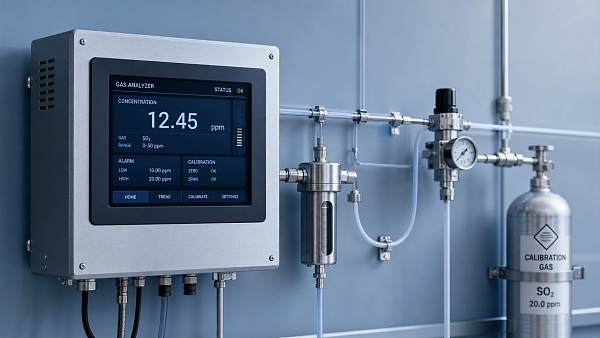
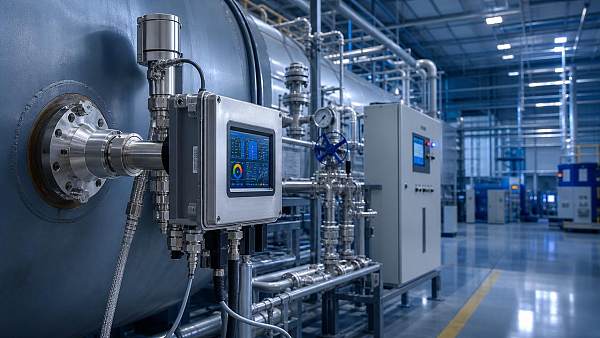
“Better control” means more than measurement accuracy on paper. For operators, it means getting the right reading at the right time, knowing whether the value is rising or falling, and being able to act before limits are exceeded. On that standard, a fixed SO2 concentration analyzer generally performs better in continuous processes because it provides a live signal, supports trending, and can be integrated with alarms or control systems.
Portable testing is still valuable, but its strength is different. It is better for confirmation, route inspection, comparison across points, maintenance support, and temporary checks during commissioning or fault diagnosis. It usually does not provide the same real-time control layer because readings depend on when the operator samples, how consistently the test is performed, and whether process changes occur between tests.
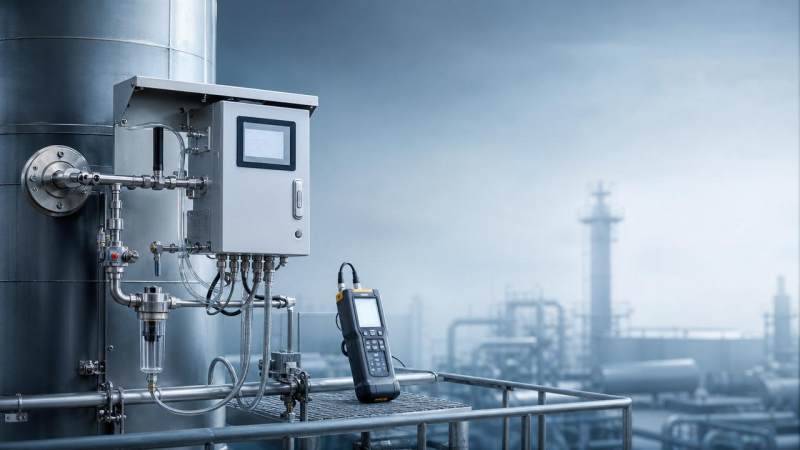
Operational comparison checklist: SO2 concentration analyzer vs portable testing
Use the table below as a practical decision tool. It focuses on what users and operators need to manage daily performance.
Check the process scenario before making the final call
Choose a fixed SO2 concentration analyzer first when these conditions apply
- SO2 concentration affects combustion, emissions, scrubbing efficiency, or product quality in real time.
- Your site must maintain a continuous compliance record or support audit traceability.
- Operators need alarms when concentration exceeds a threshold or deviates from a stable trend.
- Manual testing frequency would be too high to manage safely and consistently.
- The process has unstable phases where periodic checks can easily miss events.
Portable testing is often enough when these conditions apply
- SO2 values are relatively stable and only need occasional confirmation.
- You need to test several locations without installing multiple online points.
- The task is commissioning, maintenance verification, leak investigation, or temporary process review.
- Budget or installation constraints make a full online system impractical in the short term.
For many plants, the best answer is not either-or. A permanent SO2 concentration analyzer handles continuous monitoring at critical points, while portable testing supports verification, backup checks, and field diagnosis.
Most important operator checks for measurement quality
Whether you use an online SO2 concentration analyzer or a portable instrument, measurement quality depends on execution. Operators should prioritize the following checks to avoid false confidence.
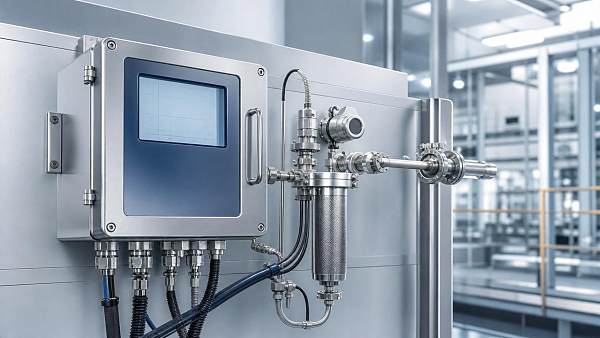
- Sampling integrity: Confirm there are no leaks, blockages, condensation problems, or long delays in the sampling path.
- Calibration status: Check zero and span performance at the required interval, and verify drift trends rather than only pass/fail results.
- Cross-sensitivity: Review whether other gases, moisture, or particulate matter may influence the SO2 reading.
- Response time: Make sure the measured value reflects actual process change fast enough for the intended action.
- Data handling: Confirm that records are stored, traceable, and easy to interpret during shift handover or incident review.
- Maintenance access: Ensure filters, sensors, tubing, and calibration ports can be serviced without disrupting safe operation.
Commonly overlooked risks that reduce control performance
The biggest mistakes are usually not in the purchase decision but in what gets overlooked after installation or during routine use. These issues can make either solution appear better or worse than it really is.
- Confusing accuracy with control value: A portable device may have good accuracy, but if it only captures one reading every few hours, it cannot control a rapidly changing process.
- Ignoring sampling environment: Even a high-quality SO2 concentration analyzer can underperform if the sampling point is poorly selected or conditioning is inadequate.
- Underestimating maintenance: Continuous analyzers reduce manual testing burden, but they still need disciplined preventive maintenance.
- Missing operator training: Portable testing results depend heavily on consistent procedure, purge timing, sensor handling, and recordkeeping.
- Using a single method for every task: A fixed analyzer is not always ideal for route surveys, and portable testing is not ideal for continuous emissions or closed-loop adjustment.
Practical execution advice for users and operators
If the goal is better daily control, users should evaluate the measurement task from an operational workflow perspective, not only from a purchase perspective. Start by listing where SO2 data is actually used: compliance reporting, scrubber adjustment, burner tuning, stack monitoring, process diagnosis, or safety management. Then map the required response speed against the likely variability of the process.
As a rule, if a delayed reading could lead to off-spec operation, avoid relying only on portable testing. In those cases, an SO2 concentration analyzer provides stronger control because it supports continuous visibility and faster correction. If readings are mainly used to confirm stable performance, portable testing can reduce capital cost and give more flexibility across multiple locations.
A good implementation plan often includes three layers: continuous online monitoring at critical points, portable confirmation during rounds or maintenance, and a defined calibration and verification schedule that links both methods. This layered approach improves trust in the data and reduces the chance of unnoticed drift or process excursions.
Quick FAQ for field-level decision making
Is a portable device enough if the measured SO2 level is usually stable?
Possibly, but only if process changes are slow, compliance does not require continuous records, and missing a short-term peak will not create operational or environmental risk.
Does an SO2 concentration analyzer always cost less in the long run?
Not always. It often lowers manual workload and improves control, but total value depends on maintenance resources, installation conditions, and how critical the data is to operation.
Can portable testing replace a fixed analyzer during maintenance?
It can provide temporary coverage for verification or troubleshooting, but it usually cannot fully replace the continuous control function of an online SO2 concentration analyzer.
Final decision guide and next-step action list
If your priority is real-time control, stable trend data, alarm response, and dependable compliance support, a fixed SO2 concentration analyzer usually delivers better control than portable testing. If your priority is flexible spot measurement, route inspection, temporary verification, or limited-budget deployment, portable testing can be the right tool. For many users, the strongest solution is a combination of both.
Before moving forward, prepare a short internal checklist: required measurement range, process variability, number of sampling points, response time target, maintenance capacity, calibration routine, installation conditions, data logging expectations, and budget range. If you need to confirm parameters, system compatibility, service cycle, or application fit, start the discussion with these questions first. That will make it much easier to decide whether an SO2 concentration analyzer, portable testing, or a combined monitoring strategy will give your team the best operational control.
Recommended for You
 Kuwait Bans HCFC Air Conditioners, Boosts IR Camera ExportsKuwait bans HCFC air conditioners—boosting demand for IR cameras, leak detectors & refrigerant analyzers. Discover GCC compliance insights and export opportunities.
 China's IC Exports Surge 78.3% in First Four Months of 2026China's IC exports surge 78.3% in early 2026 — driven by soaring global demand for AI chip test equipment, SMUs, and parametric analyzers. Discover the supply chain shift.
 Chile Enforces Mandatory INN Safety Certification for Industrial Temperature ControllersChile mandates INN safety certification (NCh Elec 4/2025) for industrial temperature controllers starting Aug 1, 2026—act now to avoid shipment delays & market bans.
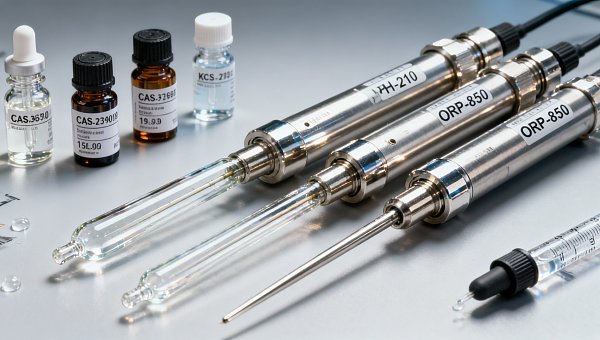
 K-REACH Supply-Shortage Exemption Launches for pH/ORP ElectrodesK-REACH Supply-Shortage Exemption now applies to pH/ORP electrodes—act before June 30, 2026 to avoid customs delays & penalties. Key for exporters & manufacturers.
 4th China International Supply Chain Expo to Focus on Smart Sensing & In-Process InspectionSmart Sensing & In-Process Inspection take center stage at the 4th China International Supply Chain Expo in Beijing, Nov 26–30, 2026 — discover next-gen inspection tech, AI vision modules, and calibrated sensing solutions for global industrial buyers.
 ASTM F2100-26 Medical Mask Standard Takes Effect in USASTM F2100-26 medical mask standard is now in force—driving global demand for biosafety cabinets, particle counters & air velocity calibrators, especially China-made instruments.
 South Africa Enforces SABS Certification for IoT Monitoring DevicesSABS certification now mandatory for IoT monitoring devices entering South Africa via e-commerce—act before 1 June 2026 to avoid customs rejection and ensure market access.
 EU REACH Adds Fluorinated Substances; SVHC Reporting Required for Gas AnalyzersEU REACH now restricts fluorinated substances in gas analyzers—SVHC reporting is mandatory by 30 Nov 2026. Ensure compliance for sensors, membranes & monitoring systems.
 Revised Maritime Code Takes Effect May 1, 2026: Shift in Unclaimed Cargo LiabilityRevised Maritime Code (2026): Shippers now liable for unclaimed cargo—critical for industrial instrument exporters, logistics providers & cross-border supply chains. Act now.
 China Imposes Zero Tariffs on Goods from All African Diplomatic Partners Starting May 1, 2026China’s zero-tariff policy for African instrumentation & automation exports starts May 1, 2026—boosting competitiveness in EPC tenders and market access for exporters.
 Import and Export Shifts in the PPM Gas Analyzer Marketppm gas analyzer market insights: discover how import tariffs, export controls, and compliance shifts impact cost, supply stability, and growth opportunities across key applications.
 Single Gas Analyzer Maintenance Issues That Raise DowntimeSingle gas analyzer maintenance issues can quietly increase downtime. Learn how to spot drift, calibration errors, and sample path faults early to improve uptime and field efficiency.
 Combustion Gas Analyzer Market Trends Shaping 2026 UpgradesCombustion gas analyzer market trends shaping 2026: discover how smarter monitoring, multi-gas accuracy, and digital integration can improve compliance, efficiency, and ROI.
 Corrosive Gas Analyzer Risks That Impact Safety ComplianceCorrosive gas analyzer risks can quietly undermine safety compliance. Learn how drift, sampling failures, and poor maintenance affect accuracy—and how to strengthen monitoring reliability.
 Percent Range Analyzer Applications in Process ControlPercent range analyzer applications improve process control by turning raw signals into clear operating percentages. Discover faster decisions, better alarms, and more stable system performance.
 What Affects the Total Cost of a Dual Gas AnalyzerDual gas analyzer total cost goes beyond purchase price. Learn how sensors, calibration, compliance, integration, and maintenance shape lifecycle value and smarter buying decisions.
 High Temperature Analyzer Selection Mistakes to Avoid in 2026High temperature analyzer selection mistakes can delay projects and raise lifecycle costs. Discover the top 2026 pitfalls and how to choose a safer, smarter solution.
 2026 Price Trends for Multi Gas Analyzer SystemsMulti gas analyzer price trends for 2026: discover key cost drivers, ownership factors, and smart budgeting tips to compare systems, control risk, and choose the right solution.
 PPB Gas Analyzer vs PPM Gas Analyzer: What Changes in Real Useppb gas analyzer vs PPM gas analyzer: learn how sensitivity, calibration, maintenance, and sample handling change in real use to choose the right solution with less risk and cost.
 How to Choose a Trace Gas Analyzer for Low-Level Leak DetectionTrace gas analyzer selection for low-level leak detection: learn how to compare sensitivity, response time, interference control, and integration for safer, faster, more reliable results.
 US-China Trade Talks Agree on Tariff Cuts for Key Test Equipment PartsUS-China tariff cuts on key test equipment parts—like pressure sensor chips & infrared thermal imaging modules—boost margins, cut costs, and strengthen global competitiveness for manufacturers.
 G7 Paris Meeting Focuses on Critical Mineral Supply SecurityCritical mineral supply security takes center stage at the G7 Paris meeting—key for rare-earth sensor exporters. Learn EU compliance impacts & actionable readiness steps.
 Brent Crude Surpasses $106/bbl, Raising Sea Freight Costs for Small Testing Equipment ExportsBrent Crude Surpasses $106/bbl—sea freight costs surge, impacting small testing equipment exporters. Learn how SMEs can adapt pricing, terms & logistics now.
 WTO Forecasts 1.9% Global Goods Trade Growth in 2026 Amid Supply Chain ShorteningWTO forecasts 1.9% global goods trade growth in 2026—sparking nearshoring demand for testing equipment, calibration services & OTA-ready solutions in ASEAN, Middle East & Mexico.
 UK-China Export Control Working Group Holds Second Meeting in LondonUK-China Export Control Working Group: Key updates on dual-use items—laser interferometers, quantum sensors & oscilloscopes. Learn compliance implications for exporters now.
 Japan's 10Y Yield Drop to 2.745% Lifts Yen, Raising China-Made Testing Equipment CostsJapan's 10Y yield drop to 2.745% lifts yen, raising costs for China-made testing equipment — explore FX impacts, procurement shifts & strategic responses.
 KOSPI 200 Futures Circuit Breaker Triggered, Impacting Industrial Automation Instrument Export TimelinesKOSPI 200 futures circuit breaker triggered — impact on PLC modules, transmitters & fieldbus instrument exports to Korea. Urgent timeline insights inside.
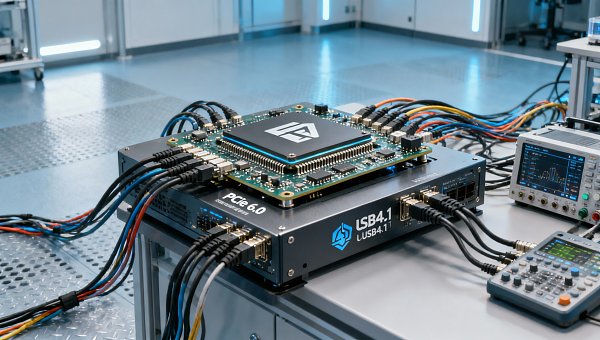
 South Korea’s Chip Exports Surge 202% in May 2026 Amid AI Test Equipment DemandAI test equipment demand surges as South Korea’s chip exports jump 202% in May 2026 — PCIe 6.0 & USB4.1 validation tools see sharp global procurement rise.
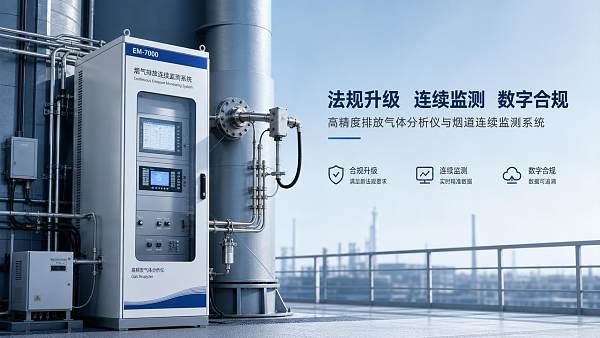
 Emission Gas Analyzer News in 2026: Regulatory Shifts Affecting DemandEmission gas analyzer demand is changing fast in 2026 as new regulations tighten limits, expand continuous monitoring, and raise data compliance standards. Explore key trends shaping smarter buying decisions.
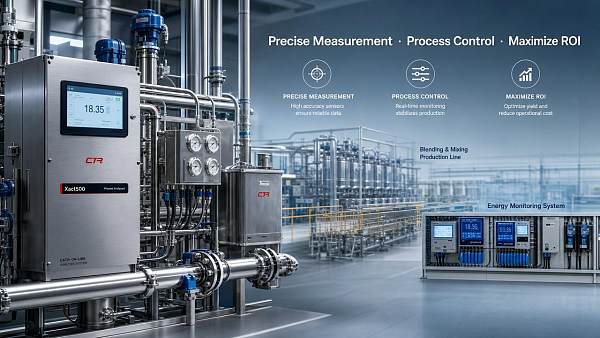
 When a High Accuracy Analyzer Delivers Real ROI in Process ControlHigh accuracy analyzer ROI starts with better process control. Learn where tighter measurements cut waste, improve stability, reduce compliance risk, and deliver measurable operational savings.
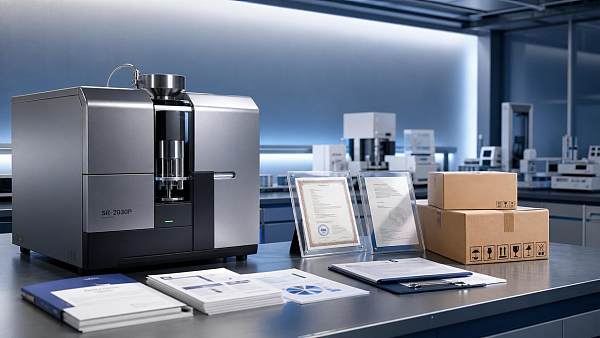
 SR-2030P Analyzer Import Updates in 2026: Compliance Points to ReviewSR-2030P analyzer import updates for 2026: review classification, certification, customs documents, and market access risks to reduce delays, control costs, and source with confidence.
 Industrial Oxygen Analyzer Price Trends in 2026: Cost Drivers to WatchIndustrial oxygen analyzer price trends in 2026 explained: compare sensor, compliance, installation, and maintenance cost drivers to make smarter, lower-risk buying decisions.
Search Categories
Search Categories
Latest Article
- Kuwait Bans HCFC Air Conditioners, Boosts IR Camera ExportsKuwait bans HCFC air conditioners—boosting demand for IR cameras, leak detectors & refrigerant analyzers. Discover GCC compliance insights and export opportunities.Posted by:
- China's IC Exports Surge 78.3% in First Four Months of 2026China's IC exports surge 78.3% in early 2026 — driven by soaring global demand for AI chip test equipment, SMUs, and parametric analyzers. Discover the supply chain shift.Posted by:
- Chile Enforces Mandatory INN Safety Certification for Industrial Temperature ControllersChile mandates INN safety certification (NCh Elec 4/2025) for industrial temperature controllers starting Aug 1, 2026—act now to avoid shipment delays & market bans.Posted by:
Please give us a message
