
Why Corrosion Resistant Analyzers Still Fail in Coastal Plants


Many coastal plants install a corrosion resistant analyzer expecting years of stable performance. Yet in real operating conditions, failure still happens. The main reason is simple: corrosion resistance alone does not solve the combined stress of salt spray, condensation, enclosure breathing, vibration, cable entry weakness, maintenance error, and hazardous-area compliance. In other words, a unit labeled as a rugged gas analyzer, harsh environment analyzer, IECEx analyzer, ATEX analyzer, zone 1 analyzer, zone 2 analyzer, or intrinsically safe analyzer may still fail if the full installation environment, operating practice, and protection concept were not matched correctly from the start.
For operators, engineers, procurement teams, safety managers, and decision-makers, the key question is not whether an analyzer is “corrosion resistant” on paper. The real question is whether the complete analyzer system can remain accurate, safe, serviceable, and cost-effective in a coastal plant over time. This article explains why failures still occur, what readers should evaluate before buying or approving equipment, and how to reduce lifecycle risk in extreme condition analyzer applications.
Why “corrosion resistant” is often not enough in coastal plants
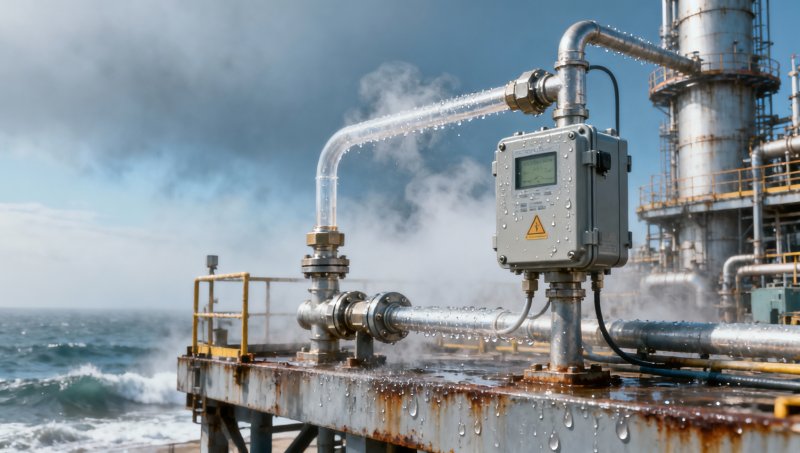
In coastal facilities, analyzers face more than occasional exposure to humid air. They are often subjected to a continuous mix of chloride-rich salt mist, rapid temperature change, persistent condensation, aggressive washdown, structural vibration, UV exposure, and hazardous-area constraints. These factors do not act separately. They overlap, accelerate each other, and create hidden failure paths.
That is why a corrosion resistant analyzer can still fail in a short period. The enclosure may resist rust, but cable glands may not. External surfaces may survive, but internal electronics may suffer from condensation. The analyzer body may be strong, but sample lines, fittings, terminals, displays, connectors, heaters, purge systems, or seals may degrade first. In many cases, the weak point is not the analyzer’s headline material specification but the complete system design.
For buyers and technical evaluators, this means one practical lesson: never judge suitability only by stainless steel grade, coating claims, or a hazardous-area label. Coastal reliability depends on the full chain of design, installation, operation, and maintenance.
What actually causes failure: the most common weak points
The most common failure causes in coastal plants are usually predictable. They are just underestimated during specification and purchase.
1. Salt enters where the datasheet does not emphasize
Many failures begin at overlooked locations: hinges, fasteners, cable entries, display windows, door seals, vents, tubing connections, sensor caps, terminal blocks, and grounding points. Even when the main enclosure is corrosion resistant, these smaller components may not be equally protected.
2. Condensation damages electronics before corrosion is visible
In coastal applications, daytime heating and nighttime cooling cause air exchange inside enclosures. Moisture condenses on boards, connectors, and terminals. This can lead to drift, intermittent faults, short circuits, and false alarms long before visible external damage appears.
3. Hazardous-area selection is correct, but environmental suitability is not
A zone 1 analyzer or zone 2 analyzer may meet the required area classification, but that does not automatically mean it is optimized for a marine or coastal setting. IECEx analyzer and ATEX analyzer certifications confirm compliance for explosion protection concepts, not total immunity to salt, water ingress, thermal cycling, or installation abuse.
4. Sample systems fail before the analyzer core fails
In many gas analyzer deployments, the analyzer itself is blamed when the real problem lies in the sample handling system. Corroded regulators, blocked filters, degraded tubing, leaking fittings, wet sample intrusion, and poorly placed drains can all reduce measurement performance. In extreme condition analyzer service, sample conditioning quality is often just as important as the analyzer model.
5. Vibration and support issues create progressive damage
Coastal plants with rotating machinery, compressor skids, loading facilities, and exposed structures often introduce vibration. Over time, vibration loosens terminals, damages solder joints, weakens tube supports, and creates micro-leaks. A harsh environment analyzer that appears rugged in construction may still underperform if mounted on unstable supports or near repeated impact and resonance sources.
6. Maintenance access is poor, so small issues become major failures
If calibration ports are hard to reach, if doors are difficult to open safely, or if spare parts are not standardized, operators may defer inspection. In corrosive coastal conditions, delay is expensive. Minor seal wear or connector oxidation can quickly become a shutdown event.
Why certifications and labels do not guarantee long-term reliability
This is one of the most important points for procurement teams and non-technical approvers. Certifications matter, but they answer only part of the risk question.
An IECEx analyzer or ATEX analyzer demonstrates that the equipment meets defined explosion protection requirements under specified conditions. An intrinsically safe analyzer addresses ignition risk by limiting electrical energy. A zone 1 analyzer or zone 2 analyzer indicates suitability for a classified hazardous area. These are essential compliance factors, but they are not the same as proving long-term durability in salt-laden air and high humidity.
Similarly, terms such as rugged gas analyzer, corrosion resistant analyzer, or harsh environment analyzer are useful starting points, but they should trigger deeper questions:
- What materials are used for exposed fasteners, glands, brackets, and fittings?
- How is condensation controlled inside the enclosure?
- What is the actual ingress protection performance in real maintenance conditions?
- How does the analyzer handle frequent door opening in humid air?
- What are the limitations of the display, keypad, sensor modules, and connectors in coastal service?
- What preventive maintenance interval is realistic, not theoretical?
For decision-makers, the takeaway is clear: certifications reduce compliance risk, but they do not remove lifecycle reliability risk.
How different stakeholders should evaluate analyzer suitability
Because the target readers include operators, technical evaluators, procurement teams, project managers, safety personnel, distributors, and financial approvers, the evaluation process should not be one-dimensional. Each group has a different risk lens.
For operators and maintenance teams
Focus on daily usability. Ask whether calibration, draining, filter replacement, cleaning, and inspection can be done safely and quickly. If routine work is difficult, reliability will suffer because maintenance quality drops.
For technical evaluators and quality or safety managers
Check the complete protection concept. Review enclosure design, material compatibility, sample system layout, hazardous-area compliance, thermal management, anti-condensation strategy, and mounting method. Ask where the first likely failure point will be.
For procurement and commercial teams
Do not compare products only by purchase price and basic specification. Compare total cost of ownership: spare part frequency, calibration burden, expected service life, downtime risk, and support responsiveness. A lower-cost analyzer that fails early in a coastal plant is often the more expensive option.
For project managers and engineering leaders
Verify installation assumptions. Many analyzer failures come from site realities not reflected in the package design: exposure angle to sea wind, shelter limitations, insufficient sun protection, poor drainage, wrong cable routing, or inaccessible maintenance space.
For business leaders and financial approvers
The critical question is business continuity. If analyzer failure can stop production, delay export, create safety exposure, trigger environmental non-compliance, or increase maintenance labor, then durability and serviceability are strategic investment factors, not minor technical details.
What to check before buying a corrosion resistant analyzer for coastal service
Readers looking for a practical buying framework should focus on these points.
Material consistency, not just enclosure material
Confirm whether all exposed components are designed for the same corrosion environment. One weak hardware choice can compromise an otherwise strong unit.
Moisture and condensation management
Ask how the system prevents internal condensation. This may involve heaters, breathers, purge design, insulation, or enclosure configuration. In coastal plants, moisture control is often more decisive than basic corrosion resistance.
Sample system design
Review filters, separators, tubing materials, drain arrangement, regulator selection, and sheltering. If the analyzer is excellent but the sample path is unstable, the measurement will still fail.
Hazardous-area fit
Check whether the chosen zone 1 analyzer, zone 2 analyzer, IECEx analyzer, ATEX analyzer, or intrinsically safe analyzer also matches environmental and maintenance realities. Compliance and durability should be evaluated together, not separately.
Ingress protection in real operation
Ask how the enclosure performs after repeated maintenance access, not just in a new condition test. Door seals, gland quality, and service handling make a real difference over time.
Mounting and vibration control
Check support structure, anti-vibration measures, tubing restraint, and cable management. Mechanical stress is a hidden reliability killer.
Service support and spare parts
Strong coastal performance also depends on support availability. If a site cannot obtain seals, filters, sensors, boards, or certified replacement parts quickly, downtime risk increases sharply.
How to reduce failure risk after installation
Even a well-selected analyzer can fail early if post-installation management is weak. Coastal plants should implement a more disciplined reliability routine than inland facilities.
- Inspect cable glands, seals, and exposed hardware regularly for early corrosion or loosening.
- Monitor enclosure humidity and signs of internal condensation.
- Review calibration drift trends instead of treating each event as isolated.
- Replace vulnerable consumables before visible failure appears.
- Check sample line cleanliness, drain function, and leak integrity.
- Verify grounding and bonding condition in humid, corrosive environments.
- Train operators to recognize the difference between analyzer core faults and sample system faults.
For distributors and integrators, this is also where added value can be created. Supplying the analyzer alone is not enough. Long-term success comes from helping end users implement the right shelter, mounting, sample handling, and maintenance plan.
The practical conclusion: buy for system reliability, not just product claims
Corrosion resistant analyzers still fail in coastal plants because coastal performance is a system challenge, not a single-feature problem. Labels such as corrosion resistant analyzer, rugged gas analyzer, harsh environment analyzer, extreme condition analyzer, IECEx analyzer, ATEX analyzer, zone 1 analyzer, zone 2 analyzer, and intrinsically safe analyzer all matter, but none of them alone guarantees dependable field performance.
The best decision framework is to assess five things together: environmental exposure, hazardous-area requirements, sample system design, maintainability, and lifecycle cost. When these are aligned, analyzer reliability improves dramatically. When they are not, even a premium product may underperform.
For buyers and plant teams, the clearest takeaway is this: if the application is coastal, evaluate the entire analyzer package as an operating system, not as a standalone instrument. That is the difference between a compliant purchase and a reliable investment.
Recommended for You
 Stack Gas Analyzers: When Maintenance Delays Start Raising RiskStack gas analyzers can look normal while hidden drift raises compliance, efficiency, and reliability risks. Learn the warning signs and smart maintenance checks before delays become costly.
 Industrial Measurement Systems in Export Projects: Key Compliance ChecksIndustrial measurement systems for export projects: learn the key compliance checks for certifications, calibration, safety, and documents to avoid delays and ensure smooth delivery.
 Pharmaceutical Instrumentation Upgrades: What to Evaluate FirstPharmaceutical instrumentation upgrades start with compliance, data integrity, uptime, and ROI. Learn what to evaluate first to reduce risk and make smarter buying decisions.
 Food Processing Analyzers for Compliance and Batch ConsistencyFood processing analyzers help manufacturers improve compliance, reduce batch variation, and verify quality from raw materials to final release with faster, traceable decisions.
 Biogas Analyzers Market Trends: Accuracy, Maintenance, and ROIBiogas analyzers market trends: explore how accuracy, lower maintenance, and stronger ROI help energy and industrial buyers improve gas quality, uptime, and compliance.
 Safety Monitoring Systems: Common Setup Mistakes to AvoidSafety monitoring systems fail fast when setup is wrong. Discover common installation, calibration, and alarm mistakes to avoid for safer operations and more reliable monitoring.
 Industrial Testing Equipment Costs in 2026: What Drives Pricing?Industrial testing equipment costs in 2026 depend on accuracy, compliance, automation, and lifecycle service. Learn what drives pricing and how to reduce total ownership cost.
 Multi-Component Analyzers vs Single-Gas Units: Which Fits Better?Multi-component analyzers vs single-gas units: compare lifecycle cost, compliance, maintenance, and scalability to choose the best fit for safer, smarter industrial projects.
 Petrochemical Analyzers: Key Specs That Affect Safety and UptimePetrochemical analyzers directly affect safety and uptime. Learn which specs—accuracy, response time, compatibility, and maintenance—matter most for reliable plant performance.
 How to Choose Process Monitoring Instruments for Stable Plant PerformanceProcess monitoring instruments are key to stable plant performance. Learn how to choose the right devices for accuracy, compatibility, lower risk, and better efficiency.
 Brazil INMETRO to Require Portuguese UI and Local Units for Industrial Instruments by 2026Brazil INMETRO mandates Portuguese UI & local units (mbar, kPa, °C) for industrial instruments by Dec 2026—key for exporters, integrators & service providers.
 STMicroelectronics 200mm Line Eases Industrial Sensor Chip ShortageSTMicroelectronics 200mm line eases industrial sensor chip shortage — MCUs & signal-conditioning ICs now ship in 12 weeks. Secure allocation today.
 Southeast Asia Manufacturing Re-shoring Accelerates: Vietnam/Indonesia Industrial Instrument Imports Up 37% YoYSoutheast Asia manufacturing re-shoring accelerates: Vietnam & Indonesia industrial instrument imports up 37% YoY — key insights for suppliers, OEMs & procurement teams.
 First Global White Paper on Humanoid Robot Sensor Calibration ReleasedHumanoid robot sensor calibration: First global white paper released—key for ISO/IEC JWG 23 compliance, export readiness & dynamic torque accuracy. Act now.
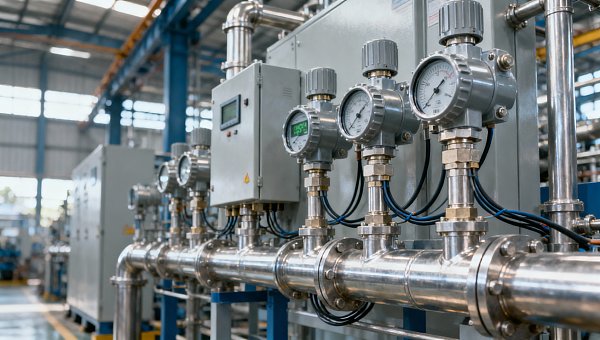
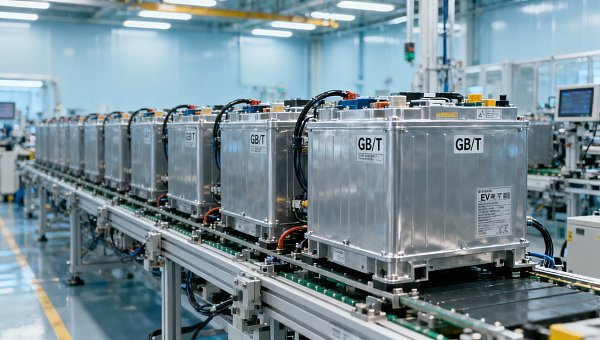
 SAMR to Upgrade EV Battery Recycling Standard to MandatorySAMR to upgrade EV battery recycling standard GB/T 34015—202X to mandatory by Dec 2026 — critical for exporters, BMS makers & cert labs.
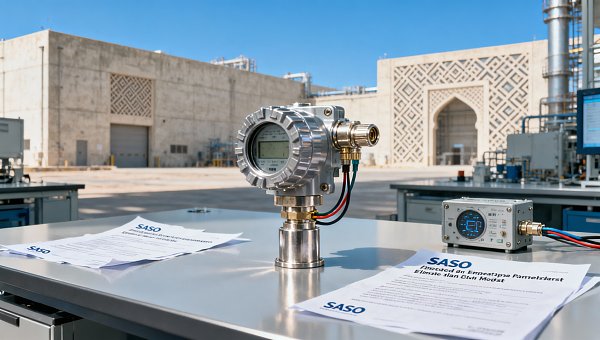
 Saudi SASO Accelerates AI Energy Efficiency Rules for TransmittersSASO AI energy efficiency rules for transmitters take effect 1 June 2026 — mandatory AI simulation, Saudi climate data, and authorized lab validation required. Act now to avoid export delays.
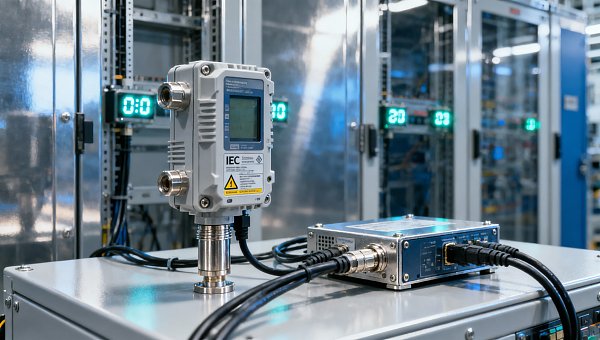
 IEC 63278:2026 Released for Industrial Instrument CybersecurityIEC 63278:2026 is live — the first global standard mandating cybersecurity verification for industrial instruments. Discover compliance impacts, deadlines, and actionable steps for OT/IT convergence.
 Red Sea Crisis Escalates: Gulf of Aden Navigation Ban Extended to June 15, 2026Red Sea Crisis escalates: Gulf of Aden navigation ban extended to June 15, 2026—disrupting industrial instrumentation shipments to the Middle East with 458% air freight spikes and 12–18 day delays.
 US DOE Updates Efficiency Rules for Industrial SensorsUS DOE updates industrial sensor efficiency rules: AI-driven dynamic calibration required by Sept 2026. Ensure AI-Cal Verified compliance now.
 EU Mandates PEF Carbon Footprint Module for Industrial Instruments from June 2026EU mandates PEF carbon footprint module for industrial instruments from June 2026—key for exporters, OEMs & certifiers. Act now to ensure compliance.
 Explosion-Proof Instruments: Compliance Risks Before You OrderExplosion-proof instruments can trigger delays, failed inspections, and safety risks if compliance is overlooked. Learn what to verify before ordering and make safer, smarter purchasing decisions.
 Gas Quality Monitoring Equipment Import Rules to Watch in 2026Gas quality monitoring equipment import rules for 2026 are tightening. Learn the key compliance, certification, and customs risks distributors must manage to avoid delays and protect margins.
 Emission Control Shelter Demand Shifts Across Industrial ProjectsEmission control shelter demand is rising across industrial projects as buyers seek faster deployment, reliable monitoring, and compliance-ready designs. Explore key evaluation factors.
 Temperature Measurement Instruments: Selection Mistakes That Raise DowntimeTemperature measurement instruments selection mistakes can drive downtime, unstable control, and higher costs. Discover 5 common errors and practical fixes to improve reliability.
 Thermal Conductivity Analyzers: When Are They the Right Choice?Thermal conductivity analyzers are ideal for binary and high-contrast gas mixtures. Learn when they deliver reliable, low-maintenance online monitoring and smarter project value.
 Level Measurement Instruments for Tanks: What Affects ReliabilityLevel measurement instruments reliability depends on media, installation, and diagnostics. Discover what causes tank reading failures and how to improve safety, uptime, and control.
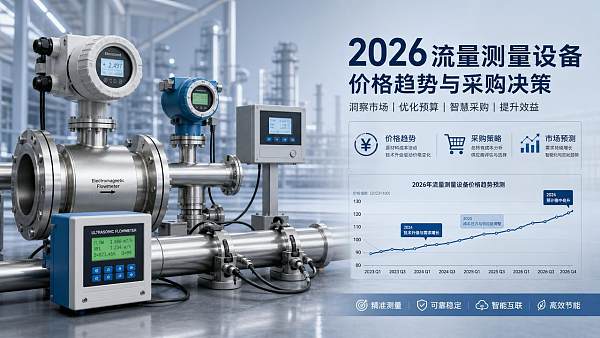
 Flow Measurement Equipment Price Trends in 2026Flow measurement equipment price trends in 2026: learn key cost drivers, budgeting risks, and smart buying strategies to improve ROI and make better procurement decisions.
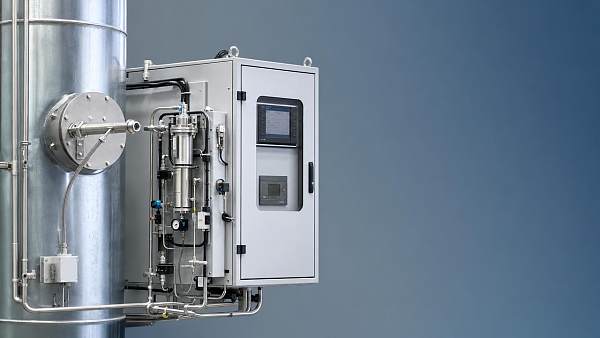
 Flue Gas Monitoring Equipment: Common Accuracy Issues and FixesFlue gas monitoring equipment accuracy issues can lead to drift, false readings, and compliance risks. Discover common causes, practical fixes, and smarter maintenance tips.
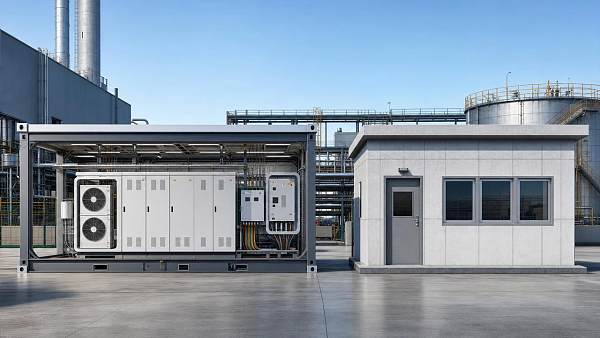
 Process Control Shelter vs Control Room: Key Cost and Deployment DifferencesProcess control shelter vs control room: compare cost, deployment speed, integration, and lifecycle value to choose the smarter solution for industrial automation projects.
 How to Select an Industrial Control Shelter for Harsh Site ConditionsIndustrial control shelter selection for harsh sites: learn how to compare materials, HVAC, safety, and lifecycle cost to protect equipment, reduce downtime, and improve reliability.
 SAMR to Finalize 1,800+ Standards by 2026, Including EV Battery RecyclingSAMR to finalize 1,800+ standards by 2026—including EV battery recycling, hazardous chemical packaging & EMC immunity. Stay ahead of mandatory GB shifts and global export compliance.
 China's Largest Single-Line Large-Tow Carbon Fiber Line Starts OperationChina's largest single-line large-tow carbon fiber line is live—30,000 tons/year capacity, ASME-certified, 22% cheaper & 6-week lead time. Boost your industrial instrumentation supply chain now.








Search Categories
Search Categories
Latest Article
- Stack Gas Analyzers: When Maintenance Delays Start Raising RiskStack gas analyzers can look normal while hidden drift raises compliance, efficiency, and reliability risks. Learn the warning signs and smart maintenance checks before delays become costly.Posted by:
- Industrial Measurement Systems in Export Projects: Key Compliance ChecksIndustrial measurement systems for export projects: learn the key compliance checks for certifications, calibration, safety, and documents to avoid delays and ensure smooth delivery.Posted by:
- Pharmaceutical Instrumentation Upgrades: What to Evaluate FirstPharmaceutical instrumentation upgrades start with compliance, data integrity, uptime, and ROI. Learn what to evaluate first to reduce risk and make smarter buying decisions.Posted by:
Please give us a message
