
O2 Concentration Analyzer News: Where Industrial Demand Is Growing Fast


As industrial upgrading accelerates across energy, manufacturing, environmental monitoring, and automation, demand for the O2 concentration analyzer is rising quickly in both mature and emerging markets. For distributors, dealers, and agents, understanding where this growth is happening can reveal high-potential opportunities, stronger customer demand, and more competitive product positioning in a rapidly evolving instrumentation landscape.
For channel partners, the key question is not whether the market is growing, but where demand is expanding fastest, which customer segments are actively buying, and what product configurations are most likely to convert into repeat business. The strongest opportunities are now appearing in sectors where oxygen measurement directly affects efficiency, safety, emissions compliance, and process stability.
This means the O2 concentration analyzer is no longer a niche instrument sold only into a limited set of industrial processes. It is becoming a broader decision tool for plant optimization, environmental accountability, combustion control, gas monitoring, and automated quality assurance. Distributors that understand these shifts can make better stocking, positioning, and technical support decisions.
Where industrial demand for the O2 concentration analyzer is growing fastest
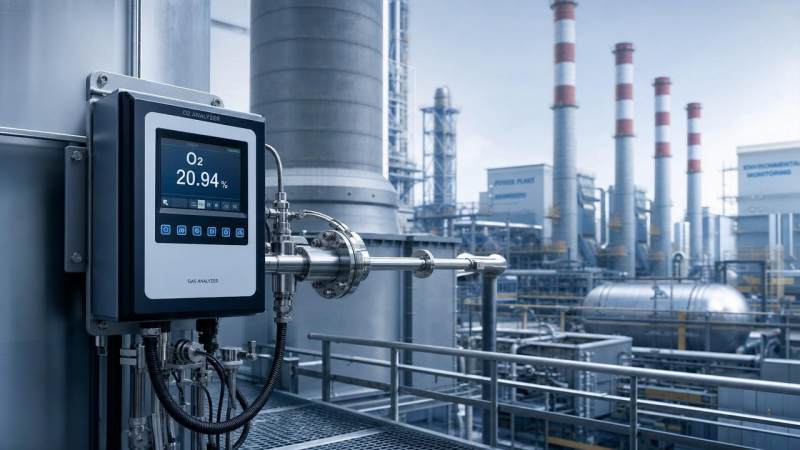
The fastest-growing demand is coming from industries where oxygen concentration has a direct operational or regulatory impact. These include power generation, steel and metal processing, petrochemicals, waste incineration, environmental monitoring, industrial gas production, food packaging, pharmaceuticals, and advanced manufacturing. In many of these sectors, customers are no longer buying analyzers as optional monitoring devices. They are buying them as process-critical instruments.
In energy and power, oxygen analysis remains central to combustion optimization. Boilers, furnaces, turbines, and thermal systems depend on accurate oxygen measurement to balance fuel efficiency with emissions reduction. As plants work to cut fuel waste and meet tightening environmental targets, demand for stable and low-maintenance O2 concentration analyzer systems continues to rise.
In heavy manufacturing, especially steel, cement, glass, and ceramics, oxygen measurement supports process consistency and product quality. High-temperature operations need precise control of combustion and atmosphere conditions. Even a small deviation in oxygen concentration can reduce thermal efficiency, increase reject rates, or create safety risks. That makes analyzers easier to justify at the plant level.
Environmental monitoring is another major growth driver. Industrial facilities are facing stronger pressure to monitor emissions, improve reporting accuracy, and demonstrate compliance. In this setting, the O2 concentration analyzer is often used alongside flue gas monitoring systems because oxygen levels influence emissions calculations and combustion performance interpretation. This creates bundled sales opportunities for distributors already active in gas analysis or environmental instrumentation.
Demand is also expanding in sectors that were previously considered smaller-volume users. Food and beverage companies increasingly need oxygen monitoring in modified atmosphere packaging. Pharmaceutical and biotech users require controlled oxygen environments in production and storage. Electronics and battery manufacturing use oxygen measurement in inert gas processes, clean environments, and quality-sensitive applications. These segments may not always place the largest single orders, but they can generate attractive margins and recurring replacement demand.
Why distributors, dealers, and agents should pay close attention now
For channel partners, market timing matters. Growth in oxygen analysis is not happening in isolation. It is tied to wider trends in industrial automation, digitalization, energy efficiency, and safety upgrades. Customers are upgrading from older analog devices, replacing labor-intensive manual testing, and integrating analyzers into centralized control systems. This makes the O2 concentration analyzer a product category with both new installation and retrofit potential.
Another reason to pay attention is that oxygen analysis often opens the door to wider instrumentation business. A customer asking for an analyzer may also need sample conditioning systems, transmitters, flow instruments, pressure monitoring, temperature sensors, controllers, data acquisition, or calibration services. For distributors, this creates a path from single-product sales to multi-product account development.
There is also a practical advantage in selling products tied to measurable return on investment. End users can often connect oxygen measurement directly to lower fuel consumption, improved product quality, reduced downtime, safer operation, or better audit readiness. Compared with products that require more abstract justification, the O2 concentration analyzer can be easier to position when sales teams understand the customer’s process pain points.
In addition, replacement cycles support ongoing business. Sensors degrade, calibration requirements continue, and older systems become less compatible with digital plant infrastructure. This creates opportunities not only for first-time sales but also for maintenance contracts, consumables, upgrades, and migration to smarter analyzer platforms with better diagnostics and remote communication functions.
Which customer pain points are actually driving purchase decisions
Many buyers are not starting with the phrase “we need an analyzer.” They are starting with a business problem. A boiler operator may want to reduce fuel costs. A plant manager may be under pressure to improve emissions performance. A safety officer may need better oxygen monitoring in enclosed or controlled-gas environments. A quality manager may need consistent atmosphere control to reduce batch variation. Understanding these motivations is essential for channel partners.
Accuracy is important, but it is rarely the only concern. Customers also care about response time, long-term stability, maintenance frequency, calibration requirements, sensor life, environmental tolerance, and ease of integration into existing systems. In harsh industrial settings, buyers often place high value on reliability and serviceability rather than simply choosing the analyzer with the most advanced specifications on paper.
Total cost of ownership is another major factor. A lower-priced unit may lose appeal if it requires frequent maintenance, difficult calibration, or repeated sensor replacement. By contrast, a more robust O2 concentration analyzer can become the better commercial choice if it reduces field visits, minimizes downtime, and maintains stable performance under demanding conditions.
Lead time and technical support also influence channel success. Many industrial customers need help selecting the correct measurement principle, installation method, and enclosure protection level. Distributors that can guide these decisions are more likely to win trust than those offering only catalog pricing. In this product category, technical confidence often determines whether the order is placed.
How to identify the highest-potential application segments in your market
Not every region has the same growth pattern, so distributors should map demand by industrial structure rather than relying only on broad market reports. Start by identifying sectors in your territory with active investment in boilers, furnaces, kilns, gas systems, emissions control, clean manufacturing, or packaged goods production. These are often the most immediate targets for O2 concentration analyzer sales.
Look for industries facing one or more of the following pressures: energy cost reduction, emissions compliance, process automation, product quality improvement, worker safety, or traceability requirements. When several of these factors appear together, the probability of analyzer adoption rises sharply. The strongest targets are usually plants where oxygen levels have a clear effect on output, safety, or regulatory performance.
It is also useful to separate customers into three groups: greenfield projects, retrofit users, and replacement buyers. Greenfield projects often want system compatibility and long-term support. Retrofit users care about installation flexibility and integration with existing controls. Replacement buyers prioritize reliability, short delivery cycles, and low switching risk. Each group responds to different sales messaging.
Distributors should also monitor policy-driven sectors. Government support for cleaner energy, industrial efficiency, emissions transparency, waste treatment, and advanced manufacturing often translates into equipment demand. Even if oxygen analyzers are not explicitly named in policy documents, they frequently become necessary instruments in the implementation phase of compliance and modernization projects.
What product features matter most when building a competitive portfolio
For channel partners, choosing the right product mix is more important than offering the widest possible range. The best portfolio balances broad applicability with credible technical depth. In the O2 concentration analyzer category, this means understanding the differences among zirconia, paramagnetic, electrochemical, and other measurement approaches, then matching them to realistic market demand.
For combustion and high-temperature process applications, durability, fast response, and resistance to harsh environments often matter more than cosmetic features. For laboratory, medical, packaging, or precision gas applications, customers may focus more on sensitivity, low-range performance, compact design, and contamination control. A distributor that stocks only one type of analyzer may miss profitable adjacent markets.
Connectivity is becoming increasingly important. More customers now expect outputs and protocols compatible with PLC, DCS, SCADA, or remote monitoring systems. Alarm functions, self-diagnostics, data logging, and predictive maintenance features can improve product appeal, especially in automated facilities. These are not just technical extras; they can be strong commercial differentiators.
Certification, enclosure rating, and installation adaptability also matter. Some buyers need explosion-proof solutions. Others need portable units, panel-mounted models, extractive systems, or in-situ configurations. If distributors understand these practical distinctions, they can reduce project friction and improve close rates. A strong portfolio is not just technically complete; it is commercially usable in the field.
How to position value instead of competing only on price
Price competition is common in instrumentation markets, but oxygen analysis is a category where value-based selling can work well. The most effective approach is to translate analyzer performance into operational outcomes. Instead of saying a product has stable measurement and fast response, explain how that helps a furnace maintain combustion balance, reduces wasted fuel, or improves process repeatability.
For customers concerned about compliance, position the analyzer as a tool for dependable reporting and better environmental control. For safety-sensitive users, emphasize dependable oxygen monitoring in critical spaces or controlled atmospheres. For manufacturers, connect oxygen measurement to reduced rejects, better product consistency, and more reliable process control. The more specific the use case, the stronger the positioning becomes.
Service capability is another powerful differentiator. Commissioning support, calibration assistance, spare parts availability, training, and local response speed often influence buying decisions as much as product specifications. Distributors and agents that invest in after-sales confidence can defend margin more effectively than those relying only on low pricing.
Case-based selling also helps. If possible, organize reference stories by application: boiler optimization, kiln combustion, gas purity monitoring, packaging atmosphere control, or emissions system support. Buyers trust examples that look similar to their own operating environment. For many channel partners, better application storytelling can produce more growth than simply adding more models to the product list.
Common mistakes distributors should avoid in this market
One common mistake is treating all oxygen measurement requests as interchangeable. In reality, application conditions vary widely. Process temperature, dust load, gas composition, pressure, moisture, installation location, and maintenance access can all affect analyzer suitability. Recommending the wrong configuration may lead to field problems, warranty disputes, and damaged credibility.
Another mistake is focusing too heavily on nominal accuracy without discussing operating conditions. In many industrial applications, reliability, drift performance, calibration interval, and sensor longevity are more commercially important than laboratory-grade accuracy figures. Buyers often discover this after installation, so a well-informed distributor should raise these questions early.
A third mistake is ignoring the buying center. The person asking for a quote may not be the only decision-maker. Operations teams care about uptime. Maintenance teams care about accessibility and service needs. Procurement cares about cost and delivery. Management cares about return on investment and risk reduction. Sales success improves when product communication addresses all of these viewpoints.
Finally, some distributors miss aftermarket revenue. Every installed O2 concentration analyzer creates potential future demand for calibration tools, service visits, replacement parts, accessories, and system upgrades. Treating the sale as a one-time transaction leaves value on the table. Treating it as the start of an account relationship creates more durable revenue.
What the near-term market outlook means for channel growth
The near-term outlook for the O2 concentration analyzer market remains positive because the demand drivers are structural rather than temporary. Energy efficiency is not going away. Emissions oversight is not weakening. Industrial automation continues to expand. Process industries still need safer, more measurable, and more controllable operations. These conditions support steady demand across multiple sectors.
For distributors, dealers, and agents, the best opportunities will likely come from targeted specialization rather than generic selling. Those who understand regional industries, prioritize high-conversion applications, and provide practical technical guidance will be better positioned than those competing only on broad product availability. In this market, relevance wins more often than volume.
The most successful channel strategy is to combine application knowledge, a carefully selected product portfolio, and dependable support. When these elements are aligned, the O2 concentration analyzer becomes more than just another catalog item. It becomes a solution linked to measurable customer outcomes and repeat business potential.
In summary, industrial demand is growing fastest where oxygen measurement directly influences efficiency, compliance, safety, and quality. That includes power, heavy industry, environmental systems, advanced manufacturing, and controlled-atmosphere applications. For channel partners, the real opportunity lies in knowing which sectors in their market are moving now, what those buyers truly care about, and how to position the right analyzer with business value that is easy to understand.
Recommended for You
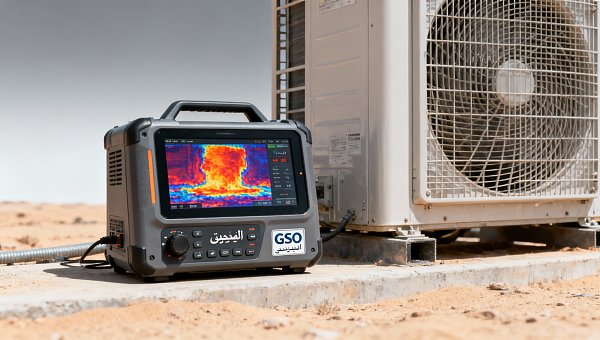
 Kuwait Bans HCFC Air Conditioners, Boosts IR Camera ExportsKuwait bans HCFC air conditioners—boosting demand for IR cameras, leak detectors & refrigerant analyzers. Discover GCC compliance insights and export opportunities.
 China's IC Exports Surge 78.3% in First Four Months of 2026China's IC exports surge 78.3% in early 2026 — driven by soaring global demand for AI chip test equipment, SMUs, and parametric analyzers. Discover the supply chain shift.
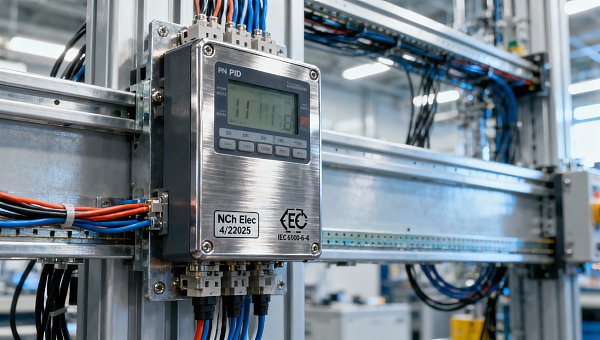
 Chile Enforces Mandatory INN Safety Certification for Industrial Temperature ControllersChile mandates INN safety certification (NCh Elec 4/2025) for industrial temperature controllers starting Aug 1, 2026—act now to avoid shipment delays & market bans.
 K-REACH Supply-Shortage Exemption Launches for pH/ORP ElectrodesK-REACH Supply-Shortage Exemption now applies to pH/ORP electrodes—act before June 30, 2026 to avoid customs delays & penalties. Key for exporters & manufacturers.
 4th China International Supply Chain Expo to Focus on Smart Sensing & In-Process InspectionSmart Sensing & In-Process Inspection take center stage at the 4th China International Supply Chain Expo in Beijing, Nov 26–30, 2026 — discover next-gen inspection tech, AI vision modules, and calibrated sensing solutions for global industrial buyers.
 ASTM F2100-26 Medical Mask Standard Takes Effect in USASTM F2100-26 medical mask standard is now in force—driving global demand for biosafety cabinets, particle counters & air velocity calibrators, especially China-made instruments.
 South Africa Enforces SABS Certification for IoT Monitoring DevicesSABS certification now mandatory for IoT monitoring devices entering South Africa via e-commerce—act before 1 June 2026 to avoid customs rejection and ensure market access.
 EU REACH Adds Fluorinated Substances; SVHC Reporting Required for Gas AnalyzersEU REACH now restricts fluorinated substances in gas analyzers—SVHC reporting is mandatory by 30 Nov 2026. Ensure compliance for sensors, membranes & monitoring systems.
 Revised Maritime Code Takes Effect May 1, 2026: Shift in Unclaimed Cargo LiabilityRevised Maritime Code (2026): Shippers now liable for unclaimed cargo—critical for industrial instrument exporters, logistics providers & cross-border supply chains. Act now.
 China Imposes Zero Tariffs on Goods from All African Diplomatic Partners Starting May 1, 2026China’s zero-tariff policy for African instrumentation & automation exports starts May 1, 2026—boosting competitiveness in EPC tenders and market access for exporters.
 Import and Export Shifts in the PPM Gas Analyzer Marketppm gas analyzer market insights: discover how import tariffs, export controls, and compliance shifts impact cost, supply stability, and growth opportunities across key applications.
 Single Gas Analyzer Maintenance Issues That Raise DowntimeSingle gas analyzer maintenance issues can quietly increase downtime. Learn how to spot drift, calibration errors, and sample path faults early to improve uptime and field efficiency.
 Combustion Gas Analyzer Market Trends Shaping 2026 UpgradesCombustion gas analyzer market trends shaping 2026: discover how smarter monitoring, multi-gas accuracy, and digital integration can improve compliance, efficiency, and ROI.
 Corrosive Gas Analyzer Risks That Impact Safety ComplianceCorrosive gas analyzer risks can quietly undermine safety compliance. Learn how drift, sampling failures, and poor maintenance affect accuracy—and how to strengthen monitoring reliability.
 Percent Range Analyzer Applications in Process ControlPercent range analyzer applications improve process control by turning raw signals into clear operating percentages. Discover faster decisions, better alarms, and more stable system performance.
 What Affects the Total Cost of a Dual Gas AnalyzerDual gas analyzer total cost goes beyond purchase price. Learn how sensors, calibration, compliance, integration, and maintenance shape lifecycle value and smarter buying decisions.
 High Temperature Analyzer Selection Mistakes to Avoid in 2026High temperature analyzer selection mistakes can delay projects and raise lifecycle costs. Discover the top 2026 pitfalls and how to choose a safer, smarter solution.
 2026 Price Trends for Multi Gas Analyzer SystemsMulti gas analyzer price trends for 2026: discover key cost drivers, ownership factors, and smart budgeting tips to compare systems, control risk, and choose the right solution.
 PPB Gas Analyzer vs PPM Gas Analyzer: What Changes in Real Useppb gas analyzer vs PPM gas analyzer: learn how sensitivity, calibration, maintenance, and sample handling change in real use to choose the right solution with less risk and cost.
 How to Choose a Trace Gas Analyzer for Low-Level Leak DetectionTrace gas analyzer selection for low-level leak detection: learn how to compare sensitivity, response time, interference control, and integration for safer, faster, more reliable results.
 US-China Trade Talks Agree on Tariff Cuts for Key Test Equipment PartsUS-China tariff cuts on key test equipment parts—like pressure sensor chips & infrared thermal imaging modules—boost margins, cut costs, and strengthen global competitiveness for manufacturers.
 G7 Paris Meeting Focuses on Critical Mineral Supply SecurityCritical mineral supply security takes center stage at the G7 Paris meeting—key for rare-earth sensor exporters. Learn EU compliance impacts & actionable readiness steps.
 Brent Crude Surpasses $106/bbl, Raising Sea Freight Costs for Small Testing Equipment ExportsBrent Crude Surpasses $106/bbl—sea freight costs surge, impacting small testing equipment exporters. Learn how SMEs can adapt pricing, terms & logistics now.
 WTO Forecasts 1.9% Global Goods Trade Growth in 2026 Amid Supply Chain ShorteningWTO forecasts 1.9% global goods trade growth in 2026—sparking nearshoring demand for testing equipment, calibration services & OTA-ready solutions in ASEAN, Middle East & Mexico.
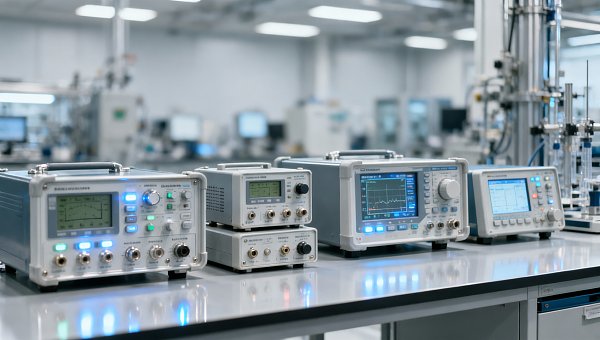
 UK-China Export Control Working Group Holds Second Meeting in LondonUK-China Export Control Working Group: Key updates on dual-use items—laser interferometers, quantum sensors & oscilloscopes. Learn compliance implications for exporters now.
 Japan's 10Y Yield Drop to 2.745% Lifts Yen, Raising China-Made Testing Equipment CostsJapan's 10Y yield drop to 2.745% lifts yen, raising costs for China-made testing equipment — explore FX impacts, procurement shifts & strategic responses.
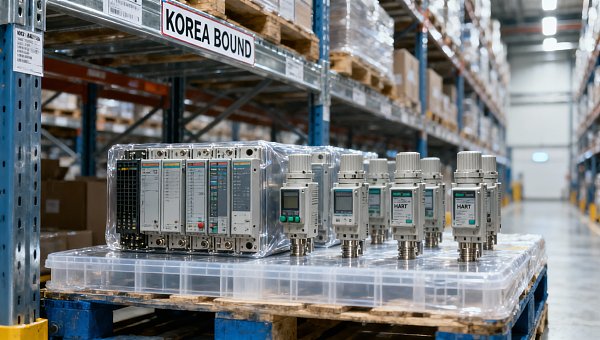
 KOSPI 200 Futures Circuit Breaker Triggered, Impacting Industrial Automation Instrument Export TimelinesKOSPI 200 futures circuit breaker triggered — impact on PLC modules, transmitters & fieldbus instrument exports to Korea. Urgent timeline insights inside.
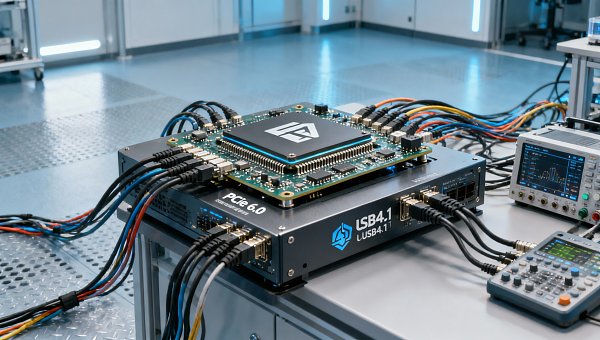
 South Korea’s Chip Exports Surge 202% in May 2026 Amid AI Test Equipment DemandAI test equipment demand surges as South Korea’s chip exports jump 202% in May 2026 — PCIe 6.0 & USB4.1 validation tools see sharp global procurement rise.
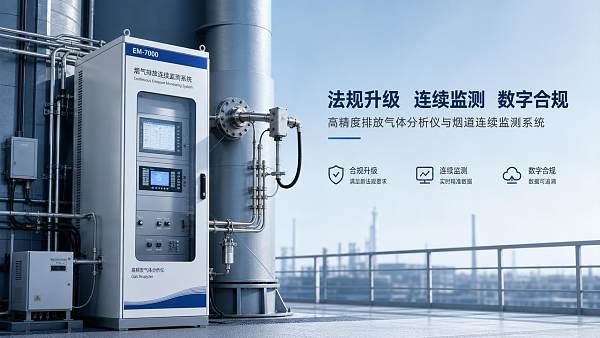
 Emission Gas Analyzer News in 2026: Regulatory Shifts Affecting DemandEmission gas analyzer demand is changing fast in 2026 as new regulations tighten limits, expand continuous monitoring, and raise data compliance standards. Explore key trends shaping smarter buying decisions.
 When a High Accuracy Analyzer Delivers Real ROI in Process ControlHigh accuracy analyzer ROI starts with better process control. Learn where tighter measurements cut waste, improve stability, reduce compliance risk, and deliver measurable operational savings.
 SR-2030P Analyzer Import Updates in 2026: Compliance Points to ReviewSR-2030P analyzer import updates for 2026: review classification, certification, customs documents, and market access risks to reduce delays, control costs, and source with confidence.
 Industrial Oxygen Analyzer Price Trends in 2026: Cost Drivers to WatchIndustrial oxygen analyzer price trends in 2026 explained: compare sensor, compliance, installation, and maintenance cost drivers to make smarter, lower-risk buying decisions.


Search Categories
Search Categories
Latest Article
- Kuwait Bans HCFC Air Conditioners, Boosts IR Camera ExportsKuwait bans HCFC air conditioners—boosting demand for IR cameras, leak detectors & refrigerant analyzers. Discover GCC compliance insights and export opportunities.Posted by:
- China's IC Exports Surge 78.3% in First Four Months of 2026China's IC exports surge 78.3% in early 2026 — driven by soaring global demand for AI chip test equipment, SMUs, and parametric analyzers. Discover the supply chain shift.Posted by:
- Chile Enforces Mandatory INN Safety Certification for Industrial Temperature ControllersChile mandates INN safety certification (NCh Elec 4/2025) for industrial temperature controllers starting Aug 1, 2026—act now to avoid shipment delays & market bans.Posted by:
Please give us a message
