
Flue Testing Demand Is Rising in Retrofit Projects


As retrofit activity accelerates across industrial, commercial, and public infrastructure, flue testing is becoming a critical step in ensuring safety, compliance, and system efficiency. For researchers evaluating upgrade trends, understanding why flue testing demand is rising helps reveal broader shifts in emissions control, heating system performance, and instrumentation needs within modernized facilities.
A checklist approach is the fastest way to evaluate this topic because retrofit projects rarely involve a single driver. In most cases, rising flue testing demand comes from a combination of aging assets, tighter environmental expectations, energy-efficiency goals, insurance requirements, commissioning standards, and better instrumentation availability. For information researchers, the key is not just knowing that demand is increasing, but knowing which signals to verify first, which project types show the strongest pull, and which overlooked factors are reshaping the market.
Start Here: The First Signals That Explain Rising Flue Testing Demand
Before comparing technologies or service providers, it helps to confirm the main demand signals behind retrofit-related flue testing. These signals are useful because they connect project activity to measurable operational needs rather than abstract market commentary.
- Boiler, furnace, and burner replacement cycles are accelerating. Older combustion systems are being upgraded for fuel flexibility, reliability, and lower operating costs. Every major change to combustion equipment increases the need for flue performance verification.
- Emission accountability is becoming more visible. Even where regulations have not dramatically changed, organizations are tracking combustion efficiency, CO, NOx, O2, and stack conditions more carefully.
- Retrofit projects now involve integrated controls. Modern upgrades often combine mechanical replacement with automation, sensors, and data systems, making post-installation testing more systematic.
- Safety and liability reviews are stricter. Facility owners want documented evidence that exhaust pathways, draft conditions, and combustion outputs are operating within acceptable limits.
- Energy audits increasingly lead to corrective work. Once an audit identifies combustion losses or flue-related inefficiency, testing becomes a practical decision tool rather than a compliance formality.
For researchers, these signals matter because they show that flue testing is being pulled by both regulation and performance management. That combination usually indicates durable demand rather than a short-term spike.
Core Checklist: What Must Be Verified in Retrofit-Driven Flue Testing
When assessing why retrofit work creates more testing activity, the most useful method is to review the core check items that become mandatory or highly recommended after a system change. These are the areas most likely to trigger a formal flue testing process.
- Fuel and combustion compatibility. If a retrofit changes fuel type, burner design, or control logic, operators need to confirm combustion stability and exhaust composition under real load conditions.
- Draft performance and pressure behavior. Flue pathways must maintain proper draft. Poor draft can reduce efficiency, damage equipment, and create serious safety issues.
- Temperature profile verification. Stack temperature influences condensation risk, heat recovery potential, material suitability, and overall thermal performance.
- Gas composition measurement. O2, CO2, CO, and in some cases NOx or SO2 readings help verify tuning quality, combustion completeness, and environmental impact.
- Leakage and integrity checks. Retrofit work can disturb joints, liners, dampers, and supports. Flue testing helps reveal whether system integrity has been compromised.
- Commissioning and baseline creation. Many modern facilities want post-retrofit reference data so future maintenance can be compared against a known operating condition.
This checklist also highlights why the instrumentation industry is central to retrofit demand. Accurate gas analyzers, pressure measurement devices, temperature sensors, portable combustion analyzers, and calibration tools are all essential to reliable decision-making.
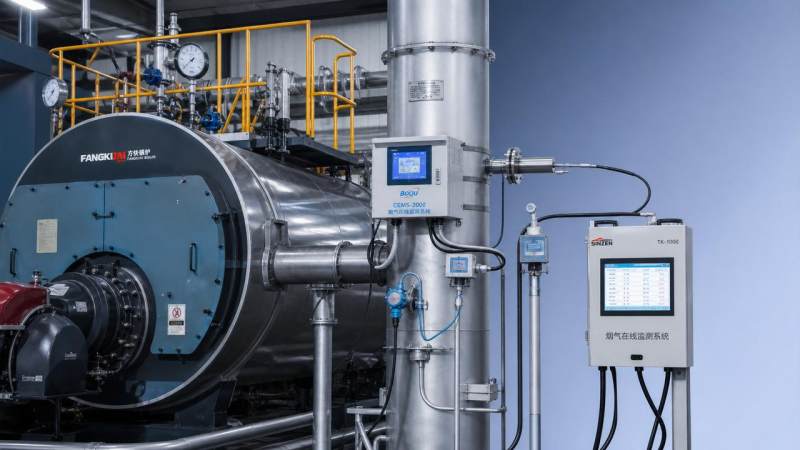
Use This Quick Evaluation Table to Judge Demand Strength
If the goal is to estimate where flue testing demand is most likely to rise, the table below provides a practical screening framework for researchers and project evaluators.
Scenario Guide: Which Retrofit Segments Need the Most Attention
Not all projects drive flue testing demand in the same way. Researchers should compare segments based on operating risk, compliance visibility, and the scale of combustion equipment involved.
Industrial Manufacturing Facilities
Industrial sites often show the strongest demand because combustion systems directly affect production continuity. Retrofit projects may include process heaters, steam boilers, kilns, or thermal oxidizers. In these settings, flue testing supports emissions review, process reliability, and fuel-cost optimization.
Commercial and Institutional Buildings
Hospitals, schools, office complexes, and public buildings are upgrading heating systems to meet efficiency targets and reduce long-term maintenance exposure. Here, flue testing is often tied to safety assurance, occupancy protection, and commissioning records.
Energy and Utility Infrastructure
District heating assets, backup generation systems, and distributed energy installations are being modernized with closer attention to monitoring quality. These projects often demand higher-grade instrumentation and more repeatable test procedures.
Public-Sector Retrofit Programs
Government-supported upgrades frequently require documentation, standardization, and traceable testing results. That makes flue testing not only a technical requirement but also a procurement and reporting requirement.
Commonly Overlooked Factors That Increase Testing Needs
Some of the strongest demand drivers are easy to miss because they sit between mechanical design, environmental control, and instrumentation practice. These overlooked items often explain why testing demand rises after retrofit budgets are approved.
- System interactions change after upgrades. A new burner may interact differently with an older chimney, fan, or control loop than expected.
- Heat recovery can create new moisture risks. Lower exhaust temperatures may improve efficiency but increase condensation risk inside the flue system.
- Documentation standards are improving. Owners increasingly want trend data, not just pass-fail results, especially in larger portfolios.
- Portable analyzers still require calibration discipline. Demand for testing rises alongside demand for trustworthy measurement, which strengthens the role of calibration services and metrology support.
- Retrofit schedules are compressed. Tight shutdown windows increase the value of efficient test planning and multi-parameter instruments.
Practical Research Checklist: What to Collect Before Drawing Conclusions
If you are studying the market or evaluating a retrofit pipeline, collect these inputs before concluding how strong flue testing demand will be in a given segment or region.
- Count how many retrofit projects involve combustion equipment rather than purely electrical or envelope upgrades.
- Check whether projects include fuel conversion, heat recovery, or control optimization, since these raise testing complexity.
- Review whether local codes, insurer requirements, or internal engineering standards require documented post-upgrade verification.
- Identify which measurement parameters are typically required: gas composition, temperature, pressure, airflow, or particulate-related indicators.
- Assess whether facility operators have in-house capability or rely on external testing services, as this changes procurement behavior.
- Confirm how often equipment must be retested after commissioning, especially in facilities with seasonal load variation.
Execution Advice: How Companies Should Respond to Rising Flue Testing Demand
For companies participating in the instrumentation, testing, or retrofit ecosystem, the response should be practical and data-driven. The increase in flue testing demand is not only about selling equipment. It is about matching measurement capability to upgrade complexity.
A strong response plan usually includes five priorities: first, map the retrofit sectors generating the highest volume of combustion-related work; second, align analyzers and sensors with the parameters customers actually need to verify; third, strengthen calibration and traceability support; fourth, prepare application guidance for different flue configurations and fuels; and fifth, integrate reporting tools that make results easier to interpret for engineers, contractors, and compliance teams.
This is where the broader instrumentation industry becomes especially relevant. Demand growth favors suppliers and service teams that can connect field measurement, laboratory-grade reliability, digital reporting, and long-term maintenance support. In retrofit projects, the value of testing often depends as much on data credibility as on the test itself.
FAQ for Information Researchers
Is flue testing demand rising because of regulation alone?
No. Regulation is important, but efficiency improvement, commissioning discipline, risk management, and better instrumentation access are also major drivers.
Which retrofit types generate the highest flue testing intensity?
Projects involving boilers, burners, fuel switching, and heat recovery usually generate the strongest need for formal flue testing.
Why does instrumentation matter so much in this trend?
Because testing quality depends on accurate measurement, stable calibration, repeatable procedures, and clear reporting. Without these, retrofit decisions are harder to validate.
What to Discuss Next If You Need Deeper Evaluation
If you need to move from general research to practical assessment, the next step is to clarify a focused set of questions: What type of combustion equipment is being retrofitted? Which flue parameters must be verified? What standards or owner requirements apply? How often will testing be needed after commissioning? Is the priority safety, emissions, efficiency, or all three? What budget, timeline, and reporting format are expected?
By organizing the topic through these check items, researchers can see why flue testing is becoming more prominent in retrofit projects. The trend reflects more than maintenance activity. It points to a larger shift toward measurable performance, accountable modernization, and wider use of precision instrumentation across industrial, commercial, and public infrastructure upgrades.
Recommended for You
 C2H5OH Concentration Analyzer: Key Checks Before Import OrdersC2H5OH concentration analyzer import guide: check specs, calibration, compliance, and supplier support before ordering to reduce risk and choose the right analyzer with confidence.
 2026 Market Trends for C4H10 Concentration Analyzers in Process IndustriesC4H10 concentration analyzer market trends for 2026: discover how smarter, connected analyzers help process industries improve safety, compliance, uptime, and ROI.
 Common Safety Gaps When Using a C6H6 Concentration AnalyzerC6H6 concentration analyzer safety gaps can distort readings and delay hazard response. Learn the most common risks, practical fixes, and smarter deployment tips across industrial, lab, and environmental use.
 C7H8 Concentration Analyzer Price Trends in 2026: What Shapes CostC7H8 concentration analyzer price trends in 2026 depend on sensors, compliance, calibration, integration, and service. See what really shapes total cost before you approve a budget.
 How to Choose a C8H10 Concentration Analyzer for Stable VOC MonitoringC8H10 concentration analyzer selection guide for stable VOC monitoring. Learn how to compare performance, technology, drift, and application fit for reliable results.
 Guangdong Launches 3-Year Service Trade Plan to Boost Instrument Exports via AI and HarmonyOSGuangdong's 3-year service trade plan boosts instrument exports via AI optimization & HarmonyOS—key for ASEAN/Latin America market access. Act now.
 China-Pakistan MOU Opens Faster Certification Path for Instruments in South AsiaChina-Pakistan MOU accelerates instrument certification in South Asia—faster CCC acceptance, mutual lab recognition & Islamabad testing hub for pressure gauges, flow meters, environmental monitors.
 Gold Futures Surge 1.1%; Overseas Orders for Precious Metals Analyzers Rise 35%Gold futures surge 1.1% — driving 35% rise in overseas orders for precious metals analyzers like XRF & ICP-MS. Discover key market impacts & compliance insights.
 《中华人民共和国矿产资源法实施条例》6月15日施行,矿产分析仪出口标准升级矿产分析仪出口标准升级!《中华人民共和国矿产资源法实施条例》6月15日正式施行,助力企业合规出海、抢占全球矿产检测新机遇。
 特朗普称美伊‘基本谈成’霍尔木兹通航协议,能源监测设备出口波动预警Energy monitoring equipment export volatility warning amid Trump’s 'nearly finalized' US-Iran Strait of Hormuz navigation deal—key insights for exporters and energy sector stakeholders.
,国产存储测试设备订单窗口打开") 长鑫科技科创板IPO上会(5月27日),国产存储测试设备订单窗口打开Changxin Technology's STAR Market IPO on May 27 opens a key window for domestic memory testing equipment orders—discover growth opportunities now!
长鑫科技科创板IPO上会(5月27日),国产存储测试设备订单窗口打开Changxin Technology's STAR Market IPO on May 27 opens a key window for domestic memory testing equipment orders—discover growth opportunities now! 墨西哥拟对中国轻型车及零部件加征关税至50%,车载检测设备出口承压Mexican tariff hike to 50% on Chinese light vehicles & parts pressures exports of automotive testing equipment—key insights and mitigation strategies.
 美SEC紧急叫停‘代币化美股’计划,全球AI算力设备出口融资环境趋稳AI算力设备出口融资环境趋稳!美SEC紧急叫停‘代币化美股’计划,释放监管明确信号,利好全球合规科技投融资布局。速看深度解析。
 EU Industrial Accelerator Act Enforces 70% Local Sourcing for InstrumentsEU Industrial Accelerator Act enforces 70% local sourcing for instruments—key implications for exporters, suppliers & integrators. Act now.
 China Imposes Full Export Ban on Dual-Use Items to Japanese Military End UsersChina's dual-use export ban to Japanese military users takes effect Jan 6, 2026—impacting rare earth, semiconductor & precision manufacturing supply chains. Act now.
 Where C3H8 Concentration Analyzers Fit in 2026 Industrial Emissions MonitoringC3H8 concentration analyzer solutions are reshaping 2026 industrial emissions monitoring with better compliance, safer propane control, and smarter efficiency insights. Learn where they fit.
 B2H6 Concentration Analyzer Import and Export Updates for 2026 Compliance PlanningB2H6 concentration analyzer import and export updates for 2026: explore compliance risks, documentation priorities, and planning tips to reduce delays and support smarter cross-border decisions.
 GeH4 Concentration Analyzer Safety Risks and Detection Limits in Semiconductor UseGeH4 concentration analyzer safety risks, alarm strategy, and detection limits for semiconductor use. Learn how to reduce exposure risk, improve process stability, and choose the right monitoring solution.
 C2H4 Concentration Analyzer Price Trends in 2026: What Is Driving Cost ChangesC2H4 concentration analyzer price trends in 2026 explained: discover key cost drivers, procurement risks, and smart buying tips to balance budget, compliance, and long-term value.
 How to Compare C2H2 Concentration Analyzer Accuracy in Industrial Gas MonitoringC2H2 concentration analyzer accuracy matters beyond the datasheet. Learn how to compare drift, calibration, interference, and field reliability for safer industrial gas monitoring.
![]() SiH4 Concentration Analyzer Import Rules to Watch in 2026SiH4 concentration analyzer import rules are tightening in 2026. Learn the key documents, compliance checks, and procurement tips to avoid delays and speed project delivery.
SiH4 Concentration Analyzer Import Rules to Watch in 2026SiH4 concentration analyzer import rules are tightening in 2026. Learn the key documents, compliance checks, and procurement tips to avoid delays and speed project delivery. HF Concentration Analyzer Demand Shifts Across Key IndustriesHF concentration analyzer demand is shifting across chemical, refining, environmental, and advanced manufacturing sectors—learn what drives safer control, compliance, and precision upgrades.
 Common HCN Concentration Analyzer Mistakes in Daily OperationHCN concentration analyzer daily mistakes can quietly damage accuracy and uptime. Learn common errors, practical checks, and smart operating tips to improve reliability.
 PH3 Concentration Analyzer Price Trends in 2026PH3 concentration analyzer price trends in 2026 reveal what really drives cost, compliance, and performance. Explore key buying factors to compare quotes smarter and reduce total ownership risk.
 How to Choose an AsH3 Concentration Analyzer for Trace Gas SafetyAsH3 concentration analyzer selection starts with the right application context. Learn how to compare response, interference, integration, and lifecycle fit for safer trace gas monitoring.
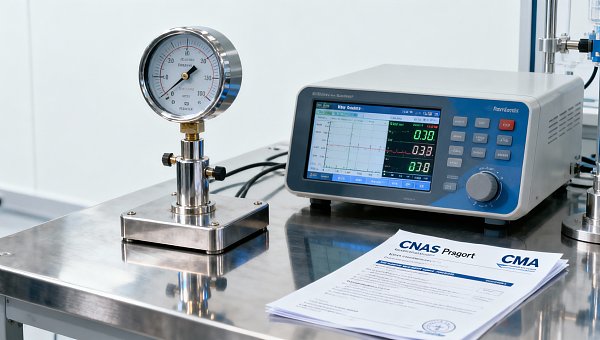
 Released") China's Business Environment Report (2026) ReleasedChina's Business Environment Report (2026) reveals 92% digital CMA/CNAS coverage—cutting export test report time to 15 days. Boost CE, UKCA & UL certification for pressure gauges, thermostats & analyzers.
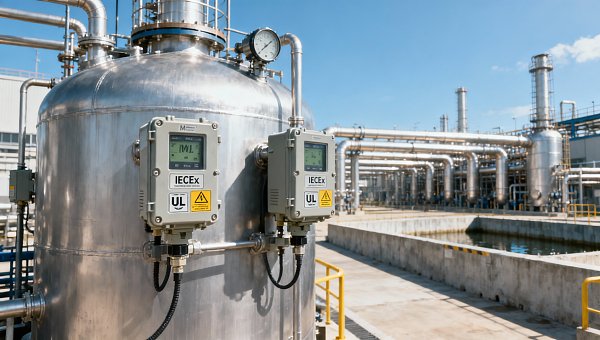
China's Business Environment Report (2026) ReleasedChina's Business Environment Report (2026) reveals 92% digital CMA/CNAS coverage—cutting export test report time to 15 days. Boost CE, UKCA & UL certification for pressure gauges, thermostats & analyzers. US MMA Tank Incident Triggers Regional Safety UpgradesUS MMA tank incident sparks urgent demand for VOCs monitoring, toxic gas modeling & intrinsically safe transmitters across LATAM and SEA.
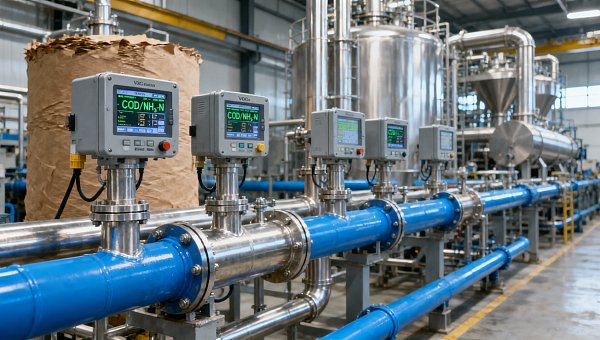
 NDRC Expands Energy-Saving and Carbon-Reduction Oversight to Dyeing, Chemical Fibers, and PapermakingNDRC expands energy-saving & carbon-reduction oversight to dyeing, chemical fibers, and papermaking—boosting demand for COD/NH₃-N analyzers, VOCs monitors, and CEMS systems.
 MIIT Sets 2026 Energy-Saving Inspection Targets for High-Energy ChemicalsMIIT Sets 2026 Energy-Saving Inspection Targets for High-Energy Chemicals—urgent demand surges for certified pH meters, gas analyzers & explosion-proof controllers.
 MOFCOM: FDI in China Down 10.3% Jan–Apr 2026, but Manufacturing Up 12.1%FDI in China fell 10.3% Jan–Apr 2026—but manufacturing FDI surged 12.1%, led by high-tech sectors. Discover what this means for precision metrology, sensors & calibration providers.
 PBOC Conducts 600-Billion-Yuan MLF Operation, Boosting RMB Stability for Testing Equipment ExportsPBOC's 600-billion-yuan MLF operation boosts RMB stability—key for NDT equipment exporters using LC/DA terms. Reduce FX risk, optimize hedging & improve cash flow planning now.
 EU Steel Strategy Upgrade: CBAM Expansion to Machinery & InstrumentsEU Steel Strategy Upgrade expands CBAM to machinery & instruments (HS 84/90) — LCA data mandatory from 1 July 2026. Act now to avoid delays & ensure compliance.








Search Categories
Search Categories
Latest Article
- C2H5OH Concentration Analyzer: Key Checks Before Import OrdersC2H5OH concentration analyzer import guide: check specs, calibration, compliance, and supplier support before ordering to reduce risk and choose the right analyzer with confidence.Posted by:
- 2026 Market Trends for C4H10 Concentration Analyzers in Process IndustriesC4H10 concentration analyzer market trends for 2026: discover how smarter, connected analyzers help process industries improve safety, compliance, uptime, and ROI.Posted by:
- Common Safety Gaps When Using a C6H6 Concentration AnalyzerC6H6 concentration analyzer safety gaps can distort readings and delay hazard response. Learn the most common risks, practical fixes, and smarter deployment tips across industrial, lab, and environmental use.Posted by:
Please give us a message
