
Gas Quality Analyzer Shelter Cost Drivers


Understanding what drives gas quality analyzer shelter cost is essential for buyers, engineers, and project managers seeking reliable performance and budget control. From enclosure design and environmental protection to gas quality monitoring equipment integration, analyzer type, compliance needs, and installation complexity, every factor influences total investment. This guide explains the key cost variables behind a gas quality analyzer shelter and related industrial control shelter solutions.
In instrumentation-intensive projects, a shelter is more than a simple housing. It protects analyzers, sample conditioning systems, control panels, and communication devices from temperature swings, dust, corrosive atmospheres, vibration, and unsafe access conditions. For procurement teams and technical evaluators, the real question is not only the initial purchase price, but also how design choices affect uptime, calibration stability, compliance exposure, and 5- to 15-year operating cost.
Whether the shelter is used in natural gas stations, refinery units, power plants, biogas upgrading, chemical process lines, or environmental monitoring applications, cost differences can be significant. A compact shelter for 1 to 2 analyzers may require a very different budget than a fully integrated analyzer house with HVAC, fire and gas detection, hazardous area components, and remote SCADA connectivity. Understanding the drivers behind these differences helps users avoid under-specification and unnecessary overspending.
Core Cost Components in a Gas Quality Analyzer Shelter
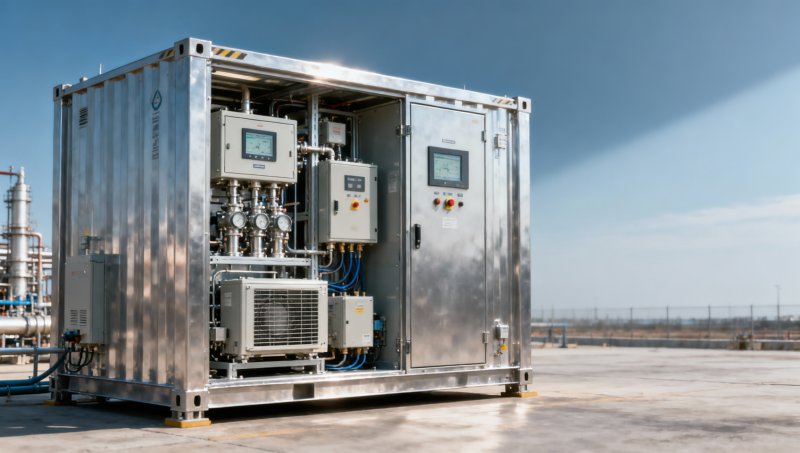
The largest share of gas quality analyzer shelter cost usually comes from four categories: enclosure structure, analyzer and sampling integration, environmental control, and electrical or automation systems. In many industrial projects, the shelter shell itself may account for roughly 20% to 35% of the total package value, while analyzer systems, sample handling, and associated controls can account for 40% to 60%, depending on the number of measurement points and analytical methods involved.
Material selection is one of the first cost levers. Carbon steel shelters are often selected where ambient corrosion is moderate and budgets are tighter, while stainless steel or coated corrosion-resistant structures are preferred in coastal, chemical, or sour gas environments. The price gap between basic painted steel and higher-grade corrosion-resistant construction can be meaningful, especially when the project requires a service life of 10 years or more with limited structural maintenance.
Analyzer integration also changes cost rapidly. A shelter designed only for methane and carbon dioxide monitoring is generally less complex than one combining H2S, moisture, oxygen, calorific value, Wobbe index, or sulfur measurement. More analyzers mean more sample conditioning, more calibration gas lines, more panel space, additional tubing, and more commissioning hours. For multi-stream systems, the need for stream switching and validation logic increases both engineering effort and material cost.
Environmental control systems should not be treated as optional add-ons. In many installations, shelters must maintain internal conditions such as 18°C to 28°C, or at least keep analyzers within manufacturer-recommended operating windows. This often requires air conditioning, heating, insulation, ventilation fans, thermostats, and sometimes redundant HVAC. Once temperature control, anti-condensation design, or positive pressure systems are added, the project budget can rise significantly, but so can analytical reliability.
Typical Package Elements That Influence Budget
Buyers comparing quotations should confirm whether the shelter package includes only the building, or a complete analyzer house solution. The difference affects not just price, but also responsibilities during installation and start-up.
- Structural enclosure, base frame, flooring, doors, windows, and internal layout
- Sample probes, heated lines, sample conditioning panels, filters, regulators, and drains
- Gas quality analyzers, transmitters, PLC or RTU interface, HMI, and communication modules
- HVAC, lighting, junction boxes, cable trays, grounding, and power distribution panels
- Fire and gas detectors, alarms, emergency shutdown links, and hazardous area protection measures
A package that looks 15% cheaper at quotation stage may later require separate site integration, third-party panel work, or additional compliance upgrades. That is why project managers often compare total installed cost rather than equipment-only cost.
Configuration Levels and Their Cost Impact
The table below shows how common shelter configurations can influence budget expectations and project complexity in instrumentation applications.
Recommended for You
 First Global White Paper on Humanoid Robot Industrial Calibration ReleasedHumanoid robot industrial calibration: First global white paper released—key for sensor makers, integrators & metrology labs. Learn impact & action steps.
 FDA Updates IVD Import Guidance: CNAS Calibration Chain RequiredFDA mandates CNAS calibration chain with NIST traceability for IVD instruments from China—act now to avoid U.S. import rejection starting July 1, 2026.
 IEC TC65 Releases Cybersecurity Validation Guidance for Industrial InstrumentsIEC TC65 releases cybersecurity validation guidance for industrial instruments—key for exporters, OEMs & integrators targeting EU/NA markets. Act now.
 ASEAN Green Corridor for Measuring Instruments Fully LaunchedASEAN Green Corridor for Measuring Instruments is live—unlock 3.8-hour customs clearance for CNAS-calibrated instruments across all 10 ASEAN nations. Act now!
 PTB Opens Direct VDA/ISO 17025 Report Portal for CNAS LabsPTB opens direct VDA/ISO 17025 report portal for CNAS labs — enabling dual-compliant calibration reports in <72h. Boost automotive audit readiness now!
 Vietnam Enforces Dual CNAS + Vietnamese Language Requirement for Industrial InstrumentsVietnam enforces dual CNAS + Vietnamese language requirement for industrial instruments (HS 9026/9027/9030) — avoid customs rejection. Act now!
 Red Sea Crisis Escalates: Gulf of Aden No-Sail Zone Extended to June 15, 2026Red Sea Crisis escalates: Gulf of Aden no-sail zone extended to June 15, 2026 — impacting industrial instrumentation trade, airfreight costs (+452%), and supply chain resilience between China and the Middle East.
 SASO Mandates AI-Driven Energy Simulation for Industrial Transmitters from June 2026SASO mandates AI-driven energy simulation for industrial transmitters from June 2026 — ensure compliance with NAIEC-certified testing now to avoid delays & rejections.
 BIS Adds 3 High-Precision Process Calibrators to EAR Supplement No. 4BIS Adds 3 High-Precision Process Calibrators to EAR Supplement No. 4—urgent compliance insights for semiconductor, nuclear, and calibration service providers operating with China.
 EU PEF Carbon Footprint Database Mandatory Integration CountdownEU PEF Carbon Footprint Database integration is mandatory for industrial instrument exporters by Jan 2027—act now to secure market access, customs clearance & B2B tenders.
 FDA Updates IVD Import Guidance: CNAS Calibration Traceability to NIST Required for Chinese ManufacturersFDA now requires CNAS calibration traceability to NIST for Chinese IVD manufacturers — critical for 510(k)/De Novo submissions. Act now to avoid RTA delays!
 ASEAN's Green Clearance Corridor Fully LaunchedGreen Clearance Corridor now live: CNAS calibration reports auto-verified for ASEAN customs clearance in under 4 hours — boost your China–ASEAN trade efficiency today!
 First Global Cybersecurity Verification Guide for Industrial Instruments ReleasedFirst global cybersecurity verification guide for industrial instruments launched—featuring a 5-level maturity model & standardized pentest library. Essential for exporters, OEMs, and critical infrastructure suppliers.
 SASO Shortens Energy Labeling for Industrial Transmitters to 7 Days, Adds AI Power Simulation RequirementSASO energy labeling for industrial transmitters now takes just 7 days — but requires AI power simulation. Learn how to comply fast and avoid delays.
 PTB Launches AI Calibration Cloud Platform 2.0PTB AI Calibration Cloud Platform 2.0 launches with CNAS-VDA 5/ISO/IEC 17025 dual-compliance reporting — streamline cross-border calibration for auto suppliers, labs & equipment makers.
 EU Mandates Carbon Footprint Labels on Industrial Instruments from 2027EU mandates carbon footprint labels on industrial instruments from 2027—key for pressure, temperature & flow meter exporters. Act now to ensure PEF compliance and market access.
 Red Sea Crisis Worsens: Gulf of Aden Ban Extends to 3 Weeks, Air Freight Premiums for Industrial Instruments Surge 420%Red Sea crisis deepens: Gulf of Aden ban hits 3 weeks, spiking air freight premiums for industrial instruments by 420%—urgent insights for exporters & EPC contractors.
 Vietnam Enforces CNAS + Vietnamese Dual Requirement for Industrial InstrumentsVietnam Enforces CNAS + Vietnamese Dual Requirement for Industrial Instruments: Key compliance update for exporters, labs & documentation teams ahead of June 2026.
 U.S. BIS Adds 5 High-Precision Pressure/Flow Calibration Sources to EAR ListU.S. BIS adds 5 high-precision pressure/flow calibration sources to EAR list — critical for exporters, instrument makers & supply chain teams. Act now.
 IEC 61508-3:2026 Published: Functional Safety Certification UpgradedIEC 61508-3:2026 is live—discover what the upgraded functional safety certification means for your industrial software, AI diagnostics & global market access.
 FDA Updates IVD Import Guidance: CNAS Calibration Chain Required for China-Made DevicesFDA now requires CNAS calibration chain reports for China-made IVD analyzers—pH, ion & clinical chemistry devices entering via 510(k)/De Novo. Act now to avoid U.S. port rejections.
 EN 61000-6-4:2026 Enters Force: Stricter EMC Requirements for Industrial Field InstrumentsEN 61000-6-4:2026 enforces stricter EMC requirements for industrial field instruments—key for AI edge controllers, sensors & exporters. Act now to ensure CE-EMC compliance by Nov 2026.
 Global Methanol Electric Alliance Launches Cross-Border Energy Efficiency Recognition RoadmapGlobal Methanol Electric Alliance launches cross-border energy efficiency recognition roadmap—key for exporters, cal labs & methanol-instrument manufacturers.
 Red Sea Crisis Escalates: Air Freight Premiums for China–Middle East Industrial Instruments Hit 390%Red Sea Crisis hits industrial instruments: China–Middle East air freight premiums surge 390%. Act now to secure Q3 capacity, avoid delays & optimize LCL alternatives.
 IEC TC65 Mandates Cybersecurity Certification for Industrial Field Instruments from 2027IEC TC65 mandates cybersecurity certification for industrial field instruments by 2027 — pressure, flow & analytical devices must meet IEC 62443-4-2:2026 and display SL1–SL3 labels. Act now to ensure market access.
 SASO Cuts Energy Labeling Turnaround for Industrial Transmitters to 7 Working DaysSASO Energy Labeling now takes just 7 working days for industrial transmitters — faster market access, CNAS reports accepted. Act now!
 PTB Launches CalCloud 2.0 with Direct CNAS Lab IntegrationCalCloud 2.0 now integrates directly with CNAS labs—enabling automated VDA 5 & ISO/IEC 17025 dual-compliant calibration reports for automotive and industrial exporters. Boost compliance efficiency today!
 ASEAN's Green Clearance Corridor for CNAS Calibration Reports LaunchesASEAN's Green Clearance Corridor now verifies CNAS calibration reports via blockchain—cut customs clearance to <48h for flow meters, analyzers & more. Act now!
 Vietnam Mandates CNAS Calibration Certificates & Vietnamese Manuals for Industrial Meters from June 1, 2026CNAS calibration certificates & Vietnamese manuals now mandatory for industrial meters entering Vietnam from June 1, 2026—avoid customs delays and ensure seamless market access.
 U.S. BIS Tightens Export Controls on High-Precision Laser InterferometersU.S. BIS tightens export controls on high-precision laser interferometers—critical for semiconductor metrology & ISO/IEC 17025 calibration. Act now to ensure compliance.
 Paramagnetic Monitor Calibration Tips for Stable OutputParamagnetic monitor calibration tips for stable output: learn how to reduce drift, improve accuracy, cut downtime, and keep oxygen measurement reliable in demanding industrial applications.
 Paramagnetic Measurement in Low-Oxygen Process ControlParamagnetic measurement enables accurate low-oxygen process control with fast response and stable oxygen analysis. Learn how it improves safety, consistency, and system performance.



















Search Categories
Search Categories
Latest Article
- First Global White Paper on Humanoid Robot Industrial Calibration ReleasedHumanoid robot industrial calibration: First global white paper released—key for sensor makers, integrators & metrology labs. Learn impact & action steps.Posted by:
- FDA Updates IVD Import Guidance: CNAS Calibration Chain RequiredFDA mandates CNAS calibration chain with NIST traceability for IVD instruments from China—act now to avoid U.S. import rejection starting July 1, 2026.Posted by:
- IEC TC65 Releases Cybersecurity Validation Guidance for Industrial InstrumentsIEC TC65 releases cybersecurity validation guidance for industrial instruments—key for exporters, OEMs & integrators targeting EU/NA markets. Act now.Posted by:
Please give us a message
