
Flue Gas Analyzer Shelter for Harsh Sites


A flue gas analyzer shelter is essential for harsh sites where dust, vibration, moisture, and temperature extremes can compromise accuracy and uptime. Designed as an emission control shelter and process control shelter, it protects gas quality monitoring equipment, flue gas monitoring equipment, and emission monitoring equipment while supporting safer operation, easier maintenance, and more reliable process monitoring for demanding industrial environments.
For operators, engineers, buyers, project managers, safety teams, and financial approvers, the shelter is not just a housing structure. It is a practical part of the instrumentation system that directly affects analyzer stability, calibration frequency, maintenance labor, and compliance readiness. In facilities such as power plants, waste incineration lines, cement production, petrochemical units, metal processing, and environmental monitoring stations, shelter design often determines whether the analyzer delivers usable data over 24/7 duty cycles.
When site conditions include ambient temperatures from -20°C to 50°C, high particulate loading, continuous vibration, or coastal humidity above 85%, unprotected analyzers face faster component aging, signal drift, and unplanned shutdowns. A properly specified flue gas analyzer shelter helps reduce those risks by creating a controlled space for sample conditioning systems, gas analyzers, cabinets, power distribution, and service access.
Why a Flue Gas Analyzer Shelter Matters in Harsh Industrial Sites
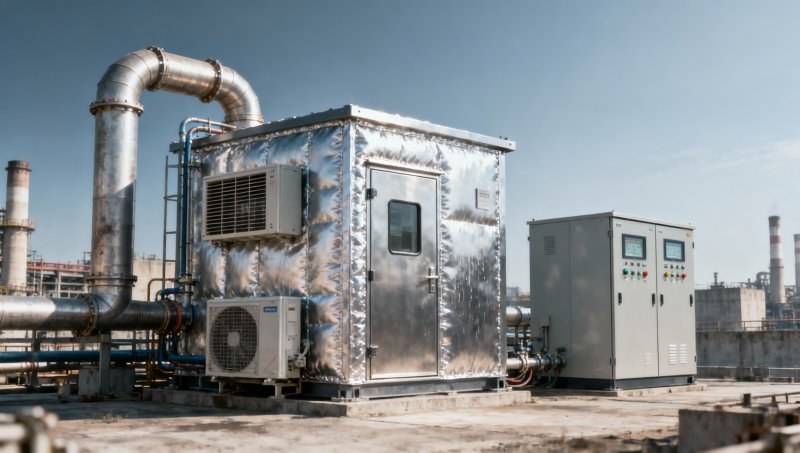
In the instrumentation industry, measurement quality depends not only on the analyzer itself but also on the environment around it. Harsh industrial sites expose instruments to dust ingress, corrosive gases, rainwater, solar heat gain, and mechanical stress. Even a high-grade analyzer can lose accuracy if the shelter does not maintain stable internal conditions for electronics, sample lines, and calibration components.
A flue gas analyzer shelter acts as a controlled interface between the process area and the monitoring system. It typically integrates insulation, ventilation, air conditioning or heating, lighting, cable routing, gas cylinder storage arrangements, and service space. In many projects, the shelter supports 1 to 4 analyzer cabinets, a sample conditioning unit, a PLC or DCS interface panel, and safety devices such as gas leak alarms or emergency exhaust fans.
For process control and emissions monitoring, stable enclosure conditions improve repeatability and reduce operator intervention. If the internal shelter temperature is kept within a common range such as 15°C to 30°C, analyzer warm-up becomes more predictable and condensation risk drops. That means fewer manual checks per shift and less troubleshooting during weather changes or process upsets.
The shelter also supports compliance and plant governance. Environmental managers and quality teams need reliable records, not intermittent values caused by moisture or cabinet overheating. Procurement teams need equipment that can survive 5 to 10 years of service without excessive repair costs. Decision-makers need a clear view of total ownership cost, including maintenance hours, replacement intervals, and downtime exposure.
From a safety perspective, a dedicated shelter improves access control and keeps wiring, tubing, and calibration equipment organized. This is especially important when operators must perform weekly inspection rounds, monthly filter replacement, or quarterly calibration verification. A poor layout can add 20 to 30 minutes to each maintenance task, while a well-planned shelter reduces service time and lowers error risk.
Typical Site Challenges That Affect Analyzer Performance
- Dust concentrations and fly ash that clog filters, sample probes, and cooling passages.
- Ambient temperature swings of 25°C or more within a 24-hour period, causing condensation or thermal stress.
- Vibration from fans, mills, compressors, or nearby rotating equipment that loosens terminals and damages tubing supports.
- High moisture, rain, washdown exposure, or coastal corrosion that affects enclosure integrity and electrical reliability.
- Limited service access in elevated platforms, narrow plant corridors, or hazardous process zones.
Operational Benefits by Stakeholder
Different teams evaluate the same shelter from different angles. Operators focus on access and uptime. Technical evaluators check thermal control, layout, and material compatibility. Procurement compares initial cost against expected service life. Finance reviews lifecycle value, especially when maintenance frequency can drop from weekly reactive work to scheduled monthly inspection.
Key Design Elements of an Effective Emission Control Shelter
A strong shelter design starts with the enclosure structure. For outdoor duty, common material choices include painted carbon steel, stainless steel, and insulated panel assemblies. Material selection depends on corrosion level, installation budget, expected lifespan, and maintenance strategy. In coastal, chemical, or high-humidity zones, corrosion resistance should be reviewed early because repainting or panel replacement within 2 to 3 years can erase any initial savings.
Thermal control is equally critical. Many gas analyzers and conditioning systems perform best within a narrow operating envelope, often around 18°C to 28°C. In colder regions, shelter heating prevents freezing in sample lines and drains. In hotter climates, HVAC capacity must cover internal heat load from analyzers, pumps, lighting, and solar radiation. A rough planning approach may consider 2 to 6 kW of cooling demand depending on shelter size and internal equipment density.
Internal layout affects both safety and serviceability. A well-organized process control shelter separates electrical panels from gas paths, leaves enough front and side clearance for cabinet doors, and allows at least 700 to 900 mm of working aisle space where practical. This helps technicians replace filters, inspect pumps, and perform calibration without disturbing adjacent instruments.
Ingress protection and sealing details are often underestimated. Door gaskets, cable glands, floor penetration sealing, and ventilation louver design all influence long-term reliability. For dusty areas, designers commonly target enclosure concepts aligned with higher protection levels and filtered ventilation. In wet zones, drainage and roof overhangs help prevent water intrusion during storms or washdown events.
The following table summarizes practical design factors that technical teams often compare during specification review.
The key takeaway is that shelter design should follow the analyzer process, not the other way around. Oversizing the HVAC unit while ignoring drainage or service clearance does not create a durable solution. A balanced design combines thermal control, structural protection, internal accessibility, and clean routing for cables, tubing, and drains.
H4-Level Design Review Points
Mechanical Integration
Check base frame rigidity, lifting points, anchoring method, and vibration isolation where nearby equipment creates continuous movement. Even moderate vibration over 6 to 12 months can affect terminal integrity and tubing joints if supports are weak.
Utilities and Safety
Review power supply, lighting level, ventilation logic, fire protection interface, and alarm outputs. For critical installations, teams often add local status indication and remote alarm signals to reduce response time during faults.
How to Select the Right Shelter for Process Monitoring and Compliance
Selecting a flue gas analyzer shelter should begin with the application, not with a generic enclosure size. A shelter serving a continuous emissions monitoring task may need different ventilation, calibration gas handling, and uptime priorities than one used mainly for process optimization. Buyers should define at least 4 core inputs first: analyzer type, number of cabinets, environmental conditions, and required maintenance access.
It is also useful to separate critical requirements from preferred features. Critical items include temperature control, weather resistance, internal layout, electrical safety, and compatibility with the sample conditioning system. Preferred items may include upgraded corrosion protection, spare service ports, remote diagnostics interface, or enhanced lighting for night maintenance. This distinction helps procurement compare suppliers without losing focus on operational essentials.
Financial approvers often ask whether a lower-priced shelter can provide similar value. The answer depends on lifecycle factors. If a lower-cost unit increases service visits from once per month to once per week, the labor cost over 3 years may exceed the original savings. The same applies if poor insulation leads to HVAC overload and repeated shutdowns during summer peak conditions.
Technical evaluation should include a structured checklist. This makes reviews more consistent across engineering, operations, safety, and purchasing teams. The table below provides a practical decision framework that can be used during RFQ comparison.
The strongest purchasing decisions usually come from cross-functional review. A project manager may focus on delivery timing, while an operator highlights access problems that would otherwise be discovered only after installation. Bringing these views together during the evaluation stage reduces redesign, site modification, and startup delays.
A Practical 5-Step Selection Process
- Define the process monitoring goal, analyzer configuration, and expected duty cycle.
- Confirm site conditions, including temperature range, dust loading, vibration, and corrosive atmosphere.
- Review shelter layout, service access, and utility requirements with operations and maintenance teams.
- Compare lifecycle cost across 3 to 5 years, not only purchase price and freight cost.
- Validate documentation scope, FAT expectations, and field installation responsibilities before order release.
Implementation, Maintenance, and Long-Term Reliability
A well-built shelter still needs disciplined implementation. Many reliability problems appear during transport, installation, or startup rather than during manufacturing. Cable entry points may be left unsealed, drain routing may be incorrect, or HVAC settings may not match the local climate. A clear project plan with mechanical, electrical, and instrumentation checkpoints helps avoid these issues before the analyzer enters full operation.
For many projects, a realistic delivery and implementation window includes 2 to 4 weeks for engineering confirmation, 4 to 8 weeks for fabrication depending on complexity, and several days to 2 weeks for site installation and commissioning. Complex configurations with multiple analyzers, sample systems, and remote interfaces may take longer, especially if plant shutdown coordination is required.
Preventive maintenance should be built into the shelter concept from day one. Common tasks include weekly visual checks, monthly inspection of filters and seals, quarterly review of HVAC performance, and scheduled verification of alarms, lighting, and internal corrosion points. If the shelter lacks logical access and clean arrangement, these simple tasks become costly and irregular, increasing the risk of unnoticed degradation.
Service strategy also matters for distributors and project contractors. End users often prefer shelters that allow standard spare parts, straightforward panel labeling, and clear documentation for routine work. This is especially important when plants operate with limited on-site analyzer specialists and depend on general maintenance technicians for first-line response.
The following checklist outlines maintenance areas that directly support analyzer uptime and measurement quality.
- Inspect door seals, cable glands, and roof or floor penetrations every 1 to 3 months for dust or water ingress.
- Check internal temperature and humidity trend performance, especially during seasonal transitions and high-load summer periods.
- Clean or replace ventilation and HVAC filters according to site dust load, often every 1 to 4 weeks in heavy particulate areas.
- Verify drain lines, sample line heat tracing, and condensation management before winter operation or rainy season peaks.
- Confirm alarm outputs, lighting, emergency switches, and panel labeling during routine safety inspections.
Common Mistakes That Reduce Shelter Value
Undersized Thermal Management
Selecting HVAC based only on floor area, without considering solar load and analyzer heat release, often causes summer faults. A shelter that is comfortable at 25°C ambient may become unstable when outside temperature reaches 40°C.
Poor Service Layout
If cabinets are packed too tightly, technicians may need partial disassembly just to reach filters or terminals. This increases maintenance time and raises the chance of accidental disturbance to live systems.
Ignoring Site-Specific Corrosion Risk
Plants near coastlines, chemical units, or waste handling areas often need stronger material and coating decisions. Assuming a standard finish will last 8 to 10 years can be unrealistic in aggressive atmospheres.
FAQ for Buyers, Engineers, and Plant Teams
The questions below reflect common concerns from technical reviewers, purchasing teams, and plant managers when planning a flue gas analyzer shelter for demanding sites. They also help expand the evaluation beyond basic enclosure dimensions.
How do I know if my site really needs a dedicated analyzer shelter?
If the analyzer is exposed to outdoor weather, dust, vibration, washdown, or major temperature swings, a dedicated shelter is usually worth considering. Sites with ambient conditions below 0°C or above 35°C, heavy fly ash, or continuous 24/7 operation are strong candidates because stability and service access directly affect usable measurement data.
What should procurement focus on besides price?
Focus on lifecycle cost, service frequency, internal accessibility, insulation quality, HVAC suitability, and corrosion resistance. A lower purchase price may lead to more maintenance hours, more spare consumption, or earlier refurbishment. Reviewing a 3-year to 5-year operating cost usually gives a clearer business case than comparing capital cost only.
How long does delivery usually take?
For standard industrial configurations, many projects plan around 6 to 12 weeks from approved drawings to shipment, depending on complexity and utility requirements. Site installation may then take several days to 2 weeks. Projects with custom instrumentation interfaces, multiple analyzer trains, or special material requirements often need a longer schedule.
Which parameters matter most for technical evaluation?
The most important parameters usually include ambient design range, internal temperature target, insulation thickness, utility load, access clearance, material selection, and routing for sample, drain, and electrical systems. It is also wise to review alarm logic, ventilation method, and maintenance frequency assumptions before final approval.
Can one shelter support both emissions monitoring and process control analyzers?
Yes, in many cases one shelter can support both functions if layout, utility load, and maintenance access are carefully planned. However, combining systems should not compromise serviceability or thermal performance. The design must still allow safe access, organized routing, and stable operating conditions for each analyzer and sample conditioning module.
A flue gas analyzer shelter is more than a protective enclosure. It is a reliability platform for measurement, compliance, maintenance efficiency, and safer plant operation. When selected with attention to environmental conditions, thermal control, internal layout, lifecycle cost, and maintenance access, it helps protect gas quality monitoring equipment and supports more dependable process monitoring in harsh industrial environments.
If you are planning a new analyzer project, upgrading an emission monitoring point, or comparing enclosure options for difficult field conditions, now is the right time to review the shelter as part of the full instrumentation solution. Contact us to discuss your site conditions, request a tailored configuration, or get more details on flue gas analyzer shelter solutions for demanding applications.
Recommended for You
 First Global White Paper on Humanoid Robot Industrial Calibration ReleasedHumanoid robot industrial calibration: First global white paper released—key for sensor makers, integrators & metrology labs. Learn impact & action steps.
 FDA Updates IVD Import Guidance: CNAS Calibration Chain RequiredFDA mandates CNAS calibration chain with NIST traceability for IVD instruments from China—act now to avoid U.S. import rejection starting July 1, 2026.
 IEC TC65 Releases Cybersecurity Validation Guidance for Industrial InstrumentsIEC TC65 releases cybersecurity validation guidance for industrial instruments—key for exporters, OEMs & integrators targeting EU/NA markets. Act now.
 ASEAN Green Corridor for Measuring Instruments Fully LaunchedASEAN Green Corridor for Measuring Instruments is live—unlock 3.8-hour customs clearance for CNAS-calibrated instruments across all 10 ASEAN nations. Act now!
 PTB Opens Direct VDA/ISO 17025 Report Portal for CNAS LabsPTB opens direct VDA/ISO 17025 report portal for CNAS labs — enabling dual-compliant calibration reports in <72h. Boost automotive audit readiness now!
 Vietnam Enforces Dual CNAS + Vietnamese Language Requirement for Industrial InstrumentsVietnam enforces dual CNAS + Vietnamese language requirement for industrial instruments (HS 9026/9027/9030) — avoid customs rejection. Act now!
 Red Sea Crisis Escalates: Gulf of Aden No-Sail Zone Extended to June 15, 2026Red Sea Crisis escalates: Gulf of Aden no-sail zone extended to June 15, 2026 — impacting industrial instrumentation trade, airfreight costs (+452%), and supply chain resilience between China and the Middle East.
 SASO Mandates AI-Driven Energy Simulation for Industrial Transmitters from June 2026SASO mandates AI-driven energy simulation for industrial transmitters from June 2026 — ensure compliance with NAIEC-certified testing now to avoid delays & rejections.
 BIS Adds 3 High-Precision Process Calibrators to EAR Supplement No. 4BIS Adds 3 High-Precision Process Calibrators to EAR Supplement No. 4—urgent compliance insights for semiconductor, nuclear, and calibration service providers operating with China.
 EU PEF Carbon Footprint Database Mandatory Integration CountdownEU PEF Carbon Footprint Database integration is mandatory for industrial instrument exporters by Jan 2027—act now to secure market access, customs clearance & B2B tenders.
 FDA Updates IVD Import Guidance: CNAS Calibration Traceability to NIST Required for Chinese ManufacturersFDA now requires CNAS calibration traceability to NIST for Chinese IVD manufacturers — critical for 510(k)/De Novo submissions. Act now to avoid RTA delays!
 ASEAN's Green Clearance Corridor Fully LaunchedGreen Clearance Corridor now live: CNAS calibration reports auto-verified for ASEAN customs clearance in under 4 hours — boost your China–ASEAN trade efficiency today!
 First Global Cybersecurity Verification Guide for Industrial Instruments ReleasedFirst global cybersecurity verification guide for industrial instruments launched—featuring a 5-level maturity model & standardized pentest library. Essential for exporters, OEMs, and critical infrastructure suppliers.
 SASO Shortens Energy Labeling for Industrial Transmitters to 7 Days, Adds AI Power Simulation RequirementSASO energy labeling for industrial transmitters now takes just 7 days — but requires AI power simulation. Learn how to comply fast and avoid delays.
 PTB Launches AI Calibration Cloud Platform 2.0PTB AI Calibration Cloud Platform 2.0 launches with CNAS-VDA 5/ISO/IEC 17025 dual-compliance reporting — streamline cross-border calibration for auto suppliers, labs & equipment makers.
 EU Mandates Carbon Footprint Labels on Industrial Instruments from 2027EU mandates carbon footprint labels on industrial instruments from 2027—key for pressure, temperature & flow meter exporters. Act now to ensure PEF compliance and market access.
 Red Sea Crisis Worsens: Gulf of Aden Ban Extends to 3 Weeks, Air Freight Premiums for Industrial Instruments Surge 420%Red Sea crisis deepens: Gulf of Aden ban hits 3 weeks, spiking air freight premiums for industrial instruments by 420%—urgent insights for exporters & EPC contractors.
 Vietnam Enforces CNAS + Vietnamese Dual Requirement for Industrial InstrumentsVietnam Enforces CNAS + Vietnamese Dual Requirement for Industrial Instruments: Key compliance update for exporters, labs & documentation teams ahead of June 2026.
 U.S. BIS Adds 5 High-Precision Pressure/Flow Calibration Sources to EAR ListU.S. BIS adds 5 high-precision pressure/flow calibration sources to EAR list — critical for exporters, instrument makers & supply chain teams. Act now.
 IEC 61508-3:2026 Published: Functional Safety Certification UpgradedIEC 61508-3:2026 is live—discover what the upgraded functional safety certification means for your industrial software, AI diagnostics & global market access.
 FDA Updates IVD Import Guidance: CNAS Calibration Chain Required for China-Made DevicesFDA now requires CNAS calibration chain reports for China-made IVD analyzers—pH, ion & clinical chemistry devices entering via 510(k)/De Novo. Act now to avoid U.S. port rejections.
 EN 61000-6-4:2026 Enters Force: Stricter EMC Requirements for Industrial Field InstrumentsEN 61000-6-4:2026 enforces stricter EMC requirements for industrial field instruments—key for AI edge controllers, sensors & exporters. Act now to ensure CE-EMC compliance by Nov 2026.
 Global Methanol Electric Alliance Launches Cross-Border Energy Efficiency Recognition RoadmapGlobal Methanol Electric Alliance launches cross-border energy efficiency recognition roadmap—key for exporters, cal labs & methanol-instrument manufacturers.
 Red Sea Crisis Escalates: Air Freight Premiums for China–Middle East Industrial Instruments Hit 390%Red Sea Crisis hits industrial instruments: China–Middle East air freight premiums surge 390%. Act now to secure Q3 capacity, avoid delays & optimize LCL alternatives.
 IEC TC65 Mandates Cybersecurity Certification for Industrial Field Instruments from 2027IEC TC65 mandates cybersecurity certification for industrial field instruments by 2027 — pressure, flow & analytical devices must meet IEC 62443-4-2:2026 and display SL1–SL3 labels. Act now to ensure market access.
 SASO Cuts Energy Labeling Turnaround for Industrial Transmitters to 7 Working DaysSASO Energy Labeling now takes just 7 working days for industrial transmitters — faster market access, CNAS reports accepted. Act now!
 PTB Launches CalCloud 2.0 with Direct CNAS Lab IntegrationCalCloud 2.0 now integrates directly with CNAS labs—enabling automated VDA 5 & ISO/IEC 17025 dual-compliant calibration reports for automotive and industrial exporters. Boost compliance efficiency today!
 ASEAN's Green Clearance Corridor for CNAS Calibration Reports LaunchesASEAN's Green Clearance Corridor now verifies CNAS calibration reports via blockchain—cut customs clearance to <48h for flow meters, analyzers & more. Act now!
 Vietnam Mandates CNAS Calibration Certificates & Vietnamese Manuals for Industrial Meters from June 1, 2026CNAS calibration certificates & Vietnamese manuals now mandatory for industrial meters entering Vietnam from June 1, 2026—avoid customs delays and ensure seamless market access.
 U.S. BIS Tightens Export Controls on High-Precision Laser InterferometersU.S. BIS tightens export controls on high-precision laser interferometers—critical for semiconductor metrology & ISO/IEC 17025 calibration. Act now to ensure compliance.
 Paramagnetic Monitor Calibration Tips for Stable OutputParamagnetic monitor calibration tips for stable output: learn how to reduce drift, improve accuracy, cut downtime, and keep oxygen measurement reliable in demanding industrial applications.
 Paramagnetic Measurement in Low-Oxygen Process ControlParamagnetic measurement enables accurate low-oxygen process control with fast response and stable oxygen analysis. Learn how it improves safety, consistency, and system performance.






Search Categories
Search Categories
Latest Article
- First Global White Paper on Humanoid Robot Industrial Calibration ReleasedHumanoid robot industrial calibration: First global white paper released—key for sensor makers, integrators & metrology labs. Learn impact & action steps.Posted by:
- FDA Updates IVD Import Guidance: CNAS Calibration Chain RequiredFDA mandates CNAS calibration chain with NIST traceability for IVD instruments from China—act now to avoid U.S. import rejection starting July 1, 2026.Posted by:
- IEC TC65 Releases Cybersecurity Validation Guidance for Industrial InstrumentsIEC TC65 releases cybersecurity validation guidance for industrial instruments—key for exporters, OEMs & integrators targeting EU/NA markets. Act now.Posted by:
Please give us a message
