
Laser measurement pricing is shifting with component supply


Laser measurement pricing is no longer moving in a predictable, linear way. For buyers and technical teams, the main issue is not simply that prices are rising, but that pricing is becoming uneven across product types, lead times, and component-dependent configurations. If you are comparing fixed analysis, portable analysis, continuous analysis, or custom analysis systems, the right question is: which solution still delivers acceptable accuracy, compliance, and lifecycle value under current supply conditions? In today’s instrumentation market, decisions are being shaped as much by sensor availability, electronics sourcing, certification constraints, and after-sales support as by the headline purchase price.
For procurement teams, operators, engineers, and decision-makers, that means a more disciplined evaluation process is essential. Explosion proof systems, multi gas analyzers, paramagnetic oxygen analyzers, thermal measurement devices, and online measurement platforms may all face different pricing pressure depending on components, enclosure requirements, communication modules, and calibration needs. Understanding where those cost shifts come from can help reduce risk, avoid overbuying, and improve long-term return on investment.
Why laser measurement pricing is changing now
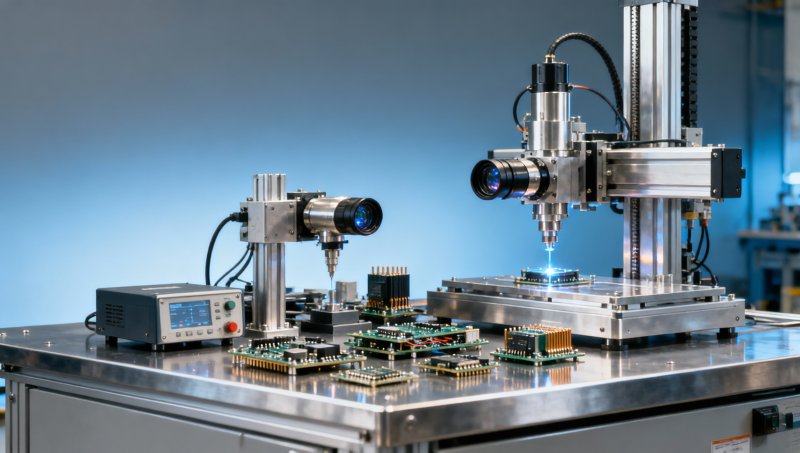
The most important driver behind current laser measurement pricing shifts is component supply volatility. In the instrumentation industry, even a stable-looking analyzer or measurement platform often depends on a complex bill of materials: lasers, detectors, optical components, industrial processors, power modules, communication chips, display units, certified housings, and specialty connectors. When one or two critical parts become harder to source, total system pricing can change quickly.
This affects laser-based measurement products in several ways:
- Core optical and electronic components may rise in cost, especially when suppliers reduce allocation or increase minimum order quantities.
- Lead times can extend, which raises inventory carrying costs for manufacturers and often gets reflected in customer quotations.
- Certified configurations cost more to maintain, especially for explosion proof and hazardous-area systems where substitute components may require renewed validation.
- Lower-volume custom systems become more expensive because engineering teams must redesign around available components.
- Service and spare parts planning becomes harder, increasing lifecycle cost even if initial pricing appears acceptable.
For buyers, the practical takeaway is clear: the quoted price now reflects not only product capability, but also supply-chain resilience. Two systems with similar specifications may differ significantly in delivery certainty, supportability, and future maintenance cost.
What different buyer groups care about most before approving a purchase
Although the title focuses on pricing, most stakeholders are actually trying to answer broader business and technical questions.
Information researchers want a reliable picture of market movement, technology alternatives, and pricing logic rather than generic claims.
Users and operators care about ease of use, calibration frequency, downtime risk, and whether a substitute model will affect daily operations.
Technical evaluators focus on measurement principle, repeatability, drift, environmental suitability, system integration, and whether a lower-cost option changes analytical performance.
Procurement teams want supplier stability, lead-time transparency, available options, total delivered cost, and negotiation leverage.
Business decision-makers and finance approvers look at budget impact, payback period, compliance exposure, downtime cost, and asset life.
Quality and safety managers are concerned with regulatory fit, hazardous-area certification, alarm reliability, and traceable calibration performance.
Project managers and engineering leads need delivery confidence, installation compatibility, commissioning timelines, and reduced risk of rework.
Distributors and channel partners care about stock planning, margin pressure, replacement demand, and supplier continuity.
That is why a useful laser measurement pricing discussion must go beyond “prices are up” and instead explain where cost changes matter and where they do not.
Which product categories are most affected by supply-driven price movement
Not all measurement systems are being affected equally. Buyers should compare categories based on component sensitivity, certification requirements, and customization level.
Fixed analysis systems
Fixed analysis solutions used in industrial manufacturing, energy and power, process control, and environmental monitoring often depend on ruggedized electronics, stable optics, and industrial communication interfaces. Their pricing is especially sensitive when the system must operate continuously in demanding conditions. If your process requires 24/7 reliability, a cheaper alternative may create greater long-term cost through drift, maintenance, or unplanned stoppages.
Portable analysis instruments
Portable analysis products are often influenced by battery modules, compact sensors, displays, onboard processing components, and enclosure materials. These products may show sharper short-term pricing swings because small-form-factor parts are often sourced from broader electronics markets. Buyers should pay attention to replacement parts, battery lifecycle, and field calibration support.
Continuous analysis and online measurement systems
Continuous analysis and online measurement technologies typically involve higher integration complexity. They may require sampling systems, communication gateways, thermal management, alarms, and software interfaces. Even if the analyzer itself remains available, supporting modules may drive price increases. In these cases, total installed cost matters more than the analyzer list price alone.
Custom analysis solutions
Custom analysis systems are usually the most exposed to supply-driven pricing changes. Engineering redesign, firmware adjustments, enclosure modifications, and compliance updates can all raise project cost. However, for critical applications, custom solutions may still offer better value if they reduce process risk, improve safety, or avoid repeated retrofits.
Specialized technologies
Products such as explosion proof analyzers, multi gas systems, paramagnetic oxygen analyzers, and thermal measurement instruments should be evaluated individually. A supply issue affecting one sensor technology may not affect another in the same way. Certification, accuracy range, gas compatibility, temperature resilience, and maintenance intervals all influence whether a price increase is justified.
How to evaluate laser measurement quotes when component supply is unstable
When pricing is shifting, comparing quotations line by line is not enough. A lower quotation may hide project delays, unavailable spare parts, or reduced support. A better evaluation framework includes the following points.
1. Check component and delivery transparency
Ask suppliers which parts are driving lead time and whether the quoted configuration depends on at-risk components. If they cannot explain this clearly, the risk is higher than it appears.
2. Compare total cost of ownership, not just unit price
Include installation, calibration, consumables, maintenance intervals, spare parts, software licensing, training, and expected downtime. In many instrumentation projects, lifecycle cost outweighs initial purchase price.
3. Confirm compliance and certification boundaries
For hazardous areas, environmental monitoring, regulated industries, or quality-critical production, a substitute component can create approval issues. Ensure the quoted system maintains required certifications and documented performance.
4. Assess measurement performance under real conditions
Review not only nominal accuracy, but also drift, cross-sensitivity, response time, ambient tolerance, and maintenance burden. A lower-cost analyzer that requires more intervention may not be economical.
5. Evaluate service continuity
Can the supplier support calibration, field service, spares, and technical troubleshooting over the full asset life? Supply disruption today can become a service disruption tomorrow.
6. Separate standard and custom cost drivers
If the quotation includes custom sampling, enclosures, software protocols, or integration engineering, ask for a breakdown. This helps identify where value is being created and where simplification is possible.
When a higher price is justified and when it is not
Not every price increase should be accepted automatically. The key is to distinguish between value-based cost and avoidable cost.
A higher price may be justified when:
- The system preserves required accuracy and stability in a harsh environment.
- The supplier can guarantee delivery while competitors cannot.
- The product includes valid explosion proof or industry-specific certification.
- The analyzer reduces labor, downtime, calibration frequency, or process losses.
- Long-term service, spare parts, and integration support are clearly available.
A higher price may not be justified when:
- The specification significantly exceeds actual application needs.
- Custom design is being proposed where a standard platform would work.
- Lead time remains uncertain despite the premium.
- The supplier cannot explain cost changes in technical or supply terms.
- The performance difference has little impact on your process, compliance, or risk profile.
For many buyers, the smartest move is not simply choosing the cheapest or most advanced system, but selecting the configuration that is “fit for purpose” under current supply realities.
Practical buying strategies for procurement, engineering, and management teams
To respond effectively to changing laser measurement pricing, organizations should align technical and commercial decisions early.
- Standardize where possible. Reducing unnecessary variation in models, interfaces, or accessories can improve supply flexibility and simplify maintenance.
- Prioritize critical applications. Reserve premium or custom systems for high-risk, safety-critical, or compliance-sensitive use cases.
- Qualify alternatives in advance. Pre-approve equivalent technologies or backup suppliers before a shortage affects a live project.
- Buy with lifecycle support in mind. A supplier with better local service, calibration capability, and spare stock may provide more value than a lower upfront price.
- Request validity windows on quotations. In unstable component markets, quote validity matters for budgeting and approval timing.
- Coordinate finance and engineering review. Technical teams should explain risk and performance implications so finance approvers can judge beyond capex alone.
- Consider phased procurement. For larger projects, splitting purchases into critical-now and optional-later packages can reduce exposure.
These actions are especially relevant in the instrumentation industry, where equipment choices affect production continuity, quality assurance, environmental compliance, and digital automation goals.
What the market trend means for future laser measurement decisions
The current shift in laser measurement pricing is likely to influence purchasing behavior well beyond the immediate supply cycle. Buyers are becoming less willing to evaluate analyzers only by specification sheets and base pricing. Instead, they are asking stronger questions about resilience, serviceability, interoperability, and long-term operating cost.
That change is healthy for the market. It encourages more practical decision-making around fixed analysis, portable analysis, continuous analysis, and online measurement systems. It also pushes suppliers to be clearer about component sourcing, redesign risk, and support commitments. In sectors such as manufacturing, energy, construction engineering, laboratory analysis, automation control, and environmental monitoring, this more mature buying approach can reduce project failure and improve asset value.
In short, laser measurement pricing is shifting because supply conditions are reshaping the true cost of building and supporting measurement systems. The best response is not reactive buying, but informed evaluation. When you compare options based on application fit, compliance, service continuity, and lifecycle economics—not just headline price—you are far more likely to choose the right analyzer or measurement platform for both current operations and future business needs.
Recommended for You
 Brazil INMETRO to Require Portuguese UI and Local Units for Industrial Instruments by 2026Brazil INMETRO mandates Portuguese UI & local units (mbar, kPa, °C) for industrial instruments by Dec 2026—key for exporters, integrators & service providers.
 STMicroelectronics 200mm Line Eases Industrial Sensor Chip ShortageSTMicroelectronics 200mm line eases industrial sensor chip shortage — MCUs & signal-conditioning ICs now ship in 12 weeks. Secure allocation today.
 Southeast Asia Manufacturing Re-shoring Accelerates: Vietnam/Indonesia Industrial Instrument Imports Up 37% YoYSoutheast Asia manufacturing re-shoring accelerates: Vietnam & Indonesia industrial instrument imports up 37% YoY — key insights for suppliers, OEMs & procurement teams.
 First Global White Paper on Humanoid Robot Sensor Calibration ReleasedHumanoid robot sensor calibration: First global white paper released—key for ISO/IEC JWG 23 compliance, export readiness & dynamic torque accuracy. Act now.
 SAMR to Upgrade EV Battery Recycling Standard to MandatorySAMR to upgrade EV battery recycling standard GB/T 34015—202X to mandatory by Dec 2026 — critical for exporters, BMS makers & cert labs.
 Saudi SASO Accelerates AI Energy Efficiency Rules for TransmittersSASO AI energy efficiency rules for transmitters take effect 1 June 2026 — mandatory AI simulation, Saudi climate data, and authorized lab validation required. Act now to avoid export delays.
 IEC 63278:2026 Released for Industrial Instrument CybersecurityIEC 63278:2026 is live — the first global standard mandating cybersecurity verification for industrial instruments. Discover compliance impacts, deadlines, and actionable steps for OT/IT convergence.
 Red Sea Crisis Escalates: Gulf of Aden Navigation Ban Extended to June 15, 2026Red Sea Crisis escalates: Gulf of Aden navigation ban extended to June 15, 2026—disrupting industrial instrumentation shipments to the Middle East with 458% air freight spikes and 12–18 day delays.
 US DOE Updates Efficiency Rules for Industrial SensorsUS DOE updates industrial sensor efficiency rules: AI-driven dynamic calibration required by Sept 2026. Ensure AI-Cal Verified compliance now.
 EU Mandates PEF Carbon Footprint Module for Industrial Instruments from June 2026EU mandates PEF carbon footprint module for industrial instruments from June 2026—key for exporters, OEMs & certifiers. Act now to ensure compliance.
 Explosion-Proof Instruments: Compliance Risks Before You OrderExplosion-proof instruments can trigger delays, failed inspections, and safety risks if compliance is overlooked. Learn what to verify before ordering and make safer, smarter purchasing decisions.
 Gas Quality Monitoring Equipment Import Rules to Watch in 2026Gas quality monitoring equipment import rules for 2026 are tightening. Learn the key compliance, certification, and customs risks distributors must manage to avoid delays and protect margins.
 Emission Control Shelter Demand Shifts Across Industrial ProjectsEmission control shelter demand is rising across industrial projects as buyers seek faster deployment, reliable monitoring, and compliance-ready designs. Explore key evaluation factors.
 Temperature Measurement Instruments: Selection Mistakes That Raise DowntimeTemperature measurement instruments selection mistakes can drive downtime, unstable control, and higher costs. Discover 5 common errors and practical fixes to improve reliability.
 Thermal Conductivity Analyzers: When Are They the Right Choice?Thermal conductivity analyzers are ideal for binary and high-contrast gas mixtures. Learn when they deliver reliable, low-maintenance online monitoring and smarter project value.
 Level Measurement Instruments for Tanks: What Affects ReliabilityLevel measurement instruments reliability depends on media, installation, and diagnostics. Discover what causes tank reading failures and how to improve safety, uptime, and control.
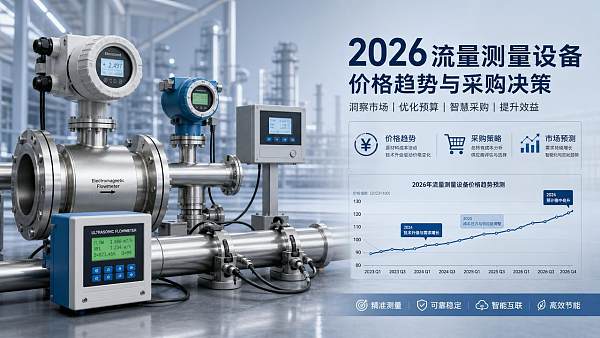
 Flow Measurement Equipment Price Trends in 2026Flow measurement equipment price trends in 2026: learn key cost drivers, budgeting risks, and smart buying strategies to improve ROI and make better procurement decisions.
 Flue Gas Monitoring Equipment: Common Accuracy Issues and FixesFlue gas monitoring equipment accuracy issues can lead to drift, false readings, and compliance risks. Discover common causes, practical fixes, and smarter maintenance tips.
 Process Control Shelter vs Control Room: Key Cost and Deployment DifferencesProcess control shelter vs control room: compare cost, deployment speed, integration, and lifecycle value to choose the smarter solution for industrial automation projects.
 How to Select an Industrial Control Shelter for Harsh Site ConditionsIndustrial control shelter selection for harsh sites: learn how to compare materials, HVAC, safety, and lifecycle cost to protect equipment, reduce downtime, and improve reliability.
 SAMR to Finalize 1,800+ Standards by 2026, Including EV Battery RecyclingSAMR to finalize 1,800+ standards by 2026—including EV battery recycling, hazardous chemical packaging & EMC immunity. Stay ahead of mandatory GB shifts and global export compliance.
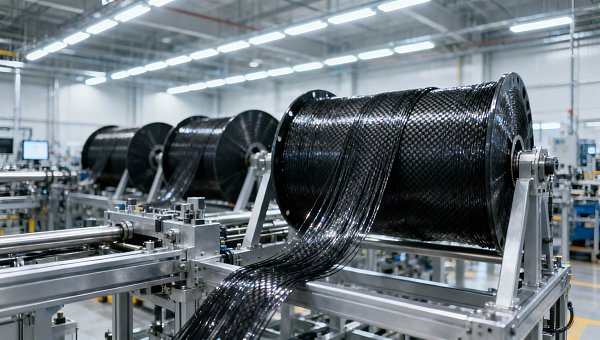
 China's Largest Single-Line Large-Tow Carbon Fiber Line Starts OperationChina's largest single-line large-tow carbon fiber line is live—30,000 tons/year capacity, ASME-certified, 22% cheaper & 6-week lead time. Boost your industrial instrumentation supply chain now.
 China Mobile Unveils National Integrated Computing Power NetworkChina Mobile's National Integrated Computing Power Network accelerates AI quality inspection for global manufacturers—cutting model training time by 68% and enabling cross-border industrial AI development.
 World's First Humanoid Robot Industrial Calibration White Paper ReleasedWorld's First Humanoid Robot Industrial Calibration White Paper released—setting new global benchmarks for dynamic sensor calibration in robotics. Discover how ABB, Yaskawa & metrology leaders are reshaping industry trust.
 Red Sea Crisis Escalates: Aden Gulf Ban Extended to June 15Red Sea Crisis escalates: Aden Gulf ban extended to June 15 — disrupting industrial instrumentation trade between China and the Middle East with 452% air freight spikes and 7–12 day delays.
 Saudi SASO Introduces AI-Based Energy Validation for Industrial TransmittersAI-based energy validation for industrial transmitters is now mandatory in Saudi Arabia—learn how SASO’s new AI regulation impacts global exporters, compliance timelines, and supply chains.
 IEC TC65 Releases Cybersecurity Validation Guide for Industrial InstrumentsIEC TC65’s new Cybersecurity Validation Guide for Industrial Instruments mandates SDL certification & firmware signing—key for EU/US market access. Act now to align with GB/T 42278-2026 and avoid export delays.
 EU PEF Carbon Footprint Database Mandatory Access for Industrial InstrumentsEU PEF Carbon Footprint Database mandatory access starts June 2026 for industrial instruments—pressure, temperature & flow meters. Ensure compliance now to avoid EU customs delays and market exclusion.
 Gas Quality Analyzer Shelter Price Trends and Specification Gaps to WatchGas quality analyzer shelter price trends vary with materials, HVAC, safety, integration, and compliance. See key specification gaps before shortlisting suppliers or approving budget.
 Process Measurement Equipment: Key Accuracy Risks in Harsh EnvironmentsProcess measurement equipment in harsh environments can drift before failing. Discover key accuracy risks, warning signs, and practical controls to protect quality, safety, and compliance.
 Industrial Analyzer Shelter Export Factors Affecting Lead Times This YearIndustrial analyzer shelter export lead times vary with sourcing, engineering, compliance, packing, and logistics. Learn the key factors to quote smarter and deliver with confidence.
 What to Check Before Buying a Process Analyzer ShelterProcess analyzer shelter buying guide: learn what to check before purchase, from compliance and HVAC to utilities, durability, and maintenance access.


















Search Categories
Search Categories
Latest Article
- Brazil INMETRO to Require Portuguese UI and Local Units for Industrial Instruments by 2026Brazil INMETRO mandates Portuguese UI & local units (mbar, kPa, °C) for industrial instruments by Dec 2026—key for exporters, integrators & service providers.Posted by:
- STMicroelectronics 200mm Line Eases Industrial Sensor Chip ShortageSTMicroelectronics 200mm line eases industrial sensor chip shortage — MCUs & signal-conditioning ICs now ship in 12 weeks. Secure allocation today.Posted by:
- Southeast Asia Manufacturing Re-shoring Accelerates: Vietnam/Indonesia Industrial Instrument Imports Up 37% YoYSoutheast Asia manufacturing re-shoring accelerates: Vietnam & Indonesia industrial instrument imports up 37% YoY — key insights for suppliers, OEMs & procurement teams.Posted by:
Please give us a message
