
When Does an Emission Measurement System Pay Off?


For manufacturers, plant operators, and decision-makers, investing in an emission measurement system is not just about compliance—it is about long-term operational value. When combined with a process measurement system, oxygen measurement system, and broader industrial control equipment, it can improve gas quality measurement, strengthen gas quality control, and optimize overall performance. But when does the return truly justify the cost?
That question matters to several stakeholders at once. Operators want reliable readings and fewer manual checks. Quality and safety managers need traceable data. Project managers care about installation risk, system integration, and commissioning time. Financial approvers and business evaluators want a clear payback path, not just a technical justification.
In the instrumentation industry, an emission measurement system rarely works in isolation. Its value increases when it is connected with analyzers, flow measurement, pressure and temperature sensors, data logging, and plant automation platforms. The real payback is often found not only in avoiding penalties, but also in reducing fuel waste, stabilizing combustion, lowering maintenance hours, and improving reporting efficiency.
The most practical way to judge the investment is to examine where the system creates measurable gains: compliance assurance, process optimization, downtime reduction, audit readiness, and better environmental performance. The sections below break down when an emission measurement system pays off, which operating conditions improve the return, and how buyers can evaluate a project before approval.
What Creates the Business Case for an Emission Measurement System
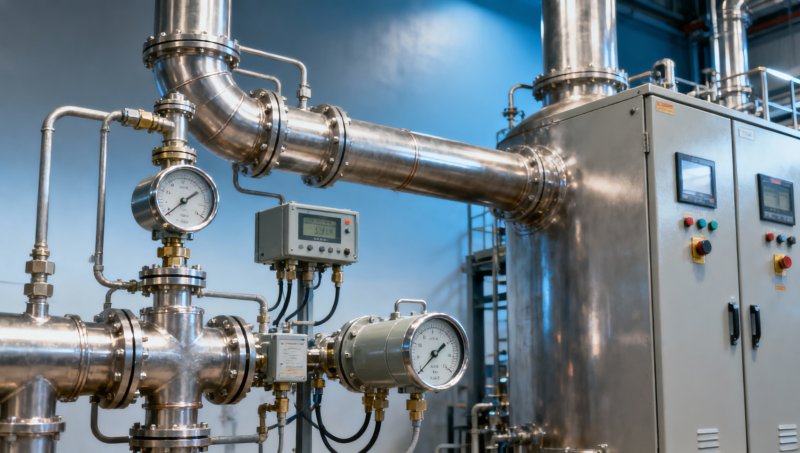
An emission measurement system pays off fastest in operations where combustion quality, gas composition, and environmental reporting directly affect cost or production continuity. Typical examples include boilers, furnaces, thermal oxidizers, power generation units, incineration lines, and process plants with continuous exhaust streams. In these environments, even a 1%–3% improvement in combustion efficiency can translate into meaningful annual savings.
For many plants, the first layer of value is risk prevention. If reporting gaps, inaccurate readings, or delayed detection lead to permit violations, the financial impact can exceed the price of the measurement system itself. A system that captures oxygen, NOx, SO2, CO, CO2, particulates, flow, and temperature in a structured way reduces the probability of non-compliant operation and shortens response time when parameters drift beyond thresholds.
The second layer of value comes from process control. When emission data is fed into a process measurement system and linked to industrial control equipment, operators can adjust air-fuel ratio, burner settings, draft conditions, and exhaust treatment more precisely. In many facilities, this reduces excess air, limits energy waste, and stabilizes product quality. The result is not only lower emissions, but also tighter process consistency over 24/7 operations.
The third layer is labor efficiency. Plants that rely on manual sampling or fragmented instruments often spend 2–6 labor hours per week on data collection, reconciliation, and audit preparation. Automated monitoring can cut that burden significantly, especially when centralized dashboards, alarm functions, and trend reports are included. For organizations with multiple lines or multiple sites, the gain becomes even more visible.
Main value drivers that affect payback
- Fuel or utility savings from tighter combustion control, often visible within 6–18 months in high-load operations.
- Reduced risk of production interruption due to environmental excursions, alarm failures, or delayed corrective action.
- Lower manual reporting effort through digital records, trending, and automated data export.
- Improved gas quality measurement for process tuning, especially where oxygen and flue gas composition affect yield.
- Better maintenance planning because sensor drift, clogging, and analyzer issues can be identified earlier.
A practical view of where returns usually come from
The most common mistake is to evaluate the system only as a compliance expense. In reality, the strongest business case usually combines 3 factors at once: avoided compliance risk, reduced operating cost, and improved process stability. When all 3 apply, payback can be considerably faster than expected.
When Payback Is Fast, Moderate, or Slow
Not every facility will see the same return timeline. The payback period depends on operating hours, fuel consumption, emissions sensitivity, maintenance practice, and whether the system is used only for reporting or also for control optimization. In general, facilities running more than 5,000 hours per year tend to realize value faster than intermittent operations.
Fast payback is common when a plant has high fuel costs, measurable combustion inefficiency, or strict reporting obligations. A moderate payback is more typical when the system mainly replaces manual checks and supports periodic reporting. Slow payback often appears when the installation is oversized, underused, or not integrated into process decisions.
The table below provides a practical comparison for decision-makers reviewing different site conditions. It can help technical teams, procurement staff, and finance approvers align around realistic expectations before capital approval.
The key takeaway is that payback accelerates when the system is operationally active, not passively installed. If emission data is reviewed daily, tied to alarms, and connected to process control, the return is usually stronger than in sites where data is only archived for audits.
Signs that a site is likely to justify investment
- The process runs continuously or in long batches, such as 16–24 hours per day.
- Fuel, steam, or thermal energy cost is high enough that small efficiency gains matter.
- The facility already uses process measurement and automation, making data integration easier.
- Manual logging, periodic stack checks, or disconnected analyzers create reporting gaps.
- Environmental performance affects contracts, permitting, export requirements, or customer audits.
Why low-data-use projects often underperform
If the system is purchased only to satisfy a checklist, the business case weakens. Sites that do not assign data review responsibility, calibration schedules, or alarm response procedures often fail to capture the full value. In those cases, the issue is not the instrumentation itself, but the lack of operational integration.
How Integration with Process and Oxygen Measurement Improves ROI
An emission measurement system delivers more value when it is part of a broader measurement architecture. In many industrial applications, the strongest return comes from linking emissions data with process variables such as flow, temperature, pressure, burner status, fan load, oxygen concentration, and gas composition. This is especially relevant in sectors where thermal efficiency and gas quality control directly influence output quality and operating cost.
Oxygen measurement is a good example. When flue gas oxygen is measured accurately and trended in real time, operators can avoid excessive air input. Too much excess air raises energy loss; too little can increase CO formation and unstable combustion. Keeping oxygen in the correct operating band, whether that is 2%–4% or 3%–6% depending on the process, can improve both emissions and fuel economy.
Process measurement systems add another layer of value by providing context. Emission peaks may be linked to load changes, feed variation, burner imbalance, or pressure swings. Without integrated instrumentation, operators may see the emission event but not the root cause. With integrated monitoring, troubleshooting becomes faster, and corrective actions become more precise.
For engineering teams and project managers, integration also affects lifecycle cost. A system designed to communicate with PLC, DCS, SCADA, or historian platforms usually reduces duplicate wiring, manual data transfer, and later retrofit expense. That is why integration planning during the front-end stage is often worth more than small upfront savings from a disconnected setup.
Integrated vs. stand-alone value comparison
The table below shows how measurement architecture changes the economics of the same emission monitoring investment across typical B2B industrial environments.
For many buyers, this means the system should be evaluated as part of an instrumentation strategy, not as a single device purchase. A lower-cost stand-alone configuration may seem attractive at first, but a better-integrated solution often produces a stronger 2-year to 5-year return.
Common integration targets in industrial projects
- Oxygen analyzers for combustion balance and air-fuel optimization.
- Flow meters for stack gas normalization and process correlation.
- Temperature and pressure sensors for compensation and event tracing.
- PLC or DCS signals for alarms, interlocks, and operator response logic.
- Data platforms for 12-month to 36-month trend review, audit support, and maintenance analysis.
Selection Criteria That Influence Cost, Performance, and Approval
Whether the investment pays off also depends on choosing the right system scope. Overspecification increases capital cost without proportional benefit. Underspecification creates maintenance problems, poor data quality, and earlier replacement. A balanced specification should match the process profile, gas conditions, reporting requirements, maintenance resources, and future expansion plans.
From a procurement and finance perspective, the total cost of ownership matters more than purchase price alone. The true cost includes sampling components, analyzer technology, calibration practice, installation complexity, spare parts, software, operator training, and annual service needs. A system with a lower initial price but frequent maintenance interruptions may become more expensive within 24 months.
For operators and quality teams, reliability indicators are just as important as analytical capability. These include analyzer stability, calibration interval, diagnostic functions, filter and probe maintenance access, and spare part availability. Plants that lack these checks often experience data gaps exactly when emission records are most needed.
The table below summarizes practical evaluation points often used in industrial instrumentation projects. It can support distributor discussions, internal approval workflows, and technical-commercial comparisons during supplier review.
A good approval package should include at least 4 cost views: initial equipment cost, installation cost, annual maintenance estimate, and expected operational benefit. This makes capital review easier for non-technical stakeholders and reduces the chance of selecting a system based only on headline price.
A 5-point buyer checklist
- Define whether the system is for compliance only, optimization only, or both.
- Confirm which gases and process variables must be measured continuously or periodically.
- Estimate maintenance hours per month and spare part planning for at least 12 months.
- Review data integration requirements with automation and reporting systems before purchase.
- Compare suppliers on service support, commissioning capability, and long-term technical availability.
Implementation, Risks, and Common Mistakes That Delay Return
Even a well-selected emission measurement system can underperform if implementation is weak. In most industrial projects, the first 30–90 days after installation have a major influence on whether the system becomes a useful operational tool or just another isolated instrument. Commissioning quality, baseline setup, calibration practice, and operator adoption all matter.
One frequent mistake is poor sampling design. If probe location, sample line heating, moisture management, or filtration is not matched to real gas conditions, analyzer drift and maintenance demand will rise. Another common issue is that alarm limits are configured, but no response workflow is assigned, so repeated alerts do not lead to process correction.
Training is another hidden ROI factor. Operators, maintenance personnel, and environmental staff should not all receive the same training. A practical approach is 3 levels: operator use, maintenance procedures, and supervisory data review. In many facilities, 4–8 hours of focused training per user group is more effective than one broad handover session.
Service planning also affects return. Plants should define calibration intervals, consumable replacement cycles, and troubleshooting responsibility before startup. Without this, minor issues can turn into long data gaps. Preventive service windows every 3 months or 6 months are common, depending on dust load, temperature, and gas composition.
Typical implementation sequence
- Site assessment: confirm gas conditions, utilities, mounting points, and communication interfaces.
- Engineering review: align measurement scope, cabinet layout, sample path, and integration logic.
- Installation and loop checks: verify wiring, signals, purge systems, and safety conditions.
- Commissioning: calibrate analyzers, validate readings, set alarms, and establish baseline values.
- Operational handover: train users, assign maintenance tasks, and define report ownership.
Common mistakes that weaken payback
- Buying a system without deciding how the data will be used in daily operations.
- Ignoring the connection between emission trends and process variables such as oxygen or flow.
- Underestimating maintenance access, especially in high-dust or high-moisture exhaust conditions.
- Delaying calibration routines until an audit or alarm event exposes the problem.
- Assigning no clear ownership between production, environment, and maintenance departments.
When those issues are addressed early, the system becomes much more than an emissions record. It turns into an operational feedback tool that supports quality control, safety management, and process consistency across the plant.
Frequently Asked Questions Before Purchase Approval
How do I know whether a continuous system is better than periodic measurement?
If your process runs continuously, has regulated emission limits, or experiences variable combustion load, a continuous system is usually the better choice. Periodic measurement can be sufficient for simpler, low-risk operations, but it may miss short-duration excursions and provides less value for optimization. A practical rule is that sites running more than 12 hours per day often benefit more from continuous monitoring.
Which sites usually see the best return?
Facilities with high thermal energy use, strict emissions oversight, and a clear need for gas quality control usually see the strongest returns. Examples include power-related systems, industrial furnaces, drying lines, boilers, waste treatment units, and process plants where oxygen balance affects fuel cost or product quality. Multi-line plants also gain more because centralized data improves cross-line comparison.
What procurement questions should finance and management ask?
They should ask for the expected payback range, annual maintenance estimate, implementation schedule, and what measurable savings are realistically available. They should also ask whether the system will integrate with existing industrial control equipment and whether current teams can maintain it. Typical project timelines range from 2–6 weeks for simpler retrofits and 6–12 weeks for more integrated installations.
What are the most overlooked technical details?
Sampling point quality, condensation control, calibration gas handling, communication protocol matching, and service accessibility are often overlooked. These details strongly affect long-term reliability. A technically capable analyzer can still perform poorly if the surrounding sampling and installation design is weak.
An emission measurement system pays off when it is matched to the real process, connected to broader instrumentation, and used as an operational decision tool rather than only a reporting device. The strongest returns usually come from a mix of compliance assurance, efficiency improvement, gas quality measurement, and better maintenance control. For manufacturers, plant operators, quality managers, project leaders, and financial approvers, the most effective investment is one that combines accurate sensing, practical integration, manageable service needs, and a clear use case from day one.
If you are evaluating a new installation, retrofit, or integrated monitoring upgrade, now is the right time to compare configuration options, define your target payback range, and review the supporting process measurement and oxygen measurement requirements. Contact us to get a tailored solution, discuss product details, and explore the right emission monitoring approach for your industrial application.
Recommended for You
 First Global White Paper on Humanoid Robot Industrial Calibration ReleasedHumanoid robot industrial calibration: First global white paper released—key for sensor makers, integrators & metrology labs. Learn impact & action steps.
 FDA Updates IVD Import Guidance: CNAS Calibration Chain RequiredFDA mandates CNAS calibration chain with NIST traceability for IVD instruments from China—act now to avoid U.S. import rejection starting July 1, 2026.
 IEC TC65 Releases Cybersecurity Validation Guidance for Industrial InstrumentsIEC TC65 releases cybersecurity validation guidance for industrial instruments—key for exporters, OEMs & integrators targeting EU/NA markets. Act now.
 ASEAN Green Corridor for Measuring Instruments Fully LaunchedASEAN Green Corridor for Measuring Instruments is live—unlock 3.8-hour customs clearance for CNAS-calibrated instruments across all 10 ASEAN nations. Act now!
 PTB Opens Direct VDA/ISO 17025 Report Portal for CNAS LabsPTB opens direct VDA/ISO 17025 report portal for CNAS labs — enabling dual-compliant calibration reports in <72h. Boost automotive audit readiness now!
 Vietnam Enforces Dual CNAS + Vietnamese Language Requirement for Industrial InstrumentsVietnam enforces dual CNAS + Vietnamese language requirement for industrial instruments (HS 9026/9027/9030) — avoid customs rejection. Act now!
 Red Sea Crisis Escalates: Gulf of Aden No-Sail Zone Extended to June 15, 2026Red Sea Crisis escalates: Gulf of Aden no-sail zone extended to June 15, 2026 — impacting industrial instrumentation trade, airfreight costs (+452%), and supply chain resilience between China and the Middle East.
 SASO Mandates AI-Driven Energy Simulation for Industrial Transmitters from June 2026SASO mandates AI-driven energy simulation for industrial transmitters from June 2026 — ensure compliance with NAIEC-certified testing now to avoid delays & rejections.
 BIS Adds 3 High-Precision Process Calibrators to EAR Supplement No. 4BIS Adds 3 High-Precision Process Calibrators to EAR Supplement No. 4—urgent compliance insights for semiconductor, nuclear, and calibration service providers operating with China.
 EU PEF Carbon Footprint Database Mandatory Integration CountdownEU PEF Carbon Footprint Database integration is mandatory for industrial instrument exporters by Jan 2027—act now to secure market access, customs clearance & B2B tenders.
 FDA Updates IVD Import Guidance: CNAS Calibration Traceability to NIST Required for Chinese ManufacturersFDA now requires CNAS calibration traceability to NIST for Chinese IVD manufacturers — critical for 510(k)/De Novo submissions. Act now to avoid RTA delays!
 ASEAN's Green Clearance Corridor Fully LaunchedGreen Clearance Corridor now live: CNAS calibration reports auto-verified for ASEAN customs clearance in under 4 hours — boost your China–ASEAN trade efficiency today!
 First Global Cybersecurity Verification Guide for Industrial Instruments ReleasedFirst global cybersecurity verification guide for industrial instruments launched—featuring a 5-level maturity model & standardized pentest library. Essential for exporters, OEMs, and critical infrastructure suppliers.
 SASO Shortens Energy Labeling for Industrial Transmitters to 7 Days, Adds AI Power Simulation RequirementSASO energy labeling for industrial transmitters now takes just 7 days — but requires AI power simulation. Learn how to comply fast and avoid delays.
 PTB Launches AI Calibration Cloud Platform 2.0PTB AI Calibration Cloud Platform 2.0 launches with CNAS-VDA 5/ISO/IEC 17025 dual-compliance reporting — streamline cross-border calibration for auto suppliers, labs & equipment makers.
 EU Mandates Carbon Footprint Labels on Industrial Instruments from 2027EU mandates carbon footprint labels on industrial instruments from 2027—key for pressure, temperature & flow meter exporters. Act now to ensure PEF compliance and market access.
 Red Sea Crisis Worsens: Gulf of Aden Ban Extends to 3 Weeks, Air Freight Premiums for Industrial Instruments Surge 420%Red Sea crisis deepens: Gulf of Aden ban hits 3 weeks, spiking air freight premiums for industrial instruments by 420%—urgent insights for exporters & EPC contractors.
 Vietnam Enforces CNAS + Vietnamese Dual Requirement for Industrial InstrumentsVietnam Enforces CNAS + Vietnamese Dual Requirement for Industrial Instruments: Key compliance update for exporters, labs & documentation teams ahead of June 2026.
 U.S. BIS Adds 5 High-Precision Pressure/Flow Calibration Sources to EAR ListU.S. BIS adds 5 high-precision pressure/flow calibration sources to EAR list — critical for exporters, instrument makers & supply chain teams. Act now.
 IEC 61508-3:2026 Published: Functional Safety Certification UpgradedIEC 61508-3:2026 is live—discover what the upgraded functional safety certification means for your industrial software, AI diagnostics & global market access.
 FDA Updates IVD Import Guidance: CNAS Calibration Chain Required for China-Made DevicesFDA now requires CNAS calibration chain reports for China-made IVD analyzers—pH, ion & clinical chemistry devices entering via 510(k)/De Novo. Act now to avoid U.S. port rejections.
 EN 61000-6-4:2026 Enters Force: Stricter EMC Requirements for Industrial Field InstrumentsEN 61000-6-4:2026 enforces stricter EMC requirements for industrial field instruments—key for AI edge controllers, sensors & exporters. Act now to ensure CE-EMC compliance by Nov 2026.
 Global Methanol Electric Alliance Launches Cross-Border Energy Efficiency Recognition RoadmapGlobal Methanol Electric Alliance launches cross-border energy efficiency recognition roadmap—key for exporters, cal labs & methanol-instrument manufacturers.
 Red Sea Crisis Escalates: Air Freight Premiums for China–Middle East Industrial Instruments Hit 390%Red Sea Crisis hits industrial instruments: China–Middle East air freight premiums surge 390%. Act now to secure Q3 capacity, avoid delays & optimize LCL alternatives.
 IEC TC65 Mandates Cybersecurity Certification for Industrial Field Instruments from 2027IEC TC65 mandates cybersecurity certification for industrial field instruments by 2027 — pressure, flow & analytical devices must meet IEC 62443-4-2:2026 and display SL1–SL3 labels. Act now to ensure market access.
 SASO Cuts Energy Labeling Turnaround for Industrial Transmitters to 7 Working DaysSASO Energy Labeling now takes just 7 working days for industrial transmitters — faster market access, CNAS reports accepted. Act now!
 PTB Launches CalCloud 2.0 with Direct CNAS Lab IntegrationCalCloud 2.0 now integrates directly with CNAS labs—enabling automated VDA 5 & ISO/IEC 17025 dual-compliant calibration reports for automotive and industrial exporters. Boost compliance efficiency today!
 ASEAN's Green Clearance Corridor for CNAS Calibration Reports LaunchesASEAN's Green Clearance Corridor now verifies CNAS calibration reports via blockchain—cut customs clearance to <48h for flow meters, analyzers & more. Act now!
 Vietnam Mandates CNAS Calibration Certificates & Vietnamese Manuals for Industrial Meters from June 1, 2026CNAS calibration certificates & Vietnamese manuals now mandatory for industrial meters entering Vietnam from June 1, 2026—avoid customs delays and ensure seamless market access.
 U.S. BIS Tightens Export Controls on High-Precision Laser InterferometersU.S. BIS tightens export controls on high-precision laser interferometers—critical for semiconductor metrology & ISO/IEC 17025 calibration. Act now to ensure compliance.
 Paramagnetic Monitor Calibration Tips for Stable OutputParamagnetic monitor calibration tips for stable output: learn how to reduce drift, improve accuracy, cut downtime, and keep oxygen measurement reliable in demanding industrial applications.
 Paramagnetic Measurement in Low-Oxygen Process ControlParamagnetic measurement enables accurate low-oxygen process control with fast response and stable oxygen analysis. Learn how it improves safety, consistency, and system performance.






Search Categories
Search Categories
Latest Article
- First Global White Paper on Humanoid Robot Industrial Calibration ReleasedHumanoid robot industrial calibration: First global white paper released—key for sensor makers, integrators & metrology labs. Learn impact & action steps.Posted by:
- FDA Updates IVD Import Guidance: CNAS Calibration Chain RequiredFDA mandates CNAS calibration chain with NIST traceability for IVD instruments from China—act now to avoid U.S. import rejection starting July 1, 2026.Posted by:
- IEC TC65 Releases Cybersecurity Validation Guidance for Industrial InstrumentsIEC TC65 releases cybersecurity validation guidance for industrial instruments—key for exporters, OEMs & integrators targeting EU/NA markets. Act now.Posted by:
Please give us a message
