
Gas Quality Measurement: What Matters Most?


Gas quality measurement matters most when it directly reduces risk, protects product quality, and supports efficient, compliant operations. In practice, that means focusing less on abstract specifications and more on a few decision-critical factors: what needs to be measured, how accurate and stable the measurement must be, how quickly the system must respond, and how well the data can support control actions. Whether you are evaluating an industrial measurement system for combustion control, an oxygen measurement system for safety, or an emission measurement system for compliance, the best solution is the one that improves gas quality control under real operating conditions—not just on a datasheet.
For plant operators, engineers, quality teams, and decision-makers, the key question is usually not “How do we measure gas?” but “Which measurements actually matter for process performance, safety, and ROI?” The answer depends on the application, but across industries, a strong process monitoring system combines the right analyzers, proper installation, dependable calibration strategy, and useful integration with the wider industrial control system.
What matters most in gas quality measurement for real operations?
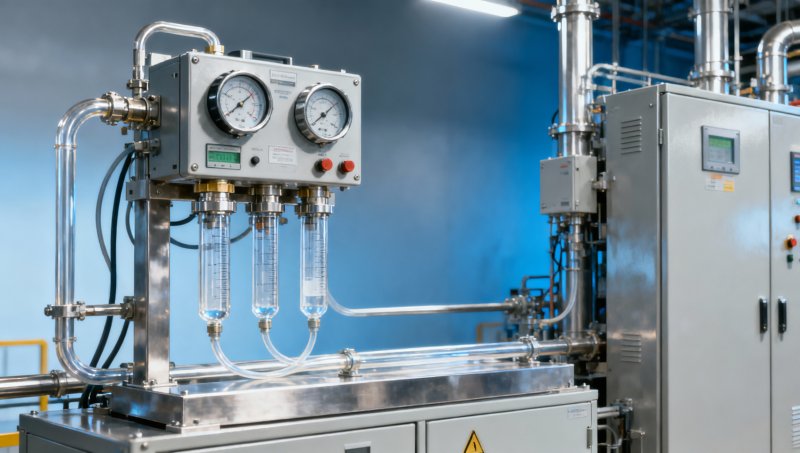
The most important point is fit-for-purpose measurement. Different processes care about different gas quality indicators, and choosing the wrong measurement priorities can lead to wasted investment or poor control outcomes. In most industrial environments, gas quality measurement should be evaluated against five practical criteria:
- Critical parameters measured: oxygen, moisture, hydrocarbons, CO2, CO, H2S, methane concentration, calorific value, dew point, particulates, and trace contaminants depending on the process.
- Measurement accuracy and repeatability: especially important where product quality, custody transfer, combustion efficiency, or environmental compliance is involved.
- Response time: fast response is essential for dynamic process control, burner tuning, leak detection, and safety shutdown logic.
- Reliability in actual field conditions: dust, vibration, temperature swings, condensation, corrosive gases, and pressure changes often affect performance more than lab specifications suggest.
- Integration with control and reporting systems: measurement data must be usable by the industrial control equipment, SCADA, DCS, PLC, or plant analytics platform.
For most buyers and technical evaluators, the real priority is not simply analytical capability. It is whether the measurement system helps teams make better operational decisions. A process measurement system that delivers highly precise data but suffers from downtime, difficult maintenance, or poor data communication may create more cost than value.
Which gas quality parameters are usually the most important?
The answer depends on the industrial scenario, but several parameters consistently have high decision value:
- Oxygen: critical in combustion optimization, inerting verification, furnace efficiency, and worker safety. An oxygen measurement system is often one of the highest-value investments in combustion and controlled-atmosphere applications.
- Moisture and dew point: important for compressed air systems, specialty gases, natural gas handling, and processes where corrosion, freezing, or product contamination is a risk.
- Combustible gases: methane, hydrogen, hydrocarbons, and other flammable gases must often be monitored for both process control and safety protection.
- Toxic contaminants: H2S, CO, SO2, NOx, and similar compounds may affect safety, product quality, downstream equipment, and legal compliance.
- Gas composition and purity: especially relevant in chemical production, semiconductors, laboratories, pharmaceuticals, metallurgy, and gas blending operations.
- Emissions-related components: where an emission measurement system is required to demonstrate compliance and support environmental reporting.
For decision-makers, the best approach is to rank parameters by business consequence. Ask: if this gas property drifts out of range, what happens first—safety risk, scrap, energy loss, equipment damage, failed compliance, or customer complaints? The measurements tied most directly to these consequences should receive priority in system design and budget approval.
How do you choose between lab-grade accuracy and practical process performance?
This is one of the most common evaluation mistakes. In many industrial settings, the highest theoretical accuracy is not the most valuable choice. What matters more is whether the measurement is stable, representative, and actionable in the process environment.
A good gas quality control strategy should consider:
- Sample quality: poor sampling design can make even a premium analyzer unreliable.
- Operating range: the instrument should perform well across real concentration ranges, not just near ideal calibration points.
- Maintenance burden: frequent servicing can undermine uptime and total cost effectiveness.
- Calibration practicality: if calibration is too complex, actual field accuracy may decline over time.
- Data relevance: measurements must support operator action, alarm strategy, and process adjustments.
For example, a process monitoring system used in combustion optimization may benefit more from fast and repeatable oxygen trending than from ultra-high laboratory precision with slow response. Likewise, in pipeline or distribution applications, reliability and long-term stability may be more valuable than marginal improvements in sensitivity.
What system design factors have the biggest impact on measurement quality?
Gas quality measurement is not just about the analyzer. System architecture often determines whether the data is trustworthy. Several design factors deserve close attention:
- Sampling point selection: measurements must reflect the actual process condition, not a stagnant or biased location.
- Sample conditioning: filtration, pressure regulation, temperature control, moisture handling, and flow control are essential in many applications.
- Sensor technology match: zirconia, paramagnetic, NDIR, TDLAS, electrochemical, thermal conductivity, and other methods each have strengths and limitations.
- Installation environment: enclosure protection, hazardous area classification, vibration resistance, and thermal management affect system life and stability.
- Signal integration: outputs must connect cleanly with the industrial control system for alarms, trending, optimization, and reporting.
In many projects, underinvestment in sample handling or installation engineering causes bigger performance issues than analyzer selection itself. For project managers and engineering teams, this is a critical procurement insight: the total system matters more than any single component.
How does gas quality measurement create business value?
For managers, approvers, and commercial evaluators, value is usually created in five areas:
- Safety improvement: better oxygen and hazardous gas monitoring reduces incident risk and strengthens safe operating procedures.
- Product quality consistency: stable gas composition supports repeatable manufacturing outcomes.
- Energy efficiency: accurate combustion and process gas measurements can lower fuel use and reduce waste.
- Compliance assurance: a robust emission measurement system and traceable records help meet regulatory requirements.
- Reduced downtime and maintenance costs: early detection of gas quality issues can prevent corrosion, fouling, burner instability, and process disruptions.
When building a business case, it is useful to compare current losses against the expected benefit of improved measurement. Common hidden costs include off-spec production, excessive fuel consumption, unplanned shutdowns, failed audits, manual testing time, and maintenance caused by poor gas control. In many cases, the ROI of modern industrial control equipment becomes clear when these operational losses are quantified.
What should buyers and technical teams ask before selecting a solution?
A practical evaluation framework can help avoid poor-fit purchases. Key questions include:
- Which gas parameters directly affect safety, quality, efficiency, or compliance in this application?
- What detection limits, accuracy, and response time are truly required?
- Will the instrument perform reliably in the actual process environment?
- What sample conditioning or installation support is needed?
- How often will calibration and maintenance be required?
- Can the system integrate with existing process measurement system infrastructure?
- How will the data be used by operators, quality teams, and the industrial control system?
- What is the total lifecycle cost, not just the purchase price?
For distributors, integrators, and procurement teams, these questions also help clarify whether a customer needs a standalone analyzer, a broader process monitoring system, or a more complete industrial measurement system linked with alarms, controls, and reporting tools.
Common mistakes that reduce gas measurement value
Even technically strong projects can underperform because of avoidable mistakes. The most common include:
- Choosing technology based only on specification sheets
- Ignoring sampling system design
- Overbuying precision that the process does not need
- Underestimating maintenance and calibration workload
- Failing to connect measurement outputs to real control decisions
- Using measurement data for monitoring only, without process improvement action
The best-performing systems are those designed around operational goals. If gas quality measurement is expected to improve production, compliance, or safety, then responsibilities, alarm thresholds, maintenance planning, and response procedures must all be defined clearly.
Conclusion: the most important thing is usable, decision-ready measurement
Gas quality measurement matters most when it provides reliable information that operators and managers can act on. The right solution is not automatically the most complex or the most precise—it is the one that matches the process, measures the parameters that drive risk and performance, and integrates effectively with the wider industrial control equipment and process monitoring system.
For companies evaluating an oxygen measurement system, emission measurement system, or broader industrial measurement system, the smartest path is to focus on consequence-based priorities: safety, quality, compliance, efficiency, and lifecycle cost. When those priorities guide technology choice and system design, gas quality control becomes a practical source of operational value rather than just another instrumentation expense.
Recommended for You
 First Global White Paper on Humanoid Robot Industrial Calibration ReleasedHumanoid robot industrial calibration: First global white paper released—key for sensor makers, integrators & metrology labs. Learn impact & action steps.
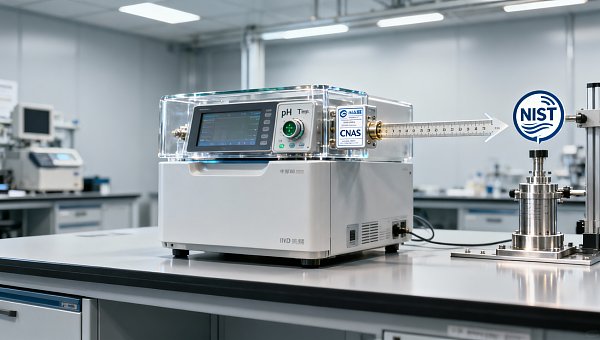
 FDA Updates IVD Import Guidance: CNAS Calibration Chain RequiredFDA mandates CNAS calibration chain with NIST traceability for IVD instruments from China—act now to avoid U.S. import rejection starting July 1, 2026.
 IEC TC65 Releases Cybersecurity Validation Guidance for Industrial InstrumentsIEC TC65 releases cybersecurity validation guidance for industrial instruments—key for exporters, OEMs & integrators targeting EU/NA markets. Act now.
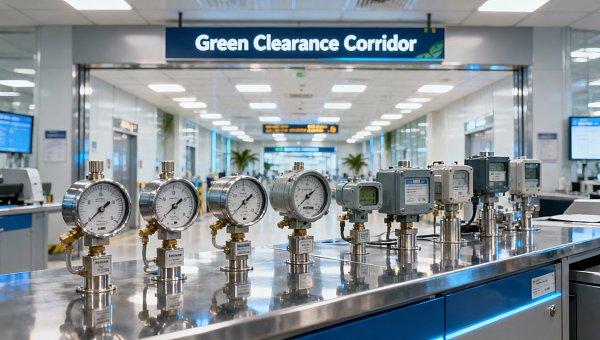
 ASEAN Green Corridor for Measuring Instruments Fully LaunchedASEAN Green Corridor for Measuring Instruments is live—unlock 3.8-hour customs clearance for CNAS-calibrated instruments across all 10 ASEAN nations. Act now!
 PTB Opens Direct VDA/ISO 17025 Report Portal for CNAS LabsPTB opens direct VDA/ISO 17025 report portal for CNAS labs — enabling dual-compliant calibration reports in <72h. Boost automotive audit readiness now!
 Vietnam Enforces Dual CNAS + Vietnamese Language Requirement for Industrial InstrumentsVietnam enforces dual CNAS + Vietnamese language requirement for industrial instruments (HS 9026/9027/9030) — avoid customs rejection. Act now!
 Red Sea Crisis Escalates: Gulf of Aden No-Sail Zone Extended to June 15, 2026Red Sea Crisis escalates: Gulf of Aden no-sail zone extended to June 15, 2026 — impacting industrial instrumentation trade, airfreight costs (+452%), and supply chain resilience between China and the Middle East.
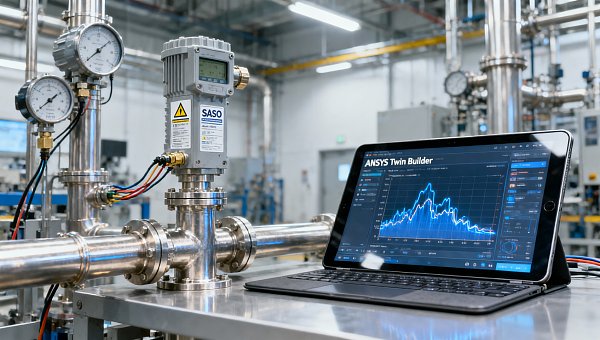
 SASO Mandates AI-Driven Energy Simulation for Industrial Transmitters from June 2026SASO mandates AI-driven energy simulation for industrial transmitters from June 2026 — ensure compliance with NAIEC-certified testing now to avoid delays & rejections.
 BIS Adds 3 High-Precision Process Calibrators to EAR Supplement No. 4BIS Adds 3 High-Precision Process Calibrators to EAR Supplement No. 4—urgent compliance insights for semiconductor, nuclear, and calibration service providers operating with China.
 EU PEF Carbon Footprint Database Mandatory Integration CountdownEU PEF Carbon Footprint Database integration is mandatory for industrial instrument exporters by Jan 2027—act now to secure market access, customs clearance & B2B tenders.
 FDA Updates IVD Import Guidance: CNAS Calibration Traceability to NIST Required for Chinese ManufacturersFDA now requires CNAS calibration traceability to NIST for Chinese IVD manufacturers — critical for 510(k)/De Novo submissions. Act now to avoid RTA delays!
 ASEAN's Green Clearance Corridor Fully LaunchedGreen Clearance Corridor now live: CNAS calibration reports auto-verified for ASEAN customs clearance in under 4 hours — boost your China–ASEAN trade efficiency today!
 First Global Cybersecurity Verification Guide for Industrial Instruments ReleasedFirst global cybersecurity verification guide for industrial instruments launched—featuring a 5-level maturity model & standardized pentest library. Essential for exporters, OEMs, and critical infrastructure suppliers.
 SASO Shortens Energy Labeling for Industrial Transmitters to 7 Days, Adds AI Power Simulation RequirementSASO energy labeling for industrial transmitters now takes just 7 days — but requires AI power simulation. Learn how to comply fast and avoid delays.
 PTB Launches AI Calibration Cloud Platform 2.0PTB AI Calibration Cloud Platform 2.0 launches with CNAS-VDA 5/ISO/IEC 17025 dual-compliance reporting — streamline cross-border calibration for auto suppliers, labs & equipment makers.
 EU Mandates Carbon Footprint Labels on Industrial Instruments from 2027EU mandates carbon footprint labels on industrial instruments from 2027—key for pressure, temperature & flow meter exporters. Act now to ensure PEF compliance and market access.
 Red Sea Crisis Worsens: Gulf of Aden Ban Extends to 3 Weeks, Air Freight Premiums for Industrial Instruments Surge 420%Red Sea crisis deepens: Gulf of Aden ban hits 3 weeks, spiking air freight premiums for industrial instruments by 420%—urgent insights for exporters & EPC contractors.
 Vietnam Enforces CNAS + Vietnamese Dual Requirement for Industrial InstrumentsVietnam Enforces CNAS + Vietnamese Dual Requirement for Industrial Instruments: Key compliance update for exporters, labs & documentation teams ahead of June 2026.
 U.S. BIS Adds 5 High-Precision Pressure/Flow Calibration Sources to EAR ListU.S. BIS adds 5 high-precision pressure/flow calibration sources to EAR list — critical for exporters, instrument makers & supply chain teams. Act now.
 IEC 61508-3:2026 Published: Functional Safety Certification UpgradedIEC 61508-3:2026 is live—discover what the upgraded functional safety certification means for your industrial software, AI diagnostics & global market access.
 FDA Updates IVD Import Guidance: CNAS Calibration Chain Required for China-Made DevicesFDA now requires CNAS calibration chain reports for China-made IVD analyzers—pH, ion & clinical chemistry devices entering via 510(k)/De Novo. Act now to avoid U.S. port rejections.
 EN 61000-6-4:2026 Enters Force: Stricter EMC Requirements for Industrial Field InstrumentsEN 61000-6-4:2026 enforces stricter EMC requirements for industrial field instruments—key for AI edge controllers, sensors & exporters. Act now to ensure CE-EMC compliance by Nov 2026.
 Global Methanol Electric Alliance Launches Cross-Border Energy Efficiency Recognition RoadmapGlobal Methanol Electric Alliance launches cross-border energy efficiency recognition roadmap—key for exporters, cal labs & methanol-instrument manufacturers.
 Red Sea Crisis Escalates: Air Freight Premiums for China–Middle East Industrial Instruments Hit 390%Red Sea Crisis hits industrial instruments: China–Middle East air freight premiums surge 390%. Act now to secure Q3 capacity, avoid delays & optimize LCL alternatives.
 IEC TC65 Mandates Cybersecurity Certification for Industrial Field Instruments from 2027IEC TC65 mandates cybersecurity certification for industrial field instruments by 2027 — pressure, flow & analytical devices must meet IEC 62443-4-2:2026 and display SL1–SL3 labels. Act now to ensure market access.
 SASO Cuts Energy Labeling Turnaround for Industrial Transmitters to 7 Working DaysSASO Energy Labeling now takes just 7 working days for industrial transmitters — faster market access, CNAS reports accepted. Act now!
 PTB Launches CalCloud 2.0 with Direct CNAS Lab IntegrationCalCloud 2.0 now integrates directly with CNAS labs—enabling automated VDA 5 & ISO/IEC 17025 dual-compliant calibration reports for automotive and industrial exporters. Boost compliance efficiency today!
 ASEAN's Green Clearance Corridor for CNAS Calibration Reports LaunchesASEAN's Green Clearance Corridor now verifies CNAS calibration reports via blockchain—cut customs clearance to <48h for flow meters, analyzers & more. Act now!
 Vietnam Mandates CNAS Calibration Certificates & Vietnamese Manuals for Industrial Meters from June 1, 2026CNAS calibration certificates & Vietnamese manuals now mandatory for industrial meters entering Vietnam from June 1, 2026—avoid customs delays and ensure seamless market access.
 U.S. BIS Tightens Export Controls on High-Precision Laser InterferometersU.S. BIS tightens export controls on high-precision laser interferometers—critical for semiconductor metrology & ISO/IEC 17025 calibration. Act now to ensure compliance.
 Paramagnetic Monitor Calibration Tips for Stable OutputParamagnetic monitor calibration tips for stable output: learn how to reduce drift, improve accuracy, cut downtime, and keep oxygen measurement reliable in demanding industrial applications.
 Paramagnetic Measurement in Low-Oxygen Process ControlParamagnetic measurement enables accurate low-oxygen process control with fast response and stable oxygen analysis. Learn how it improves safety, consistency, and system performance.



Search Categories
Search Categories
Latest Article
- First Global White Paper on Humanoid Robot Industrial Calibration ReleasedHumanoid robot industrial calibration: First global white paper released—key for sensor makers, integrators & metrology labs. Learn impact & action steps.Posted by:
- FDA Updates IVD Import Guidance: CNAS Calibration Chain RequiredFDA mandates CNAS calibration chain with NIST traceability for IVD instruments from China—act now to avoid U.S. import rejection starting July 1, 2026.Posted by:
- IEC TC65 Releases Cybersecurity Validation Guidance for Industrial InstrumentsIEC TC65 releases cybersecurity validation guidance for industrial instruments—key for exporters, OEMs & integrators targeting EU/NA markets. Act now.Posted by:
Please give us a message
