
How to Choose Industrial Control Equipment


Choosing the right industrial control equipment is critical for ensuring efficiency, safety, and long-term cost control across modern operations. From an industrial control system to a process measurement system, emission measurement system, or oxygen measurement system, the best choice depends on application demands, compliance goals, and gas quality control requirements. This guide will help you evaluate key factors with confidence.
For researchers, operators, project managers, quality teams, distributors, and financial approvers, industrial control equipment selection is rarely a single-product decision. It usually affects process stability, maintenance planning, data visibility, compliance readiness, and future expansion. A poor fit can lead to repeated shutdowns, inaccurate measurement, excessive calibration work, or high total ownership cost within 12 to 36 months.
In the instrumentation sector, the scope can include sensors, transmitters, analyzers, PLC-based control panels, industrial communication modules, gas monitoring units, and online process monitoring devices. The right selection method should connect technical performance with business outcomes, especially in manufacturing, energy, environmental monitoring, laboratory analysis, and automation upgrade projects.
Define the Application Before Comparing Equipment

The first step in choosing industrial control equipment is to define the operating environment and process objective. A control device used in a clean indoor laboratory has very different requirements from equipment installed in a dusty plant, outdoor utility station, or corrosive process line. Temperature range, humidity, vibration, enclosure protection, and signal distance all influence the correct specification.
Buyers should also identify whether the project focuses on measurement, monitoring, control, or integrated automation. For example, a process measurement system may prioritize accuracy such as ±0.1% to ±0.5% of span, while an industrial control system may focus more on response time, I/O capacity, communication compatibility, and redundancy. In gas-related applications, oxygen measurement system performance may depend on sampling stability, sensor life, and contamination resistance.
A clear application definition reduces the risk of overspecification and underspecification. Overspecification increases capital cost without practical value. Underspecification may create repeated replacements within 6 to 18 months, especially in harsh environments or high-cycle processes. This is why experienced procurement teams document at least 5 to 8 baseline conditions before requesting quotations.
Core questions to answer early
- What medium is being measured or controlled: liquid, gas, steam, dust-laden gas, or mixed process flow?
- What is the required measuring range, control precision, and acceptable deviation threshold?
- Will the equipment operate continuously for 24/7 duty, batch cycles, or periodic testing?
- What electrical and communication standards are needed, such as 4–20 mA, Modbus, Profibus, or Ethernet-based protocols?
- Are there compliance targets related to environmental emissions, safety interlocks, or product quality traceability?
The table below helps translate common application scenarios into practical equipment priorities. It is useful for technical users and commercial reviewers who need a shared framework for evaluation.
The main takeaway is simple: selection starts with process reality, not catalog comparisons. When the application conditions are clear, the shortlist becomes more accurate, supplier communication improves, and unexpected change orders are reduced during implementation.
Evaluate Technical Specifications That Affect Real Performance
Once the application is defined, technical evaluation should move beyond nominal product descriptions. Many industrial control equipment options appear similar on paper, but practical differences often show up in signal stability, environmental tolerance, sensor drift, control latency, and maintenance intervals. These factors directly affect uptime and operator workload.
For measurement-related systems, buyers should review range, accuracy, repeatability, response time, and calibration requirements. A pressure or flow transmitter with a wide range may still be a poor choice if the normal operating point stays within the lower 10% of span. In those cases, effective accuracy may not support quality targets. For gas analyzers and oxygen measurement systems, response times of 5 to 30 seconds may be acceptable in some monitoring applications, while fast process control may require a much shorter loop response.
For control systems, I/O count, controller architecture, fail-safe behavior, and communication options matter just as much as raw precision. A plant that expects to expand 20% to 30% within 2 years should avoid a controller that leaves no spare channels or protocol flexibility. In retrofit projects, compatibility with existing panels and supervisory systems can save weeks of integration effort.
Technical checkpoints that should not be skipped
Measurement and analyzer considerations
- Specified accuracy under real operating conditions, not only under laboratory reference conditions.
- Zero drift and span drift over calibration intervals of 30, 90, or 180 days.
- Sample conditioning requirements for moisture, dust, temperature, or corrosive gases.
- Sensor replacement frequency and expected consumable cost over 1 to 3 years.
Control and automation considerations
- Input and output type mix, including analog, digital, relay, pulse, and communication channels.
- Controller scan time and alarm handling capacity under peak operating conditions.
- Network integration with SCADA, DCS, historians, or cloud-based monitoring platforms.
- Redundancy strategy for power supply, communication, and critical measurement points.
The following table can be used during technical review meetings to compare the most decision-critical specifications across equipment categories.
A disciplined technical review prevents common mistakes such as choosing the lowest purchase price while ignoring calibration burden, spare part lead times, or communication limitations. In many projects, these hidden constraints create more cost than the initial equipment difference.
Consider Safety, Compliance, and Lifecycle Risk
Industrial control equipment does not operate in isolation. It supports safe production, environmental responsibility, traceable quality control, and reliable decision-making. This means compliance and risk management must be part of selection from the beginning, especially in energy, environmental monitoring, chemical handling, utilities, and industrial gas applications.
For safety-related applications, the wrong sensor placement or enclosure rating can lead to false readings or delayed alarms. For emission measurement systems, weak sample conditioning or unstable analyzer performance may result in unreliable reporting. For oxygen measurement systems, contamination, condensation, or unsuitable installation points can shorten sensor life and reduce measurement credibility. These are not only technical issues; they can also affect production permits, audit outcomes, and insurance discussions.
Lifecycle risk should be evaluated over at least 3 dimensions: operational downtime, maintenance frequency, and spare part availability. A product with a lower initial price but a 4-week replacement lead time may create major production loss if installed at a critical point. Likewise, equipment requiring monthly recalibration may overload maintenance teams in facilities with limited technical staff.
Practical risk screening checklist
- Confirm whether the operating area involves explosive, corrosive, high-dust, or outdoor conditions.
- Review alarm logic, fail-safe response, and what happens during communication or power loss.
- Check routine maintenance frequency, calibration gas needs, and technician skill requirements.
- Ask about spare part availability and realistic delivery windows, such as 7 days, 15 days, or longer.
- Verify document support for installation, commissioning, and periodic verification.
A strong supplier should be able to explain where equipment may fail, how to reduce drift, what maintenance tasks are required, and which application limitations should be respected. Decision-makers should treat this transparency as a positive sign rather than a weakness.
Common selection errors
- Choosing instrument range based on the maximum theoretical value instead of the normal operating band.
- Ignoring sample pretreatment needs in gas analysis and online monitoring systems.
- Assuming all communication interfaces are equally easy to integrate into existing systems.
- Comparing capital expenditure only, without estimating service cost over 12 to 24 months.
The more critical the process, the more important it is to balance compliance, safety, and maintainability. A technically advanced device has limited value if it cannot be supported at the site or if operators cannot use it correctly under daily conditions.
Compare Suppliers on Support, Delivery, and Total Cost
In B2B procurement, equipment performance alone does not determine project success. Supplier responsiveness, documentation quality, configuration support, and after-sales capability often decide whether commissioning finishes on schedule. For project managers and finance reviewers, this is where total cost becomes more meaningful than unit price.
A proper comparison should include quotation clarity, scope boundaries, spare part recommendations, training options, and realistic lead time. Standard instruments may be available in 7 to 21 days, but customized control panels, integrated analyzer systems, or site-specific monitoring skids may require 4 to 8 weeks or more. If this is not clarified early, installation schedules can slip quickly.
Distributors and agents should also consider whether the supplier provides stable technical documents, remote troubleshooting support, and replacement planning. These points affect not just one sale, but also the long-term viability of channel cooperation and local service reputation.
A practical supplier comparison framework
The table below helps procurement teams compare suppliers using criteria that matter across the equipment lifecycle, not only at the purchase stage.
This kind of comparison often changes the final decision. A quote that is 8% lower may become more expensive after adding commissioning visits, faster-wearing components, and longer service delays. That is why mature buyers compare 4 cost layers: purchase, installation, maintenance, and downtime exposure.
Questions worth asking before purchase approval
- What is included in the standard package and what is optional?
- What consumables or calibration materials will be needed in the first 12 months?
- How quickly can technical support respond in normal and urgent situations?
- Can the supplier support future expansion or integration with upgraded automation systems?
A well-supported industrial control equipment purchase protects not only process continuity, but also internal confidence among engineering, operations, procurement, and finance teams.
Plan Commissioning, Training, and Long-Term Maintenance
The best industrial control equipment can still underperform if installation, commissioning, and operator training are treated as secondary tasks. In practice, many system issues arise from poor wiring, unsuitable mounting points, unstable sample lines, incorrect scaling, or incomplete alarm settings. These are implementation issues, not product failures.
A good rollout plan usually follows 5 stages: technical confirmation, installation preparation, commissioning, operator training, and preventive maintenance setup. Depending on system complexity, this process may take 2 to 5 days for standard instruments or several weeks for integrated control cabinets and analyzer systems. Project teams should align site access, utilities, and acceptance criteria before equipment arrives.
Training should be role-based. Operators need alarm response and routine checks. Maintenance staff need calibration, replacement, and troubleshooting procedures. Managers need visibility into reporting, spare planning, and performance trends. This approach reduces human error and improves use consistency across shifts.
Recommended implementation workflow
- Review drawings, process points, wiring requirements, and communication interfaces.
- Confirm utilities such as power quality, air supply, sample lines, drainage, and protective mounting.
- Perform startup checks, signal validation, alarm testing, and loop verification.
- Train operators and maintenance staff with clear records and standard procedures.
- Set a maintenance plan covering daily, monthly, and quarterly actions.
Maintenance practices that improve reliability
- Inspect critical measurement points weekly during the first 30 days after startup.
- Track drift and alarm frequency to identify early configuration or contamination issues.
- Keep essential spare sensors, filters, or fuses for equipment with long lead times.
- Review calibration records every 3 to 6 months to confirm actual maintenance intervals.
When implementation and maintenance are planned early, equipment life is extended, operator confidence improves, and quality or compliance problems are detected faster. This is especially important in facilities moving toward digitalization and intelligent production management.
FAQ: Common questions during selection
How do I know whether I need a standalone instrument or an integrated system?
If the application only requires local measurement with limited control logic, a standalone transmitter or analyzer may be sufficient. If the project requires centralized alarms, data logging, remote communication, and multiple control loops, an integrated industrial control system is usually the better option. A practical threshold is whether more than 5 to 10 field points must be coordinated in one process area.
What is a reasonable delivery expectation?
For common instruments, 1 to 3 weeks is often achievable if stock is available. Customized assemblies, analyzer shelters, or panel-based systems may need 4 to 8 weeks, plus testing and shipping time. Always confirm whether quoted lead time includes documentation, factory testing, and commissioning preparation.
Which metrics matter most for financial approval?
Finance teams should look beyond purchase price and review expected service cost, maintenance frequency, spare consumption, and downtime risk. A lifecycle comparison over 12, 24, and 36 months is often more useful than a one-time budget view, especially for equipment tied to production continuity or compliance reporting.
Choosing industrial control equipment is ultimately a cross-functional decision. The most reliable outcome comes from matching application demands, technical performance, compliance needs, supplier support, and maintenance practicality. Whether you are selecting a process measurement system, an emission measurement system, an oxygen measurement system, or a broader industrial control system, a structured evaluation will reduce risk and improve long-term value.
If you are planning a new project, upgrading an existing line, or comparing alternatives for a specific process, now is the right time to review your requirements in detail. Contact us to discuss your application, get a tailored equipment recommendation, or learn more about practical solutions for industrial automation, monitoring, and control.
Recommended for You
 First Global White Paper on Humanoid Robot Industrial Calibration ReleasedHumanoid robot industrial calibration: First global white paper released—key for sensor makers, integrators & metrology labs. Learn impact & action steps.
 FDA Updates IVD Import Guidance: CNAS Calibration Chain RequiredFDA mandates CNAS calibration chain with NIST traceability for IVD instruments from China—act now to avoid U.S. import rejection starting July 1, 2026.
 IEC TC65 Releases Cybersecurity Validation Guidance for Industrial InstrumentsIEC TC65 releases cybersecurity validation guidance for industrial instruments—key for exporters, OEMs & integrators targeting EU/NA markets. Act now.
 ASEAN Green Corridor for Measuring Instruments Fully LaunchedASEAN Green Corridor for Measuring Instruments is live—unlock 3.8-hour customs clearance for CNAS-calibrated instruments across all 10 ASEAN nations. Act now!
 PTB Opens Direct VDA/ISO 17025 Report Portal for CNAS LabsPTB opens direct VDA/ISO 17025 report portal for CNAS labs — enabling dual-compliant calibration reports in <72h. Boost automotive audit readiness now!
 Vietnam Enforces Dual CNAS + Vietnamese Language Requirement for Industrial InstrumentsVietnam enforces dual CNAS + Vietnamese language requirement for industrial instruments (HS 9026/9027/9030) — avoid customs rejection. Act now!
 Red Sea Crisis Escalates: Gulf of Aden No-Sail Zone Extended to June 15, 2026Red Sea Crisis escalates: Gulf of Aden no-sail zone extended to June 15, 2026 — impacting industrial instrumentation trade, airfreight costs (+452%), and supply chain resilience between China and the Middle East.
 SASO Mandates AI-Driven Energy Simulation for Industrial Transmitters from June 2026SASO mandates AI-driven energy simulation for industrial transmitters from June 2026 — ensure compliance with NAIEC-certified testing now to avoid delays & rejections.
 BIS Adds 3 High-Precision Process Calibrators to EAR Supplement No. 4BIS Adds 3 High-Precision Process Calibrators to EAR Supplement No. 4—urgent compliance insights for semiconductor, nuclear, and calibration service providers operating with China.
 EU PEF Carbon Footprint Database Mandatory Integration CountdownEU PEF Carbon Footprint Database integration is mandatory for industrial instrument exporters by Jan 2027—act now to secure market access, customs clearance & B2B tenders.
 FDA Updates IVD Import Guidance: CNAS Calibration Traceability to NIST Required for Chinese ManufacturersFDA now requires CNAS calibration traceability to NIST for Chinese IVD manufacturers — critical for 510(k)/De Novo submissions. Act now to avoid RTA delays!
 ASEAN's Green Clearance Corridor Fully LaunchedGreen Clearance Corridor now live: CNAS calibration reports auto-verified for ASEAN customs clearance in under 4 hours — boost your China–ASEAN trade efficiency today!
 First Global Cybersecurity Verification Guide for Industrial Instruments ReleasedFirst global cybersecurity verification guide for industrial instruments launched—featuring a 5-level maturity model & standardized pentest library. Essential for exporters, OEMs, and critical infrastructure suppliers.
 SASO Shortens Energy Labeling for Industrial Transmitters to 7 Days, Adds AI Power Simulation RequirementSASO energy labeling for industrial transmitters now takes just 7 days — but requires AI power simulation. Learn how to comply fast and avoid delays.
 PTB Launches AI Calibration Cloud Platform 2.0PTB AI Calibration Cloud Platform 2.0 launches with CNAS-VDA 5/ISO/IEC 17025 dual-compliance reporting — streamline cross-border calibration for auto suppliers, labs & equipment makers.
 EU Mandates Carbon Footprint Labels on Industrial Instruments from 2027EU mandates carbon footprint labels on industrial instruments from 2027—key for pressure, temperature & flow meter exporters. Act now to ensure PEF compliance and market access.
 Red Sea Crisis Worsens: Gulf of Aden Ban Extends to 3 Weeks, Air Freight Premiums for Industrial Instruments Surge 420%Red Sea crisis deepens: Gulf of Aden ban hits 3 weeks, spiking air freight premiums for industrial instruments by 420%—urgent insights for exporters & EPC contractors.
 Vietnam Enforces CNAS + Vietnamese Dual Requirement for Industrial InstrumentsVietnam Enforces CNAS + Vietnamese Dual Requirement for Industrial Instruments: Key compliance update for exporters, labs & documentation teams ahead of June 2026.
 U.S. BIS Adds 5 High-Precision Pressure/Flow Calibration Sources to EAR ListU.S. BIS adds 5 high-precision pressure/flow calibration sources to EAR list — critical for exporters, instrument makers & supply chain teams. Act now.
 IEC 61508-3:2026 Published: Functional Safety Certification UpgradedIEC 61508-3:2026 is live—discover what the upgraded functional safety certification means for your industrial software, AI diagnostics & global market access.
 FDA Updates IVD Import Guidance: CNAS Calibration Chain Required for China-Made DevicesFDA now requires CNAS calibration chain reports for China-made IVD analyzers—pH, ion & clinical chemistry devices entering via 510(k)/De Novo. Act now to avoid U.S. port rejections.
 EN 61000-6-4:2026 Enters Force: Stricter EMC Requirements for Industrial Field InstrumentsEN 61000-6-4:2026 enforces stricter EMC requirements for industrial field instruments—key for AI edge controllers, sensors & exporters. Act now to ensure CE-EMC compliance by Nov 2026.
 Global Methanol Electric Alliance Launches Cross-Border Energy Efficiency Recognition RoadmapGlobal Methanol Electric Alliance launches cross-border energy efficiency recognition roadmap—key for exporters, cal labs & methanol-instrument manufacturers.
 Red Sea Crisis Escalates: Air Freight Premiums for China–Middle East Industrial Instruments Hit 390%Red Sea Crisis hits industrial instruments: China–Middle East air freight premiums surge 390%. Act now to secure Q3 capacity, avoid delays & optimize LCL alternatives.
 IEC TC65 Mandates Cybersecurity Certification for Industrial Field Instruments from 2027IEC TC65 mandates cybersecurity certification for industrial field instruments by 2027 — pressure, flow & analytical devices must meet IEC 62443-4-2:2026 and display SL1–SL3 labels. Act now to ensure market access.
 SASO Cuts Energy Labeling Turnaround for Industrial Transmitters to 7 Working DaysSASO Energy Labeling now takes just 7 working days for industrial transmitters — faster market access, CNAS reports accepted. Act now!
 PTB Launches CalCloud 2.0 with Direct CNAS Lab IntegrationCalCloud 2.0 now integrates directly with CNAS labs—enabling automated VDA 5 & ISO/IEC 17025 dual-compliant calibration reports for automotive and industrial exporters. Boost compliance efficiency today!
 ASEAN's Green Clearance Corridor for CNAS Calibration Reports LaunchesASEAN's Green Clearance Corridor now verifies CNAS calibration reports via blockchain—cut customs clearance to <48h for flow meters, analyzers & more. Act now!
 Vietnam Mandates CNAS Calibration Certificates & Vietnamese Manuals for Industrial Meters from June 1, 2026CNAS calibration certificates & Vietnamese manuals now mandatory for industrial meters entering Vietnam from June 1, 2026—avoid customs delays and ensure seamless market access.
 U.S. BIS Tightens Export Controls on High-Precision Laser InterferometersU.S. BIS tightens export controls on high-precision laser interferometers—critical for semiconductor metrology & ISO/IEC 17025 calibration. Act now to ensure compliance.
 Paramagnetic Monitor Calibration Tips for Stable OutputParamagnetic monitor calibration tips for stable output: learn how to reduce drift, improve accuracy, cut downtime, and keep oxygen measurement reliable in demanding industrial applications.
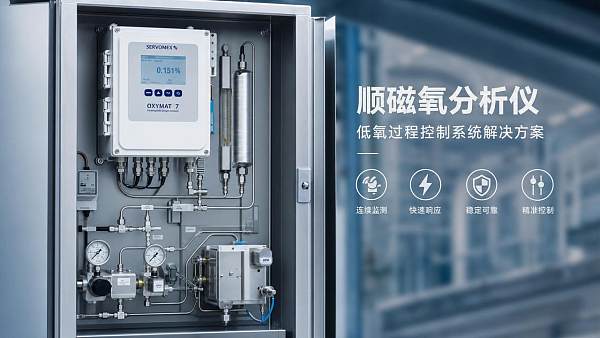
 Paramagnetic Measurement in Low-Oxygen Process ControlParamagnetic measurement enables accurate low-oxygen process control with fast response and stable oxygen analysis. Learn how it improves safety, consistency, and system performance.















Search Categories
Search Categories
Latest Article
- First Global White Paper on Humanoid Robot Industrial Calibration ReleasedHumanoid robot industrial calibration: First global white paper released—key for sensor makers, integrators & metrology labs. Learn impact & action steps.Posted by:
- FDA Updates IVD Import Guidance: CNAS Calibration Chain RequiredFDA mandates CNAS calibration chain with NIST traceability for IVD instruments from China—act now to avoid U.S. import rejection starting July 1, 2026.Posted by:
- IEC TC65 Releases Cybersecurity Validation Guidance for Industrial InstrumentsIEC TC65 releases cybersecurity validation guidance for industrial instruments—key for exporters, OEMs & integrators targeting EU/NA markets. Act now.Posted by:
Please give us a message
