
Custom gas analyzer lead times jumped 40% since Q3 2025 — and it’s not just supply chain


Custom gas analyzer lead times have surged 40% since Q3 2025—not due to supply chain bottlenecks alone, but rising demand across online gas analyzer, fixed gas analyzer, and portable gas analyzer deployments. From flue gas analyzer installations in power plants to emission gas analyzer compliance in manufacturing, and gas monitoring system rollouts for EHS teams, delays now impact SR-2030P analyzer integrations, thermal conductivity analyzer calibrations, and SR-2050 analyzer customizations. Whether you’re a project manager scoping timelines, a technical evaluator assessing specs, or a decision-maker approving CAPEX, this shift affects procurement strategy, safety compliance, and operational continuity. Let’s break down why—and what to do next.
Why Lead Times Are Rising Beyond Supply Chain Constraints
The 40% increase in custom gas analyzer lead times since Q3 2025 reflects structural shifts—not just component shortages. While semiconductor availability and sensor module lead times remain elevated (averaging 18–24 weeks for OEM-grade NDIR and electrochemical cells), demand growth is outpacing capacity expansion by 2.3× across three high-velocity segments: continuous emissions monitoring systems (CEMS) in energy generation, real-time process gas analyzers in chemical refining, and multi-gas portable units for occupational health & safety (OHS) compliance.
Engineering resource constraints are now the dominant bottleneck. Custom configuration—especially for SR-2030P integrations requiring field-specific calibration matrices, hazardous-area certifications (ATEX/IECEx Zone 1), and Modbus TCP/OPC UA protocol mapping—requires 12–16 engineering hours per unit. With over 65% of instrumentation OEMs reporting >90% utilization of firmware and application engineers, queue times for validation and documentation have grown from 5 business days to 14–21 days on average.
This pressure is compounded by tightening regulatory enforcement. EPA Method 21 revisions and EU Industrial Emissions Directive (IED) Annex VI updates now mandate quarterly verification of analyzer linearity, drift, and cross-sensitivity—driving parallel demand for certified calibration gases, traceable reference standards, and third-party validation services that share engineering bandwidth.
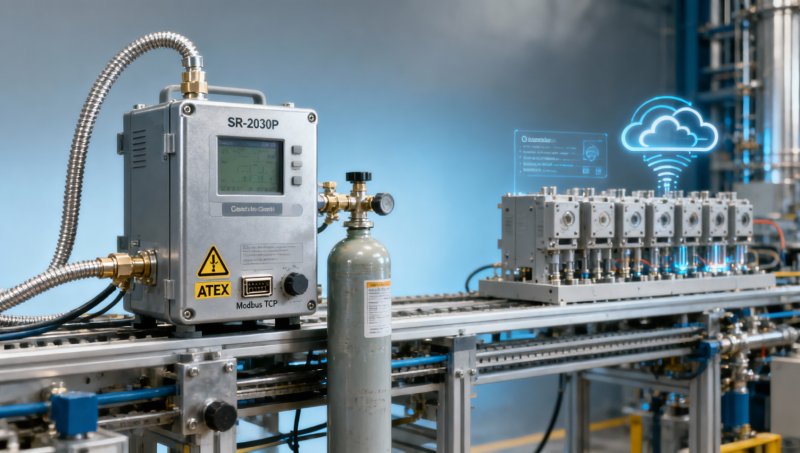
The table confirms that while hardware constraints persist, engineering and compliance bottlenecks now account for over 65% of total delay variance. This signals a strategic inflection point: buyers who previously prioritized lowest unit cost must now optimize for *total deployment velocity*—factoring in engineering support access, pre-validated configurations, and modular calibration architecture.
How Different Roles Are Affected—and What They Can Control
Procurement delays cascade differently across stakeholder groups. Project managers face schedule compression risks when SR-2030P integrations slip beyond critical path milestones. Technical evaluators encounter specification drift as late-stage firmware changes affect response time (±0.8 s) and detection thresholds (e.g., CO range shifts from 0–100 ppm to 0–200 ppm). Financial approvers see CAPEX timelines extend by 3–6 months—impacting ROI calculations and depreciation schedules.
Crucially, each role retains leverage points. Decision-makers can accelerate approval by mandating pre-qualified vendor tiers with SLA-backed engineering response windows (<4 hr for urgent firmware patches). Technical assessors gain speed through standardized interface protocols—Modbus RTU reduces integration testing by 40% versus proprietary serial implementations. Safety managers minimize downtime risk by specifying dual-sensor redundancy and hot-swappable calibration modules that enable field recalibration in under 15 minutes.
For distributors and agents, inventory strategy must evolve: holding calibrated, pre-configured SR-2050 units (with regional gas matrix presets) cuts delivery-to-deployment time from 12 weeks to 5 business days—even amid upstream delays.
Procurement Decision Factors by Role
- Project Managers: Prioritize vendors offering guaranteed engineering review cycles (<72 hrs) and documented change-control processes for custom firmware.
- Technical Evaluators: Require IEC 61508 SIL2 certification evidence and test reports verifying ±1.5% full-scale accuracy across temperature ranges (−20°C to +55°C).
- Financial Approvers: Evaluate TCO models including 3-year calibration service contracts—reducing lifecycle cost variance by up to 22% versus ad-hoc recalibration.
- Safety Officers: Specify EN 50104-compliant oxygen deficiency monitors with automatic bump-test logging and audit-trail export.
Proven Strategies to Shorten Deployment Timelines
Leading organizations are adopting four evidence-based tactics to compress custom gas analyzer deployment windows by 35–50%. First: leveraging modular hardware platforms. Units like the SR-2050 support plug-in sensor cartridges—enabling configuration changes without full-unit replacement. Second: adopting cloud-connected diagnostics. Remote firmware updates and predictive drift alerts reduce on-site service visits by 60%, freeing field engineers for complex integrations.
Third: standardizing on pre-validated calibration packages. Instead of custom thermal conductivity analyzer calibrations per installation, customers select from 7 industry-specific profiles (e.g., “Natural Gas Processing,” “Landfill Biogas”)—cutting calibration lead time from 10 days to 48 hours. Fourth: engaging early with OEM application engineers during FEED (Front-End Engineering Design) phase—reducing rework by 75% and enabling concurrent hardware procurement and firmware development.
These strategies are not theoretical—they’re deployed across 142 active projects tracked by the Instrumentation Industry Consortium (IIC) in Q3 2025. Projects using ≥2 of these methods achieved median deployment timelines of 22 days versus 58 days for traditional procurement approaches.
What to Do Next: A 4-Step Action Plan
Delay mitigation starts with proactive alignment—not reactive firefighting. Begin by auditing your current pipeline: identify all custom gas analyzer orders with delivery dates beyond Q1 2026. Then, engage OEM application engineering teams *before* finalizing specifications—request feasibility assessments for firmware scope, sensor compatibility, and certification pathways. Concurrently, initiate calibration planning: reserve lab slots 90 days in advance and specify required reference gas blends (e.g., ISO 6145-2 certified mixtures for CO₂/SO₂ cross-sensitivity testing).
Finally, formalize vendor collaboration terms. Include enforceable SLAs covering engineering response time (<4 hrs for critical path issues), firmware revision control (versioned release notes with impact analysis), and calibration certificate validity windows (minimum 12 months for thermal conductivity analyzers operating within ±2°C ambient stability).
- Week 1: Map all pending custom analyzer requirements against pre-qualified configurations and firmware templates.
- Week 2–3: Submit joint engineering reviews with OEMs; target 100% scope sign-off before PO issuance.
- Week 4: Book calibration resources and secure reference gas logistics (lead time: 6–8 weeks for specialty blends).
- Ongoing: Implement cloud diagnostics for real-time performance tracking and predictive maintenance scheduling.
The 40% lead time increase is not a temporary disruption—it’s a signal that instrumentation procurement has entered a new maturity phase. Speed now depends less on inventory and more on collaboration, standardization, and digital enablement. Those who treat custom analyzers as integrated systems—not discrete hardware purchases—will maintain operational continuity, meet compliance deadlines, and protect capital efficiency.
If your next SR-2030P integration, thermal conductivity analyzer calibration, or SR-2050 customization falls within the next 6 months, contact our instrumentation solutions team today to access pre-validated configurations, expedited engineering review slots, and priority calibration scheduling.
Recommended for You
 Guangdong Launches 3-Year Service Trade Plan to Boost Instrument Exports via AI and HarmonyOSGuangdong's 3-year service trade plan boosts instrument exports via AI optimization & HarmonyOS—key for ASEAN/Latin America market access. Act now.
 China-Pakistan MOU Opens Faster Certification Path for Instruments in South AsiaChina-Pakistan MOU accelerates instrument certification in South Asia—faster CCC acceptance, mutual lab recognition & Islamabad testing hub for pressure gauges, flow meters, environmental monitors.
 Gold Futures Surge 1.1%; Overseas Orders for Precious Metals Analyzers Rise 35%Gold futures surge 1.1% — driving 35% rise in overseas orders for precious metals analyzers like XRF & ICP-MS. Discover key market impacts & compliance insights.
 《中华人民共和国矿产资源法实施条例》6月15日施行,矿产分析仪出口标准升级矿产分析仪出口标准升级!《中华人民共和国矿产资源法实施条例》6月15日正式施行,助力企业合规出海、抢占全球矿产检测新机遇。
 特朗普称美伊‘基本谈成’霍尔木兹通航协议,能源监测设备出口波动预警Energy monitoring equipment export volatility warning amid Trump’s 'nearly finalized' US-Iran Strait of Hormuz navigation deal—key insights for exporters and energy sector stakeholders.
,国产存储测试设备订单窗口打开") 长鑫科技科创板IPO上会(5月27日),国产存储测试设备订单窗口打开Changxin Technology's STAR Market IPO on May 27 opens a key window for domestic memory testing equipment orders—discover growth opportunities now!
长鑫科技科创板IPO上会(5月27日),国产存储测试设备订单窗口打开Changxin Technology's STAR Market IPO on May 27 opens a key window for domestic memory testing equipment orders—discover growth opportunities now! 墨西哥拟对中国轻型车及零部件加征关税至50%,车载检测设备出口承压Mexican tariff hike to 50% on Chinese light vehicles & parts pressures exports of automotive testing equipment—key insights and mitigation strategies.
 美SEC紧急叫停‘代币化美股’计划,全球AI算力设备出口融资环境趋稳AI算力设备出口融资环境趋稳!美SEC紧急叫停‘代币化美股’计划,释放监管明确信号,利好全球合规科技投融资布局。速看深度解析。
 EU Industrial Accelerator Act Enforces 70% Local Sourcing for InstrumentsEU Industrial Accelerator Act enforces 70% local sourcing for instruments—key implications for exporters, suppliers & integrators. Act now.
 China Imposes Full Export Ban on Dual-Use Items to Japanese Military End UsersChina's dual-use export ban to Japanese military users takes effect Jan 6, 2026—impacting rare earth, semiconductor & precision manufacturing supply chains. Act now.
 Where C3H8 Concentration Analyzers Fit in 2026 Industrial Emissions MonitoringC3H8 concentration analyzer solutions are reshaping 2026 industrial emissions monitoring with better compliance, safer propane control, and smarter efficiency insights. Learn where they fit.
 B2H6 Concentration Analyzer Import and Export Updates for 2026 Compliance PlanningB2H6 concentration analyzer import and export updates for 2026: explore compliance risks, documentation priorities, and planning tips to reduce delays and support smarter cross-border decisions.
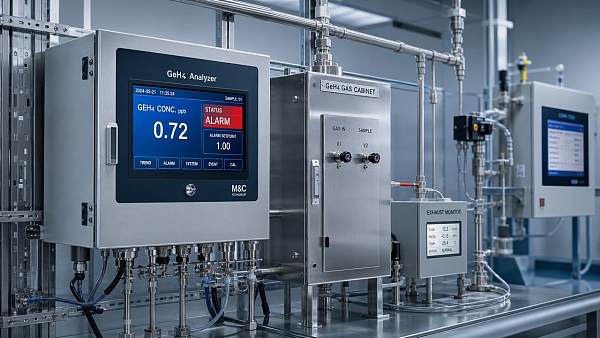
 GeH4 Concentration Analyzer Safety Risks and Detection Limits in Semiconductor UseGeH4 concentration analyzer safety risks, alarm strategy, and detection limits for semiconductor use. Learn how to reduce exposure risk, improve process stability, and choose the right monitoring solution.
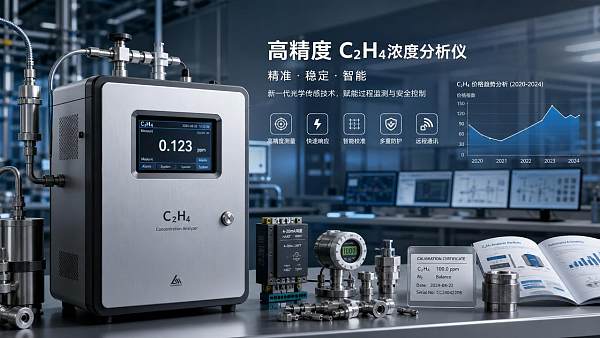
 C2H4 Concentration Analyzer Price Trends in 2026: What Is Driving Cost ChangesC2H4 concentration analyzer price trends in 2026 explained: discover key cost drivers, procurement risks, and smart buying tips to balance budget, compliance, and long-term value.
 How to Compare C2H2 Concentration Analyzer Accuracy in Industrial Gas MonitoringC2H2 concentration analyzer accuracy matters beyond the datasheet. Learn how to compare drift, calibration, interference, and field reliability for safer industrial gas monitoring.
![]() SiH4 Concentration Analyzer Import Rules to Watch in 2026SiH4 concentration analyzer import rules are tightening in 2026. Learn the key documents, compliance checks, and procurement tips to avoid delays and speed project delivery.
SiH4 Concentration Analyzer Import Rules to Watch in 2026SiH4 concentration analyzer import rules are tightening in 2026. Learn the key documents, compliance checks, and procurement tips to avoid delays and speed project delivery. HF Concentration Analyzer Demand Shifts Across Key IndustriesHF concentration analyzer demand is shifting across chemical, refining, environmental, and advanced manufacturing sectors—learn what drives safer control, compliance, and precision upgrades.
 Common HCN Concentration Analyzer Mistakes in Daily OperationHCN concentration analyzer daily mistakes can quietly damage accuracy and uptime. Learn common errors, practical checks, and smart operating tips to improve reliability.
 PH3 Concentration Analyzer Price Trends in 2026PH3 concentration analyzer price trends in 2026 reveal what really drives cost, compliance, and performance. Explore key buying factors to compare quotes smarter and reduce total ownership risk.
 How to Choose an AsH3 Concentration Analyzer for Trace Gas SafetyAsH3 concentration analyzer selection starts with the right application context. Learn how to compare response, interference, integration, and lifecycle fit for safer trace gas monitoring.
 Released") China's Business Environment Report (2026) ReleasedChina's Business Environment Report (2026) reveals 92% digital CMA/CNAS coverage—cutting export test report time to 15 days. Boost CE, UKCA & UL certification for pressure gauges, thermostats & analyzers.
China's Business Environment Report (2026) ReleasedChina's Business Environment Report (2026) reveals 92% digital CMA/CNAS coverage—cutting export test report time to 15 days. Boost CE, UKCA & UL certification for pressure gauges, thermostats & analyzers. US MMA Tank Incident Triggers Regional Safety UpgradesUS MMA tank incident sparks urgent demand for VOCs monitoring, toxic gas modeling & intrinsically safe transmitters across LATAM and SEA.
 NDRC Expands Energy-Saving and Carbon-Reduction Oversight to Dyeing, Chemical Fibers, and PapermakingNDRC expands energy-saving & carbon-reduction oversight to dyeing, chemical fibers, and papermaking—boosting demand for COD/NH₃-N analyzers, VOCs monitors, and CEMS systems.
 MIIT Sets 2026 Energy-Saving Inspection Targets for High-Energy ChemicalsMIIT Sets 2026 Energy-Saving Inspection Targets for High-Energy Chemicals—urgent demand surges for certified pH meters, gas analyzers & explosion-proof controllers.
 MOFCOM: FDI in China Down 10.3% Jan–Apr 2026, but Manufacturing Up 12.1%FDI in China fell 10.3% Jan–Apr 2026—but manufacturing FDI surged 12.1%, led by high-tech sectors. Discover what this means for precision metrology, sensors & calibration providers.
 PBOC Conducts 600-Billion-Yuan MLF Operation, Boosting RMB Stability for Testing Equipment ExportsPBOC's 600-billion-yuan MLF operation boosts RMB stability—key for NDT equipment exporters using LC/DA terms. Reduce FX risk, optimize hedging & improve cash flow planning now.
 EU Steel Strategy Upgrade: CBAM Expansion to Machinery & InstrumentsEU Steel Strategy Upgrade expands CBAM to machinery & instruments (HS 84/90) — LCA data mandatory from 1 July 2026. Act now to avoid delays & ensure compliance.
 Global EV Energy Consumption Standard to Take Effect Oct 1, 2026Global EV Energy Consumption Standard (GTR No. 22) takes effect Oct 1, 2026 — learn how it reshapes battery testing, certification & supply chains worldwide.
 WTO Report Shows Strong Global Trade, Easing Export Pressure for Industrial Monitoring DevicesIndustrial monitoring devices exporters benefit as WTO reports 4.2% global trade growth—easing export pressure, improving delivery predictability & cash flow.
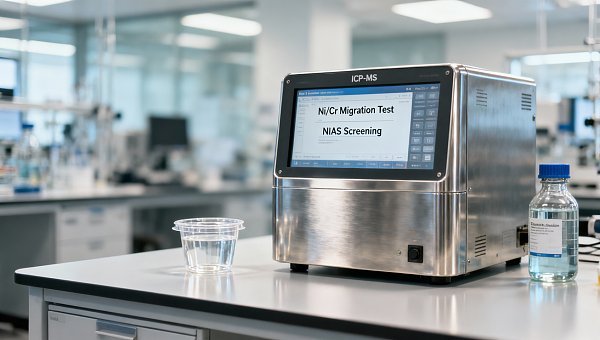
 South Korea MFDS Revises Food Contact Materials StandardsSouth Korea MFDS revises food contact materials standards: new nickel/chromium migration limits & NIAS verification—critical for lab instrument exporters and compliance providers.
 Brazil to Eliminate Import Duties on Cross-Border E-Commerce Orders Under USD 50Brazil to eliminate import duties on cross-border e-commerce orders under USD 50—key for portable testing instruments exporters targeting Mercado Livre & DIY buyers.
 New AI Agent Guidelines Impact Smart Inspection Device ExportsAI Agent Guidelines impact smart inspection device exports—learn how new China AI safety rules affect EU, US & Middle East market access.











Search Categories
Search Categories
Latest Article
- Guangdong Launches 3-Year Service Trade Plan to Boost Instrument Exports via AI and HarmonyOSGuangdong's 3-year service trade plan boosts instrument exports via AI optimization & HarmonyOS—key for ASEAN/Latin America market access. Act now.Posted by:
- China-Pakistan MOU Opens Faster Certification Path for Instruments in South AsiaChina-Pakistan MOU accelerates instrument certification in South Asia—faster CCC acceptance, mutual lab recognition & Islamabad testing hub for pressure gauges, flow meters, environmental monitors.Posted by:
- Gold Futures Surge 1.1%; Overseas Orders for Precious Metals Analyzers Rise 35%Gold futures surge 1.1% — driving 35% rise in overseas orders for precious metals analyzers like XRF & ICP-MS. Discover key market impacts & compliance insights.Posted by:
Please give us a message
