
China Resumes Refined Oil Exports, Boosting Overseas Demand for Process Instruments


On April 30, 2026, China resumed refined oil exports, allocating an initial 2.75 million tonnes of export quotas—primarily targeting Southeast Asia. This development signals renewed momentum for process instrumentation suppliers, as domestic refining capacity reaches 945 million tonnes/year and new energy vehicle penetration exceeds 60%, intensifying pressure on downstream automation and measurement equipment deployment. Industrial automation providers, EPC contractors, and instrumentation distributors—especially those active in Southeast Asia and the Middle East—should monitor implications for export-oriented project execution and integrated instrument procurement.
Event Overview
On April 30, 2026, Chinese authorities reinstated refined oil export quotas, issuing an initial allocation of 2.75 million tonnes. The quota is directed mainly toward Southeast Asian markets. Concurrently, publicly reported data indicates China’s installed refining capacity stands at 945 million tonnes per year, while new energy vehicle penetration has surpassed 60%. These conditions are accelerating overseas deployment of process instruments—including distributed control systems (DCS), online analyzers, flow meters, and pressure transmitters—via refinery EPC projects and associated technical upgrades.

Industries Affected
Process Instrument Manufacturers & Exporters
These companies face direct demand uplift as domestic refineries pursue overseas EPC contracts and retrofit projects requiring certified, export-compliant instrumentation. Impact manifests in increased order volume for field devices and system integration packages—particularly those meeting ASEAN or GCC regulatory requirements.
EPC Contractors with Refinery Portfolios
Contractors executing refinery projects abroad now encounter tighter integration timelines for instrumentation packages. With export quotas reactivated, more Chinese-owned or -backed refineries outside China are advancing feasibility and construction phases—raising demand for bundled automation solutions and cross-border commissioning support.
Distribution & Integration Partners in Target Markets
Distributors in Southeast Asia and the Middle East report a widening window for industrial instrument procurement tied to refinery-related infrastructure. Impact includes higher inbound inquiries for pre-integrated skids, calibration services, and localized technical documentation—especially where end users prioritize fast-track delivery and regional compliance alignment.
Supply Chain & Logistics Providers Serving Industrial Automation
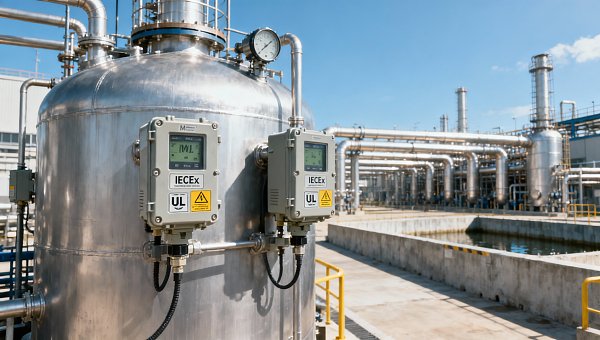
Freight forwarders, customs brokers, and certification facilitators handling instrumentation shipments may see increased volume for Class I hazardous-area certified devices and explosion-proof enclosures. Impact centers on documentation complexity, lead time sensitivity, and regional import licensing procedures—notably in Indonesia, Vietnam, and Saudi Arabia.
What Enterprises and Practitioners Should Monitor and Do
Track official quota adjustments and policy guidance beyond the initial batch
The April 30 allocation marks the first tranche; subsequent releases—and any linkage to broader energy trade policy—are likely to shape quarterly demand visibility. Stakeholders should monitor announcements from the Ministry of Commerce and National Development and Reform Commission for signals on quota expansion or destination diversification.
Focus on high-priority instrumentation categories and regional compliance pathways
Online analyzers and smart pressure transmitters are cited in market feedback as early movers in current EPC tenders. Separately, ASEAN’s harmonized standards (e.g., ASEAN Mutual Recognition Arrangement for Conformity Assessment) and Saudi SASO IECEE CB Scheme recognition status warrant verification before tender submission.
Distinguish between policy signal and near-term project execution
While export resumption is a clear policy signal, actual refinery EPC awards and instrument procurement cycles typically lag by 3–6 months. Companies should avoid over-indexing on headline timing and instead validate pipeline activity through engineering procurement leads and tender databases specific to downstream oil & gas projects.
Prepare for accelerated integration and documentation workflows
Given compressed project timelines observed in recent Southeast Asian refinery upgrades, suppliers should pre-validate multilingual technical manuals, ATEX/IECEx certification validity, and local agent authorization letters—reducing delays during customs clearance and site handover.
Editorial Perspective / Industry Observation
Observably, this development functions less as an immediate commercial inflection and more as a structural signal: it confirms that domestic refining overcapacity—combined with maturing export logistics and regulatory frameworks—is now translating into tangible instrumentation demand abroad. Analysis shows the 2.75-million-tonne quota alone does not guarantee large-scale instrument orders, but it activates decision-making cycles across EPC bidders, technology licensors, and regional distributors. From an industry perspective, the key implication lies not in the volume of fuel exported, but in how quickly and consistently instrumentation supply chains align with the resulting wave of overseas refinery modernization. Continued attention is warranted—not because the policy shift is unprecedented, but because its operationalization reveals evolving thresholds for global market readiness among Chinese industrial automation players.
This event underscores a recalibration in how refining overcapacity drives downstream industrial equipment export dynamics. It is neither a short-term spike nor a fully matured trend—but rather an early-stage inflection point where policy intent begins intersecting with real-world project execution. Current interpretation should emphasize measured responsiveness: validating regional demand signals, verifying certification readiness, and calibrating capacity against confirmed EPC pipelines—not speculative scaling.
Source: Official quota announcement (April 30, 2026); Publicly reported figures on China’s refining capacity (945 million tonnes/year) and NEV penetration rate (>60%); Market intelligence on instrumentation deployment in refinery EPC projects.
Note: Quota allocation details beyond the initial 2.75 million tonnes, as well as final destination breakdowns and end-user project timelines, remain subject to ongoing observation.
Recommended for You
 China Resumes Refined Oil Exports, Boosting Overseas Demand for Process InstrumentsProcess instruments surge as China resumes refined oil exports—2.75M tonnes quota fuels overseas demand for DCS, analyzers & flow meters in SEA and ME.
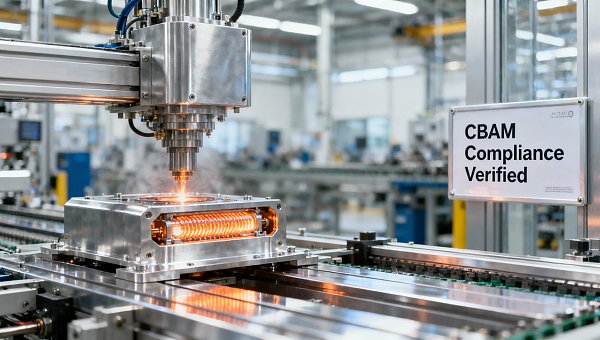
 EU CBAM Carbon Tariff Fully Enforced: Direct Cost Impact on Exports from 2026EU CBAM carbon tariff is fully enforced from 2026—directly impacting instrumentation exporters. Discover cost implications, compliance steps & strategic readiness for aluminum, heating modules & power systems.
 Guinea to Impose Bauxite Export Quotas, Spurring 5.01% Surge in Alumina PricesGuinea's new bauxite export quotas spark 5.01% alumina price surge—critical for instrument enclosures, sensor components & industrial cabinet makers. Act now.
 New Maritime Code Shifts Liability for Unclaimed Cargo to ShipperNew Maritime Code shifts unclaimed cargo liability to shipper—key implications for importers, distributors & logistics providers. Act before May 1, 2026.
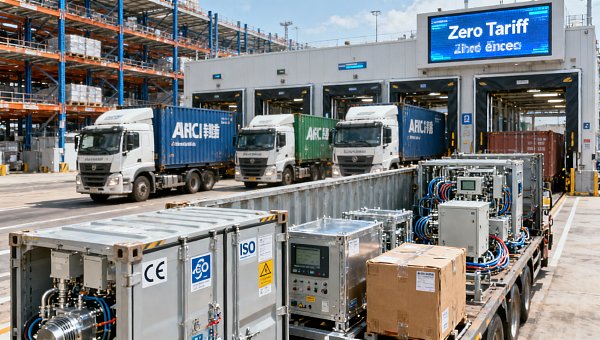
 China Imposes Zero Tariffs on Goods from 20 African Nations, Effective May 1, 2026China’s zero tariffs on goods from 20 African nations (effective May 1, 2026) boost exports of electromechanical & analytical equipment—unlock growth in automation, environmental monitoring, and lab sectors now.
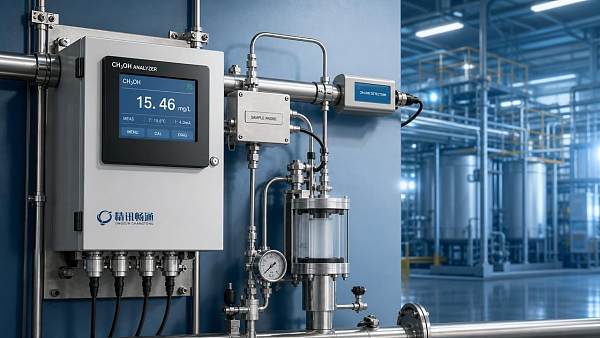
 CH3OH Concentration Analyzer Market Trends: Where Demand Is Growing in 2026CH3OH concentration analyzer demand is rising in 2026 across chemicals, energy, water treatment, and labs. See where growth is strongest and how to choose smarter.
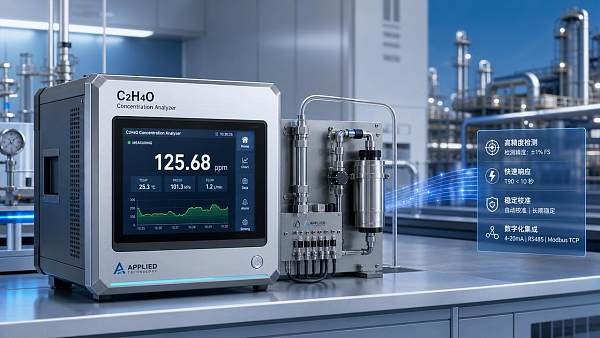
 C2H4O Concentration Analyzer: What to Compare Before Importing in 2026C2H4O concentration analyzer buying in 2026 goes beyond price. Compare accuracy, compliance, maintenance, integration, and supplier support before importing.
 C3H6O Concentration Analyzer Price Trends and Calibration Cost in 2026C3H6O concentration analyzer price trends in 2026: compare calibration cost, lifecycle expenses, and key budget drivers to choose a compliant, cost-effective analyzer.
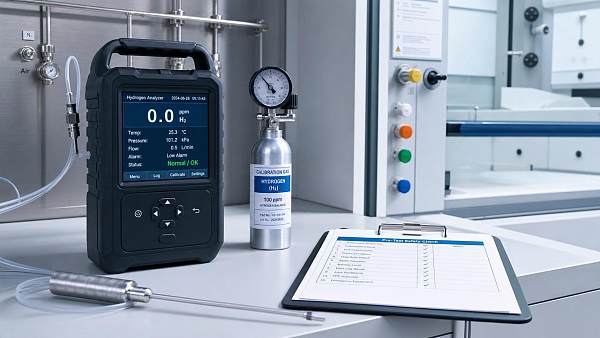
 Portable Hydrogen Analyzer for Laboratory Use: Key Safety Checks Before Daily TestingPortable hydrogen analyzer for laboratory use: discover the key daily safety checks that improve accuracy, reduce ignition risk, and keep lab hydrogen testing reliable and compliant.
 How Accurate Is a Laser Gas Analyzer for Industrial Emissions Monitoring in 2026?Laser gas analyzer for industrial emissions monitoring: discover how accurate it can be in 2026 across power, cement, waste, and chemical applications, with key risks and selection tips.
 C2H5OH Concentration Analyzer: Key Checks Before Import OrdersC2H5OH concentration analyzer import guide: check specs, calibration, compliance, and supplier support before ordering to reduce risk and choose the right analyzer with confidence.
 2026 Market Trends for C4H10 Concentration Analyzers in Process IndustriesC4H10 concentration analyzer market trends for 2026: discover how smarter, connected analyzers help process industries improve safety, compliance, uptime, and ROI.
 Common Safety Gaps When Using a C6H6 Concentration AnalyzerC6H6 concentration analyzer safety gaps can distort readings and delay hazard response. Learn the most common risks, practical fixes, and smarter deployment tips across industrial, lab, and environmental use.
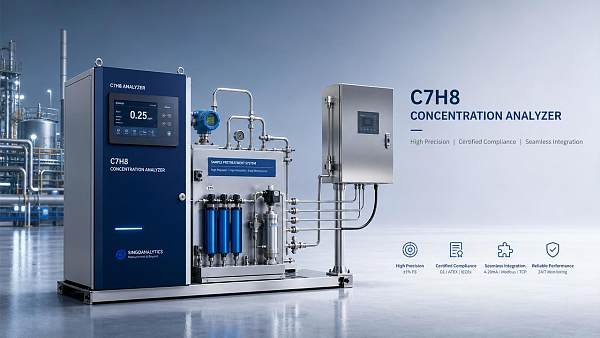
 C7H8 Concentration Analyzer Price Trends in 2026: What Shapes CostC7H8 concentration analyzer price trends in 2026 depend on sensors, compliance, calibration, integration, and service. See what really shapes total cost before you approve a budget.
 How to Choose a C8H10 Concentration Analyzer for Stable VOC MonitoringC8H10 concentration analyzer selection guide for stable VOC monitoring. Learn how to compare performance, technology, drift, and application fit for reliable results.
 Guangdong Launches 3-Year Service Trade Plan to Boost Instrument Exports via AI and HarmonyOSGuangdong's 3-year service trade plan boosts instrument exports via AI optimization & HarmonyOS—key for ASEAN/Latin America market access. Act now.
 China-Pakistan MOU Opens Faster Certification Path for Instruments in South AsiaChina-Pakistan MOU accelerates instrument certification in South Asia—faster CCC acceptance, mutual lab recognition & Islamabad testing hub for pressure gauges, flow meters, environmental monitors.
 Gold Futures Surge 1.1%; Overseas Orders for Precious Metals Analyzers Rise 35%Gold futures surge 1.1% — driving 35% rise in overseas orders for precious metals analyzers like XRF & ICP-MS. Discover key market impacts & compliance insights.
 EU Industrial Accelerator Act Enforces 70% Local Sourcing for InstrumentsEU Industrial Accelerator Act enforces 70% local sourcing for instruments—key implications for exporters, suppliers & integrators. Act now.
 China Imposes Full Export Ban on Dual-Use Items to Japanese Military End UsersChina's dual-use export ban to Japanese military users takes effect Jan 6, 2026—impacting rare earth, semiconductor & precision manufacturing supply chains. Act now.
 Where C3H8 Concentration Analyzers Fit in 2026 Industrial Emissions MonitoringC3H8 concentration analyzer solutions are reshaping 2026 industrial emissions monitoring with better compliance, safer propane control, and smarter efficiency insights. Learn where they fit.
 B2H6 Concentration Analyzer Import and Export Updates for 2026 Compliance PlanningB2H6 concentration analyzer import and export updates for 2026: explore compliance risks, documentation priorities, and planning tips to reduce delays and support smarter cross-border decisions.
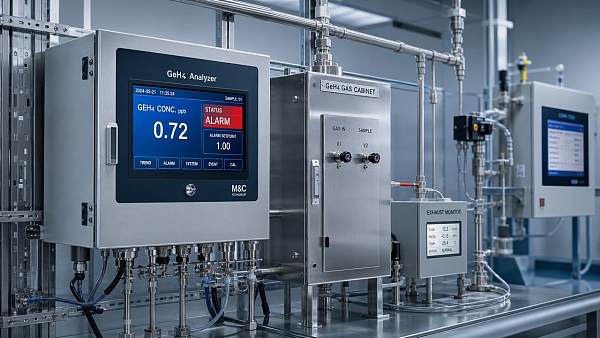
 GeH4 Concentration Analyzer Safety Risks and Detection Limits in Semiconductor UseGeH4 concentration analyzer safety risks, alarm strategy, and detection limits for semiconductor use. Learn how to reduce exposure risk, improve process stability, and choose the right monitoring solution.
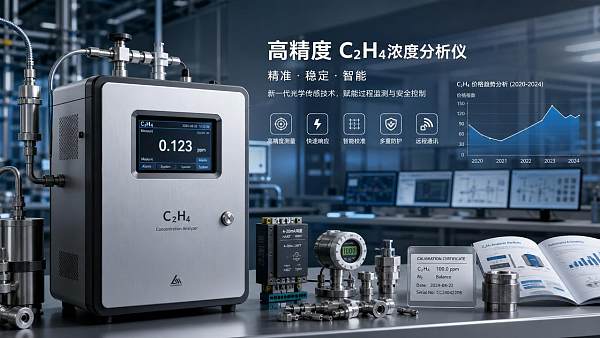
 C2H4 Concentration Analyzer Price Trends in 2026: What Is Driving Cost ChangesC2H4 concentration analyzer price trends in 2026 explained: discover key cost drivers, procurement risks, and smart buying tips to balance budget, compliance, and long-term value.
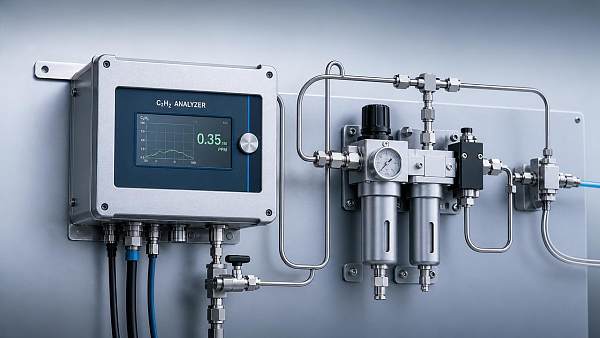
 How to Compare C2H2 Concentration Analyzer Accuracy in Industrial Gas MonitoringC2H2 concentration analyzer accuracy matters beyond the datasheet. Learn how to compare drift, calibration, interference, and field reliability for safer industrial gas monitoring.
![]() SiH4 Concentration Analyzer Import Rules to Watch in 2026SiH4 concentration analyzer import rules are tightening in 2026. Learn the key documents, compliance checks, and procurement tips to avoid delays and speed project delivery.
SiH4 Concentration Analyzer Import Rules to Watch in 2026SiH4 concentration analyzer import rules are tightening in 2026. Learn the key documents, compliance checks, and procurement tips to avoid delays and speed project delivery. HF Concentration Analyzer Demand Shifts Across Key IndustriesHF concentration analyzer demand is shifting across chemical, refining, environmental, and advanced manufacturing sectors—learn what drives safer control, compliance, and precision upgrades.
 Common HCN Concentration Analyzer Mistakes in Daily OperationHCN concentration analyzer daily mistakes can quietly damage accuracy and uptime. Learn common errors, practical checks, and smart operating tips to improve reliability.
 PH3 Concentration Analyzer Price Trends in 2026PH3 concentration analyzer price trends in 2026 reveal what really drives cost, compliance, and performance. Explore key buying factors to compare quotes smarter and reduce total ownership risk.
 How to Choose an AsH3 Concentration Analyzer for Trace Gas SafetyAsH3 concentration analyzer selection starts with the right application context. Learn how to compare response, interference, integration, and lifecycle fit for safer trace gas monitoring.
 Released") China's Business Environment Report (2026) ReleasedChina's Business Environment Report (2026) reveals 92% digital CMA/CNAS coverage—cutting export test report time to 15 days. Boost CE, UKCA & UL certification for pressure gauges, thermostats & analyzers.
China's Business Environment Report (2026) ReleasedChina's Business Environment Report (2026) reveals 92% digital CMA/CNAS coverage—cutting export test report time to 15 days. Boost CE, UKCA & UL certification for pressure gauges, thermostats & analyzers. US MMA Tank Incident Triggers Regional Safety UpgradesUS MMA tank incident sparks urgent demand for VOCs monitoring, toxic gas modeling & intrinsically safe transmitters across LATAM and SEA.












Search Categories
Search Categories
Latest Article
- China Resumes Refined Oil Exports, Boosting Overseas Demand for Process InstrumentsProcess instruments surge as China resumes refined oil exports—2.75M tonnes quota fuels overseas demand for DCS, analyzers & flow meters in SEA and ME.Posted by:
- EU CBAM Carbon Tariff Fully Enforced: Direct Cost Impact on Exports from 2026EU CBAM carbon tariff is fully enforced from 2026—directly impacting instrumentation exporters. Discover cost implications, compliance steps & strategic readiness for aluminum, heating modules & power systems.Posted by:
- Guinea to Impose Bauxite Export Quotas, Spurring 5.01% Surge in Alumina PricesGuinea's new bauxite export quotas spark 5.01% alumina price surge—critical for instrument enclosures, sensor components & industrial cabinet makers. Act now.Posted by:
Please give us a message
