
C3H6O Concentration Analyzer Price Trends and Calibration Cost in 2026


For finance approvers planning 2026 instrumentation budgets, understanding C3H6O concentration analyzer price trends is essential to balancing compliance, performance, and lifecycle cost.
Beyond the initial purchase, calibration expenses, maintenance intervals, and system integration can significantly affect total ownership cost.
This article outlines the key pricing drivers and cost considerations behind a C3H6O concentration analyzer to support more confident, data-based investment decisions.
Why C3H6O Concentration Analyzer Price Trends Matter More in 2026
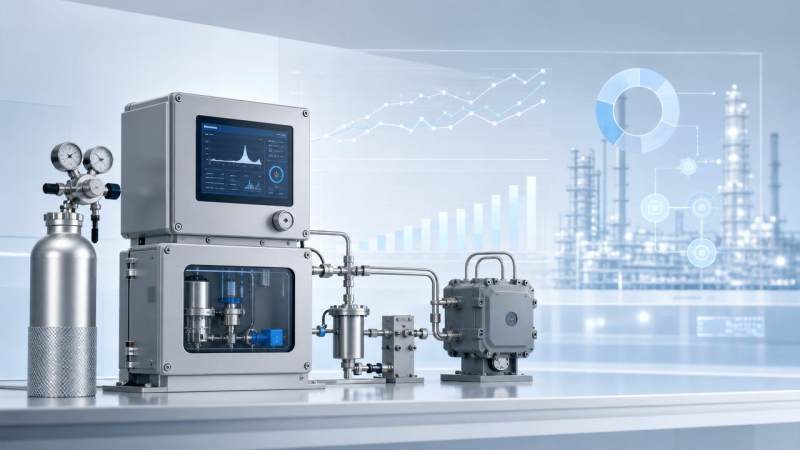
The instrumentation sector is moving through a cost-sensitive phase shaped by automation upgrades, tighter monitoring rules, and higher expectations for traceable data.
In this environment, a C3H6O concentration analyzer is no longer judged by purchase price alone.
2026 budgets increasingly evaluate analyzer accuracy, calibration frequency, digital connectivity, and service support as linked cost drivers.
That shift is especially visible across industrial manufacturing, energy, environmental monitoring, laboratory analysis, and automation control applications.
Where acetone or other C3H6O vapor measurement affects safety, emissions, process quality, or solvent recovery, price trends gain strategic importance.
The result is a broader purchasing view focused on lifecycle economics, not a one-time equipment spend.
Current Market Signals Point to a Wider Price Range
Current market signals suggest the 2026 C3H6O concentration analyzer price range will remain broad rather than normalize.
Basic fixed-point units may stay accessible, but advanced online analyzers are trending upward in total configured cost.
Several shifts explain this pattern.
- Sensor technologies with better selectivity carry higher component costs.
- Explosion-proof designs add certification and enclosure expense.
- Networked interfaces increase integration value and implementation cost.
- Longer documentation packages raise engineering and validation effort.
As a result, two systems labeled as a C3H6O concentration analyzer may differ significantly in price and long-term operating burden.
The Main Forces Driving C3H6O Concentration Analyzer Cost
A reliable budget model starts by separating visible equipment cost from embedded engineering and compliance cost.
These factors explain why a lower listed C3H6O concentration analyzer price may not represent the best financial outcome.
Calibration Cost Is Becoming a Larger Share of Ownership
Calibration cost is rising from a secondary line item to a major budget consideration for every C3H6O concentration analyzer deployment.
This is partly due to stricter expectations for traceability, repeatability, and documented performance over time.
What usually shapes calibration expense
- Required calibration interval
- Single-point versus multi-point calibration
- Reference gas quality and logistics
- On-site labor and shutdown coordination
- Third-party certification or accredited reporting
A low-cost analyzer with frequent recalibration can become more expensive than a higher-grade system with longer stability.
That pattern is particularly relevant where continuous monitoring, audit readiness, or safety-critical detection is required.
Different Application Settings Feel the Price Trend Differently
The impact of C3H6O concentration analyzer price trends is not uniform across the broader instrumentation landscape.
Different business processes experience different cost pressure points.
- Process manufacturing often prioritizes uptime, fast response, and integration with control systems.
- Environmental monitoring places more weight on reporting integrity and calibration records.
- Laboratories may accept higher unit cost for superior precision and method consistency.
- Hazardous-area projects face stronger enclosure and certification premiums.
This means the right C3H6O concentration analyzer cost benchmark should always be tied to operating context.
A generic price comparison misses the cost differences created by environment, risk profile, and data obligations.
The Most Important Budget Watchpoints for 2026
Several watchpoints deserve close attention before approving any C3H6O concentration analyzer investment in 2026.
- Check whether the quoted analyzer includes sampling system components.
- Confirm if commissioning, training, and software setup are priced separately.
- Review calibration consumables over a full operating year.
- Estimate downtime exposure during service or recertification windows.
- Compare warranty terms against expected sensor replacement cycles.
- Assess whether spare parts are local, imported, or made to order.
These details often determine the real cost gap between competing C3H6O concentration analyzer options.
A Practical Way to Compare Analyzer Options Beyond Sticker Price
A structured comparison model reduces budget risk and improves consistency across instrumentation decisions.
This framework helps compare each C3H6O concentration analyzer on a total-cost basis rather than a narrow unit-price basis.
What the 2026 Trend Suggests for Future Decisions
The likely 2026 direction is clear: the market will continue rewarding analyzers that reduce recalibration burden and simplify digital reporting.
Price pressure may persist, but cost justification will favor measurable operational savings.
For many installations, the best-value C3H6O concentration analyzer will be the one that balances stable sensing, manageable service intervals, and integration readiness.
That balance matters across the wider instrumentation industry, where modernization increasingly depends on reliable measurement and defendable data.
Next-Step Actions to Build a More Accurate Budget
A practical next step is to request a side-by-side lifecycle estimate for each C3H6O concentration analyzer under review.
- Separate hardware, installation, calibration, and service lines.
- Model annual cost under expected operating hours.
- Stress-test assumptions for drift, consumables, and downtime.
- Validate whether documentation meets future compliance needs.
Using this method, a C3H6O concentration analyzer decision becomes easier to defend financially and technically.
It also helps prevent short-term savings from turning into higher calibration cost and operating risk in 2026 and beyond.
Recommended for You
 China Resumes Refined Oil Exports, Boosting Overseas Demand for Process InstrumentsProcess instruments surge as China resumes refined oil exports—2.75M tonnes quota fuels overseas demand for DCS, analyzers & flow meters in SEA and ME.
 EU CBAM Carbon Tariff Fully Enforced: Direct Cost Impact on Exports from 2026EU CBAM carbon tariff is fully enforced from 2026—directly impacting instrumentation exporters. Discover cost implications, compliance steps & strategic readiness for aluminum, heating modules & power systems.
 Guinea to Impose Bauxite Export Quotas, Spurring 5.01% Surge in Alumina PricesGuinea's new bauxite export quotas spark 5.01% alumina price surge—critical for instrument enclosures, sensor components & industrial cabinet makers. Act now.
 New Maritime Code Shifts Liability for Unclaimed Cargo to ShipperNew Maritime Code shifts unclaimed cargo liability to shipper—key implications for importers, distributors & logistics providers. Act before May 1, 2026.
 China Imposes Zero Tariffs on Goods from 20 African Nations, Effective May 1, 2026China’s zero tariffs on goods from 20 African nations (effective May 1, 2026) boost exports of electromechanical & analytical equipment—unlock growth in automation, environmental monitoring, and lab sectors now.
 CH3OH Concentration Analyzer Market Trends: Where Demand Is Growing in 2026CH3OH concentration analyzer demand is rising in 2026 across chemicals, energy, water treatment, and labs. See where growth is strongest and how to choose smarter.
 C2H4O Concentration Analyzer: What to Compare Before Importing in 2026C2H4O concentration analyzer buying in 2026 goes beyond price. Compare accuracy, compliance, maintenance, integration, and supplier support before importing.
 C3H6O Concentration Analyzer Price Trends and Calibration Cost in 2026C3H6O concentration analyzer price trends in 2026: compare calibration cost, lifecycle expenses, and key budget drivers to choose a compliant, cost-effective analyzer.
 Portable Hydrogen Analyzer for Laboratory Use: Key Safety Checks Before Daily TestingPortable hydrogen analyzer for laboratory use: discover the key daily safety checks that improve accuracy, reduce ignition risk, and keep lab hydrogen testing reliable and compliant.
 How Accurate Is a Laser Gas Analyzer for Industrial Emissions Monitoring in 2026?Laser gas analyzer for industrial emissions monitoring: discover how accurate it can be in 2026 across power, cement, waste, and chemical applications, with key risks and selection tips.
 C2H5OH Concentration Analyzer: Key Checks Before Import OrdersC2H5OH concentration analyzer import guide: check specs, calibration, compliance, and supplier support before ordering to reduce risk and choose the right analyzer with confidence.
 2026 Market Trends for C4H10 Concentration Analyzers in Process IndustriesC4H10 concentration analyzer market trends for 2026: discover how smarter, connected analyzers help process industries improve safety, compliance, uptime, and ROI.
 Common Safety Gaps When Using a C6H6 Concentration AnalyzerC6H6 concentration analyzer safety gaps can distort readings and delay hazard response. Learn the most common risks, practical fixes, and smarter deployment tips across industrial, lab, and environmental use.
 C7H8 Concentration Analyzer Price Trends in 2026: What Shapes CostC7H8 concentration analyzer price trends in 2026 depend on sensors, compliance, calibration, integration, and service. See what really shapes total cost before you approve a budget.
 How to Choose a C8H10 Concentration Analyzer for Stable VOC MonitoringC8H10 concentration analyzer selection guide for stable VOC monitoring. Learn how to compare performance, technology, drift, and application fit for reliable results.
 Guangdong Launches 3-Year Service Trade Plan to Boost Instrument Exports via AI and HarmonyOSGuangdong's 3-year service trade plan boosts instrument exports via AI optimization & HarmonyOS—key for ASEAN/Latin America market access. Act now.
 China-Pakistan MOU Opens Faster Certification Path for Instruments in South AsiaChina-Pakistan MOU accelerates instrument certification in South Asia—faster CCC acceptance, mutual lab recognition & Islamabad testing hub for pressure gauges, flow meters, environmental monitors.
 Gold Futures Surge 1.1%; Overseas Orders for Precious Metals Analyzers Rise 35%Gold futures surge 1.1% — driving 35% rise in overseas orders for precious metals analyzers like XRF & ICP-MS. Discover key market impacts & compliance insights.
 EU Industrial Accelerator Act Enforces 70% Local Sourcing for InstrumentsEU Industrial Accelerator Act enforces 70% local sourcing for instruments—key implications for exporters, suppliers & integrators. Act now.
 China Imposes Full Export Ban on Dual-Use Items to Japanese Military End UsersChina's dual-use export ban to Japanese military users takes effect Jan 6, 2026—impacting rare earth, semiconductor & precision manufacturing supply chains. Act now.
 Where C3H8 Concentration Analyzers Fit in 2026 Industrial Emissions MonitoringC3H8 concentration analyzer solutions are reshaping 2026 industrial emissions monitoring with better compliance, safer propane control, and smarter efficiency insights. Learn where they fit.
 B2H6 Concentration Analyzer Import and Export Updates for 2026 Compliance PlanningB2H6 concentration analyzer import and export updates for 2026: explore compliance risks, documentation priorities, and planning tips to reduce delays and support smarter cross-border decisions.
 GeH4 Concentration Analyzer Safety Risks and Detection Limits in Semiconductor UseGeH4 concentration analyzer safety risks, alarm strategy, and detection limits for semiconductor use. Learn how to reduce exposure risk, improve process stability, and choose the right monitoring solution.
 C2H4 Concentration Analyzer Price Trends in 2026: What Is Driving Cost ChangesC2H4 concentration analyzer price trends in 2026 explained: discover key cost drivers, procurement risks, and smart buying tips to balance budget, compliance, and long-term value.
 How to Compare C2H2 Concentration Analyzer Accuracy in Industrial Gas MonitoringC2H2 concentration analyzer accuracy matters beyond the datasheet. Learn how to compare drift, calibration, interference, and field reliability for safer industrial gas monitoring.
![]() SiH4 Concentration Analyzer Import Rules to Watch in 2026SiH4 concentration analyzer import rules are tightening in 2026. Learn the key documents, compliance checks, and procurement tips to avoid delays and speed project delivery.
SiH4 Concentration Analyzer Import Rules to Watch in 2026SiH4 concentration analyzer import rules are tightening in 2026. Learn the key documents, compliance checks, and procurement tips to avoid delays and speed project delivery. HF Concentration Analyzer Demand Shifts Across Key IndustriesHF concentration analyzer demand is shifting across chemical, refining, environmental, and advanced manufacturing sectors—learn what drives safer control, compliance, and precision upgrades.
 Common HCN Concentration Analyzer Mistakes in Daily OperationHCN concentration analyzer daily mistakes can quietly damage accuracy and uptime. Learn common errors, practical checks, and smart operating tips to improve reliability.
 PH3 Concentration Analyzer Price Trends in 2026PH3 concentration analyzer price trends in 2026 reveal what really drives cost, compliance, and performance. Explore key buying factors to compare quotes smarter and reduce total ownership risk.
 How to Choose an AsH3 Concentration Analyzer for Trace Gas SafetyAsH3 concentration analyzer selection starts with the right application context. Learn how to compare response, interference, integration, and lifecycle fit for safer trace gas monitoring.
 Released") China's Business Environment Report (2026) ReleasedChina's Business Environment Report (2026) reveals 92% digital CMA/CNAS coverage—cutting export test report time to 15 days. Boost CE, UKCA & UL certification for pressure gauges, thermostats & analyzers.
China's Business Environment Report (2026) ReleasedChina's Business Environment Report (2026) reveals 92% digital CMA/CNAS coverage—cutting export test report time to 15 days. Boost CE, UKCA & UL certification for pressure gauges, thermostats & analyzers. US MMA Tank Incident Triggers Regional Safety UpgradesUS MMA tank incident sparks urgent demand for VOCs monitoring, toxic gas modeling & intrinsically safe transmitters across LATAM and SEA.



Search Categories
Search Categories
Latest Article
- China Resumes Refined Oil Exports, Boosting Overseas Demand for Process InstrumentsProcess instruments surge as China resumes refined oil exports—2.75M tonnes quota fuels overseas demand for DCS, analyzers & flow meters in SEA and ME.Posted by:
- EU CBAM Carbon Tariff Fully Enforced: Direct Cost Impact on Exports from 2026EU CBAM carbon tariff is fully enforced from 2026—directly impacting instrumentation exporters. Discover cost implications, compliance steps & strategic readiness for aluminum, heating modules & power systems.Posted by:
- Guinea to Impose Bauxite Export Quotas, Spurring 5.01% Surge in Alumina PricesGuinea's new bauxite export quotas spark 5.01% alumina price surge—critical for instrument enclosures, sensor components & industrial cabinet makers. Act now.Posted by:
Please give us a message
