
C2H4O Concentration Analyzer: Common Specification Traps Before Ordering


Before you order a C2H4O concentration analyzer, small specification details can lead to major measurement errors, safety risks, and unnecessary costs. For procurement teams, understanding the common traps behind range, accuracy, response time, sampling conditions, and compliance requirements is essential. This article highlights the key points buyers should verify to choose a reliable analyzer that fits real application needs.
Why Specification Traps Change from One Application Scenario to Another
A C2H4O concentration analyzer is not purchased in a vacuum. In real projects, buyers may be supporting process monitoring, safety assurance, emissions supervision, laboratory validation, or skid integration for OEM equipment. The trap is that many datasheets look complete, but they describe performance under ideal conditions rather than your actual operating environment. A model that works well in a clean laboratory sample stream may fail in a humid, hot, corrosive, or fast-changing industrial line.
For procurement personnel, the key task is not simply comparing price or checking whether the analyzer can detect C2H4O. The more important question is whether the stated specification matches the intended scenario. Measuring trace-level concentration in an environmental or research setting requires different priorities than measuring process fluctuations in manufacturing or handling hazardous gas monitoring near critical equipment. The same C2H4O concentration analyzer can be suitable in one case and a poor fit in another.
This is why pre-order review should focus on scenario-specific specification checks: actual concentration range, interference gases, sample pressure stability, moisture load, maintenance access, output protocol, alarm logic, certification scope, and calibration method. Missing one of these can create hidden lifecycle costs long after installation.
Typical Business Scenarios Where a C2H4O Concentration Analyzer Is Used
In the instrumentation industry, a C2H4O concentration analyzer may be selected for several practical use cases. Procurement teams should first classify the project before comparing brands or technologies.
- Industrial process monitoring, where continuous measurement supports quality control, reaction consistency, or solvent management.
- Safety monitoring in production areas, storage zones, or enclosed spaces, where fast response and alarm reliability matter more than ultra-low detection limits.
- Environmental or exhaust stream monitoring, where moisture, particulates, and compliance reporting can dominate analyzer selection.
- Laboratory or pilot-scale analysis, where repeatability, calibration traceability, and flexible sampling are often more important than rugged enclosure design.
- OEM or skid-mounted system integration, where communication protocol, footprint, serviceability, and long-term parts supply become critical.
These scenarios may all ask for a C2H4O concentration analyzer, but they do not ask for the same analyzer specification. That is exactly where many purchasing mistakes begin.
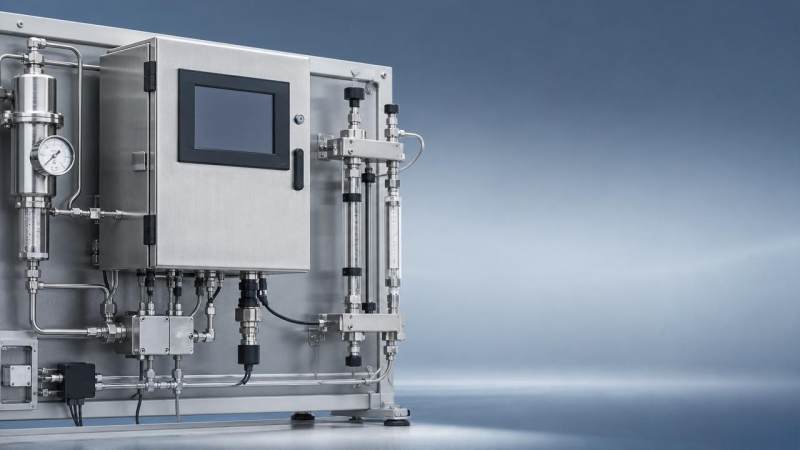
Scenario Comparison: What Buyers Should Check First
The table below helps procurement teams compare the main priorities across common application scenarios before requesting quotations for a C2H4O concentration analyzer.
The Most Common Specification Traps Before Ordering
1. Selecting the Wrong Measurement Range for the Real Operating Band
One of the most common mistakes is choosing a C2H4O concentration analyzer with an overly broad range because it seems more flexible. In reality, if the process usually operates in a narrow low-level band, the analyzer may not provide the resolution or control sensitivity needed. Buyers should ask for three values: normal operating range, startup or upset range, and alarm threshold range. A single headline range on the datasheet does not tell the whole story.
2. Misreading Accuracy Statements
Accuracy can be stated as percent of reading, percent of full scale, or under reference conditions only. These are not interchangeable. In a low-concentration application, a full-scale accuracy statement may create much larger absolute error than expected. For procurement teams, this matters when comparing vendors, because one analyzer can appear cheaper while delivering weaker usable performance in the intended concentration zone.
3. Ignoring Cross-Sensitivity and Interference Gases
A C2H4O concentration analyzer may perform well in a simple gas matrix but drift or misread when VOCs, CO2, water vapor, solvent residues, or reactive compounds are present. This issue is especially important in mixed industrial streams and exhaust applications. Procurement should provide the vendor with a realistic gas composition list rather than requesting a generic quotation.
4. Underestimating Response Time in the Full Sampling System
A fast sensor does not guarantee a fast measurement system. Long sample lines, dead volume, filters, pumps, and coolers can dramatically slow the overall response. In safety-related scenarios, this is a serious risk. Buyers should request the response time for the complete installed configuration, not just the sensor core. For a C2H4O concentration analyzer used near process hazards, T90 without system context is not enough.
5. Overlooking Sample Conditioning Requirements
Moisture, dust, temperature swings, and pressure variation often cause more trouble than the analyzer electronics themselves. In dirty or wet applications, the right conditioning train may include heated lines, knock-out devices, filtration stages, pressure regulation, and moisture management. If procurement compares only the analyzer cabinet and ignores the upstream handling package, the final project cost and reliability estimate will be wrong.
How Requirements Change by Scenario
Process Manufacturing: Stability Beats Theoretical Precision
In manufacturing environments, the best C2H4O concentration analyzer is often the one that provides repeatable trend data with manageable maintenance. Procurement should confirm drift interval, zero and span stability, service access, and whether the instrument tolerates continuous duty. A highly precise model may still be a poor fit if it requires frequent recalibration or cannot tolerate plant conditions.
Safety and Area Monitoring: Speed and Certification Come First
When the analyzer supports worker safety or equipment protection, procurement priorities shift toward hazardous area approval, fail-safe behavior, alarm outputs, diagnostics, and total response time. In these cases, buyers should verify whether the C2H4O concentration analyzer is certified for the exact installation zone and whether the certificate applies to the complete configuration, not just a sensing module.
Environmental Streams: Conditioning and Compliance Drive Success
For stack, duct, or treatment-related applications, the practical challenge is rarely detection alone. It is surviving moisture, contamination, and variable load while producing traceable records. Procurement should check maintenance intervals, consumables, calibration gas requirements, data logging capability, and whether the analyzer can support reporting expectations. A C2H4O concentration analyzer chosen for environmental service should be evaluated as a system, not a single box.
Laboratory and Pilot Use: Verify Method Fit Before Hardware Fit
In lab or pilot settings, users often care about method consistency, low detection limits, and traceable calibration. Here, procurement should verify sample preparation assumptions, carryover behavior, calibration frequency, and software usability. Some buyers focus on enclosure grade or industrial ruggedness that they do not actually need, while missing data integrity and method validation features that matter more.
Practical Questions Procurement Teams Should Send to Suppliers
A stronger RFQ usually leads to a better recommendation and fewer post-installation surprises. When sourcing a C2H4O concentration analyzer, send suppliers a structured list of application details and ask them to confirm suitability in writing.
- What is the expected normal concentration, peak concentration, and alarm threshold?
- What gases, vapors, or contaminants coexist in the sample?
- What are the sample temperature, pressure, flow conditions, and moisture content?
- Is the application continuous, intermittent, portable, or fixed-installation?
- What response time is required at the system level?
- What outputs, protocols, and control system integration points are needed?
- What certifications or compliance documents are mandatory?
- What maintenance skill level is available on site?
These questions help separate a technically matched quotation from a generic one. They also improve cross-department alignment between procurement, engineering, EHS, and operations.
Common Misjudgments That Increase Total Cost of Ownership
Many buyers focus heavily on purchase price, but lifecycle cost often tells a different story. An under-specified C2H4O concentration analyzer may need more frequent calibration gas, more filter replacements, more sample line cleaning, more shutdown time, or additional engineering modifications. An over-specified model can also waste budget if its advanced features are irrelevant to the site.
Another common error is assuming service support will be available locally. For integrated instrumentation projects, spare parts lead time, field commissioning capability, software update support, and training access can have direct operational impact. In OEM or project-driven purchasing, these practical support items should be evaluated alongside pure analytical performance.
FAQ for Buyers Comparing a C2H4O Concentration Analyzer
Should I prioritize the widest range available?
Not always. A wide range may reduce useful sensitivity in your actual operating band. Match the range to the real process scenario first.
Is sensor response time the same as analyzer response time?
No. Total system response includes sampling, transport, conditioning, and internal processing. For a C2H4O concentration analyzer in safety service, this distinction is critical.
Do I need to care about sample conditioning if the analyzer itself is high quality?
Yes. In many industrial applications, sample conditioning determines whether the analyzer performs as specified in real life.
What documents should be requested before ordering?
Ask for datasheets, accuracy basis, interference list, certification copies, recommended maintenance schedule, spare parts list, calibration procedure, and full system P&ID if conditioning is included.
Final Buying Advice Based on Your Actual Use Scenario
The best C2H4O concentration analyzer is not simply the most advanced or the lowest-priced model. It is the one whose specification holds up under your true application scenario. For procurement teams, the safest path is to define the use case first, compare scenario-specific requirements second, and only then evaluate quotations. Process control, safety monitoring, environmental duty, laboratory analysis, and OEM integration each demand a different balance of range, accuracy, response, conditioning, compliance, and support.
Before placing an order, align with engineering and end users on concentration profile, gas matrix, installation environment, maintenance capability, and required certifications. If suppliers cannot clearly explain how their C2H4O concentration analyzer will perform in your exact conditions, that is already a warning sign. A more detailed upfront review usually prevents larger technical and commercial problems later.
Recommended for You
 N2 Concentration Analyzer Cost Factors for Bulk Industrial ProcurementN2 concentration analyzer cost depends on more than unit price. Compare process, purity, and safety applications with total cost logic to source smarter and reduce lifecycle risk.
 Oxygen Concentration Analyzer vs Sensor Systems: Which Fits Continuous UseOxygen concentration analyzer or sensor system? Compare stability, drift, maintenance, and uptime for continuous use to choose the most reliable fit for your process.
 SO2 Concentration Analyzer News: Compliance Demands Reshaping Product SpecsSO2 concentration analyzer trends are shifting with stricter compliance rules. Learn how new specs, data integrity, and uptime demands are reshaping smarter buying decisions.
 He Concentration Analyzer Maintenance Tips for Stable Long-Term ReadingsHe concentration analyzer maintenance tips for stable long-term readings. Learn how to reduce drift, improve calibration accuracy, cut downtime, and keep industrial systems reliable.
 CH4 Concentration Analyzer Selection Mistakes That Raise Operating RiskCH4 concentration analyzer selection mistakes can raise safety, compliance, and maintenance risk. Learn how to choose the right analyzer for reliable performance and lower lifecycle cost.
 CO Concentration Analyzer Import Rules to Watch in 2026CO concentration analyzer import rules for 2026: learn the key customs, certification, labeling, and compliance checks to reduce risk, avoid delays, and source with confidence.
 NH3 Concentration Analyzer Market Trends for Industrial Process Control in 2026NH3 concentration analyzer market trends in 2026: explore technologies, industrial applications, selection tips, and how smarter monitoring improves compliance, safety, and process control.
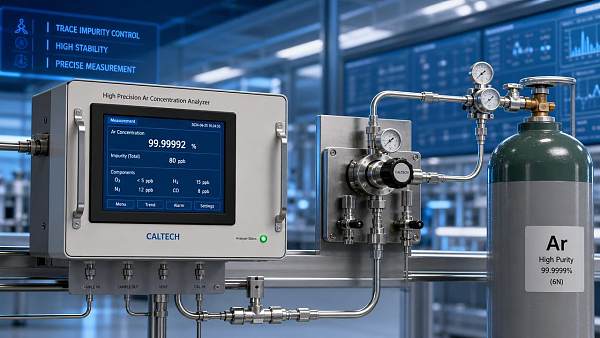
 Ar Concentration Analyzer Accuracy Issues in High-Purity Gas ApplicationsAr concentration analyzer accuracy issues can compromise high-purity gas quality, safety, and compliance. Learn the key causes, practical fixes, and how to improve reliable measurement performance.
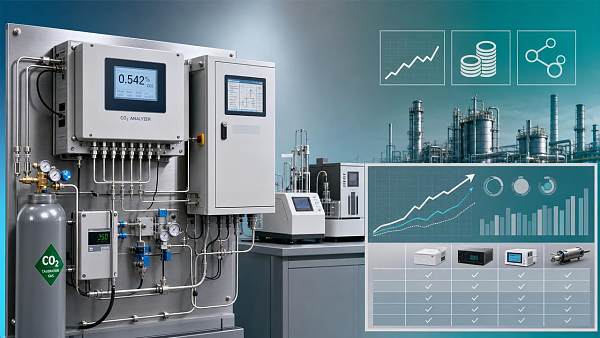
 CO2 Concentration Analyzer Price Trends in 2026: What Shapes Total CostCO2 concentration analyzer price trends in 2026 depend on technology, accuracy, calibration, compliance, and integration. Discover total cost drivers to compare quotes smarter and control lifecycle risk.
 How to Choose a NOX Concentration Analyzer for Low-Emission MonitoringNOX concentration analyzer selection for low-emission monitoring made easier. Learn how to compare accuracy, response time, compliance, and lifecycle cost before you buy.
 2026 Summit Highlights China's Smart Inspection Equipment as New Global Cooperation FocusSmart inspection equipment takes center stage at the 2026 Summit—unlocking new global cooperation, standards alignment, and market opportunities for exporters, OEMs, and tech suppliers.
 White House Warns Oil Shock May Fuel Core Inflation, Delaying Industrial Instrument ExportsWhite House warns oil shock may fuel core inflation—impacting industrial instrument exports. Discover how pressure, temperature & flow instrumentation exporters can mitigate delays and optimize trade finance workflows now.
 New AI Agent Guidelines Impact Export of AI-Powered Testing EquipmentAI agent guidelines impact export of AI-powered testing equipment—learn how new China security & controllability rules affect global compliance, supply chains, and market access.
 Canton Fair Phase III Boosts Sensor & Energy Testing ExportsSensor & energy testing exports surge at Canton Fair Phase III—driven by global demand for new energy home appliances and smart furniture compliance solutions.
 UAE Announces $150B Energy Infrastructure InvestmentUAE's $150B energy infrastructure push drives demand for IP68/IP69K, ATEX/IECEx, and LPWAN-enabled industrial sensors — act now to align with ADNOC tenders.
 WTI Net Longs Surge, Boosting Demand for Lubricant Monitoring SystemsLubricant monitoring systems surge in demand as WTI net longs rise—real-time viscosity, moisture & oxidation tracking now critical for global manufacturers.
 Shanghai Pudong Launches E-Label Pilot for Imported CosmeticsShanghai Pudong’s e-label pilot for imported cosmetics drives global demand for RFID/NFC readers, traceability solutions & certified testing equipment—act now to comply and lead.
 G7 Prioritizes Critical Mineral Supply Chain SecurityCritical mineral supply chain security takes center stage at G7 Paris meeting—impacting industrial sensors, rare-earth magnets & global procurement strategies.
 US-China Talks Yield Breakthrough on Agricultural NTBs for Testing EquipmentUS-China talks break ground on agricultural NTBs—key win for makers of residue detection, mycotoxin & spectral testing equipment targeting USDA/FDA markets.
 Fruit Attraction 2026 Booth Bookings Exceed 90%Fruit Attraction 2026 booth bookings exceed 90% — a strong signal for food safety instrumentation, cold-chain monitoring & EU compliance solution providers to secure visibility and drive qualified leads.
 Kuwait Bans HCFC Air Conditioners, Boosts IR Camera ExportsKuwait bans HCFC air conditioners—boosting demand for IR cameras, leak detectors & refrigerant analyzers. Discover GCC compliance insights and export opportunities.
 China's IC Exports Surge 78.3% in First Four Months of 2026China's IC exports surge 78.3% in early 2026 — driven by soaring global demand for AI chip test equipment, SMUs, and parametric analyzers. Discover the supply chain shift.
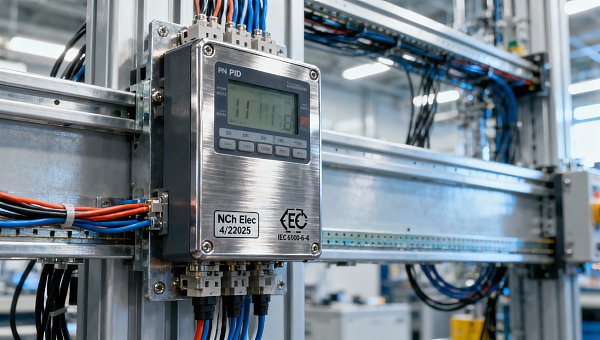
 Chile Enforces Mandatory INN Safety Certification for Industrial Temperature ControllersChile mandates INN safety certification (NCh Elec 4/2025) for industrial temperature controllers starting Aug 1, 2026—act now to avoid shipment delays & market bans.
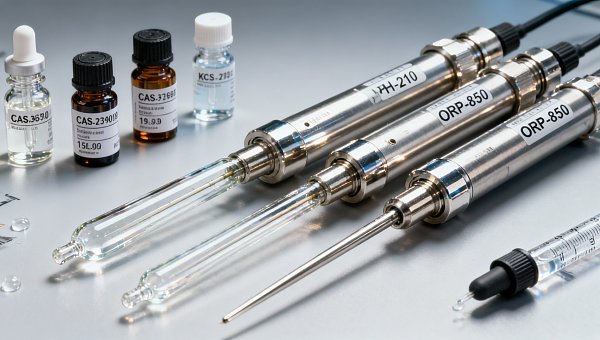
 K-REACH Supply-Shortage Exemption Launches for pH/ORP ElectrodesK-REACH Supply-Shortage Exemption now applies to pH/ORP electrodes—act before June 30, 2026 to avoid customs delays & penalties. Key for exporters & manufacturers.
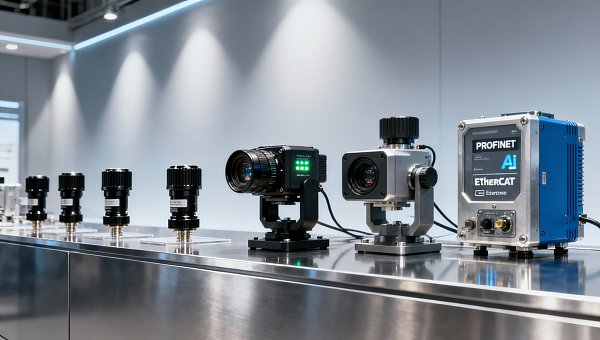
 4th China International Supply Chain Expo to Focus on Smart Sensing & In-Process InspectionSmart Sensing & In-Process Inspection take center stage at the 4th China International Supply Chain Expo in Beijing, Nov 26–30, 2026 — discover next-gen inspection tech, AI vision modules, and calibrated sensing solutions for global industrial buyers.
 ASTM F2100-26 Medical Mask Standard Takes Effect in USASTM F2100-26 medical mask standard is now in force—driving global demand for biosafety cabinets, particle counters & air velocity calibrators, especially China-made instruments.
 South Africa Enforces SABS Certification for IoT Monitoring DevicesSABS certification now mandatory for IoT monitoring devices entering South Africa via e-commerce—act before 1 June 2026 to avoid customs rejection and ensure market access.
 EU REACH Adds Fluorinated Substances; SVHC Reporting Required for Gas AnalyzersEU REACH now restricts fluorinated substances in gas analyzers—SVHC reporting is mandatory by 30 Nov 2026. Ensure compliance for sensors, membranes & monitoring systems.
 Revised Maritime Code Takes Effect May 1, 2026: Shift in Unclaimed Cargo LiabilityRevised Maritime Code (2026): Shippers now liable for unclaimed cargo—critical for industrial instrument exporters, logistics providers & cross-border supply chains. Act now.
 China Imposes Zero Tariffs on Goods from All African Diplomatic Partners Starting May 1, 2026China’s zero-tariff policy for African instrumentation & automation exports starts May 1, 2026—boosting competitiveness in EPC tenders and market access for exporters.
 Import and Export Shifts in the PPM Gas Analyzer Marketppm gas analyzer market insights: discover how import tariffs, export controls, and compliance shifts impact cost, supply stability, and growth opportunities across key applications.
 Single Gas Analyzer Maintenance Issues That Raise DowntimeSingle gas analyzer maintenance issues can quietly increase downtime. Learn how to spot drift, calibration errors, and sample path faults early to improve uptime and field efficiency.


Search Categories
Search Categories
Latest Article
- N2 Concentration Analyzer Cost Factors for Bulk Industrial ProcurementN2 concentration analyzer cost depends on more than unit price. Compare process, purity, and safety applications with total cost logic to source smarter and reduce lifecycle risk.Posted by:
- Oxygen Concentration Analyzer vs Sensor Systems: Which Fits Continuous UseOxygen concentration analyzer or sensor system? Compare stability, drift, maintenance, and uptime for continuous use to choose the most reliable fit for your process.Posted by:
- SO2 Concentration Analyzer News: Compliance Demands Reshaping Product SpecsSO2 concentration analyzer trends are shifting with stricter compliance rules. Learn how new specs, data integrity, and uptime demands are reshaping smarter buying decisions.Posted by:
Please give us a message
