
CO Analyzer with Fast Response Time: Where Faster Detection Changes Outcomes


In safety-critical operations, seconds can determine whether a minor CO leak stays controlled or becomes a serious incident. A CO analyzer with fast response time helps quality control teams and safety managers detect concentration changes quickly, verify process stability, and respond before risks escalate. From industrial production lines to environmental monitoring points, faster detection supports better decisions, stronger compliance, and more reliable protection for both equipment and personnel.
What does a CO analyzer with fast response time actually mean, and why is it getting more attention?
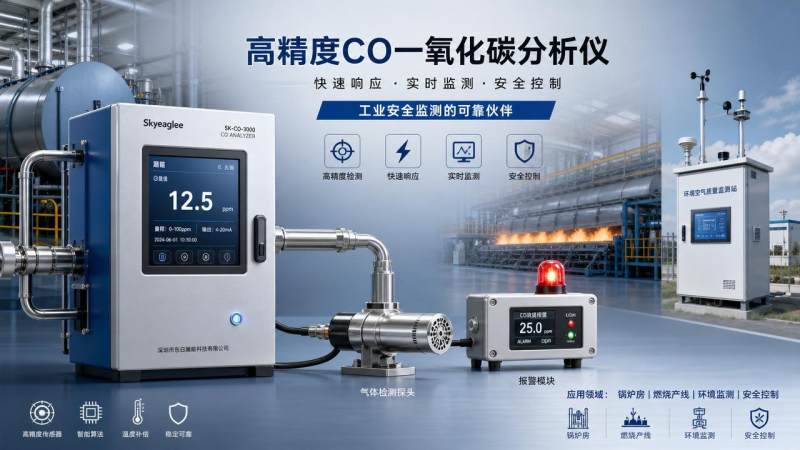
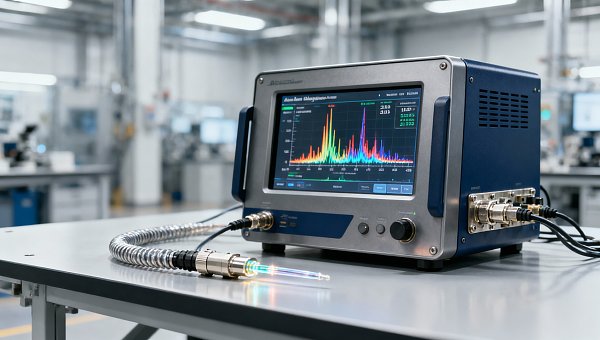
A CO analyzer with fast response time is an instrument designed to detect changes in carbon monoxide concentration quickly enough to support real-time safety and quality decisions. In practical terms, “fast response” is not just a marketing phrase. It usually refers to how rapidly the analyzer reacts to a change in gas concentration and how soon it reaches a stable reading that operators can trust. For quality control personnel, that speed helps confirm whether a combustion process, furnace, engine test, or gas treatment line is staying within target conditions. For safety managers, it can be the difference between early intervention and delayed awareness.
The growing interest comes from several industry realities. Production systems are becoming more automated, process cycles are getting shorter, and compliance expectations are increasing. At the same time, many operations cannot afford slow detection when personnel exposure, product quality, emissions performance, or equipment integrity are at stake. A slow analyzer may still provide data, but if it lags behind a rapidly changing process, the information can become less useful for action.
That is why a CO analyzer with fast response time is often evaluated not only as a monitoring device, but as a risk-control tool. In sectors that depend on combustion, gas generation, thermal processing, environmental measurement, or enclosed-space safety, faster response supports earlier alarms, tighter process control, quicker troubleshooting, and better documentation of transient events that slower systems may miss.
Which users and operating scenarios benefit most from faster CO detection?
Not every application demands the same performance, but many do benefit directly from a CO analyzer with fast response time. The strongest fit is usually found where concentration changes happen suddenly, where worker safety depends on timely alarms, or where process control requires immediate feedback.
Quality control teams often use fast-response CO monitoring in combustion efficiency testing, furnace optimization, heat treatment, engine and generator evaluation, gas blending verification, and exhaust or flue gas analysis. In these cases, delayed readings can make it harder to connect a concentration change to a process event. That weakens root-cause analysis and may slow process adjustment.
Safety managers are typically concerned with confined spaces, boiler rooms, industrial workshops, parking or tunnel ventilation, emergency response, waste treatment areas, and facilities where incomplete combustion may occur. In such environments, a CO analyzer with fast response time improves the chance of detecting leaks, ventilation failure, or abnormal combustion before personnel exposure rises further.
The value is also clear in environmental and compliance-related work. Monitoring points near industrial stacks, process vents, or temporary test stations may need to capture short-term fluctuations rather than only broad averages. If the instrument reacts too slowly, peaks may be underestimated, and trend interpretation can become misleading.
How is fast response different from accuracy, stability, and sensitivity?
This is one of the most common decision-making questions. Buyers sometimes assume that a faster instrument is automatically better in every respect, but performance should be judged across several dimensions. A CO analyzer with fast response time is valuable because it reacts quickly, yet speed alone does not guarantee the best measurement quality for every use case.
Accuracy refers to how close the reading is to the true CO concentration. Stability reflects whether the analyzer maintains consistent performance over time without excessive drift. Sensitivity relates to how well it detects small changes, especially at low concentrations. Response time indicates how quickly the analyzer reacts after the gas concentration changes.
For example, a process line with rapidly changing combustion conditions may need fast response first, because delayed readings reduce control effectiveness. A laboratory verification task may prioritize accuracy and repeatability more heavily. A worker protection application often requires a strong balance among speed, alarm reliability, and low-level detection. In short, the right analyzer is the one that aligns performance priorities with actual operating risk.
Quick comparison for evaluation
What should quality control and safety teams check before choosing a CO analyzer with fast response time?
The first step is to define the actual purpose. Is the analyzer being used for personnel safety, combustion optimization, emissions checking, equipment diagnostics, or continuous process monitoring? The answer changes what “good performance” looks like. A CO analyzer with fast response time for portable field checks may need rapid startup and easy handling, while a fixed installation may require long-term stability, communication interfaces, and integration with alarm or control systems.
Next, teams should review the operating environment. Temperature swings, dust, humidity, vibration, corrosive gases, and sample line design can all affect real-world response. An analyzer may have an excellent specification on paper, but poor sample handling can slow actual detection. In many industrial settings, tubing length, filters, pumps, and moisture management influence performance almost as much as the sensing core itself.
Another key point is the concentration range. Some applications focus on trace-level monitoring for worker safety, while others involve higher concentrations in process gas or exhaust streams. A CO analyzer with fast response time should match both the expected range and the critical alarm thresholds. If the range is too broad, resolution at the low end may be weaker. If it is too narrow, overload events may become difficult to interpret.
Data handling also matters. Quality and safety teams increasingly need trend records, event logs, digital outputs, and connectivity to plant systems. Fast detection creates value only when the information reaches decision-makers quickly. Alarm delay, reporting delay, or poor integration can reduce the benefit of the analyzer itself.
What are the most common mistakes when evaluating faster CO monitoring?
One frequent mistake is treating response time as an isolated number. A specification may look impressive, but teams should ask how it was tested and under what conditions. Real installations involve sample transport delay, environmental interference, maintenance status, and operator routines. A CO analyzer with fast response time should be assessed as a complete measurement system, not only by its sensor response in ideal conditions.
A second mistake is underestimating maintenance. Filters, sampling paths, pumps, calibration practices, and sensor health all influence whether fast response stays fast over time. If maintenance is difficult or inconsistent, performance can drift away from expectations. That is especially important for safety-critical monitoring where confidence in alarm behavior must remain high.
A third mistake is choosing purely by purchase price. A lower-cost device may seem attractive, but if slower response leads to missed transient events, delayed intervention, or weak process optimization, the long-term cost can be much higher. For quality control, that may mean scrap, rework, unstable combustion, or inconsistent test outcomes. For safety management, it may mean slower emergency response and greater exposure risk.
Finally, some users overlook training and operating discipline. Even the best CO analyzer with fast response time cannot deliver value if alarm settings are poorly configured, data is not reviewed, or staff do not know how to interpret fluctuations. Fast instruments often reveal more dynamic behavior, and teams should be ready to respond to that richer information.
How do you judge whether faster detection will really improve outcomes in your facility?
A practical way to answer this is to look at decision timing. Ask how often your team needs to act on changing CO levels within seconds or minutes. If process conditions shift quickly, if alarms trigger evacuation or ventilation changes, or if troubleshooting depends on catching short events, faster detection will likely produce clear operational value.
You should also review past incidents and near-misses. Were there cases where CO trends were noticed late, where a process upset developed before confirmation, or where historical records failed to show the true peak? These are strong indicators that a CO analyzer with fast response time could improve visibility and response quality.
Another useful test is to compare control objectives. If your facility aims to reduce combustion inefficiency, improve energy use, stabilize product quality, or strengthen occupational safety, measurement speed may directly support those goals. In modern instrumentation practice, better timing is often as important as better precision because delayed insight limits intervention.
Simple decision guide
Before procurement or implementation, what questions should you clarify with suppliers or internal stakeholders?
If you are preparing to buy, deploy, or upgrade a CO analyzer with fast response time, the most productive discussions start with application details rather than catalog comparisons alone. Clarify the target measurement range, expected concentration swings, required alarm speed, installation environment, and whether the analyzer will be portable, panel-mounted, or part of a continuous online system.
You should also ask how the stated response time is measured, what accessories are needed for stable operation, how calibration is managed, and what maintenance intervals are realistic in your plant conditions. For quality control teams, it is useful to confirm how quickly readings stabilize after process changes and whether the instrument can support traceable records. For safety managers, alarm logic, reliability under interference, and integration with ventilation or shutdown systems deserve special attention.
Finally, confirm implementation details that are often overlooked: sample line layout, training needs, spare parts availability, communication protocols, environmental protection level, and support for commissioning. A CO analyzer with fast response time delivers the greatest value when the full measurement chain, operating procedure, and decision workflow are aligned.
If you need to further confirm a suitable solution, parameters, project direction, delivery cycle, quotation, or cooperation model, prioritize discussion around your real response-time requirement, concentration range, operating environment, integration method, maintenance expectations, and the specific safety or quality outcomes you want the analyzer to improve.
Recommended for You
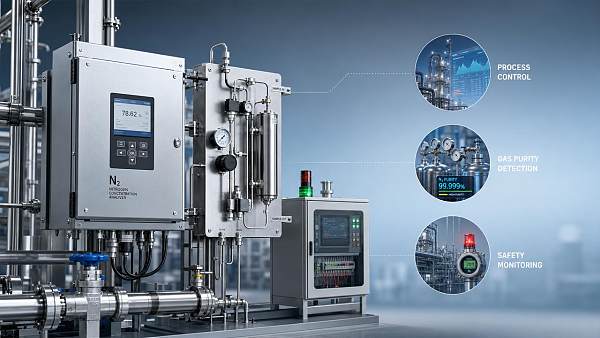
 N2 Concentration Analyzer Cost Factors for Bulk Industrial ProcurementN2 concentration analyzer cost depends on more than unit price. Compare process, purity, and safety applications with total cost logic to source smarter and reduce lifecycle risk.
 Oxygen Concentration Analyzer vs Sensor Systems: Which Fits Continuous UseOxygen concentration analyzer or sensor system? Compare stability, drift, maintenance, and uptime for continuous use to choose the most reliable fit for your process.
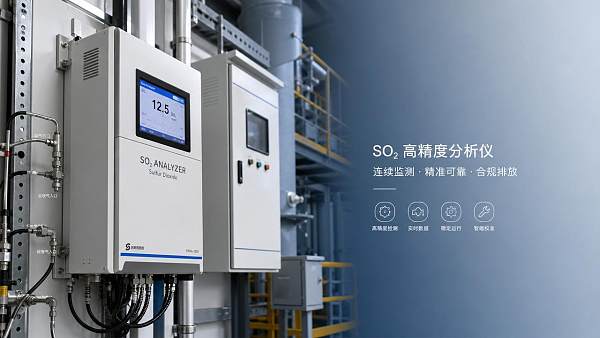
 SO2 Concentration Analyzer News: Compliance Demands Reshaping Product SpecsSO2 concentration analyzer trends are shifting with stricter compliance rules. Learn how new specs, data integrity, and uptime demands are reshaping smarter buying decisions.
 He Concentration Analyzer Maintenance Tips for Stable Long-Term ReadingsHe concentration analyzer maintenance tips for stable long-term readings. Learn how to reduce drift, improve calibration accuracy, cut downtime, and keep industrial systems reliable.
 CH4 Concentration Analyzer Selection Mistakes That Raise Operating RiskCH4 concentration analyzer selection mistakes can raise safety, compliance, and maintenance risk. Learn how to choose the right analyzer for reliable performance and lower lifecycle cost.
 CO Concentration Analyzer Import Rules to Watch in 2026CO concentration analyzer import rules for 2026: learn the key customs, certification, labeling, and compliance checks to reduce risk, avoid delays, and source with confidence.
 NH3 Concentration Analyzer Market Trends for Industrial Process Control in 2026NH3 concentration analyzer market trends in 2026: explore technologies, industrial applications, selection tips, and how smarter monitoring improves compliance, safety, and process control.
 Ar Concentration Analyzer Accuracy Issues in High-Purity Gas ApplicationsAr concentration analyzer accuracy issues can compromise high-purity gas quality, safety, and compliance. Learn the key causes, practical fixes, and how to improve reliable measurement performance.
 CO2 Concentration Analyzer Price Trends in 2026: What Shapes Total CostCO2 concentration analyzer price trends in 2026 depend on technology, accuracy, calibration, compliance, and integration. Discover total cost drivers to compare quotes smarter and control lifecycle risk.
 How to Choose a NOX Concentration Analyzer for Low-Emission MonitoringNOX concentration analyzer selection for low-emission monitoring made easier. Learn how to compare accuracy, response time, compliance, and lifecycle cost before you buy.
 2026 Summit Highlights China's Smart Inspection Equipment as New Global Cooperation FocusSmart inspection equipment takes center stage at the 2026 Summit—unlocking new global cooperation, standards alignment, and market opportunities for exporters, OEMs, and tech suppliers.
 White House Warns Oil Shock May Fuel Core Inflation, Delaying Industrial Instrument ExportsWhite House warns oil shock may fuel core inflation—impacting industrial instrument exports. Discover how pressure, temperature & flow instrumentation exporters can mitigate delays and optimize trade finance workflows now.
 New AI Agent Guidelines Impact Export of AI-Powered Testing EquipmentAI agent guidelines impact export of AI-powered testing equipment—learn how new China security & controllability rules affect global compliance, supply chains, and market access.
 Canton Fair Phase III Boosts Sensor & Energy Testing ExportsSensor & energy testing exports surge at Canton Fair Phase III—driven by global demand for new energy home appliances and smart furniture compliance solutions.
 UAE Announces $150B Energy Infrastructure InvestmentUAE's $150B energy infrastructure push drives demand for IP68/IP69K, ATEX/IECEx, and LPWAN-enabled industrial sensors — act now to align with ADNOC tenders.
 WTI Net Longs Surge, Boosting Demand for Lubricant Monitoring SystemsLubricant monitoring systems surge in demand as WTI net longs rise—real-time viscosity, moisture & oxidation tracking now critical for global manufacturers.
 Shanghai Pudong Launches E-Label Pilot for Imported CosmeticsShanghai Pudong’s e-label pilot for imported cosmetics drives global demand for RFID/NFC readers, traceability solutions & certified testing equipment—act now to comply and lead.
 G7 Prioritizes Critical Mineral Supply Chain SecurityCritical mineral supply chain security takes center stage at G7 Paris meeting—impacting industrial sensors, rare-earth magnets & global procurement strategies.
 US-China Talks Yield Breakthrough on Agricultural NTBs for Testing EquipmentUS-China talks break ground on agricultural NTBs—key win for makers of residue detection, mycotoxin & spectral testing equipment targeting USDA/FDA markets.
 Fruit Attraction 2026 Booth Bookings Exceed 90%Fruit Attraction 2026 booth bookings exceed 90% — a strong signal for food safety instrumentation, cold-chain monitoring & EU compliance solution providers to secure visibility and drive qualified leads.
 Kuwait Bans HCFC Air Conditioners, Boosts IR Camera ExportsKuwait bans HCFC air conditioners—boosting demand for IR cameras, leak detectors & refrigerant analyzers. Discover GCC compliance insights and export opportunities.
 China's IC Exports Surge 78.3% in First Four Months of 2026China's IC exports surge 78.3% in early 2026 — driven by soaring global demand for AI chip test equipment, SMUs, and parametric analyzers. Discover the supply chain shift.
 Chile Enforces Mandatory INN Safety Certification for Industrial Temperature ControllersChile mandates INN safety certification (NCh Elec 4/2025) for industrial temperature controllers starting Aug 1, 2026—act now to avoid shipment delays & market bans.
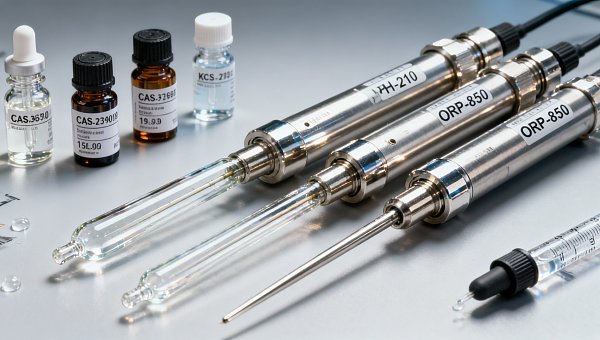
 K-REACH Supply-Shortage Exemption Launches for pH/ORP ElectrodesK-REACH Supply-Shortage Exemption now applies to pH/ORP electrodes—act before June 30, 2026 to avoid customs delays & penalties. Key for exporters & manufacturers.
 4th China International Supply Chain Expo to Focus on Smart Sensing & In-Process InspectionSmart Sensing & In-Process Inspection take center stage at the 4th China International Supply Chain Expo in Beijing, Nov 26–30, 2026 — discover next-gen inspection tech, AI vision modules, and calibrated sensing solutions for global industrial buyers.
 ASTM F2100-26 Medical Mask Standard Takes Effect in USASTM F2100-26 medical mask standard is now in force—driving global demand for biosafety cabinets, particle counters & air velocity calibrators, especially China-made instruments.
 South Africa Enforces SABS Certification for IoT Monitoring DevicesSABS certification now mandatory for IoT monitoring devices entering South Africa via e-commerce—act before 1 June 2026 to avoid customs rejection and ensure market access.
 EU REACH Adds Fluorinated Substances; SVHC Reporting Required for Gas AnalyzersEU REACH now restricts fluorinated substances in gas analyzers—SVHC reporting is mandatory by 30 Nov 2026. Ensure compliance for sensors, membranes & monitoring systems.
 Revised Maritime Code Takes Effect May 1, 2026: Shift in Unclaimed Cargo LiabilityRevised Maritime Code (2026): Shippers now liable for unclaimed cargo—critical for industrial instrument exporters, logistics providers & cross-border supply chains. Act now.
 China Imposes Zero Tariffs on Goods from All African Diplomatic Partners Starting May 1, 2026China’s zero-tariff policy for African instrumentation & automation exports starts May 1, 2026—boosting competitiveness in EPC tenders and market access for exporters.
 Import and Export Shifts in the PPM Gas Analyzer Marketppm gas analyzer market insights: discover how import tariffs, export controls, and compliance shifts impact cost, supply stability, and growth opportunities across key applications.
 Single Gas Analyzer Maintenance Issues That Raise DowntimeSingle gas analyzer maintenance issues can quietly increase downtime. Learn how to spot drift, calibration errors, and sample path faults early to improve uptime and field efficiency.





Search Categories
Search Categories
Latest Article
- N2 Concentration Analyzer Cost Factors for Bulk Industrial ProcurementN2 concentration analyzer cost depends on more than unit price. Compare process, purity, and safety applications with total cost logic to source smarter and reduce lifecycle risk.Posted by:
- Oxygen Concentration Analyzer vs Sensor Systems: Which Fits Continuous UseOxygen concentration analyzer or sensor system? Compare stability, drift, maintenance, and uptime for continuous use to choose the most reliable fit for your process.Posted by:
- SO2 Concentration Analyzer News: Compliance Demands Reshaping Product SpecsSO2 concentration analyzer trends are shifting with stricter compliance rules. Learn how new specs, data integrity, and uptime demands are reshaping smarter buying decisions.Posted by:
Please give us a message
