
Common NH3 Analyzer Issues in Wastewater Treatment and How to Prevent Them


In wastewater treatment, even a reliable NH3 analyzer for wastewater treatment can deliver unstable readings when fouling, calibration drift, sensor aging, or poor maintenance routines go unnoticed. For after-sales maintenance teams, understanding these common issues is essential to reducing downtime, improving data accuracy, and protecting compliance. This article explains the most frequent NH3 analyzer problems and outlines practical steps to prevent them before they affect plant performance.
Why do NH3 analyzers fail in wastewater plants more often than expected?
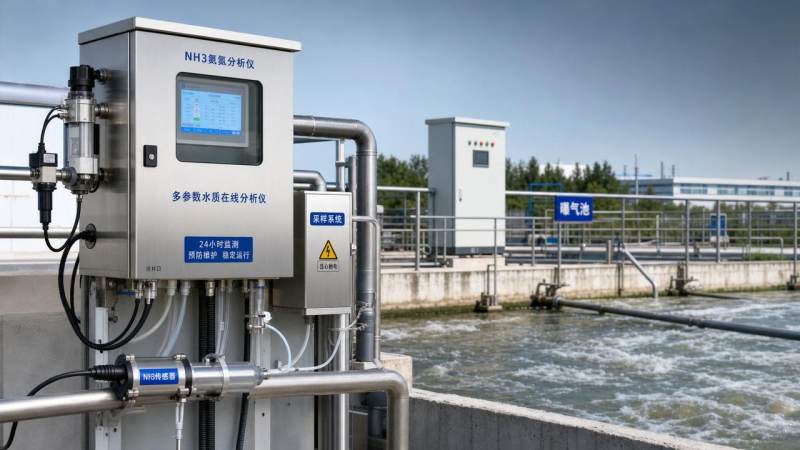
An NH3 analyzer for wastewater treatment works in one of the toughest environments in the instrumentation industry. It is exposed to suspended solids, fluctuating pH, variable temperature, grease, scaling compounds, and changing hydraulic conditions. In clean laboratory conditions, the same measuring principle may perform steadily for long periods. In aeration tanks, equalization basins, or final discharge lines, the analyzer faces a very different reality.
For after-sales maintenance personnel, the challenge is not only fixing faults after an alarm appears. The bigger task is identifying the root cause before bad data leads operators to overfeed chemicals, miss permit limits, or misjudge biological treatment performance. In modern industrial monitoring, an analyzer is part of a larger chain that includes sensors, sample conditioning, transmitters, PLC or SCADA systems, maintenance records, and compliance reporting.
Most problems with an NH3 analyzer for wastewater treatment are not caused by a single catastrophic event. They usually build gradually through contamination, process neglect, weak preventive maintenance, or incorrect installation choices. That is why service teams need a structured troubleshooting logic rather than isolated repairs.
- Process-side causes include high solids, oil films, air bubbles, unstable flow, and chemical shocks from upstream production or cleaning events.
- Instrument-side causes include membrane contamination, reagent degradation, calibration drift, sensor aging, tubing blockage, and electrical signal interference.
- Management-side causes include missed service intervals, no spare parts planning, weak commissioning records, and unclear responsibility between operations and maintenance teams.
What are the most common NH3 analyzer issues in wastewater treatment?
The failure pattern of an NH3 analyzer for wastewater treatment usually follows recognizable symptoms. Maintenance teams should learn to connect each symptom with likely mechanical, chemical, electrical, and operational causes. This reduces guesswork and shortens service time.
The table below summarizes common faults, visible symptoms, and probable causes seen in wastewater treatment monitoring systems.
A useful service habit is to separate “bad measurement” from “bad process.” If the analyzer suddenly changes but dissolved oxygen, pH, and influent load also change at the same time, the process may be the source. If NH3 alone becomes unstable while other instruments remain normal, the analyzer or sample system deserves closer attention.
Fouling is the most underestimated cause
Fouling is common because wastewater contains solids, biological growth, and precipitates that easily attach to wetted parts. A small deposit may not trigger an alarm, yet it can slow diffusion, alter sample contact, and shift the reading enough to affect process control. This is especially important where ammonia values are used to optimize aeration energy or nutrient removal.
Calibration drift often looks like a process problem
Many plants respond to rising or falling ammonia values by adjusting process settings first. However, if the NH3 analyzer for wastewater treatment has drifted for several days, the operator may be reacting to false data. This can increase energy use, chemical consumption, and compliance risk. Frequent comparison with validated grab samples remains one of the best early warnings.
Which operating conditions create the highest risk for unstable NH3 readings?
Not every installation point creates the same maintenance burden. In wastewater treatment, analyzer reliability depends heavily on where the instrument is installed and how the sample is presented. After-sales teams should review the full application scenario before replacing components too quickly.
The following comparison helps maintenance teams judge where an NH3 analyzer for wastewater treatment is likely to need stronger protection, more cleaning, or a different sampling design.
This comparison shows why maintenance cannot rely on a generic service plan. A plant with stable municipal influent may focus on routine cleaning and calibration. A facility receiving mixed industrial discharge may need event-based checks after cleaning chemical discharge, production changeovers, or pH correction upsets.
- High suspended solids increase coating risk and often require more frequent visual inspection.
- Rapid temperature swings can affect measurement stability and shorten consumable life.
- Long sampling lines add transport delay, which makes the analyzer look slow even when the sensor is healthy.
- Poorly selected installation points may expose the analyzer to turbulence, bubbles, or nonrepresentative samples.
How can after-sales maintenance teams prevent recurring NH3 analyzer problems?
A prevention strategy for an NH3 analyzer for wastewater treatment should combine routine inspection, condition-based maintenance, and disciplined documentation. The best results come when service teams treat the analyzer as part of a measurement system, not a stand-alone device.
Build a maintenance routine around failure modes
- Check sample flow and physical cleanliness first. A blocked line or coated sensor is more common than an electronics fault.
- Verify against a reference sample on a defined schedule. Trend deviation is often more useful than a single pass or fail result.
- Replace consumables before end-of-life under real site conditions, not only by catalog interval.
- Record all cleaning, calibration, and part changes. Pattern recognition is impossible without service history.
- Review cable condition, grounding, and enclosure sealing during each visit, especially in wet and corrosive areas.
Use a practical maintenance checklist
In the instrumentation industry, standardized checklists improve repeatability across technicians and sites. They are also useful when service responsibility shifts between internal teams, distributors, and external contractors.
- Inspect sensor surface, membrane, reagent condition, tubing, filters, fittings, and drains.
- Confirm temperature compensation, pH influence settings if applicable, and communication output integrity.
- Compare analyzer trend with process indicators such as pH, dissolved oxygen, blower control behavior, and lab ammonia checks.
- Document whether cleaning restored normal behavior or whether the analyzer still shows offset after service.
What should you evaluate before replacing or reselecting an NH3 analyzer for wastewater treatment?
Replacement decisions are often rushed after repeated alarms. But replacing the analyzer without reviewing the application can repeat the same failure. After-sales teams should assess process fit, maintenance burden, spare part availability, and integration requirements before recommending a new unit or a modified configuration.
The table below can be used as a service-side evaluation guide when selecting or upgrading an NH3 analyzer for wastewater treatment.
This kind of evaluation supports better purchasing decisions and avoids treating every reliability problem as a sensor defect. In many cases, reworking the installation, improving flushing, or strengthening spare stock delivers better value than replacing the entire analyzer platform.
Do not ignore serviceability
For maintenance teams with limited labor, serviceability matters as much as analytical performance. Easy access to wetted parts, clear maintenance prompts, fast calibration procedures, and practical spare part kits can reduce life-cycle cost more than a lower initial purchase price.
How do compliance, documentation, and digital maintenance affect analyzer reliability?
Wastewater plants increasingly depend on traceable records. Even where local regulations differ, maintenance teams are often expected to show calibration history, alarm response records, and evidence that online data is managed responsibly. A reliable NH3 analyzer for wastewater treatment supports compliance only when the service record is complete and defensible.
General good practice may include alignment with plant quality procedures, documented calibration methods, controlled handling of standards and reagents, and verification against laboratory methods where required. The goal is not paperwork for its own sake. The goal is to prove that the analyzer can be trusted for process control and reporting.
- Maintain calibration and verification logs with date, technician, offset, corrective action, and result after service.
- Track recurring failures by location, shift, weather, and upstream plant event to identify hidden process links.
- Use digital trend review to detect slow drift before alarms reach critical limits.
- Create minimum spare inventory rules for wear parts with longer delivery cycles.
As digital transformation expands across industrial automation and environmental monitoring, analyzers are expected to do more than output a single value. They are becoming part of predictive maintenance systems, centralized dashboards, and performance optimization programs. That shift increases the value of diagnostic transparency and stable communication.
FAQ for after-sales teams working with NH3 analyzers
How often should an NH3 analyzer for wastewater treatment be cleaned?
There is no universal interval because fouling rate depends on solids load, biological growth, installation point, and sample design. In high-biomass or industrial influent applications, weekly inspection may be necessary at first. Once trend stability is understood, the plant can move to a data-based interval. If response time slows or lab correlation worsens, cleaning frequency is probably too low.
Why does the analyzer pass calibration but still disagree with lab results?
Calibration only confirms performance under the calibration procedure. It does not prove that the sample reaching the analyzer is representative. Differences can come from sample lag, solids settling in the line, pH-dependent effects, contamination between service steps, or mismatch between online measurement timing and grab sample timing. Always compare process conditions and sampling method before concluding the sensor is defective.
When should a plant repair the current unit instead of replacing it?
Repair is often the better choice when the root cause is clearly external to the analyzer, such as poor sample conditioning, missing maintenance, or damaged wiring. Replacement becomes more reasonable when spare parts are difficult to source, diagnostics are limited, enclosure condition is poor, or the measurement principle no longer fits the process. A structured evaluation usually prevents unnecessary capital spending.
What are the biggest maintenance mistakes?
The most common mistakes are cleaning only after an alarm, skipping verification against a trusted reference, treating all deviations as process changes, storing consumables incorrectly, and failing to document what restored normal operation. Another frequent mistake is replacing sensors repeatedly without redesigning the installation point or sample handling system.
Why choose us for NH3 analyzer support and wastewater instrumentation planning?
In the instrumentation industry, effective support means more than supplying a device. It requires understanding measurement principles, field installation, sample conditioning, calibration practice, control integration, and long-term maintenance realities. For wastewater treatment users, especially after-sales teams, the right support partner helps reduce repeat failures and improves the value of every service visit.
We can support discussions around NH3 analyzer for wastewater treatment applications with a practical focus on field conditions, maintenance workload, and system compatibility. This includes reviewing installation points, identifying likely fouling or drift risks, comparing service-friendly options, and helping you define a more stable preventive maintenance plan.
- Parameter confirmation for wastewater matrix, sample temperature, pH range, solids level, and output requirements.
- Product selection support based on maintenance frequency, spare part access, integration method, and site environment.
- Delivery cycle communication for analyzers, replacement sensors, consumables, and critical service parts.
- Customized solution discussion covering sample conditioning, mounting arrangement, enclosure protection, and routine service planning.
- General guidance on documentation expectations, application review, sample support, and quotation coordination.
If your team is dealing with unstable readings, repeated cleaning, uncertain replacement decisions, or a new wastewater project with strict service requirements, contact us with your process details. Sharing your current measurement method, installation location, maintenance records, and target performance will help us discuss a more suitable analyzer configuration and support path.
Recommended for You
 Brazil to Eliminate Import Duties on Cross-Border E-Commerce Orders Under USD 50Brazil to eliminate import duties on cross-border e-commerce orders under USD 50—key for portable testing instruments exporters targeting Mercado Livre & DIY buyers.
 New AI Agent Guidelines Impact Smart Inspection Device ExportsAI Agent Guidelines impact smart inspection device exports—learn how new China AI safety rules affect EU, US & Middle East market access.
 UPS Freight Rates Increase Effective May 17, 2026UPS freight rates increase effective May 17, 2026—impact FOB pricing for industrial monitoring equipment exporters. Act now to optimize packaging, revise quotes, and secure margins.
 新修订《海商法》施行:卸货港无人提货责任转向托运人,检测设备出口交期风控升级New Maritime Code shifts unclaimed cargo liability to shippers at discharge ports—critical for testing equipment exporters managing delivery timelines and compliance risk.
 China Imposes Zero Tariffs on Lab Analyzers for 20 African NationsChina's zero tariffs on lab analyzers for 20 African nations boost export competitiveness—pH meters, spectrophotometers & more now duty-free from May 2026.
 CA Toxic Chemical Tank Overheating Sparks Explosion Risk, Monitoring Equipment Orders SurgeGas leak detectors, remote temperature warning systems & explosion-proof thermal imagers surge in demand after CA toxic tank overheating incident.
 EU REACH Adds DBDPE to SVHC List, Impacting Brominated Flame Retardant Testing for Export EquipmentDBDPE added to EU REACH SVHC list—impact on brominated flame retardant testing for industrial instruments, sensors & export compliance. Act now.
 Thailand Customs Digital Reform Spurs RFID Equipment DemandRFID equipment demand surges in Thailand as Customs digital reform mandates e-labeling, real-time parcel tracking & API compliance—act now to meet TISI specs and platform rules.
 Lazada Thailand Cuts Import Duties on 528 CategoriesLazada Thailand cuts import duties on 528 categories — including wired headphones & notebooks — lowering costs for Chinese exporters and Thai SMEs via LGS.
 US Delays 400 Tomahawk Missiles to Japan Amid Iran Inventory ReplenishmentTomahawk missiles delay to Japan sparks urgent demand for alternative guidance, navigation & secure comms suppliers—key opportunity for export-ready defense electronics firms.
 What to Check Before Importing an F2 Concentration Analyzer in 2026F2 concentration analyzer import guide for 2026: learn what to check on compliance, performance, integration, lifecycle cost, and supplier support before you buy.
 SF6 Concentration Analyzer Market Trends for Power and Gas Applications in 2026SF6 concentration analyzer market trends for 2026: explore accuracy, digital integration, emissions control, and buying tips for power and gas applications.
 Common HCl Concentration Analyzer Mistakes That Lead to Unstable ReadingsHCl concentration analyzer unstable readings? Discover the most common installation, calibration, sampling, and maintenance mistakes—and the practical fixes that improve accuracy fast.
 H2S Concentration Analyzer Price Trends: What’s Driving Costs in 2026H2S concentration analyzer price trends in 2026: discover what drives costs, from sensor technology and compliance to materials and digital features, and make smarter buying decisions.
 How to Choose a Cl2 Concentration Analyzer for Process Safety in 2026Cl2 concentration analyzer selection in 2026 starts with process safety. Learn how to match scenarios, improve reliability, avoid costly mistakes, and choose with confidence.
 N2 Concentration Analyzer Cost Factors for Bulk Industrial ProcurementN2 concentration analyzer cost depends on more than unit price. Compare process, purity, and safety applications with total cost logic to source smarter and reduce lifecycle risk.
 Oxygen Concentration Analyzer vs Sensor Systems: Which Fits Continuous UseOxygen concentration analyzer or sensor system? Compare stability, drift, maintenance, and uptime for continuous use to choose the most reliable fit for your process.
 SO2 Concentration Analyzer News: Compliance Demands Reshaping Product SpecsSO2 concentration analyzer trends are shifting with stricter compliance rules. Learn how new specs, data integrity, and uptime demands are reshaping smarter buying decisions.
 He Concentration Analyzer Maintenance Tips for Stable Long-Term ReadingsHe concentration analyzer maintenance tips for stable long-term readings. Learn how to reduce drift, improve calibration accuracy, cut downtime, and keep industrial systems reliable.
 CH4 Concentration Analyzer Selection Mistakes That Raise Operating RiskCH4 concentration analyzer selection mistakes can raise safety, compliance, and maintenance risk. Learn how to choose the right analyzer for reliable performance and lower lifecycle cost.
 CO Concentration Analyzer Import Rules to Watch in 2026CO concentration analyzer import rules for 2026: learn the key customs, certification, labeling, and compliance checks to reduce risk, avoid delays, and source with confidence.
 NH3 Concentration Analyzer Market Trends for Industrial Process Control in 2026NH3 concentration analyzer market trends in 2026: explore technologies, industrial applications, selection tips, and how smarter monitoring improves compliance, safety, and process control.
 Ar Concentration Analyzer Accuracy Issues in High-Purity Gas ApplicationsAr concentration analyzer accuracy issues can compromise high-purity gas quality, safety, and compliance. Learn the key causes, practical fixes, and how to improve reliable measurement performance.
 CO2 Concentration Analyzer Price Trends in 2026: What Shapes Total CostCO2 concentration analyzer price trends in 2026 depend on technology, accuracy, calibration, compliance, and integration. Discover total cost drivers to compare quotes smarter and control lifecycle risk.
 How to Choose a NOX Concentration Analyzer for Low-Emission MonitoringNOX concentration analyzer selection for low-emission monitoring made easier. Learn how to compare accuracy, response time, compliance, and lifecycle cost before you buy.
 2026 Summit Highlights China's Smart Inspection Equipment as New Global Cooperation FocusSmart inspection equipment takes center stage at the 2026 Summit—unlocking new global cooperation, standards alignment, and market opportunities for exporters, OEMs, and tech suppliers.
 White House Warns Oil Shock May Fuel Core Inflation, Delaying Industrial Instrument ExportsWhite House warns oil shock may fuel core inflation—impacting industrial instrument exports. Discover how pressure, temperature & flow instrumentation exporters can mitigate delays and optimize trade finance workflows now.
 New AI Agent Guidelines Impact Export of AI-Powered Testing EquipmentAI agent guidelines impact export of AI-powered testing equipment—learn how new China security & controllability rules affect global compliance, supply chains, and market access.
 Canton Fair Phase III Boosts Sensor & Energy Testing ExportsSensor & energy testing exports surge at Canton Fair Phase III—driven by global demand for new energy home appliances and smart furniture compliance solutions.
 UAE Announces $150B Energy Infrastructure InvestmentUAE's $150B energy infrastructure push drives demand for IP68/IP69K, ATEX/IECEx, and LPWAN-enabled industrial sensors — act now to align with ADNOC tenders.
 WTI Net Longs Surge, Boosting Demand for Lubricant Monitoring SystemsLubricant monitoring systems surge in demand as WTI net longs rise—real-time viscosity, moisture & oxidation tracking now critical for global manufacturers.
 Shanghai Pudong Launches E-Label Pilot for Imported CosmeticsShanghai Pudong’s e-label pilot for imported cosmetics drives global demand for RFID/NFC readers, traceability solutions & certified testing equipment—act now to comply and lead.
Search Categories
Search Categories
Latest Article
- Brazil to Eliminate Import Duties on Cross-Border E-Commerce Orders Under USD 50Brazil to eliminate import duties on cross-border e-commerce orders under USD 50—key for portable testing instruments exporters targeting Mercado Livre & DIY buyers.Posted by:
- New AI Agent Guidelines Impact Smart Inspection Device ExportsAI Agent Guidelines impact smart inspection device exports—learn how new China AI safety rules affect EU, US & Middle East market access.Posted by:
- UPS Freight Rates Increase Effective May 17, 2026UPS freight rates increase effective May 17, 2026—impact FOB pricing for industrial monitoring equipment exporters. Act now to optimize packaging, revise quotes, and secure margins.Posted by:
Please give us a message
