
IEC 61511-3:2026 Released: SIS Certification Rules Updated


On 1 May 2026, the International Electrotechnical Commission (IEC) published IEC 61511-3:2026, titled Functional safety — Safety instrumented systems for the process industry sector — Part 3: Guidance for the safety lifecycle. This update introduces mandatory requirements for AI-assisted diagnostic logic verification, failure mode library matching for heterogeneous redundant architectures, and digital twin-based simulation validation. The standard directly impacts process-intensive sectors—including petrochemicals, pharmaceuticals, and power generation—where safety instrumented systems (SIS) are critical to operational integrity and regulatory compliance.
Event Overview
The IEC officially released IEC 61511-3:2026 on 1 May 2026. The document is Part 3 of the IEC 61511 series and provides guidance for the safety lifecycle of safety instrumented systems in the process industry. It specifies new mandatory clauses related to AI-assisted diagnostic logic verification, heterogenous redundancy failure mode library matching, and digital twin simulation validation. No further implementation timelines, transitional provisions, or national adoption status beyond the publication date have been publicly confirmed.
Industries Affected by Sector and Role
Process Equipment Manufacturers & SIS System Integrators
These entities design, assemble, and deliver certified SIS solutions to end users. The updated standard introduces technical validation requirements that affect system architecture design, verification methodology, and documentation scope. Compliance now requires integration of AI-supported logic validation tools and access to standardized failure mode libraries for heterogeneous redundancy configurations.
End-User Operators (Petrochemical, Pharmaceutical, Power Generation)
Operators procuring or maintaining SIS for hazardous process applications must align procurement specifications with IEC 61511-3:2026. New projects initiated after 1 May 2026 may require vendors to demonstrate compliance with the updated clauses—especially regarding digital twin simulation evidence and traceable failure mode library usage—potentially extending project review cycles and vendor qualification timelines.
Third-Party Certification Bodies (e.g., TÜV Rheinland)
Certification providers must update their SIL3 assessment protocols and audit checklists to cover the new mandatory elements. The requirement for updated TÜV Rheinland/SIL3 certification packages signals that existing certificates issued under earlier versions of IEC 61511 will not automatically satisfy the new Part 3 requirements for new deployments.
Export-Oriented SIS Suppliers Based in China
Chinese SIS system integrators exporting to global markets must revise technical documentation, test reports, and certification submissions to reflect compliance with IEC 61511-3:2026. The standard explicitly references alignment with updated TÜV Rheinland/SIL3 certification packages—indicating that legacy certification packages may no longer meet buyer or regulator expectations in target export jurisdictions.
What Enterprises and Practitioners Should Monitor and Do Now
Track official interpretations and national adoptions
IEC standards require national adoption (e.g., as EN 61511 in Europe or GB/T equivalents in China) before becoming legally enforceable in most jurisdictions. Stakeholders should monitor updates from national standards bodies (e.g., CENELEC, SAC) and regulatory agencies (e.g., HSE, FDA, NRC) for formal recognition timelines and transitional arrangements.
Review pending and upcoming procurement specifications
End-user operators and EPC contractors should verify whether newly issued tender documents or contract annexes reference IEC 61511-3:2026. Early alignment helps avoid rework, delays, or rejection of submissions due to missing AI-assisted verification evidence or unvalidated digital twin simulation reports.
Distinguish between policy signal and operational readiness
While the standard is published, its practical enforcement depends on customer mandates, certification body updates, and project-specific contractual terms. Organizations should treat the release as a technical readiness signal—not an immediate compliance deadline—unless bound by explicit contractual or regulatory clauses referencing the 2026 edition.
Update internal validation workflows and supplier questionnaires
Integrators and manufacturers should begin mapping current verification processes against the new clauses. Internal checklists and supplier evaluation forms should be revised to include evidence requirements for AI-assisted logic validation, failure mode library sourcing, and digital twin model traceability—prior to initiating new certification submissions.
Editorial Perspective / Industry Observation
Observably, IEC 61511-3:2026 represents a technical evolution rather than a regulatory revolution. Its emphasis on AI support, heterogeneous redundancy modeling, and digital twin validation reflects growing industry reliance on model-based engineering and automated verification—not a shift away from established functional safety principles. Analysis shows this update functions primarily as a capability threshold: it raises the bar for demonstrable rigor in verification, especially where legacy methods lack scalability or traceability. From an industry perspective, the standard is best understood as a forward-looking signal of tightening technical expectations—not yet a binding outcome—requiring sustained monitoring rather than urgent overhaul.
Conclusion: IEC 61511-3:2026 marks a defined step in the maturation of SIS assurance practices, embedding emerging engineering methods into formal safety lifecycle guidance. Its significance lies less in immediate enforceability and more in its role as a benchmark for next-generation SIS design and certification. Currently, it is more appropriately understood as a technical readiness milestone—guiding preparation, not mandating retroactive change.
Source: International Electrotechnical Commission (IEC), official publication notice for IEC 61511-3:2026, dated 1 May 2026. Note: National adoption status, enforcement timelines, and certification body implementation roadmaps remain under observation and are not yet publicly confirmed.
Recommended for You
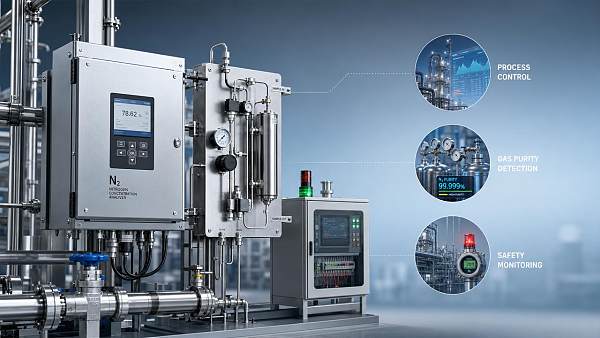
 N2 Concentration Analyzer Cost Factors for Bulk Industrial ProcurementN2 concentration analyzer cost depends on more than unit price. Compare process, purity, and safety applications with total cost logic to source smarter and reduce lifecycle risk.
 Oxygen Concentration Analyzer vs Sensor Systems: Which Fits Continuous UseOxygen concentration analyzer or sensor system? Compare stability, drift, maintenance, and uptime for continuous use to choose the most reliable fit for your process.
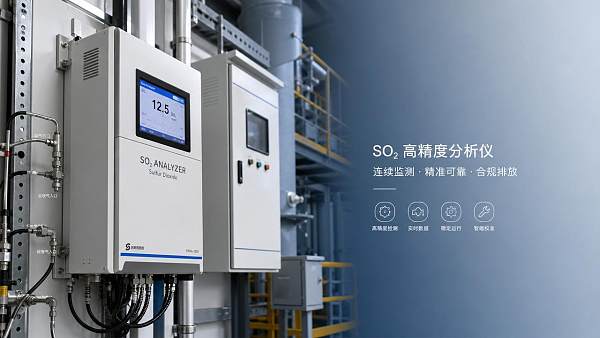
 SO2 Concentration Analyzer News: Compliance Demands Reshaping Product SpecsSO2 concentration analyzer trends are shifting with stricter compliance rules. Learn how new specs, data integrity, and uptime demands are reshaping smarter buying decisions.
 He Concentration Analyzer Maintenance Tips for Stable Long-Term ReadingsHe concentration analyzer maintenance tips for stable long-term readings. Learn how to reduce drift, improve calibration accuracy, cut downtime, and keep industrial systems reliable.
 CH4 Concentration Analyzer Selection Mistakes That Raise Operating RiskCH4 concentration analyzer selection mistakes can raise safety, compliance, and maintenance risk. Learn how to choose the right analyzer for reliable performance and lower lifecycle cost.
 CO Concentration Analyzer Import Rules to Watch in 2026CO concentration analyzer import rules for 2026: learn the key customs, certification, labeling, and compliance checks to reduce risk, avoid delays, and source with confidence.
 NH3 Concentration Analyzer Market Trends for Industrial Process Control in 2026NH3 concentration analyzer market trends in 2026: explore technologies, industrial applications, selection tips, and how smarter monitoring improves compliance, safety, and process control.
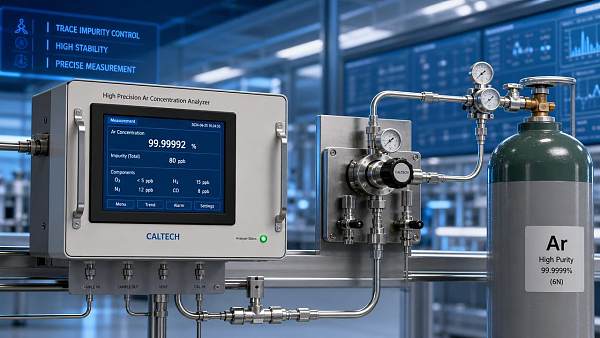
 Ar Concentration Analyzer Accuracy Issues in High-Purity Gas ApplicationsAr concentration analyzer accuracy issues can compromise high-purity gas quality, safety, and compliance. Learn the key causes, practical fixes, and how to improve reliable measurement performance.
 CO2 Concentration Analyzer Price Trends in 2026: What Shapes Total CostCO2 concentration analyzer price trends in 2026 depend on technology, accuracy, calibration, compliance, and integration. Discover total cost drivers to compare quotes smarter and control lifecycle risk.
 How to Choose a NOX Concentration Analyzer for Low-Emission MonitoringNOX concentration analyzer selection for low-emission monitoring made easier. Learn how to compare accuracy, response time, compliance, and lifecycle cost before you buy.
 2026 Summit Highlights China's Smart Inspection Equipment as New Global Cooperation FocusSmart inspection equipment takes center stage at the 2026 Summit—unlocking new global cooperation, standards alignment, and market opportunities for exporters, OEMs, and tech suppliers.
 White House Warns Oil Shock May Fuel Core Inflation, Delaying Industrial Instrument ExportsWhite House warns oil shock may fuel core inflation—impacting industrial instrument exports. Discover how pressure, temperature & flow instrumentation exporters can mitigate delays and optimize trade finance workflows now.
 New AI Agent Guidelines Impact Export of AI-Powered Testing EquipmentAI agent guidelines impact export of AI-powered testing equipment—learn how new China security & controllability rules affect global compliance, supply chains, and market access.
 Canton Fair Phase III Boosts Sensor & Energy Testing ExportsSensor & energy testing exports surge at Canton Fair Phase III—driven by global demand for new energy home appliances and smart furniture compliance solutions.
 UAE Announces $150B Energy Infrastructure InvestmentUAE's $150B energy infrastructure push drives demand for IP68/IP69K, ATEX/IECEx, and LPWAN-enabled industrial sensors — act now to align with ADNOC tenders.
 WTI Net Longs Surge, Boosting Demand for Lubricant Monitoring SystemsLubricant monitoring systems surge in demand as WTI net longs rise—real-time viscosity, moisture & oxidation tracking now critical for global manufacturers.
 Shanghai Pudong Launches E-Label Pilot for Imported CosmeticsShanghai Pudong’s e-label pilot for imported cosmetics drives global demand for RFID/NFC readers, traceability solutions & certified testing equipment—act now to comply and lead.
 G7 Prioritizes Critical Mineral Supply Chain SecurityCritical mineral supply chain security takes center stage at G7 Paris meeting—impacting industrial sensors, rare-earth magnets & global procurement strategies.
 US-China Talks Yield Breakthrough on Agricultural NTBs for Testing EquipmentUS-China talks break ground on agricultural NTBs—key win for makers of residue detection, mycotoxin & spectral testing equipment targeting USDA/FDA markets.
 Fruit Attraction 2026 Booth Bookings Exceed 90%Fruit Attraction 2026 booth bookings exceed 90% — a strong signal for food safety instrumentation, cold-chain monitoring & EU compliance solution providers to secure visibility and drive qualified leads.
 Kuwait Bans HCFC Air Conditioners, Boosts IR Camera ExportsKuwait bans HCFC air conditioners—boosting demand for IR cameras, leak detectors & refrigerant analyzers. Discover GCC compliance insights and export opportunities.
 China's IC Exports Surge 78.3% in First Four Months of 2026China's IC exports surge 78.3% in early 2026 — driven by soaring global demand for AI chip test equipment, SMUs, and parametric analyzers. Discover the supply chain shift.
 Chile Enforces Mandatory INN Safety Certification for Industrial Temperature ControllersChile mandates INN safety certification (NCh Elec 4/2025) for industrial temperature controllers starting Aug 1, 2026—act now to avoid shipment delays & market bans.
 K-REACH Supply-Shortage Exemption Launches for pH/ORP ElectrodesK-REACH Supply-Shortage Exemption now applies to pH/ORP electrodes—act before June 30, 2026 to avoid customs delays & penalties. Key for exporters & manufacturers.
 4th China International Supply Chain Expo to Focus on Smart Sensing & In-Process InspectionSmart Sensing & In-Process Inspection take center stage at the 4th China International Supply Chain Expo in Beijing, Nov 26–30, 2026 — discover next-gen inspection tech, AI vision modules, and calibrated sensing solutions for global industrial buyers.
 ASTM F2100-26 Medical Mask Standard Takes Effect in USASTM F2100-26 medical mask standard is now in force—driving global demand for biosafety cabinets, particle counters & air velocity calibrators, especially China-made instruments.
 South Africa Enforces SABS Certification for IoT Monitoring DevicesSABS certification now mandatory for IoT monitoring devices entering South Africa via e-commerce—act before 1 June 2026 to avoid customs rejection and ensure market access.
 EU REACH Adds Fluorinated Substances; SVHC Reporting Required for Gas AnalyzersEU REACH now restricts fluorinated substances in gas analyzers—SVHC reporting is mandatory by 30 Nov 2026. Ensure compliance for sensors, membranes & monitoring systems.
 Revised Maritime Code Takes Effect May 1, 2026: Shift in Unclaimed Cargo LiabilityRevised Maritime Code (2026): Shippers now liable for unclaimed cargo—critical for industrial instrument exporters, logistics providers & cross-border supply chains. Act now.
 China Imposes Zero Tariffs on Goods from All African Diplomatic Partners Starting May 1, 2026China’s zero-tariff policy for African instrumentation & automation exports starts May 1, 2026—boosting competitiveness in EPC tenders and market access for exporters.
 Import and Export Shifts in the PPM Gas Analyzer Marketppm gas analyzer market insights: discover how import tariffs, export controls, and compliance shifts impact cost, supply stability, and growth opportunities across key applications.
 Single Gas Analyzer Maintenance Issues That Raise DowntimeSingle gas analyzer maintenance issues can quietly increase downtime. Learn how to spot drift, calibration errors, and sample path faults early to improve uptime and field efficiency.














Search Categories
Search Categories
Latest Article
- N2 Concentration Analyzer Cost Factors for Bulk Industrial ProcurementN2 concentration analyzer cost depends on more than unit price. Compare process, purity, and safety applications with total cost logic to source smarter and reduce lifecycle risk.Posted by:
- Oxygen Concentration Analyzer vs Sensor Systems: Which Fits Continuous UseOxygen concentration analyzer or sensor system? Compare stability, drift, maintenance, and uptime for continuous use to choose the most reliable fit for your process.Posted by:
- SO2 Concentration Analyzer News: Compliance Demands Reshaping Product SpecsSO2 concentration analyzer trends are shifting with stricter compliance rules. Learn how new specs, data integrity, and uptime demands are reshaping smarter buying decisions.Posted by:
Please give us a message
