
Hydrogen Analyzer for Aerospace Applications: Where Accuracy Matters Most


In aerospace projects, even trace hydrogen deviations can affect safety, material performance, and system reliability. A hydrogen analyzer for aerospace applications helps project managers and engineering leaders maintain precise control across testing, production, and quality assurance. With accuracy, stability, and compliance under constant pressure, choosing the right analytical solution is critical to reducing risk and keeping complex programs on schedule.
Why a checklist-first approach works better in aerospace decisions
For project leaders, the main challenge is rarely understanding that hydrogen matters. The harder question is knowing what to verify first when comparing instruments, suppliers, and implementation plans. In aerospace environments, a hydrogen analyzer for aerospace applications is not just a lab device. It can influence acceptance testing, material validation, propulsion-related processes, leak detection workflows, and quality documentation. A checklist-based review prevents teams from focusing only on price or sensitivity while overlooking integration risk, calibration burden, or compliance gaps.
This is especially important in cross-functional programs where procurement, engineering, quality, operations, and safety teams all have different priorities. A structured review helps translate technical performance into project outcomes: fewer delays, better audit readiness, lower rework, and more reliable measurement data across the program lifecycle.
Start with these priority checks before shortlisting any analyzer
Before reviewing brands or specifications in detail, project managers should confirm the core decision framework. The right hydrogen analyzer for aerospace applications must fit the measurement task, the operating environment, and the validation process required by the program.
- Define the measurement objective clearly. Are you monitoring trace hydrogen in a controlled test chamber, verifying gas purity, checking material outgassing, or supporting process control in manufacturing? Different use cases require different detection limits, response times, and sampling methods.
- Set the required accuracy and detection range. In aerospace, small deviations can be meaningful. Confirm whether your application requires ppm, ppb, or percentage-level measurement and how that performance is validated.
- Check sample conditions. Temperature, pressure, humidity, flow stability, and the presence of other gases can all affect analyzer performance. A strong instrument on paper may underperform in real process conditions.
- Review response and recovery time. If the analyzer supports safety-critical testing or fast process transitions, slow readings can create operational blind spots and delay decision-making.
- Confirm data handling requirements. Aerospace programs often need traceable records, alarm logs, calibration history, and support for digital quality systems.
- Assess maintenance load. Frequent calibration, consumable replacement, or complicated sampling systems can increase downtime and labor cost.
- Verify compliance expectations early. The analyzer should align with internal quality procedures, applicable aerospace standards, and customer or regulatory documentation requirements.
These first checks help narrow the field quickly and reduce the risk of selecting a system that performs well in demonstrations but creates problems during commissioning or qualification.
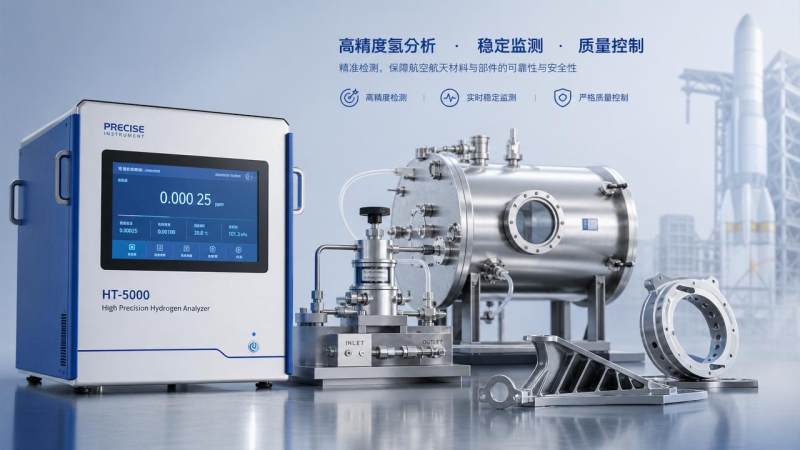
Core evaluation checklist for a hydrogen analyzer for aerospace applications
Once the project scope is clear, use the following criteria as a practical selection guide. This is where technical fit and project delivery risk should be assessed together.
1. Measurement performance
Look beyond headline sensitivity. Ask for repeatability, linearity, drift behavior, cross-sensitivity data, and performance under actual operating conditions. In aerospace projects, stability over time is often as important as initial accuracy, because trending and traceability matter during long qualification cycles.
2. Technology suitability
Different analyzer technologies offer different strengths. Thermal conductivity, electrochemical, mass spectrometric, and laser-based solutions may all be relevant depending on the use case. The right hydrogen analyzer for aerospace applications should be selected based on matrix gas, contamination risk, required precision, and operational complexity rather than technology preference alone.
3. Sampling system design
Sampling is often where projects fail quietly. Tubing materials, dead volume, filters, moisture control, pressure regulation, and purge design can all distort readings. If hydrogen is measured at trace levels, poor sampling architecture may create more error than the analyzer itself.
4. Environmental robustness
Check whether the analyzer can tolerate vibration, temperature variation, electrical noise, and installation constraints. Aerospace production and testing environments are rarely ideal laboratory settings. Robust packaging and stable operation under plant or facility conditions should be treated as must-have factors.
5. Calibration and verification strategy
Ask how the analyzer is calibrated, how often verification is needed, what reference gases are required, and how calibration records are stored. For project managers, this affects staffing, recurring cost, and audit readiness. An analyzer that is highly accurate but difficult to verify may become a lifecycle burden.
6. Connectivity and system integration
A modern hydrogen analyzer for aerospace applications should support reliable communication with control systems, data historians, laboratory information systems, or quality platforms where needed. Confirm protocol compatibility, alarm outputs, remote diagnostics capability, and cybersecurity considerations.
7. Supplier capability
The supplier should be able to provide application support, documentation, startup assistance, training, and after-sales service. For aerospace programs, documentation quality and response speed are often as valuable as hardware specifications.
A simple decision table for project teams
Scenario-specific checks that should not be treated the same
A hydrogen analyzer for aerospace applications may serve very different functions across a program. Project teams should avoid using one generic requirement list for all scenarios.
For propulsion and fuel-related testing
Priority should go to fast response, stable operation under dynamic conditions, and reliable performance with changing gas compositions. Safety interlocks, alarm handling, and test stand integration become critical.
For material research and laboratory analysis
Detection limits, low drift, and contamination control are often the main concerns. Lab teams may also require advanced data export, method validation support, and compatibility with controlled research protocols.
For manufacturing quality control
Ease of operation, repeatable daily performance, maintenance simplicity, and integration with production records matter most. If operators are not specialists, interface clarity and guided diagnostics should be evaluated carefully.
For leak testing or enclosure monitoring
Sensitivity alone is not enough. Teams should check background rejection, alarm reliability, false positive control, and the analyzer’s behavior under intermittent exposure patterns.
Common oversights that create avoidable project risk
Even experienced teams can miss details that later affect schedule, cost, or confidence in the data. The following issues are repeatedly underestimated during analyzer selection and deployment.
- Assuming catalog accuracy equals installed accuracy. Real-world sample handling and environmental conditions often reduce effective performance.
- Underestimating calibration logistics. Reference gas supply, storage rules, and recalibration frequency can affect operations significantly.
- Ignoring total cost of ownership. Consumables, downtime, service visits, and training may outweigh the initial purchase difference.
- Failing to involve quality and maintenance teams early. This often leads to specification mismatches or acceptance criteria disputes late in the project.
- Not requesting application-specific references. A supplier may be strong in general gas analysis but less proven in aerospace-related hydrogen measurement tasks.
Execution advice for project managers moving from selection to implementation
After choosing a hydrogen analyzer for aerospace applications, disciplined execution is what protects schedule and measurement credibility. Start by documenting the intended use, operating limits, acceptance criteria, and ownership responsibilities. This reduces confusion during installation qualification and operational handover.
Next, ask the supplier for a complete implementation package: analyzer specifications, calibration procedure, recommended sampling layout, utility requirements, maintenance plan, spare parts list, training scope, and data interface details. If your project includes formal validation, request template documentation support early rather than after installation.
It is also wise to run a pre-commissioning review that includes engineering, quality, operations, and safety representatives. Confirm gas connections, alarm logic, sample line integrity, grounding, software communication, and planned verification tests. A short readiness review often prevents long delays later.
FAQ for teams evaluating hydrogen measurement solutions
How accurate should a hydrogen analyzer for aerospace applications be?
It depends on the use case, but aerospace projects should define required accuracy relative to the decision being made, not only to a generic specification. The key is whether the analyzer can reliably support pass-fail criteria, trend analysis, and compliance documentation under actual process conditions.
Is faster response always better?
Not always, but in dynamic testing, leak detection, or safety-related monitoring, fast response can be crucial. In stable laboratory analysis, long-term drift and repeatability may deserve more weight than speed alone.
What should be prepared before contacting suppliers?
Prepare the measurement range, target accuracy, gas composition, pressure and temperature conditions, installation environment, data interface needs, compliance expectations, and desired project timeline. This information helps suppliers recommend a realistic hydrogen analyzer for aerospace applications rather than a generic option.
What to discuss next if your team is ready to proceed
If your organization is moving toward procurement or technical evaluation, the most useful next step is a structured requirement discussion. Prioritize the measurement objective, required detection limit, sample conditions, installation constraints, verification method, digital integration needs, service expectations, and target delivery schedule. For budget control, also request clarity on consumables, calibration support, spare parts, and long-term maintenance commitments.
A well-matched hydrogen analyzer for aerospace applications is not defined by sensitivity alone. It is defined by how reliably it supports your engineering decisions, quality assurance process, and project timeline. When teams use a practical checklist, compare real operating conditions, and align supplier support with program demands, they reduce technical uncertainty and make implementation far more predictable.
Recommended for You
 Brazil to Eliminate Import Duties on Cross-Border E-Commerce Orders Under USD 50Brazil to eliminate import duties on cross-border e-commerce orders under USD 50—key for portable testing instruments exporters targeting Mercado Livre & DIY buyers.
 New AI Agent Guidelines Impact Smart Inspection Device ExportsAI Agent Guidelines impact smart inspection device exports—learn how new China AI safety rules affect EU, US & Middle East market access.
 UPS Freight Rates Increase Effective May 17, 2026UPS freight rates increase effective May 17, 2026—impact FOB pricing for industrial monitoring equipment exporters. Act now to optimize packaging, revise quotes, and secure margins.
 新修订《海商法》施行:卸货港无人提货责任转向托运人,检测设备出口交期风控升级New Maritime Code shifts unclaimed cargo liability to shippers at discharge ports—critical for testing equipment exporters managing delivery timelines and compliance risk.
 China Imposes Zero Tariffs on Lab Analyzers for 20 African NationsChina's zero tariffs on lab analyzers for 20 African nations boost export competitiveness—pH meters, spectrophotometers & more now duty-free from May 2026.
 CA Toxic Chemical Tank Overheating Sparks Explosion Risk, Monitoring Equipment Orders SurgeGas leak detectors, remote temperature warning systems & explosion-proof thermal imagers surge in demand after CA toxic tank overheating incident.
 EU REACH Adds DBDPE to SVHC List, Impacting Brominated Flame Retardant Testing for Export EquipmentDBDPE added to EU REACH SVHC list—impact on brominated flame retardant testing for industrial instruments, sensors & export compliance. Act now.
 Thailand Customs Digital Reform Spurs RFID Equipment DemandRFID equipment demand surges in Thailand as Customs digital reform mandates e-labeling, real-time parcel tracking & API compliance—act now to meet TISI specs and platform rules.
 Lazada Thailand Cuts Import Duties on 528 CategoriesLazada Thailand cuts import duties on 528 categories — including wired headphones & notebooks — lowering costs for Chinese exporters and Thai SMEs via LGS.
 US Delays 400 Tomahawk Missiles to Japan Amid Iran Inventory ReplenishmentTomahawk missiles delay to Japan sparks urgent demand for alternative guidance, navigation & secure comms suppliers—key opportunity for export-ready defense electronics firms.
 What to Check Before Importing an F2 Concentration Analyzer in 2026F2 concentration analyzer import guide for 2026: learn what to check on compliance, performance, integration, lifecycle cost, and supplier support before you buy.
 SF6 Concentration Analyzer Market Trends for Power and Gas Applications in 2026SF6 concentration analyzer market trends for 2026: explore accuracy, digital integration, emissions control, and buying tips for power and gas applications.
 Common HCl Concentration Analyzer Mistakes That Lead to Unstable ReadingsHCl concentration analyzer unstable readings? Discover the most common installation, calibration, sampling, and maintenance mistakes—and the practical fixes that improve accuracy fast.
 H2S Concentration Analyzer Price Trends: What’s Driving Costs in 2026H2S concentration analyzer price trends in 2026: discover what drives costs, from sensor technology and compliance to materials and digital features, and make smarter buying decisions.
 How to Choose a Cl2 Concentration Analyzer for Process Safety in 2026Cl2 concentration analyzer selection in 2026 starts with process safety. Learn how to match scenarios, improve reliability, avoid costly mistakes, and choose with confidence.
 N2 Concentration Analyzer Cost Factors for Bulk Industrial ProcurementN2 concentration analyzer cost depends on more than unit price. Compare process, purity, and safety applications with total cost logic to source smarter and reduce lifecycle risk.
 Oxygen Concentration Analyzer vs Sensor Systems: Which Fits Continuous UseOxygen concentration analyzer or sensor system? Compare stability, drift, maintenance, and uptime for continuous use to choose the most reliable fit for your process.
 SO2 Concentration Analyzer News: Compliance Demands Reshaping Product SpecsSO2 concentration analyzer trends are shifting with stricter compliance rules. Learn how new specs, data integrity, and uptime demands are reshaping smarter buying decisions.
 He Concentration Analyzer Maintenance Tips for Stable Long-Term ReadingsHe concentration analyzer maintenance tips for stable long-term readings. Learn how to reduce drift, improve calibration accuracy, cut downtime, and keep industrial systems reliable.
 CH4 Concentration Analyzer Selection Mistakes That Raise Operating RiskCH4 concentration analyzer selection mistakes can raise safety, compliance, and maintenance risk. Learn how to choose the right analyzer for reliable performance and lower lifecycle cost.
 CO Concentration Analyzer Import Rules to Watch in 2026CO concentration analyzer import rules for 2026: learn the key customs, certification, labeling, and compliance checks to reduce risk, avoid delays, and source with confidence.
 NH3 Concentration Analyzer Market Trends for Industrial Process Control in 2026NH3 concentration analyzer market trends in 2026: explore technologies, industrial applications, selection tips, and how smarter monitoring improves compliance, safety, and process control.
 Ar Concentration Analyzer Accuracy Issues in High-Purity Gas ApplicationsAr concentration analyzer accuracy issues can compromise high-purity gas quality, safety, and compliance. Learn the key causes, practical fixes, and how to improve reliable measurement performance.
 CO2 Concentration Analyzer Price Trends in 2026: What Shapes Total CostCO2 concentration analyzer price trends in 2026 depend on technology, accuracy, calibration, compliance, and integration. Discover total cost drivers to compare quotes smarter and control lifecycle risk.
 How to Choose a NOX Concentration Analyzer for Low-Emission MonitoringNOX concentration analyzer selection for low-emission monitoring made easier. Learn how to compare accuracy, response time, compliance, and lifecycle cost before you buy.
 2026 Summit Highlights China's Smart Inspection Equipment as New Global Cooperation FocusSmart inspection equipment takes center stage at the 2026 Summit—unlocking new global cooperation, standards alignment, and market opportunities for exporters, OEMs, and tech suppliers.
 White House Warns Oil Shock May Fuel Core Inflation, Delaying Industrial Instrument ExportsWhite House warns oil shock may fuel core inflation—impacting industrial instrument exports. Discover how pressure, temperature & flow instrumentation exporters can mitigate delays and optimize trade finance workflows now.
 New AI Agent Guidelines Impact Export of AI-Powered Testing EquipmentAI agent guidelines impact export of AI-powered testing equipment—learn how new China security & controllability rules affect global compliance, supply chains, and market access.
 Canton Fair Phase III Boosts Sensor & Energy Testing ExportsSensor & energy testing exports surge at Canton Fair Phase III—driven by global demand for new energy home appliances and smart furniture compliance solutions.
 UAE Announces $150B Energy Infrastructure InvestmentUAE's $150B energy infrastructure push drives demand for IP68/IP69K, ATEX/IECEx, and LPWAN-enabled industrial sensors — act now to align with ADNOC tenders.
 WTI Net Longs Surge, Boosting Demand for Lubricant Monitoring SystemsLubricant monitoring systems surge in demand as WTI net longs rise—real-time viscosity, moisture & oxidation tracking now critical for global manufacturers.
 Shanghai Pudong Launches E-Label Pilot for Imported CosmeticsShanghai Pudong’s e-label pilot for imported cosmetics drives global demand for RFID/NFC readers, traceability solutions & certified testing equipment—act now to comply and lead.



Search Categories
Search Categories
Latest Article
- Brazil to Eliminate Import Duties on Cross-Border E-Commerce Orders Under USD 50Brazil to eliminate import duties on cross-border e-commerce orders under USD 50—key for portable testing instruments exporters targeting Mercado Livre & DIY buyers.Posted by:
- New AI Agent Guidelines Impact Smart Inspection Device ExportsAI Agent Guidelines impact smart inspection device exports—learn how new China AI safety rules affect EU, US & Middle East market access.Posted by:
- UPS Freight Rates Increase Effective May 17, 2026UPS freight rates increase effective May 17, 2026—impact FOB pricing for industrial monitoring equipment exporters. Act now to optimize packaging, revise quotes, and secure margins.Posted by:
Please give us a message
